Architectural Record
search
cart
facebook twitter linkedin youtube
  • Sign In
  • Subscribe
  • Sign Out
  • My Account
Architectural Record
  • NEWS
    • Latest News
    • Awards
    • Interviews
    • Obituaries
    • Podcasts
      • Design:Ed Podcast
      • Sponsored Podcasts
  • OPINION
    • Book Reviews / Excerpts
    • Exhibition Reviews
    • Forum
  • EXCLUSIVES
    • Videos
    • Design Vanguard
    • Top 300 Firms
    • Sponsored Content
    • Sponsored eBooks
    • From the Archives
  • CONTINUING ED
    • Editorial Continuing Ed
    • CE Center
    • CE Academies
  • PROJECTS
    • Buildings By Type
    • Reuse & Renovation
    • Museums & Arts Centers
    • Colleges & Universities
    • Multifamily Housing
    • Interiors
    • Lighting
    • Kitchen & Bath
  • HOUSES
    • Record Houses
    • House of the Month
    • Featured Houses
  • PRODUCTS
    • Products by Category
    • Record Products of the Year
    • Latest Products
  • EVENTS
    • Dates & Events
    • Record on the Road
    • Innovation Conference
    • Sustainability in Practice
    • Women In Architecture
    • Webinars
    • Ad Excellence Awards
    • Submit an Event
  • CONNECT
    • Ask RECORD AI
    • Newsletters
    • Contact
    • Advertise
    • Editorial Calendar
    • Store
    • Customer Service
  • SUBMIT
    • Submission Guidelines
    • RECORD Competitions
  • MAGAZINE
    • Subscribe
    • My Account
    • Digital Edition
    • Current Issue
    • Firm Pass
    • Historic Archive
Architecture News

David Adjaye and Others Tackle Social Issues in Opening Keynote of 2018 AIA Conference
By Fred A. Bernstein
David Adjaye and Others Tackle Social Issues in Opening Keynote of 2018 AIA Conference

Photo © Ed Schipul

June 22, 2018

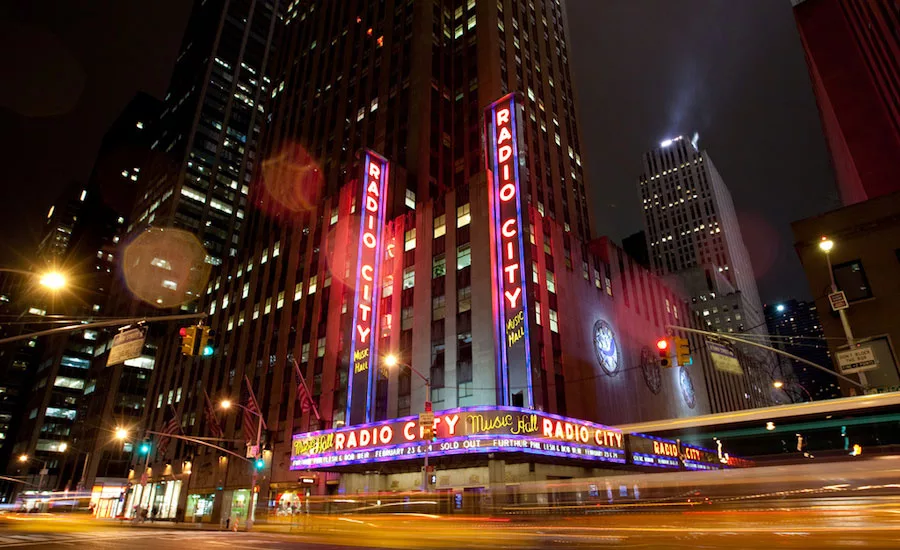
When David Adjaye stepped onto the stage of Radio City Music Hall, to give the keynote address at the 2018 AIA conference last night, the audience might have been expecting calls to action. After all, the previous speakers had been adamant that architects must tackle social issues. Carl Elefante, the outgoing president of the AIA, admonished the crowd of 6,000 to “seize our dare-to-be-great moment,” a process, he said, that involves addressing the profession’s “diversity shortcomings.”  

The subject of diversity was also taken up by Tamara Eagle Bull, FAIA, a member of the Oglala Lakota Nation and the first Native American woman in the U.S. to become a licensed architect. Eagle Bull, who owns Encompass Architects in Lincoln, Nebraska, was the winner of the AIA’s Whitney M. Young Jr. Award, named for the civil rights activist who at the 1968 AIA convention in Portland, Oregon, told the almost entirely white crowd that the profession was distinguished by its silence and irrelevance on issues of race.  Fifty years later, Eagle Bull made the case for a profession that includes more Native Americans. “They are the only ones who can truly understand the needs of native communities,” she said, adding, “Diversity is good and diversity is necessary.”

Adjaye could have taken up the theme overtly, but he did so subtly, demonstrating that—in the words of Robert Ivy, the AIA’s executive vice president and chief executive officer, who introduced him—“his commitment to people, to communities, to social well-being are made real in every project that he does.”

David Adjaye
Photo © Garagemca

Adjaye presented a series of buildings that address the needs of the disadvantaged. First up was a branch library in Washington’s neglected Anacostia section that he designed while his much larger National Museum of African American History and Culture (NMAAHC) was underway. Designing the Anacostia library allowed him to get to know the needs of a community, he said. He also showed Sugar Hill, a housing project in Harlem for the recently homeless, which he designed to be programmatically rich, with a children’s museum and a school at its base and a community garden on its roof.  “The failure of 20th century New York was the ghettoization of poor communities,” he said, resulting in an “apartheid state.” The Sugar Hill project was meant to “work against that,” to find a way “in which the city can be generous for everyone. It’s something I feel very strongly about.” He added, “Homelessness, contrary to New York’s perception of itself, has actually been rising.”

The next project he showed, at 130 William Street in Lower Manhattan, is a 66-story condo building. Adjaye traced the origins of the tower’s arched windows to New York’s early warehouse buildings, with their load-bearing brick walls.  Of course, he said, “we’re not making a brick load-bearing tower 66 stories high. Instead, he made its facades of panelized concrete, similar to those he used at Sugar Hill in Harlem. Inside are amenities like a basketball court and a cavelike spa overlooking the city.

Adjaye also showed renderings of his planned new building for the Studio Museum in Harlem, which he described as “the first museum in the country dedicated to supporting and incubating artists of the African diaspora.”  He said his building captures the soaring architecture of Harlem’s churches and theaters, and makes references to the neighborhood’s vibrant street life.

Then, saving some of the best for last, he showed the NMAAHC, which he said “has been an extraordinary journey” and “has transformed my career.”  He said that he set out to create a building whose shape recalls Yoruba art, so that the architecture wouldn’t “just be about trauma.” In closing, Adjaye asked poignantly, “Could we think of a world where maybe slavery hadn’t happened?”


A post shared by Matthew Bremer (@matthewbremer_aif) on Jun 22, 2018 at 3:43am PDT

Looking for quick answers on architecture and design topics?
Try Ask RECORD, our new smart AI search tool.
Ask RECORD →

KEYWORDS: AIA Conference

Share This Story

Looking for a reprint of this article?
From high-res PDFs to custom plaques, order your copy today!


Fred Bernstein studied architecture at Princeton and law at NYU and writes about both subjects.

Post a comment to this article

Report Abusive Comment

Subscription Center
  • Create an Account
  • Start a Subscription
  • Manage My Account
  • Sign Up for Newsletters
  • Visit Customer Service
  • Update Preferences

More Videos

Sponsored Content

Sponsored Content is a special paid section where industry companies provide high quality, objective, non-commercial content around topics of interest to the Architectural Record audience. All Sponsored Content is supplied by the advertising company and any opinions expressed in this article are those of the author and not necessarily reflect the views of Architectural Record or its parent company, BNP Media. Interested in participating in our Sponsored Content section? Contact your local rep!

close
  • cold storage facility
    Sponsored byCarlisle SynTec Systems

    How Architects Can Design More Continuous Cold Storage Envelopes

  • TAMLYN XtremeTrim Exterior Trim
    Sponsored byTamlyn

    Designing Cleaner Panel Facades: Why Exterior Trim Details Matter

  • Building with Vapor Barriers
    Sponsored byReef Industries, Inc.

    Vapor Barriers Help Control Moisture in Tighter Building Designs

DESIGN:ED Podcast
Listen to Architectural Record’s DESIGN:ED Podcast

Events

June 30, 2026

Generator Selection and Sizing for Outage-Ready Homes

Credits: 1 AIA LU/HSW; 1 AIBD P-CE; 0.1 ICC CEU

Explore how propane-powered systems and whole-home generators can improve energy resilience, reduce electrical loads, and lower long-term residential costs.

July 1, 2026

Hospitality in Higher Education

Credits: 1 AIA LU/HSW; 1 AIBD P-CE; 0.1 ICC CEU

Explore how hospitality-driven campus design can strengthen belonging, wellbeing, and community connection in higher education environments.

View All Submit An Event

Products

2026 Architect's Square Foot Costbook

2026 Architect's Square Foot Costbook

See More Products

Popular Stories

Obama Presidential Center, Chicago

The Obama Presidential Center Opens on Chicago’s South Side

Lorcan O' Herilhy

California Architect Lorcan O’Herlihy Has Died, Age 66

Spoonbill Ranch

Johnsen Schmaling Architects Integrates Spoonbill Ranch into a Pristine Landscape

Image of Bruce Springsteen Center for American Music

The CookFox-designed Bruce Springsteen Center for American Music Opens in New Jersey

Kìwekì Point, Ottawa, Canada

Perched High Above the Ottawa River, Kìwekì Point Showcases Sweeping Views of the Canadian Capital Region

Generator Selection and Sizing for Outage-Ready Homes - Free Webinar - June 30, 2026

Related Articles

  • AIA 2018 Flash Mob

    Voices of Plurality Flash Mob Gathers at 2018 AIA Conference

    See More
  • AIA 2013: Goody Two Shoes and Other Stories at AIA Opening Keynote

    See More
  • AIA WLS

    Ahead of AIA Conference, Architects Rally for Equity, Diversity and Inclusion

    See More

Related Products

See More Products
  • Architectural Record - November 2025

    Architectural Record November 2025 Issue

See More Products
×

The latest news and information

#1 Source for Architectural Design, News and Products

SUBSCRIBE
  • RESOURCES
    • Advertise
    • Contact Us
    • Submit
    • Store
  • ACCOUNT CENTER
    • Create an Account
    • Start a Subscription
    • Manage My Account
    • Sign Up for Newsletters
    • Visit Customer Service
    • Update Preferences
  • PRIVACY
    • PRIVACY POLICY
    • TERMS & CONDITIONS
    • DO NOT SELL MY PERSONAL INFORMATION
    • PRIVACY REQUEST
    • ACCESSIBILITY
  • SERVICES
    • Marketing Services
    • Reprints
    • Market Research
    • List Rental
    • Survey/Respondent Access
  • STAY CONNECTED
    • Linkedin
    • Facebook
    • Instagram
    • YouTube
    • X (Twitter)

Copyright ©2026. All Rights Reserved BNP Media, Inc. and BNP Media II, LLC.

Design, CMS, Hosting & Web Development :: ePublishing