Architectural Record
search
cart
facebook twitter linkedin youtube
  • Sign In
  • Subscribe
  • Sign Out
  • My Account
Architectural Record
  • NEWS
    • Latest News
    • Awards
    • Interviews
    • Obituaries
    • Podcasts
      • Design:Ed Podcast
      • Sponsored Podcasts
  • OPINION
    • Book Reviews / Excerpts
    • Exhibition Reviews
    • Forum
  • EXCLUSIVES
    • Videos
    • Design Vanguard
    • Top 300 Firms
    • Sponsored Content
    • Sponsored eBooks
    • From the Archives
  • CONTINUING ED
    • Editorial Continuing Ed
    • CE Center
    • CE Academies
  • PROJECTS
    • Buildings By Type
    • Reuse & Renovation
    • Museums & Arts Centers
    • Colleges & Universities
    • Multifamily Housing
    • Interiors
    • Lighting
    • Kitchen & Bath
  • HOUSES
    • Record Houses
    • House of the Month
    • Featured Houses
  • PRODUCTS
    • Products by Category
    • Record Products of the Year
    • Latest Products
  • EVENTS
    • Dates & Events
    • Record on the Road
    • Innovation Conference
    • Sustainability in Practice
    • Women In Architecture
    • Webinars
    • Ad Excellence Awards
    • Submit an Event
  • CONNECT
    • Ask RECORD AI
    • Newsletters
    • Contact
    • Advertise
    • Editorial Calendar
    • Store
    • Customer Service
  • SUBMIT
    • Submission Guidelines
    • RECORD Competitions
  • MAGAZINE
    • Subscribe
    • My Account
    • Digital Edition
    • Current Issue
    • Firm Pass
    • Historic Archive
Multifamily Housing Architecture

Sugar Hill Renaissance

New York City
By James S. Russell, FAIA Emeritus
Sugar Hill Renaissance
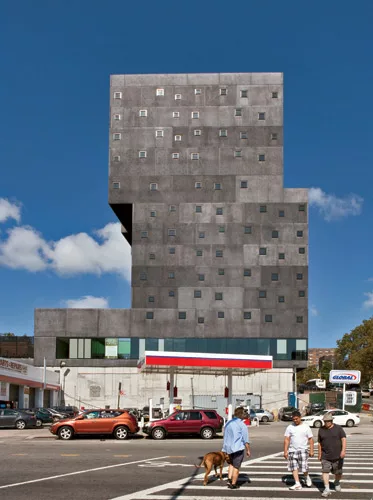
The building steps down 155th Street.
 
Photo © Kristine Larsen
Sugar Hill Renaissance
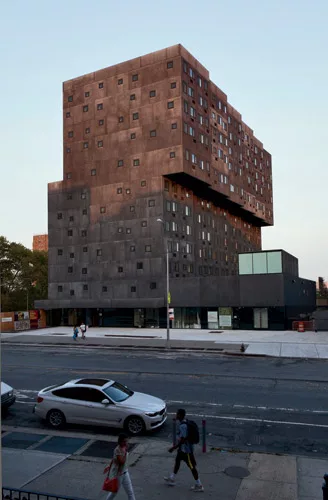
The building overlooks St. Nicholas Place.
 
Photo © Kristine Larsen
Sugar Hill Renaissance
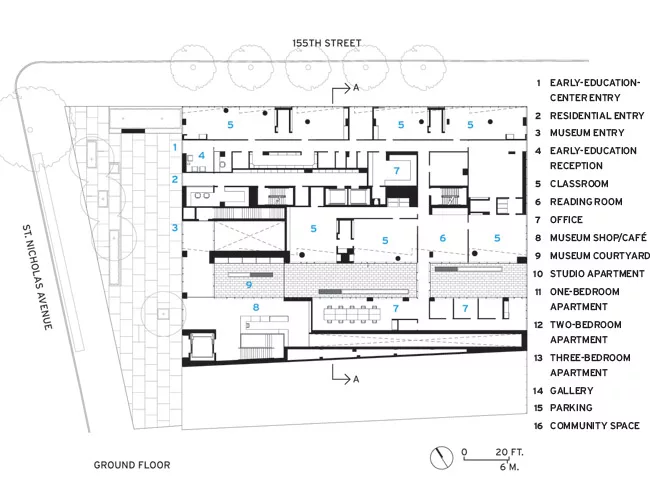
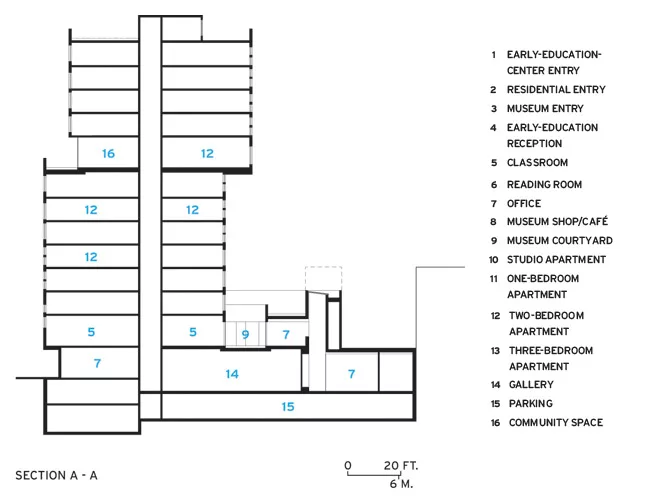
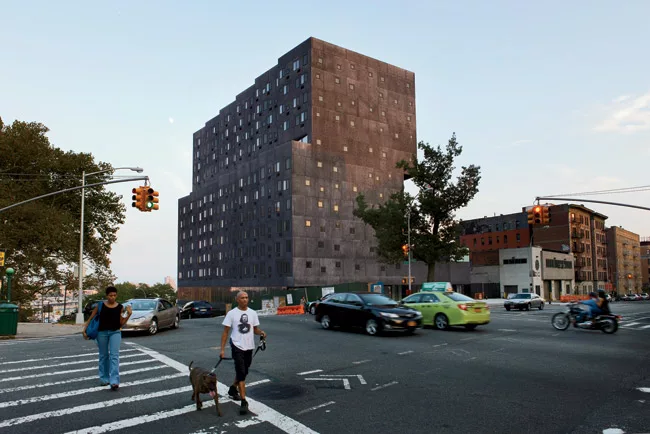
The 191,000-square-foot building makes the most of a sloping site, providing entrances to all of its key components on St. Nicholas Avenue and tucking parts of its early-education center and children’s museum on lower floors.
 
Photo © Kristine Larsen
Sugar Hill Renaissance
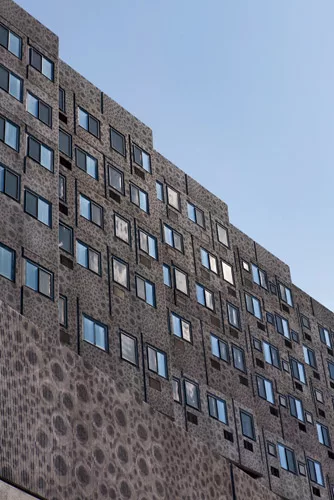
The building’s charcoal-gray precast-concrete panels have a striated texture and an embossed rose pattern long associated with the neighborhood. The pattern is most visible in raking light and almost disappears on overcast days.
 
Photo © Kristine Larsen
Sugar Hill Renaissance
Image courtesy Kristine Larsen
Sugar Hill Renaissance
Image courtesy Kristine Larsen
Sugar Hill Renaissance
Image courtesy Kristine Larsen
Sugar Hill Renaissance
October 16, 2014

Architects & Firms

Adjaye Associates

Where a garage once stood, the Sugar Hill Development rises like a charcoal escarpment interrupting the steep descent of busy 155th Street from the rocky spine of upper Manhattan. This prominent corner at St. Nicholas Avenue is suffused with African-American history. The Sugar Hill neighborhood was once the center of black wealth, especially during the 1920s cultural ascendance known as the Harlem Renaissance. The building's saturated color draws attention to itself, while a rose pattern embossed in its precast-concrete panels recalls one often found in wallpaper from the '20s.

The Sugar Hill Development has something to say. With apartments for people with very low incomes (including some formerly homeless residents), an early-childhood-education program serving 200, and a related 17,500-square-foot Children's Museum of Art & Storytelling, “the project represents the epitome of what we want to do in terms of housing,” said New York City Mayor Bill de Blasio at a press event in June. De Blasio was elected last year partly on his pledge to build and preserve 200,000 units of affordable housing, though Sugar Hill began under Michael Bloomberg.

The project shows both what is possible for such housing to achieve and how difficult is de Blasio's task.

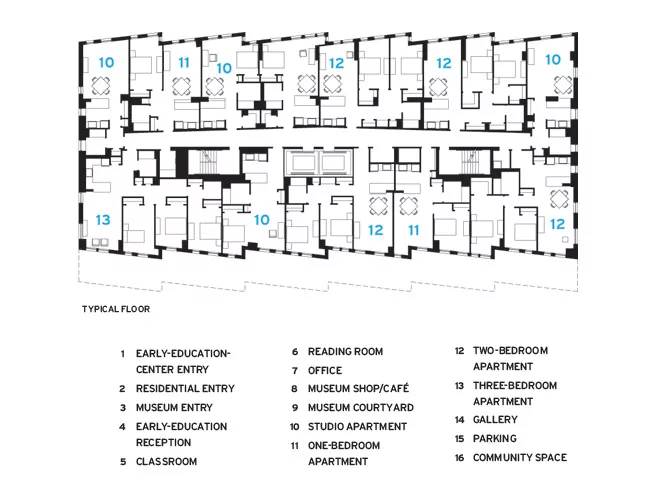
London-based David Adjaye, who worked with local housing specialist SLCE, buried about a third of the building in the steeply sloping site. A band of floor-to-ceiling glass runs around the building on the entry level, contrasting with the visual weight of the 11 floors of apartments above. An intimate entry plaza will be animated with children, visitors, and residents when all of the project's components are occupied, since entrances to the housing, school, and museum all open onto it. Kids started playing on a terrace below when school began in September.

The education spaces, bathed in daylight, take advantage of east-facing views of the Harlem River and nearby Yankee Stadium. The glass along 155th Street puts the children on display above passersby as the street drops off, a feature supported by Ellen Baxter, the director of the nonprofit developer, Broadway Housing Communities, as a cheerful advertisement of the value of prekindergarten education.

The lobby of the museum (scheduled to open in the spring of 2015) draws visitors past a small sculpture courtyard, then descends one level to a landing where a window looks into a skylit gathering space below. The corridor divides generous, high-ceilinged display space from a suite of classrooms that borrow sun from the skylight.

Mixing the mutually reinforcing early- education center and the storytelling museum “helps children succeed academically from the get-go” says Baxter. “These are resources not available in low-income communities like this one, where 70 percent of children are born into poverty.”

Looking for quick answers on architecture and design topics?
Try Ask RECORD, our new smart AI search tool.
Ask RECORD →

Inside, the architects brought touches of character and domesticity to small but functional apartments that range from studio to three-bedroom. Hardwood floors in the dwellings and stone tiles in the residential hallways survived value engineering. Residents, who are starting to move in this month, will share a planned rooftop terrace and garden. Outdated energy standards required windows that are smaller and less varied than those shown in Adjaye's renderings, affecting both the units and the building's exterior, where they advertise Sugar Hill's budget constraints and institutional character. One regulator insisted on unsightly, energy-wasting through-wall air-conditioning units—a crude way to mask the noise of 155th Street and less efficient than a central air system.

Eschewing the pink and beige bricks that usually clad affordable housing, Adjaye called for precast panels tinted charcoal gray with a striated texture and the embossed roses. The pattern is most visible in raking light, and almost disappears on dull days.

With a broken funding process endemic to “affordable” housing, Sugar Hill's benefits will be difficult to replicate at the scale de Blasio hopes to achieve. A gift from the Sirius Fund, a foundation, allowed Broadway Housing Communities to acquire the site. Sugar Hill needed 14 other funding sources from federal, state, and local governments as well as several banks deploying Federal New Market tax credits. Each contributor operates with different criteria and on different cycles, requiring an elaborate and expensive syndication process to reconcile. The education and museum programs also added to construction, financing, and regulatory complexity. Some nine city agencies will have signed off on the project before it can fully operate.

This Byzantine process is one reason why the total project cost for the 191,000 square-foot building was $89 million, only $59 million of it for construction..

The project's 124 apartments attracted a staggering 48,000 applications and Baxter's team has been filtering applicants according to exacting requirements: 40 income tiers (as low as $18,000 for a family of four, who would pay as little as $460 per month), with apartments set aside for nearby residents, city employees, the formerly homeless, and people with disabilities.

Adjaye says he likes the ambiguity of the brooding exterior, but the clumsy workmanship and irregular gaps between panels unfortunately evoke the stigmatizing low-income housing that blights too much of New York. “I wanted to see a different palette,” says Adjaye, who noted that one of his earlier projects, the Dirty House in London, had been criticized for its contrast to its surroundings, but is now embraced. “I believe the project will succeed in its use and what it offers—a very low-cost but signature building.”

James S. Russell is a New York-based architecture critic and the author of The Agile City, published in 2011.

Share This Story

Looking for a reprint of this article?
From high-res PDFs to custom plaques, order your copy today!
James S. Russell, FAIA Emeritus, a journalist who often focuses on sustainability and resilience, is the author of­­­­­ ­­­The Agile City: Building Well Being and Wealth in an Era of Climate Change (Island Press, 2011).

Post a comment to this article

Report Abusive Comment

Subscription Center
  • Create an Account
  • Start a Subscription
  • Manage My Account
  • Sign Up for Newsletters
  • Visit Customer Service
  • Update Preferences

More Videos

Sponsored Content

Sponsored Content is a special paid section where industry companies provide high quality, objective, non-commercial content around topics of interest to the Architectural Record audience. All Sponsored Content is supplied by the advertising company and any opinions expressed in this article are those of the author and not necessarily reflect the views of Architectural Record or its parent company, BNP Media. Interested in participating in our Sponsored Content section? Contact your local rep!

close
  • TAMLYN XtremeTrim Exterior Trim
    Sponsored byTamlyn

    Designing Cleaner Panel Facades: Why Exterior Trim Details Matter

  • Building with Vapor Barriers
    Sponsored byReef Industries, Inc.

    Vapor Barriers Help Control Moisture in Tighter Building Designs

  • Duct Interior with Prodeq System
    Sponsored byHenry, a Carlisle Company

    Designing Resilient Water Containment Systems

DESIGN:ED Podcast
Listen to Architectural Record’s DESIGN:ED Podcast

Events

June 16, 2026

Focus on the Façade: Exploring Steel, Timber & Fire-Rated Curtain Walls and Channel Glass Systems

Credits: 1 AIA LU/HSW; 1 AIBD P-CE; 0.1 ICC CEU

Explore modern façade and glazing systems that enhance daylighting, fire safety, and thermal performance while expanding architectural design possibilities.

June 18, 2026

Rebooting the Aging Office Building

Credits: 1 AIA LU/HSW; 1 AIBD P-CE; 0.1 ICC CEU; 1 PDH

Explore façade retrofit strategies and award-winning design concepts that can transform aging office buildings into healthier, higher-performing workplaces for today’s hybrid workforce.

View All Submit An Event

Products

2026 Architect's Square Foot Costbook

2026 Architect's Square Foot Costbook

See More Products

Popular Stories

SanDiegoAirport

Top 300 Architecture Firms of 2026

Coronado Bridge

The Architect’s Guide to San Diego

House A on a Hill

Design Vanguard 2026: Santiago Valdivieso

Dusk House

Design Vanguard 2026: ONO

Crystal Bridges Museum of American Art expansion

Safdie Architects Returns to the Crystal Bridges Museum of American Art for Major Expansion

Focus on the Facade - Free Webinar - June 16, 2026

Related Articles

  • David Adjaye-Designed Sugar Hill Affordable Housing Development Nears Completion in Harlem

    See More
  • Book Tower

    Continuing Education: Office Conversions

    See More
  • Penn 1

    A+I and Lighting Workshop Rejuvanate the Lobby of Penn 1

    See More

Related Products

See More Products
  • 3dthinking.jpg

    3D Thinking in Design and Architecture: From Antiquity to the Future

  • experience of arc.jpg

    The Experience of Architecture

See More Products
×

The latest news and information

#1 Source for Architectural Design, News and Products

SUBSCRIBE
  • RESOURCES
    • Advertise
    • Contact Us
    • Submit
    • Store
  • ACCOUNT CENTER
    • Create an Account
    • Start a Subscription
    • Manage My Account
    • Sign Up for Newsletters
    • Visit Customer Service
    • Update Preferences
  • PRIVACY
    • PRIVACY POLICY
    • TERMS & CONDITIONS
    • DO NOT SELL MY PERSONAL INFORMATION
    • PRIVACY REQUEST
    • ACCESSIBILITY
  • SERVICES
    • Marketing Services
    • Reprints
    • Market Research
    • List Rental
    • Survey/Respondent Access
  • STAY CONNECTED
    • Linkedin
    • Facebook
    • Instagram
    • YouTube
    • X (Twitter)

Copyright ©2026. All Rights Reserved BNP Media, Inc. and BNP Media II, LLC.

Design, CMS, Hosting & Web Development :: ePublishing