Architectural Record
search
cart
facebook twitter linkedin youtube
  • Sign In
  • Subscribe
  • Sign Out
  • My Account
Architectural Record
  • NEWS
    • Latest News
    • Awards
    • Interviews
    • Obituaries
    • Podcasts
      • Design:Ed Podcast
      • Sponsored Podcasts
  • OPINION
    • Book Reviews / Excerpts
    • Exhibition Reviews
    • Forum
  • EXCLUSIVES
    • Videos
    • Design Vanguard
    • Top 300 Firms
    • Sponsored Content
    • Sponsored eBooks
    • From the Archives
  • CONTINUING ED
    • Editorial Continuing Ed
    • CE Center
    • CE Academies
  • PROJECTS
    • Buildings By Type
    • Reuse & Renovation
    • Museums & Arts Centers
    • Colleges & Universities
    • Multifamily Housing
    • Interiors
    • Lighting
    • Kitchen & Bath
  • HOUSES
    • Record Houses
    • House of the Month
    • Featured Houses
  • PRODUCTS
    • Products by Category
    • Record Products of the Year
    • Latest Products
  • EVENTS
    • Dates & Events
    • Record on the Road
    • Innovation Conference
    • Sustainability in Practice
    • Women In Architecture
    • Webinars
    • Ad Excellence Awards
    • Submit an Event
  • CONNECT
    • Ask RECORD AI
    • Newsletters
    • Contact
    • Advertise
    • Editorial Calendar
    • Store
    • Customer Service
  • SUBMIT
    • Submission Guidelines
    • RECORD Competitions
  • MAGAZINE
    • Subscribe
    • My Account
    • Digital Edition
    • Current Issue
    • Firm Pass
    • Historic Archive
Opinion

Drawing on Architecture: The Object of Lines, 1970-1990

By Jordan Kauffman
By George Baird
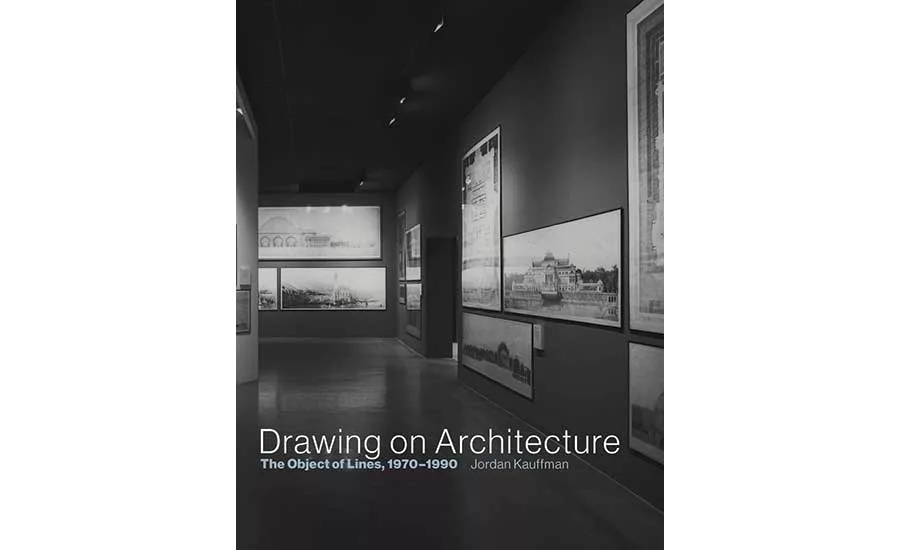
Drawing on Architecture: The Object of Lines, 1970-1990

Drawing on Architecture: The Object of Lines, 1970–1990, by Jordan Kauffman. MIT Press, 361 pages, $34.95.

November 7, 2018

Author Jordan Kauffman documents an important moment in recent history when architecture reasserted its cultural status through the showcasing of particular drawings. The episode begins in 1972 with the publication of Five Architects, which introduced the work of Peter Eisenman, Michael Graves, John Hejduk, Richard Meier, and Charles Gwathmey, and ends with the 1988 Deconstructivist Architecture exhibition at the Museum of Modern Art (MoMA). The significance of Five Architects for Kauffman is that, while many of the projects included were intended to be built, they were mostly illustrated by abstract, graphic drawings. The 1988 exhibition, with guest curators Mark Wigley and Philip Johnson, “displayed the drawings with reference to the creation of buildings, not as independent” artworks. (After 1990, as Kauffman’s title indicates, computerization gradually reduced the significance of hand-drawing altogether.)

Significant milestones in Kauffman’s 20-year history are the exhibition The Architecture of the École des Beaux-Arts at MoMA in 1975 by curator Arthur Drexler, and three pioneering exhibitions mounted at the Leo Castelli Gallery between 1978 and ’84 that offered architectural drawings for private sale, through which they came to be viewed as artworks and began having a monetary value independent of the buildings they depicted. Kauffman documents this in detail, including prices for drawings and personal interviews with such key players as Kristin Feireiss, who founded the Architecture Forum Aedes in Berlin in 1980; John Harris, curator emeritus at the Royal Institute of British Architects; Barbara Jakobson, organizer of the Castelli exhibitions; and Max Protetch, the owner of the gallery that became the longest-lasting exhibitor and dealer of such drawings. Despite this thoroughness, the result is not completely satisfactory. While the book is sumptuous and extensively illustrated, only the reproductions of individual drawings stand out; the numerous photographs of exhibition installations are disappointing, since the drawings are barely visible.

Even though this period enhanced the cultural stature of architectural drawings, their content was sometimes criticized from a political perspective. The third Castelli show included drawings of historicist garden follies designed by Quinlan Terry for the country estate of the then deputy chairman of Britain’s Tory party. Kauffman relates that a “humorous inscription” suggested that the funds used to build them “would otherwise have fallen to” the government. This kind of attitude, during a time when Margaret Thatcher was gutting public services to benefit her wealthy backers, did not go unnoticed by American critics, who, Kauffman writes, also gave “scathing” reviews to the show’s follies catering to the “idle rich” in Reaganite America.

Perhaps the most positive legacy of the period was the establishment of new institutions devoted to architectural culture, such as the Canadian Centre for Architecture in Montreal (founded in 1979), the Architecture Forum Aedes, and the German Architecture Museum in Frankfurt (established in 1983). All have gone on to make major international contributions to this discipline.

Looking for quick answers on architecture and design topics?
Try Ask RECORD, our new smart AI search tool.
Ask RECORD →

KEYWORDS: Book Reviews / Excerpts

Share This Story

Looking for a reprint of this article?
From high-res PDFs to custom plaques, order your copy today!

George Baird is an architect, author and educator based in Toronto. He and Charles Jencks were the co-editors of the 1970 book Meaning in Architecture.

Post a comment to this article

Report Abusive Comment

Subscription Center
  • Create an Account
  • Start a Subscription
  • Manage My Account
  • Sign Up for Newsletters
  • Visit Customer Service
  • Update Preferences

More Videos

Sponsored Content

Sponsored Content is a special paid section where industry companies provide high quality, objective, non-commercial content around topics of interest to the Architectural Record audience. All Sponsored Content is supplied by the advertising company and any opinions expressed in this article are those of the author and not necessarily reflect the views of Architectural Record or its parent company, BNP Media. Interested in participating in our Sponsored Content section? Contact your local rep!

close
  • cold storage facility
    Sponsored byCarlisle SynTec Systems

    How Architects Can Design More Continuous Cold Storage Envelopes

  • TAMLYN XtremeTrim Exterior Trim
    Sponsored byTamlyn

    Designing Cleaner Panel Facades: Why Exterior Trim Details Matter

  • Building with Vapor Barriers
    Sponsored byReef Industries, Inc.

    Vapor Barriers Help Control Moisture in Tighter Building Designs

DESIGN:ED Podcast
Listen to Architectural Record’s DESIGN:ED Podcast

Events

June 23, 2026

Enhancing Fire Resistance with Advanced PVC Solutions

Credits: 1 AIA LU/HSW; 1 AIBD P-CE; 0.1 ICC CEU; 1 IIBEC CEH

Evaluate advanced PVC solutions that improve fire resistance, support WUI compliance, and enhance resilience in residential and commercial building design.

June 25, 2026

Designing Glass Railing Systems that Enhance Aesthetics and Meet Code

Credits: 1 AIA LU/HSW; 1 AIBD P-CE; 0.1 ICC CEU

Upon course completion, participants will possess a deeper understanding of glass railings to help ensure that safety, aesthetic, and performance objectives are achieved.

View All Submit An Event

Products

2026 Architect's Square Foot Costbook

2026 Architect's Square Foot Costbook

See More Products

Popular Stories

SanDiegoAirport

Top 300 Architecture Firms of 2026

Lorcan O' Herilhy

California Architect Lorcan O’Herlihy Has Died, Age 66

CCA, Studio Gang

The Winners of the AIA’s 2026 Architecture Award Range from Collegiate Rowing Hubs to Housing for the Homeless

Spoonbill Ranch

Johnsen Schmaling Architects Integrates Spoonbill Ranch into a Pristine Landscape

Dusk House

Design Vanguard 2026: ONO

Enhancing Fire Resistance with Advanced PVC Solutions - Free Webinar - June 23, 2026

Related Articles

  • Writings on Architecture and the City

    Writings on Architecture and the City

    See More
  • Bound Volumes

    Resources on Race and Architecture from the Architectural League of New York

    See More
  • Battered by the Recession, Architects Pursue New Lines of Work

    See More

Related Products

See More Products
  • reuse.jpg

    Resource Salvation: The Architecture of Reuse

See More Products
×

The latest news and information

#1 Source for Architectural Design, News and Products

SUBSCRIBE
  • RESOURCES
    • Advertise
    • Contact Us
    • Submit
    • Store
  • ACCOUNT CENTER
    • Create an Account
    • Start a Subscription
    • Manage My Account
    • Sign Up for Newsletters
    • Visit Customer Service
    • Update Preferences
  • PRIVACY
    • PRIVACY POLICY
    • TERMS & CONDITIONS
    • DO NOT SELL MY PERSONAL INFORMATION
    • PRIVACY REQUEST
    • ACCESSIBILITY
  • SERVICES
    • Marketing Services
    • Reprints
    • Market Research
    • List Rental
    • Survey/Respondent Access
  • STAY CONNECTED
    • Linkedin
    • Facebook
    • Instagram
    • YouTube
    • X (Twitter)

Copyright ©2026. All Rights Reserved BNP Media, Inc. and BNP Media II, LLC.

Design, CMS, Hosting & Web Development :: ePublishing