Architects Pay Tribute to I. M. Pei
Photo courtesy Pritzker Architecture Prize
Architects & Firms
After the passing of I. M. Pei, colleagues and friends from many corners of the profession reflected on their friendships and experiences with the late architect.
Rob Rogers
Rogers Partners Architects + Urban Designers
I joined I. M. Pei soon after graduating from Rice Architecture and worked with him directly for 6 years on projects around the globe. He had a mysteriously calm intensity that allowed him to contemplate urban scale ideas and the most refined building details at the same time. His belief that architecture can enrich human life at every scale was profound. To me, that is the most important part of his legacy, and is the lesson I draw upon in my own practice every day.
—Rob Rogers
Lo-Yi Chan
I. M. offered me my first job after grad school and what a whirlwind six years that was. With I. M. and his partners, I was introduced to professionalism at the highest artistic and ethical levels. I. M. took me to high level meetings where I watched him interact with his clients, listening, teaching, selling. At the most mundane, he stopped by my drafting board one day as I was randomly stippling dots to indicate grass on a site plan. Taking the Rapidograph pen from my hand, he showed me that the dots are not random; each one is placed exactly where it should be.
I. M. had a sense of humor, too. After an all-night charrette for the competition for a new terminal for National Airlines, he took us for onion soup at the Brasserie in the Seagram Building, seating us along a banquette at the entrance. His goal was to surprise Phillip Johnson, a competitor, who was working in his office upstairs. Phillip never showed but we won the competition.
I saw I. M. angry only once. I was working with him in his office when his secretary announced someone from Canada was here to see him. I. M. asked me to step outside his office and showed the man in. He turned out to have been the clerk of the works at Place Ville Marie and had been taking some kind of kickback from Alcoa, the supplier of the curtain wall for the project. I. M. dressed him down severely, closing with, “Get out of my office. I never want to see you again.”
When it was time for me to start my own firm, I. M. sent work my way and gave me the best possible advice: pick your clients carefully. For fifty years, I tried to follow that advice. I. M. had more influence on my professional life than any other person. No doubt this is true of many of the people who worked with him and this is a small part of his legacy.
Looking for quick answers on architecture and design topics?
Try Ask RECORD, our new smart AI search tool.
Ask RECORD →
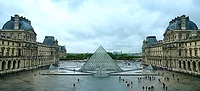
Several years ago, reminiscing at lunch with I. M. in his townhouse, I couldn't resist asking him the favorite child question. What is your favorite building? He thought for a long moment, then in the wisdom of his age, he replied, “The Louvre would have to be on that list…” No doubt a long list.
A great architect. A great legacy.
—Lo-Yi Chan
Ted Trussell Porter
Ted Porter Architecture
I got my job in the office by interviewing with Associate Partner Charles Young in 1984. At the time there were around 150 total employees. One day, after having worked for about three months without so much as seeing Mr. Pei—perhaps it was because it was the summer—I went into a meeting with our design team and the clients from JFK Airport. When Mr. Pei appeared at the meeting, he went around the room shaking hands and making small talk. When he got to me, he asked: “And young man, what do you do with the Port Authority?" Charles Young quickly interjected, “I. M., this is Ted Porter, he only started working last week in our firm.” To which Mr. Pei responded beaming: “Oh yes, we met while you were setting up your desk.” He was quick on his feet.
—Ted Trussell Porter
Abby Suckle
Abby Suckle Architects
I was hired at I. M. Pei and Partners for 6 weeks in 1982. I started on a Tuesday. I glued myself to my desk and tried to be as productive and useful as I could and became progressively more nervous for the next month and a half. When the day came, I dutifully packed up my desk and prepared to depart. The person sitting next to me asked me what I was doing and I sadly said that I was under the impression that my employment had come to an end. He said that someone would tell me when I was fired. Until then I should continue working. So I sat there for the next eighteen years waiting for the call.
In the meantime, I was indoctrinated into a fraternity which was cult-like in its devotion to design. It takes many people to make a building. I learned how to craft world class architecture from the best. What I. M. did, and he did it spectacularly, was to create a work family. We were a team. People would work there forever. No one seemed to care very much about their salary or the hours except wish that they were inverted and the higher one was lower and the lower was much higher.
At one point, Mike Vissichelli decided that 20 odd years there was enough and he needed a career change. He got a job at Philip Johnson’s office and we trooped off to Chinatown for a big lunch and gave him a watch with lots of speeches. That was Friday. On Monday morning he reported to his new firm. By noon he had called Eason Leonard our Managing Partner. By Tuesday he was back at his desk. I think he kept the watch.
Everybody knows about Harry Cobb and Jim Freed. But the cast was large, numbering as many as 300 people at times. There were families: the Woos, Wongs, Szetos, and Mushos. There were people who were experts in one aspect or another: Mike Flynn in curtain walls, Fritz Sulzer in hardware, Reg Hough in concrete. Rich to write the spec, and even George when we had the model shop, Peter when we did the graphics, Mimi to draw trees, Johnnie in the Plan room. And of course the engineers like Les Robertson. I got to work with them all.
It went without saying that everyone was very smart. No one thought it was the least bit weird if someone had a better design idea, we figured out how to make it happen. It didn’t matter whether it was 5 in the afternoon or 2 in the morning. No matter how small the detail or how low on the food chain the person proposing it was.
It might have been because we were organized by project and you worked on it cradle to grave. So you had a lot invested in its success.
When the building cost too much, I. M.’s idea of value engineering in those pre-CAD days was to take a 10’ triangular grid and reduce it to 9’7”.
It was considered perfectly normal to reinvent whatever product we needed for our buildings if nothing suitable existed on the market.
If our module required extra-long, seamless window shades in a color that perfectly matched our stone, I marched off to the factory and began rethinking weaving. No one even suggested that this was not the way it should be. Often the manufacturers incorporated our designs into their product lines after we had helped debug it.
I became an expert in logistics. I knew how to ship large fragile models to the far reaches of the planet and how to unpack them once they arrived and which Federal Express was open till 10. We commiserated a lot of course and soothed ourselves at the bar at the Four Seasons across the street where we could admire the reveals and the 19 handicap lifts that we had artfully incorporated into the lobby.
I grew very knowledgeable about Chinese food and culture. I learned about hairy crab season. I learned what to order in our favorite seafood restaurant in Chinatown.
I witnessed and played a role in some extraordinary things. When I worked on Meyerson Concert Hall in Dallas relatively early in my sojourn there were endless articles in the Dallas Morning News about the wisdom and expense of a concert hall downtown to anchor the arts district. At the end, the whole city took part in getting it opened. When I. M. toured the building in August, he looked at the Lobby and wondered where the restaurant was. Well it was simple. The City had never contracted with an operator and it was never built. So it fell to me over a 110 degree Labor Day weekend to create a Potemkin restaurant with travertine tables and everything we would have bought if we had the luxury of designing it. I. M. approved all the samples. It looked great and I think it lasted for about 10 years. Everything flipped the day the building opened. The rave reviews were unstoppable with critics gushing over the lush sound—the elegant space, couples even started booking it for their weddings.
There are usually three parties to a successful project: the client who wants it, the architect who designs it, and the contractor who builds it. It goes without saying that they all have to respect each other and like each other’s work. A lot happens over the course of the years it often takes to get something from a napkin sketch to its realization in life. It can be fairly expensive and stressful. I. M. was a master at navigating the players and inspiring them to make something extraordinary. To watch him sell “igloos to Eskimos” was to admire a pro in action.
There were some firms where many of the alumni became famous like Saarinen and OMA. Pei wasn’t like that. I often wondered why. When I met I. M. he was famous and, of course, I was young and not. But in the interim under his watch, I became an architect. And that is a gift that I got.
—Abby Suckle
Alexander Gorlin
Alexander Gorlin Architects
I worked for I. M. (as he was called in his office) twice, as a Yale student intern in 1979 and then as my first job after graduation in 1980 for two years. He became my role model and inspiration: I observed close up his interaction with projects, clients and employees.
In design, I saw that the same sketch could become furniture or a city master plan, that a strong concept was scalable from the micro to the macrocosmic size. Of course, in school one draws ideas at all scales, but to see a master architect actually build ideas that emerged as evocative hand sketches on old-fashioned yellow tracing paper was electrifying.
Fresh out of school, I thought I needed to master every technical detail and construction drawing before opening one's office, but as I. M. was to a great degree a celebrity, traveling often to get jobs and then starting the design of the project, it was clear that one could hire others to do what one was not an expert at doing. So I saw that the key to a successful office was to surround oneself with the best people for the execution of the project.
The most charming man on earth, I. M. convinced people to do it his way. At a meeting with clients, I saw I. M. deal with a difficult client by simply confounding him with contradictory body language. I. M. would smile and nod his head in agreement, while telling the client that absolutely this was the wrong idea! The client was so discombobulated that he acquiesced to Pei’s spoken point of view. It was simply an astounding performance.
Pei showed me one means of getting clients was by making oneself desirable and scarce, not unlike a romantic pursuit. I heard in the office about a legendary project in Chicago where the client asked Pei repeatedly to take the commission. I. M. said he was too busy or not interested. Then after a few months I. M. said that he may have time by stopping off in Chicago on his way to Shanghai. The clients were so overjoyed and thrilled that I. M. would grant them an audience that they signed him up immediately.
—Alexander Gorlin
Lorcan O’Herlihy
Lorcan O’Herlihy Architects
Working with I. M. Pei & Partners on the Louvre was a profound experience for me at the beginning of my career. I will always remember I. M.’s bright, welcoming smile when he entered a room, and how he would give his time and comments to the young aspiring architects on the team. This experience and the brilliance of his design have always resonated with me.
—Lorcan O’Herlihy
Michael Speaks
Dean of the School of Architecture at Syracuse University
I. M. Pei was one of the most important architects of the second half of the Twentieth Century. Significantly, he was also a truly global architect, with commissions all over the world. Among the many remarkable buildings that he designed, there are two here in Syracuse: Newhouse Communications Center 1, on the campus of Syracuse University, completed in 1964, and the Everson Museum, in downtown Syracuse, completed in 1968. The Everson Museum just celebrated its fiftieth anniversary. Referring to the four cantilevered forms of varied sizes arrayed in the shape of a pinwheel, Progressive Architecture, in a 1962 editorial feature on Pei, proclaimed the building to be 'a piece of abstract sculpture placed within a civic plaza setting—the sort of sculpture to house sculpture, one might say—a work of art for other works of art.' Indeed, the Everson was Pei’s first museum commission and among his best works overall. And that is perhaps because it was so purely and definitively a work of art dedicated to the display and exhibition of works of art.
—Michael Speaks
Robert Heintges
Heintges
I am only one of the many architects who have been and will be forever grateful to I. M. and the wonderful firm he built for our formative years as architects, and ultimately for the inspiration to strike out on our own. When, early in 1989 after over 15 years with the firm, I worked up the courage to speak with I. M. about my plans, I was surprised at his immediate reaction of encouragement and support. He said, “…Bob, you should do this…you are doing the right thing and it is the right time…I will be doing the same thing…” I had no idea what he meant at the time, but as we now know he was soon to retire. I. M.’s subsequent generosity and support, hiring us to complete work on the Bank of China curtain wall and then recommending us to numerous new clients, were largely responsible for the success of my new firm.
—Robert Heintges
Kathy Ogawa
Ogawa/Depardon Architects
I was lucky to have worked for I. M. Pei for many years early in my career. He had a profound influence on my professional life as an architect. When working on the design team for the German Historical Museum in Berlin, I imagined he visualized space through a wire frame of primary shapes and intersecting geometric volumes! I learned from his pure and intuitive approach to design and his strict adherence to the rigor of applying geometry to his architectural visions.
—Kathy Ogawa
Looking for a reprint of this article?
From high-res PDFs to custom plaques, order your copy today!