Tank Shanghai by OPEN Architecture
Shanghai
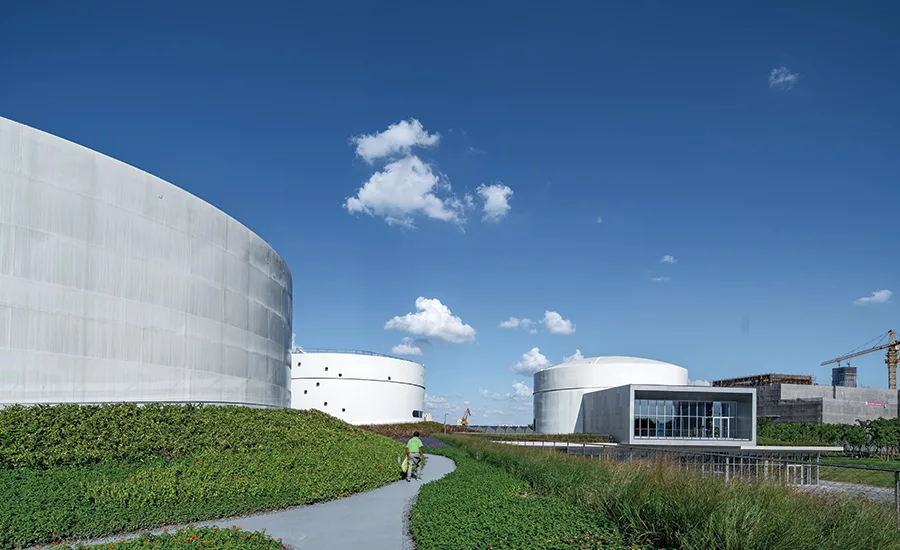
Photo © Wu Qingshan
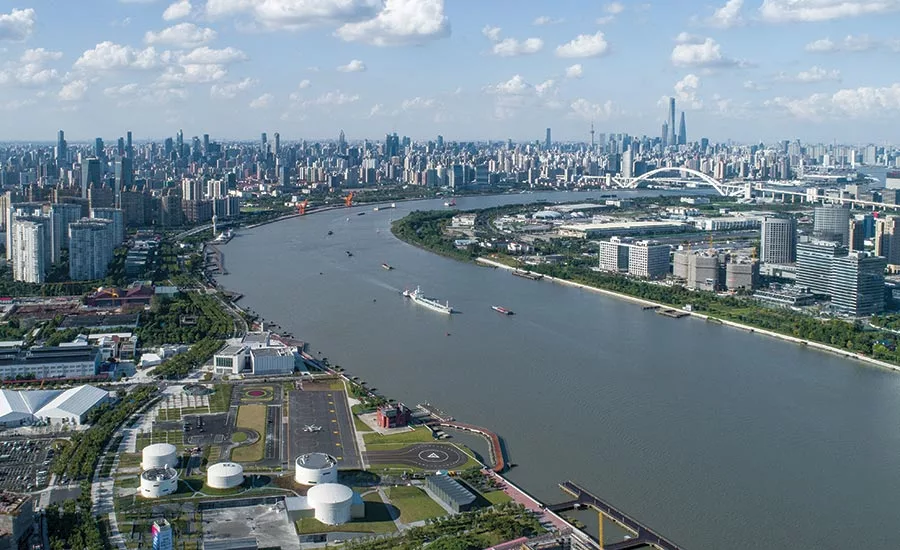
A compound of five tanks that once stored aviation fuel has been turned into a park and cultural center on the outskirts of Shanghai, where a large open plaza unites the group. Inside, each of the tanks offers different functions, including art display and performing arts.
Photo © Wu Qingshan
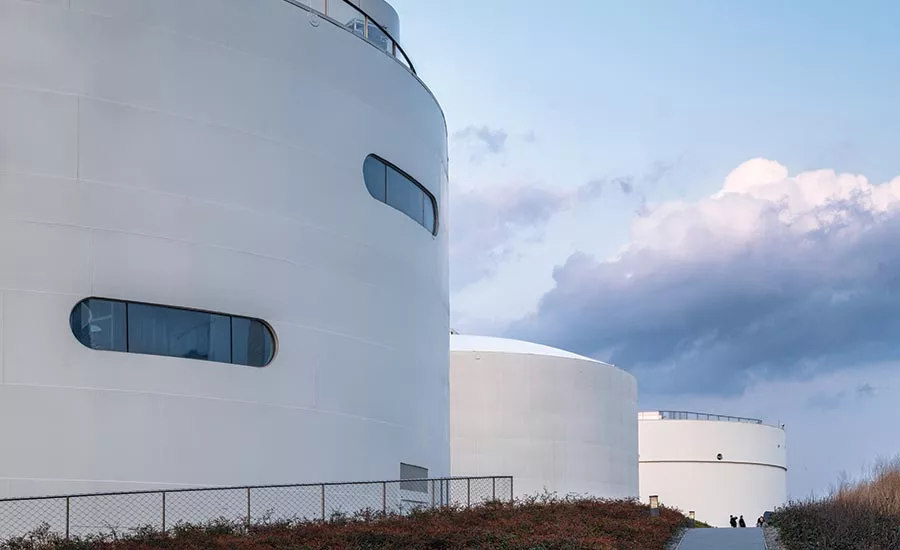
Rolling landscapes, which OPEN Architecture refers to as a “super surface,” unite the complex and take visitors on various paths with views.
Photo © Wu Qingshan
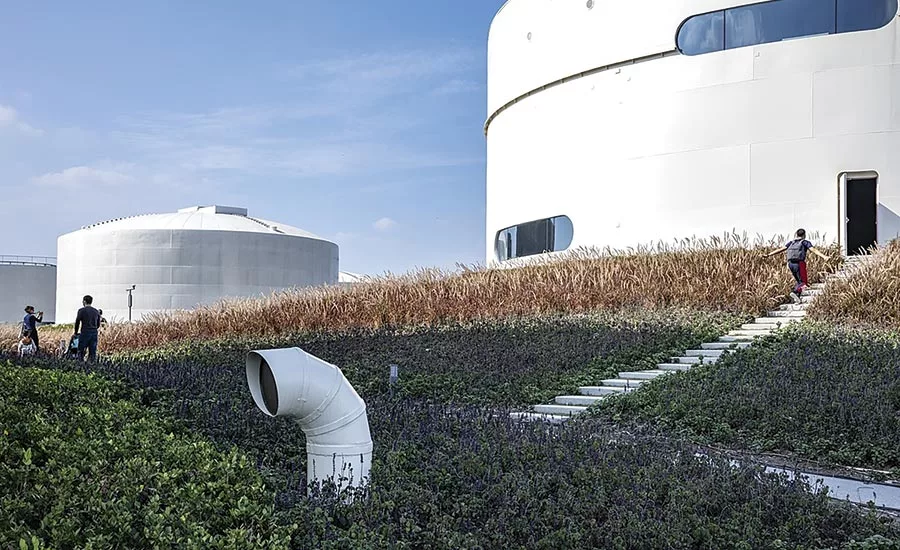
Rolling landscapes, which OPEN Architecture refers to as a “super surface,” unite the complex and take visitors on various paths with views.
Photo © Wu Qingshan
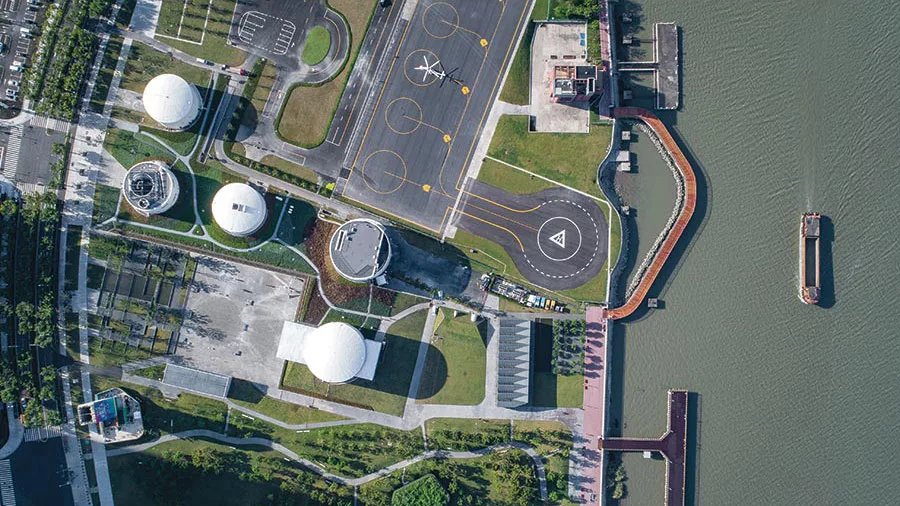
The 12-acre site sits at the edge of an unused airfield, where open space around the fuel tanks now features gardens, a stepped waterfall, and an urban plaza.
Photo © Wu Qingshan
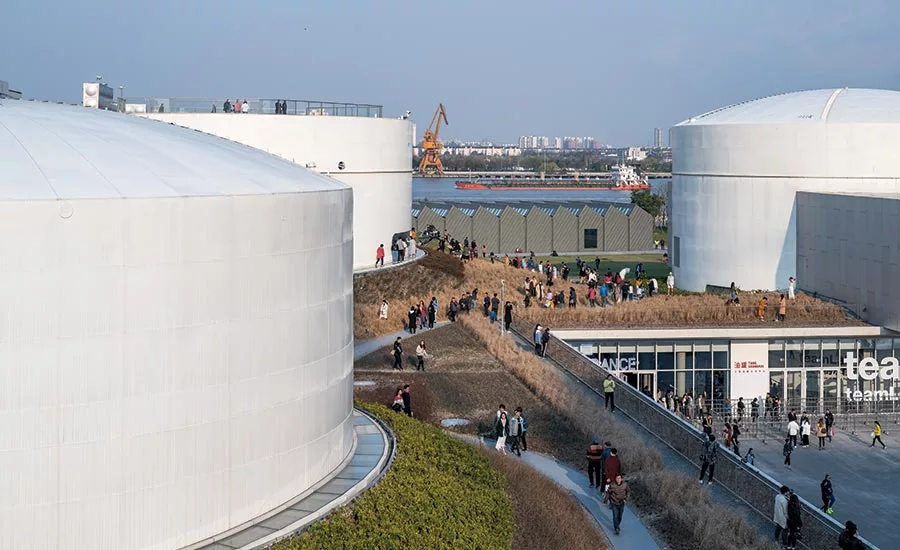
A rectilinear underground space, covered in planting, connects the various tanks and brings visitors to the serrated roof of the project space.
Photo © Wu Qingshan
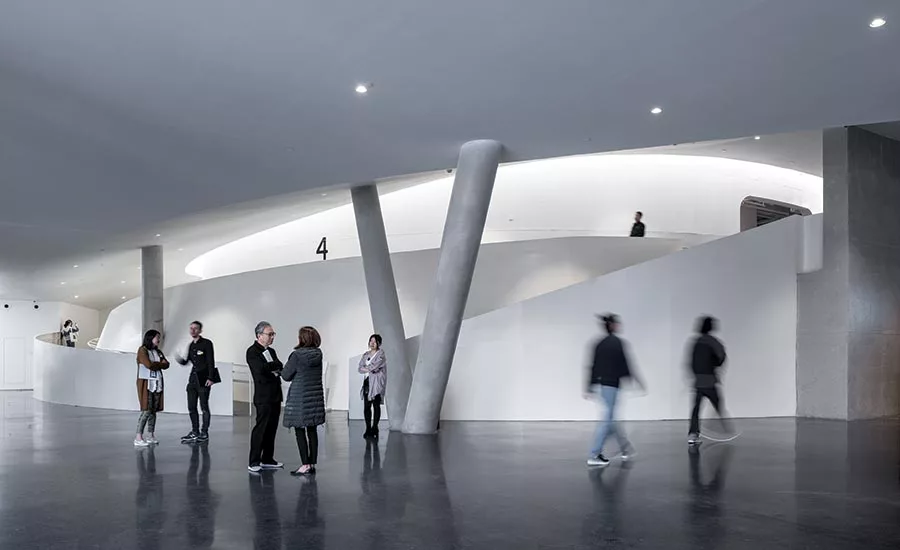
The architects designed circular ramps to lead from the lobby to display space in Tank 4.
Photo © Wu Qingshan
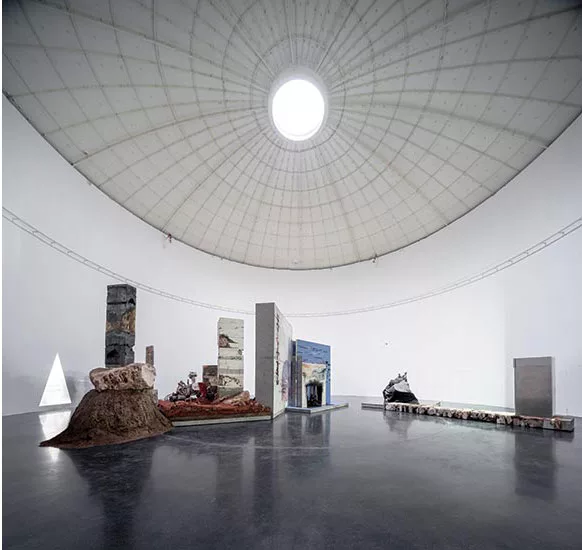
The art gallery in Tank 3 occupies a central space that is daylit by an oculus.
Photo © Wu Qingshan
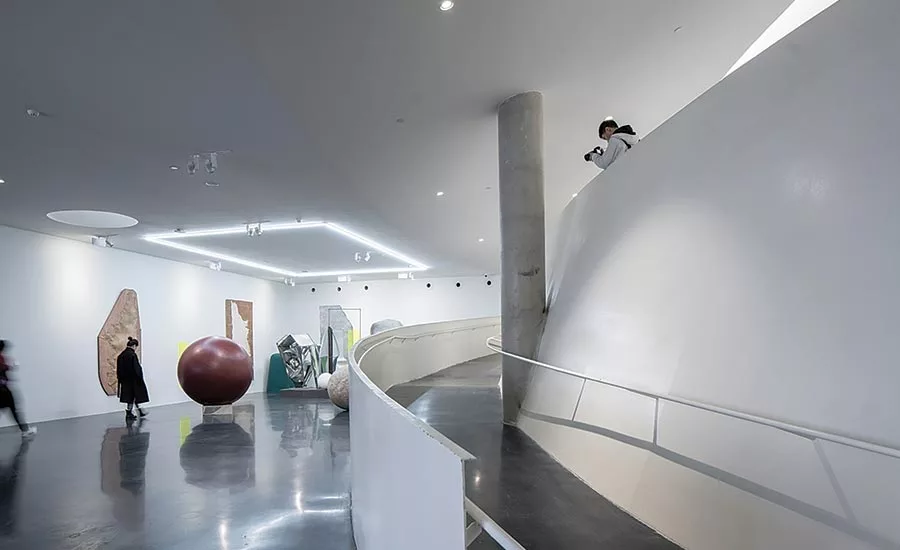
Other residual spaces display art, with vantage points increased by spiraling ramps.
Photo © Wu Qingshan
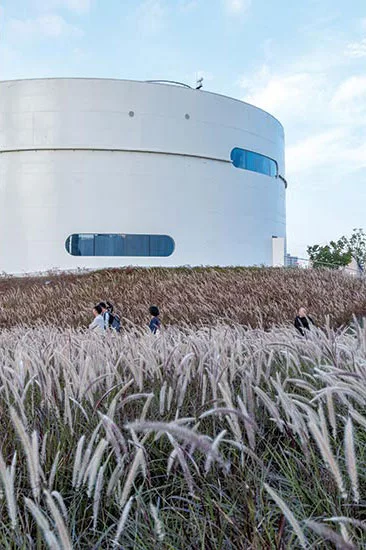
In some tanks, the architects inserted bands of glazing in the walls to allow views of the park.
Photo © Wu Qingshan
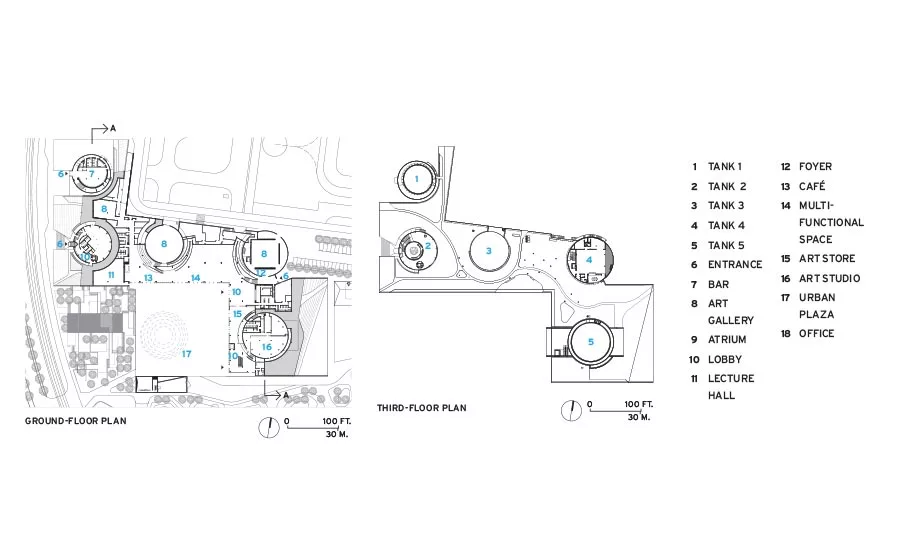
Image courtesy OPEN Architecture
Architects & Firms
In the last six years, 12 acres of land on the banks of Shanghai’s Huangpu River, where five cylindrical metal tanks once stored aviation fuel, have been transformed into a park and culture complex. Now called Tank Shanghai, the ambitious endeavor, which opened in March, is about a half hour’s drive from the downtown.
Additional Content:
Jump to credits & specifications
In 2013, the Shanghai West Bund Development Group, a local government unit, hired Li Hu and Huang Wenjing of Beijing’s OPEN Architecture to design and build the project. The result features 645,800 square feet of gardens, pavilions, plazas, and underground halls (for multiuse functions and mechanical rooms) that connect the five structures. Inside the giant industrial vessels, OPEN Architecture inserted galleries, dining areas, a music club, and event spaces, among other facilities.
“The unique grouping presented so many possibilities” says Qiao Zhibing, one of China’s most prominent contemporary-art collectors and the cultural impresario chosen by West Bund authorities to operate the programming at Tank.
Since the site is zoned as an urban park, new building above ground was limited. What is now Tank’s main entrance on Longteng Avenue was the edge of Longhua airfield, one of Shanghai’s main airports from 1922 to 1966.
The once-restricted zone controlled by the Chinese military needed to become attractive and accessible. OPEN’s cofounder and principal Li took inspiration from Frederick Law Olmsted, best known for designing Central Park and other urban parks in late 19th-century America. He notes, “The essence of Tank is about inviting people into a space to be enjoyed by everyone.”
In order to accomplish this goal, the architects created a system of rolling landscapes (which they call “super surface”) around the former fuel tanks, to offer multiple means for walking and viewing the park to those who enter the grounds, free of charge. For example, a phalanx of neatly planted Wingleaf Soapberry trees draws visitors to a paved lane ending at the Huangpu River. Concrete paths cut through undulating lawns and flowering plants to lead up to a rooftop observation point, or to a pavilion.
Art is very much a part of the Tank’s identity. The gardens are dotted with large sculptures such as those by Danh Vo, which in turn point toward the sunken plaza where a row of full-length glass doors welcomes a paying public to indoor exhibitions (which do charge admission).
Tanks 1 and 2, which have street entrances, have been refitted to become a restaurant and a performing-arts venue. Tanks 3 and 5 are converted to galleries for painting and sculpture and retain the original round configuration; the architects designed spiraling ramps and staircases encased in painted metal walls to provide dramatic entries to those areas. In Tank 4, OPEN built a multistory steel- frame cube to house Qiao’s office plus entertainment spaces, as well as halls that have permanently flat walls suitable for more conventional art display. In the rectilinear underground halls connecting the tanks, reinforced-concrete columns, placed about 30 feet apart, support the concrete roof and the expanse of greenery above.
Li, a former partner in New York at Steven Holl Architects, trained at China’s elite Tsinghua University in Beijing, then did graduate studies at Rice University in Houston.
Upon returning to China in 2008, Li led Holl’s Beijing office for two years, until 2010. Then he and Huang (the Princeton-educated OPEN cofounder, who is also his wife) focused solely on OPEN, working on a number of government- related buildings for cultural and educational uses. He says that this experience has taught him about the need to be flexible when working in China. “I like projects without a very clear brief,” Li says.
For his part, Qiao says he is pleased to see families visiting Tank on weekends. The opening show featuring interactive works by Team Lab, the Japanese multimedia collective, brought some 220,000 visitors to Tank in its first three months, an achievement, considering the distance from downtown. “Tank is like a city, always transforming itself. The gardens grow and change,” says Li.
The master plan for Tank projects the possibility of ferries’ bringing guests from downtown along the river to the cultural compound’s docks so they wouldn’t have to deal with Shanghai’s notorious traffic.
At the moment, getting to Tank means a walk of a few blocks from a subway station or driving to the entrance on Longteng Avenue, a wide boulevard lined with cranes and heavy equipment for the rising headquarters of several Chinese technology companies. On Tank’s waterside edge, the Pudong financial district’s shiny new skyscrapers loom in the distance.
Facing the river, an extensive construction site borders the Tank complex on one side, while on the other is an airfield for helicopters— perhaps one day the vehicle of choice for the country’s tech tycoons living and working in West Bund. Like Olmsted’s urban parks, Tank Shanghai could well become a space for local residents and serve as a destination for the larger city. More important, the scheme successfully continues a trend seen in other urban areas where gigantic storage containers of this kind have become outmoded.
CreditsArchitect: OPEN Architecture — Li Hu, Huang Wenjing, principals in charge; Ye Qing, Luo Ren, Victor Quiros, Zhou Tingting, Chen Xiuyuan, Li Zhentao, Zhao Yao, Lui Ki, Jia Han, Zhang Yiwen, Steven Shi, Zhou Xiaochen, Huang
Local Design Institute: Tongji Architectural Design Group
Consultants: Beijing EDSA Orient Planning & Landscape Architecture (landscape design); Shanghai Ming Chi Architecture and Engineering (lighting)
Size: 12 acres (site); 117,000 square feet (tanks)
Cost: withheld
Completion date: March 2019 |
SpecificationsLighting fixtures Hongri Lighting; Flos
Elevators and escalators Mitsubishi Elevators
Exterior zinc panels VM Building Solutions
Bathroom fixtures Kohler
Hardware Armor
Exterior coating Zhejiang Tiannu Paints
Epoxy terrazzo flooring China SRS Flooring |
Looking for a reprint of this article?
From high-res PDFs to custom plaques, order your copy today!