A Second Look at Edith Farnsworth and Her Mies van der Rohe–Designed Retreat
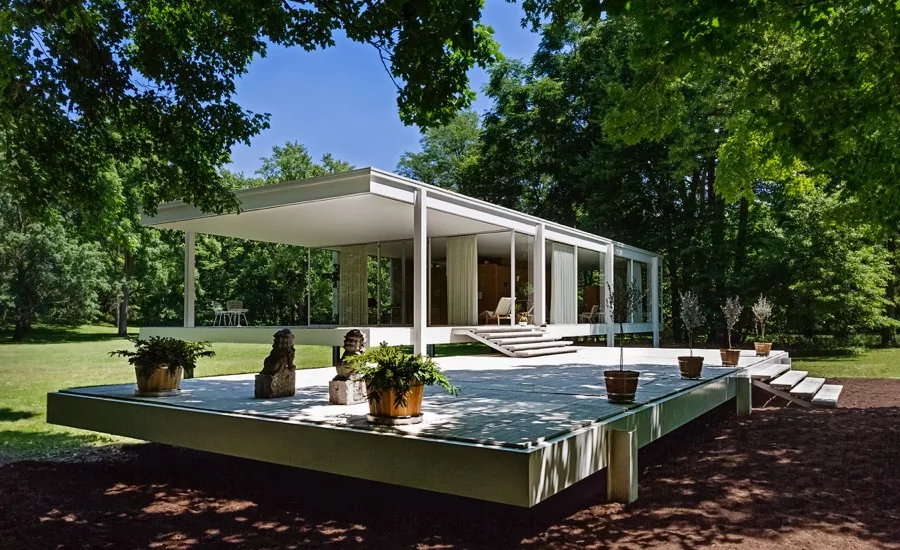
The Farnsworth House, photo © William Zbaren
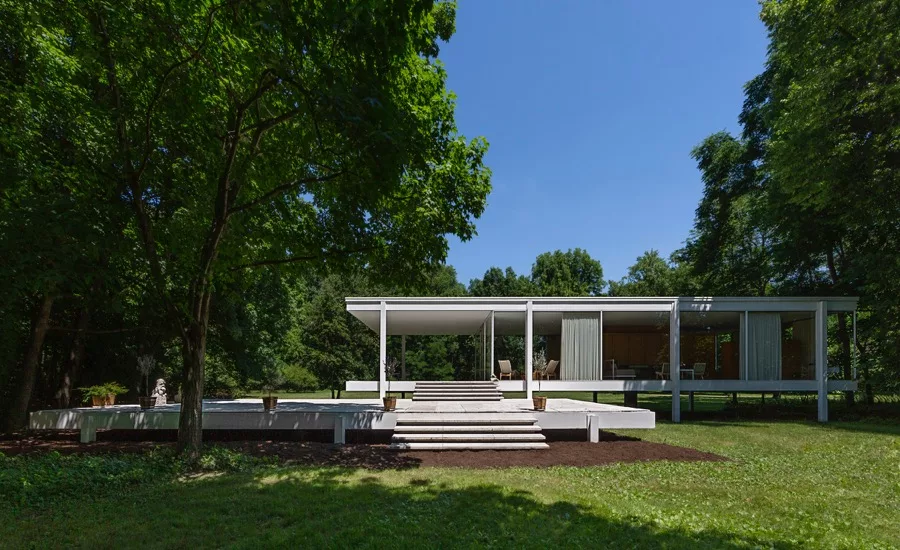
The Farnsworth House, photo © William Zbaren
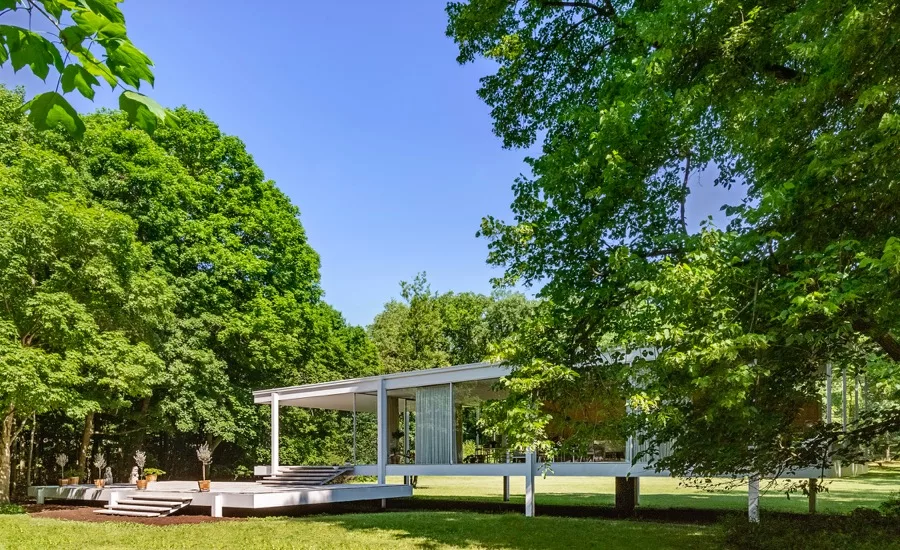
The Farnsworth House, photo © William Zbaren
Architects & Firms
During a visit to the latest exhibition at Mies van der Rohe’s Farnsworth House in Plano, Illinois, visitors are more likely to encounter a deer (as this writer did) than a single Mies-designed Brno Chair.
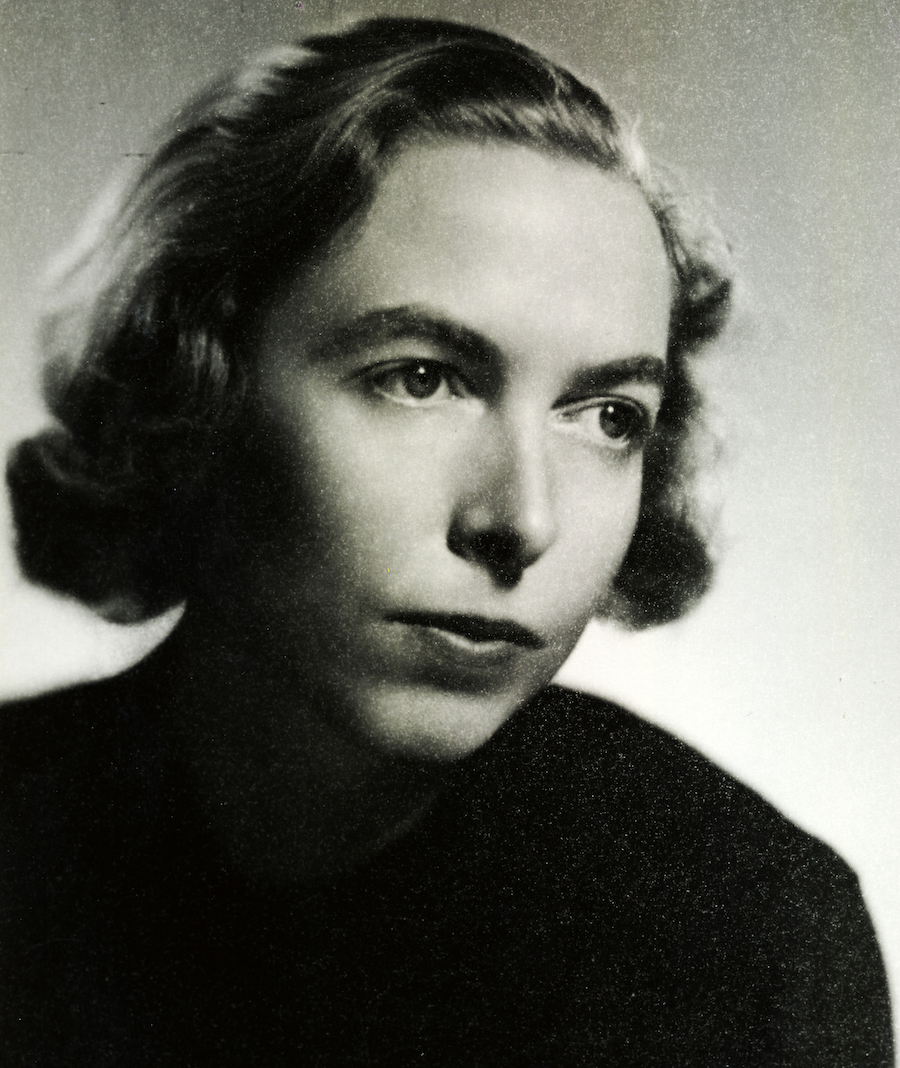
That’s because the year-long, multi-part exhibition called Edith Farnsworth Reconsidered unfolds across nearly 60 acres of forest and riverfront land, focusing on one of the most famous Modern architecture clients in history. At the heart of the show is a restoration of the house as the original owner, Edith Farnsworth, had it furnished circa 1955: with not a single piece of Mies’ work apart from the glass, steel, and travertine house itself.
Mies conceived of the house as a weekend home for Edith, a medical research scientist who developed groundbreaking treatments for kidney disease, and also a polymath classically trained violinist, poet, and translator who staked out a literary career late in life. It was completed in 1951, and was a getaway from her Chicago home till 1969. She sold the house to Lord Peter Palumbo in 1971, the globe-trotting collector of canonical architecture. A year later Palumbo hired Dirk Lohan to restore it to its 1951 appearance, and in 2003, the National Trust for Historic Preservation purchased it, opening it to the public for tours.
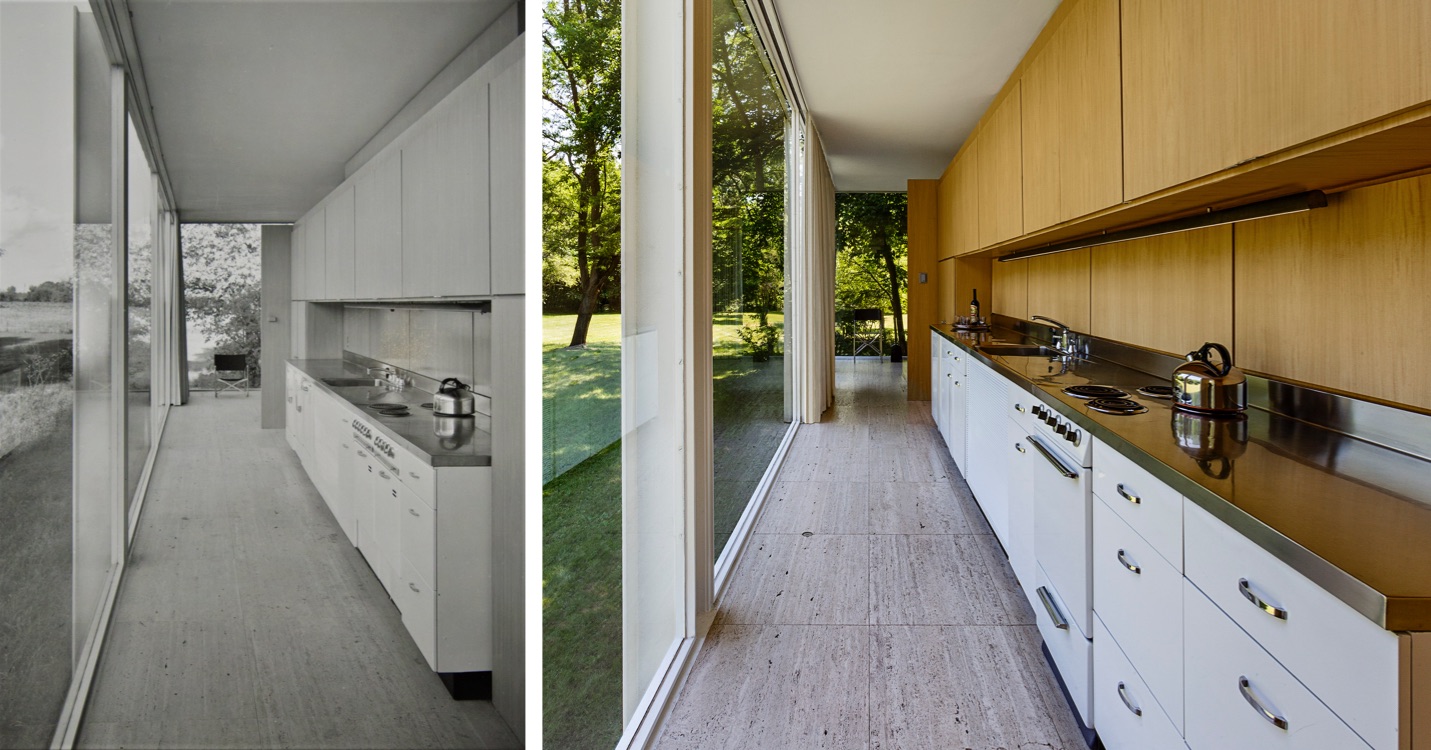
Two small sub-exhibits illuminate this history. An Untold Story: Farnsworth to Palumbo, 1968-1972, on view through September 6 and curated by T. Paul Young, explores the house’s construction and traces its transition from Edith’s stewardship to Palumbo’s. And in the visitor’s center, biographic and interpretative materials, up through December 2021, shed light on Edith’s exceptional life story.
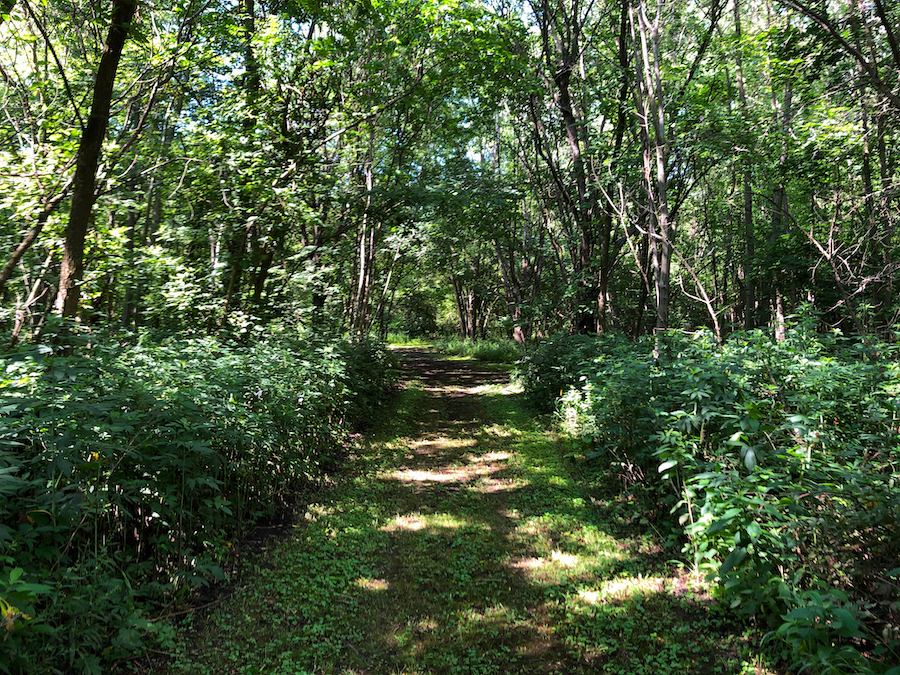
Per coronavirus precautions, the Farnsworth is inviting visitors to linger in the landscape for the first time. Picnic tables and park benches (with complimentary bug spray on hand) are now sprinkled throughout the site’s 2.5 miles of trails, and there’s Wi-Fi for self-guided tours and leisurely browsing. (The house re-opened for guided tours July 1). Alfred Caldwell, Mies’ soulful landscape guru at IIT, supplied Edith with gardens, orchards, and juneberry trees, few of which are left. But along the trails, there’s a strong sense of enclosure under the forest canopy, which is certainly more opaque than Mies’ house. The new arrangement is an opportunity to “reconnect with the land," says Farnsworth House Executive Director Scott Mehaffey. “We have a one-room house on 58.5 acres. Where’s the greater potential?”
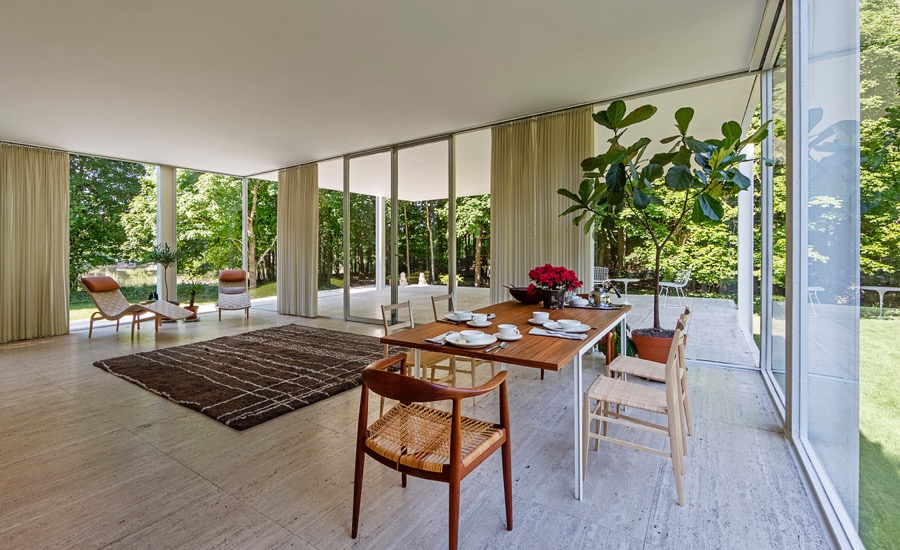
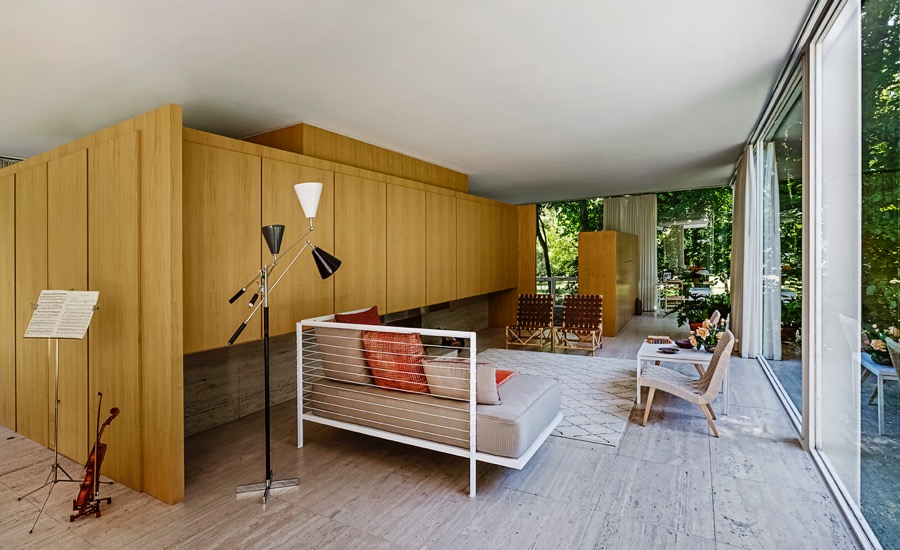
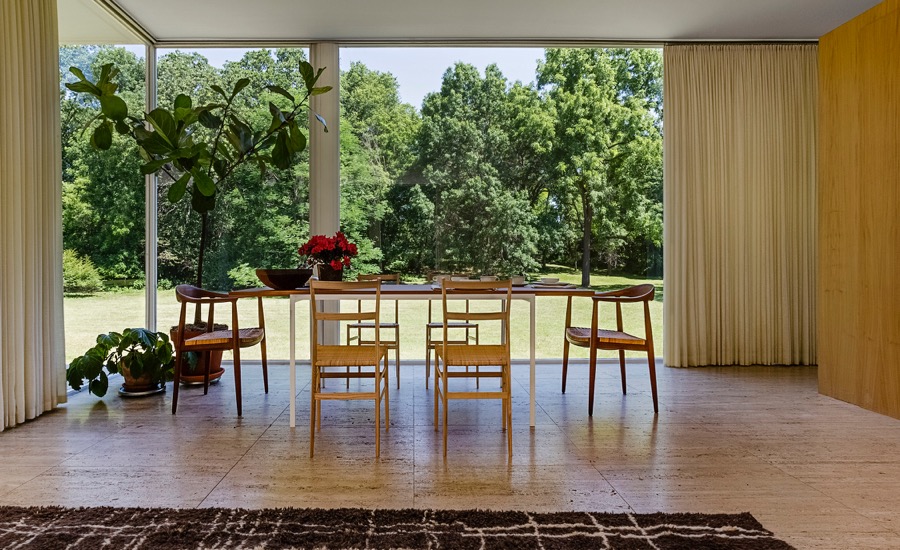
The collection of furniture, dubbed Edith Farnsworth’s Country House, was selected by Mehaffey, with assistance from Robert Kleinschimdt. The installation presents a return to Edith’s more genial and humble take on the residence. Since 1972, Palumbo intended his Farnsworth to be a museum; a Mies showcase with plenty of attention to detail but little historical fidelity to what the house was. With the Country House iteration, Mehaffey wanted to present the house as a lived-in and intimate residence, true to the house’s origins when Edith moved in, if not its place in the architectural imagination. “This was her weekend house. There were stacks of books and magazine. There was dried dog vomit,” says Mehaffey. “We didn’t go that far.” But they did include her medical bag, her Olivetti typewriter alongside copies of her poetry that Farnsworth House staff re-typed, and her violin.
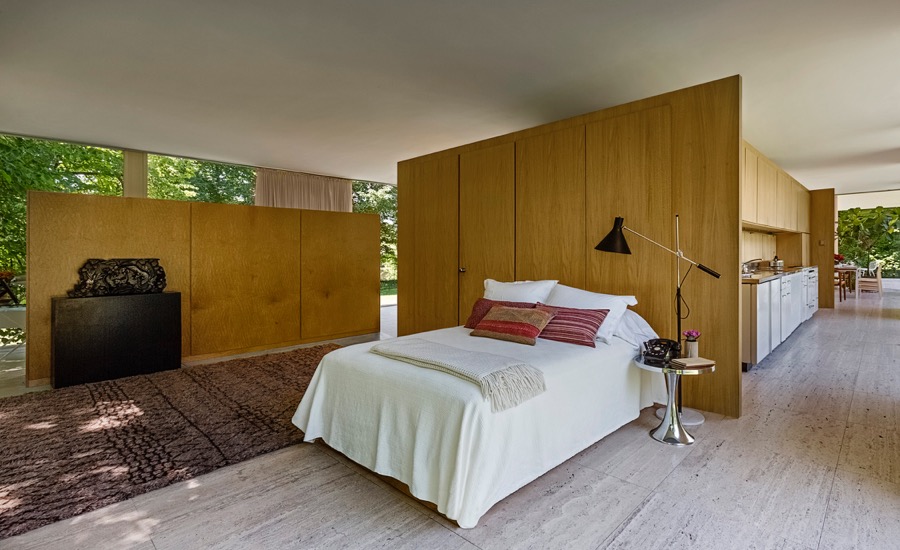
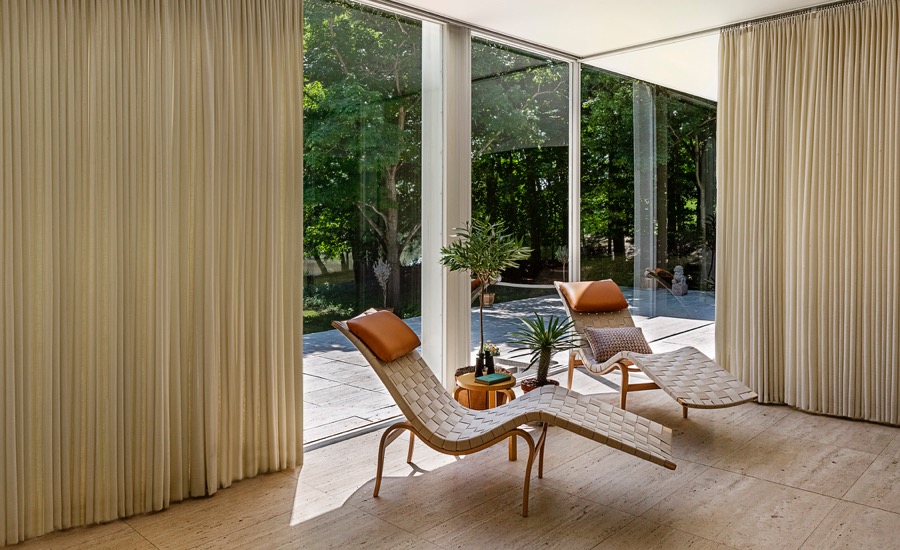
Inside the steel and glass one-room house, there’s the joy of running your toes over opulently wooly Moroccan rugs. It’s a complimentary material opposition that thrives on the crystalline austerity of the house, but was absent the in the house’s previous Mies-furnished, Palumbo-led incarnation. Scandinavian furniture predominates, with woven fabric straps binding together Jens Risom and Bruno Matthson chairs. (Edith rejected Mies’ furniture out of hand as too ponderous and masculine, though Mies did try to sneak in a pink Barcelona Chair.)
Looking for quick answers on architecture and design topics?
Try Ask RECORD, our new smart AI search tool.
Ask RECORD →
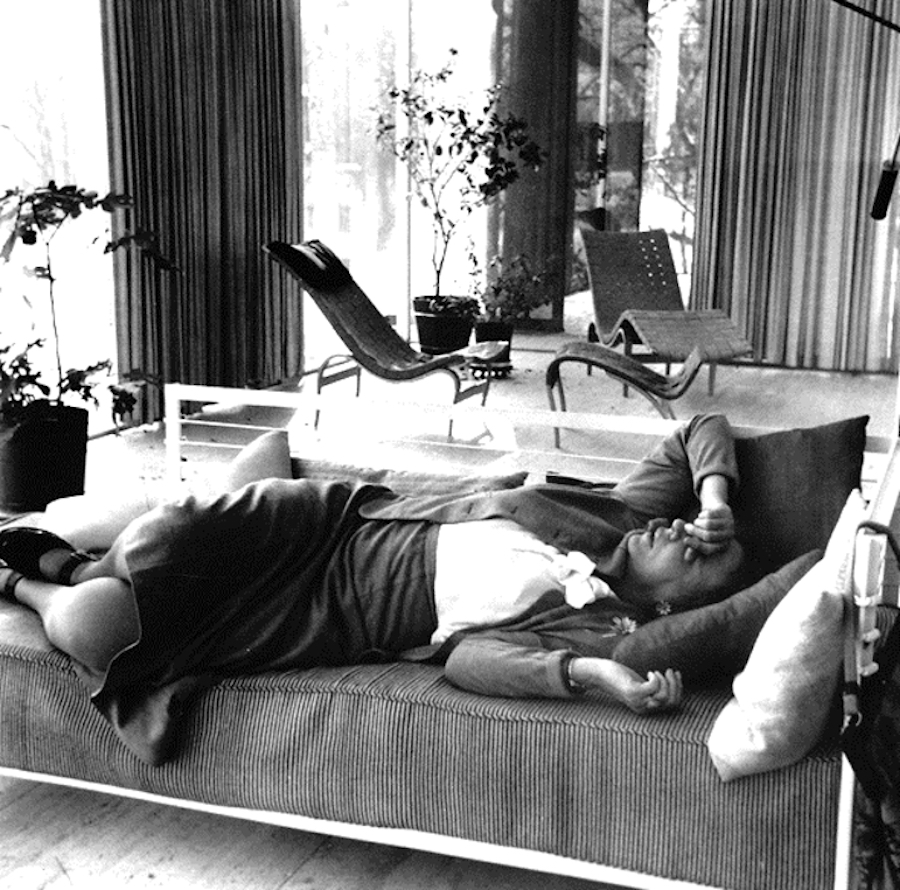
The project had Mehaffey looking through old photos and emailing Modern furniture experts across Europe to identify, source, and if necessary, reverse engineer and reconstruct items. He traced the likely design lineage of Edith’s daybed back to Harry Weese, and made the fabric straps on a pair of bamboo and rattan chairs himself.
It’s altogether a warmer and more humane place now than it was under Palumbo’s care, when spans of travertine threatened to swallow you up. Edith wrote that she often felt like a caged animal on display in the house, and even her predilection for Scandinavian proto-hygge couldn’t quite bridge that gap. By focusing on her vision of how to make the house livable, the curators return agency to a worldly scholar who became more of a passive observer to her place in architectural history. It’s common knowledge that Mies and Edith had a bitter falling out that ended with 4,000 pages of litigation transcripts; a soured affair between the two was suspected as the reason why. But it’s less well known that this supposition is mostly the result of third-hand guesses and innuendo: Mies biographer Franz Schulze introduced it in 1985 with the caveat that he had no proof.
This narrative, according to architecture scholars Nora Wendl and Alice Friedman, enveloped Edith and her house, rendering her another object in Mies’ glass menagerie. Her writing, in both poetry and prose, is as clarifying and articulate as Mies’ architecture, and it never mentioned an affair. Wendl’s scholarship—as well as critical research by Friedman, who was the first to balance the historical record with Edith’s own memoirs—found more evidence for an intense and emotionally intimate friendship than for a torrid entanglement. Early on in her partnership with Mies, Edith enthused that the project was “marvelous because it fulfilled my ideal that persons trained in different fields of the arts and sciences should seek to understand the ideals and the principles common to all fields in advancement, and to lend their loyalty and support.” One can see evidence of her confidence and thirst for knowledge all over her house, even beyond her conventionally excellent design sense. Edith may well have wanted Mies as an intellectual partner instead of a romantic one. “Perhaps it was never a friend and collaborator, so to speak, that [Mies] wanted, but a dupe and a victim,” she wrote later, after the pair's falling out.
A degree of sadness seems to underpin Edith’s time at the house. In an issue of the MIT architecture journal Thresholds (PDF), Wendl writes that Edith was looking for sanctuary along the Fox River; a reprieve from a world that looked askance at her for stepping outside of the compulsory roles and wife and mother, instead choosing the path of a self-actualized professional. Her initial impulse, Wendl writes, was to “create a significant and meaningful work of architecture that resonated with her own desires for finding a place in a world that had defined her as simply: Edith Farnsworth: An Unmarried Woman.”
It’s bitterly ironic that the sanctuary she founded was not truly for herself, but for legions of Mies devotees in thrall to her insensitive collaborator. Fanning out from the Farnsworth House, these acolytes have propagated the International Style everywhere, making it the dominant historical context in the Western World. Which asks the question: why bother putting all the Mies furniture back? There are already plenty of Barcelona stools in showrooms and galleries. But there are precious few examples of people outside of this narrative, dispossessed of their own story, bending this architecture to work for them and being celebrated for it.
Looking for a reprint of this article?
From high-res PDFs to custom plaques, order your copy today!