Architectural Record
search
cart
facebook twitter linkedin youtube
  • Sign In
  • Subscribe
  • Sign Out
  • My Account
Architectural Record
  • NEWS
    • Latest News
    • Awards
    • Interviews
    • Obituaries
    • Podcasts
      • Design:Ed Podcast
      • Sponsored Podcasts
  • OPINION
    • Book Reviews / Excerpts
    • Exhibition Reviews
    • Forum
  • EXCLUSIVES
    • Videos
    • Design Vanguard
    • Top 300 Firms
    • Sponsored Content
    • Sponsored eBooks
    • From the Archives
  • CONTINUING ED
    • Editorial Continuing Ed
    • CE Center
    • CE Academies
  • PROJECTS
    • Buildings By Type
    • Reuse & Renovation
    • Museums & Arts Centers
    • Colleges & Universities
    • Multifamily Housing
    • Interiors
    • Lighting
    • Kitchen & Bath
  • HOUSES
    • Record Houses
    • House of the Month
    • Featured Houses
  • PRODUCTS
    • Products by Category
    • Record Products of the Year
    • Latest Products
  • EVENTS
    • Dates & Events
    • Record on the Road
    • Innovation Conference
    • Sustainability in Practice
    • Women In Architecture
    • Webinars
    • Ad Excellence Awards
    • Submit an Event
  • CONNECT
    • Ask RECORD AI
    • Newsletters
    • Contact
    • Advertise
    • Editorial Calendar
    • Store
    • Customer Service
  • SUBMIT
    • Submission Guidelines
    • RECORD Competitions
  • MAGAZINE
    • Subscribe
    • My Account
    • Digital Edition
    • Current Issue
    • Firm Pass
    • Historic Archive
Architecture NewsOpinion

Review of 'My House Is Better Than Your House'

By Nader Tehrani
By Stella Betts
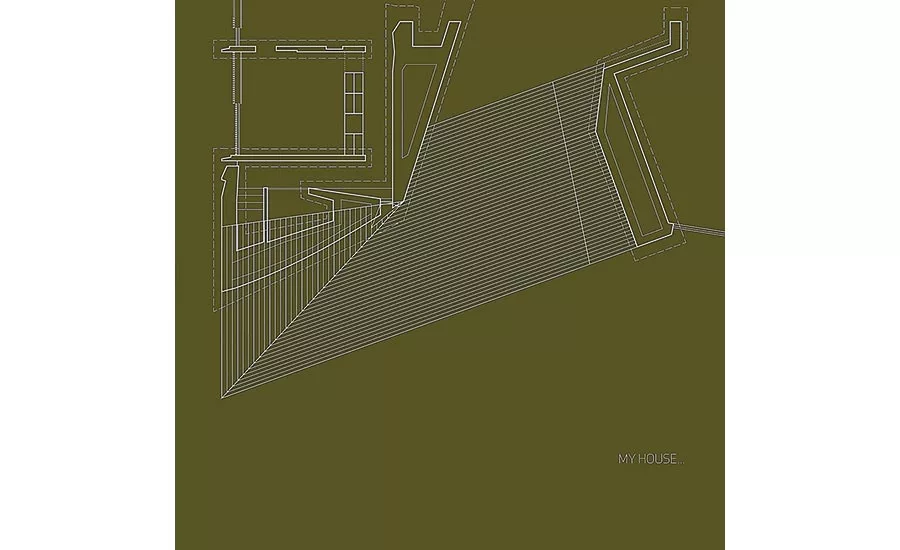
My House is Better Than Your House.

My House Is Better Than Your House, by Nader Tehrani; introduction by Robert Levit. ORO Editions, 120 pages, $34.95.

April 7, 2021
✕
Image in modal.

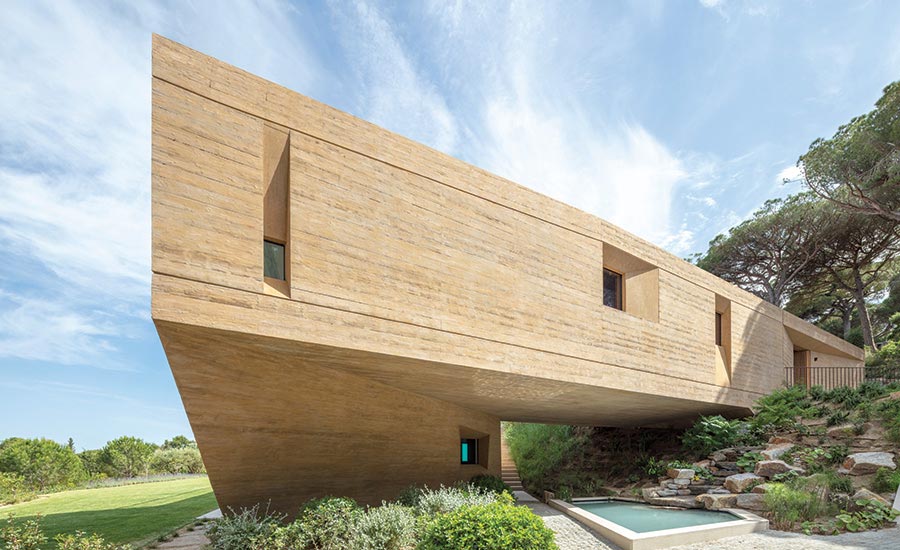
The question of what defines “better” hovers over the tongue-in-cheek title of this book, My House Is Better Than Your House, which focuses on a private residence in southern France, the Villa Varoise, designed by Nader Tehrani of NADAAA. The Villa is primarily in conversation with the unbuilt Fahmy House, by Preston Scott Cohen. But, in fact, the conversation is “dedicated” to a series of unbuilt early houses with complex geometries Cohen designed—the Torus House and Wu House included—to which Tehrani’s approach to form-making comes close with this project. At first glance, the exercise may seem insular, yet a deeper reading reveals that the betterment in the title is an effort to engage in a debate about design at a truly disciplinary and tectonic level.
Villa Varoise.

Villa Varoise in southern France, designed by Boston-based NADAAA. Photo © John Horner, click to enlarge.

The structure of the svelte, soft-bound volume is as instructive as the description of the Villa itself. The main text, running down the center of the left-hand pages and flanked by small images relating to that text, transcribes an event at Harvard’s Graduate School of Design on April 16, 2012, the format of which was unconventional: Cohen presented the house designed by Tehrani, and Tehrani presented those by Cohen. Cohen and Tehrani are longstanding colleagues and friends, who for many years have been engaged in a candid dialogue, and a spirit of brutal honesty pervades. “We have a rare relationship,” says Cohen. “He will tell me exactly what is wrong with what I am doing, and I will tell him what I think is wrong with what he is doing.”

With its conversational tone, the exchange captured in the book manages to complement the images and drawings more successfully than is usual in a conventional monograph. The dialogue goes beyond a comparison of the houses and leads to discussions of the typology of the house itself. By doing so, it transcends the conceit of dueling dwellings, opening up a larger discourse on the practice of architecture. But it’s a fun read—both light and serious.

Included in the book is an essay by Robert Levit, associate dean of architecture at the University of Toronto. He writes specifically about Tehrani’s practice, both past and present, and “what [Tehrani] has described as the relationship between figuration and configuration.” Levit explains this as the difference between building parts (the material components that make up the structure) and the overall shape of the building. In the case of the Villa Varoise, the distinction has been blurred due to the nature of cast-in-place board-formed concrete, creating a house more reductive, singular, and pure. This, as Levit and Cohen both note, is a slight deviation from Tehrani’s other work, in which the modularity and manipulation of the building material is expressed in the plastic form-making of the building itself.

The art of this book is that it can be enjoyed on several levels. It is a deep dive into the design process and the meticulous execution of one single house, and its surrounding landscape, taken from initial concept and site strategies through drawings, diagrams, models, and construction details. (Photos of the built structure, completed last year, occupy the book’s right-hand pages, opposite the text.) But the book is also a manifesto—a reminder to all of us that as architects it is “our responsibility to change the status quo . . . to motivate the discipline, and produce not novelty, but innovation.” If you manage that, then the results of the design process just may be “better.”

Looking for quick answers on architecture and design topics?
Try Ask RECORD, our new smart AI search tool.
Ask RECORD →

KEYWORDS: Book Reviews / Excerpts

Share This Story

Looking for a reprint of this article?
From high-res PDFs to custom plaques, order your copy today!

Stella Betts is a founding principal at LEVENBETTS, and the author of Thirteen Ways of Looking at a House, with her partner, David Leven.

Post a comment to this article

Report Abusive Comment

Subscription Center
  • Create an Account
  • Start a Subscription
  • Manage My Account
  • Sign Up for Newsletters
  • Visit Customer Service
  • Update Preferences

More Videos

Sponsored Content

Sponsored Content is a special paid section where industry companies provide high quality, objective, non-commercial content around topics of interest to the Architectural Record audience. All Sponsored Content is supplied by the advertising company and any opinions expressed in this article are those of the author and not necessarily reflect the views of Architectural Record or its parent company, BNP Media. Interested in participating in our Sponsored Content section? Contact your local rep!

close
  • TAMLYN XtremeTrim Exterior Trim
    Sponsored byTamlyn

    Designing Cleaner Panel Facades: Why Exterior Trim Details Matter

  • Building with Vapor Barriers
    Sponsored byReef Industries, Inc.

    Vapor Barriers Help Control Moisture in Tighter Building Designs

  • Duct Interior with Prodeq System
    Sponsored byHenry, a Carlisle Company

    Designing Resilient Water Containment Systems

DESIGN:ED Podcast
Listen to Architectural Record’s DESIGN:ED Podcast

Events

June 10, 2026

Rethinking Stormwater – The Power of Porous Paving

Credits: 1 AIA LU/HSW; 1 AIBD P-CE; 0.1 ICC CEU

Learn how porous paving systems support stormwater management, reduce heat island effects, and enhance sustainable site design performance.

June 11, 2026

Very Early Warning Fire Detection for Mission-Critical Facilities

Credits: 1 AIA LU/HSW; 1 AIBD P-CE; 0.1 ICC CEU

Examine advanced fire detection strategies that support uptime and enhance safety in data centers and other mission-critical facilities.

View All Submit An Event

Products

2026 Architect's Square Foot Costbook

2026 Architect's Square Foot Costbook

See More Products

Popular Stories

Coronado Bridge

The Architect’s Guide to San Diego

Practice Matters illustration

What’s in a (Firm’s) Name? Thinking About Succession and Legacy

Practice Matters illustration

By the Numbers: Counting America's Architects

Inward House

Inward House by VeeV Design Studio

Riverdale House by Studio Lau

Riverdale House by Studio Lau

Broader Sustainability of CMU - Free Webinar - May 21, 2026

Related Articles

  • Welcome to My House

    Welcome to My House: Multifamily Housing

    See More
  • Le Corbusier Paper Models: 10 Kirigami Buildings to Cut and Fold

    Review of 'Le Corbusier Paper Models: 10 Kirigami Buildings to Cut and Fold'

    See More
  • Thirteen Ways of Looking at a House

    Review of 'Thirteen Ways of Looking at a House'

    See More

Related Products

See More Products
  • biogenic.jpg

    Manual of Biogenic House Sections

  • iconic house.jpg

    The Iconic House

See More Products
×

The latest news and information

#1 Source for Architectural Design, News and Products

SUBSCRIBE
  • RESOURCES
    • Advertise
    • Contact Us
    • Submit
    • Store
  • ACCOUNT CENTER
    • Create an Account
    • Start a Subscription
    • Manage My Account
    • Sign Up for Newsletters
    • Visit Customer Service
    • Update Preferences
  • PRIVACY
    • PRIVACY POLICY
    • TERMS & CONDITIONS
    • DO NOT SELL MY PERSONAL INFORMATION
    • PRIVACY REQUEST
    • ACCESSIBILITY
  • SERVICES
    • Marketing Services
    • Reprints
    • Market Research
    • List Rental
    • Survey/Respondent Access
  • STAY CONNECTED
    • Linkedin
    • Facebook
    • Instagram
    • YouTube
    • X (Twitter)

Copyright ©2026. All Rights Reserved BNP Media, Inc. and BNP Media II, LLC.

Design, CMS, Hosting & Web Development :: ePublishing