Architectural Record
search
cart
facebook twitter linkedin youtube
  • Sign In
  • Subscribe
  • Sign Out
  • My Account
Architectural Record
  • NEWS
    • Latest News
    • Awards
    • Interviews
    • Obituaries
    • Podcasts
      • Design:Ed Podcast
      • Sponsored Podcasts
  • OPINION
    • Book Reviews / Excerpts
    • Exhibition Reviews
    • Forum
  • EXCLUSIVES
    • Videos
    • Design Vanguard
    • Top 300 Firms
    • Sponsored Content
    • Sponsored eBooks
    • From the Archives
  • CONTINUING ED
    • Editorial Continuing Ed
    • CE Center
    • CE Academies
  • PROJECTS
    • Buildings By Type
    • Reuse & Renovation
    • Museums & Arts Centers
    • Colleges & Universities
    • Multifamily Housing
    • Interiors
    • Lighting
    • Kitchen & Bath
  • HOUSES
    • Record Houses
    • House of the Month
    • Featured Houses
  • PRODUCTS
    • Products by Category
    • Record Products of the Year
    • Latest Products
  • EVENTS
    • Dates & Events
    • Record on the Road
    • Innovation Conference
    • Sustainability in Practice
    • Women In Architecture
    • Webinars
    • Ad Excellence Awards
    • AIA 2026 Videos
    • Submit an Event
  • CONNECT
    • Ask RECORD AI
    • Newsletters
    • Contact
    • Advertise
    • Editorial Calendar
    • Store
    • Customer Service
  • SUBMIT
    • Submission Guidelines
    • RECORD Competitions
  • MAGAZINE
    • Subscribe
    • My Account
    • Digital Edition
    • Current Issue
    • Firm Pass
    • Historic Archive
Architecture NewsInterviews

Interview with Carol Ross Barney
By Zach Mortice
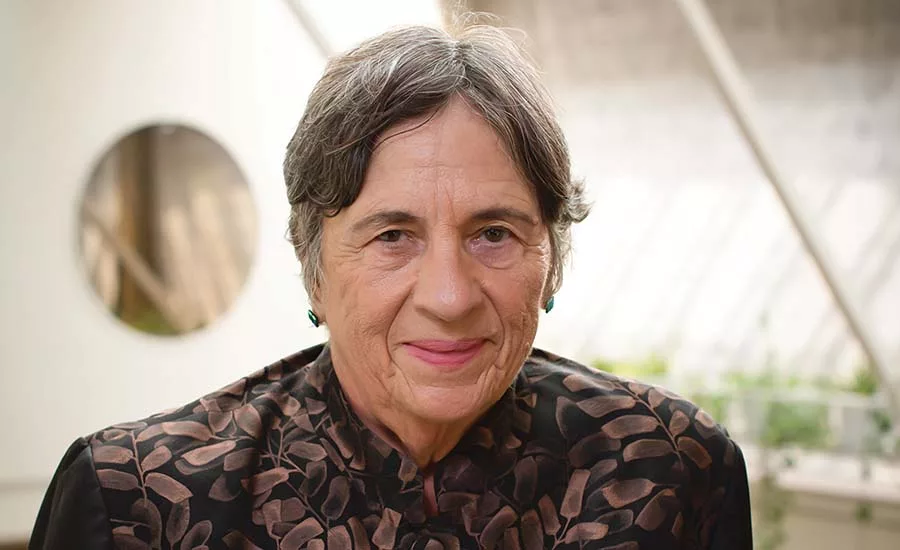
Carol Ross Barney.

Carol Ross Barney. Photo © Tara White

October 1, 2021

Architects & Firms

Ross Barney Architects

With a portfolio of train stations, chiller plants, and border stations, Carol Ross Barney has built one of the nation’s most vital practices, from utilitarian public infrastructure that seldom gets the attention of a designer. But these pieces of urban connective tissue, expanding outward from her home base in Chicago—where she founded her firm, Ross Barney Architects, in 1981—are not, in her hands, unassuming. Her Chi­cago Riverwalk (on which she collaborated with Sasaki) synthesizes landscape design and architecture to create an engaging pedestrian corridor along Chicago’s founding waterway, generating a new civic connection to the water.

In response to the pandemic crisis and last year’s uprisings against racist police violence, demands for equitable public space are reshaping conversations around this sort of infrastructure, just as the horizon of what’s politically possible opens up a pathway toward more investment in cities and towns. By selecting Ross Barney for the Cooper Hewitt, Smithsonian Design Museum’s 2021 National Design Award for Architecture and Interior Design, the institution honors a designer who has found ways for the prosaic and noble to hold us together. The architect spoke with Zach Mortice for RECORD.


Why did you decide to build your practice around public sector projects?

I started out thinking that design will make a difference. As a kid, there were spaces that impressed me, that made my emotions change, and I was really aware of that power. I wanted to do that. But I had two epiphanies. One was that public space has a much bigger impact than other spaces. If you’re going to make everyday life better, why not do it in public? The second was that I’ve always felt empowered working in the public realm, because I see myself as a part of a community, and that makes me not only the designer but the client.

With my first partner, Jim Jankowski, we made a pact that we would rather do toilet rooms and parking lots than houses for our friends, not that we had bad friends. We think this is more important.


How has Covid-19, which has separated us in many architectural contexts, made us reevaluate the value of the public sector?

The pandemic has forced us to consider our commonly owned and operated public spaces in a new light. Now the space is so precious, and people are thinking about who owns it and why. In a way, that’s the essential argument that Americans are having with each other. What’s your responsibility to the whole? Can you be unvaccinated and be responsible? Is there morality in that type of individualism? And that extends to space. Why don’t we have green space for everybody? It’s forced a conversation about the health and well-being of the community, and our individual roles in it.

Looking for quick answers on architecture and design topics?
Try Ask RECORD, our new smart AI search tool.
Ask RECORD →


When you were selected for the Cooper Hewitt award, did it seem that appreciation for the public sector work you’ve steadily championed has finally risen to match the crises facing the public realm?

We’re not the Cooper Hewitt’s usual audience at all. We’re almost urban guerrillas. We don’t have a building specialty—we’re really interested in a lot of different situations. What they have in common is that they need some sort of intervention, and they’re not always thought of as opportunities for design. It’s hard to run a studio like that, believe me, although it’s been very satisfying. It’s willful. You do what you want.

KEYWORDS: awards

Share This Story

Looking for a reprint of this article?
From high-res PDFs to custom plaques, order your copy today!


Zach Mortice is a Chicago-based design journalist who focuses on landscape architecture and architecture. You can follow him on Twitter and Instagram @zachmortice.

Post a comment to this article

Report Abusive Comment

Subscription Center
  • Create an Account
  • Start a Subscription
  • Manage My Account
  • Sign Up for Newsletters
  • Visit Customer Service
  • Update Preferences

More Videos

Sponsored Content

Sponsored Content is a special paid section where industry companies provide high quality, objective, non-commercial content around topics of interest to the Architectural Record audience. All Sponsored Content is supplied by the advertising company and any opinions expressed in this article are those of the author and not necessarily reflect the views of Architectural Record or its parent company, BNP Media. Interested in participating in our Sponsored Content section? Contact your local rep!

close
  • 3D configurator
    Sponsored byDoorBird

    How DoorBird’s 3D Configurator Is Redefining Customization Across Residential and Commercial Design

  • interior of modern office
    Sponsored byCurrent

    The Downlight's Second Life: Why Below-Ceiling Serviceability Is the Specification Detail That Matters Most

  • cold storage facility
    Sponsored byCarlisle SynTec Systems

    How Architects Can Design More Continuous Cold Storage Envelopes

DESIGN:ED Podcast
Listen to Architectural Record’s DESIGN:ED Podcast

Events

July 16, 2026

Fit, Form, Function: Rethinking Privacy Curtains for Modern Spaces

Credits: 1 AIA LU/HSW; 1 AIBD P-CE; 0.1 ICC CEU

Explore how privacy curtain systems can enhance occupant comfort, operational efficiency, and sustainability across healthcare, education, hospitality, and senior living environments.

July 22, 2026

Water Containment Waterproofing: Best Practices and System Selection

Credits: 1 AIA LU/HSW; 1 AIBD P-CE; 0.1 ICC CEU

Examine waterproofing strategies for water containment structures that enhance durability, prevent failures, and support long-term building performance.

View All Submit An Event

Products

2026 Architect's Square Foot Costbook

2026 Architect's Square Foot Costbook

See More Products

Popular Stories

7480 N Delaware

A Portland Apartment Building by Daniel Toole Architecture Stands as a Study in Adaptation

Home Spirit apartment building exterior

Outdoor Access Drives the Design of a French Apartment Building

Bergen complex frontage

Brooklyn’s Bergen Establishes Place with a Modulated Concrete Facade and an Idyllic Garden

The Mark and Hive Glenrock, LOHA

Two Student Residences Continue LOHA’s Decades-long Reimagination of the L.A. Lifestyle

The Bend in Winnipeg, Canada

The Bend Wraps an Adapted Winnipeg Warehouse, Adding Apartments and Defining Public Space

Fit, Form, Function: Rethinking Privacy Curtains for Modern Spaces - Free Webinar - July 16, 2026

Related Articles

  • Chicago Riverwalk

    Chicago Architect Carol Ross Barney Wins 2023 AIA Gold Medal

    See More
  • Chicago Riverwalk Extension

    DESIGN:ED Podcast: Carol Ross Barney

    See More
  • Chicago Riverwalk, Phase III, by Ross Barney Architects

    Carol Ross Barney on Designing Chicago’s DuSable Park

    See More
×

The latest news and information

#1 Source for Architectural Design, News and Products

SUBSCRIBE
  • RESOURCES
    • Advertise
    • Contact Us
    • Submit
    • Store
  • ACCOUNT CENTER
    • Create an Account
    • Start a Subscription
    • Manage My Account
    • Sign Up for Newsletters
    • Visit Customer Service
    • Update Preferences
  • PRIVACY
    • PRIVACY POLICY
    • TERMS & CONDITIONS
    • DO NOT SELL MY PERSONAL INFORMATION
    • PRIVACY REQUEST
    • ACCESSIBILITY
  • SERVICES
    • Marketing Services
    • Reprints
    • Market Research
    • List Rental
    • Survey/Respondent Access
  • STAY CONNECTED
    • Linkedin
    • Facebook
    • Instagram
    • YouTube
    • X (Twitter)

Copyright ©2026. All Rights Reserved BNP Media, Inc. and BNP Media II, LLC.

Design, CMS, Hosting & Web Development :: ePublishing