Architectural Record
search
cart
facebook twitter linkedin youtube
  • Sign In
  • Subscribe
  • Sign Out
  • My Account
Architectural Record
  • NEWS
    • Latest News
    • Awards
    • Interviews
    • Obituaries
    • Podcasts
      • Design:Ed Podcast
      • Sponsored Podcasts
  • OPINION
    • Book Reviews / Excerpts
    • Exhibition Reviews
    • Forum
  • EXCLUSIVES
    • Videos
    • Design Vanguard
    • Top 300 Firms
    • Sponsored Content
    • Sponsored eBooks
    • From the Archives
  • CONTINUING ED
    • Editorial Continuing Ed
    • CE Center
    • CE Academies
  • PROJECTS
    • Buildings By Type
    • Reuse & Renovation
    • Museums & Arts Centers
    • Colleges & Universities
    • Multifamily Housing
    • Interiors
    • Lighting
    • Kitchen & Bath
  • HOUSES
    • Record Houses
    • House of the Month
    • Featured Houses
  • PRODUCTS
    • Products by Category
    • Record Products of the Year
    • Latest Products
  • EVENTS
    • Dates & Events
    • Record on the Road
    • Innovation Conference
    • Sustainability in Practice
    • Women In Architecture
    • Webinars
    • Ad Excellence Awards
    • Submit an Event
  • CONNECT
    • Ask RECORD AI
    • Newsletters
    • Contact
    • Advertise
    • Editorial Calendar
    • Store
    • Customer Service
  • SUBMIT
    • Submission Guidelines
    • RECORD Competitions
  • MAGAZINE
    • Subscribe
    • My Account
    • Digital Edition
    • Current Issue
    • Firm Pass
    • Historic Archive
Architecture NewsOpinion

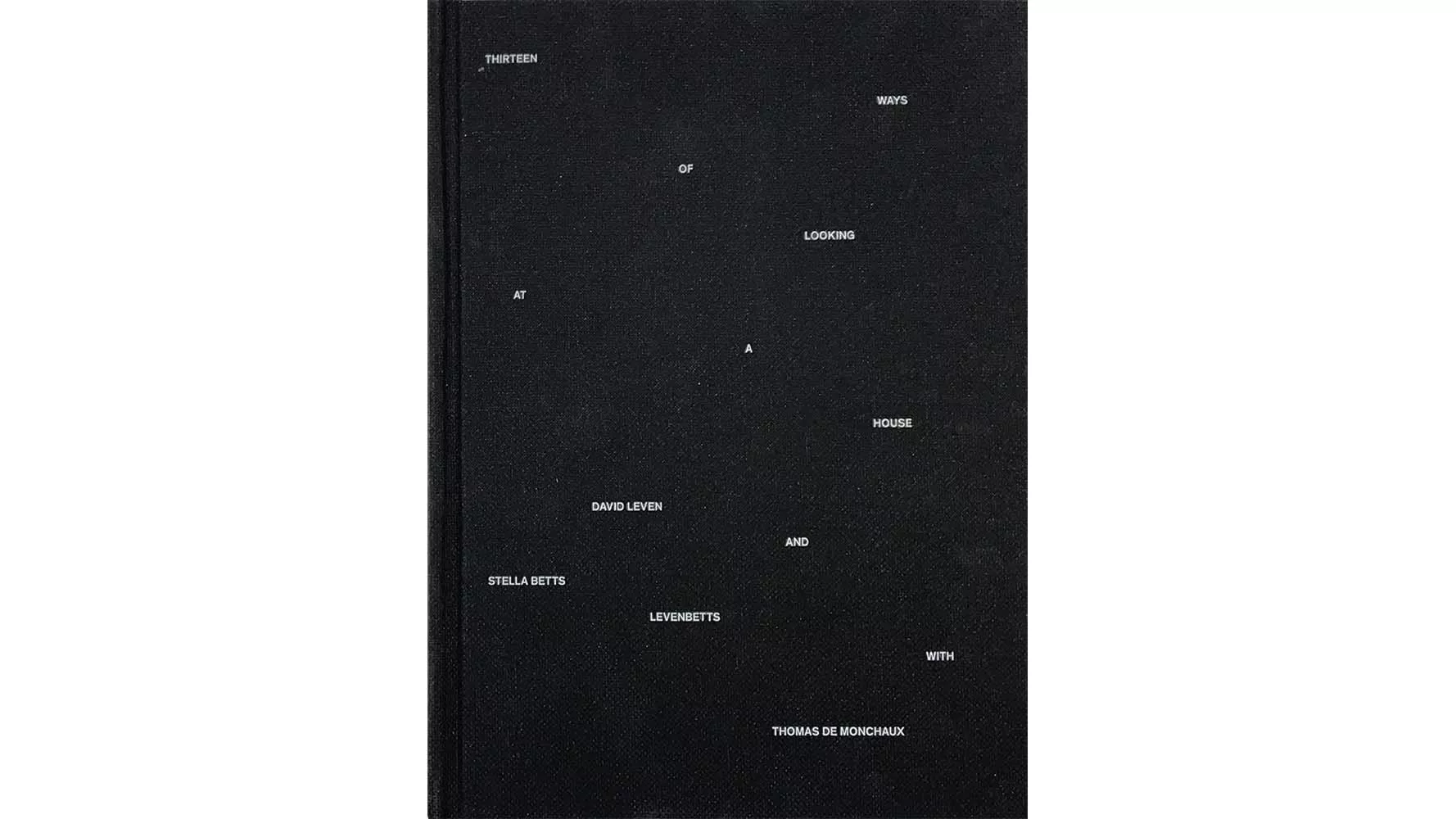
Review of 'Thirteen Ways of Looking at a House'

By Stella Betts and David Leven with essays by Thomas de Monchaux
By Nader Tehrani
Thirteen Ways of Looking at a House

Thirteen Ways of Looking at a House, by Stella Betts and David Leven, with essays by Thomas de Monchaux. Oro Editions, 328 pages, $45.

April 7, 2022

Architects & Firms

LEVENBETTS

A collaboration between Stella Betts and David Leven of LevenBetts, this book is a testament to how the ethic of iteration in architecture evolves into discipline. Certainly, not all architectural disciplines can be captured by a simple house, but, in this exercise, the duo has taken the house apart and put it back together in accordance with 13 themes and houses, each replete with wider cultural contexts that include literature, art, architectural precedents, and film.

Open House, Campsite, Doors and Windows, Steps and Stairs, Corridors, Courtyards, Curtains, Plumbing, House Plants, Plans, Structures, Thick and Thin, Home—when listed like this, they appear as nothing more than benign architectural elements. But in the authors’ minds, each is conceptualized as an indispensable element of a mis-en-scène that anticipates the events that invariably get acted out, with each one serving as another protagonist onstage.

These elements are charged by associations that are less centered on architecture than on the narrative that drives them. Imagine the embrace of Kar-wai’s atmospheric corridors in In the Mood for Love, Godard’s theatricalization of Libera’s Casa Malaparte stair in Contempt, or Kurosawa’s diaphanous curtains in High and Low—the presence of these backdrops, no matter their silence, sets the stage for the narrative itself.

Equally important, the human drama that unleashes itself onto architecture helps to tame the architect’s ambition for total control. Form can only do so much, especially as scenes of love, jealousy, rage, and anxiety cast different shadows within those spaces. Ironically, these architects maintain that control with meticulous attention, down to the detail lovingly drawn; for them, the open plan is a recipe for informality, but within intricate formal orders. It is their conception of an “open plan” in dialogue with an idea about specificity that disentangles programs from an assumed alignment with spatial enclosures. Despite the identification of 13 elements, the mission of this book is to dismantle the stability of their conventional definitions. They force us to “unlearn,” and to redefine the elements of architecture in spatial, functional, and tectonic terms. This entails our seeing beyond an aperture before assigning a “window” to it, defining the depth of a threshold before specifying a “door,” or understanding the quality of light rather than designating a “skylight.”

Their focus on informality stems from an elemental delight with foundational human needs as they manifest in the raw and provisional “campsite,” but also in the evolution of other architectures whose predisposition toward Existenzminimum defines an ethic of ingenuity based in critical constraints. With this, they set out to redefine the house by “un-domesticating” it, releasing it from the iconographic conventions that form the house as we know it. They are careful to distinguish the house from the home, using the informality of domestic activities to disrupt the pristine architectural intentions that commonly plague the architect.

By escaping the sequential presentation of houses within the format of standard monographs and taking the unorthodox path through themes that give partial views into how ideas are embedded in objects, histories, and narratives, they reorient the ideological underpinnings of the reader. On the one hand, they broaden the architect’s point of view toward a wider world deserving more detailed attention, and, on the other, they educate a broader public on how architecture engenders worldly ideas that are specific to its medium. From diagram to type, from thickness to thinness, and from raw material to elaborate details, the book thoughtfully dismantles what it means to make a book as much as it takes apart the domestic structures that are its subject. In doing so, it also reveals to us how lessons from a simple house may yet have wider and far-reaching implications, whether confronting buildings of larger program, sites of urban complexity, or narratives of greater consequence.

Looking for quick answers on architecture and design topics?
Try Ask RECORD, our new smart AI search tool.
Ask RECORD →

KEYWORDS: Book Reviews / Excerpts

Share This Story

Looking for a reprint of this article?
From high-res PDFs to custom plaques, order your copy today!
Nader Tehrani is the founding principal of NADAAA and former dean of the architecture school of The Cooper Union. He is completing the redesign of the Ancient West Asia and Cypriot Galleries at the Metropolitan Museum of Art.

Post a comment to this article

Report Abusive Comment

Subscription Center
  • Create an Account
  • Start a Subscription
  • Manage My Account
  • Sign Up for Newsletters
  • Visit Customer Service
  • Update Preferences

More Videos

Sponsored Content

Sponsored Content is a special paid section where industry companies provide high quality, objective, non-commercial content around topics of interest to the Architectural Record audience. All Sponsored Content is supplied by the advertising company and any opinions expressed in this article are those of the author and not necessarily reflect the views of Architectural Record or its parent company, BNP Media. Interested in participating in our Sponsored Content section? Contact your local rep!

close
  • TAMLYN XtremeTrim Exterior Trim
    Sponsored byTamlyn

    Designing Cleaner Panel Facades: Why Exterior Trim Details Matter

  • Building with Vapor Barriers
    Sponsored byReef Industries, Inc.

    Vapor Barriers Help Control Moisture in Tighter Building Designs

  • Duct Interior with Prodeq System
    Sponsored byHenry, a Carlisle Company

    Designing Resilient Water Containment Systems

DESIGN:ED Podcast
Listen to Architectural Record’s DESIGN:ED Podcast

Events

June 10, 2026

Rethinking Stormwater – The Power of Porous Paving

Credits: 1 AIA LU/HSW; 1 AIBD P-CE; 0.1 ICC CEU

Learn how porous paving systems support stormwater management, reduce heat island effects, and enhance sustainable site design performance.

June 11, 2026

Very Early Warning Fire Detection for Mission-Critical Facilities

Credits: 1 AIA LU/HSW; 1 AIBD P-CE; 0.1 ICC CEU

Examine advanced fire detection strategies that support uptime and enhance safety in data centers and other mission-critical facilities.

View All Submit An Event

Products

2026 Architect's Square Foot Costbook

2026 Architect's Square Foot Costbook

See More Products

Popular Stories

Practice Matters illustration

What’s in a (Firm’s) Name? Thinking About Succession and Legacy

Practice Matters illustration

By the Numbers: Counting America's Architects

House on a Hill

Design Vanguard 2026: Forma

Crane Cove, ONO

Design Vanguard 2026 Winners

KRESA by DLR

In Kalamazoo, DLR Group Completes a Mass-Timber Hub for Career and Technical Education Programs

Broader Sustainability of CMU - Free Webinar - May 21, 2026

Related Articles

  • Artists tackle architecture and find new ways of looking at it

    See More
  • Artists tackle architecture and find new ways of looking at it

    See More
  • My House is Better Than Your House.

    Review of 'My House Is Better Than Your House'

    See More

Related Products

See More Products
  • 1444336282.gif

    The Handbook of Interior Design

  • 9 ways.jpg

    9 Ways To Make Housing for People

  • biogenic.jpg

    Manual of Biogenic House Sections

See More Products
×

The latest news and information

#1 Source for Architectural Design, News and Products

SUBSCRIBE
  • RESOURCES
    • Advertise
    • Contact Us
    • Submit
    • Store
  • ACCOUNT CENTER
    • Create an Account
    • Start a Subscription
    • Manage My Account
    • Sign Up for Newsletters
    • Visit Customer Service
    • Update Preferences
  • PRIVACY
    • PRIVACY POLICY
    • TERMS & CONDITIONS
    • DO NOT SELL MY PERSONAL INFORMATION
    • PRIVACY REQUEST
    • ACCESSIBILITY
  • SERVICES
    • Marketing Services
    • Reprints
    • Market Research
    • List Rental
    • Survey/Respondent Access
  • STAY CONNECTED
    • Linkedin
    • Facebook
    • Instagram
    • YouTube
    • X (Twitter)

Copyright ©2026. All Rights Reserved BNP Media, Inc. and BNP Media II, LLC.

Design, CMS, Hosting & Web Development :: ePublishing