Architectural Record
search
cart
facebook twitter linkedin youtube
  • Sign In
  • Subscribe
  • Sign Out
  • My Account
Architectural Record
  • NEWS
    • Latest News
    • Awards
    • Interviews
    • Obituaries
    • Podcasts
      • Design:Ed Podcast
      • Sponsored Podcasts
  • OPINION
    • Book Reviews / Excerpts
    • Exhibition Reviews
    • Forum
  • EXCLUSIVES
    • Videos
    • Design Vanguard
    • Top 300 Firms
    • Sponsored Content
    • Sponsored eBooks
    • From the Archives
  • CONTINUING ED
    • Editorial Continuing Ed
    • CE Center
    • CE Academies
  • PROJECTS
    • Buildings By Type
    • Reuse & Renovation
    • Museums & Arts Centers
    • Colleges & Universities
    • Multifamily Housing
    • Interiors
    • Lighting
    • Kitchen & Bath
  • HOUSES
    • Record Houses
    • House of the Month
    • Featured Houses
  • PRODUCTS
    • Products by Category
    • Record Products of the Year
    • Latest Products
  • EVENTS
    • Dates & Events
    • Record on the Road
    • Innovation Conference
    • Sustainability in Practice
    • Women In Architecture
    • Webinars
    • Ad Excellence Awards
    • Submit an Event
  • CONNECT
    • Ask RECORD AI
    • Newsletters
    • Contact
    • Advertise
    • Editorial Calendar
    • Store
    • Customer Service
  • SUBMIT
    • Submission Guidelines
    • RECORD Competitions
  • MAGAZINE
    • Subscribe
    • My Account
    • Digital Edition
    • Current Issue
    • Firm Pass
    • Historic Archive
Architecture NewsOpinion

The Skyscraper Museum Surveys the Fast-Paced Transformation of Lower Manhattan

Review: “Residential Rising: Lower Manhattan Since 9/11”
By Matthew Marani
Skyscraper-Museum-1.jpg
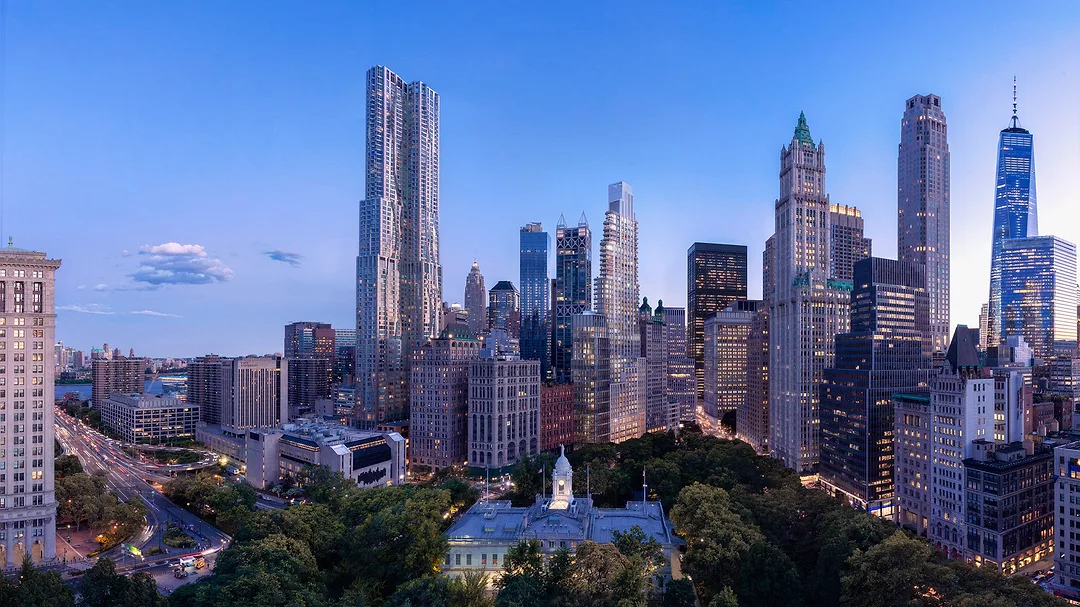
New York towers in Lower Manhattan. Image © DBOX
Skyscraper-Museum4.webp
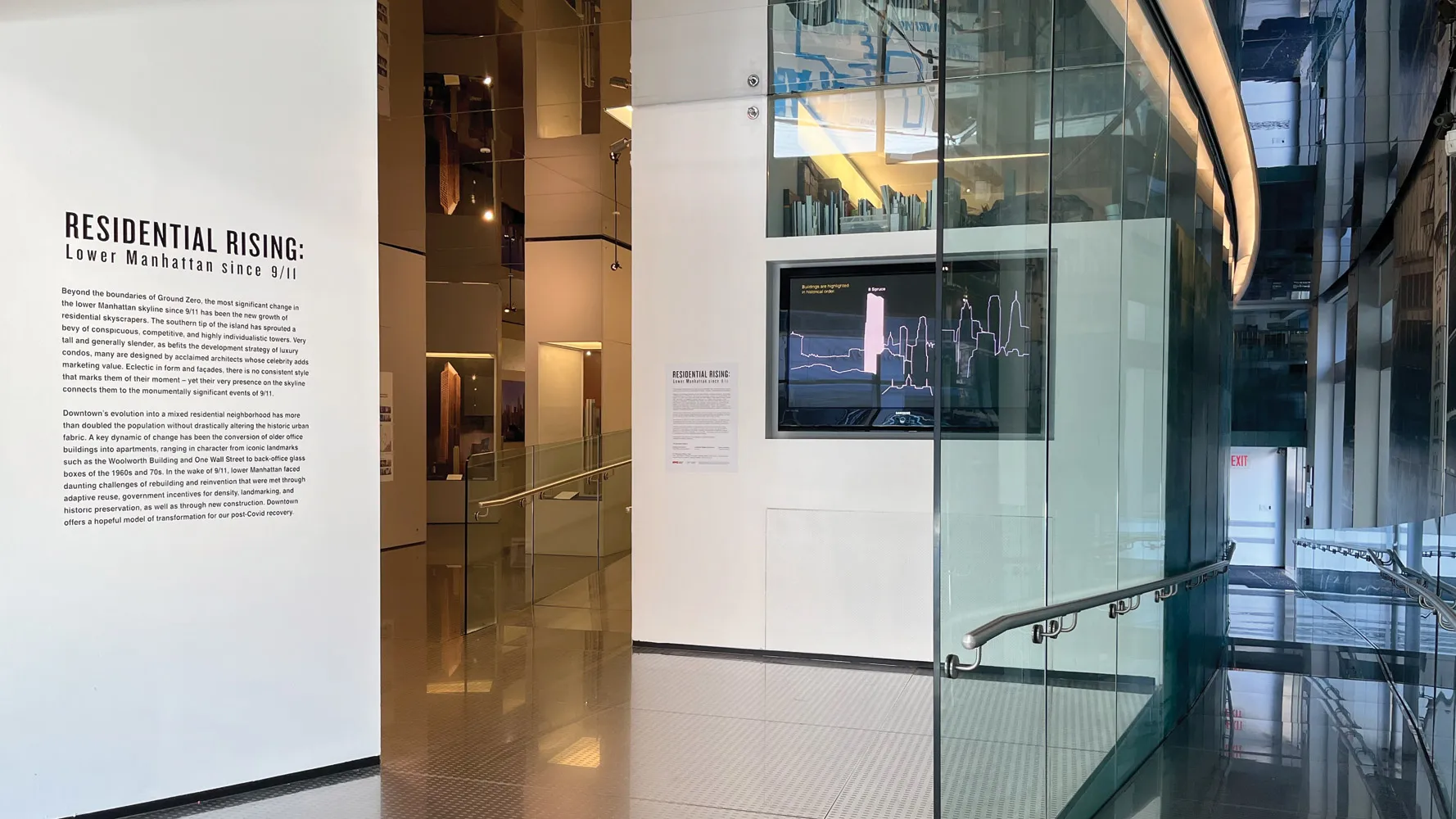
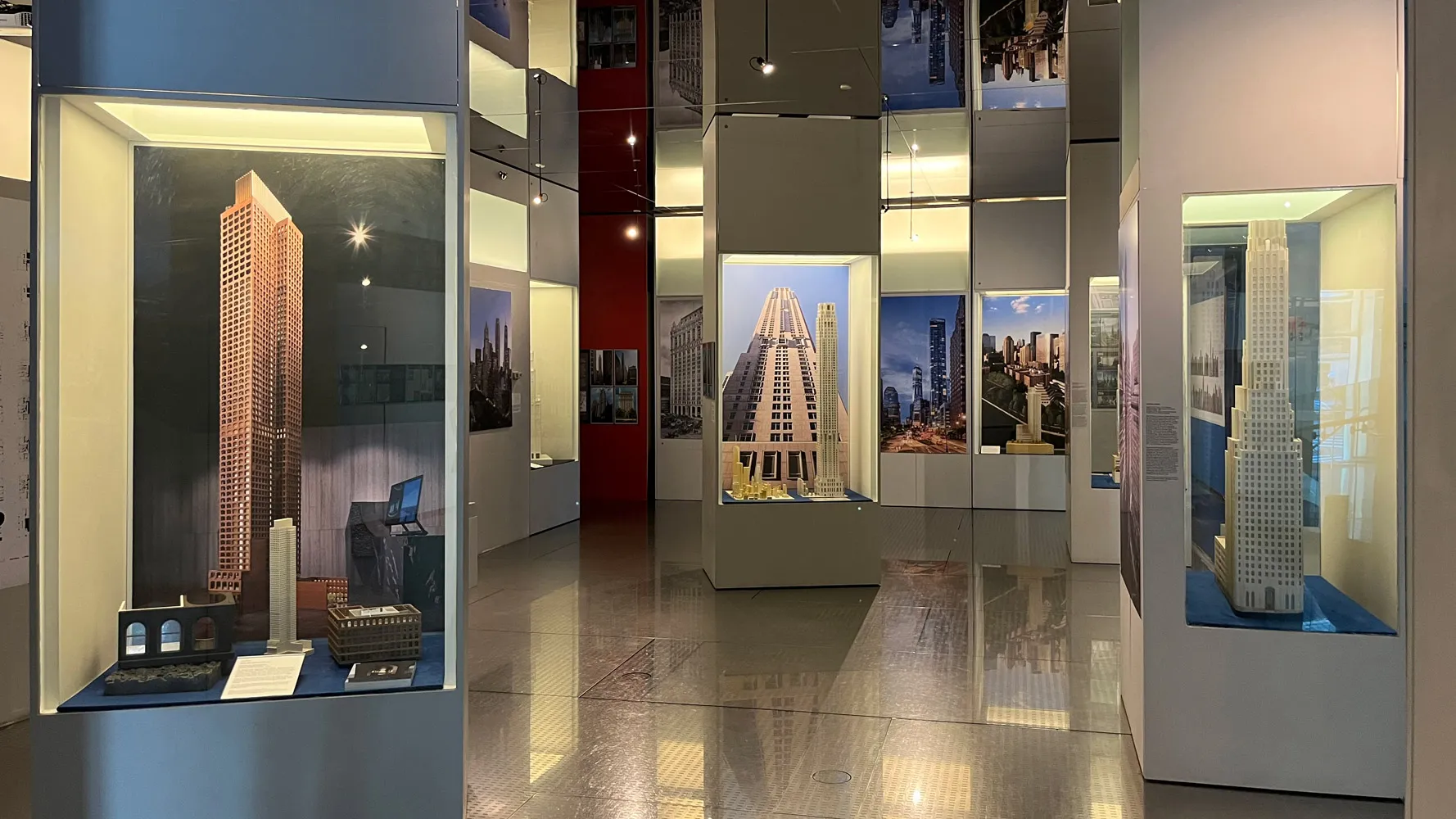
"Residental Rising" installation view at New York's Skyscraper Museum. Photo courtesy The Skyscraper Museum
Skyscraper-Museum-2.webp
“Residential Rising" installation view. Photo courtesy The Skyscraper Museum
Skyscraper-Museum-1.jpg
Skyscraper-Museum4.webp
Skyscraper-Museum-2.webp
August 29, 2022
✕
Image in modal.

Lower Manhattan has undergone a seismic change over the last two decades. That urban district, roughly bound to the north by Canal Street, flanked by the East and Hudson Rivers, and bookended by the Battery to the south, has emerged as the fastest growing residential neighborhood in New York City—rising from just over 39,000 residents in 2000 to more than 80,000 in 2020. And it is difficult to conjure a more appropriate venue for an examination of this phenomenon than Skyscraper Museum, which has experienced this transformation firsthand. Founded in 1996, the museum opened in its permanent home in the neighborhood in 2004. Its current exhibition, “Residential Rising: Lower Manhattan since 9/11,” adroitly explores this trend with a succinct, informative survey, deploying imaginative infographics, architectural models, and professional photography.
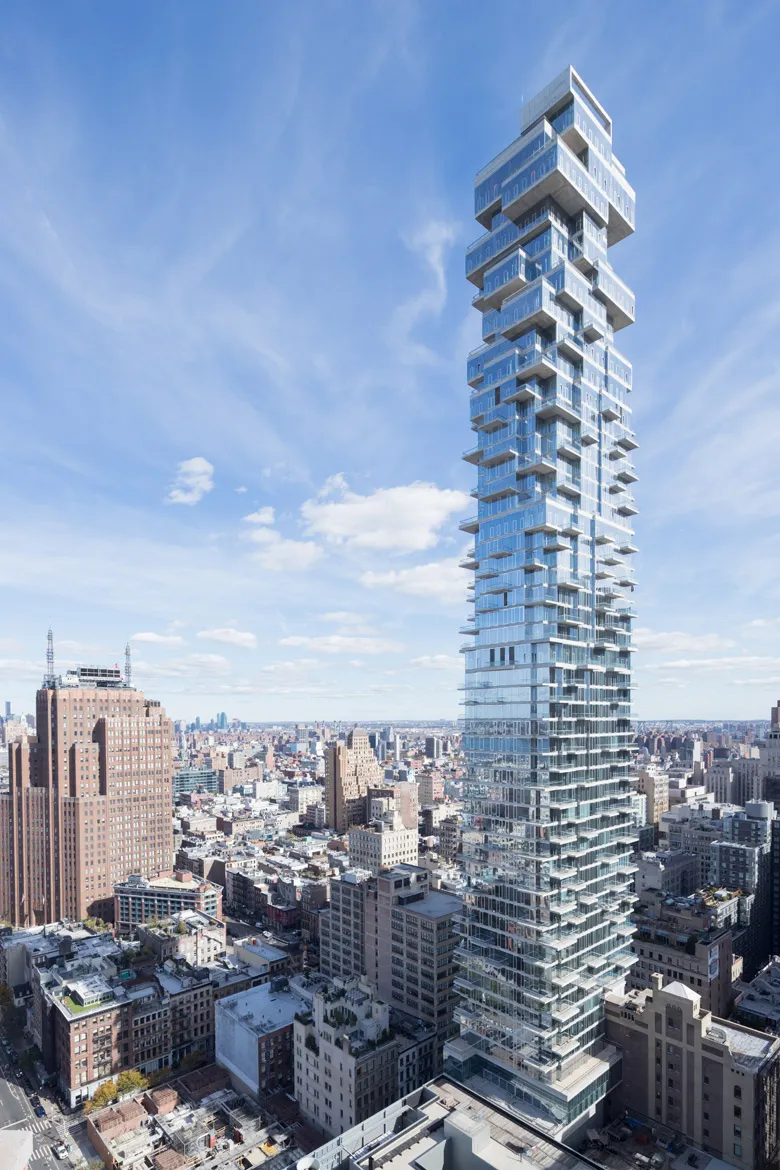
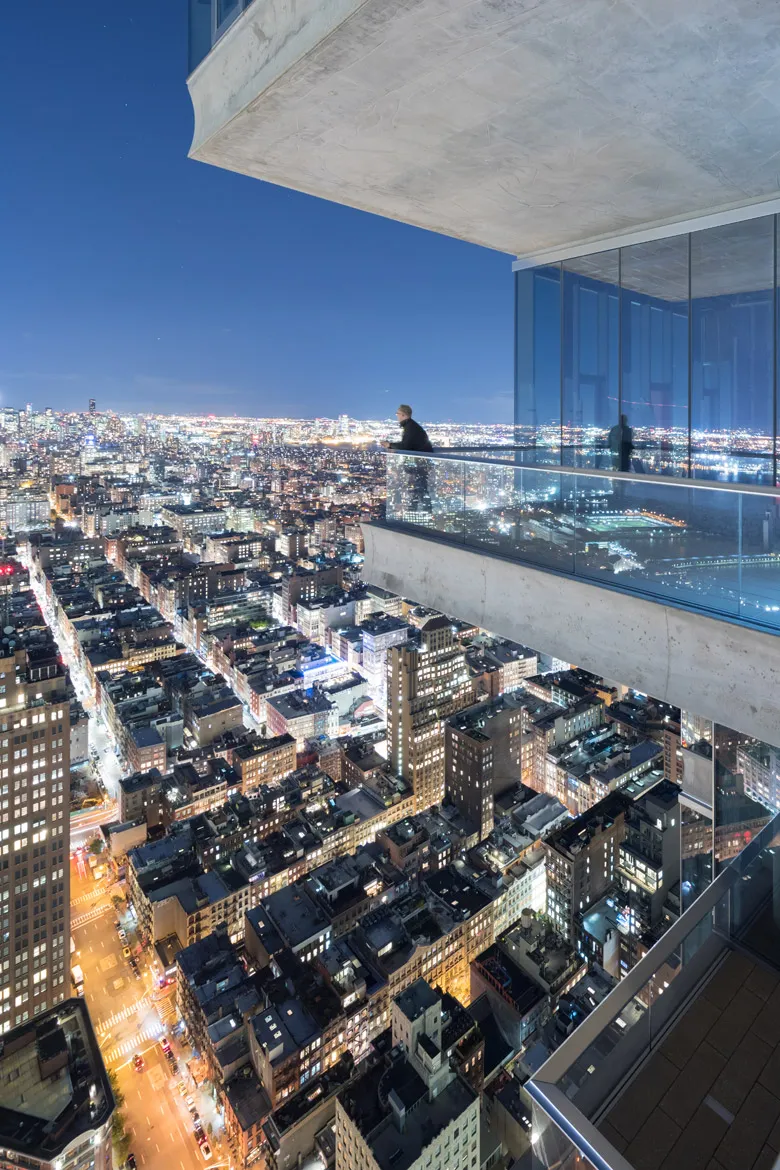
56 Leonard Street.

1

11 Murray Street by KPF.

2

56 Leonard Street by Herzog & de Meuron (1+2). Photos by Iwan Baan, © Herzog & de Meuron

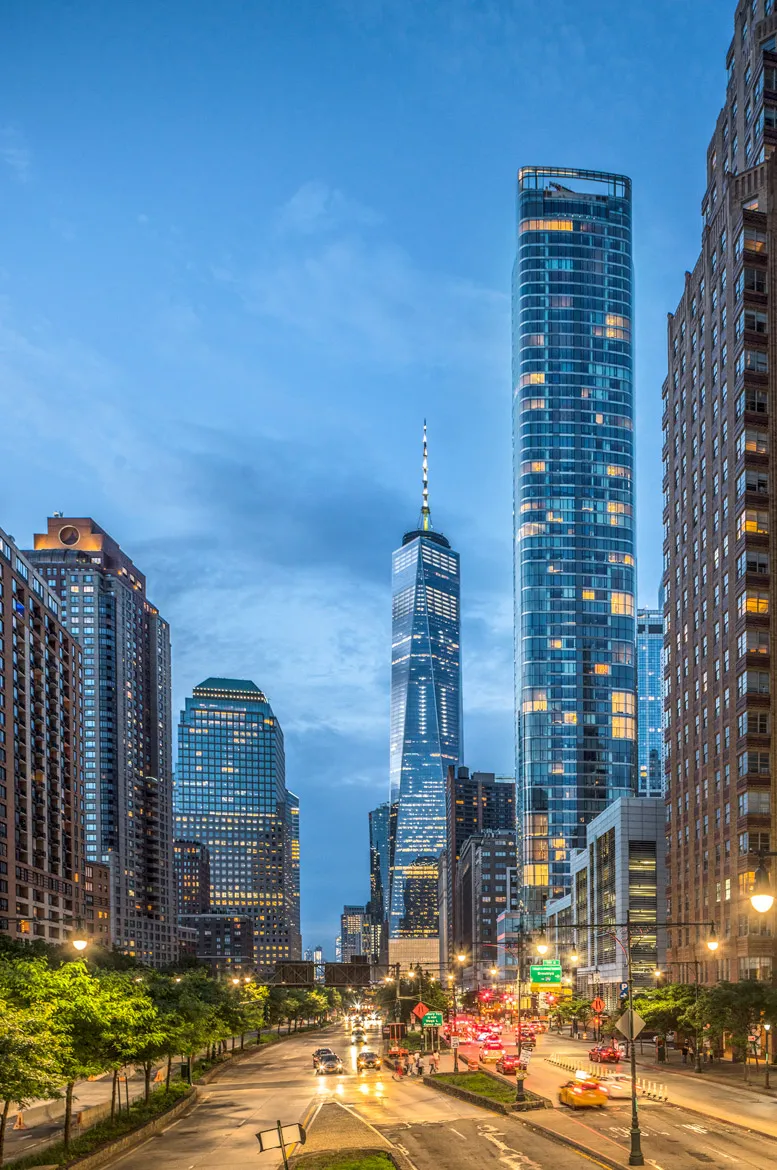
“The dozen buildings we highlight in the exhibition are downtown's ‘stand-out' towers,” says the museum’s founding director Carol Willis. “They include the tallest on the skyline beyond Ground Zero and illustrate an astonishing variety of inventive forms and facades—from glass to stone, stainless steel, terra cotta, and cast concrete. Though they share no style, they are expressions of how New York developers began to value high-end design as a marketing feature as a result of 9/11.”
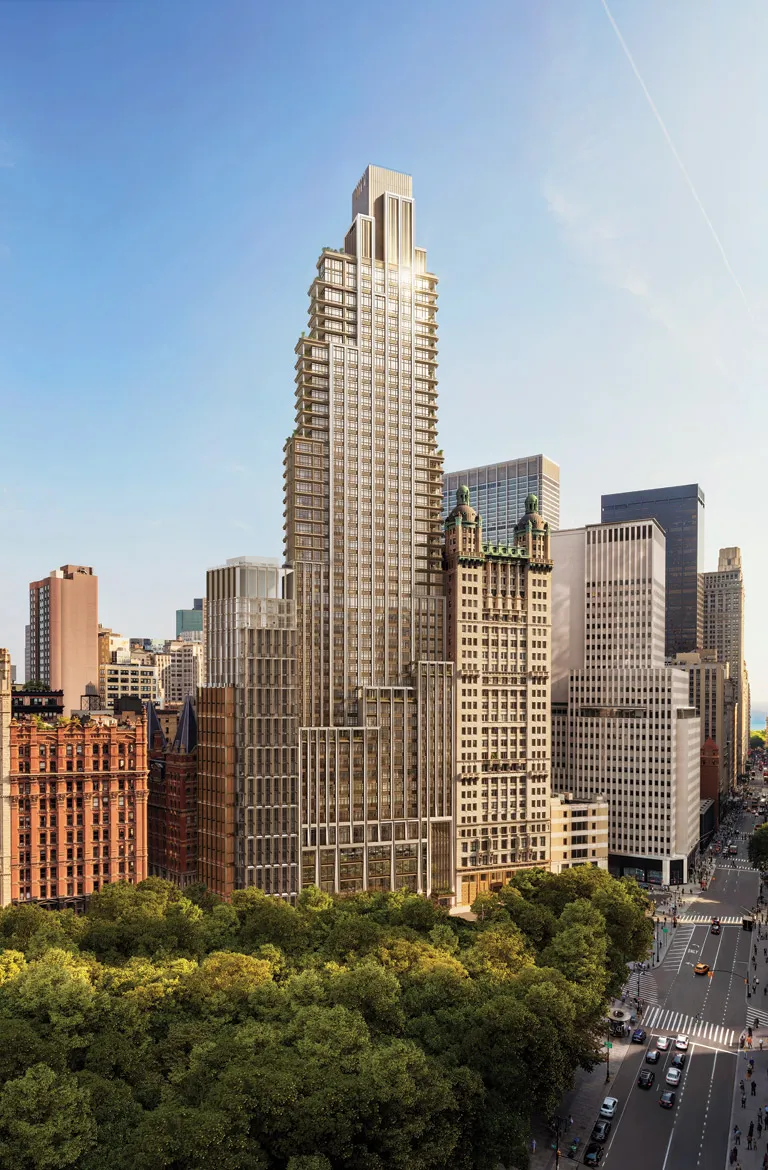
25 Park Row.

25 Park Row by COOKFOX Architects. Image © DBOX

The large-scale transformation of Lower Manhattan into a sizable residential community may come as a surprise: Wall Street and its environs are the symbolic hub of American capitalism and vast hordes of office workers used to arrive each morning to keep all that financial machinery humming. But as “Residential Rising” highlights, change has been coming since the decline of Manhattan’s shipping piers and the creation of Battery Park City, the planned residential community built in the early 1970s on landfill from the construction of the original World Trade Center. The transformative process picked up steam with the savings and loan crisis of the 1980s and 1990s, which hollowed out office space across New York City and left approximately 25 million square feet vacant. And the September 11th terrorist attacks not only scarred the city and the country but exacerbated the exodus of offices from Lower Manhattan. The current growth of remote working is only continuing the trend.
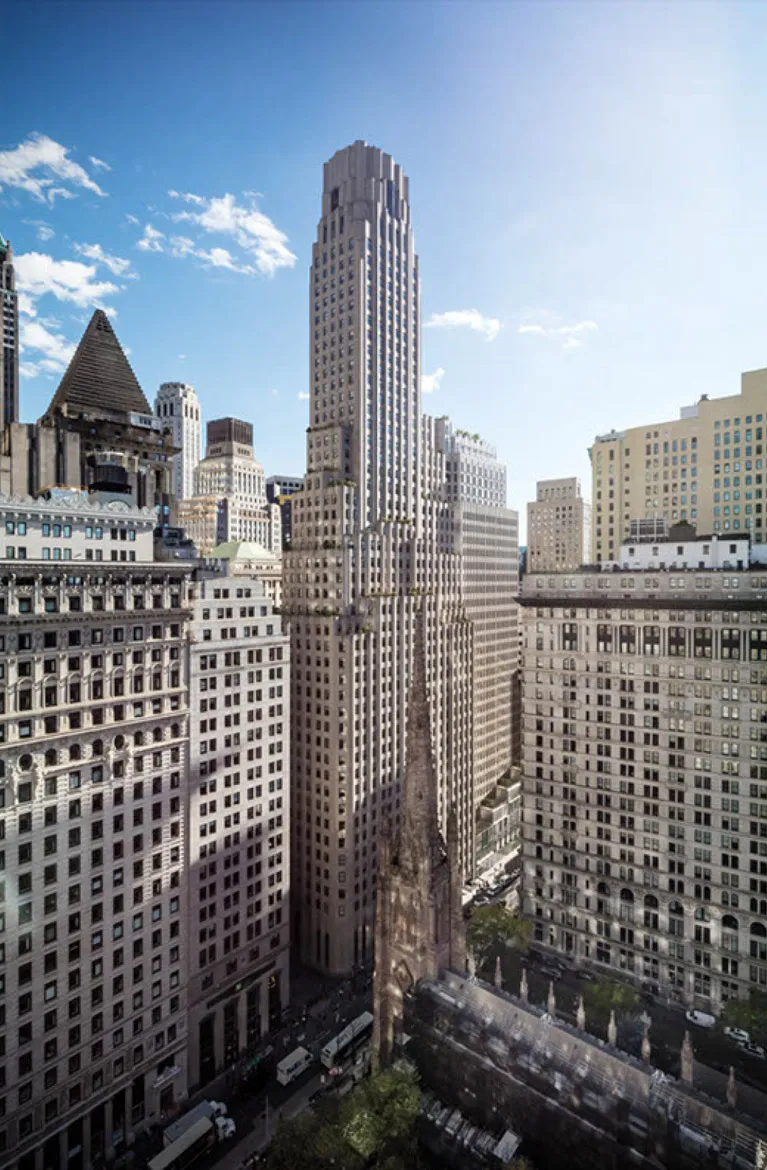
One Wall Street.

Ralph Thomas Walker’s One Wall Street. Image © DBOX

“Residential Rising” is a story of significant adaptive reuse, with nearly 60 office buildings in the neighborhood converted into apartment houses—some 12,000 units in total. In response to the Lower Manhattan vacancy crises of the late 20th century, both the Dinkins and Giuliani mayoral administrations passed a suite of incentives, such as property tax abatements and zoning changes, to spur residential conversions. Those wholesale use changes of historic commercial towers benefitted, too, from federal and state historic rehabilitation tax credits which dramatically reduced the costs of conversions. As examples, “Residential Rising,” focusses on three such landmark buildings: Cass Gilbert’s Woolworth Tower and West Street Building, and Ralph Thomas Walker’s Art Deco-icon One Wall Street.
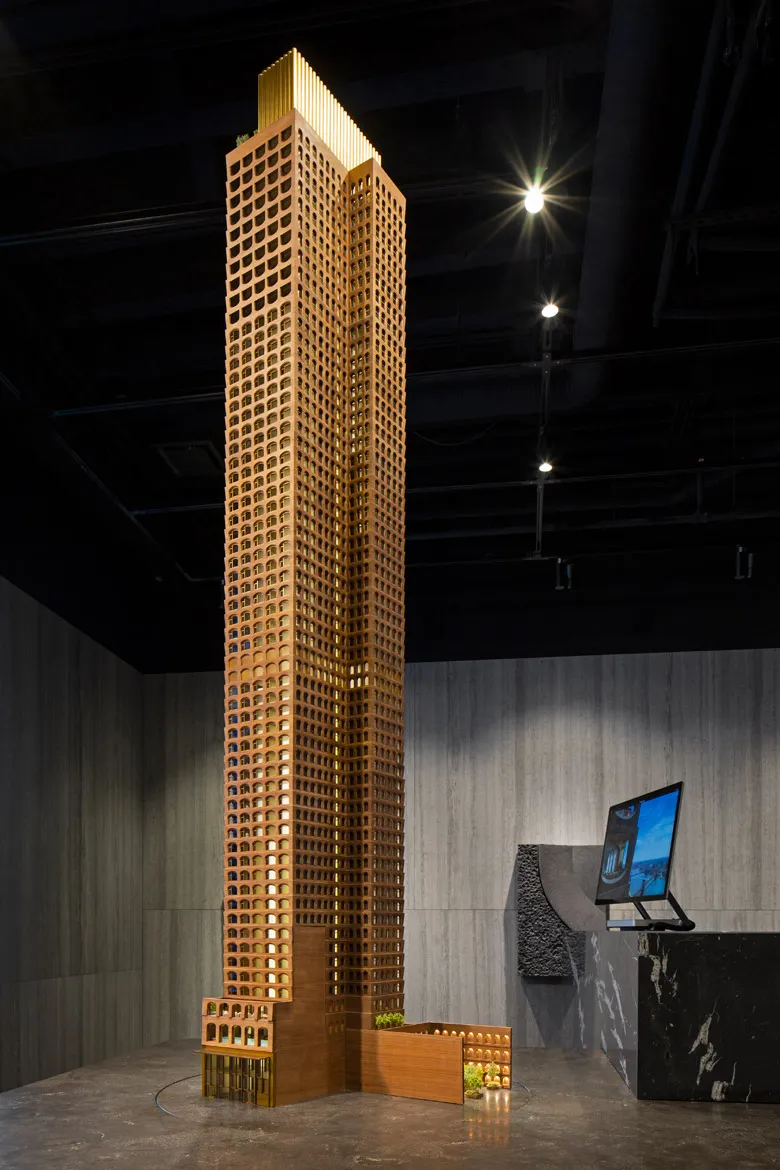
One Wall Street.

David Adjaye's 130 William Street, exhibition model. Photo © RADII

Although much of the residential transformation stems from such adaptive reuse, the ubiquitous cranes and construction crews in the area point to the prominent role of new luxury skyscrapers in re-shaping Lower Manhattan’s cityscape. But as “Residential Rising” correctly notes, due to the super-slender nature of such buildings, and the space demands of luxury apartments, the new towers have had limited effect on residential growth in the area. For example, David Adjaye’s sleek new 130 William, featured in the exhibition, contains just 242 units in 66 stories.

The economic and labor disruptions spurred by the Covid-19 pandemic have had a similar impact on commercial districts across New York City—especially Midtown Manhattan—and several lessons can be gleaned from “Residential Rising.”
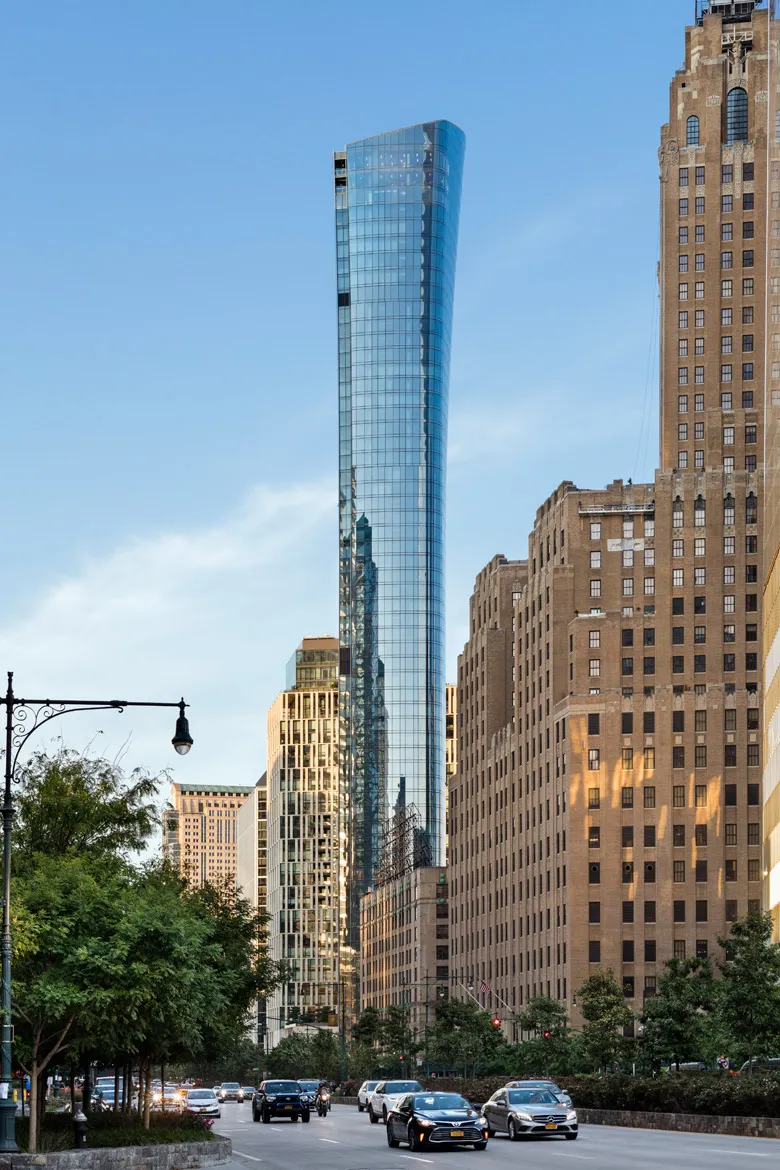
11 Murray Street by KPF.

3

50 West Street.

4

111 Murray Street by Kohn Pedersen Fox Associates (KPF) (3), and 50 West Street by Helmut Jahn (4). Photo (3) © Raimund Koch, (4) by Rainer Viertlböck, courtesy of Jahn/

“Downtown after 9/11 and Midtown post-COVID have a lot in common,” suggests Willis. “The office market shut off abruptly, but the opportunity to reinvent older properties for new uses has left room for the city to plan for a healthier, long-term future. Like Downtown, Midtown has a lot of Class B and C properties on its cross streets that could be converted to residential or live-work uses. Some might even be able to take advantage of historic preservation tax credits.”

As this exhibition makes clear, recent history has powerful lessons for the future of New York as well as other cities.
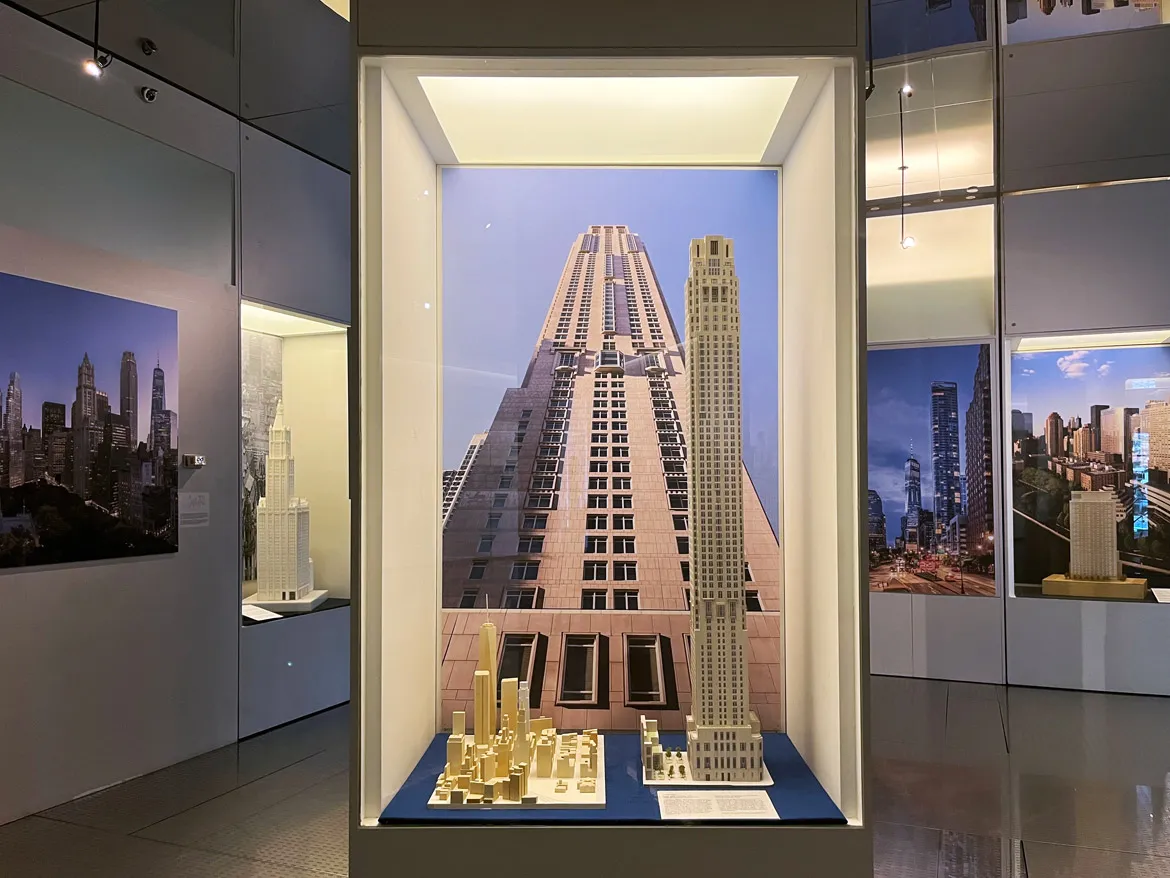
30 Park Place, .

30 Park Place by Robert A.M. Stern Architects, installation view. Photo © The Skyscraper Museum. Tower photo by Peter Aaron/OTTO

Looking for quick answers on architecture and design topics?
Try Ask RECORD, our new smart AI search tool.
Ask RECORD →

KEYWORDS: building design cities Exhibitions historic preservation New York City urban planning

Share This Story

Looking for a reprint of this article?
From high-res PDFs to custom plaques, order your copy today!

Matthew marani

Matthew Marani is a senior editor at Architectural Record. Previously, he served as program manager at The Architect’s Newspaper and has several years of experience as a freelance writer specializing in urban planning, historic preservation, and architectural technology. Matthew is a born and raised New Yorker and holds an MSc in Architectural Conservation from the University of Edinburgh.

Post a comment to this article

Report Abusive Comment

Subscription Center
  • Create an Account
  • Start a Subscription
  • Manage My Account
  • Sign Up for Newsletters
  • Visit Customer Service
  • Update Preferences

More Videos

Sponsored Content

Sponsored Content is a special paid section where industry companies provide high quality, objective, non-commercial content around topics of interest to the Architectural Record audience. All Sponsored Content is supplied by the advertising company and any opinions expressed in this article are those of the author and not necessarily reflect the views of Architectural Record or its parent company, BNP Media. Interested in participating in our Sponsored Content section? Contact your local rep!

close
  • TAMLYN XtremeTrim Exterior Trim
    Sponsored byTamlyn

    Designing Cleaner Panel Facades: Why Exterior Trim Details Matter

  • Building with Vapor Barriers
    Sponsored byReef Industries, Inc.

    Vapor Barriers Help Control Moisture in Tighter Building Designs

  • Duct Interior with Prodeq System
    Sponsored byHenry, a Carlisle Company

    Designing Resilient Water Containment Systems

DESIGN:ED Podcast
Listen to Architectural Record’s DESIGN:ED Podcast

Events

June 10, 2026

Rethinking Stormwater – The Power of Porous Paving

Credits: 1 AIA LU/HSW; 1 AIBD P-CE; 0.1 ICC CEU

Learn how porous paving systems support stormwater management, reduce heat island effects, and enhance sustainable site design performance.

June 11, 2026

Very Early Warning Fire Detection for Mission-Critical Facilities

Credits: 1 AIA LU/HSW; 1 AIBD P-CE; 0.1 ICC CEU

Examine advanced fire detection strategies that support uptime and enhance safety in data centers and other mission-critical facilities.

View All Submit An Event

Products

2026 Architect's Square Foot Costbook

2026 Architect's Square Foot Costbook

See More Products

Popular Stories

Coronado Bridge

The Architect’s Guide to San Diego

Practice Matters illustration

What’s in a (Firm’s) Name? Thinking About Succession and Legacy

Practice Matters illustration

By the Numbers: Counting America's Architects

Inward House

Inward House by VeeV Design Studio

Riverdale House by Studio Lau

Riverdale House by Studio Lau

Broader Sustainability of CMU - Free Webinar - May 21, 2026

Related Articles

  • Players on a World Stage

    Power at Ground Zero: Politics, Money, and the Rebuilding of Lower Manhattan

    See More
  • Marina Towers historic construction photo

    A New Exhibition at the Skyscraper Museum in New York Traces the Evolution of Concrete in Tall Buildings

    See More
  • Exhibition Review: Ten Tops at the Skyscraper Museum

    See More

Related Products

See More Products
  • 1444336282.gif

    The Handbook of Interior Design

See More Products
×

The latest news and information

#1 Source for Architectural Design, News and Products

SUBSCRIBE
  • RESOURCES
    • Advertise
    • Contact Us
    • Submit
    • Store
  • ACCOUNT CENTER
    • Create an Account
    • Start a Subscription
    • Manage My Account
    • Sign Up for Newsletters
    • Visit Customer Service
    • Update Preferences
  • PRIVACY
    • PRIVACY POLICY
    • TERMS & CONDITIONS
    • DO NOT SELL MY PERSONAL INFORMATION
    • PRIVACY REQUEST
    • ACCESSIBILITY
  • SERVICES
    • Marketing Services
    • Reprints
    • Market Research
    • List Rental
    • Survey/Respondent Access
  • STAY CONNECTED
    • Linkedin
    • Facebook
    • Instagram
    • YouTube
    • X (Twitter)

Copyright ©2026. All Rights Reserved BNP Media, Inc. and BNP Media II, LLC.

Design, CMS, Hosting & Web Development :: ePublishing