Architectural Record
search
cart
facebook twitter linkedin youtube
  • Sign In
  • Subscribe
  • Sign Out
  • My Account
Architectural Record
  • NEWS
    • Latest News
    • Awards
    • Interviews
    • Obituaries
    • Podcasts
      • Design:Ed Podcast
      • Sponsored Podcasts
  • OPINION
    • Book Reviews / Excerpts
    • Exhibition Reviews
    • Forum
  • EXCLUSIVES
    • Videos
    • Design Vanguard
    • Top 300 Firms
    • Sponsored Content
    • Sponsored eBooks
    • From the Archives
  • CONTINUING ED
    • Editorial Continuing Ed
    • CE Center
    • CE Academies
  • PROJECTS
    • Buildings By Type
    • Reuse & Renovation
    • Museums & Arts Centers
    • Colleges & Universities
    • Multifamily Housing
    • Interiors
    • Lighting
    • Kitchen & Bath
  • HOUSES
    • Record Houses
    • House of the Month
    • Featured Houses
  • PRODUCTS
    • Products by Category
    • Record Products of the Year
    • Latest Products
  • EVENTS
    • Dates & Events
    • Record on the Road
    • Innovation Conference
    • Sustainability in Practice
    • Women In Architecture
    • Webinars
    • Ad Excellence Awards
    • Submit an Event
  • CONNECT
    • Ask RECORD AI
    • Newsletters
    • Contact
    • Advertise
    • Editorial Calendar
    • Store
    • Customer Service
  • SUBMIT
    • Submission Guidelines
    • RECORD Competitions
  • MAGAZINE
    • Subscribe
    • My Account
    • Digital Edition
    • Current Issue
    • Firm Pass
    • Historic Archive
Opinion

Fifty Years After ‘Learning from Las Vegas,’ Denise Scott Brown Gets Her Due

Review: 'Denise Scott Brown In Other Eyes: Portraits of an Architect,' edited by Frida Grahn
By Izzy Kornblatt
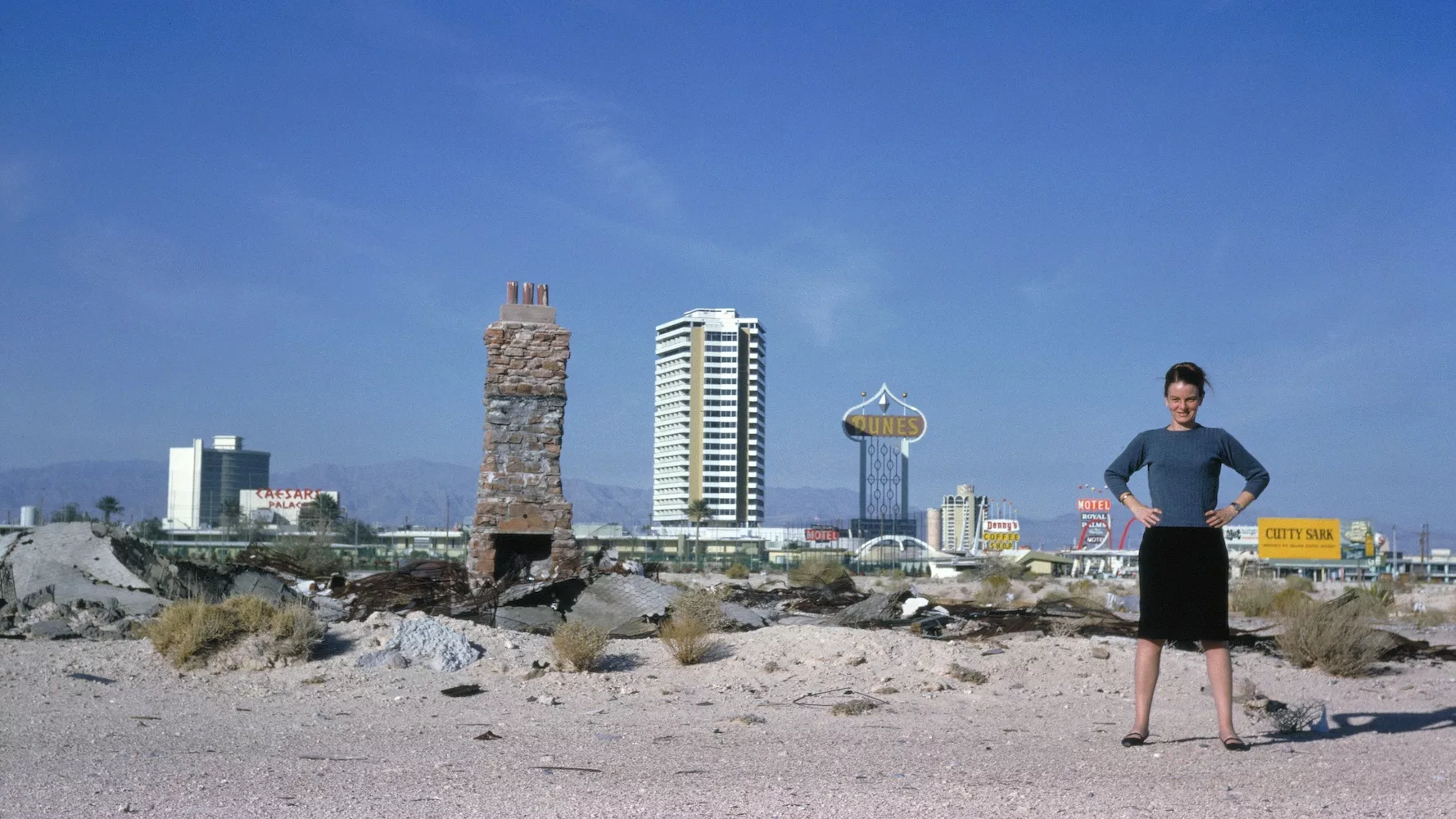
archival photo of denise scott brown with las vegas in the background
Denise Scott Brown in the Las Vegas desert off the Strip. Photo by Robert Venturi, Las Vegas, 1966, courtesy Denise Scott Brown
February 7, 2023
✕
Image in modal.
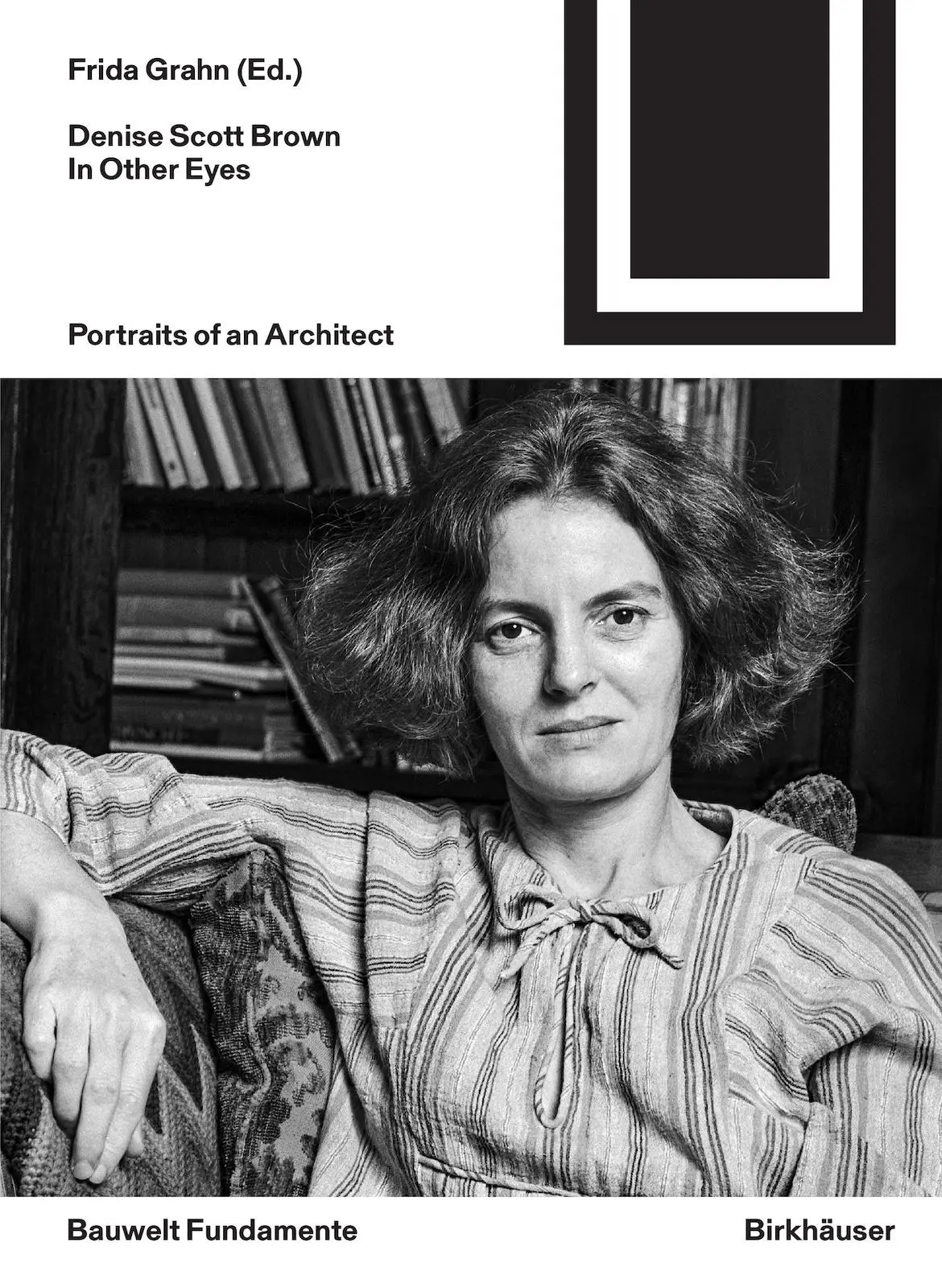
cover art for a book about denise scott brown.

Denise Scott Brown In Other Eyes: Portraits of an Architect, edited by Frida Grahn. Birkhäuser, 256 pages.

The ugly debate over the future of the Venturi, Scott Brown, and Associates-designed Sainsbury Wing of London’s National Gallery gives me a strong sense of deja vu. It was just a few years ago, in 2018, that I argued in two essays and a widely circulated petition that a plan to expand the firm’s Museum of Contemporary Art in La Jolla be redesigned with a greater appreciation for and sensitivity to Venturi and Scott Brown’s work. But in the ensuing controversy—as in the controversy over the Sainsbury Wing—this point has been lost in a sea of caricatures. The question taken up in the media and on Twitter has instead become whether a museum has the right to evolve with the times (of course it does), or whether it must instead be preserved in aspic on account of the fame of its architects (of course it should not be). This shift in terms has done a disservice to all involved. After all, rigid preservationism has never characterized the work of Denise Scott Brown and Robert Venturi, and it is not what drives Scott Brown’s concerns over the future of her work in London.

All this helps explain why Denise Scott Brown In Other Eyes, a new anthology edited by the Swiss architect and historian Frida Grahn, whose publication coincides with the 50th anniversary of Learning from Las Vegas, comes as so welcome a corrective. The book is, remarkably, the first collection of writings dedicated solely to Scott Brown, and as such it marks a new and long overdue beginning for scholars—an invitation to give serious consideration to Scott Brown that one hopes will be taken up widely in the coming years. Even on its own, this 300-page overture begins to tease out the disparate strands of Scott Brown’s thought as they developed over the course of a seven-decade career spanning from South Africa to London to Philadelphia, with subsequent travels to Los Angeles and Las Vegas. The picture that emerges has a complexity and nuance befitting its subject.

To good effect, Grahn cast a wide net in soliciting contributions. Among the 23 texts are personal remembrances, including a lovely essay by Scott Brown’s close friend Robin Middleton on a 1951 exhibition in Johannesburg; scholarly papers by established and emerging historians; and reflections by practitioners, among which is a thoughtful piece by Inès Lamunière and an interview Grahn conducted with Jacques Herzog. These are presented in three loosely chronological sections titled “1950s: Learning,” “1960s: Teaching,” and “1970s –2020s: Designing."
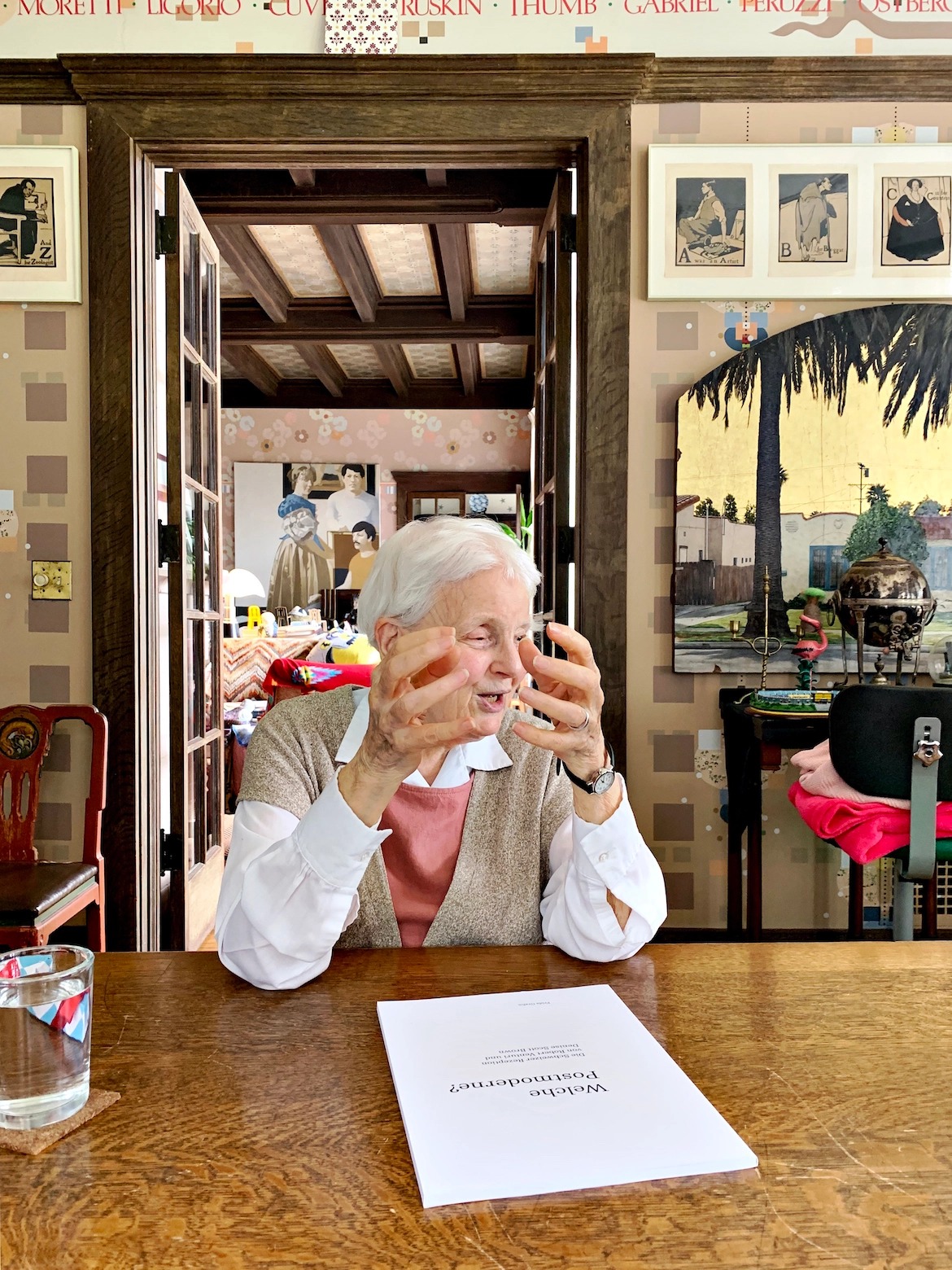
a chat with denise scott brown.

Denise Scott Brown, Wissahickon Avenue, Philadelphia, 2019. Photo by Carl C. Paatz

Scott Brown herself contributed an epistolary epilogue, which takes the form of a series of emails sent in 2022. Writing has always been one of Scott Brown’s great strengths, and these informal and lively missives reveal the same sharp mind, restless curiosity, and perceptive eye that were the generative forces behind Learning from Las Vegas and so many memorable essays. For me, as for so many other students of architecture, those writings opened up vast new domains of thought: you could learn from anything, Scott Brown suggested, as long as you learned to keep your eyes open, find rigorous tools of analysis, and always question received orthodoxies.

For Scott Brown, writing, photography, architecture, and planning have all been interlinked ways of grappling with the realities of a tragic and fragmented world. As Christopher Long writes in an essay in this volume, Scott Brown’s Postmodernism—understood more as a social and political movement than an architectural one—grew out of “experiences of exile, of the dislocations of modern life, and the supreme shock of the Shoah.” This loss of innocence, which manifested in a suspicion of the grand visions of urban renewal as well as of the artificial divide between high and low architecture, left irony as one of the few tools available to the postwar designer. “We use irony as a way to laugh so we don’t cry,” as Scott Brown famously put it in a 1975 interview, cited here in an excellent essay by Valéry Didelon linking Scott Brown’s thinking to Susan Sontag’s writing on camp.

aerial view of los angeles freeway in 1960s.

Los Angeles, 1967. Photo by Denise Scott Brown, courtesy Denise Scott Brown

Understood in these broader terms, Scott Brown and Venturi’s built work, too, takes on a greater significance. Far from exhibits of “Postmodernism” in a preservationist’s museum of architectural styles, these buildings and urban interventions question received notions of beauty and meaning, jolting their audiences awake to uncomfortable realities. Beyond their functional intelligence, they deploy aesthetics to punch up rather than down, and one suspects that this is the ultimate reason that they have long inspired impassioned dislike among purveyors of good taste. By enabling readers to place these works in intellectual context, Denise Scott Brown In Other Eyes serves as a useful and timely reminder of the acuity and social agency that this work possesses—and of the empathetic vision of design that it puts forward.

60s-era neon signage in las vegas.

Las Vegas signage, 1966. Photo by Denise Scott Brown, courtesy Denise Scott Brown

In honor of the release of Denise Scott Brown In Other Eyes and the 50th anniversary of Learning from Las Vegas, two events explored the legacy of Denise Scott Brown:

Denise Scott Brown: A Symposium
Yale School of Architecture
February 8, 1:30 pm EST

Book Talk: Denise Scott Brown In Other Eyes
New York Center for Architecture
February 10, 6:00 pm EST

Looking for quick answers on architecture and design topics?
Try Ask RECORD, our new smart AI search tool.
Ask RECORD →

KEYWORDS: Book Reviews / Excerpts Denise Scott Brown Las Vegas

Share This Story

Looking for a reprint of this article?
From high-res PDFs to custom plaques, order your copy today!


Izzy kornblatt
RECORD contributing editor Izzy Kornblatt is a Ph.D. candidate at the Yale School of Architecture. He is the editor of Encounters: Denise Scott Brown Photographs (Lars Müller Publishers, 2025).

Post a comment to this article

Report Abusive Comment

Subscription Center
  • Create an Account
  • Start a Subscription
  • Manage My Account
  • Sign Up for Newsletters
  • Visit Customer Service
  • Update Preferences

More Videos

Sponsored Content

Sponsored Content is a special paid section where industry companies provide high quality, objective, non-commercial content around topics of interest to the Architectural Record audience. All Sponsored Content is supplied by the advertising company and any opinions expressed in this article are those of the author and not necessarily reflect the views of Architectural Record or its parent company, BNP Media. Interested in participating in our Sponsored Content section? Contact your local rep!

close
  • cold storage facility
    Sponsored byCarlisle SynTec Systems

    How Architects Can Design More Continuous Cold Storage Envelopes

  • TAMLYN XtremeTrim Exterior Trim
    Sponsored byTamlyn

    Designing Cleaner Panel Facades: Why Exterior Trim Details Matter

  • Building with Vapor Barriers
    Sponsored byReef Industries, Inc.

    Vapor Barriers Help Control Moisture in Tighter Building Designs

DESIGN:ED Podcast
Listen to Architectural Record’s DESIGN:ED Podcast

Events

June 23, 2026

Enhancing Fire Resistance with Advanced PVC Solutions

Credits: 1 AIA LU/HSW; 1 AIBD P-CE; 0.1 ICC CEU; 1 IIBEC CEH

Evaluate advanced PVC solutions that improve fire resistance, support WUI compliance, and enhance resilience in residential and commercial building design.

June 25, 2026

Designing Glass Railing Systems that Enhance Aesthetics and Meet Code

Credits: 1 AIA LU/HSW; 1 AIBD P-CE; 0.1 ICC CEU

Upon course completion, participants will possess a deeper understanding of glass railings to help ensure that safety, aesthetic, and performance objectives are achieved.

View All Submit An Event

Products

2026 Architect's Square Foot Costbook

2026 Architect's Square Foot Costbook

See More Products

Popular Stories

Lorcan O' Herilhy

California Architect Lorcan O’Herlihy Has Died, Age 66

Obama Presidential Center, Chicago

The Obama Presidential Center Opens on Chicago’s South Side

Spoonbill Ranch

Johnsen Schmaling Architects Integrates Spoonbill Ranch into a Pristine Landscape

Image of Bruce Springsteen Center for American Music

The CookFox-designed Bruce Springsteen Center for American Music Opens in New Jersey

Three Courtyards House

Design Vanguard 2026: Balsa Crosetto Piazzi

Enhancing Fire Resistance with Advanced PVC Solutions - Free Webinar - June 23, 2026

Related Articles

  • Las Vegas, 1968

    ‘Encounters’ Presents a Decades-Spanning Trove of Photographs Captured by Denise Scott Brown

    See More
  • Second Time Around: Will Denise Scott Brown Get Her Pritzker?

    See More
  • Denise Scott Brown and Robert Venturi

    Denise Scott Brown & Robert Venturi Win 2016 AIA Gold Medal

    See More

Related Products

See More Products
  • Web-Modern-chinese-architecture18-1920x1125.jpg

    Modern Chinese Architecture: 180 Years

See More Products
×

The latest news and information

#1 Source for Architectural Design, News and Products

SUBSCRIBE
  • RESOURCES
    • Advertise
    • Contact Us
    • Submit
    • Store
  • ACCOUNT CENTER
    • Create an Account
    • Start a Subscription
    • Manage My Account
    • Sign Up for Newsletters
    • Visit Customer Service
    • Update Preferences
  • PRIVACY
    • PRIVACY POLICY
    • TERMS & CONDITIONS
    • DO NOT SELL MY PERSONAL INFORMATION
    • PRIVACY REQUEST
    • ACCESSIBILITY
  • SERVICES
    • Marketing Services
    • Reprints
    • Market Research
    • List Rental
    • Survey/Respondent Access
  • STAY CONNECTED
    • Linkedin
    • Facebook
    • Instagram
    • YouTube
    • X (Twitter)

Copyright ©2026. All Rights Reserved BNP Media, Inc. and BNP Media II, LLC.

Design, CMS, Hosting & Web Development :: ePublishing