Architectural Record
search
cart
facebook twitter linkedin youtube
  • Sign In
  • Subscribe
  • Sign Out
  • My Account
Architectural Record
  • NEWS
    • Latest News
    • Awards
    • Interviews
    • Obituaries
    • Podcasts
      • Design:Ed Podcast
      • Sponsored Podcasts
  • OPINION
    • Book Reviews / Excerpts
    • Exhibition Reviews
    • Forum
  • EXCLUSIVES
    • Videos
    • Design Vanguard
    • Top 300 Firms
    • Sponsored Content
    • Sponsored eBooks
    • From the Archives
  • CONTINUING ED
    • Editorial Continuing Ed
    • CE Center
    • CE Academies
  • PROJECTS
    • Buildings By Type
    • Reuse & Renovation
    • Museums & Arts Centers
    • Colleges & Universities
    • Multifamily Housing
    • Interiors
    • Lighting
    • Kitchen & Bath
  • HOUSES
    • Record Houses
    • House of the Month
    • Featured Houses
  • PRODUCTS
    • Products by Category
    • Record Products of the Year
    • Latest Products
  • EVENTS
    • Dates & Events
    • Record on the Road
    • Innovation Conference
    • Sustainability in Practice
    • Women In Architecture
    • Webinars
    • Ad Excellence Awards
    • Submit an Event
  • CONNECT
    • Ask RECORD AI
    • Newsletters
    • Contact
    • Advertise
    • Editorial Calendar
    • Store
    • Customer Service
  • SUBMIT
    • Submission Guidelines
    • RECORD Competitions
  • MAGAZINE
    • Subscribe
    • My Account
    • Digital Edition
    • Current Issue
    • Firm Pass
    • Historic Archive
Architecture NewsClimate Change & SustainabilityOpinion

Jake Bittle Documents Climate Displacement Across the United States in New Book

Review: ‘The Great Displacement: Climate Change and the Next American Migration' by Jake Bittle
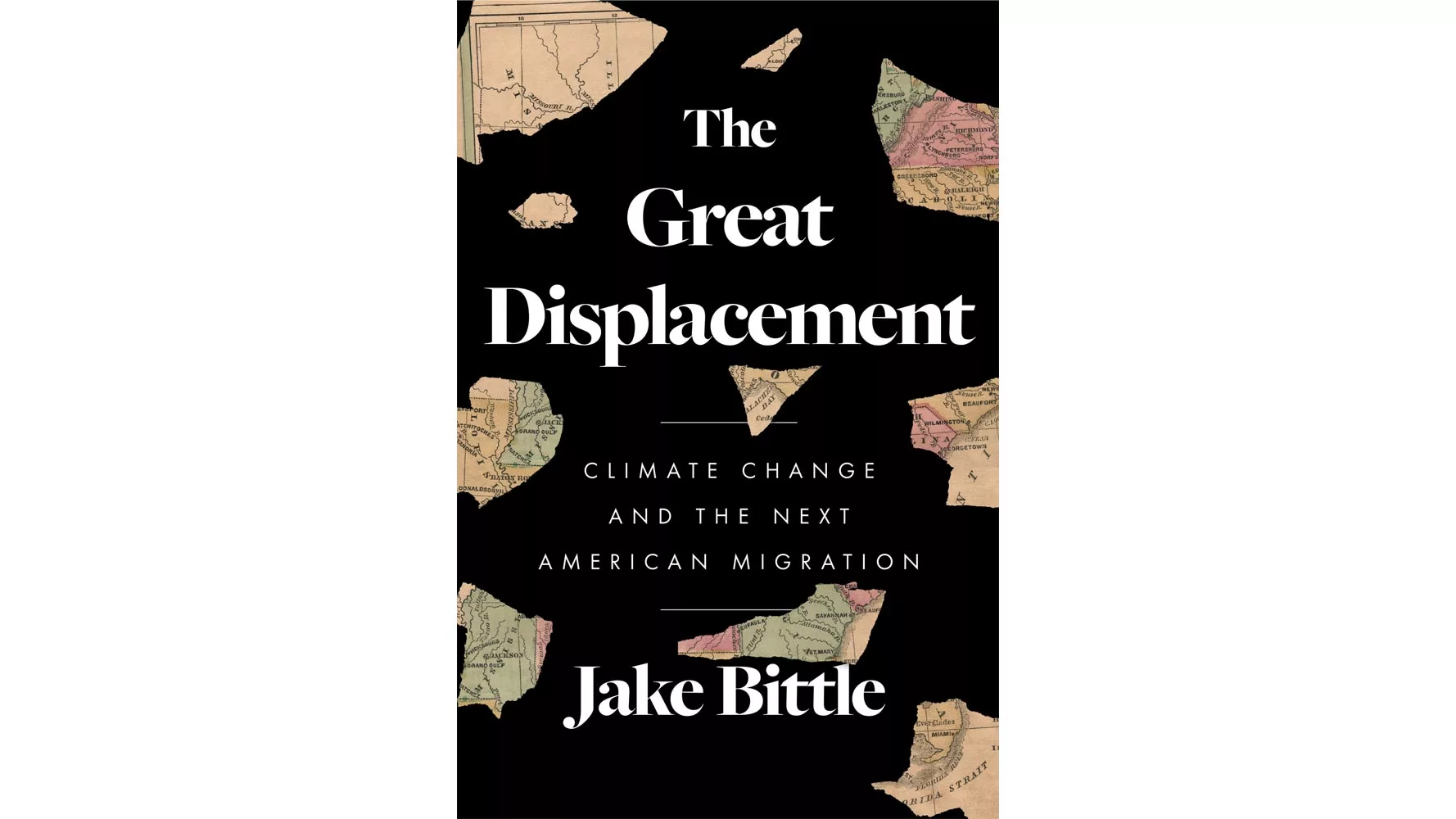
By Anthony Acciavatti
Great Displacement
The Great Displacement: Climate Change and the Next American Migration, by Jake Bittle. Simon & Schuster, 368 pages, $29.
March 14, 2023

If scientists have developed complex climate models that are often reduced to mere degree measurements for public consumption, then architects and designers routinely condense climate—adaptation proposals to sea walls and parks. Journalist Jake Bittle has written a rejoinder of sorts to these future-scenarios of living with climate change by exploring contemporary climate displacement in the United States.

The book’s argument is straightforward: climate displacement is already occurring, and its story “is messy, diffuse, and many-stranded. There is no single starting point, no shot-heard-round-the-world moment that kicked off this evolving process of relocation.” From soil erosion to droughts, and from flooding to wildfires, Bittle investigates the impact of climate displacement over eight compelling chapters. The result of hundreds of interviews and visits to each of the locations spread out across the U.S., the book is born from extensive fieldwork. In the hands of an unskilled narrator, this could easily create a sense of whiplash for a reader who encounters wildfires in California in one chapter and dire droughts in Arizona in another. Instead, the author reveals intricate connections among the people and places he visits.

Eschewing charts and maps, Bittle focuses on the lives of individuals and whole communities forced to migrate. Thick description can conjure images of worlds and experiences that might otherwise be flattened by black-and-white diagrams. For instance, in chapter four, we are introduced to the Verdins of Bayou Pointe-au-Chien, Louisiana. Here, a family with deep ties to this area in the Mississippi Delta has for generations been forced to confront soil erosion and flooding. Bittle’s approach allows him to not only give readers a sense of what it has been like for the Verdins (and families like them), but also detail the ways in which the conditions they’re facing are different from what people in the Florida Keys or the coast of North Carolina are confronting. Bittle’s ability to zoom in and out, combined with clear and striking prose, goads the reader into seeing climate displacement from a vantage point other than the frame of a single news cycle of disaster. Instead, we are shown how problems accrue over time, often slowly, but with clear warning signs.

In “Where Will We Go,” the eighth and final chapter, the author builds on the rich descriptions of climate displacement to speculate on what might come next. And, while the “largest migratory trends in the United States have little to do with climate change,” Bittle cites ample evidence to suggest that they will. Having shown how widespread the risks of climate change are in so many locales, it’s obvious that no place will go unscathed.

But some areas may prove safer and more welcoming than others, particularly in the Rust Belt. As Bittle points out, shrinking cities like Buffalo, New York, have attempted to turn their geography into a boon, with campaigns claiming that their community is a “climate-refuge city.” City campaigns aside, the author concludes with the question of responsibility. Or, as he asks it, “What do we owe each other?” Policy suggestions, ranging from addressing wealth inequity to reforming the insurance industry, abound. However, what this might look like and what it might mean to live in a more responsive world is not fully fleshed out in the concluding chapter—and with good reason! Architects and design professionals would benefit from reading the book and asking not only what their response and ability to respond to climate displacement entails, but in what ways design expertise can be most effective.

Looking for quick answers on architecture and design topics?
Try Ask RECORD, our new smart AI search tool.
Ask RECORD →

KEYWORDS: Book Reviews / Excerpts embodied energy

Share This Story

Looking for a reprint of this article?
From high-res PDFs to custom plaques, order your copy today!

Anthony Acciavatti is assistant professor at the Yale School of Architecture. His research on the Ganges River basin examines how people adapt to environmental uncertainty.

Post a comment to this article

Report Abusive Comment

Subscription Center
  • Create an Account
  • Start a Subscription
  • Manage My Account
  • Sign Up for Newsletters
  • Visit Customer Service
  • Update Preferences

More Videos

Sponsored Content

Sponsored Content is a special paid section where industry companies provide high quality, objective, non-commercial content around topics of interest to the Architectural Record audience. All Sponsored Content is supplied by the advertising company and any opinions expressed in this article are those of the author and not necessarily reflect the views of Architectural Record or its parent company, BNP Media. Interested in participating in our Sponsored Content section? Contact your local rep!

close
  • TAMLYN XtremeTrim Exterior Trim
    Sponsored byTamlyn

    Designing Cleaner Panel Facades: Why Exterior Trim Details Matter

  • Building with Vapor Barriers
    Sponsored byReef Industries, Inc.

    Vapor Barriers Help Control Moisture in Tighter Building Designs

  • Duct Interior with Prodeq System
    Sponsored byHenry, a Carlisle Company

    Designing Resilient Water Containment Systems

DESIGN:ED Podcast
Listen to Architectural Record’s DESIGN:ED Podcast

Events

June 16, 2026

Focus on the Façade: Exploring Steel, Timber & Fire-Rated Curtain Walls and Channel Glass Systems

Credits: 1 AIA LU/HSW; 1 AIBD P-CE; 0.1 ICC CEU

Explore modern façade and glazing systems that enhance daylighting, fire safety, and thermal performance while expanding architectural design possibilities.

June 18, 2026

Rebooting the Aging Office Building

Credits: 1 AIA LU/HSW; 1 AIBD P-CE; 0.1 ICC CEU; 1 PDH

Explore façade retrofit strategies and award-winning design concepts that can transform aging office buildings into healthier, higher-performing workplaces for today’s hybrid workforce.

View All Submit An Event

Products

2026 Architect's Square Foot Costbook

2026 Architect's Square Foot Costbook

See More Products

Popular Stories

Coronado Bridge

The Architect’s Guide to San Diego

SanDiegoAirport

Top 300 Architecture Firms of 2026

Crane Cove, ONO

Design Vanguard 2026 Winners

House on a Hill

Design Vanguard 2026: Forma

House A on a Hill

Design Vanguard 2026: Santiago Valdivieso

Focus on the Facade - Free Webinar - June 16, 2026

Related Articles

  • Delaware Children’s Theater

    Commemorating Minerva Parker Nichols, the First Independent Woman Architect in the United States

    See More
  • MVDRV Breaks Ground

    MVRDV Breaks Ground on First Project in the United States

    See More
  • Point-Action-Cooke-John

    The United States Artists’ Annual Fellowship Honors Five Architecture & Design Recipients

    See More

Related Products

See More Products
  • arch concept.jpg

    The Architecture Concept Book

See More Products
×

The latest news and information

#1 Source for Architectural Design, News and Products

SUBSCRIBE
  • RESOURCES
    • Advertise
    • Contact Us
    • Submit
    • Store
  • ACCOUNT CENTER
    • Create an Account
    • Start a Subscription
    • Manage My Account
    • Sign Up for Newsletters
    • Visit Customer Service
    • Update Preferences
  • PRIVACY
    • PRIVACY POLICY
    • TERMS & CONDITIONS
    • DO NOT SELL MY PERSONAL INFORMATION
    • PRIVACY REQUEST
    • ACCESSIBILITY
  • SERVICES
    • Marketing Services
    • Reprints
    • Market Research
    • List Rental
    • Survey/Respondent Access
  • STAY CONNECTED
    • Linkedin
    • Facebook
    • Instagram
    • YouTube
    • X (Twitter)

Copyright ©2026. All Rights Reserved BNP Media, Inc. and BNP Media II, LLC.

Design, CMS, Hosting & Web Development :: ePublishing