Architectural Record
search
cart
facebook twitter linkedin youtube
  • Sign In
  • Subscribe
  • Sign Out
  • My Account
Architectural Record
  • NEWS
    • Latest News
    • Awards
    • Interviews
    • Obituaries
    • Podcasts
      • Design:Ed Podcast
      • Sponsored Podcasts
  • OPINION
    • Book Reviews / Excerpts
    • Exhibition Reviews
    • Forum
  • EXCLUSIVES
    • Videos
    • Design Vanguard
    • Top 300 Firms
    • Sponsored Content
    • Sponsored eBooks
    • From the Archives
  • CONTINUING ED
    • Editorial Continuing Ed
    • CE Center
    • CE Academies
  • PROJECTS
    • Buildings By Type
    • Reuse & Renovation
    • Museums & Arts Centers
    • Colleges & Universities
    • Multifamily Housing
    • Interiors
    • Lighting
    • Kitchen & Bath
  • HOUSES
    • Record Houses
    • House of the Month
    • Featured Houses
  • PRODUCTS
    • Products by Category
    • Record Products of the Year
    • Latest Products
  • EVENTS
    • Dates & Events
    • Record on the Road
    • Innovation Conference
    • Sustainability in Practice
    • Women In Architecture
    • Webinars
    • Ad Excellence Awards
    • Submit an Event
  • CONNECT
    • Ask RECORD AI
    • Newsletters
    • Contact
    • Advertise
    • Editorial Calendar
    • Store
    • Customer Service
  • SUBMIT
    • Submission Guidelines
    • RECORD Competitions
  • MAGAZINE
    • Subscribe
    • My Account
    • Digital Edition
    • Current Issue
    • Firm Pass
    • Historic Archive
Architecture NewsOpinion

A Chicago Architecture Critic Interrogates the Role of Design in Constructing the City's History

Review: ‘Who is the City for? Architecture, Equity, and the Public Realm in Chicago’ by Blair Kamin
By Eric Mumford
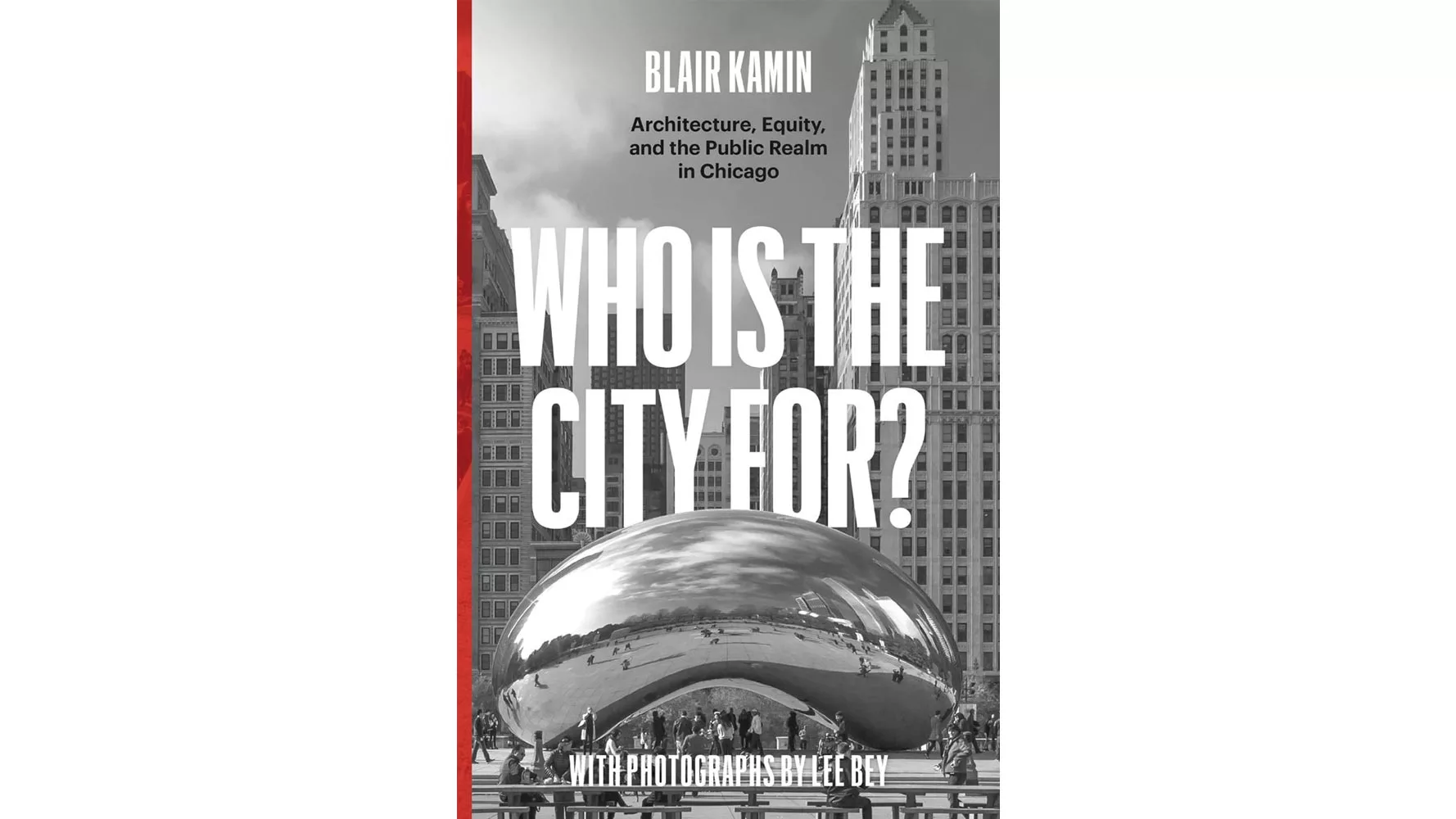
Who is the City For
Who is the City for? Architecture, Equity, and the Public Realm in Chicago, by Blair Kamin. University of Chicago Press, 312 pages, $29.
March 6, 2023
✕
Image in modal.
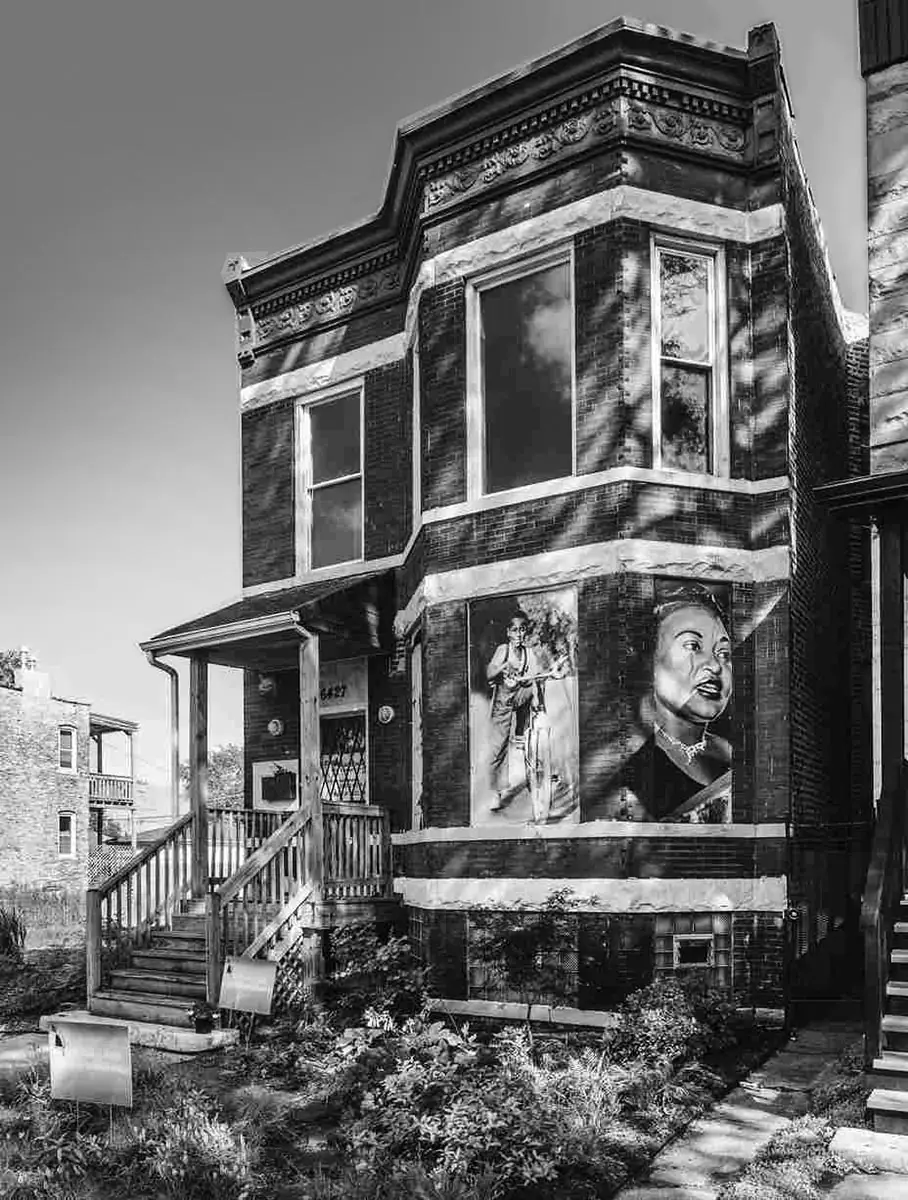
Lee Bey’s photo of a Chicago house.

Lee Bey’s photos of Chicago illustrate the book.

This collection of Blair Kamin’s architectural criticism from the Chicago Tribune—illustrated with photographs by Lee Bey, architecture critic for the Chicago Sun-Times—is a great documentation of Chicago’s recent architectural and urban history. Its 55 carefully observed essays range over many topics, from the yet-to-be-completed Obama library by Tod Williams Billie Tsien Architects to complex issues of urban improvement in an era of rampant inequality. Although the book lacks any clear overall concept, these short texts offer an excellent starting point from which to understand the specifics of recent Chicago architecture and urbanism, at a point where much of this past is now receding into pre-pandemic history.

The answer to the question posed by the title also proves to be elusive. Chicago is no longer primarily a central place for offices and transportation, and it sits uncomfortably on the remains of a partly ruined and profoundly segregated 20th-century industrial city. The violence of that racially divided past still lingers, as in most American cities. This makes Chicago’s current impressive status as a global center of education, culture, and business precarious, despite its many clear advantages in location, infrastructure, and urban amenities of all kinds, including its extraordinary lakefront public parks.

Kamin’s essays are organized into five sections, covering Chicago architecture in relation to national and local politics, urban design, historic preservation, and architecture and urban “good citizenship.” He considers many facets of ambitious new design interventions, which often take place in social and economic settings radically different from those of the past. His architectural judgments are tempered by an awareness of the limits of design’s ability to address severe social conflicts, as in his nuanced assessment of Michael Van Valkenburgh Associates’s 606 Trail, Chicago’s neighborhood version of New York’s High Line. Kamin also rightly emphasizes Chicago’s historic centrality to modern skyscraper design and considers some of the many design exchanges between Chicago firms and fast-growing cities in Asia, as well as Jeanne Gang’s architecturally ambitious just-completed St. Regis tower. He notes that Chicago still has much better pedestrian connectivity and a more publicly accessible waterfront than many newer global cities. At the same time, he doesn’t skip discussing the difficult issues raised by the continuing public design interventions in the most expensive and central parts of the city, such as the proposed Lincoln Yards development, nor does he assume that preserving historic sites and already affluent neighborhoods will stimulate new investment in the city’s devastated and once redlined South and West sides, a challenge now being taken up by Maurice Cox, the mayor’s city planning commissioner.

Important regional issues of historic preservation are also addressed, including that of key works of modern architecture such as Frank Lloyd Wright’s Robie House, Unity Temple in Oak Park, and Ludwig Mies van der Rohe’s Farnsworth House in Plano, all public sites, as well as newer historic-preservation projects like the still private but highly visible Lake Point Tow­er (1967), designed by George Schipporeit and John Heinrich, former associates of Mies. These articles are important, as preservation does not come easily in Chicago, a city that often even now tends to prefer new development to reuse for commercial and institutional projects. Kamin notes the “infamous savagery” of the demolition of Bertrand Goldberg’s Prentice Women’s Hospital in 2013, over strong community and preservationist objections. He emphasizes that reuse is often a better option architecturally, as in Johnston Marklee’s expert renovation of Josef Paul Kleihues’s Museum of Contempo­rary Art. Readers not familiar with Chicago’s recent design history will find much of interest here, even if not all of it may be a cause for optimism.

Looking for quick answers on architecture and design topics?
Try Ask RECORD, our new smart AI search tool.
Ask RECORD →

KEYWORDS: Book Reviews / Excerpts Chicago historic preservation urban planning

Share This Story

Looking for a reprint of this article?
From high-res PDFs to custom plaques, order your copy today!

Eric P. Mumford is professor of architecture at Washington University in St. Louis and author of Designing the Modern City: Urbanism Since 1850.

Post a comment to this article

Report Abusive Comment

Subscription Center
  • Create an Account
  • Start a Subscription
  • Manage My Account
  • Sign Up for Newsletters
  • Visit Customer Service
  • Update Preferences

More Videos

Sponsored Content

Sponsored Content is a special paid section where industry companies provide high quality, objective, non-commercial content around topics of interest to the Architectural Record audience. All Sponsored Content is supplied by the advertising company and any opinions expressed in this article are those of the author and not necessarily reflect the views of Architectural Record or its parent company, BNP Media. Interested in participating in our Sponsored Content section? Contact your local rep!

close
  • TAMLYN XtremeTrim Exterior Trim
    Sponsored byTamlyn

    Designing Cleaner Panel Facades: Why Exterior Trim Details Matter

  • Building with Vapor Barriers
    Sponsored byReef Industries, Inc.

    Vapor Barriers Help Control Moisture in Tighter Building Designs

  • Duct Interior with Prodeq System
    Sponsored byHenry, a Carlisle Company

    Designing Resilient Water Containment Systems

DESIGN:ED Podcast
Listen to Architectural Record’s DESIGN:ED Podcast

Events

June 16, 2026

Focus on the Façade: Exploring Steel, Timber & Fire-Rated Curtain Walls and Channel Glass Systems

Credits: 1 AIA LU/HSW; 1 AIBD P-CE; 0.1 ICC CEU

Explore modern façade and glazing systems that enhance daylighting, fire safety, and thermal performance while expanding architectural design possibilities.

June 18, 2026

Rebooting the Aging Office Building

Credits: 1 AIA LU/HSW; 1 AIBD P-CE; 0.1 ICC CEU; 1 PDH

Explore façade retrofit strategies and award-winning design concepts that can transform aging office buildings into healthier, higher-performing workplaces for today’s hybrid workforce.

View All Submit An Event

Products

2026 Architect's Square Foot Costbook

2026 Architect's Square Foot Costbook

See More Products

Popular Stories

Coronado Bridge

The Architect’s Guide to San Diego

SanDiegoAirport

Top 300 Architecture Firms of 2026

Crane Cove, ONO

Design Vanguard 2026 Winners

House on a Hill

Design Vanguard 2026: Forma

House A on a Hill

Design Vanguard 2026: Santiago Valdivieso

Focus on the Facade - Free Webinar - June 16, 2026

Related Articles

  • Detroit Design Festival Highlights the Role of Design in Transforming the City

    See More
  • At the Center for Architecture, Addressing the Role of Design After the Storm

    See More

Related Products

See More Products
  • 3dthinking.jpg

    3D Thinking in Design and Architecture: From Antiquity to the Future

  • 1444336282.gif

    The Handbook of Interior Design

See More Products
×

The latest news and information

#1 Source for Architectural Design, News and Products

SUBSCRIBE
  • RESOURCES
    • Advertise
    • Contact Us
    • Submit
    • Store
  • ACCOUNT CENTER
    • Create an Account
    • Start a Subscription
    • Manage My Account
    • Sign Up for Newsletters
    • Visit Customer Service
    • Update Preferences
  • PRIVACY
    • PRIVACY POLICY
    • TERMS & CONDITIONS
    • DO NOT SELL MY PERSONAL INFORMATION
    • PRIVACY REQUEST
    • ACCESSIBILITY
  • SERVICES
    • Marketing Services
    • Reprints
    • Market Research
    • List Rental
    • Survey/Respondent Access
  • STAY CONNECTED
    • Linkedin
    • Facebook
    • Instagram
    • YouTube
    • X (Twitter)

Copyright ©2026. All Rights Reserved BNP Media, Inc. and BNP Media II, LLC.

Design, CMS, Hosting & Web Development :: ePublishing