‘Emerging Ecologies’ at MoMA Looks to Architecture’s Past for a Fresh Perspective on a Sustainable Future
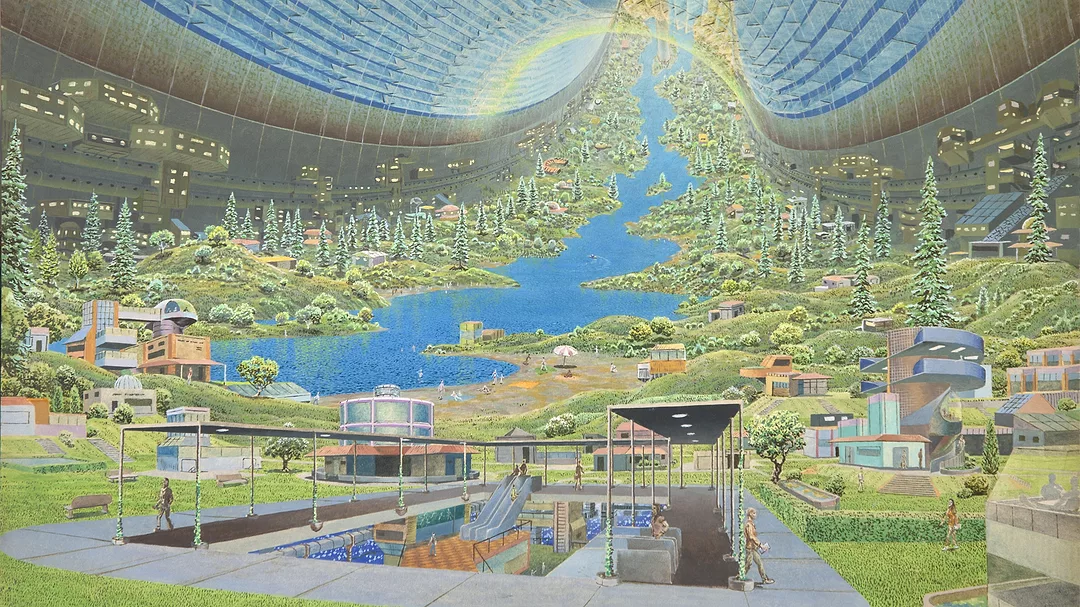
An unused 1975 illustration by Don Davis commissioned by NASA for a special 1977 publication exploring design possibilities for space settlements. Image courtesy Collection Don Davis
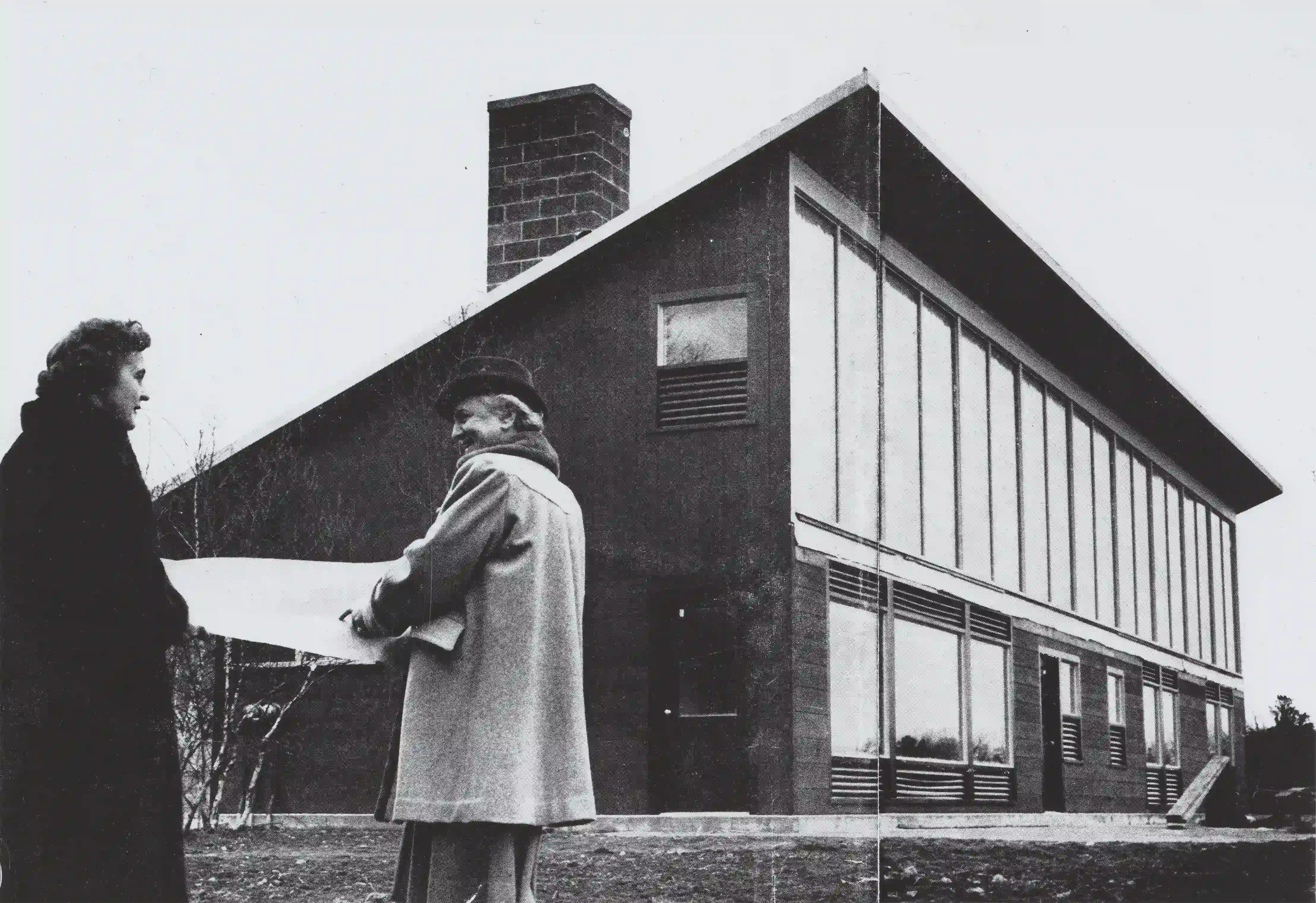
Eleanor Raymond with physicist Mária Telkes at the Dover Sun House (1948). Photo courtesy Special Collections, Frances Loeb Library, Harvard University GSD
Opened September 17, the latest architecture exhibition at New York’s Museum of Modern Art (MoMA) tackles ecological concerns through a historical lens, looking back at the intersections of architecture with the environmental movement as it came to fruition in the 20th century.
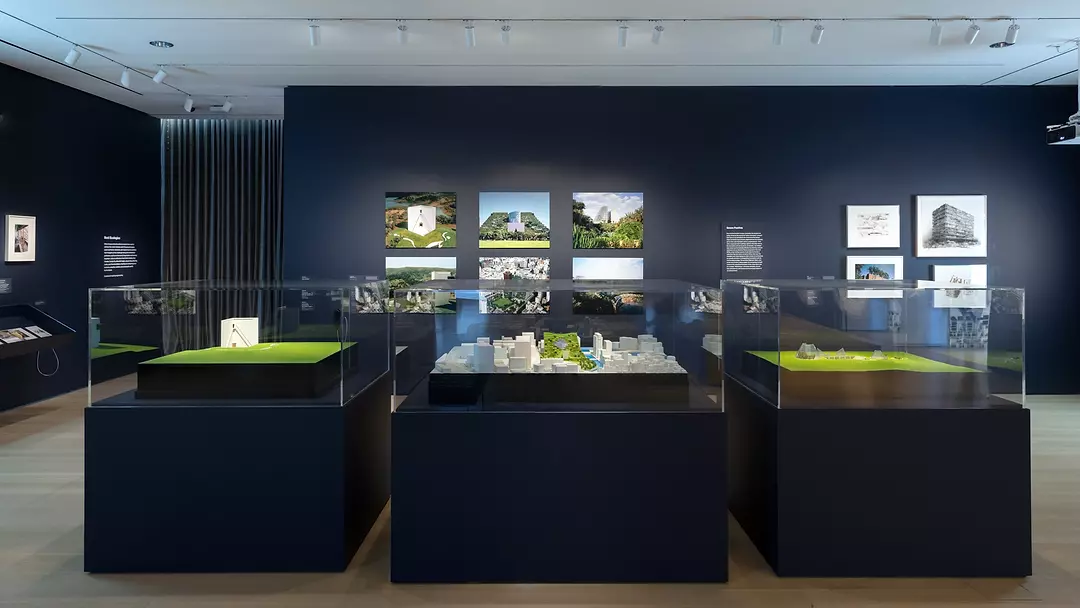
Encompassing both built and unbuilt works from the 1930s through the 1990s, Emerging Ecologies: Architecture and the Rise of Environmentalism delves into an array of architectural responses to the concerns of environmentalism, both bringing to light contributions of lesser-known practitioners while reexamining the portfolio of the era’s masters, such as Buckminster Fuller and Frank Lloyd Wright. To that egalitarian aim, the large-scale model of Wright’s instantly recognizable Fallingwater which greets visitors as they enter the exhibition abuts a 13-foot-long scroll produced during one of seminal feminist architect Phyllis Birkby’s "environmental fantasy" workshops for women in the 1970s.
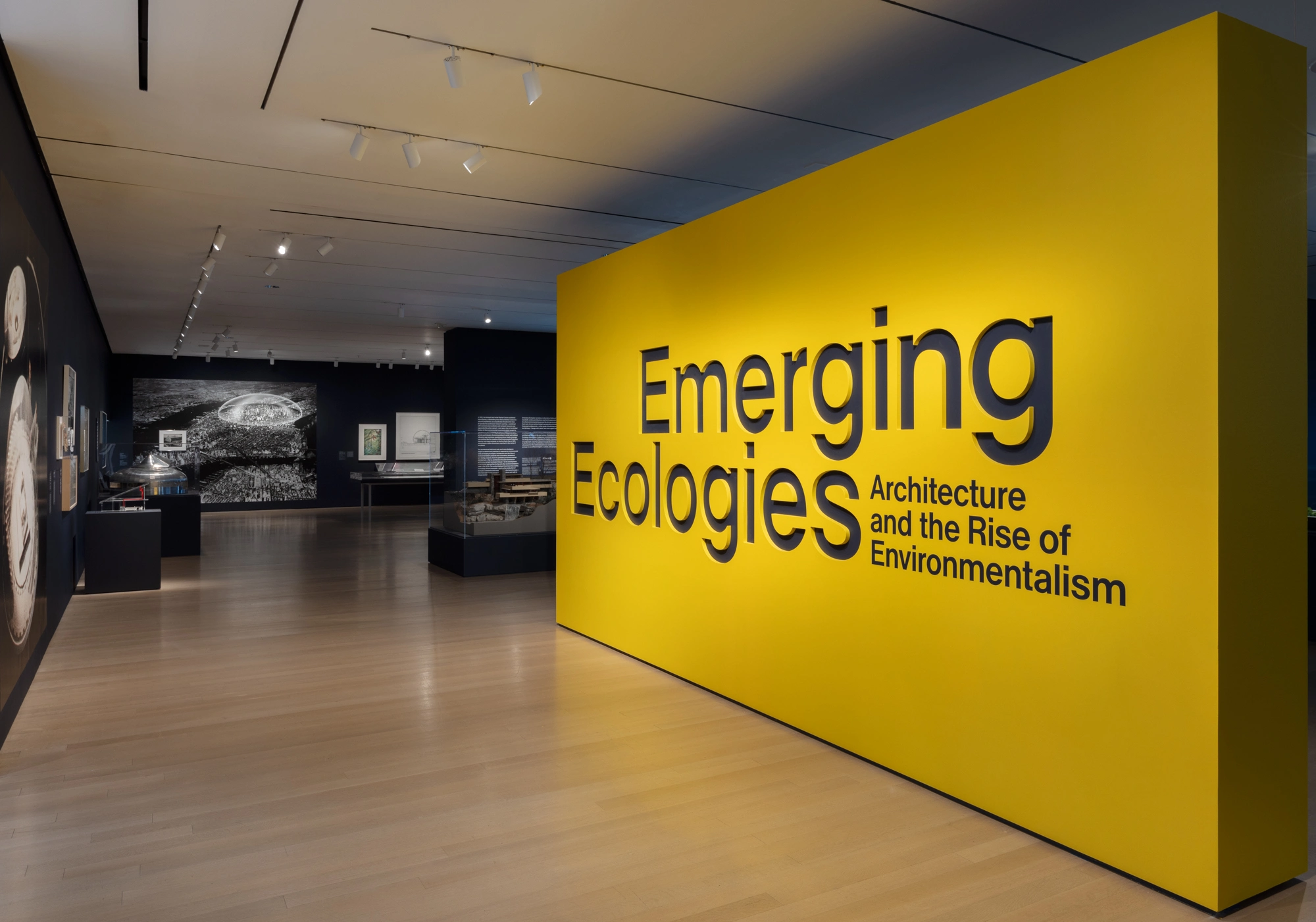
Installation view of Emerging Ecologies: Architecture and the Rise of Environmentalism, on view at The Museum of Modern Art from September 17, 2023 through January 20, 2024. Photo by Jonathan Dorado
Emerging Ecologies is the first exhibition presented by the Emilio Ambasz Institute for the Joint Study of the Built and the Natural Environment, which was established in 2020 within MoMA’s Department of Architecture and Design to conduct research initiatives and organize exhibitions and events on topics related to the built environment and environmental justice. According to MoMA, this is the first exhibition at a major museum to survey the relationship between architecture and the environmental movement. “In thinking about how architecture can address the climate crisis today, it’s important for us to have a historical understanding of how architecture has responded to environmental and ecological issues in the past,” says inaugural Emilio Ambasz Institute director Carson Chan, who curated the exhibition. “This is a moment to look at the inventive and experimental ideas that have taken place already.”
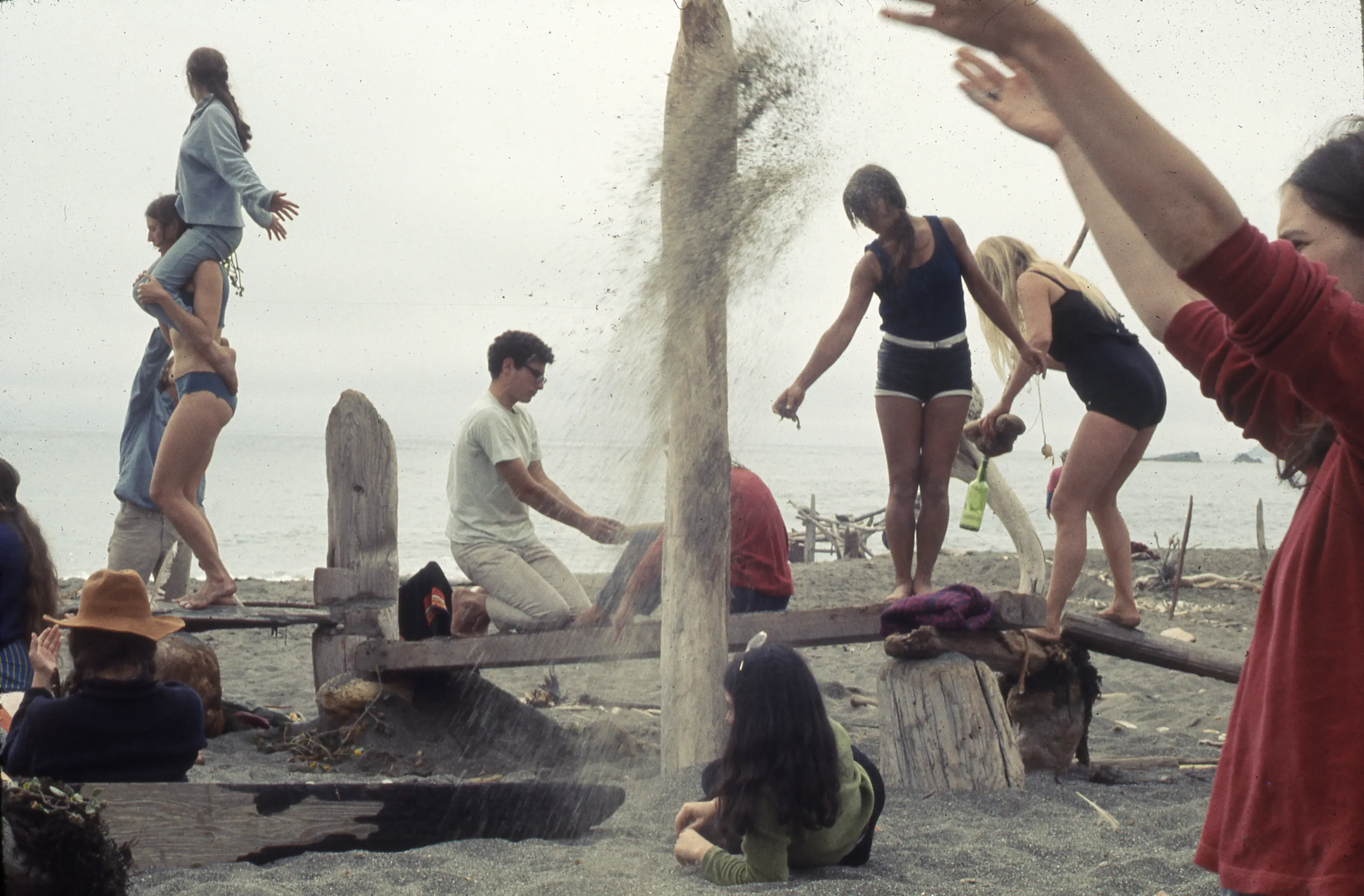
Participants in the Sea Ranch Driftwood Village Rebuilt event, Sea Ranch, California (1968). Photo courtesy Lawrence Halprin Collection, The Architectural Archives, University of Pennsylvania
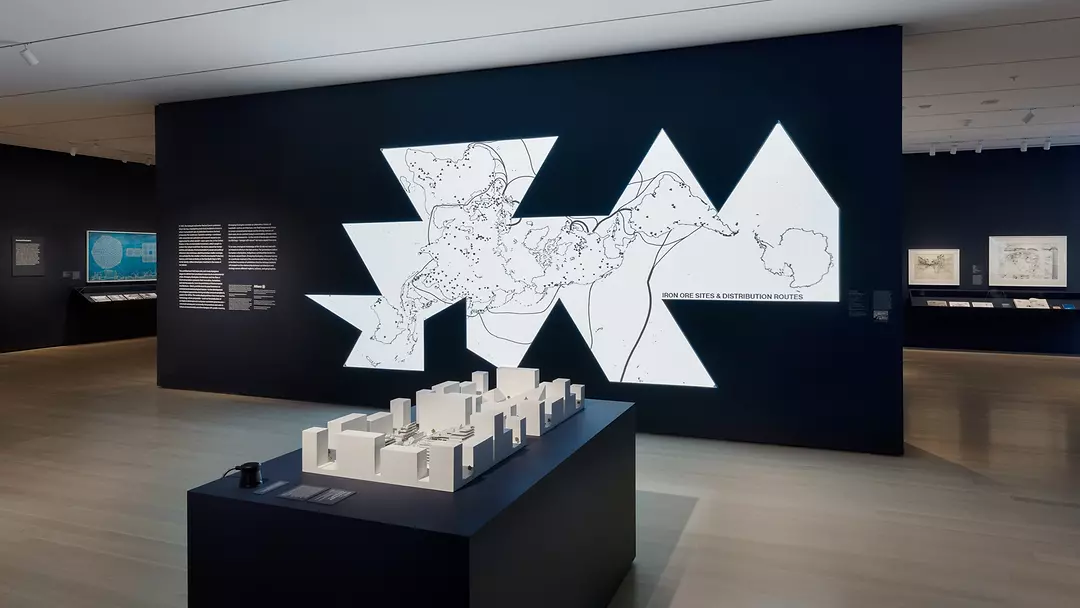
The exhibition is not overly proscriptive, allowing visitors to wander and take in the works—both individually and in toto—without being explicitly guided by any linear timeline or walls of text. Rather than rely on chronology to parse the diverse array of architectural production present, the exhibition is subtly divided into five thematic groupings, titled Environment as Information, Environmental Enclosures, Multispecies Design, Counterculture Experiments, and Green Poetics. Made up of over 150 models, photographs, diagrams, sketches, and archival materials, the exhibition’s broad scope includes projects such as Fuller’s Dome Over Manhattan (1959); plans for an unrealized dolphin research center by the avant-garde practice Ant Farm (1968); documentary footage of the New Alchemy Institute from the 1970s; and Eugene Tsui’s fantastical “biologic’ designs. (1982).
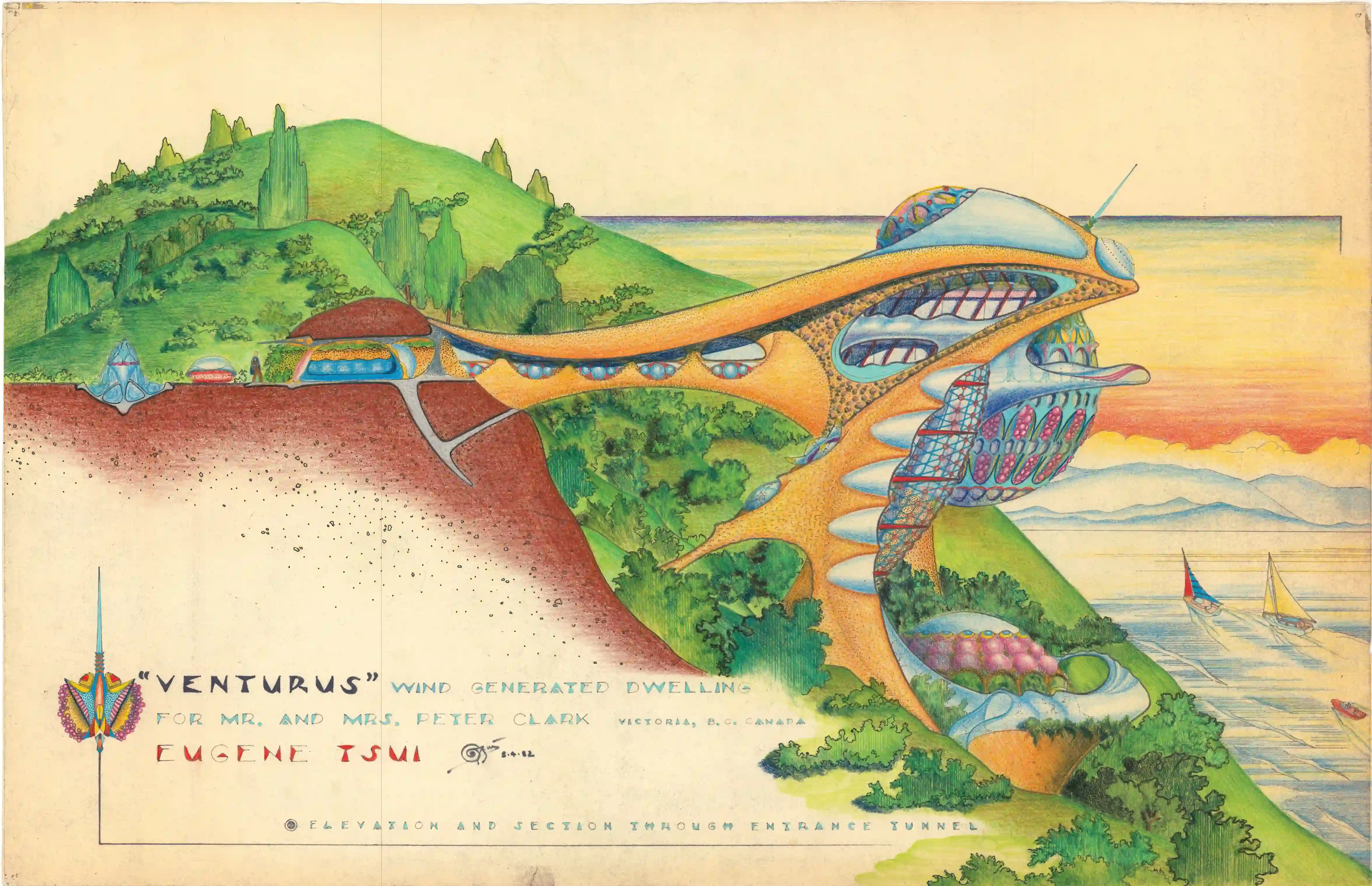
“Venturus,” drawing of a wind-generated dwelling designed for Mr. and Mrs. Peter Cook (1982) by Eugene Tssui. Photo courtesy Collection Eugene Tssui
Despite the lack of formal similarity to the show’s works, Chan says a natural order arose over the course of the two years it took to organize the exhibition.
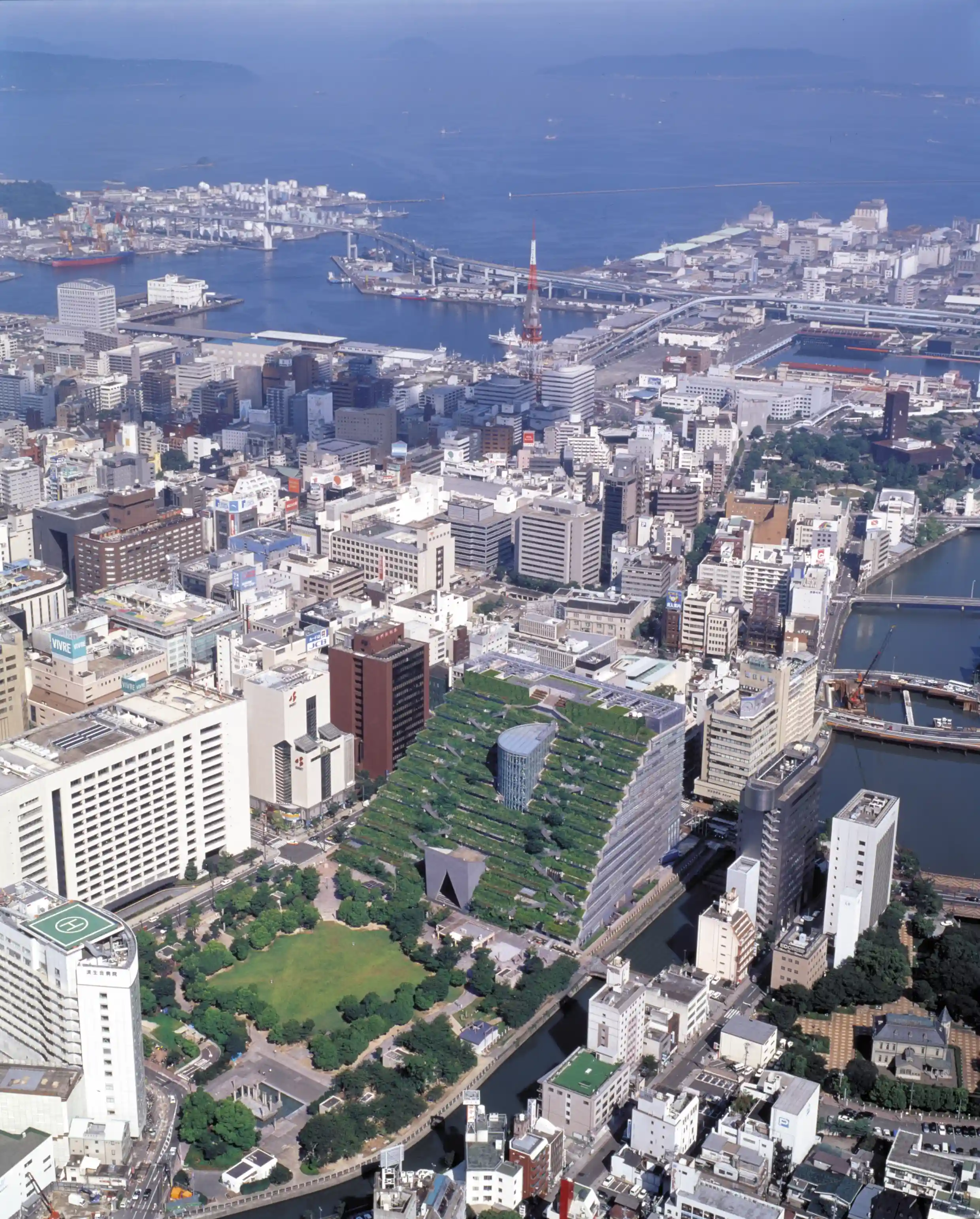
Prefectural International Hall, Fukuoka, Japan (1990) by Emilio Ambasz. Photo by Hiromi Watanabe, courtesy Collection Emilio Ambasz
“It really dawned on me that we were looking at a movement, not just a number of disparate attempts to respond to environmental issues,” he told RECORD. “All these people knew each other—they all went to the same conferences, they wrote to each other, they met with each other—but they all had very different methods and responses to these concerns."
After absorbing the exhibition’s historical array, visitors can visit a small, bench-lined hallway and don headphones which play seven newly commissioned audio recordings with commentary from contemporary practitioners—Mae-ling Lokko, Jeanne Gang, Meredith Gaglio, Charlotte Malterre-Barthes, Amy Chester, Carolyn Dry, and Emilio Ambasz—on what architects today can do in the face of the climate crisis.
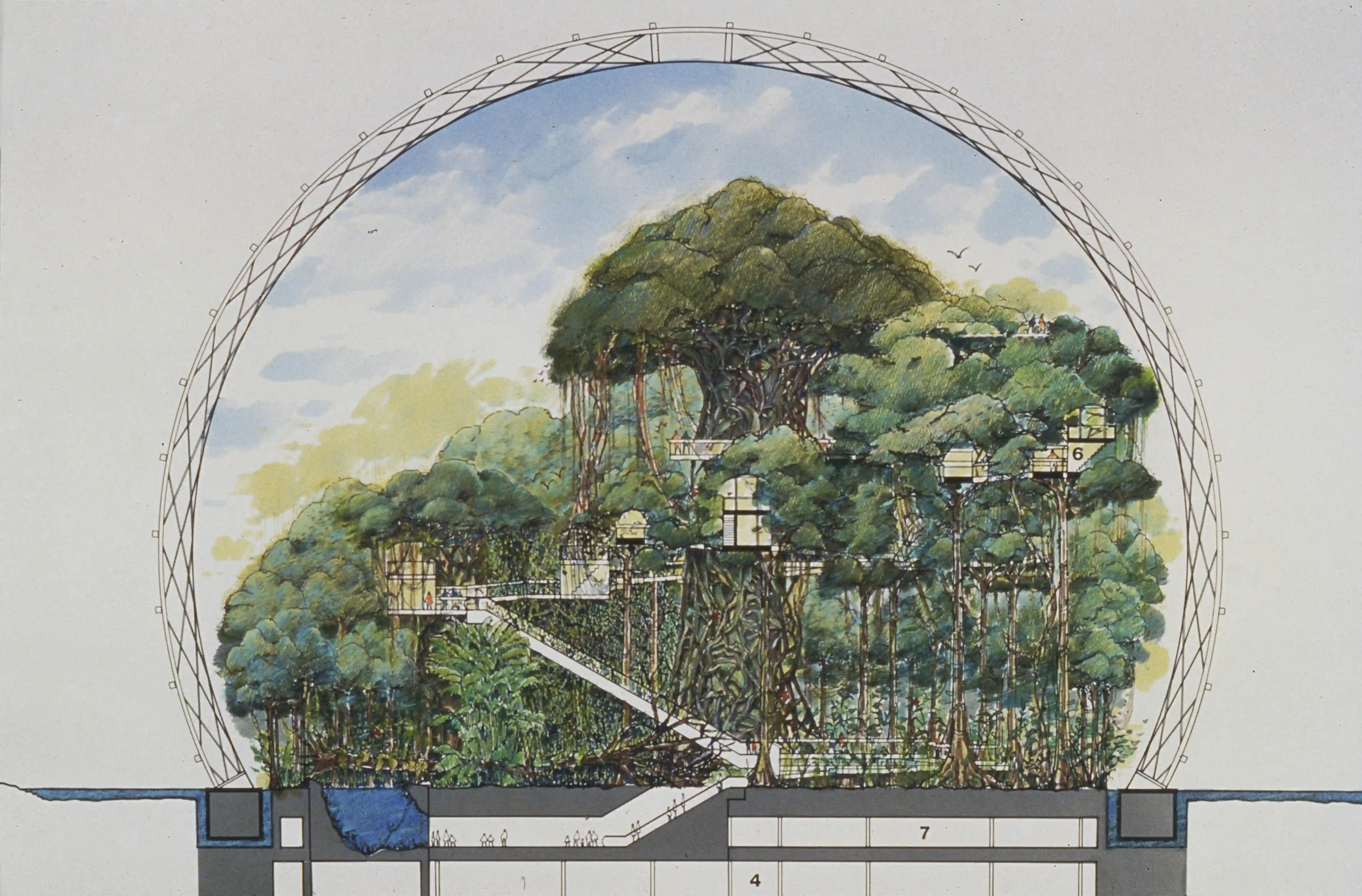
Section drawing of the Tsuruhama Rain Forest Pavilion, Osaka, Japan (1994–95) by Cambridge Seven Associates. Image courtesy Collection Cambridge Seven Associates
“For the longest time, architecture has been defined as buildings, as objects. Part of the aim of the show, and of the Ambasz Institute, is to expand our definition of architecture to include process— everything from resource extraction to labor, to social, political, economic, and racial contexts, to what happens after we're done with the building,” says Chan. “All of this is architecture; the building is just one small part of the process.”
By consolidating scattered ephemera of the past into a relevant contemporary resource, Emerging Ecologies avoids the pitfalls of exhibitions that myopically position works of architecture as savior, such as MoMA’s recent New York, New Publics. As the pursuit of sustainability increasingly defines architectural practice, the definition of “green” design has become more muddied, and debates on how best to achieve it more fractured and polluted by financial interests. Returning to the singular minds once working on the fringes of practice could offer today’s architects a much-needed perspective shift when it comes to considering environmental aims.
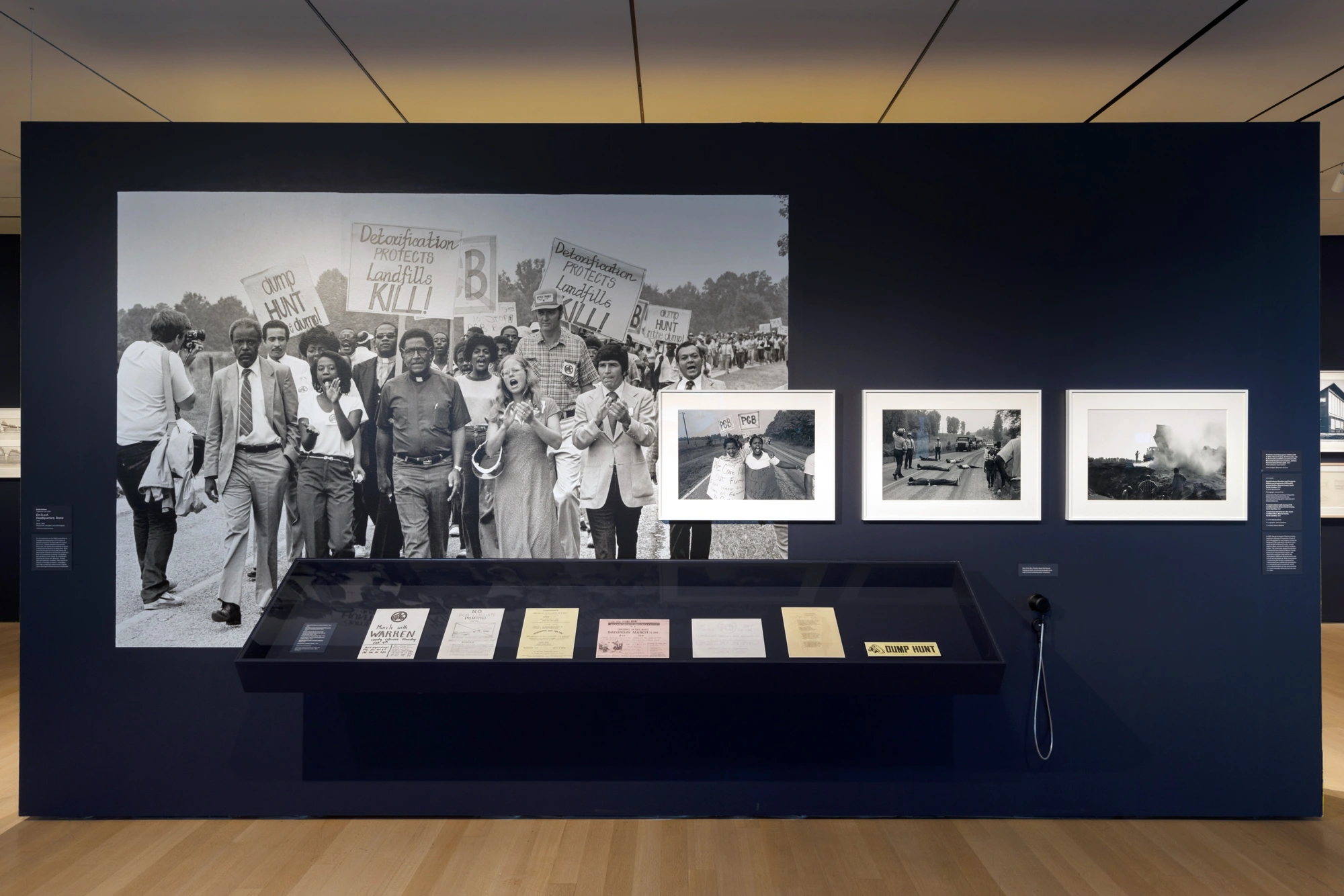
Installation view depicting the history of the 1982 PCB landfill protest, led by Reverends Leon White and Joseph Lowery, and environmentalist Ken Ferruccio in Afton, Warren County, North Carolina. Photo by Jonathan Dorado
Just two days after the September 13 press preview of Emerging Ecologies, a group of 50 climate demonstrators descended upon MoMA in protest of the museum’s ties to private equity firm Kohlberg Kravis Roberts, which is a major investor in fossil fuel projects including the impending Coastal Gaslink Pipeline. By blocking ticketed entrances, the demonstration effectively shut down the museum lobby for over two hours and resulted in the arrests of 16 protestors. Though perhaps unfortunate timing for the organizers of the exhibition—which included archival material from the successful collective actions against the Orme Dam project and the PCB landfill in the 1970s and 80s, respectively—the all-too-vivid stroke of irony is a stark reminder that environmentalism’s entrance into the mainstream has not resolved many of its primary concerns of equity, habitat destruction, and resource consumption, only obfuscated them. The fight continues and the cycles of history are bound to repeat.
Looking for quick answers on architecture and design topics?
Try Ask RECORD, our new smart AI search tool.
Ask RECORD →
Looking for a reprint of this article?
From high-res PDFs to custom plaques, order your copy today!