Architectural Record
search
cart
facebook twitter linkedin youtube
  • Sign In
  • Subscribe
  • Sign Out
  • My Account
Architectural Record
  • NEWS
    • Latest News
    • Awards
    • Interviews
    • Obituaries
    • Podcasts
      • Design:Ed Podcast
      • Sponsored Podcasts
  • OPINION
    • Book Reviews / Excerpts
    • Exhibition Reviews
    • Forum
  • EXCLUSIVES
    • Videos
    • Design Vanguard
    • Top 300 Firms
    • Sponsored Content
    • Sponsored eBooks
    • From the Archives
  • CONTINUING ED
    • Editorial Continuing Ed
    • CE Center
    • CE Academies
  • PROJECTS
    • Buildings By Type
    • Reuse & Renovation
    • Museums & Arts Centers
    • Colleges & Universities
    • Multifamily Housing
    • Interiors
    • Lighting
    • Kitchen & Bath
  • HOUSES
    • Record Houses
    • House of the Month
    • Featured Houses
  • PRODUCTS
    • Products by Category
    • Record Products of the Year
    • Latest Products
  • EVENTS
    • Dates & Events
    • Record on the Road
    • Innovation Conference
    • Sustainability in Practice
    • Women In Architecture
    • Webinars
    • Ad Excellence Awards
    • Submit an Event
  • CONNECT
    • Ask RECORD AI
    • Newsletters
    • Contact
    • Advertise
    • Editorial Calendar
    • Store
    • Customer Service
  • SUBMIT
    • Submission Guidelines
    • RECORD Competitions
  • MAGAZINE
    • Subscribe
    • My Account
    • Digital Edition
    • Current Issue
    • Firm Pass
    • Historic Archive
Architecture NewsOpinion

Iwan Baan Surveys the Curious Likeness of Two Capitals of Power and Play in ‘Rome–Las Vegas’

Excerpt: Rome–Las Vegas: Bread and Circuses, by Iwan Baan
Rome-Las Vegas_04.jpg

Photo © Iwan Baan, courtesy Lars Müller Publishers
August 26, 2024
✕
Image in modal.

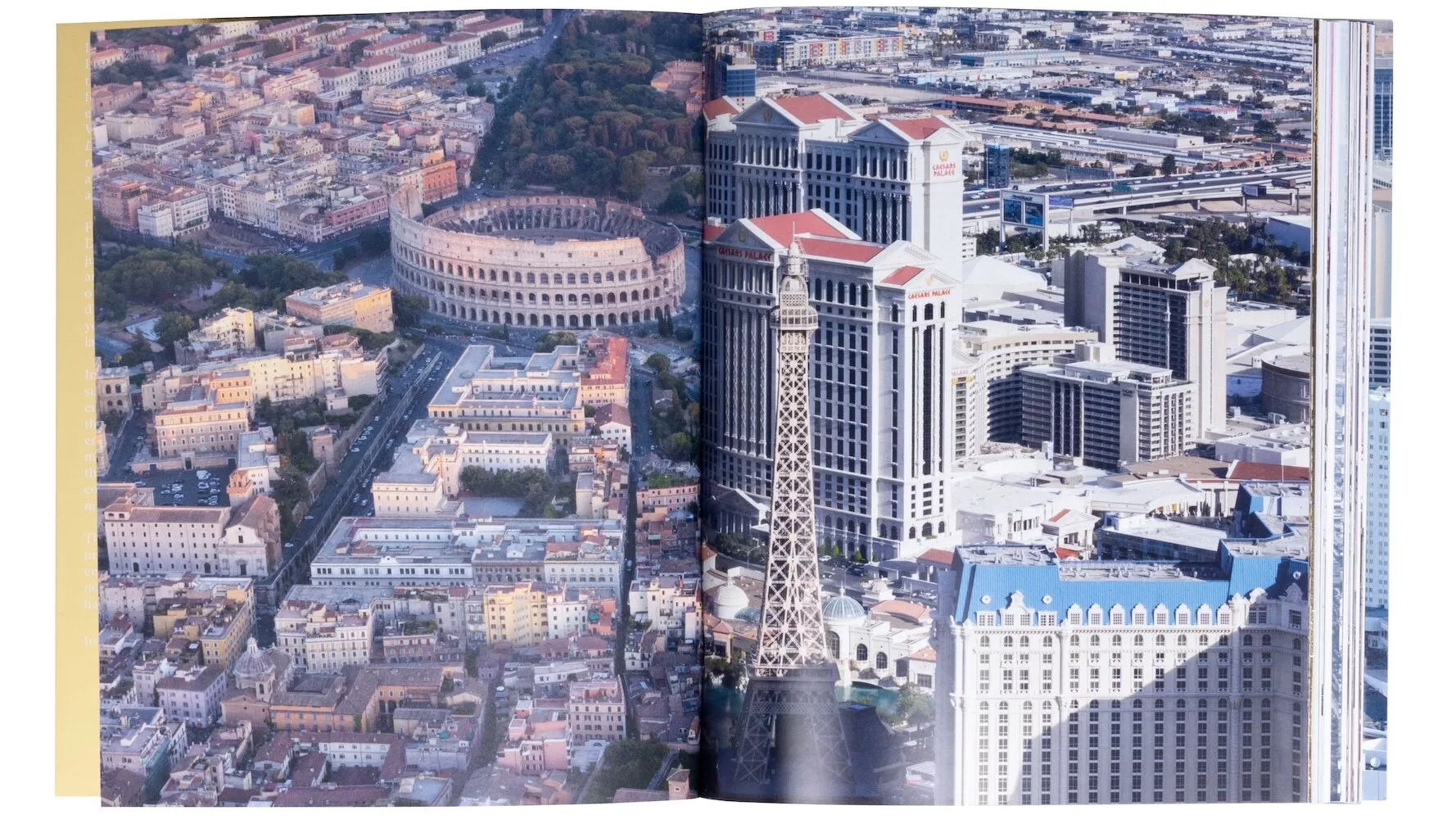
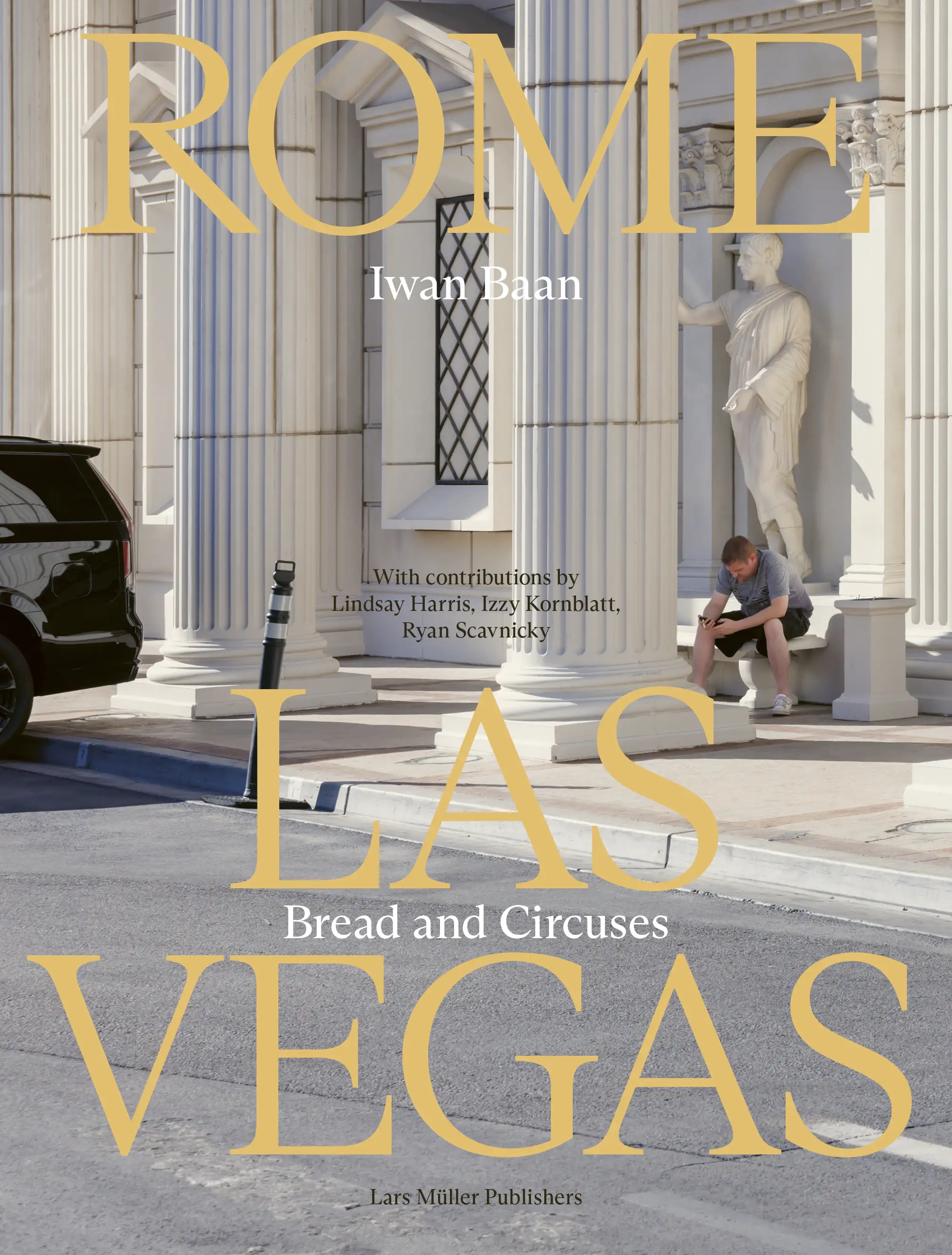
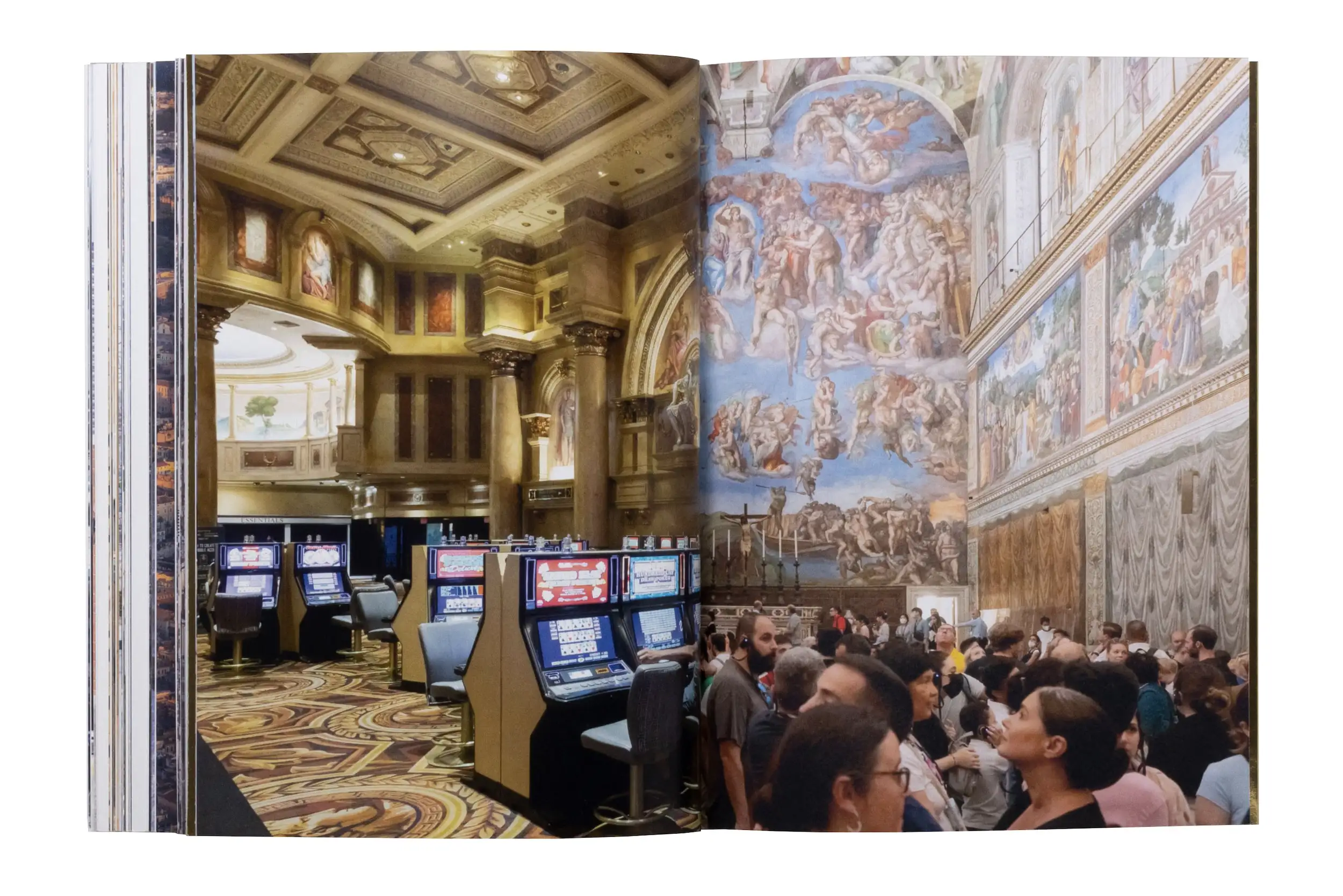
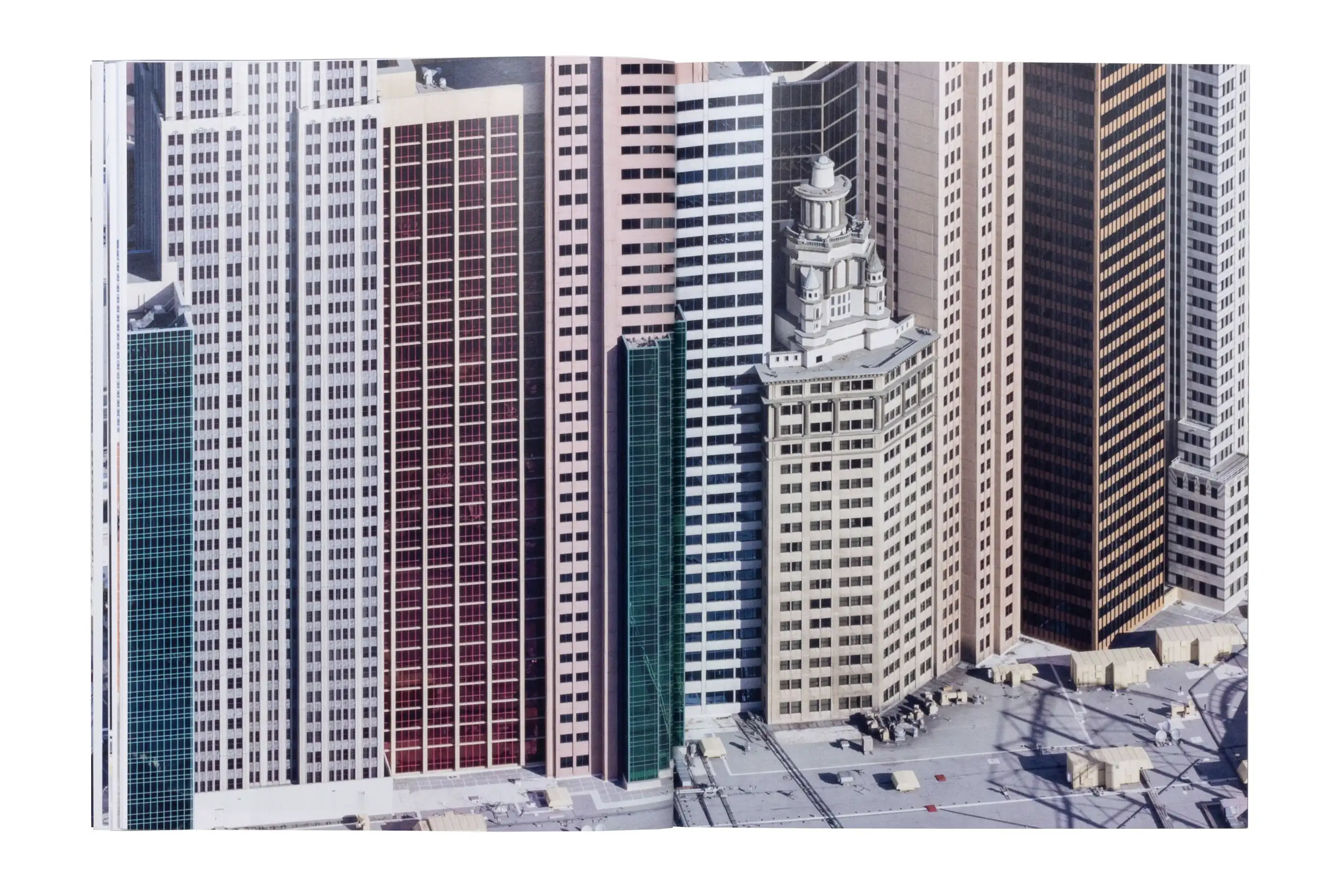
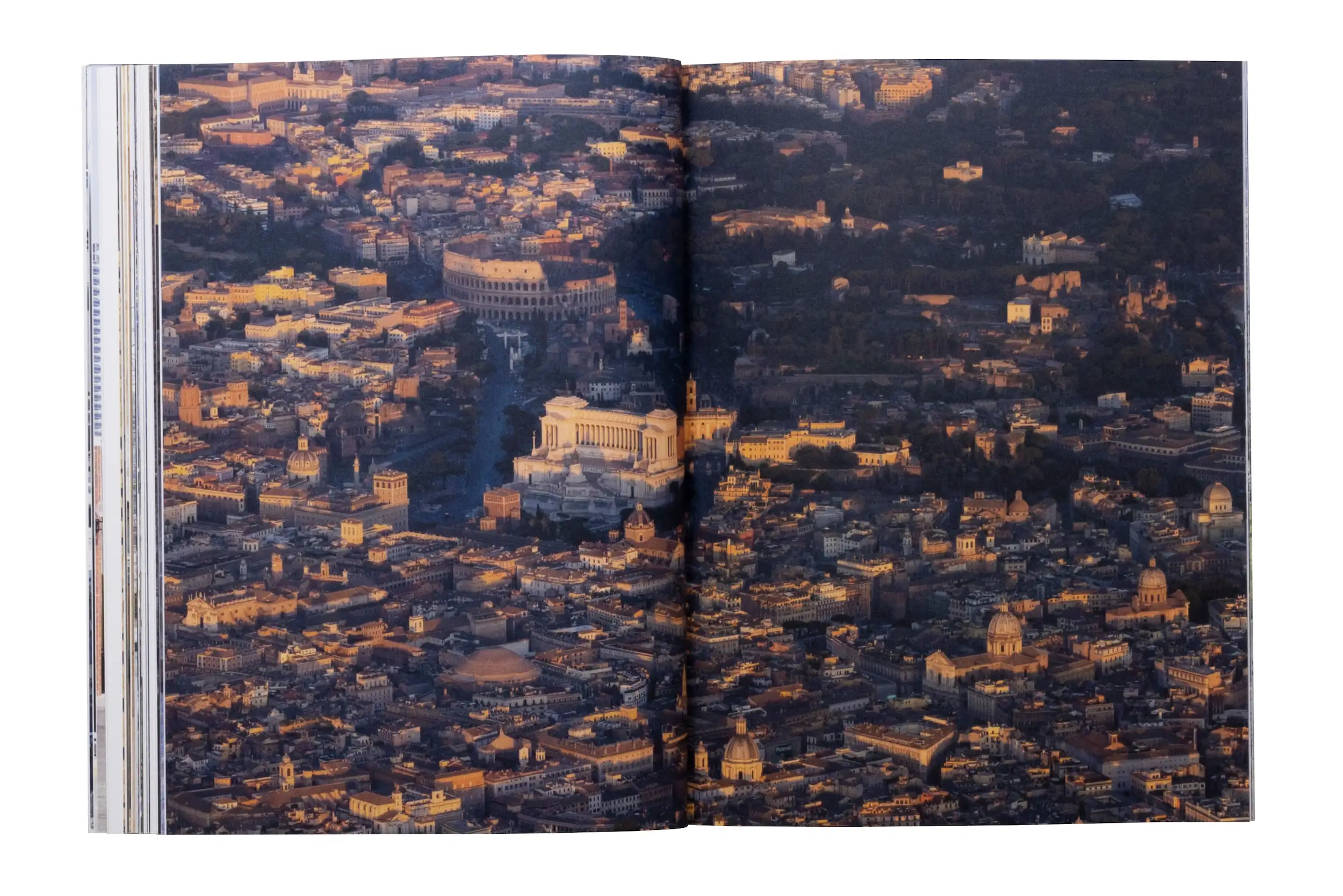
RECORD contributing photographer Iwan Baan explores the frenetic atmospheres of the former capital of the Roman Empire and Sin City in Rome–Las Vegas: Bread and Circuses. Primarily consisting of Baan’s photographs, arranged in compelling juxtaposition, the book includes essays by Lindsay Harris, Ryan Scavnicky, and RECORD contributing editor Izzy Kornblatt. It also comes 50 years after Denise Scott Brown, Robert Venturi, and Steven Izenour’s seminal Learning from Las Vegas (1972). Following is an excerpt by Kornblatt, who reflects on an encounter with Baan and Scott Brown.


Rome-Las Vegas Baan.

Rome–Las Vegas: Bread and Circuses, by Iwan Baan. Contributions by Lindsay Harris, Ryan Scavnicky, and Izzy Kornblatt. Lars Müller Publishers, 320 pages, $53.


About twenty minutes off of I-95, at the end of a lane lined by midcentury houses in a leafy corner of Philadelphia, stands the stately Art Nouveau residence of Denise Scott Brown. The sharp contrast between this impressive house, evidently designed to stand alone, and its smaller neighbors, no doubt built when the estate was subdivided, lends the street an aesthetic dissonance befitting its occupant. Denise, over the course of a decades-long career as one of the most influential architectural thinkers of the postwar era, has consistently argued for the validity and the vitality of the ordinary—of those features of the built environment shaped not by architects but by broader economic and social forces.

Iwan and I arrived late morning on a sweltering July day. The planned topic of discussion for our visit was, naturally, Las Vegas, but first Denise took us on an abridged house tour. She noted the millwork—could it have been the design of someone affiliated with Charles Rennie Mackintosh?—and its eclectic mix of furnishings and decorations, from a metal-and-plastic McDonald’s sign to floral-pattern wallpaper designed by the late Bob Venturi, to furniture varied in style but consistent in comfort. Through her second-floor bedroom she brought us out to a terrace overlooking a gently sloping lawn. This, she told us, is where she dances to Klezmer music and where, when she hosted a reception in the midst of the pandemic, she came out to speak to the guests gathered below.

Downstairs, seated in the airy dining room after lunch, we turned to one of Iwan’s aerial photographs of Las Vegas. Denise famously organized the 1968 Yale studio that traveled to Las Vegas and conducted research for a book that would change the course of 20th-century architecture—Learning from Las Vegas (1972), co-authored with Bob Venturi and Steven Izenour. But the Las Vegas that Bob and Denise had so assiduously studied bears little resemblance to the Las Vegas of today. Its contemporary landscape of themed casino resorts and monumental attractions, realized on a scale that would have impressed even the likes of megalomaniacal French architect Étienne-Louis Boullée (1728–1799), seems somehow both paradigmatic of the contemporary city and not like a city at all.
Rome-Las Vegas Baan.

Photo © Iwan Baan, courtesy Lars Müller Publishers

Looking at Iwan’s photographs, Denise suggested to us that Las Vegas has not changed all that much. She remarked that the city’s new megastructures are “signs visible from the air before ever you get there—they dominate everything.” Yet, she continued, “Does that mean that they are extraordinary or ordinary?”  The commercial techniques of the earlier city have evolved in medium and scale: from the Strip’s midcentury neon signs—Learning from Las Vegas’s “iconography”—to its 1980s–1990s transformation into “scenography,” exemplified by themed resorts, such as the Excalibur castle and Luxor pyramid, culminating in its characterization today by the sublime purity of a building like the Sphere. Now that the city’s decorated sheds have fully given way to ducks, might it have outlived its usefulness as a case study in understanding (and learning from) ordinariness in the built environment?

Las Vegas’s economy has changed, too, Denise noted, recalling the relationship she developed with the casino magnate Steve Wynn, who helped fund her Perelman Quadrangle project at the University of Pennsylvania (2000). Like other developers of recent decades, Wynn understood that Las Vegas’s offerings needed to expand beyond gambling to encompass everything from entertainment to high-end dining to golf. But Wynn had gone even further, rejecting the campy ornament of earlier resorts, and predicting, Denise recalled, that neon signage would soon become irrelevant.

Denise had not found his prediction entirely convincing. Paraphrasing the late casino architect Alan Lapidus, she argued that people who come to Las Vegas feel “afraid that something wonderful might happen,” and that the sterile architecture of generic luxury was unlikely to capture the imagination. Neon itself may have gone to the “graveyard,” the Neon Museum’s repository of decommissioned signage located north of the Las Vegas Strip that Denise described as “like a cathedral,” but the exuberance and vulgarity that it has come to represent remains relevant. Denise, now ninety-two, has not visited Las Vegas in years. Still, the bold forms of the new casinos and the all-seeing eye of the Sphere would seem to confirm her view.
Rome-Las Vegas Baan.

Photo © Iwan Baan, courtesy Lars Müller Publishers
Rome-Las Vegas Baan.

Photo © Iwan Baan, courtesy Lars Müller Publishers

As we sat downstairs, we turned to Denise’s own photography. In a well-practiced presentation, Denise took us from South Africa through Philadelphia to Las Vegas, demonstrating the central role that photography has played in her efforts to perceive and understand the built world. The photos, almost all of ordinary subjects and places, are themselves extraordinary—and in their discovery of the sublime within the mundane, they seem, intriguingly, to prefigure Iwan’s own photographs of Rome and Las Vegas.

A few hours later, as we made our way back to the highway, it occurred to me that the similarity is no accident. The significance of Denise’s 1968 Las Vegas, as constructed and illuminated through her photographs and writings, is less in its status as the paradigm of ordinary sprawl—after all, that claim served as a justification for Bob and Denise’s own architectural methods—than in the empathetic, serious and nonjudgmental method of approaching a place that it introduced to the world of architecture, and it is this method that can be felt in the work of Iwan and many others working today.

Looking for quick answers on architecture and design topics?
Try Ask RECORD, our new smart AI search tool.
Ask RECORD →

KEYWORDS: Book Reviews / Excerpts Denise Scott Brown Iwan Baan Las Vegas Robert Venturi Rome

Share This Story

Looking for a reprint of this article?
From high-res PDFs to custom plaques, order your copy today!
Post a comment to this article

Report Abusive Comment

Subscription Center
  • Create an Account
  • Start a Subscription
  • Manage My Account
  • Sign Up for Newsletters
  • Visit Customer Service
  • Update Preferences

More Videos

Sponsored Content

Sponsored Content is a special paid section where industry companies provide high quality, objective, non-commercial content around topics of interest to the Architectural Record audience. All Sponsored Content is supplied by the advertising company and any opinions expressed in this article are those of the author and not necessarily reflect the views of Architectural Record or its parent company, BNP Media. Interested in participating in our Sponsored Content section? Contact your local rep!

close
  • TAMLYN XtremeTrim Exterior Trim
    Sponsored byTamlyn

    Designing Cleaner Panel Facades: Why Exterior Trim Details Matter

  • Building with Vapor Barriers
    Sponsored byReef Industries, Inc.

    Vapor Barriers Help Control Moisture in Tighter Building Designs

  • Duct Interior with Prodeq System
    Sponsored byHenry, a Carlisle Company

    Designing Resilient Water Containment Systems

DESIGN:ED Podcast
Listen to Architectural Record’s DESIGN:ED Podcast

Events

June 10, 2026

Rethinking Stormwater – The Power of Porous Paving

Credits: 1 AIA LU/HSW; 1 AIBD P-CE; 0.1 ICC CEU

Learn how porous paving systems support stormwater management, reduce heat island effects, and enhance sustainable site design performance.

June 11, 2026

Very Early Warning Fire Detection for Mission-Critical Facilities

Credits: 1 AIA LU/HSW; 1 AIBD P-CE; 0.1 ICC CEU

Examine advanced fire detection strategies that support uptime and enhance safety in data centers and other mission-critical facilities.

View All Submit An Event

Products

2026 Architect's Square Foot Costbook

2026 Architect's Square Foot Costbook

See More Products

Popular Stories

Practice Matters illustration

What’s in a (Firm’s) Name? Thinking About Succession and Legacy

Practice Matters illustration

By the Numbers: Counting America's Architects

House on a Hill

Design Vanguard 2026: Forma

Crane Cove, ONO

Design Vanguard 2026 Winners

House A on a Hill

Design Vanguard 2026: Santiago Valdivieso

Broader Sustainability of CMU - Free Webinar - May 21, 2026

Related Articles

  • Iwan-American-Academy-11.jpg

    "From Las Vegas to Rome: Photographs by Iwan Baan" Opens at the American Academy

    See More
  • The Way We Live: An Exhibition of Iwan Baan's Photographs

    See More
  • 07_VDM_Iwan-Baan_Plasencia.jpg

    ‘Iwan Baan: Moments in Architecture' at the Vitra Museum Marks the Photographer’s First Major Retrospective

    See More

Related Products

See More Products
  • drawingfrommodel.jpg

    Drawing from the Model: Fundamentals of Digital Drawing, 3D Modeling, and Visual Programming in Architectural Design

  • 1444336282.gif

    The Handbook of Interior Design

See More Products
×

The latest news and information

#1 Source for Architectural Design, News and Products

SUBSCRIBE
  • RESOURCES
    • Advertise
    • Contact Us
    • Submit
    • Store
  • ACCOUNT CENTER
    • Create an Account
    • Start a Subscription
    • Manage My Account
    • Sign Up for Newsletters
    • Visit Customer Service
    • Update Preferences
  • PRIVACY
    • PRIVACY POLICY
    • TERMS & CONDITIONS
    • DO NOT SELL MY PERSONAL INFORMATION
    • PRIVACY REQUEST
    • ACCESSIBILITY
  • SERVICES
    • Marketing Services
    • Reprints
    • Market Research
    • List Rental
    • Survey/Respondent Access
  • STAY CONNECTED
    • Linkedin
    • Facebook
    • Instagram
    • YouTube
    • X (Twitter)

Copyright ©2026. All Rights Reserved BNP Media, Inc. and BNP Media II, LLC.

Design, CMS, Hosting & Web Development :: ePublishing