Architectural Record
search
cart
facebook twitter linkedin youtube
  • Sign In
  • Subscribe
  • Sign Out
  • My Account
Architectural Record
  • NEWS
    • Latest News
    • Awards
    • Interviews
    • Obituaries
    • Podcasts
      • Design:Ed Podcast
      • Sponsored Podcasts
  • OPINION
    • Book Reviews / Excerpts
    • Exhibition Reviews
    • Forum
  • EXCLUSIVES
    • Videos
    • Design Vanguard
    • Top 300 Firms
    • Sponsored Content
    • Sponsored eBooks
    • From the Archives
  • CONTINUING ED
    • Editorial Continuing Ed
    • CE Center
    • CE Academies
  • PROJECTS
    • Buildings By Type
    • Reuse & Renovation
    • Museums & Arts Centers
    • Colleges & Universities
    • Multifamily Housing
    • Interiors
    • Lighting
    • Kitchen & Bath
  • HOUSES
    • Record Houses
    • House of the Month
    • Featured Houses
  • PRODUCTS
    • Products by Category
    • Record Products of the Year
    • Latest Products
  • EVENTS
    • Dates & Events
    • Record on the Road
    • Innovation Conference
    • Sustainability in Practice
    • Women In Architecture
    • Webinars
    • Ad Excellence Awards
    • AIA 2026 Videos
    • Submit an Event
  • CONNECT
    • Ask RECORD AI
    • Newsletters
    • Contact
    • Advertise
    • Editorial Calendar
    • Store
    • Customer Service
  • SUBMIT
    • Submission Guidelines
    • RECORD Competitions
  • MAGAZINE
    • Subscribe
    • My Account
    • Digital Edition
    • Current Issue
    • Firm Pass
    • Historic Archive
Architecture News

Tribute: Joseph Rykwert (1926–2024)
By Dante A. Ciampaglia
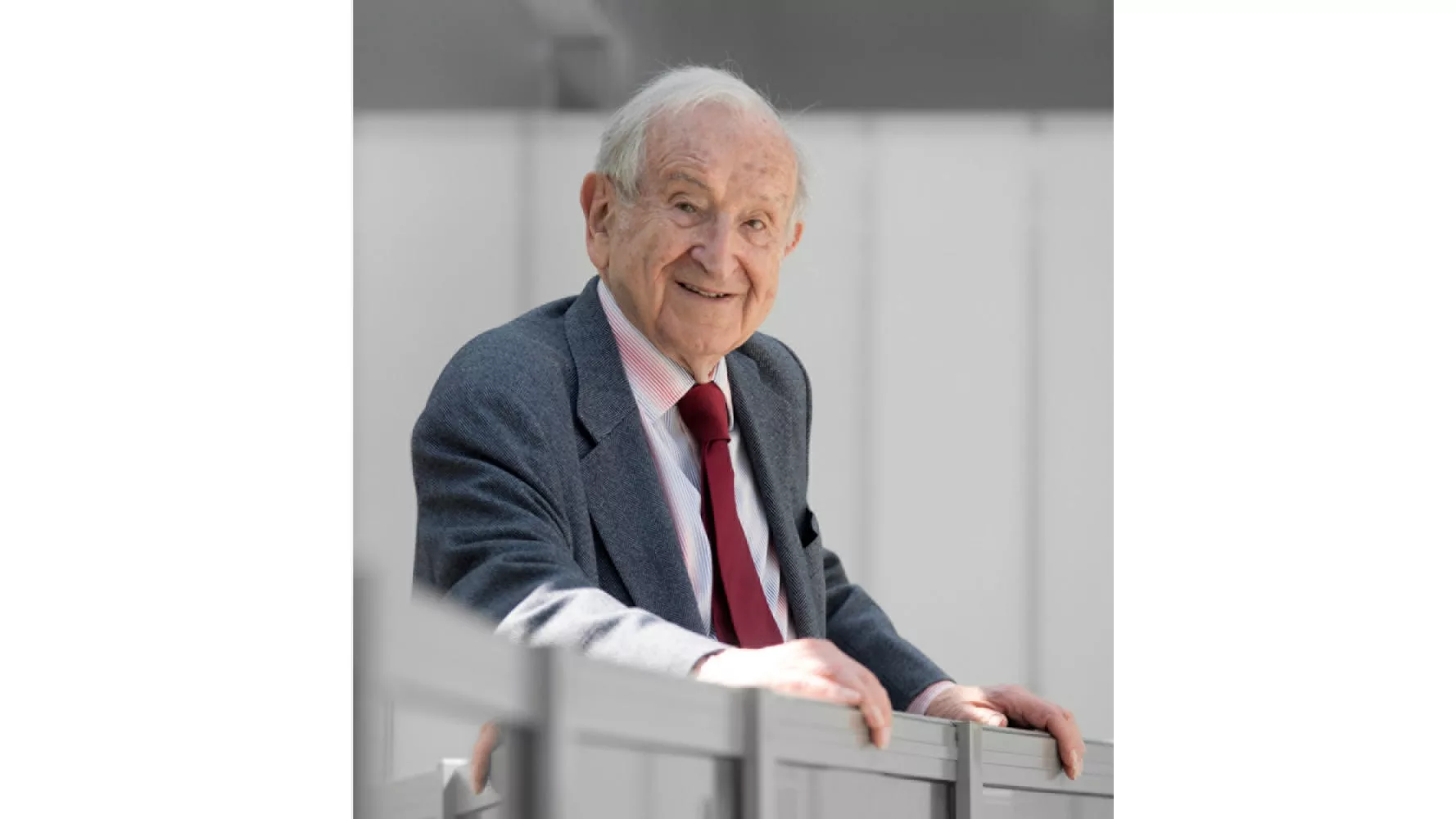
Joseph Rykwert
Joseph Rykwert. Photo by Paweł Mazur/Międzynarodowe Centrum Kultury, Wikimedia Commons
October 21, 2024

Architecture critic, historian, and professor Joseph Rykwert, whose writing on cities, how they’re built, and our relationship with them has influenced generations of architects died on Friday, October 18. He was 98.

For more than 70 years, Rykwert—one of only a handful of non-practitioners to receive the Royal Institute of British Architects Gold Medal—strove to not only deepen architects’ engagement with and appreciation of core tenets of the profession but also expand how they saw their work—particularly when it came to the urban experience. “The idea at the basis of my approach to architecture is that a building is also an utterance, and therefore an approach to building must be in some sense hermeneutic,” he said in a 2020 documentary. “An architect has a double client: the person who actually pays the money for getting it built and the [person] who walks by, touches it, and looks at it and enters into some sort of relationship by just passing by it. This double relationship is something that architects quite often forget.”

Born in Warsaw in 1926, Rykwert was drawn to architecture while watching the construction of his family’s home, designed by architect Lucjan Korngold. “When the house was being built, I climbed the scaffolding, saw the architect’s drawings, and watched bricklayers working according to those drawings,” Rykwert said. “It made a strong impression on me, that somebody would draw and then a bricklayer would lay bricks according to this drawing.”

After the Nazi invasion of Poland in 1939, Rykwert and his family fled to London. He attended the Bartlett School of Architecture before leaving for the Architectural Association, then worked briefly in the office of Maxwell Fry and Jane Drew, mainly contributing to school and hospital projects in Africa. His draftsmanship impressed Le Corbusier, who offered him a position—unpaid—that Rykwert ultimately declined.

But the famed Modernist still impacted Rykwert’s career. After Le Corbusier and Clive Entwistle’s 1946 proposal for a new Crystal Palace in 1946 failed to win a competition, Rykwert published a defense of the plan, attracting Entwistle’s attention and leading to the meeting with Corbusier. It also got Rykwert started as a writer.

In 1949, he traveled through Italy with architect John Turner intending to write a history of modern Italian architecture. The project was never completed, but he met numerous architects, including Gio Ponti, who was then running Domus. Rykwert soon became the magazine’s London correspondent. A few years later, he returned to the country to collaborate on an alternative history of Italian city types with sociologist Carlo Doglio. Rykwert would cover the Roman city; Doglio would handle the smaller comune. Rykwert delivered his chapter, but Doglio never completed his. Rather than stick the work in a drawer, Rykwert connected with another architect friend, Aldo van Eyck, then running the Dutch magazine Forum, who dedicated a special issue to the chapter. It was favorably received, and he eventually developed it into the seminal The Idea of a Town: The Anthropology of Urban Form, published in 1963.

Over the decades, Rykwert wrote a number of similarly consequential books that interrogated the origins of architectural ideas and contemporary planning concerns: On Adam's House in Paradise: The Idea of the Primitive Hut in Architectural History (1972), The First Moderns: The Architects of the Eighteenth Century (1980), The Dancing Column: On Order in Architecture (1966), and The Seduction of Place: The History and Future of Cities (2000).

Looking for quick answers on architecture and design topics?
Try Ask RECORD, our new smart AI search tool.
Ask RECORD →

“Joseph Rykwert is a gloriously erudite, ingeniously speculative historian and critic of architecture—of, that is, the forms (in the most concrete sense) of civilization, of social embodiment itself,” wrote critic Susan Sontag about The Dancing Column.

The success of The Idea of a Town also led Rykwert to academia, teaching architecture history and theory at University of Essex, Cambridge, and the University of Pennsylvania, where he served as Paul Philippe Cret professor of architecture at the Stuart Weitzman School of Design for a decade before becoming an emeritus professor. He was also a visiting lecturer at a raft of institutions, ranging from Princeton and Harvard to the University of Sydney and Paris’ Institut d'Urbanisme.

In 2014, Rykwert was honored for his contributions to architecture, first, by RIBA when it awarded him its Gold Medal—his nomination was supported by past winners David Chipperfield, Frank Gehry, and Renzo Piano—then again when he was appointed Commander of the Order of the British Empire.

“Architecture needs people who stand apart and interrogate it. Not necessarily as critics of buildings … but as thinkers who in turn shape the way we think about things,” wrote Hugh Pearman in 2013 for RIBA Journal. “With Rykwert, it is never about the purely functional, the picturesque or stylisms: his appreciation of the value of the human and the symbolic is one of his great contributions to architectural discourse.”

Rykwert said at the time he was “elated and enormously grateful” about the honors. But while he spent a lifetime engaged with the academic, his enduring interest was in the practical and lived experience of architecture and the built environment.

“A building is never standing on its own. It's always part of the fabric, whether it's in the country or in the town,” he said. “I think cities are to live in, not to look at.”

KEYWORDS: obituary

Share This Story

Looking for a reprint of this article?
From high-res PDFs to custom plaques, order your copy today!

Dante ciampaglia

Dante A. Ciampaglia has two decades experience editing print and digital magazines, including at Newsweek, Sports Illustrated, and Time. He has been a contributor to Architectural Record for more than 10 years, writing about the intersection of architecture, film, and the visual arts. His work has also been published by the Washington Post, Paris Review, Wired, Los Angeles Review of Books, Metropolis, and the Brooklyn Rail, among others.

Post a comment to this article

Report Abusive Comment

Subscription Center
  • Create an Account
  • Start a Subscription
  • Manage My Account
  • Sign Up for Newsletters
  • Visit Customer Service
  • Update Preferences

More Videos

Sponsored Content

Sponsored Content is a special paid section where industry companies provide high quality, objective, non-commercial content around topics of interest to the Architectural Record audience. All Sponsored Content is supplied by the advertising company and any opinions expressed in this article are those of the author and not necessarily reflect the views of Architectural Record or its parent company, BNP Media. Interested in participating in our Sponsored Content section? Contact your local rep!

close
  • 3D configurator
    Sponsored byDoorBird

    How DoorBird’s 3D Configurator Is Redefining Customization Across Residential and Commercial Design

  • interior of modern office
    Sponsored byCurrent

    The Downlight's Second Life: Why Below-Ceiling Serviceability Is the Specification Detail That Matters Most

  • cold storage facility
    Sponsored byCarlisle SynTec Systems

    How Architects Can Design More Continuous Cold Storage Envelopes

DESIGN:ED Podcast
Listen to Architectural Record’s DESIGN:ED Podcast

Events

July 16, 2026

Fit, Form, Function: Rethinking Privacy Curtains for Modern Spaces

Credits: 1 AIA LU/HSW; 1 AIBD P-CE; 0.1 ICC CEU

Explore how privacy curtain systems can enhance occupant comfort, operational efficiency, and sustainability across healthcare, education, hospitality, and senior living environments.

July 22, 2026

Water Containment Waterproofing: Best Practices and System Selection

Credits: 1 AIA LU/HSW; 1 AIBD P-CE; 0.1 ICC CEU

Examine waterproofing strategies for water containment structures that enhance durability, prevent failures, and support long-term building performance.

View All Submit An Event

Products

2026 Architect's Square Foot Costbook

2026 Architect's Square Foot Costbook

See More Products

Popular Stories

Home Spirit apartment building exterior

Outdoor Access Drives the Design of a French Apartment Building

7480 N Delaware

A Portland Apartment Building by Daniel Toole Architecture Stands as a Study in Adaptation

The Mark and Hive Glenrock, LOHA

Two Student Residences Continue LOHA’s Decades-long Reimagination of the L.A. Lifestyle

The Bend in Winnipeg, Canada

Multifamily Housing 2026

Trump's triumphal arch

What Exactly Does Trump’s Triumphal Arch Commemorate?

Fit, Form, Function: Rethinking Privacy Curtains for Modern Spaces - Free Webinar - July 16, 2026

Related Articles

  • Roberto Burle Marx: Brazilian Modernist

    Review of 'Roberto Burle Marx: Brazilian Modernist'

    See More
  • National Medal of Honor Museum

    Rafael Viñoly Architects’s National Medal of Honor Museum Opens in Arlington, Texas

    See More
  • Breuer1.jpg

    Marcel Breuer’s Whitney Museum Building and Lower-Level Interior are Designated Landmarks

    See More
×

The latest news and information

#1 Source for Architectural Design, News and Products

SUBSCRIBE
  • RESOURCES
    • Advertise
    • Contact Us
    • Submit
    • Store
  • ACCOUNT CENTER
    • Create an Account
    • Start a Subscription
    • Manage My Account
    • Sign Up for Newsletters
    • Visit Customer Service
    • Update Preferences
  • PRIVACY
    • PRIVACY POLICY
    • TERMS & CONDITIONS
    • DO NOT SELL MY PERSONAL INFORMATION
    • PRIVACY REQUEST
    • ACCESSIBILITY
  • SERVICES
    • Marketing Services
    • Reprints
    • Market Research
    • List Rental
    • Survey/Respondent Access
  • STAY CONNECTED
    • Linkedin
    • Facebook
    • Instagram
    • YouTube
    • X (Twitter)

Copyright ©2026. All Rights Reserved BNP Media, Inc. and BNP Media II, LLC.

Design, CMS, Hosting & Web Development :: ePublishing