Design for Survival: Adapting to a Changing World
The Architecture 2030 Palette
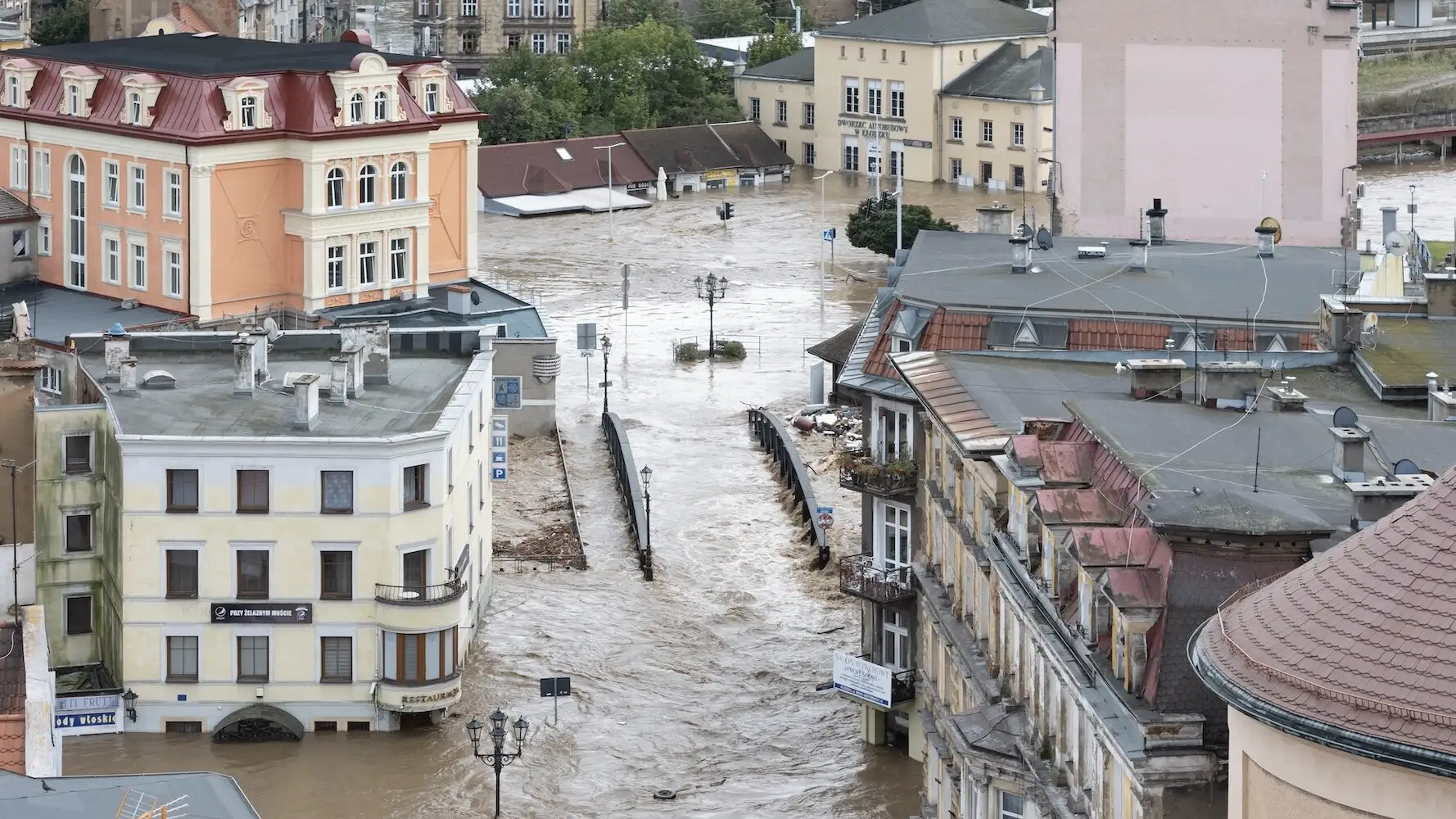
Climate change impacts are rapidly intensifying. Recent events like the catastrophic hurricanes Helene and Milton, wildfires in Australia and the Amazon, severe flooding in the United States, Spain, Central Europe, and Southeast Asia, and extreme heat waves across the U.S., Europe, and Africa demonstrate that the need for resilient planning and design solutions has never been more urgent. The 2030 Palette, a free and interactive platform developed by Architecture 2030, provides strategies for architects, planners, designers, and policymakers to implement sustainable and low- to zero-carbon solutions in the built environment globally. The worsening and widespread impacts underscore the Palette’s vital role in providing innovative “Swatches”—tools and resources, from regions, cities, and infrastructure, to buildings and materials—to effectively mitigate disaster risks and tackle current and future design challenges.
In response to escalating climate impacts, the Palette has expanded its database with 11 new Swatches. These additions come at a critical time when urban areas worldwide are facing the dual issues of accommodating growing populations and mitigating environmental impacts. By integrating innovative solutions, planners and designers can expand the boundaries of current practice, ensuring that our built environments are sustainable and resilient to increasingly volatile climate conditions.
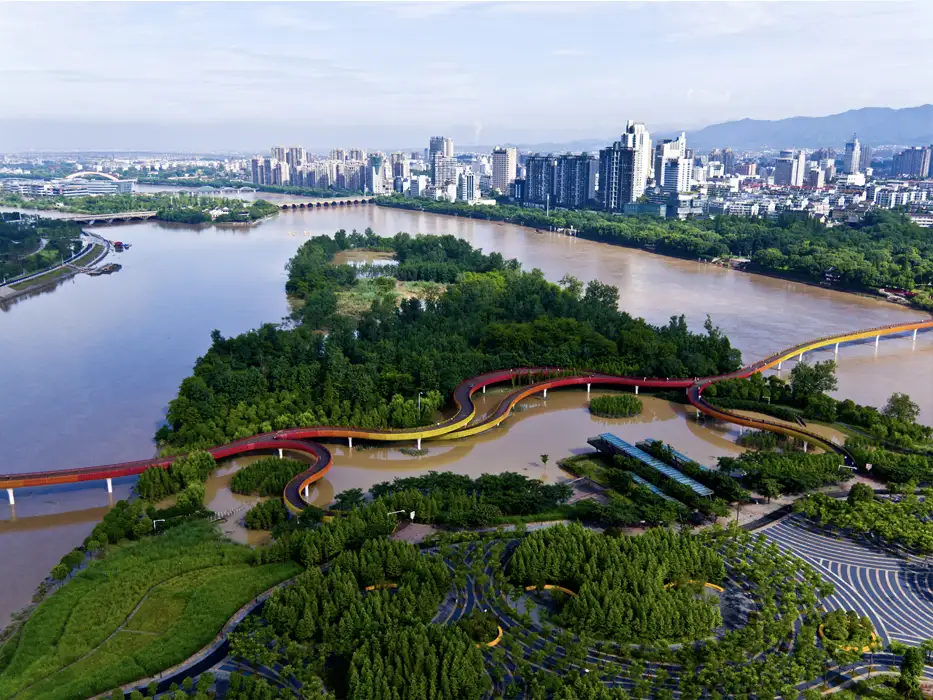
Jinhua Yanweizhou Park by Turenscape; Jinhua, Zhejiang, China. Photo by Kongjian Yu/Turenscape
Nature-Based Solutions Become Pivotal
Several new Swatches emphasize the power of nature-based approaches to address climate change and enhance community well-being:
To mitigate flood risks from rapid urbanization and extreme rainfall, the Sponge City concept integrates green spaces, permeable pavements, rain gardens, green roofs, and wetlands into the built environment. These features absorb, store, and gradually release rainwater, reducing flood impacts, improving water quality, replenishing groundwater, enhancing urban biodiversity, cooling heat islands, and boosting climate resilience.
Coastal Seaforestation Drawdown
Restoring and expanding kelp forests, seagrass meadows, and other marine vegetation serves as a powerful carbon sink, capturing and storing atmospheric CO₂ and mitigating climate change. These ecosystems also enhance marine biodiversity, protect shorelines from erosion, support local fisheries, and increase coastal resilience against storms and sea-level rise.
Habitat Health and Carbon Sequestration
Nature-based landscaping can turn urban environments into carbon sinks and biodiversity hubs. Embracing native plantings, minimizing chemical inputs, and promoting natural processes all contributes to climate mitigation and adaptation.
Creating new forests on previously non-forested land is a powerful way to sequester carbon, restore ecosystems, and support biodiversity. Afforestation can also prevent erosion and aid vulnerable communities by providing ecological and economic benefits.
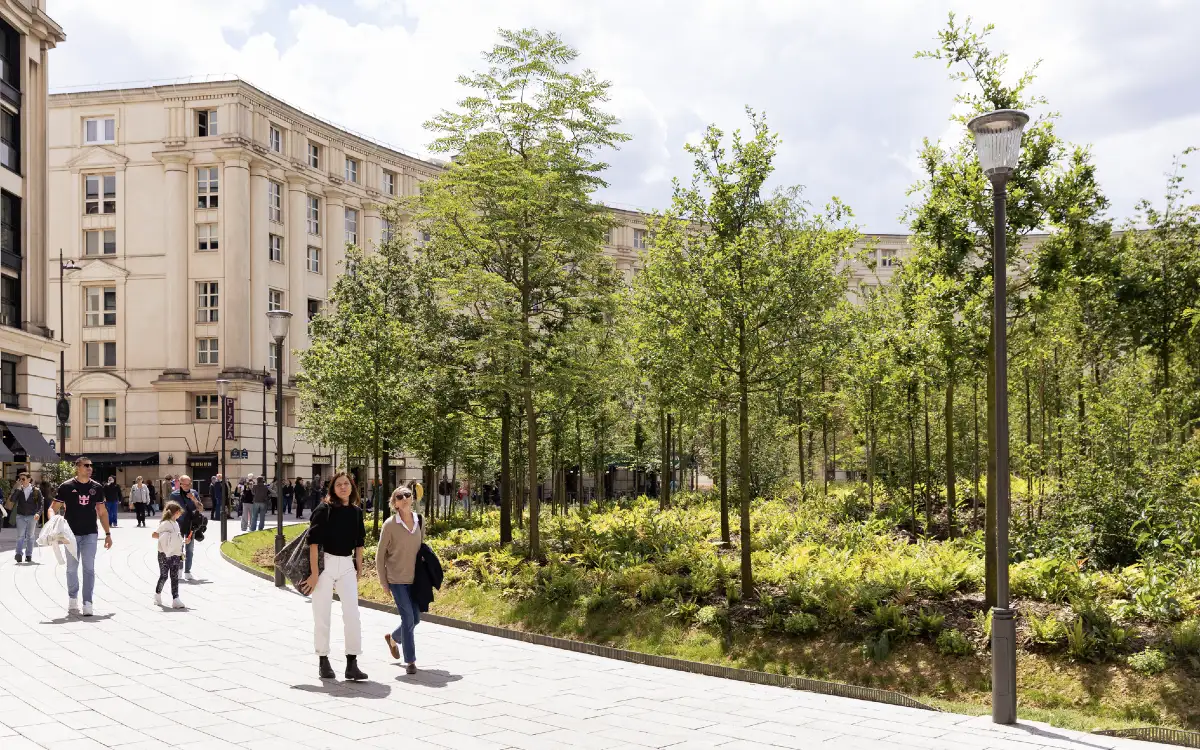
Place de la Catalogne, Paris. Photo by Guillaume Bontemps/Ville de Paris
From community plots to rooftop farms, urban gardens enhance food security, air quality, and social benefits. They also mitigate urban heat islands and create economic opportunities.
Water-Smart Landscapes and Systems
Water scarcity and climate-induced variability in precipitation patterns requires innovative management. Water-smart landscapes conserve water through xeriscaping, rainwater harvesting, and drought-resistant plants, ensuring sustainable water use and resilient landscapes.
Rethinking Urban Design and Development
These new Swatches address crucial aspects of urban planning and design:
This concept ensures that most daily necessities and services are within a short walk or cycle from residences, promoting active transportation, physical activity, social connections, and local economies. By decentralizing amenities and creating compact, mixed-use neighborhoods, reliance on cars decreases thereby reducing the city’s overall carbon footprint.
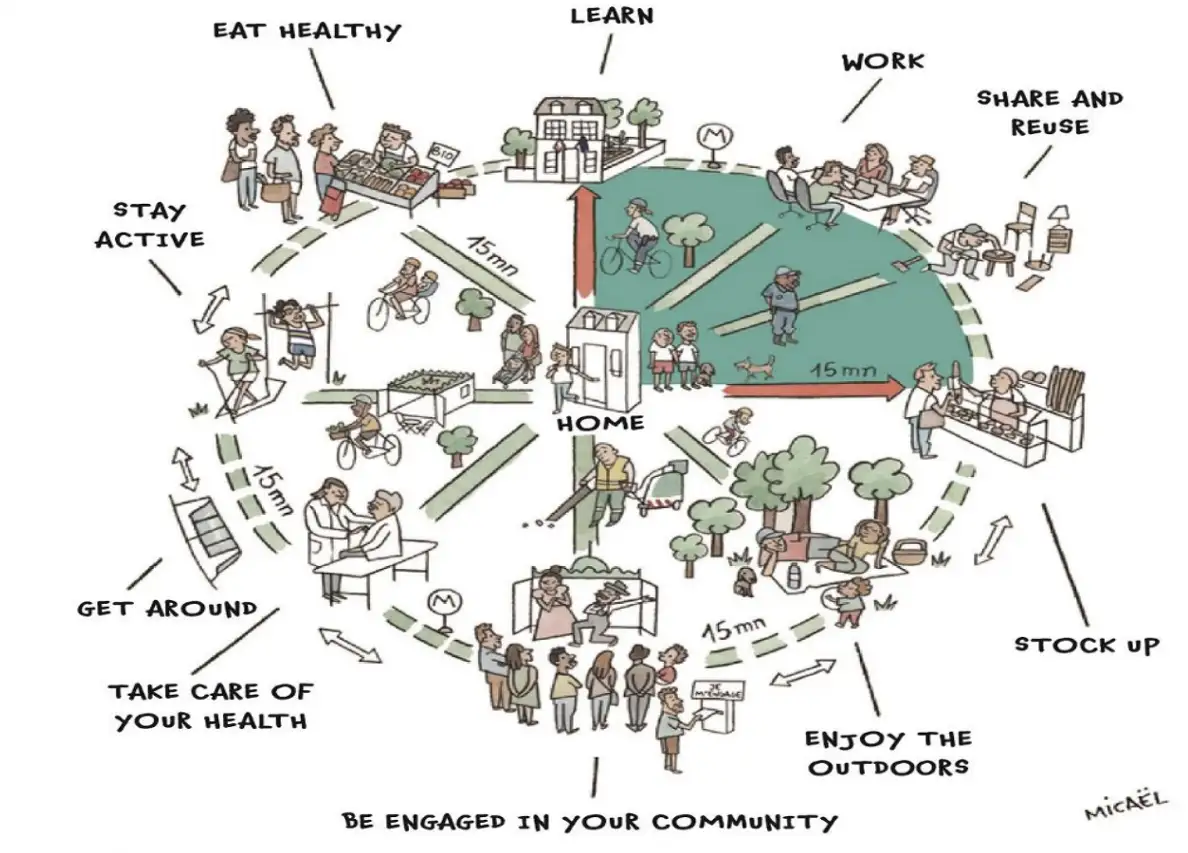
The 15-minute city. Image by Micaël Dessin, Paris en Commun
Regenerative Peri-Urban Agriculture
As urban populations grow, sustainable food production in and around cities becomes critical. This Swatch promotes agricultural practices that restore soil health, enhance biodiversity, and reduce dependency on external inputs, thereby improving food security, creating jobs, and minimizing the environmental footprint of agriculture.
Prioritizing Circularity and Resource Efficiency
The final three new Swatches focus on minimizing waste, reducing carbon emissions, and maximizing the lifespan of existing buildings.
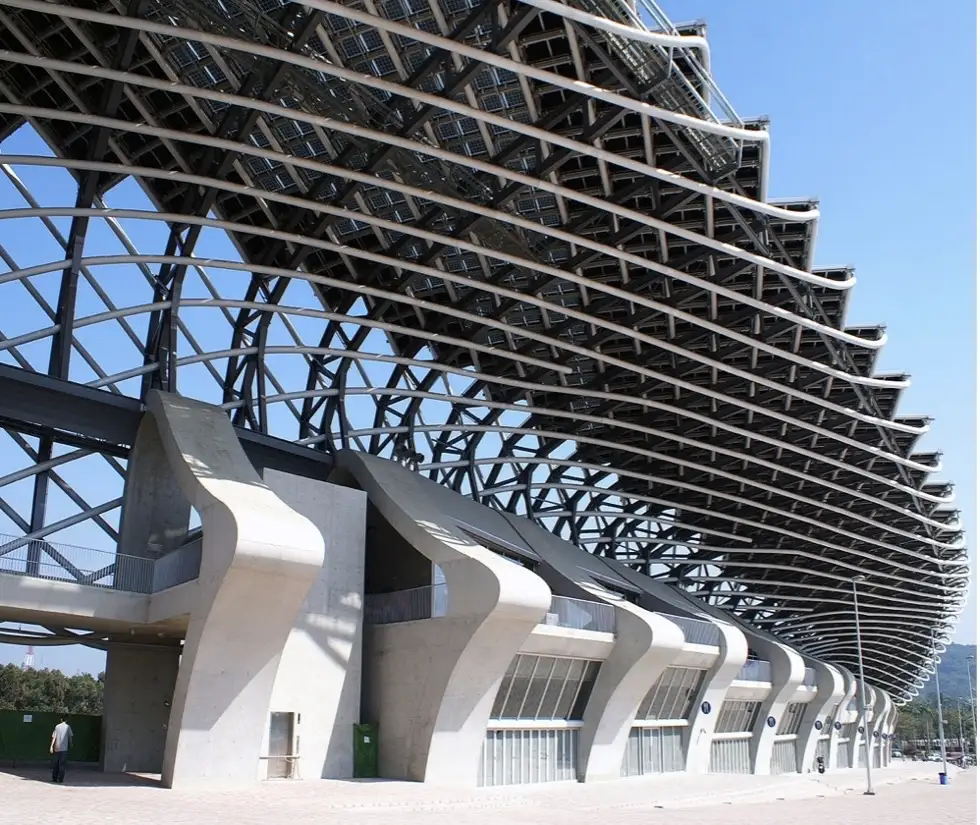
2009 World Game Main Stadium, Kaohsiung, Taiwan. Photo by Peellden, Wikimedia Commons
Building-Integrated Photovoltaics (BIPV)
BIPV systems incorporate solar power into a building’s structure, serving both as an exterior finish and an energy source. These systems generate power for on-site use or grid export without additional land and can be integrated into new construction or retrofitted into existing buildings, providing a versatile renewable energy solution.
Planning and Design for Disassembly
Designing buildings, landscapes, and infrastructure for future disassembly allows for material reuse, minimizes waste, lowers raw material demand, and reduces embodied carbon and environmental impacts from demolition and new construction.
Reuse, Adapt, Renovate, and Restore Buildings
Repurposing and upgrading existing buildings enhances energy efficiency, increases resilience, reduces emissions, and preserves cultural and historic assets. This approach conserves resources and promotes sustainable urban development through adaptive reuse.

Chinese American International School, San Francisco, by LMSA Architects. Photo © Bruce Damonte
As the built environment sector works to reduce its contribution to the climate crisis, these new Swatches offer practical guidance and inspiration for sustainable and adaptable design and planning.
Professionals and policymakers are encouraged to explore the Palette and the new Swatches on the 2030 Palette website. With 2030 approaching as a critical deadline for climate action, implementing these and other proven strategies—such as heat island mitigation, and hazard mapping—are essential for built environments to endure and thrive amidst escalating climate challenges.
The drive towards a zero-carbon and resilient built environment has gained irreversible momentum since 2005, fueled by recognizing the climate crisis as a threat of both economic ruin and human suffering. In the U.S., this momentum is firmly rooted in the planning and design professions and the private sector, and strongly supported by local and state governments. As such, it has demonstrated remarkable progress under both Republican and Democratic administrations, making it resilient to shifts in federal policy.
The urgency of the global climate situation demands accelerated action—the tools and strategies are available, and the time to implement them is now.
The 2030 Palette, developed by Architecture 2030, is a free interactive online platform that puts effective and time-tested planning and design principles and actions behind low-carbon and resilient built environments at the fingertips of architects, planners, designers, and policymakers worldwide.
New Swatches development team:
Architecture 2030: Edward Mazria, Erin McDade
Climate Positive Design: Eustacia Brossart
Looking for quick answers on architecture and design topics?
Try Ask RECORD, our new smart AI search tool.
Ask RECORD →
Looking for a reprint of this article?
From high-res PDFs to custom plaques, order your copy today!
.webp?height=200&t=1711433253&width=200 "141Willoughby-1B (1).jpg")