Architectural Record
search
cart
facebook twitter linkedin youtube
  • Sign In
  • Subscribe
  • Sign Out
  • My Account
Architectural Record
  • NEWS
    • Latest News
    • Awards
    • Interviews
    • Obituaries
    • Podcasts
      • Design:Ed Podcast
      • Sponsored Podcasts
  • OPINION
    • Book Reviews / Excerpts
    • Exhibition Reviews
    • Forum
  • EXCLUSIVES
    • Videos
    • Design Vanguard
    • Top 300 Firms
    • Sponsored Content
    • Sponsored eBooks
    • From the Archives
  • CONTINUING ED
    • Editorial Continuing Ed
    • CE Center
    • CE Academies
  • PROJECTS
    • Buildings By Type
    • Reuse & Renovation
    • Museums & Arts Centers
    • Colleges & Universities
    • Multifamily Housing
    • Interiors
    • Lighting
    • Kitchen & Bath
  • HOUSES
    • Record Houses
    • House of the Month
    • Featured Houses
  • PRODUCTS
    • Products by Category
    • Record Products of the Year
    • Latest Products
  • EVENTS
    • Dates & Events
    • Record on the Road
    • Innovation Conference
    • Sustainability in Practice
    • Women In Architecture
    • Webinars
    • Ad Excellence Awards
    • Submit an Event
  • CONNECT
    • Ask RECORD AI
    • Newsletters
    • Contact
    • Advertise
    • Editorial Calendar
    • Store
    • Customer Service
  • SUBMIT
    • Submission Guidelines
    • RECORD Competitions
  • MAGAZINE
    • Subscribe
    • My Account
    • Digital Edition
    • Current Issue
    • Firm Pass
    • Historic Archive
ProjectsBuildings by TypeResidential ArchitectureHouse of the Month

House of the Month

A Toronto House by Batay-Csorba Architects Challenges Neighborhood Norms

Toronto
By Matthew Marani
Westminster Residence
Westminster Residence. Photo © Doublespace Photography
December 13, 2024

Architects & Firms

Batay-Csorba Architects
✕
Image in modal.

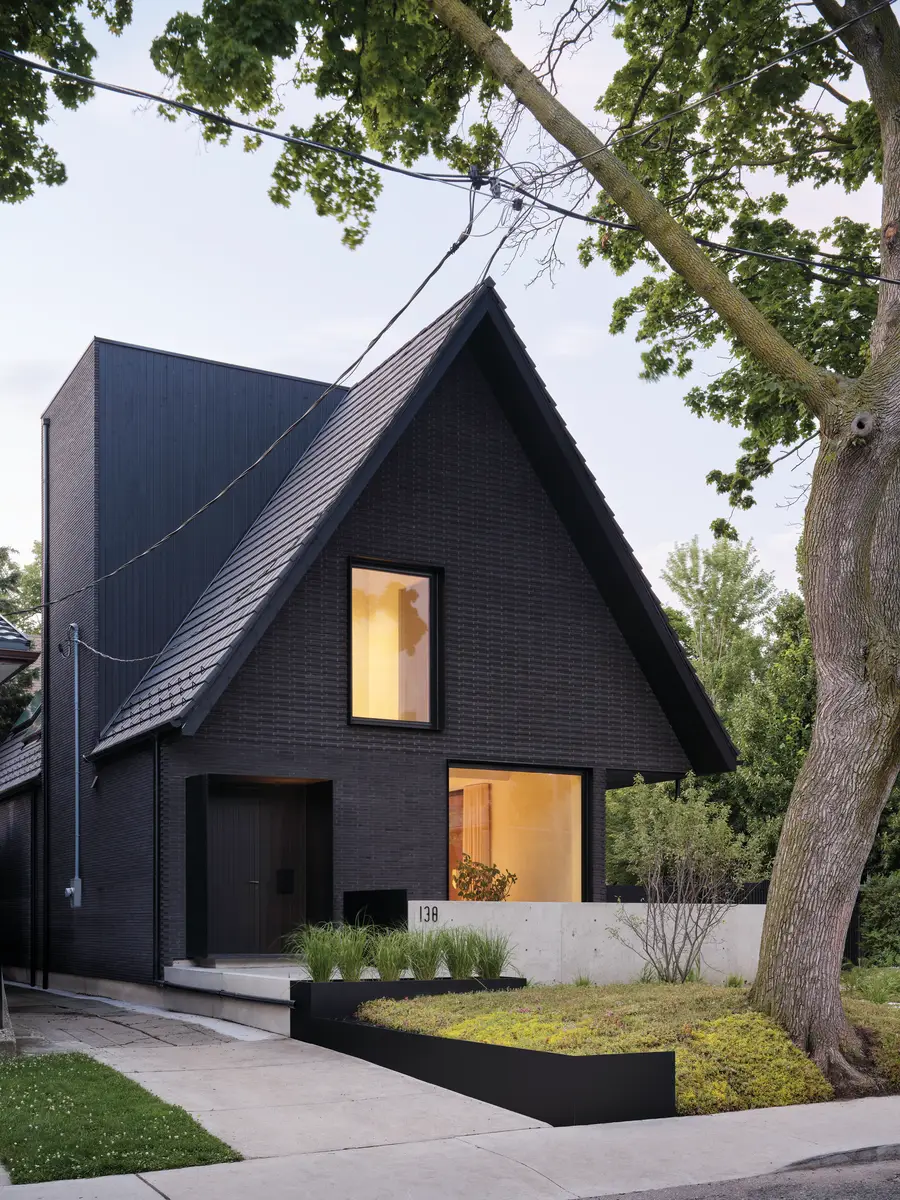
Toronto’s High Park-Swansea neighborhood, like other historic residential districts surrounding the city center, largely comprises two- and three-story houses with Victorian and Edwardian architectural verve. The dwellings, built prior to the era of sprawling single-family lots that came to define the postwar North American suburb, are tightly packed side to side, with ornate flourishes and fenestration primarily clustered on their front and rear-facing elevations. The Westminster Residence, designed by local firm Batay-Csorba Architects, treads the line between contextually sensitive and stridently contemporary through artful massing and well-conceived details.
Westminster Residence.

The family residence is fronted by a steep gable, and its windows and doors are bordered by dark steel frames. Photo © Doublespace Photography, click to enlarge.
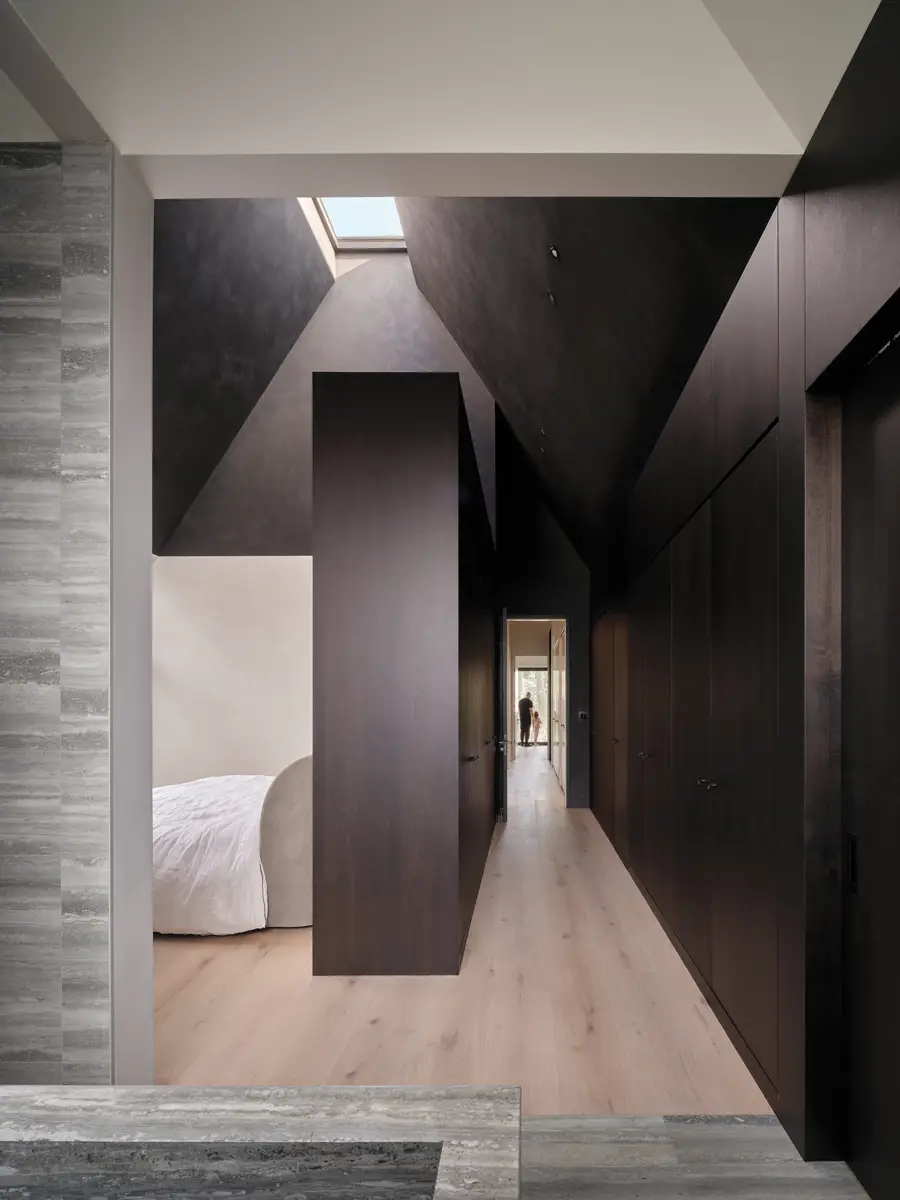
Westminster Residence.

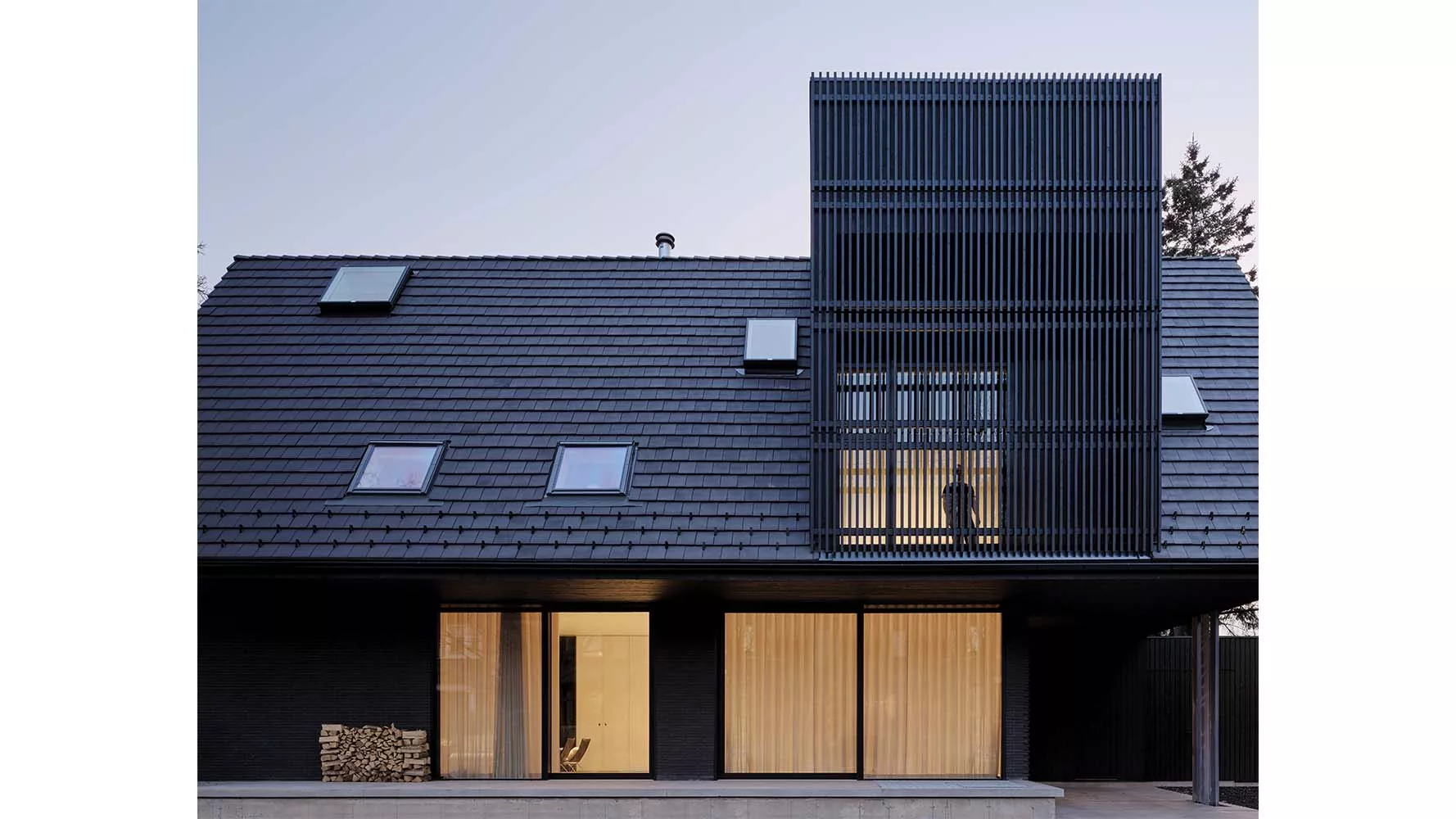
The steeply pitched gable and vaulted ceiling make room for skylights and dormers (above and top of page). Photo © Doublespace Photography

The two-story, 3,490-square-foot house for a small family sits prominently on a corner lot, with a steeply pitched gabled roof covered in slate-colored terra-cotta tiles flanked on both sides by oversize rectilinear dormers. The exterior walls are clad in elongated, Roman-style black brick and are punctuated on the short north and south elevations by steel-framed windows. At the long east elevation, the roof hangs over four sliding glass doors, measuring 31 feet wide in total, which open onto a patio and garden and provide abundant daylight across the ground-floor living spaces. The result, with the help of a dark wood fence, is a layout that turns a local paradigm on its head. “In contrast to neighboring buildings that are oriented to their front-and-rear elevations, the idea was to reorient to the side yard and produce something of a courtyard in the middle of the city,” explains Andrew Batay-Csorba.
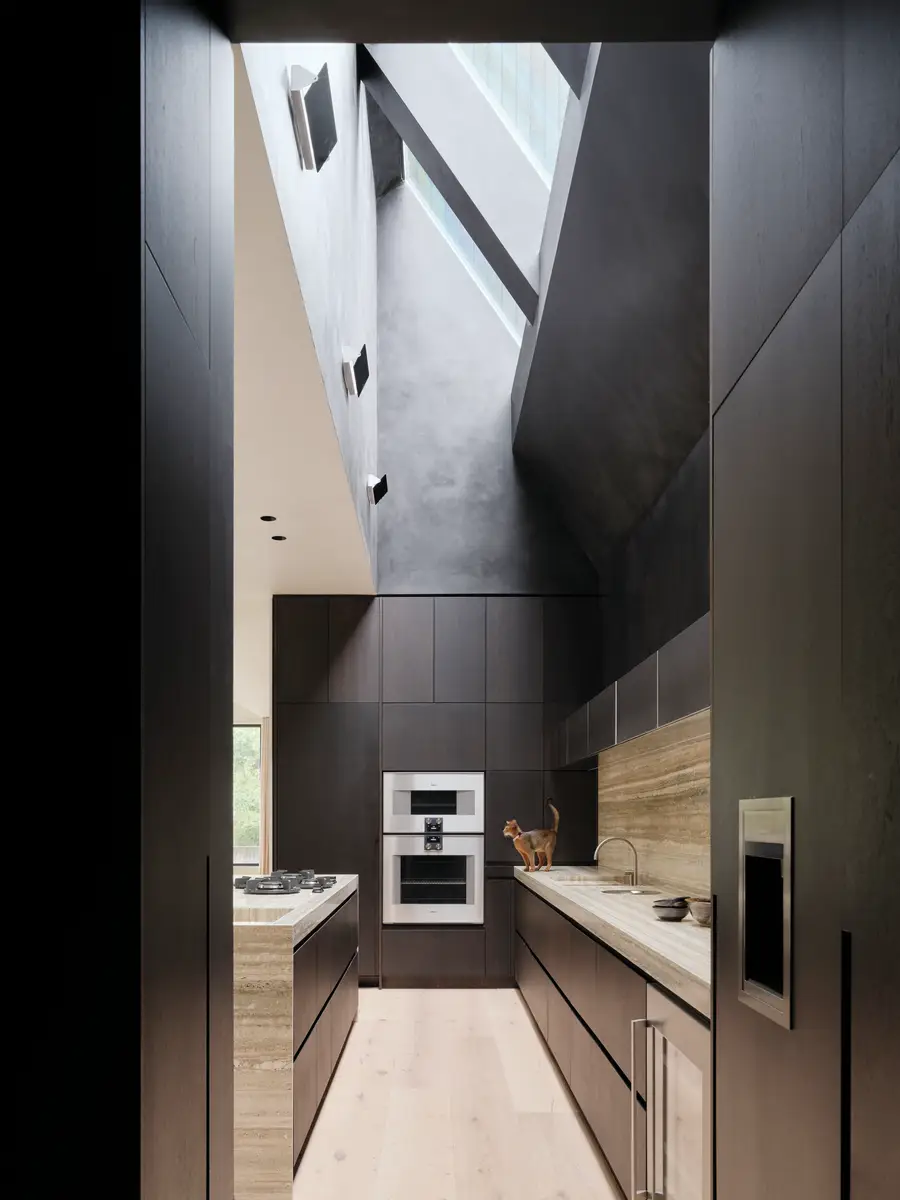
Westminster Residence.

Compressed zones, like the kitchen, are treated with dark materials. Photo © Doublespace Photography

To help accomplish this, the design team loaded the bulk of the cabinetry, stairwells, bathrooms, and the kitchen into distinct volumes on the opposite side of the house’s first and second floors. Those constricted zones stand in contrast to the more open living and dining rooms. This duality is further expressed through several material choices: tighter spaces are treated with dark, textured lime-wash walls and stained walnut wall panels, while open spaces feature wide-cut white oak and beige travertine on the floors and walls. “While we came to the clients with a project massing and orientation, they brought forward a particular materiality,” notes Jodi Batay-Csorba. “You can see the dichotomy between her mark, on the bright and open spaces, and his, in the darker, more compressed zones.”
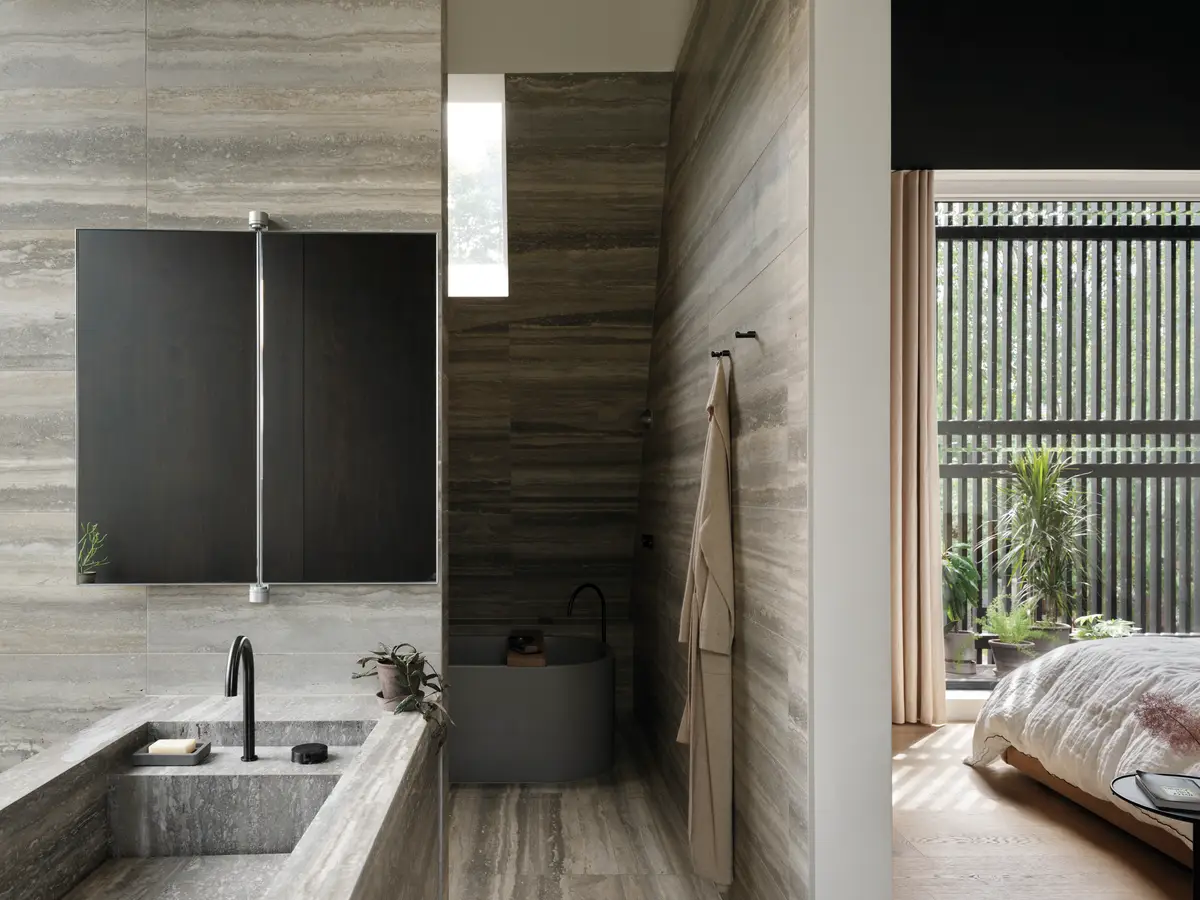
Westminster Residence.

The primary bathroom and bedroom are amply daylit. Photo © Doublespace Photography

A U-shaped stairwell in the center of the plan leads to the second level. There, the absence of an attic allowed the architects to take full advantage of the steeply pitched roof to position numerous skylights high above the second-floor hallways, bedrooms, and bathrooms. The cathedral-like effect of the double-height spaces culminates within the primary bedroom. There, the 20-foot-tall dormer and its window suffuse the room with light, even with the brise soleil over the balcony outside. The effect is enhanced by the contrast with the en suite bathroom’s starkly different dark travertine flooring and wall panels. Below grade, the basement level comprises a guest bedroom with an adjoining light well, a gym, and a recreation room, which can also be accessed by a courtyard stairwell, planted with ivy, adjacent to the ground-floor entry.

The exterior landscaping and hardscaping are currently under way, and, once complete in spring, will include a low-maintenance blend of sedum (a perennial plant with seasonal green foliage) and a series of canopy trees to provide additional privacy around the eastern courtyard. In the meantime, the Westminster Residence both blends into, and questions, its context, while housing a dynamic interplay of contrasts within.

Click graphics to enlarge
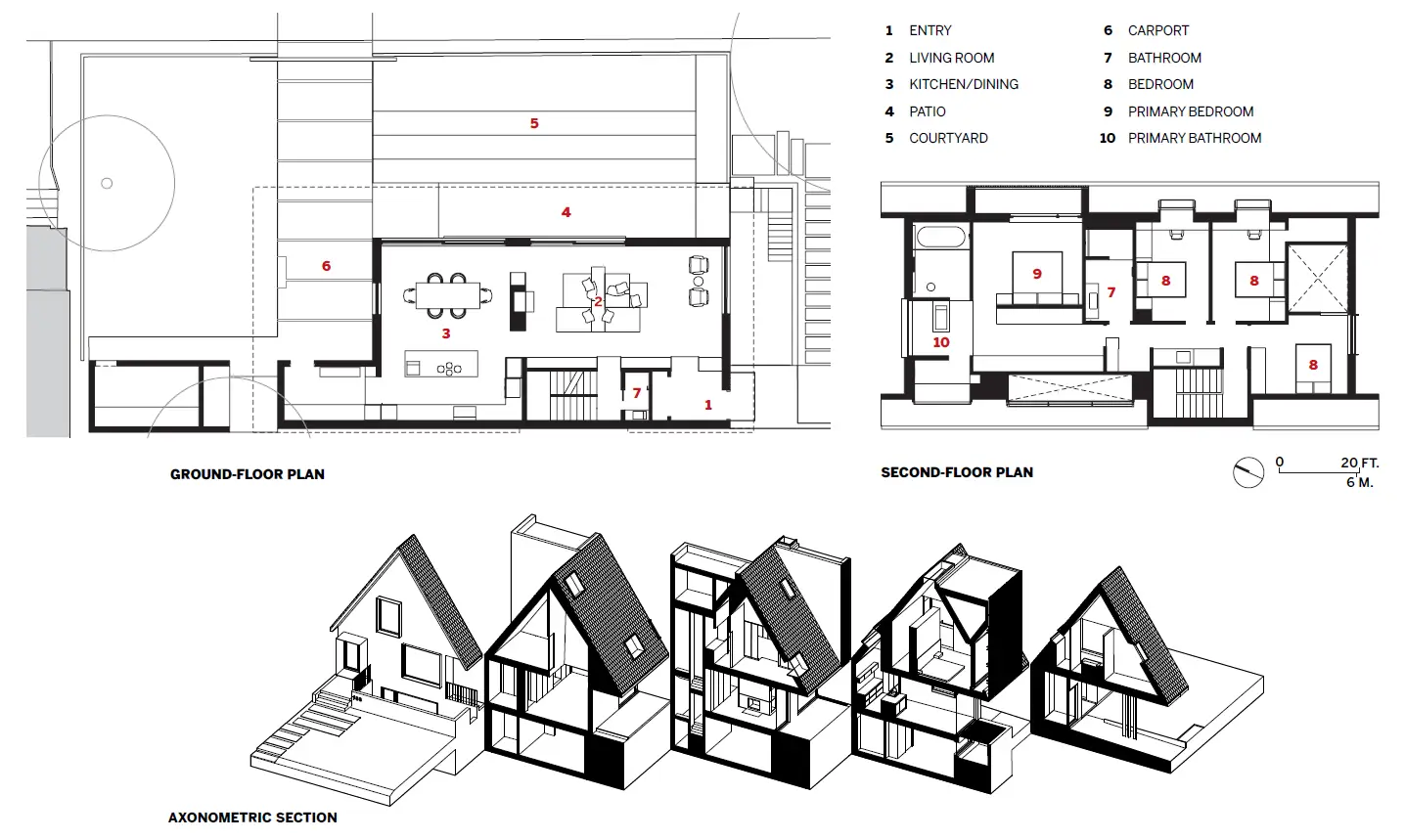
Westminster Residence.

Credits

Architect:
Batay-Csorba Architects — Jodi Batay-Csorba, Andrew Batay-Csorba, principals; Sacha Milojevic, Jacob Henriquez, Myles Bury, design team

Engineers:
Contact Structural Engineering (structural)

Consultants:
Elite HVAC Designs (m/e/p); Gravenor Landscape Design (landscape)

General Contractor:
Whitaker Construction

Client:
Withheld&

Size:
3,490 square feet

Cost:
Withheld

Completion Date:
July 2024


Sources

Cladding:
Van De Moortel (brick); Urban Steel Products, Custom B-CA Design (window projections); Fraserwood (wood)

Roofing:
Ludowici (terra-cotta)

Windows:
Heroal (metal frame)

Glazing:
Heroal; Artistic Skylights, Velux Skylights (skylights)

Interior Finishes:
EDM Canada (travertine); Benjamin Moore (paints and stains); Whitaker, Custom B-CA Design (millwork)

Lighting:
Bocci (bathroom ambient lighting); Flexalighting (exterior); Grand Mirrors (backlit mirrors)


Looking for quick answers on architecture and design topics?
Try Ask RECORD, our new smart AI search tool.
Ask RECORD →

KEYWORDS: Canada modern residential architecture Ontario Toronto

Share This Story

Looking for a reprint of this article?
From high-res PDFs to custom plaques, order your copy today!

Matthew marani

Matthew Marani is a senior editor at Architectural Record. Previously, he served as program manager at The Architect’s Newspaper and has several years of experience as a freelance writer specializing in urban planning, historic preservation, and architectural technology. Matthew is a born and raised New Yorker and holds an MSc in Architectural Conservation from the University of Edinburgh.

Post a comment to this article

Report Abusive Comment

Subscription Center
  • Create an Account
  • Start a Subscription
  • Manage My Account
  • Sign Up for Newsletters
  • Visit Customer Service
  • Update Preferences

More Videos

Sponsored Content

Sponsored Content is a special paid section where industry companies provide high quality, objective, non-commercial content around topics of interest to the Architectural Record audience. All Sponsored Content is supplied by the advertising company and any opinions expressed in this article are those of the author and not necessarily reflect the views of Architectural Record or its parent company, BNP Media. Interested in participating in our Sponsored Content section? Contact your local rep!

close
  • cold storage facility
    Sponsored byCarlisle SynTec Systems

    How Architects Can Design More Continuous Cold Storage Envelopes

  • TAMLYN XtremeTrim Exterior Trim
    Sponsored byTamlyn

    Designing Cleaner Panel Facades: Why Exterior Trim Details Matter

  • Building with Vapor Barriers
    Sponsored byReef Industries, Inc.

    Vapor Barriers Help Control Moisture in Tighter Building Designs

DESIGN:ED Podcast
Listen to Architectural Record’s DESIGN:ED Podcast

Events

June 25, 2026

Designing Glass Railing Systems that Enhance Aesthetics and Meet Code

Credits: 1 AIA LU/HSW; 1 AIBD P-CE; 0.1 ICC CEU

Upon course completion, participants will possess a deeper understanding of glass railings to help ensure that safety, aesthetic, and performance objectives are achieved.

June 30, 2026

Generator Selection and Sizing for Outage-Ready Homes

Credits: 1 AIA LU/HSW; 1 AIBD P-CE; 0.1 ICC CEU

Explore how propane-powered systems and whole-home generators can improve energy resilience, reduce electrical loads, and lower long-term residential costs.

View All Submit An Event

Products

2026 Architect's Square Foot Costbook

2026 Architect's Square Foot Costbook

See More Products

Popular Stories

Obama Presidential Center, Chicago

The Obama Presidential Center Opens on Chicago’s South Side

Lorcan O' Herilhy

California Architect Lorcan O’Herlihy Has Died, Age 66

Spoonbill Ranch

Johnsen Schmaling Architects Integrates Spoonbill Ranch into a Pristine Landscape

Image of Bruce Springsteen Center for American Music

The CookFox-designed Bruce Springsteen Center for American Music Opens in New Jersey

Kìwekì Point, Ottawa, Canada

Perched High Above the Ottawa River, Kìwekì Point Showcases Sweeping Views of the Canadian Capital Region

Designing Glass Railing Systems that Enhance Aesthetics and Meet Code - Free Webinar - June 25, 2026

Related Articles

  • Double Duplex

    Double Duplex by Batay-Csorba Architects

    See More
  • House of Monitors

    In Toronto, a House by Williamson Williamson Harnesses Light Monitors to Illuminate its Interiors

    See More
  • Toronto and Region Conservation Authority Headquarters

    Bucholz McEvoy and ZAS Create a Mass-Timber Showcase for a Toronto Environmental Agency

    See More

Related Products

See More Products
  • book3.jpg

    If Architecture is a Language, Then a Building is a Story

See More Products

Events

View AllSubmit An Event
  • November 20, 2025

    A Roundtable Discussion: Designing to Meet Resilient Building Challenges with Stainless Steel

    NOW ON DEMANDCredits: 1 AIA LU/HSW; 1 AIBD P-CE; 0.1 ICC CEU; 0.1 IACET CEU; 1 PDHExplore innovative façade and material strategies that advance building resilience and sustainability through insights from experts in metals, fabrication, and engineering.
View AllSubmit An Event
×

The latest news and information

#1 Source for Architectural Design, News and Products

SUBSCRIBE
  • RESOURCES
    • Advertise
    • Contact Us
    • Submit
    • Store
  • ACCOUNT CENTER
    • Create an Account
    • Start a Subscription
    • Manage My Account
    • Sign Up for Newsletters
    • Visit Customer Service
    • Update Preferences
  • PRIVACY
    • PRIVACY POLICY
    • TERMS & CONDITIONS
    • DO NOT SELL MY PERSONAL INFORMATION
    • PRIVACY REQUEST
    • ACCESSIBILITY
  • SERVICES
    • Marketing Services
    • Reprints
    • Market Research
    • List Rental
    • Survey/Respondent Access
  • STAY CONNECTED
    • Linkedin
    • Facebook
    • Instagram
    • YouTube
    • X (Twitter)

Copyright ©2026. All Rights Reserved BNP Media, Inc. and BNP Media II, LLC.

Design, CMS, Hosting & Web Development :: ePublishing