Multifamily Housing 2025
Berlin’s Famed Artist Squat, Tacheles, Undergoes a Drastic Transformation by Herzog & de Meuron
Berlin

Architects & Firms
“How long is now”—until 2019, this rhetorical message was painted in black block lettering five stories tall across the eastern wall of Tacheles, a high-end fin de siècle department store later turned countercultural icon of post-Wall Berlin.
Cutting through an inner-city block from bustling Friedrichstraße north to Oranienburgerstraße, the once-sprawling building was designed by architect Franz Ahrend and opened in 1908, but a few years later the store faced financial difficulties and sold at auction. A decade after that, German electrical company AEG moved in to showcase its products, only to be kicked out by the Nazis, who housed prisoners there during World War II. Later heavily bombarded, the partially destroyed building escaped complete demolition by the East German government only through lack of funds.
1
2
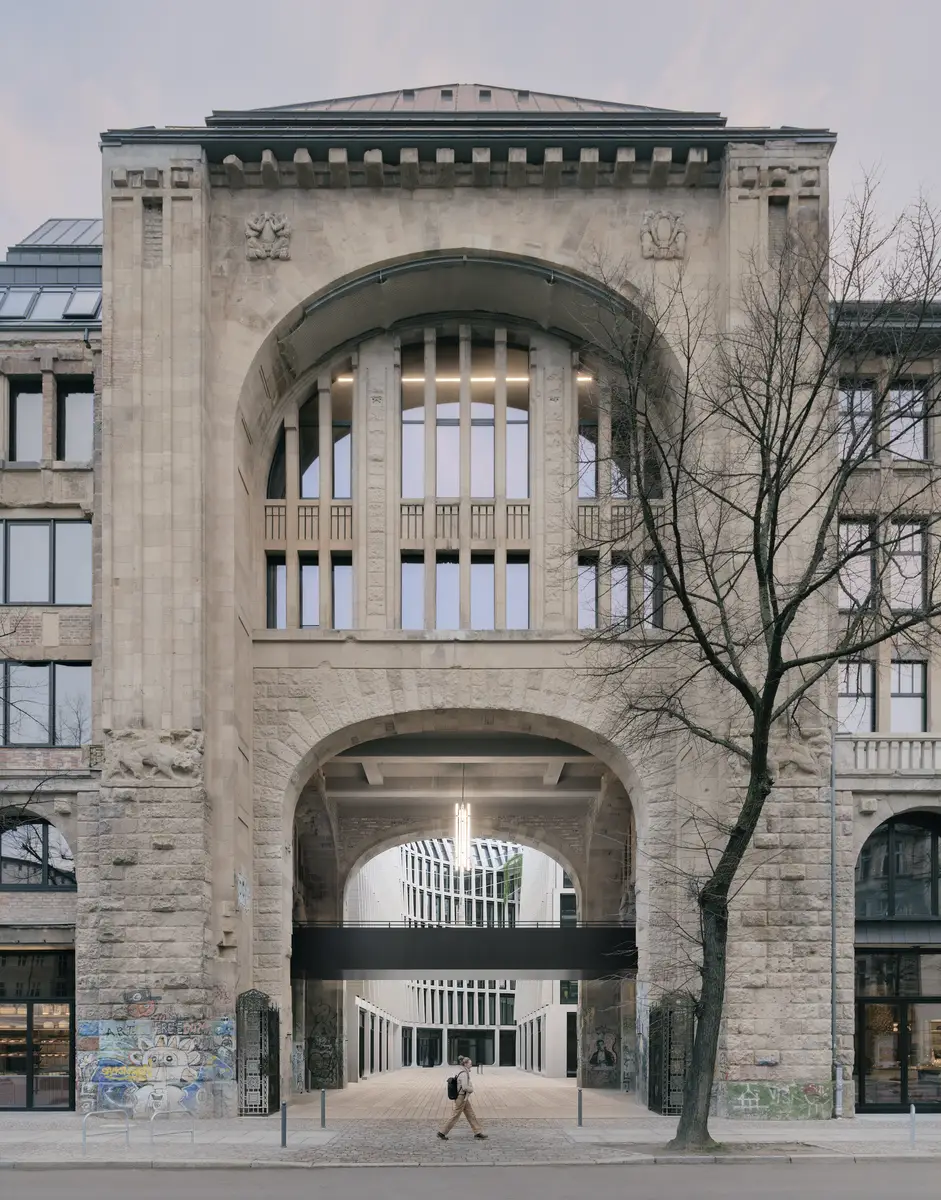
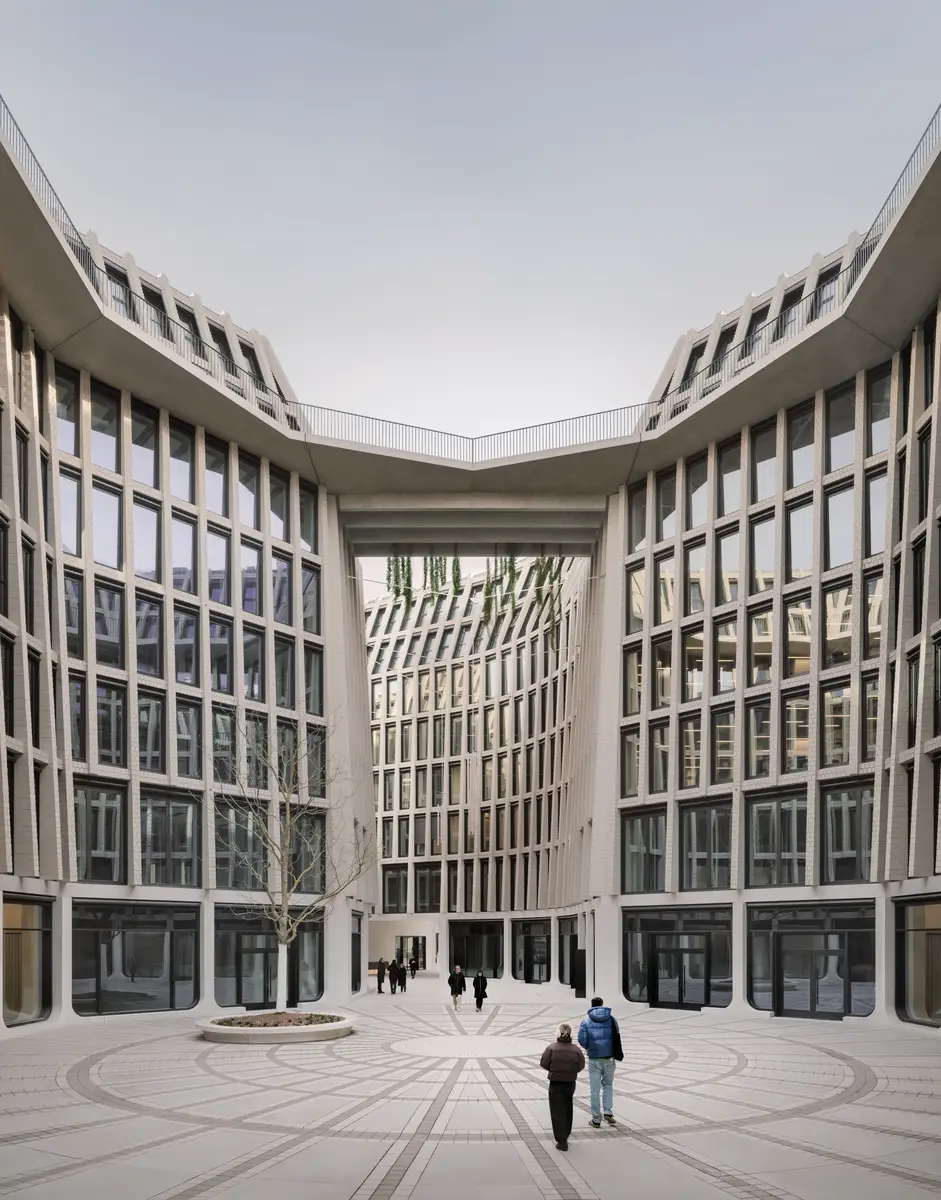
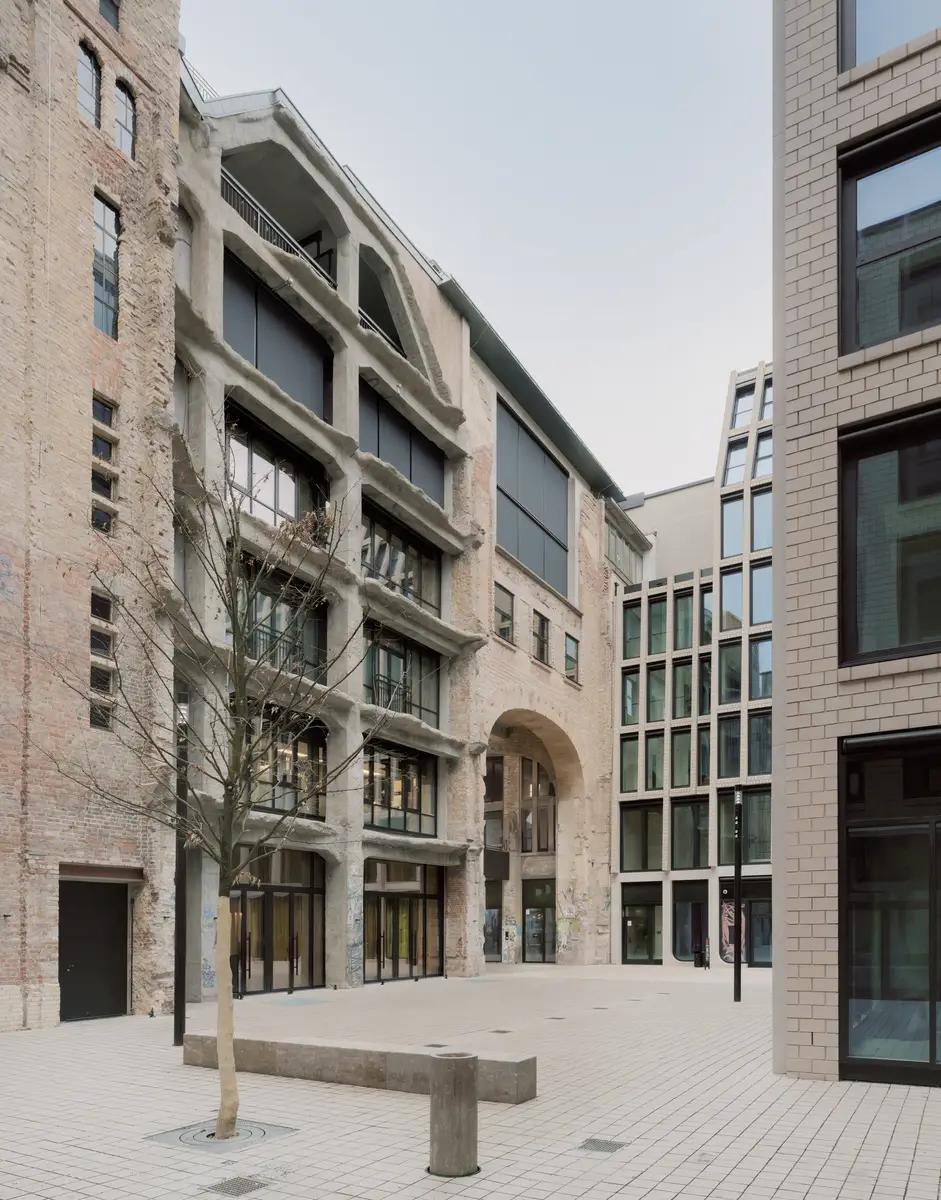
The limestone-clad 1908 structure (1) serves as one of the gateways to the retail-lined pedestrian passageway (2). Photos © Nino Tugushi, click to enlarge.
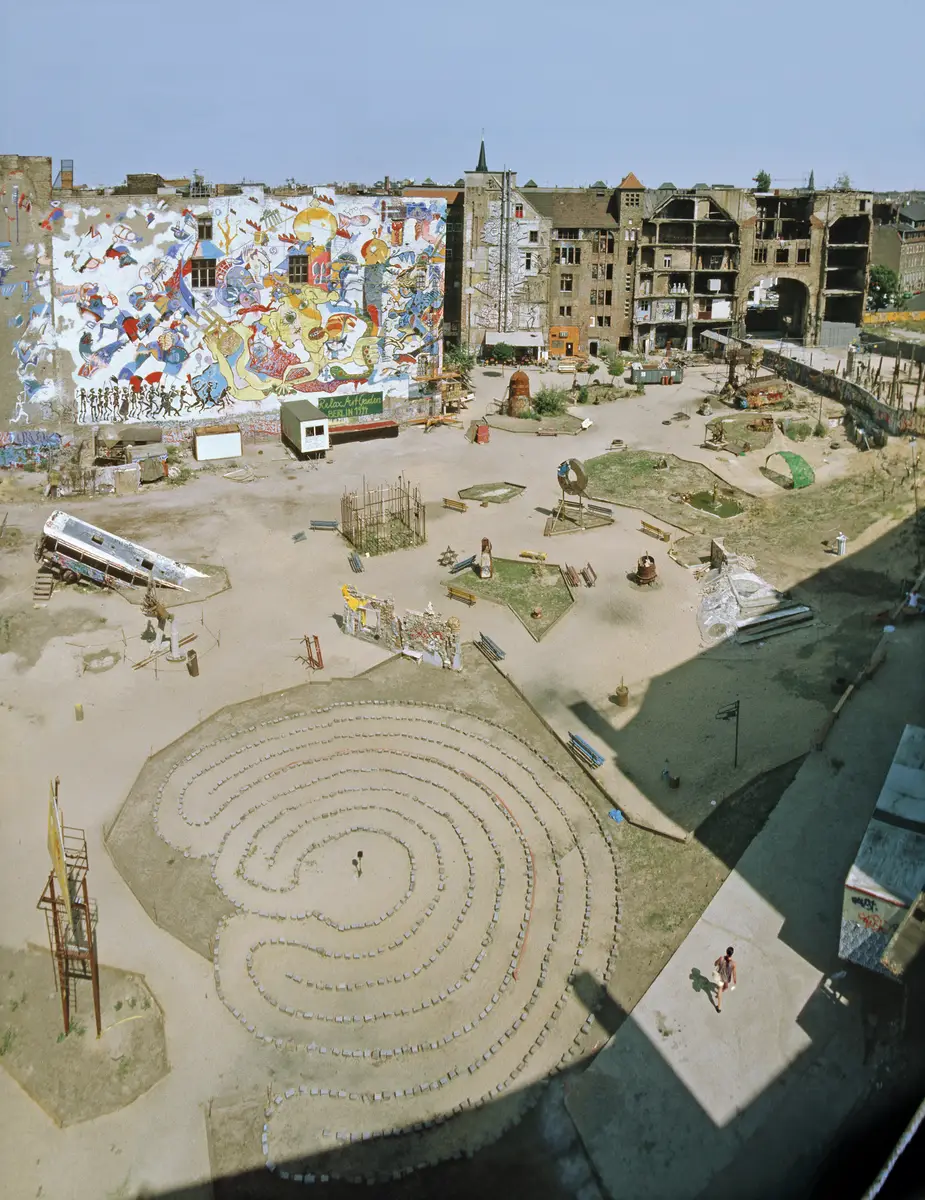
When the Berlin Wall fell in 1989, artists occupied the derelict building, repopulating it as they saw fit. The entrenched collective of ateliers, bars, and dance floors came to symbolize the newly opened city’s freewheeling creative scene. Although Tacheles’s international profile rose along with the tide of hipster tourists, Berlin authorities finally ended the party in 2012. The tract traded hands multiple times before being acquired by Aermont Capital, which initially sought to develop offices, shops, and condos, but construction stalled, and the fate of the shuttered ruin hung in limbo again.
How long is now—that moody, probing statement (sans question mark) struck a plaintive tone at Tacheles’s final curtain call.
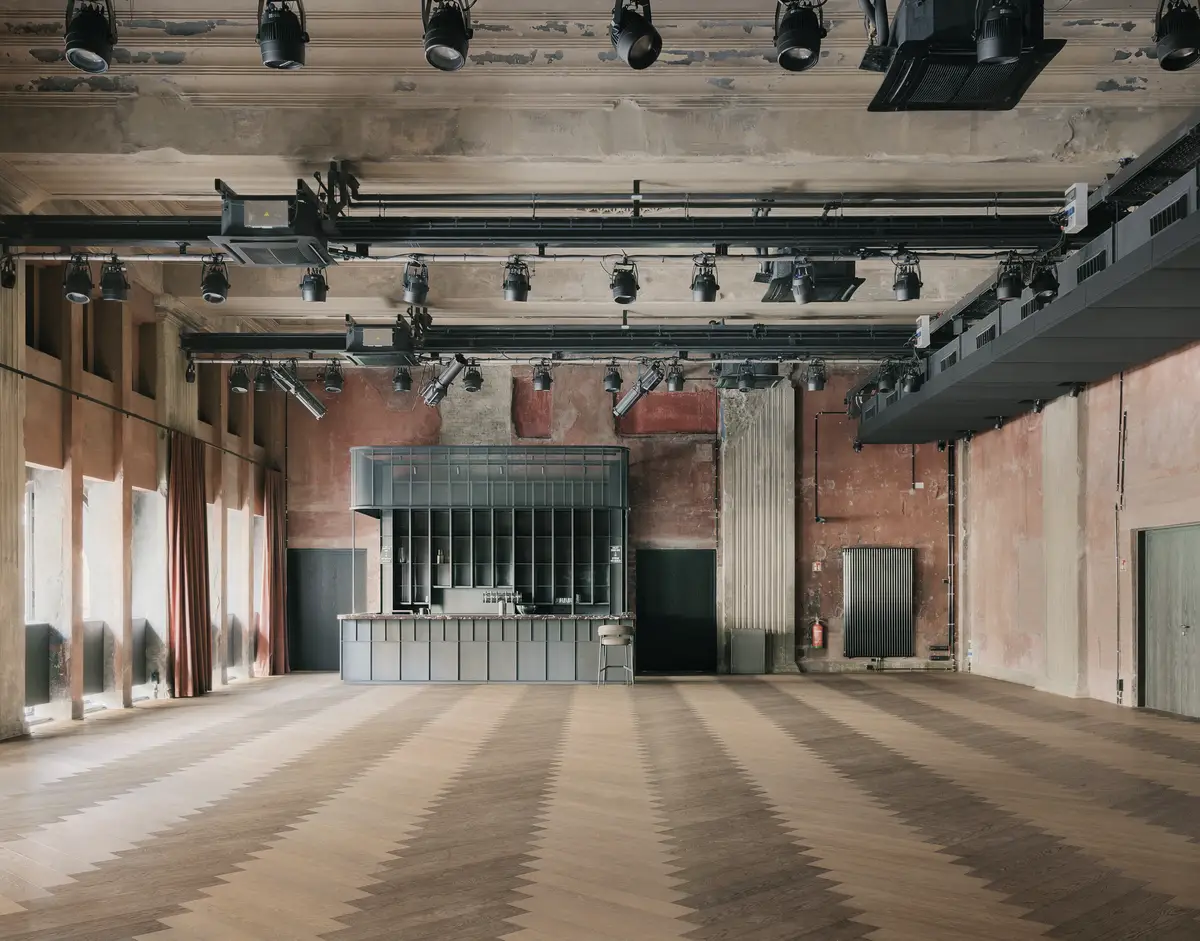
More than a decade later, a 10-building, 922,790-square-foot enclave realized by PWR Development and master-planned by Herzog & de Meuron, stands on the site, incorporating the husk of the original five-story Tacheles and using the parking lots that surrounded it for new construction. The historic structure got a polish and new windows, with riotous bursts of graffiti left preserved inside, to make space for a 60,000-square-foot outpost of Swedish museum Fotografiska plus new amenities—two cafés, a restaurant, and a rooftop bar. A steeply pitched, zinc-clad pyramid now crowns the building above its arched limestone portal, while the back-of-house areas have been left in a state of arrested decay, with exposed concrete edges and coarse brick walls.
3
4
Tacheles, circa 1994 (3), was integrated into the complex (4), which includes new amenity spaces (5). Photos © Stefan Schilling (3), Nino Tugushi (4 & 5)
5
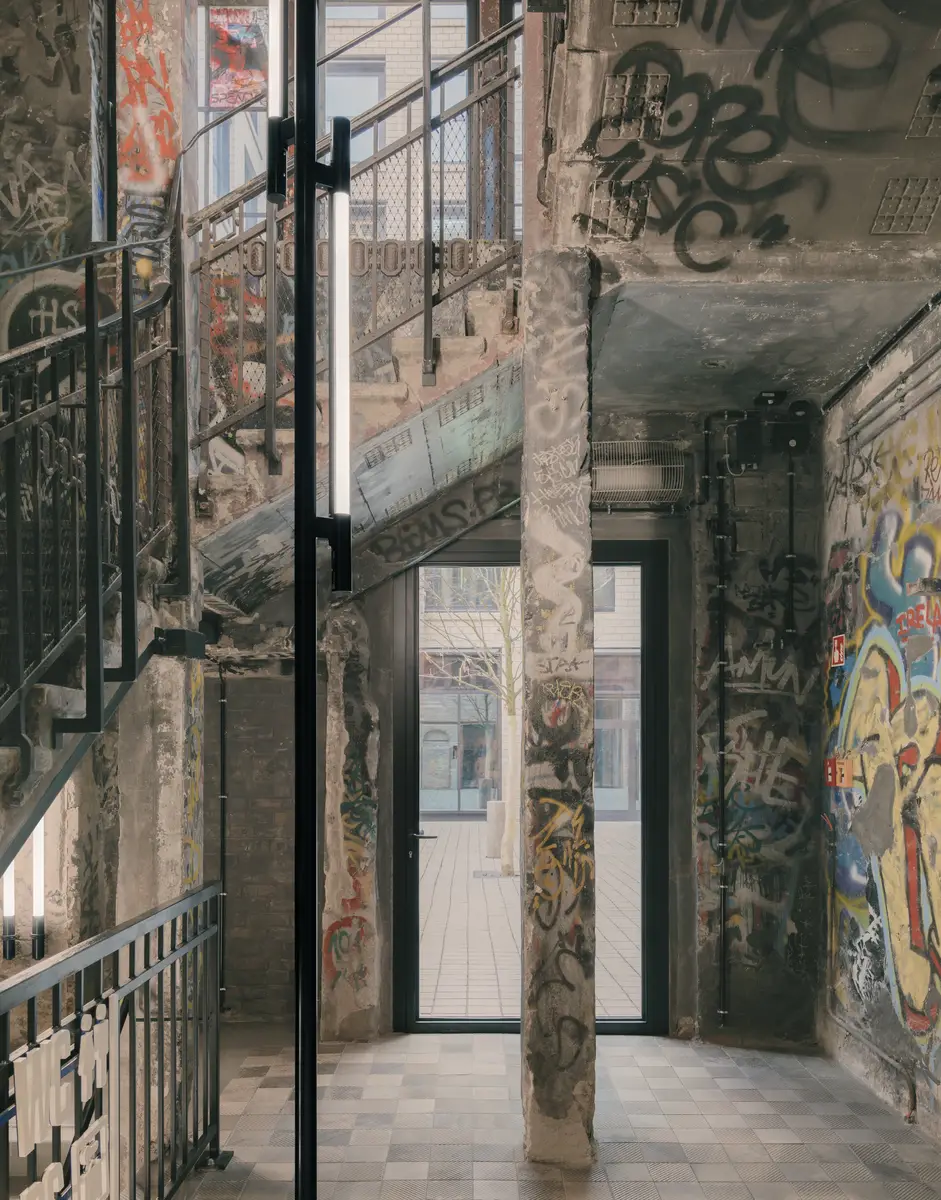
Original graffiti were preserved. Photo © Nino Tugushi
It’s a balancing act of old and new that the Basel-based firm has long explored—from its famed gutting of a disused power station to clear space for the Tate Modern in London to the process of blending Park Avenue’s historic 19th-century Armory with modern architectural interventions in New York.
Senior partner Ascan Mergenthaler explains that the objective was to update the structure without scrubbing more than a century of change away completely. “It’s about making the building fit for its purpose without destroying layers of the past, being too protective, or being too precious,” he says. “It’s not about renovation. It’s about revitalization.”
Looking for quick answers on architecture and design topics?
Try Ask RECORD, our new smart AI search tool.
Ask RECORD →
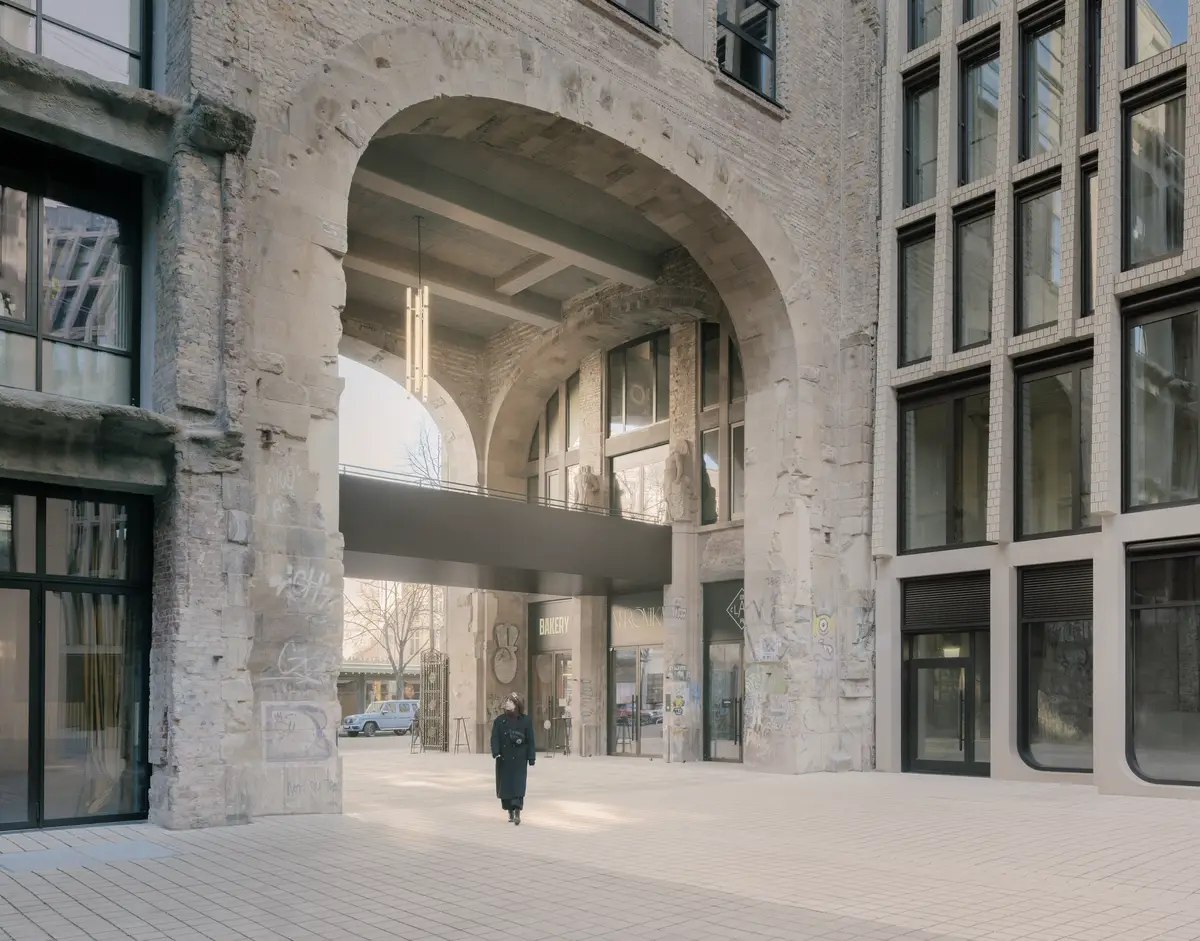
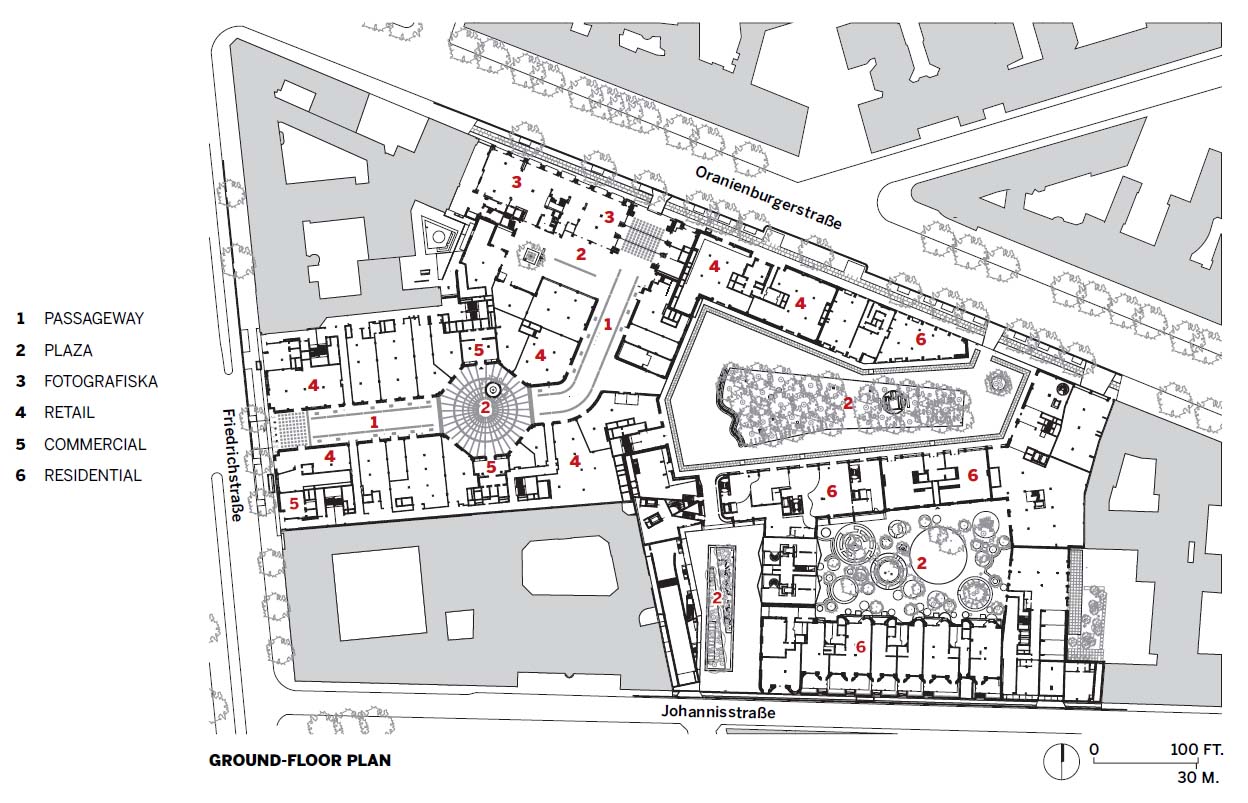
The rest of the development springs from the historic structure, comprising ground-up buildings—all mixed use but six primarily for apartments and three primarily for offices—shot through by plazas and passages. (Six of the buildings were designed by Herzog & de Meuron, with the others commissioned to Grüntuch Ernst and Arno Brandlhuber.) The guiding principle of the master plan, explains Mergenthaler: to restore the defining curved path of the former department store and reimagine it as an open-air pedestrian sluice lined with shops. “With Tacheles, we were basically left a head without a body. We thought it was very important to bring back the missing element, so you understand the full history of this place,” he says. “It’s all about layers—like a palimpsest—without falling into that trap of rebuilding the past.”
While the snaking canyon defines the western half of the complex, the eastern portion is organized around a series of linked courtyards. Nearly all the Herzog & de Meuron–designed exteriors are jacketed in textured grids of glazed, oatmeal-colored clay bricks. The firm rough-cut the blocks and faced the split ends outward. Inspired by the exposed remnants of the original Tacheles, this technique was also carried through the passageway to Friedrichstraße. The resulting corduroy-like surface recalls the hand-chipped concrete ribs of Paul Rudolph’s Art & Architecture Building, but also the firm’s own VitraHaus design museum in Weil am Rhein, Germany.
6
Rough-cut brick clads many of the residential buildings (6) and the offices adjacent to the original structure (7). Photos © Nino Tugushi
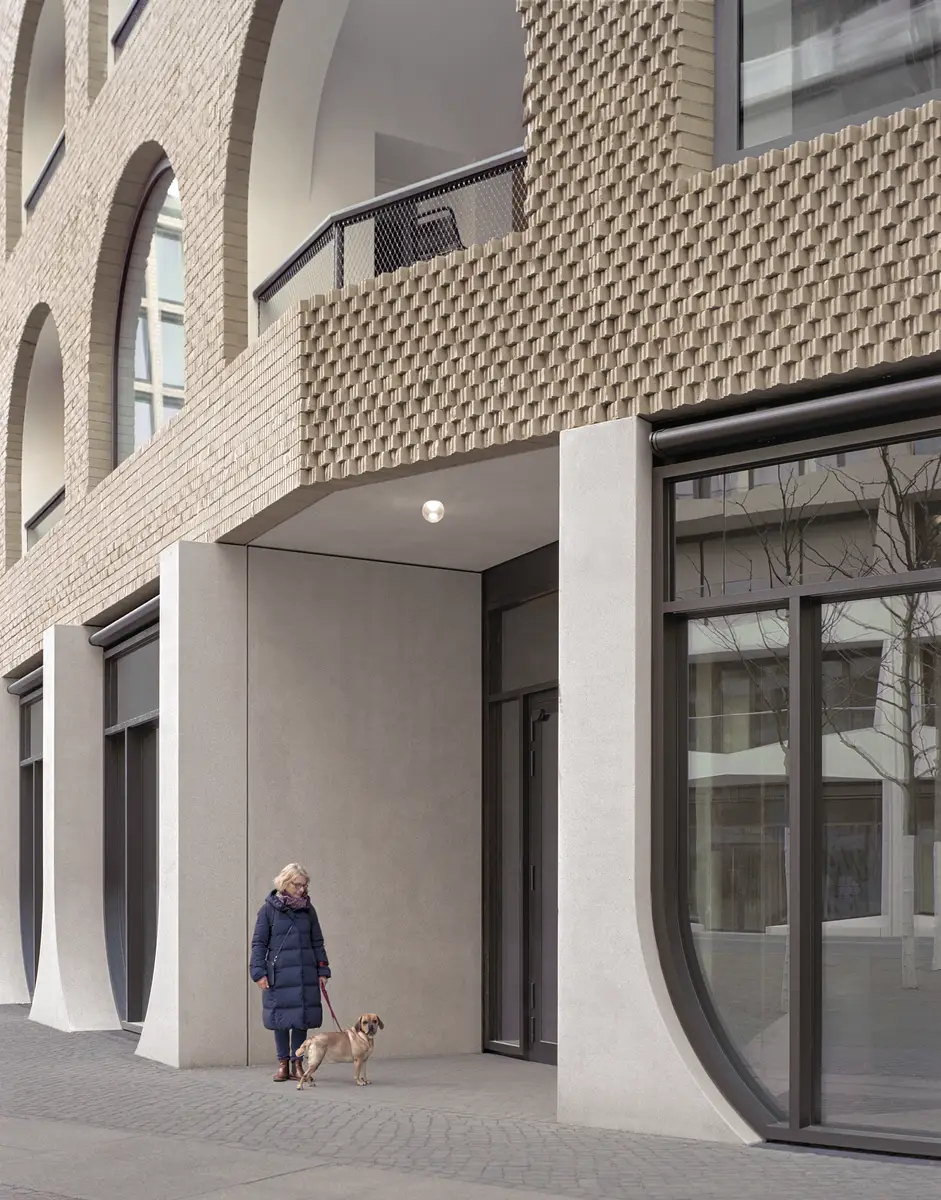
7
The long-demolished Friedrichstraße facade of Tacheles has been replaced with twin eight-story-high office blocks straddling the pedestrian passage, where narrow windows of reflective glass sit deep within protruding brick piers. “There had to be a gesture so that you recognize that this was a very important entrance,” Mergenthaler says. “Otherwise, people might just walk by.” Echoing the monumentality of the limestone arch on Oranienburgerstraße, Herzog & de Meuron’s gateway is announced by full-height reentrant corners, where the clay bricks have been rotated to reveal their smooth side faces. A pedestrian bridge held up by six exposed-concrete beams encloses the top of this gateway.
Along the passage, closely spaced brick piers taper as they rise. The top two floors rake back even more sharply to form a serrated, mansard-like silhouette. Two additional sky bridges complete a collar of terraces ringing an octagonal knuckle where the arcade’s towering dome once stood. There, a Chinese pagoda tree springs from a raised circular concrete planter—one of the passage’s scant green sprigs.
Attempts to grow a curtain of mixed vines have so far proven unsuccessful. The scraggly, half-desiccated tendrils add a decidedly un-verdant sky-high fillip to the clay canyon. Sixteen bronze-colored lanterns, each comprising six tubular LED masts hung from steel cables above, fittingly march down the chasm like steampunk chandeliers. But the muted aesthetic—in addition to the bricks, beige and cream-colored pavers as well as smooth cast concrete—at times feels pallid.
“We made a conscious decision to keep all the buildings within a similar mineral color palette,” Mergenthaler says. “We didn’t want a zoo of buildings. We aimed to create a cohesive framework where the public spaces and greenery take center stage.” He hopes that shops and eateries will begin to bring a certain vibrancy. Many of the ground-floor retail spaces remain vacant a year after completion—but a Starbucks greets visitors at the Friedrichstraße gateway and an almost absurdly incongruous Cadillac dealership bumps up against Fotografiska’s café.
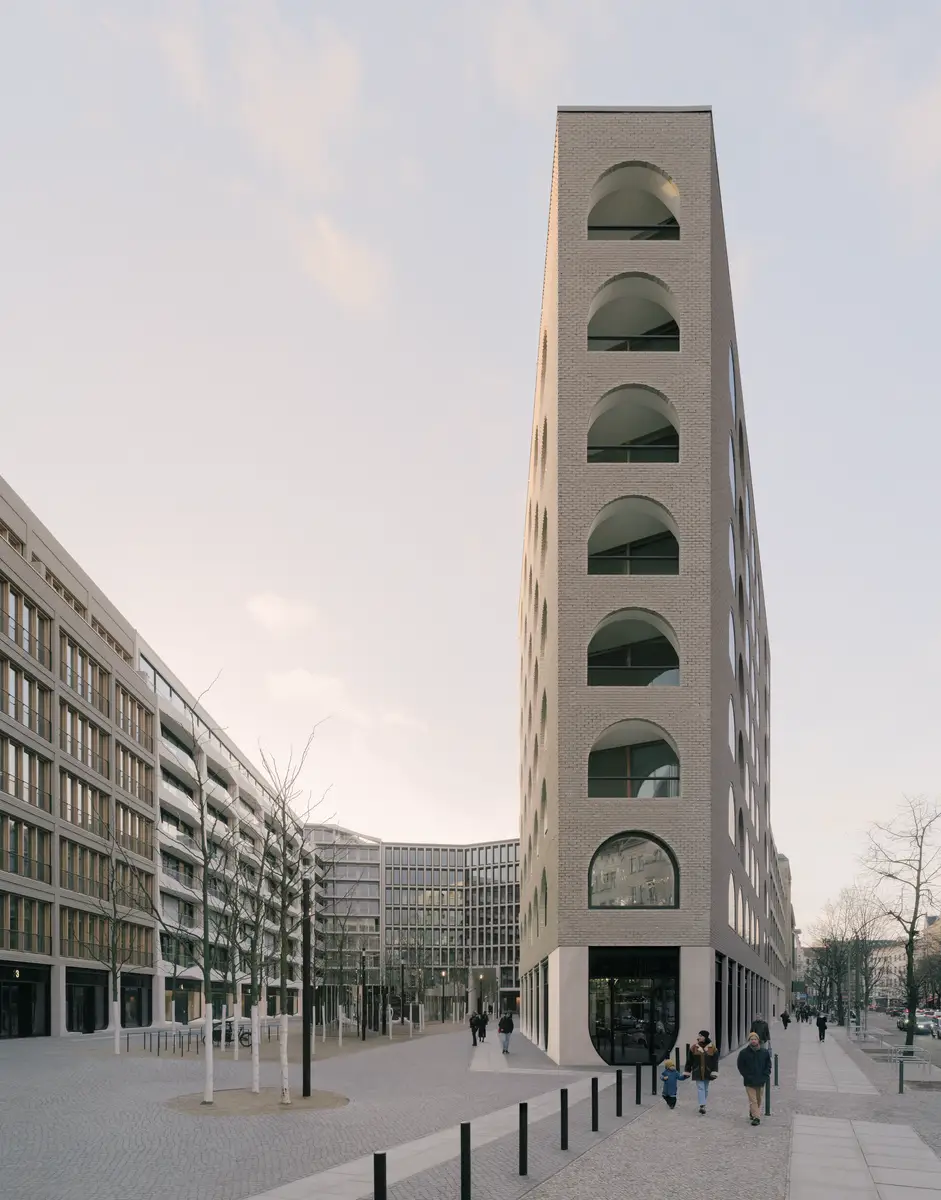
A wedge-shaped building marks the edge of the eastern plaza, which is dotted by three cylindrical 12-foot-tall chromed exhaust vents. Photos © Nino Tugushi
The neutral character persists across the quarter’s main eastern plaza, which is primarily residential but also features some office and retail spaces. Two of the apartment buildings, along the southern edge of the plaza, are a study in contrasts. One, designed by Grüntuch Ernst, features traditional townhouse layouts and faceted balconies. The other, by Herzog & de Meuron, is filled with loft-like open spaces and thin, timber-framed windows. At the northeastern edge of this plaza, Herzog & de Meuron also realized an eight-floor, reinforced-concrete wedge ordered by tiers of arched windows. Here, the broken-brick facade is refined to a more subtle texture—more cashmere than corduroy.
One could be forgiven for not sensing the presence of Johannisplatz, a more intimate residential plaza connecting the quarter to the quieter Johannisstraße to the south. Populated with two triangular plots of columnar Aspen trees, this small rectangular court sits between angular tiers of gray concrete micro-apartments, designed by Brandlhuber, and an undulant row of townhouses faced in putty-colored plaster with rolling waves of bay windows, unexpectedly designed by Herzog & de Meuron.
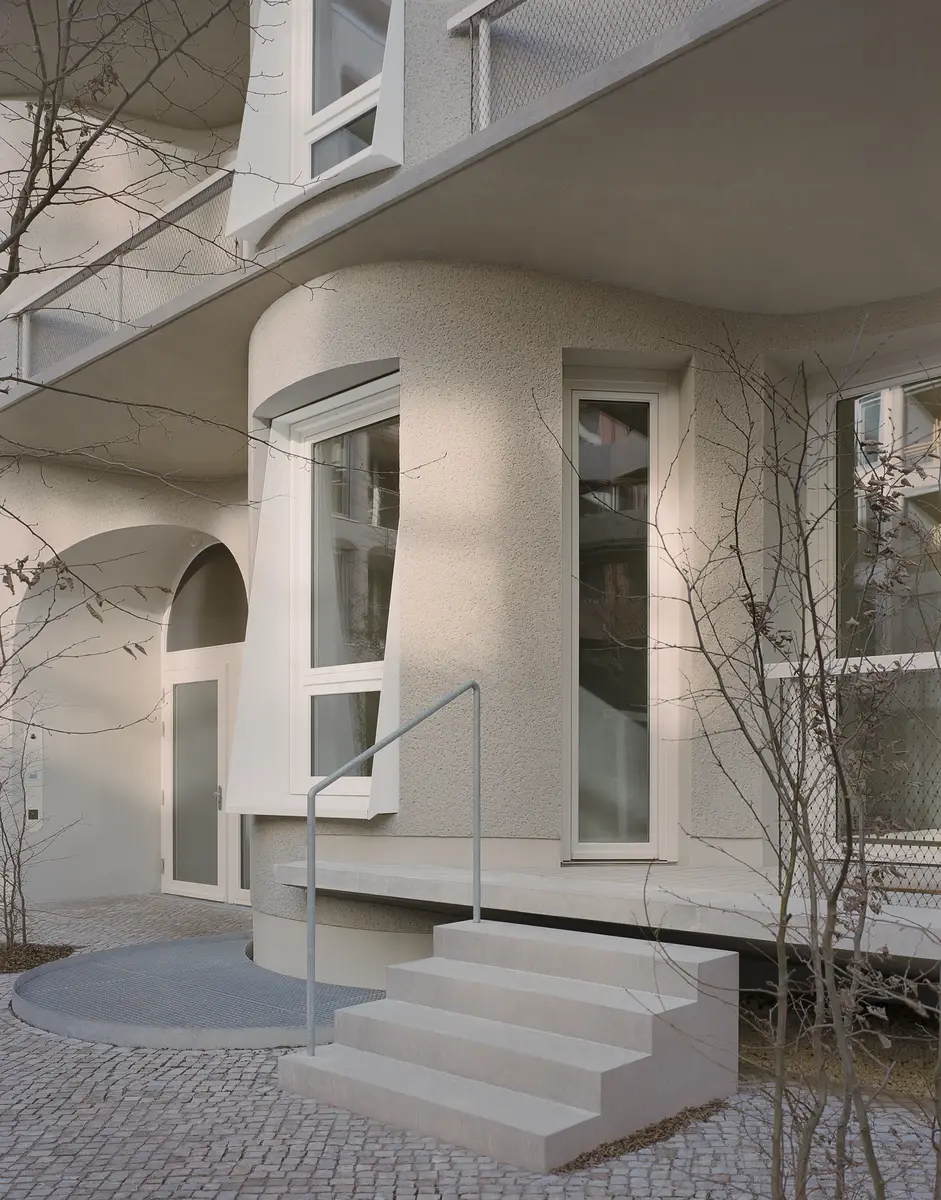
8
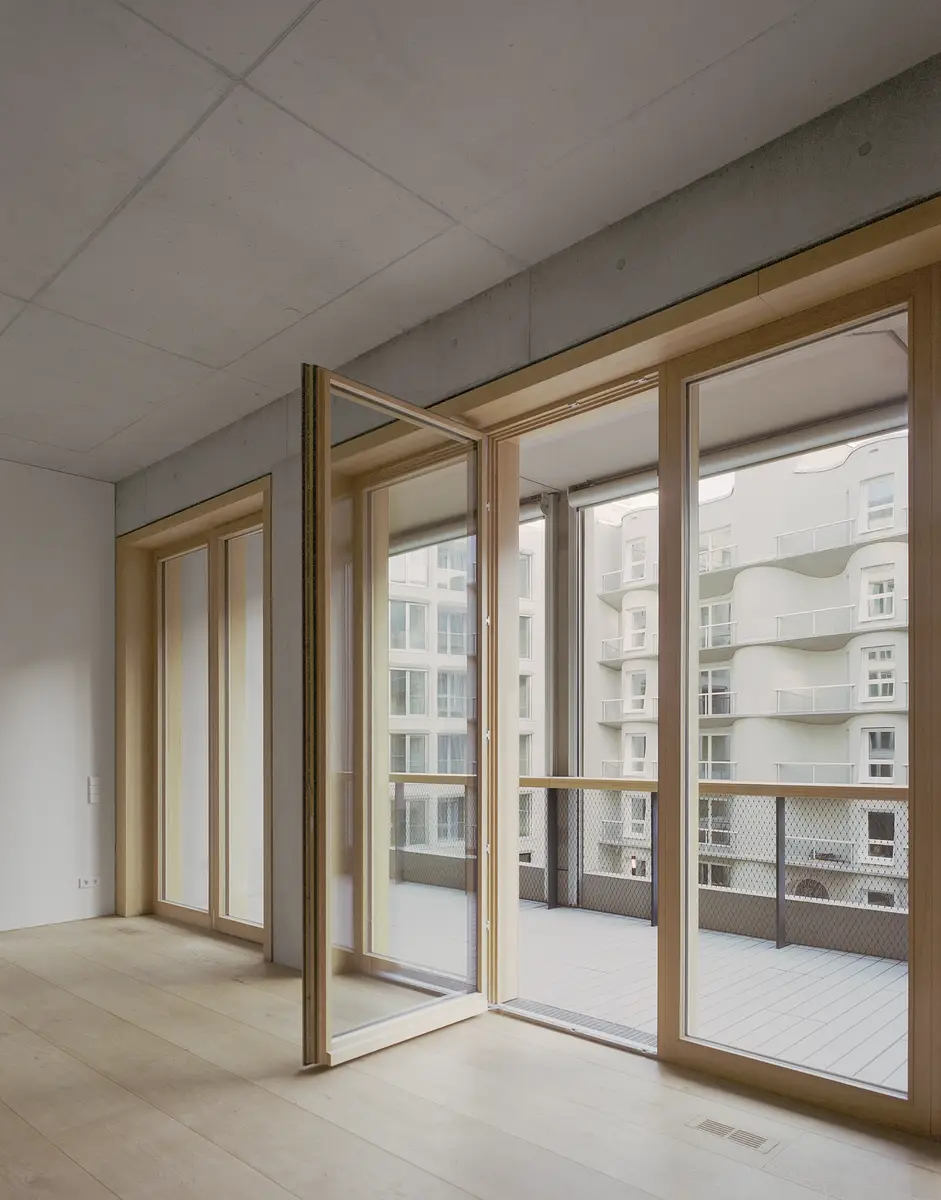
9
Others nearby buildings feature undulant stuccoed walls (8) or minimal timberframed windows (9). Photos © Nino Tugushi, click to enlarge.
From a planning perspective, all the puzzle pieces would appear to fit: there is public access to, from, and through the complex from all directions. Plazas, rather than parking lots, abound. Vacant spaces have been transformed into high-end lofts. And the grand, curving passageway has faithfully reappeared. But what is missing? As yet, it is the sense of place that old Tacheles so vividly radiated. Who is this all for?
Chain stores, tourist shops, car dealerships—even Fotografiska, a for-profit private museum—all attest to the corporate credentials of the project, an antithesis of the bottom-up aesthetic that defined Berlin’s heady post-Wall, pre-gentrification era. From “poor but sexy”—a famous description of the city made by former mayor Klaus Wowereit in 2006—to moneyed and mannered.
Mergenthaler explains that the “hardware”—the physical components—are all in place. Still outstanding is the “software” of cool shops and people. “There are still plenty of qualities you can enjoy as a Berliner—as a shortcut or hanging out on a bench under the trees,” he says. He acknowledges the scraggly hanging gardens have just one summer behind them, but the hope is that plants will soon thrive, local shops will take root, the stage set will come alive.
It’s an optimistic outlook for a site—and a city—so ruthlessly braced by history. But another question lingers: How long is now?
Click plan to enlarge
Credits
Architect:
Herzog & de Meuron — Jacques Herzog, Pierre de Meuron, Ascan Mergenthaler, partners; Jan-Christoph Lindert, Yasmin Kherad, Nicholas Lyons, associates; Gregor Herberholz, Elisabeth Klein, senior architects
Associate Architect:
Aukett+Heese
landscape architect: Vogt Landschaft
Consultants:
WSK Ingenieure (structural, offices); Happold Ingenieurbüro (structural, residential); hhp Berlin Ingenieure für Brandschutz (fp); Liebert (m/e/p); Krebs+Kiefer (building physics); Bartenbach (lighting)
General Contractor:
Hochtief
Client:
Aermont Capital
Size:
922,790 square feet
Cost:
Withheld
Completion Date:
June 2023
Looking for a reprint of this article?
From high-res PDFs to custom plaques, order your copy today!