Elbphilharmonie by Herzog & de Meuron
Hamburg, Germany
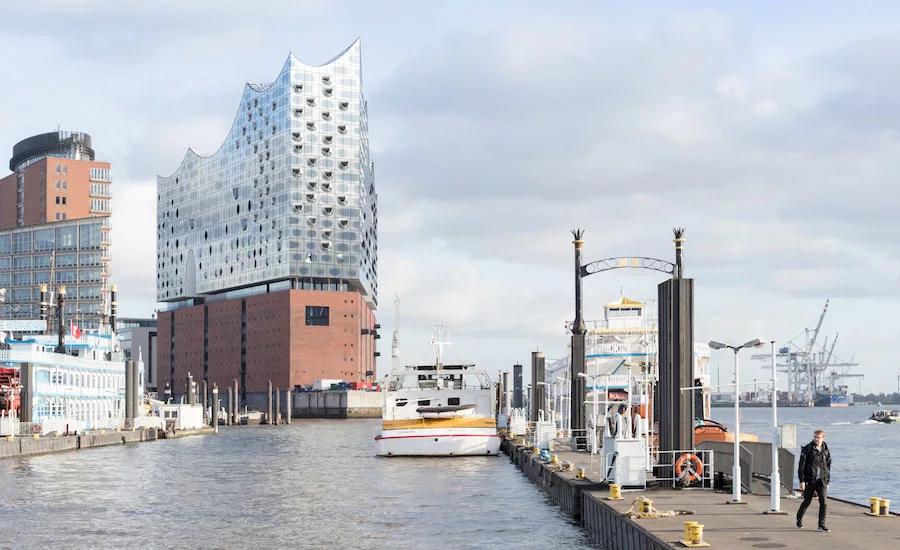
Photo © Iwan Baan
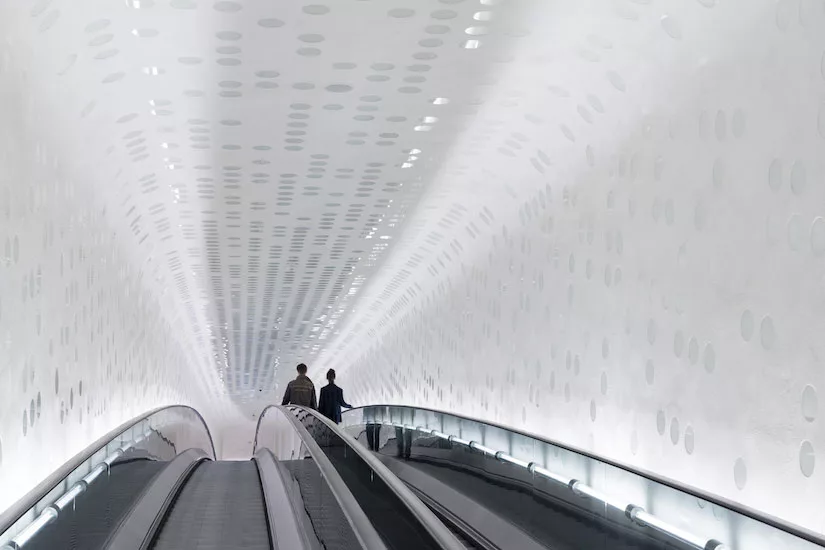
An escalator dramatized by reflective disks embedded in white stucco walls rises on a gentle curve to the upper levels.
Photo © Iwan Baan
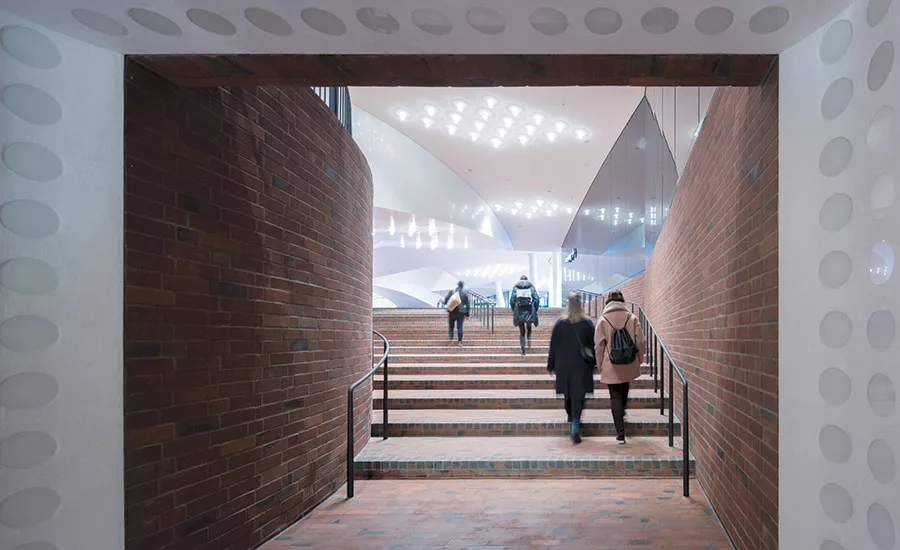
At the top, a brick stair takes visitors to the main plaza on the eighth floor.
Photo © Iwan Baan
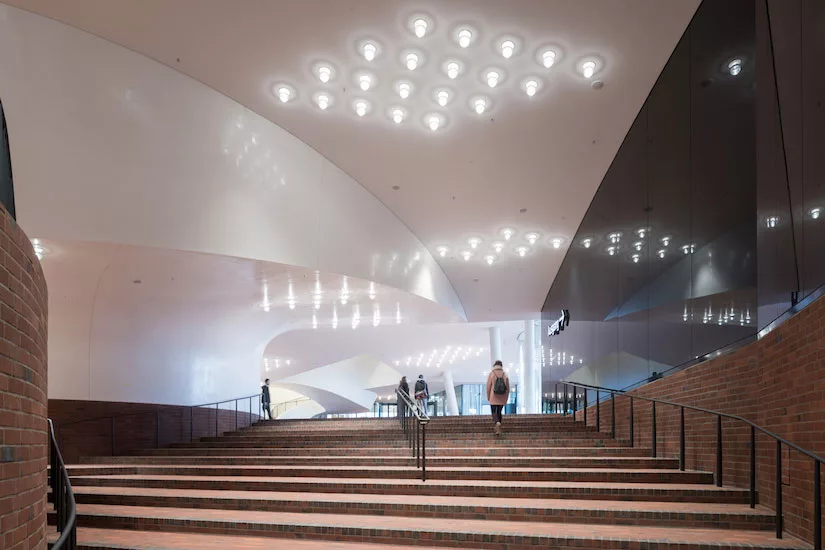
Photo © Iwan Baan
Broad, spiraling stairs lead up from the plaza to the two auditoriums.
Photo © Iwan Baan
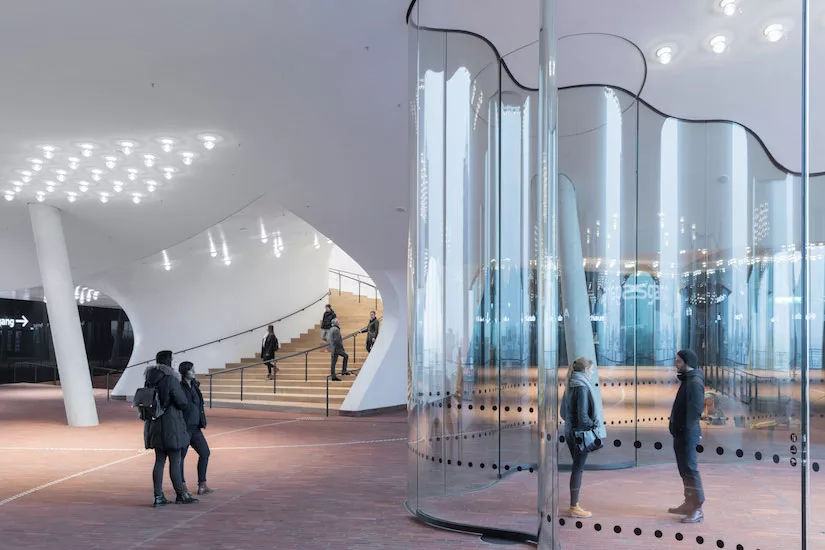
A large balcony is backed by rippled glazed panels, to protect against the wind while offering expansive views of the city and harbor. Broad, spiraling stairs lead up from the plaza to the two auditoriums.
Photo © Iwan Baan
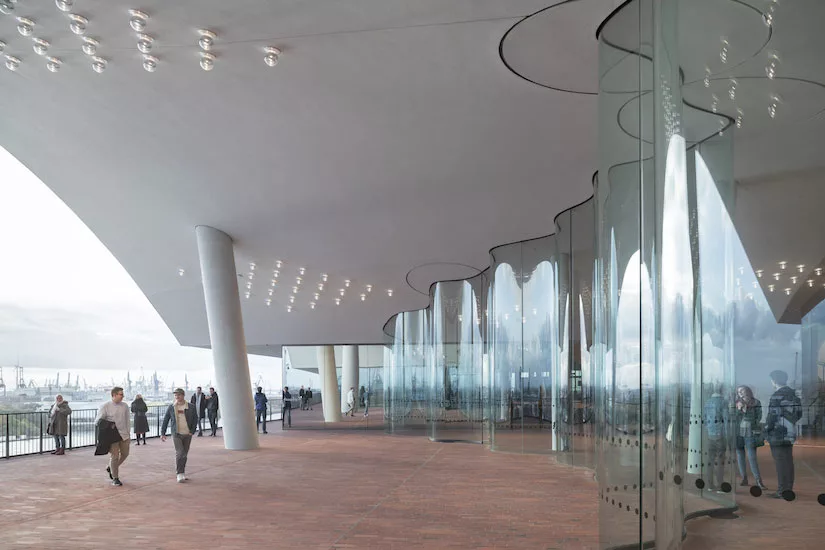
Photo © Iwan Baan
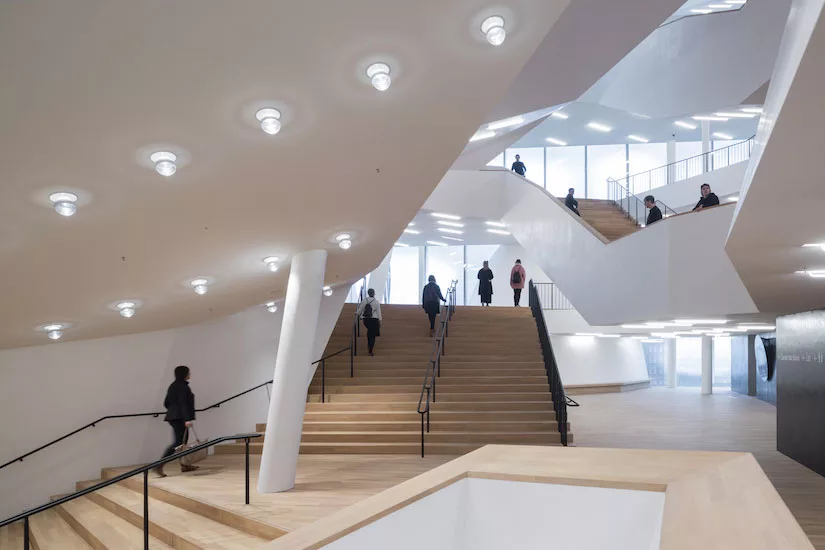
Photo © Iwan Baan
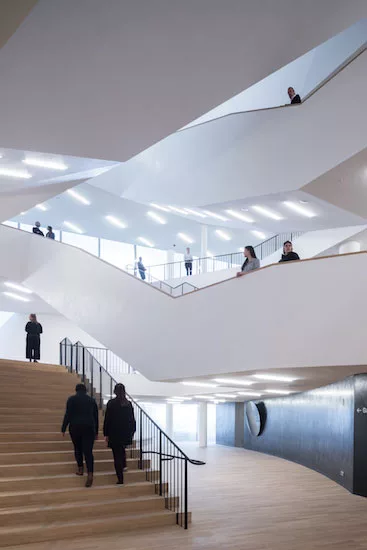
Photo © Iwan Baan
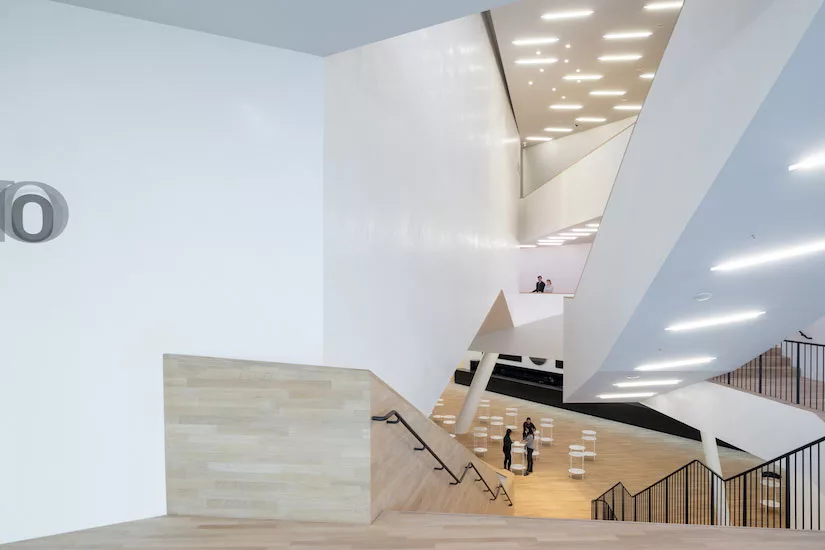
The twisting plan offers unexpected glimpses of the concert hall foyer.
Photo © Iwan Baan
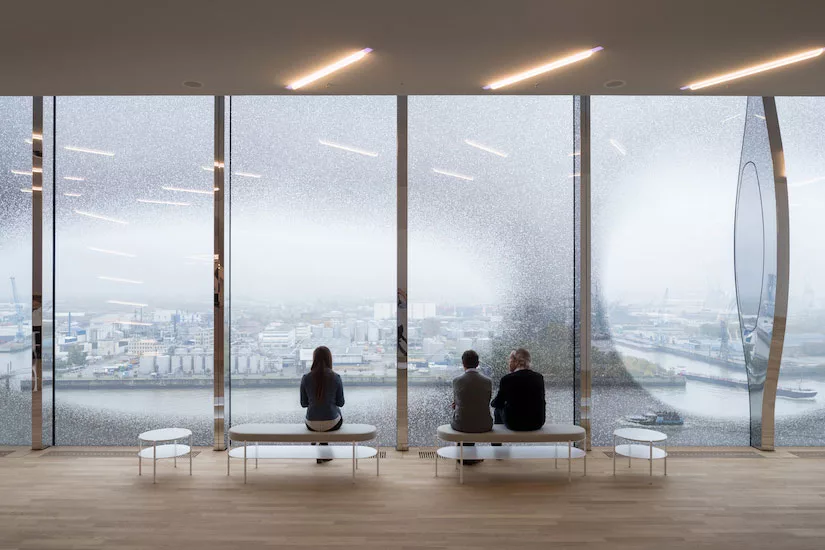
Visitors look out at the working harbor through fritted glass with bent profiles and swiveling ventilation panels.
Photo © Iwan Baan
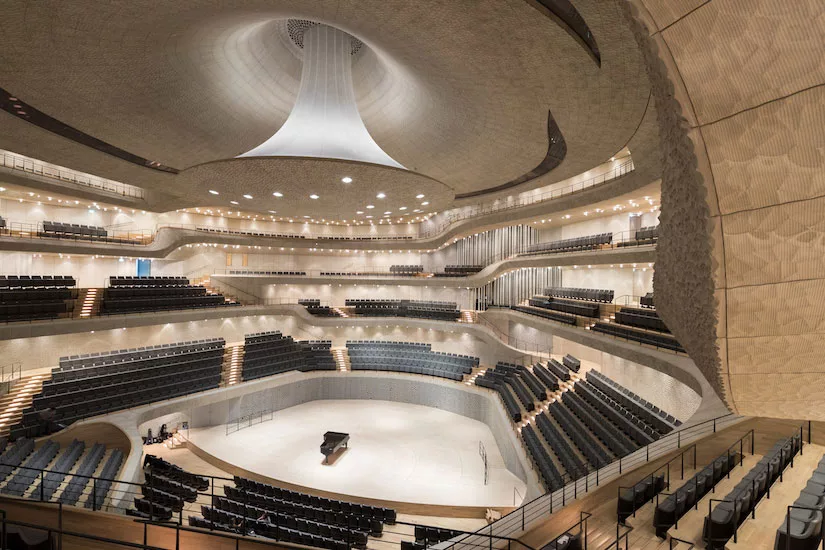
With the help of acoustician Yasuhisa Toyota, Herzog & de Meuron designed the 2,100-seat concert hall, where tiers of gray-upholstered chairs loop around the orchestra under a mushroom-shaped canopy.
Photo © Iwan Baan
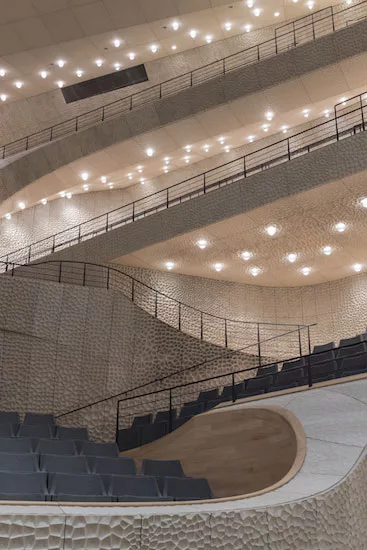
The team also covered walls and ceilings with a biomorphically contoured gypsum fiberboard.
Photo © Iwan Baan
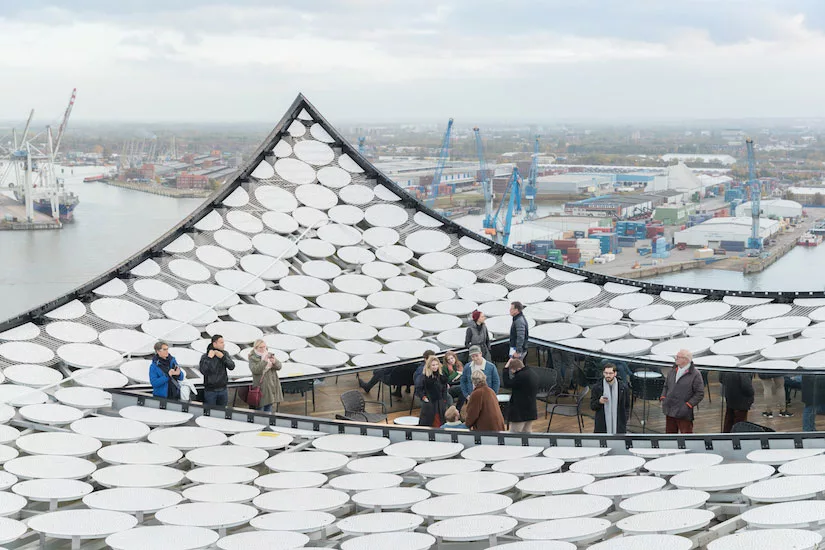
On the roof, white metal perforated disks add to the optical pleasure.
Photo © Iwan Baan
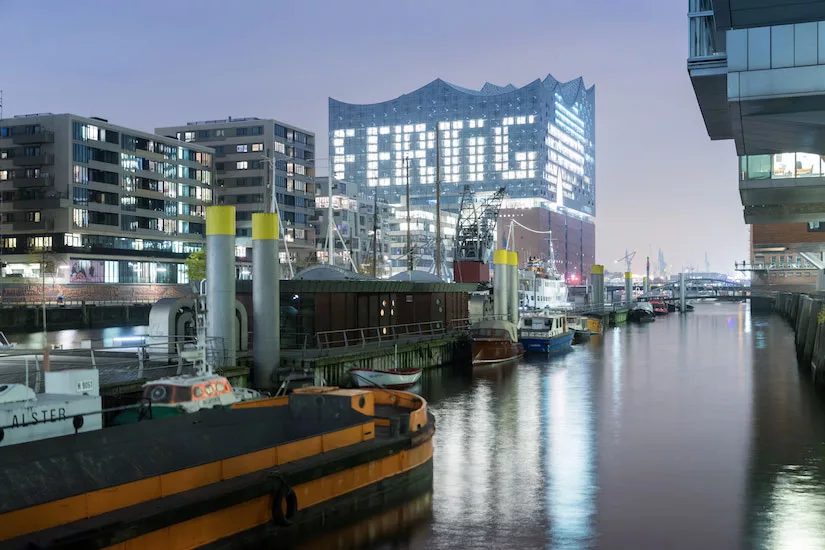
Photo © Iwan Baan
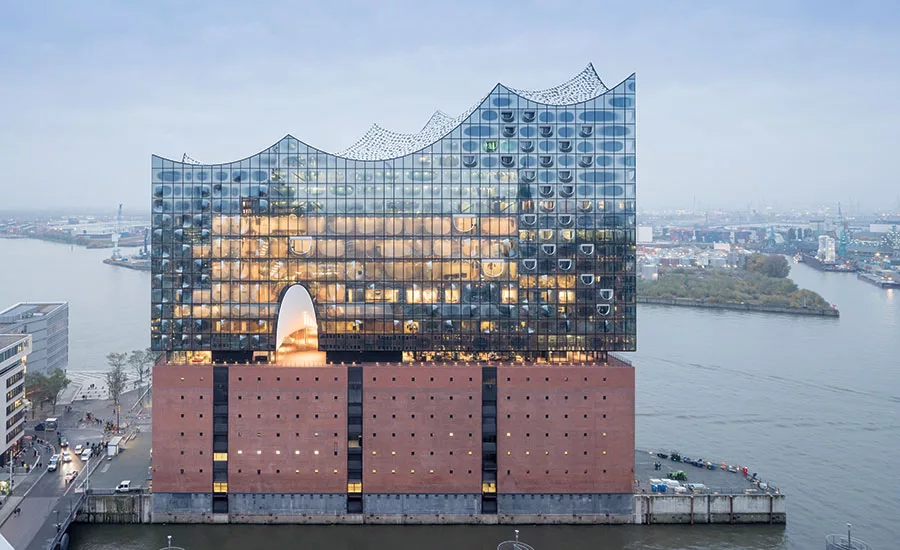
Photo © Iwan Baan
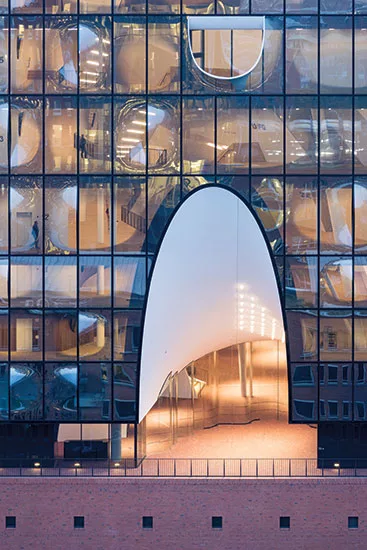
Multiple views of interior spaces are on display from outside.
Photo © Iwan Baan
Drawing courtesy Herzog & de Meuron
Drawing courtesy Herzog & de Meuron
Drawing courtesy Herzog & de Meuron
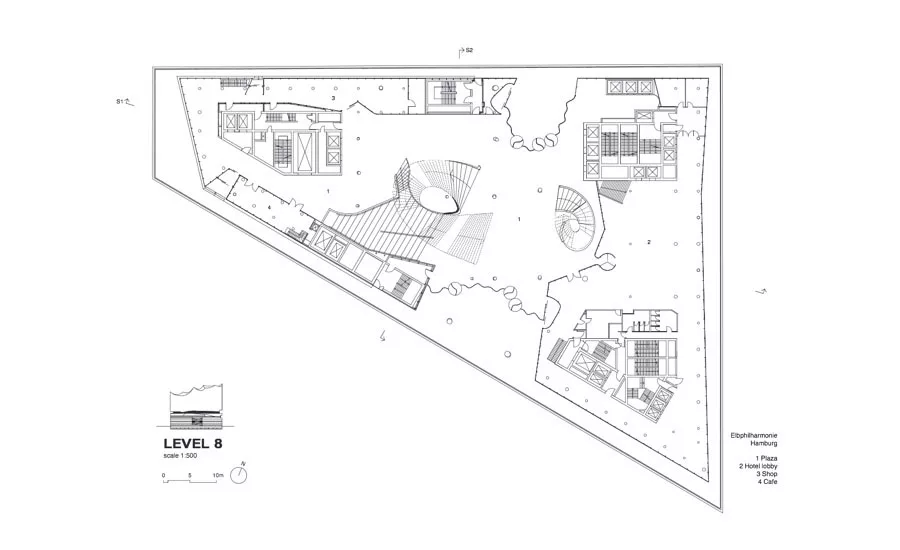
Drawing courtesy Herzog & de Meuron
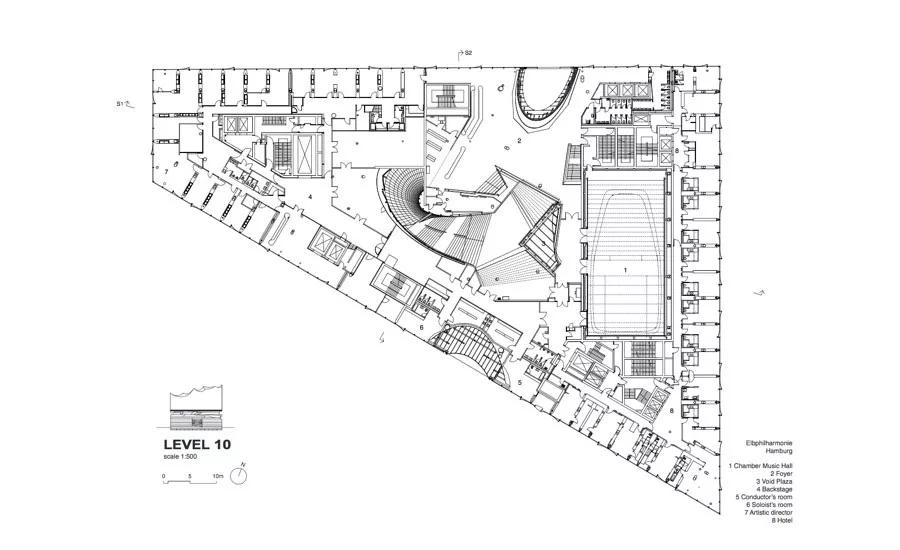
Drawing courtesy Herzog & de Meuron
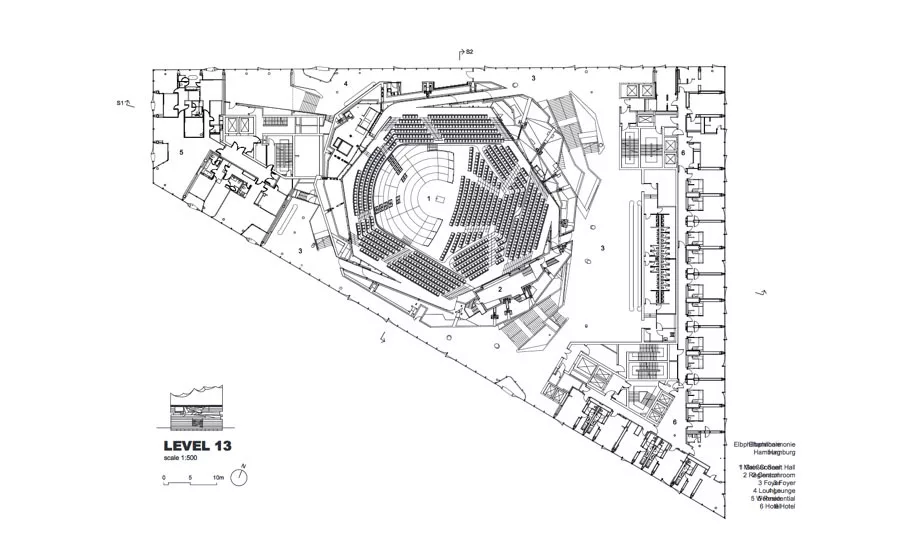
Drawing courtesy Herzog & de Meuron

Drawing courtesy Herzog & de Meuron
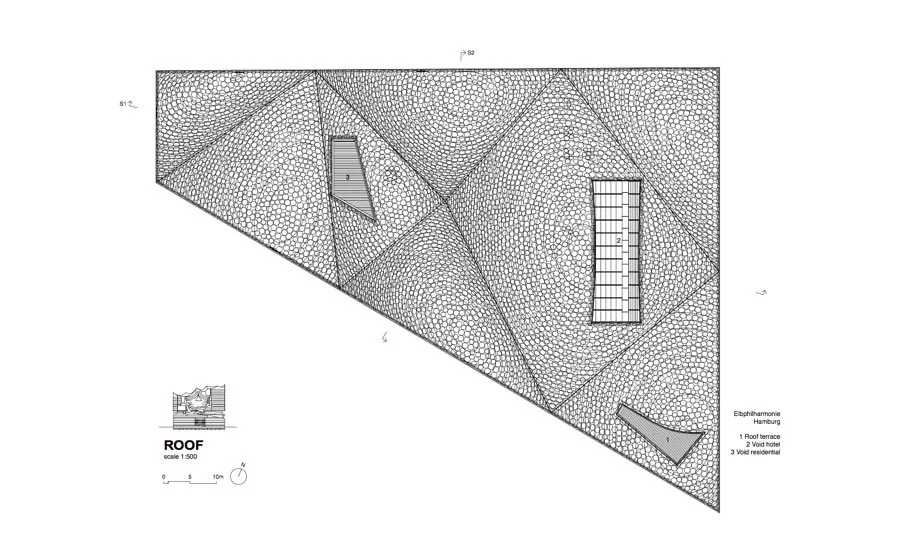
Drawing courtesy Herzog & de Meuron
Architects & Firms
Like a giant seafaring ship with rippling sails of glass instead of canvas and a brick base instead of a wood hull, the new Elbphilharmonie commands the harbor of Hamburg’s still-active port in northern Germany. The concert hall, hotel, and apartment building designed by the Swiss firm of Herzog & de Meuron (as well as local architects Hohler + Partner) sits at the western tip of HafenCity. There it functions as a glittering beacon for this 390-acre residential and commercial waterfront redevelopment under construction along the Elbe River. While Elbphilharmonie’s grand 2,100-seat concert hall and its 550-seat recital hall don’t open until January 2017, already there is plenty of hubbub. The “plaza,” an elevated public space eight stories above ground—between the brick base and the new glass structure on top—was inaugurated early in November. “We feel the enthusiasm of the people,” says founding partner Jacques Herzog. “Outstanding buildings are key for successful urban planning.”
Fascination with the multiuse 26-story, 1,292,000-square-foot structure has burgeoned since the building’s conception in 2003, when the city of Hamburg saw an opportunity to provide a state-of-the-art home to the NDR Symphony Orchestra (now NDR Elbphilharmonie Orchestra). Herzog & de Meuron had been asked previously by a private developer, Alexander Gérard, to renovate a brick storage house, Kaispeicher A, protected by law, on this site for a concert hall. When the city took it over from Gérard, the architects were retained, even though it was at this point a public project, in which the designer is usually chosen through competition. Moreover, it was the firm’s first foray into this acoustically challenging building type. Yet the Pritzker Prize–winners’ idea to place the two concert halls in a 668,000-square-foot glass structure atop the existing brick base, had captivated the public. “Both people and the press found it seductive,” says Herzog. “We wanted to keep the integrity of the warehouse, with its heavy, rocky base, for parking and other uses. And because so many people were behind it, the city adopted it.”
The project also includes the 224-room Westin Hamburg hotel on the east end, with interiors by Tassilo Bost of Berlin. The hotel is expected to open by the year’s end, while 45 apartments on the west end are now being marketed by a local developer, with separate design firms involved in its interior architecture. The base, into which Herzog & de Meuron inserted a concrete frame, contains a third music hall, as well as studios, plus the parking and support services.
If Elbphilharmonie were a ship it might be named the Billion Dollar Baby. Mushrooming costs brought construction to a halt for almost two years, beginning in 2011, and problems between the city, the architects and the construction company, Hochtief Solutions, were resolved by putting a new management process in place. Nevertheless, the price tag increased tenfold, from an estimated $86 million at the start to $880 million today.
The complex design owes its “wow” factor first to the shimmering, evanescent surface that cloaks its top. Herzog & de Meuron made its name with inventive glass skins, as shown in Eberswalde Technical School Library and the Hospital Pharmacy Institute in Basel (RECORD, August 1999). With this project, the architects have taken curtain walls to a new level: the glass of the upper portion drapes and ripples like a real curtain. The exterior membrane is formed of flat and bent insulated glazing units that reflect light and change hue according to the weather and time of day. Concave and convex glass meet at perpendicular slots, where swiveling ventilation panels are inserted. To cut glare, the architects fritted two surfaces of laminated lites, which adds to the richly layered translucency of this enclosure. Another aspect of the skin game is the way the glass droops around U-shaped fiberglass elements framing the balconies.
The undulating glass floats above the sturdy reddish-brown brick of the base, once a warehouse for coffee, cocoa, and tea. While it fits in with the 19th-century vernacular of the port structures, its severe solidity and punched windows (à la Aldo Rossi) offer a clue that it was actually completed in 1966, by Hamburg architect Werner Kallmorgen.
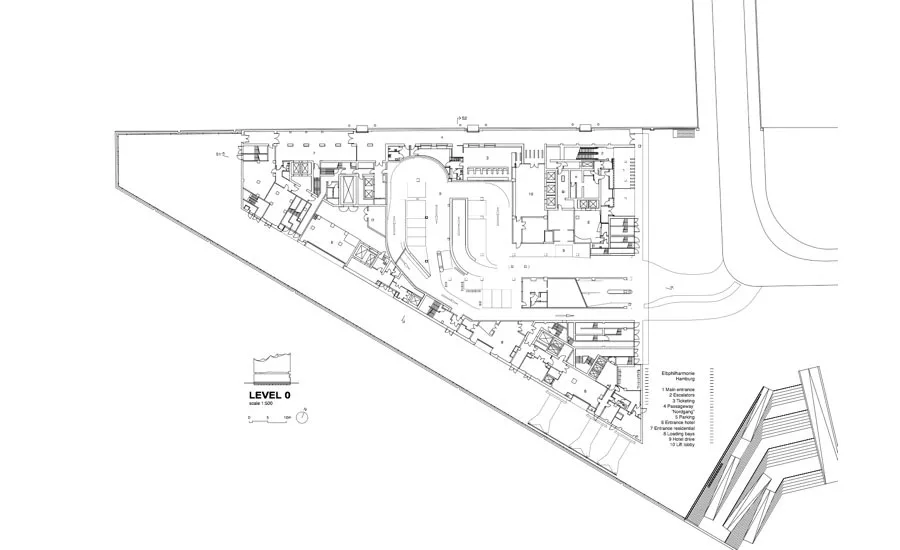
Visitors enter this dark bunker from the east side, where an escalator, perpendicular to the entrance facade, moves up in an arc to the plaza level. It is enclosed in a white tube that glistens with the bounced light of numerous circular discs embedded in its stuccoed interior. “We were thinking of the grand staircases of the older concert halls in Europe,” says Herzog & de Meuron partner Ascan Mergenthaler.
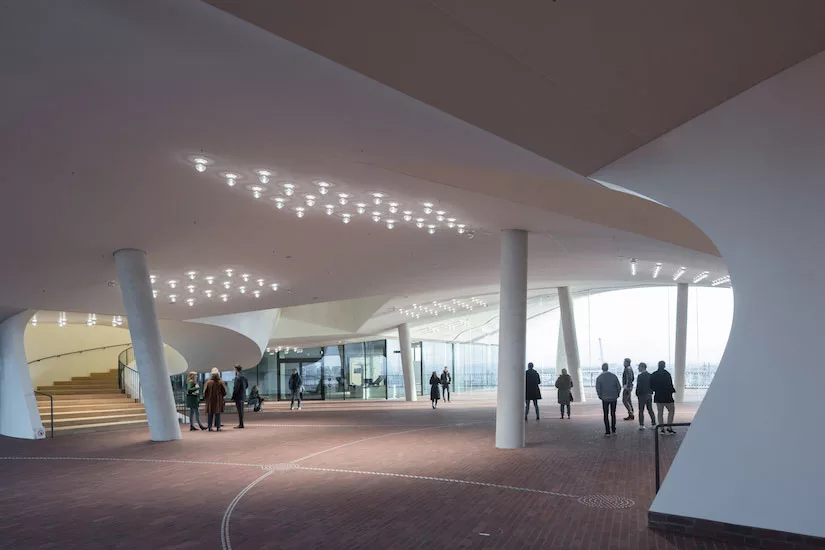
At the top of the escalator, visitors ascend broad brick steps leading to the public plaza. At this point in the architectural procession, they’re drawn to the view of the city through a high, arched portal that opens onto a balcony, which continues as a walkway around the building. Large swooping sheets of glass separate the space from the interior: since the plaza is intended to convey a sense of being open to the outdoors, the architects decided to create these billowing elements without mullions, leaving gaps between the glass folds so that the transparent “draperies” can be mechanically shut or opened.
Large, round, slanted concrete columns of different diameters punctuate the plaza and indicate a shift in structural forces between the brick base, with its regular grid of columns, and the upper glass portion, where loads must be carried differently because of the irregularly formed concert hall.
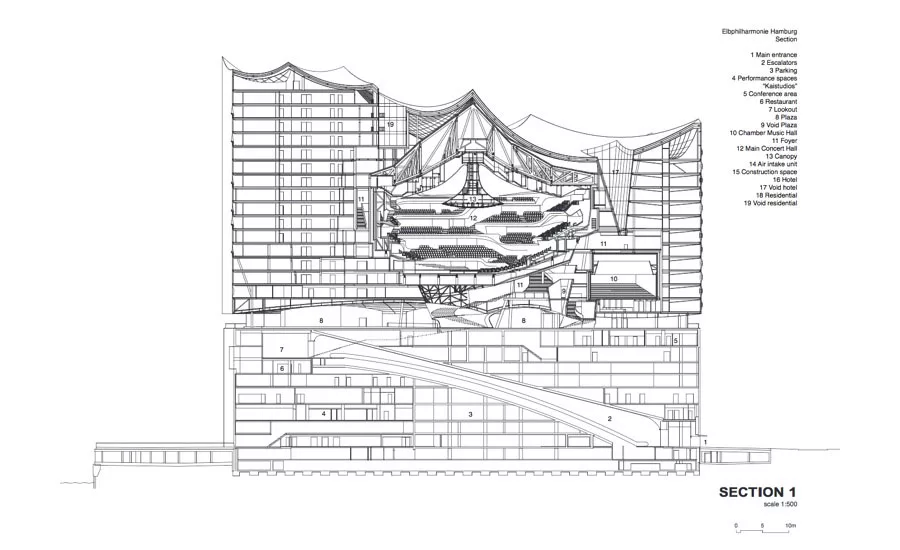
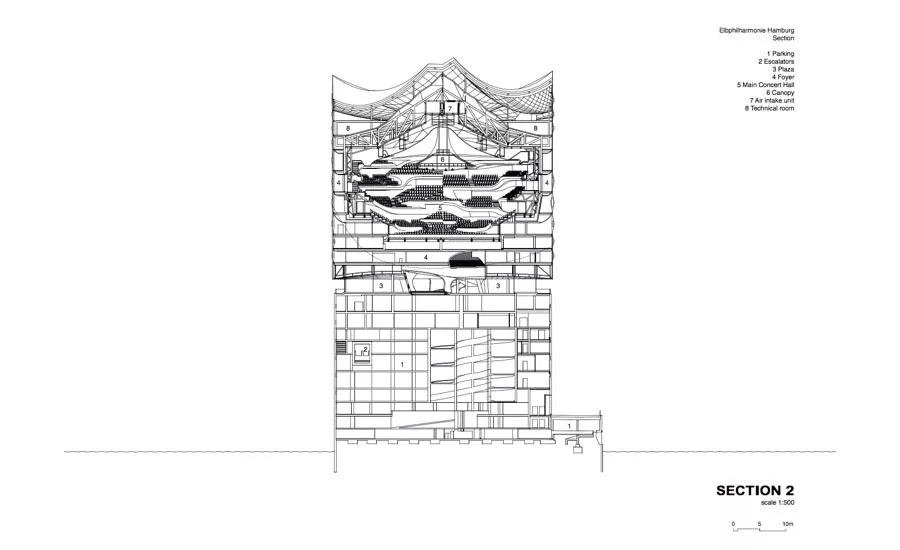
Swirling staircases, “like auditory canals,” Mergenthaler says, which the architects have finished in lustrous white Venetian plaster and lead up to the two auditoriums. The main hall’s steel-framed structure is separated from the rest of the building for acoustical reasons, balanced on 362 large spring assemblies. Working with famed acoustician Yasuhisa Toyota of Nagata Acoustics, the architects came up with a vineyard seating plan, following the example of Hans Scharoun’s 1963 Berlin Philharmonie. Here the architecture assumes a limpid, organic fluidity to surround the orchestra with the audience. To help achieve the right resonance for concerts, the team came up with an acoustical CNC-milled gypsum fiberboard surface that is pleated, puckered, and pocked.
The cap of this remarkable journey is unexpected. By going up to the top of the complex, you find an indoor event space adjoining a small outdoor terrace, where you can see up close the white perforated-metal disks that animate the roof’s wavelike contoured peaks. Here, above the halls, hotel, and apartments, you feel as if you are on a futuristic deck. It will offer a panoramic view of the city once the floor is, as promised, raised. And so at long last the ship, stunningly redeeming the effort, expense, and reputations of all involved, has come into the harbor.
PeopleArchitect: Herzog & de Meuron — Jacques Herzog, Pierre de Meuron, partners; Ascan Mergenthaler, David Koch, partners in charge; Jan-Christoph Lindert, associate, project manager; Nicholas Lyons, Stefan Goeddertz, associates, project architects
Associate Architect: Hohler + Partner
Consultants Nagata Acoustics (acoustics)
General contractor: Adamanta and Hochtief Solutions
Size: 1,292,000 square feet
Cost: $880 million
Completion date: November 2016–January 2017
|
ProductsGlass facade Gartner Float glass Guardian Gypsum fiber panels, main concert hall Gifatec |
Looking for a reprint of this article?
From high-res PDFs to custom plaques, order your copy today!