Architectural Record
search
cart
facebook twitter linkedin youtube
  • Sign In
  • Subscribe
  • Sign Out
  • My Account
Architectural Record
  • NEWS
    • Latest News
    • Awards
    • Interviews
    • Obituaries
    • Podcasts
      • Design:Ed Podcast
      • Sponsored Podcasts
  • OPINION
    • Book Reviews / Excerpts
    • Exhibition Reviews
    • Forum
  • EXCLUSIVES
    • Videos
    • Design Vanguard
    • Top 300 Firms
    • Sponsored Content
    • Sponsored eBooks
    • From the Archives
  • CONTINUING ED
    • Editorial Continuing Ed
    • CE Center
    • CE Academies
  • PROJECTS
    • Buildings By Type
    • Reuse & Renovation
    • Museums & Arts Centers
    • Colleges & Universities
    • Multifamily Housing
    • Interiors
    • Lighting
    • Kitchen & Bath
  • HOUSES
    • Record Houses
    • House of the Month
    • Featured Houses
  • PRODUCTS
    • Products by Category
    • Record Products of the Year
    • Latest Products
  • EVENTS
    • Dates & Events
    • Record on the Road
    • Innovation Conference
    • Sustainability in Practice
    • Women In Architecture
    • Webinars
    • Ad Excellence Awards
    • Submit an Event
  • CONNECT
    • Ask RECORD AI
    • Newsletters
    • Contact
    • Advertise
    • Editorial Calendar
    • Store
    • Customer Service
  • SUBMIT
    • Submission Guidelines
    • RECORD Competitions
  • MAGAZINE
    • Subscribe
    • My Account
    • Digital Edition
    • Current Issue
    • Firm Pass
    • Historic Archive
Architecture NewsCommentary & CriticismTall Building Projects

Books

‘The Great Miscalculation’ Offers a Riveting Account of a Would-Be Crisis in Midtown Manhattan

Review: ‘The Great Miscalculation: The Race to Save New York City’s Citicorp Tower’ by Michael M. Greenburg

By Matthew Marani
The Great Miscalculation
Image courtesy NYU Press
The Great Miscalculation: The Race to Save New York City’s Citicorp Tower, by Michael M. Greenburg. NYU Press, 264 pages, $28. Image courtesy NYU Press
July 8, 2025

It’s hurricane season, and a storm barrels up the eastern seaboard from the Gulf of Mexico, slamming into the center of New York. Extreme winds radiate outward from the storm’s eye and overwhelm Midtown Manhattan. A skyscraper’s structural system buckles from the wind load, progressively fails, then catastrophically topples over its environs, which happen to be one of the densest sections of the city and the nation.

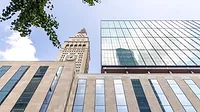
It sounds like a plot out of a Hollywood disaster movie. But this was a real-life scenario narrowly avoided at the 59-story Citicorp Center, designed by architect Hugh A. Stubbins and structural engineer William LeMessurier, which was completed in October 1977 and, in the months following, underwent a (nearly) covert retrofit to remedy a flawed design. The danger was largely kept secret over the succeeding 17 years, until 1995, when Joe Morgenstern wrote about it for The New Yorker, in the article “The Fifty-Nine-Story Crisis.”

The nail-biting story, replete with questions concerning engineering ethics, has been rehashed many times in the last three decades. But Michael M. Greenburg, an attorney by profession, provides a gripping and fresh account of the would-be crisis in his new book, The Great Miscalculation: The Race to Save New York City’s Citicorp Tower.

Greenburg is an astute chronicler who vividly evokes the backdrop against which the Citigroup Center near-catastrophe takes place. The tower rose as New York was at its nadir. The 1977 blackout happened three months before the building opened; some still called the Big Apple “Fear City.” Citigroup, rather than retreat to a suburban corporate campus, bet on the city’s future and built a new headquarters at 53rd Street and Lexington Avenue. There was a major holdout, though, as the bank amassed building parcels: St. Peter’s Lutheran Church, with a shrinking congregation and a backlog of unfunded repairs to its 1905 Gothic Revival home. The church agreed to its own demolition in exchange for payment and construction of a new, modern sanctuary, partially below grade, on the existing site.

This arrangement guided the design of the tower, which sits atop a structural deck some nine stories above grade and cantilevers over the new house of worship, while making room for a public plaza. LeMessurier was approached by Stubbins to collaborate and, in a napkin sketch, proposed a steel-braced system with 10-floor-tall diagonal members resting atop columns placed at the center, rather than corners, of each elevation’s base. Construction commenced in 1974, and three years later Citicorp Center opened its doors to praise for its graceful, singular design. There was a potentially fatal flaw, however, that the team didn’t know about lurking in the detailing.

Princeton University engineering student Diane Hartley, researching a senior thesis focused on the tower, and New Jersey Institute of Technology architecture student Lee DeCarolis, seeking clarification following a classroom conversation, independently raised questions to the structural engineering firm and LeMessurier himself about the perimeter bracing system’s capacity to withstand sustained diagonal wind loads. (New York’s building code at the time required only that structural engineers assess perpendicular wind-load capacity). A cost-cutting decision, unknown to the students, by the steel erector to swap out the original design’s welded joints for weaker, bolt-connected joints compounded the structural dangers.

After LeMessurier consulted other experts and reassessed the building calculations, he discovered that, should diagonal winds exceed 70 miles per hour, and should the tower’s tuned mass damper be made inoperable by loss of power, Citicorp Center had a one-in-16 chance of structural failure. The engineer blew the whistle on himself, and a constellation of figures—high-powered financial executives, litigious attorneys and insurance agents, municipal bureaucrats, inimitable skyscraper engineering experts—descended on Citicorp Center to manage the retrofit and potential public relations fallout.

Looking for quick answers on architecture and design topics?
Try Ask RECORD, our new smart AI search tool.
Ask RECORD →

Greenburg provides a painstakingly detailed, fly-on-the-wall account of these events. Like a good litigator, he uses interviews and exhaustive research to bring to life the cast of strong, flawed, hubristic characters as they engage in a herculean effort to avert potential disaster. He shines a light on stakeholder deliberations and the ethical questions they raised, from the decision to keep the public in the dark regarding the skyscraper’s compromised structural system, conducting repairs (welding 2-inch-thick steel plates over all bolted joints) in the dead of night, to the design team’s failure to properly assess the substitution of welding for bolting in the first place. His Robert Caro–like dedication to turning every page even led to unearthing LeMessuerier’s primary record of the crisis, “Project SERENE—or Special Engineering Review for Events No One Envisioned—within the depths of Harvard University’s Graduate School of Design’s archive.

That effort to put the reader into the story is undercut somewhat by the curious omission of technical drawings. All that’s included is a rudimentary diagram highlighting perpendicular and quartering winds. We also never know if St. Peter’s was affronted by the congregation’s exclusion from conversations pertaining to disaster preparedness and the skyscraper’s retrofit—another missing piece that stands out for how important the church was to the tower’s initial design and the sanctuary’s location underneath it.

Still, Greenburg’s history of what is now the Citigroup Center adroitly, and with nuance, puts a fresh spin on a familiar story that continues to offer lessons for the building professions writ large. Ignore them, and this book, at your own peril.

KEYWORDS: Book Reviews / Excerpts New York City

Share This Story

Looking for a reprint of this article?
From high-res PDFs to custom plaques, order your copy today!

Matthew marani

Matthew Marani is a senior editor at Architectural Record. Previously, he served as program manager at The Architect’s Newspaper and has several years of experience as a freelance writer specializing in urban planning, historic preservation, and architectural technology. Matthew is a born and raised New Yorker and holds an MSc in Architectural Conservation from the University of Edinburgh.

Post a comment to this article

Report Abusive Comment

Subscription Center
  • Create an Account
  • Start a Subscription
  • Manage My Account
  • Sign Up for Newsletters
  • Visit Customer Service
  • Update Preferences

More Videos

Sponsored Content

Sponsored Content is a special paid section where industry companies provide high quality, objective, non-commercial content around topics of interest to the Architectural Record audience. All Sponsored Content is supplied by the advertising company and any opinions expressed in this article are those of the author and not necessarily reflect the views of Architectural Record or its parent company, BNP Media. Interested in participating in our Sponsored Content section? Contact your local rep!

close
  • cold storage facility
    Sponsored byCarlisle SynTec Systems

    How Architects Can Design More Continuous Cold Storage Envelopes

  • TAMLYN XtremeTrim Exterior Trim
    Sponsored byTamlyn

    Designing Cleaner Panel Facades: Why Exterior Trim Details Matter

  • Building with Vapor Barriers
    Sponsored byReef Industries, Inc.

    Vapor Barriers Help Control Moisture in Tighter Building Designs

DESIGN:ED Podcast
Listen to Architectural Record’s DESIGN:ED Podcast

Events

June 23, 2026

Enhancing Fire Resistance with Advanced PVC Solutions

Credits: 1 AIA LU/HSW; 1 AIBD P-CE; 0.1 ICC CEU; 1 IIBEC CEH

Evaluate advanced PVC solutions that improve fire resistance, support WUI compliance, and enhance resilience in residential and commercial building design.

June 25, 2026

Designing Glass Railing Systems that Enhance Aesthetics and Meet Code

Credits: 1 AIA LU/HSW; 1 AIBD P-CE; 0.1 ICC CEU

Upon course completion, participants will possess a deeper understanding of glass railings to help ensure that safety, aesthetic, and performance objectives are achieved.

View All Submit An Event

Products

2026 Architect's Square Foot Costbook

2026 Architect's Square Foot Costbook

See More Products

Popular Stories

Lorcan O' Herilhy

California Architect Lorcan O’Herlihy Has Died, Age 66

Obama Presidential Center, Chicago

The Obama Presidential Center Opens on Chicago’s South Side

Spoonbill Ranch

Johnsen Schmaling Architects Integrates Spoonbill Ranch into a Pristine Landscape

West Village Penthouse

Design Vanguard 2026: Brent Buck Architects

Trinity University Business & Humanities District

AIA Announces 2026 COTE Top Ten Awardees

Enhancing Fire Resistance with Advanced PVC Solutions - Free Webinar - June 23, 2026

Related Articles

  • amenity space at 825 Third Ave., New York City

    Studios Architecture Plants a High-End Amenity Space in Midtown Manhattan

    See More
  • Lefferts Manor House

    Abruzzo Bodziak Architects’ Refined Overhaul of a Historic Brooklyn Rowhouse Offers a Fresh Start to a Young Family

    See More
  • One Madison Avenue

    KPF’s Overhaul of a Madison Avenue Office Offers a Template for Upgrading Manhattan’s Commercial Stock

    See More

Related Products

See More Products
  • WC_-SCA.png

    Building Great Schools for a Great City

  • book3.jpg

    If Architecture is a Language, Then a Building is a Story

  • image7.jpg

    Contemporary Architecture in China Towards A Critical Pragmatism

See More Products
×

The latest news and information

#1 Source for Architectural Design, News and Products

SUBSCRIBE
  • RESOURCES
    • Advertise
    • Contact Us
    • Submit
    • Store
  • ACCOUNT CENTER
    • Create an Account
    • Start a Subscription
    • Manage My Account
    • Sign Up for Newsletters
    • Visit Customer Service
    • Update Preferences
  • PRIVACY
    • PRIVACY POLICY
    • TERMS & CONDITIONS
    • DO NOT SELL MY PERSONAL INFORMATION
    • PRIVACY REQUEST
    • ACCESSIBILITY
  • SERVICES
    • Marketing Services
    • Reprints
    • Market Research
    • List Rental
    • Survey/Respondent Access
  • STAY CONNECTED
    • Linkedin
    • Facebook
    • Instagram
    • YouTube
    • X (Twitter)

Copyright ©2026. All Rights Reserved BNP Media, Inc. and BNP Media II, LLC.

Design, CMS, Hosting & Web Development :: ePublishing