Braced for the Future: Milan’s Renovated Torre Velasca Reconnects with the City

Architects & Firms
A Brutalist behemoth; a pinkish Postmodern castle; and to the Milanese, “the building with suspenders.”
None of these quite fully describe Torre Velasca, one of Italy’s earliest skyscrapers, built between 1956–1958 by the architectural partnership BBPR. Their radical vision placed the 26-story, reinforced concrete building at the center of a modernizing postwar Milan, swapping bombed-out blocks for a vertical, mixed-use scheme of offices and housing.

Photo © Giacomo Albo
BBPR stitched two tower blocks together with a ring of three-story-tall support struts projecting diagonally from the 15th floor of the lower, skinnier volume to support the wider top block cantilevering above. V-shaped horizontal outriggers grip the struts at the 18th floor. Seventy-two apartments populate the top section, crowned with a copper-covered mansard roof. With its veiled references to the Duomo and Sforza Castle’s Filarete Tower, BBPR contested both nostalgic historicism and the minimalist language of the International Style.
When American real estate giant Hines acquired Velasca in 2020, the plaster facades were shot, the mechanical systems were outdated, and the building’s street-level contribution was an inhospitable, car-choked plaza. A five-year, top-to-bottom refurbishment, led by Milan-based Asti Architetti in close consultation with the Superintendence for Cultural Heritage, junked ancient mechanicals, stripped and replaced the plaster exterior, polished terrazzo floors and exterior mosaics, and restored the office block and apartment interiors.
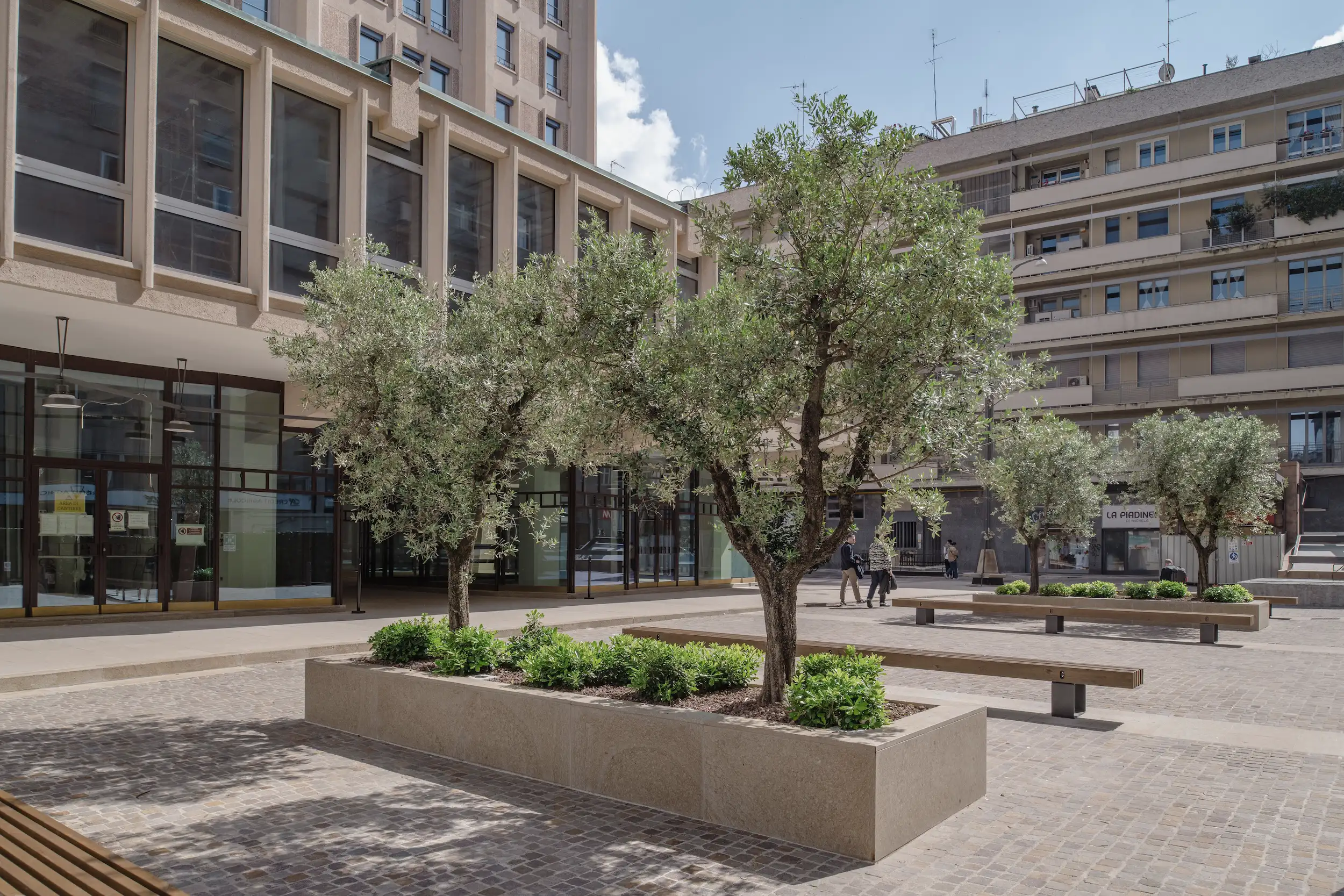

The tower's street-level plaza and the lobby entrance are now more inviting. Photos © Giacomo Albo
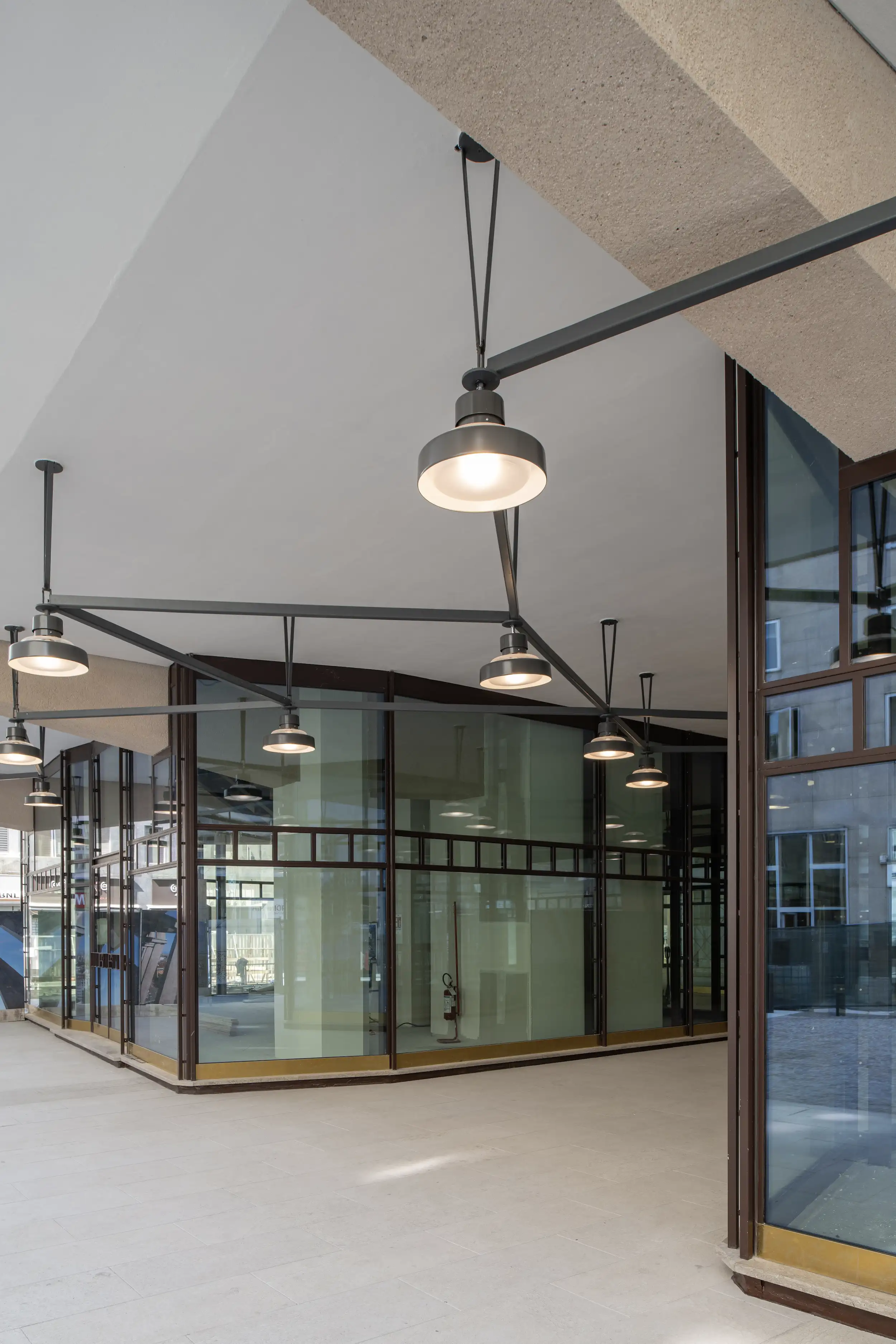
The most publicly visible transformation, however, is at street level: A former dead zone has reestablished dialogue with the city. “Before I was a Milanese architect, I was a Milanese kid, but the tower was never part of my life, because the plaza had no particular interest for the everyday citizen,” says Asti Architetti principal Paolo Asti. “When I had the chance to put my head and heart into this building, I tried to understand how to let other Milanese kids live with this tower in a different way,” he says.
The new pedestrian-focused plaza features stone paving in trachyte (a fine-grained volcanic rock) and repurposed porphyry blocks, echoing Milan’s historic street surfaces and the rhythm of the tower’s vertical supports. Asti restored BBPR’s twin custom streetlamps ringed with integrated concrete seats and added benches, landscaped plant beds, and two pairs of olive trees—a trademark of Asti’s.

Photo © Giacomo Albo
The tower renovation began with a forensic examination of the facades. Decades of pollution ate away the plaster, reinforced concrete, and prefabricated infill panels. Asti stripped the facade and treated the exposed reinforcement, applying a new, mineral-based plaster matching the original finish.
“Nobody recognized the original pink color because the plaster had turned grey,” Asti says. “We went back to the archives to find the color and the aggregate to achieve the right effect—when the sun hits it, the building sparkles.”

Photo © Giacomo Albo
Where the two blocks are stitched together, the structural tie rods were mapped using ground-penetrating radar, then reinforced with carbon fiber laminated along the paths of the original embedded rebar, which remained in place and hidden under new plaster. Updating and moving mechanical systems to the basement freed up space for a restaurant on the 18th floor. At the request of the cultural heritage office, half of the mechanical floor spaces were preserved to showcase the design history of mid-century HVAC solutions. Replacing every window and all nine elevators helped boost the building to LEED Gold status too.
Looking for quick answers on architecture and design topics?
Try Ask RECORD, our new smart AI search tool.
Ask RECORD →

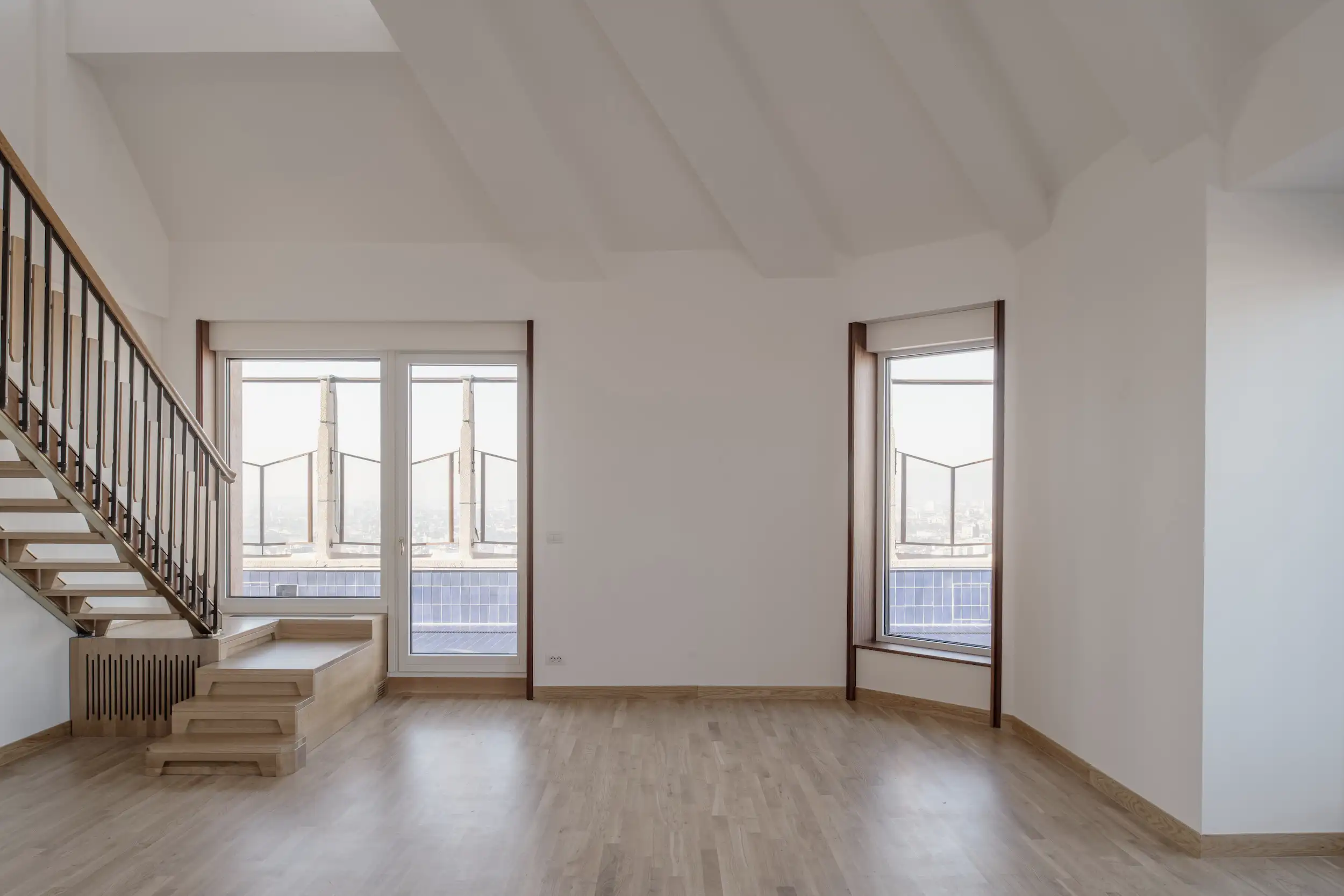
Views of renovated balcony and tower interior. Photos © Giacomo Albo
From the restaurant’s wraparound terrace, the apartment block hovering overhead, a panoramic vista of Milan extends in all directions. The space is narrow, the parapet low, but the feeling is one of shelter and enclosure. “I actually prefer the view from this level to the one from the apartment terraces up top,” Asti says. “Here, you feel like you’re in the embrace of the building.”

Photo © Giacomo Albo
The roofline has been cleaned up, too. Gone is the bristly metal forest of antennae; Velasca now etches the sky with rigorous architectural purity, save for two stainless steel mechanical bulkheads, discreetly slotted into the mansard’s elaborate crown. “You don’t even notice them,” Asti says. “They disappear into the blue of the sky.”
From a distance, they very nearly do.
Twenty-six floors below, the updated piazza cements Asti’s effort to not only restore Velasca’s iconic luster but to anchor the landmark in the quotidian flow of Milanese life. “The main challenge was to understand how such a definitive building could enter into contemporaneity without losing its identity,” he says. “It is the most difficult thing I have done in my life.”
The renovation is a breathtaking and marvelous achievement. Scrubbed, sparkling pink, and as strange as ever, the skyscraper is no longer just an astonishing architectural statement—Velasca is now fully a part of Milan’s urban fabric.
A clip from Australian TV miniseries From the Ashes of World War II details the significance of Torre Velasca as Milan rebuilt following heavy wartime bombing. The segment includes commentary from RECORD editor in chief Josephine Minutillo. Video courtesy Wildbear Entertainment
A painstaking four-year renovation scheme preserves the architectural splendor of Milan's Torre Velasca while enhancing the landmark 1958 high-rise's connections with the city, from both the street and in the sky. Video courtesy Hines
Looking for a reprint of this article?
From high-res PDFs to custom plaques, order your copy today!