In Focus: Comtemporary Shingled Cottages
In New Brunswick, MacKay-Lyons Sweetapple Architects Designs an Off-Grid Cottage for a Nonagenarian Client
New Brunswick

Architects & Firms
The Shingle Style keeps coming back. Or maybe it never went away. In 1955, Vincent Scully vigorously investigated this late 19th-century manifestation—with its picturesque vernacular architecture of casually assembled masses clad in cedar shingles. His book The Shingle Style and the Stick Style paid homage to those such as Henry Hobson Richardson, Stanford White, and Frank Lloyd Wright, who explored the textures of the wood shingle, as well as others who experimented with the verticality and flatness of board-and-batten construction (aka the Stick Style).
Later, in 1974, with The Shingle Style Today: or, The Historian’s Revenge, Scully examined the way modern architects, such as the young Robert Venturi and even younger Charles Gwathmey, reinterpreted this design approach in the 1960s and ’70s. Their version of the original Shingle Style still made abundant use of the cladding, stressed horizontality, and thoughtfully considered the relationship to the landscape, but added layered planes, diagonal elements, and truncated geometries to the mix.
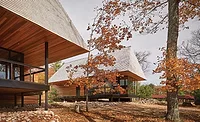
Today, the Shingle Style—and to a degree the Stick Style—tenaciously persists. Several contemporary architects continue to mine the style, adapting it for 21st-century living—as reflected in the houses shown here that span to both coasts of North America. In these examples, the walls and roofs are not shaggy but wrapped in such a way that stresses simplicity. Each also features a play on the hipped roof and minimal or nonexistent eaves that emphasize purity of form. Inside, the lavish use of wood planks or framing members, assiduous craftsmanship, the dependence on the square plan, and precise proportions unite them even more as sisters under the skin. Below is a profile of Hilltop House by MacKay-Lyons Sweetapple Architects, the first project in our special In Focus series on contemporary shingled cottages. The two other featured cottages are Dune House by Waechter Architecture and Mohegan Trail by Bates Masi + Architects.
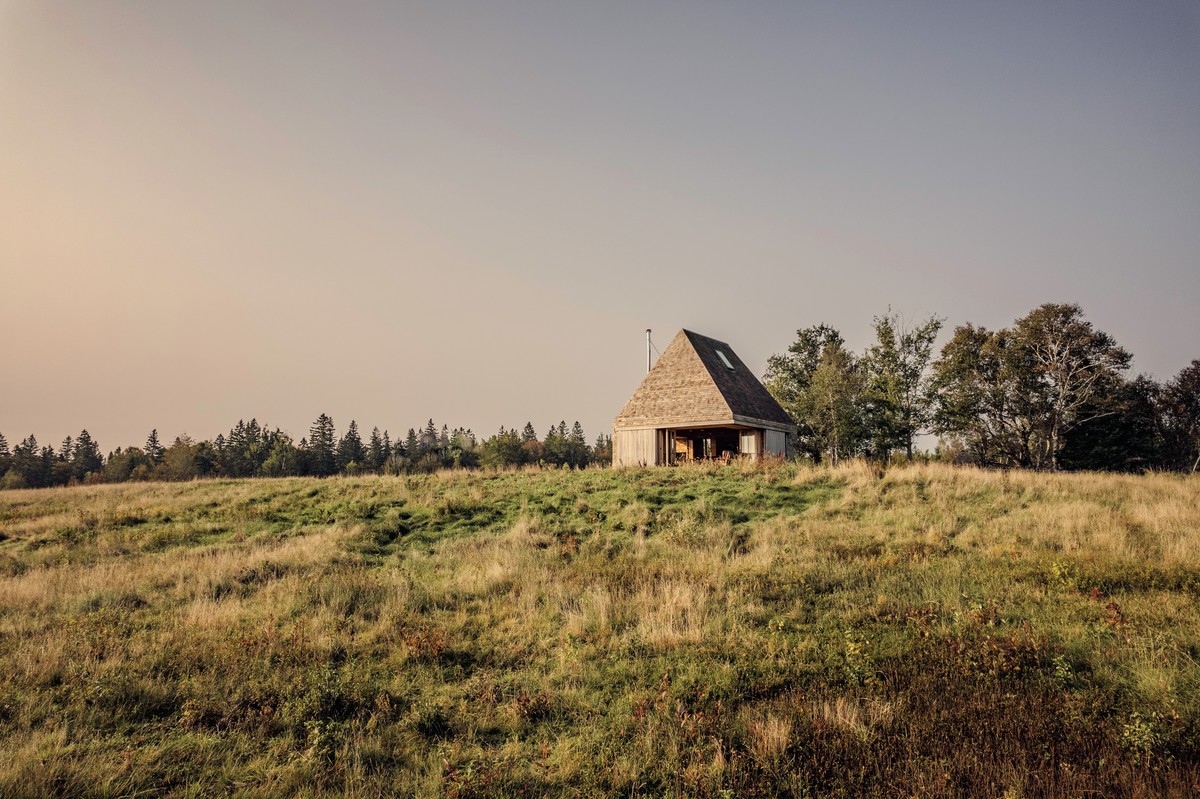
This steeply hip-roofed pavilion proudly sits on a gentle mound in New Brunswick, overlooking the Saint John River. It is one of several structures that the Halifax, Nova Scotia, firm of MacKay-Lyons Sweetapple Architects (MLSA) built for a client who commissioned this cottage to celebrate his 90th birthday on the spot where he had been betrothed many years before.
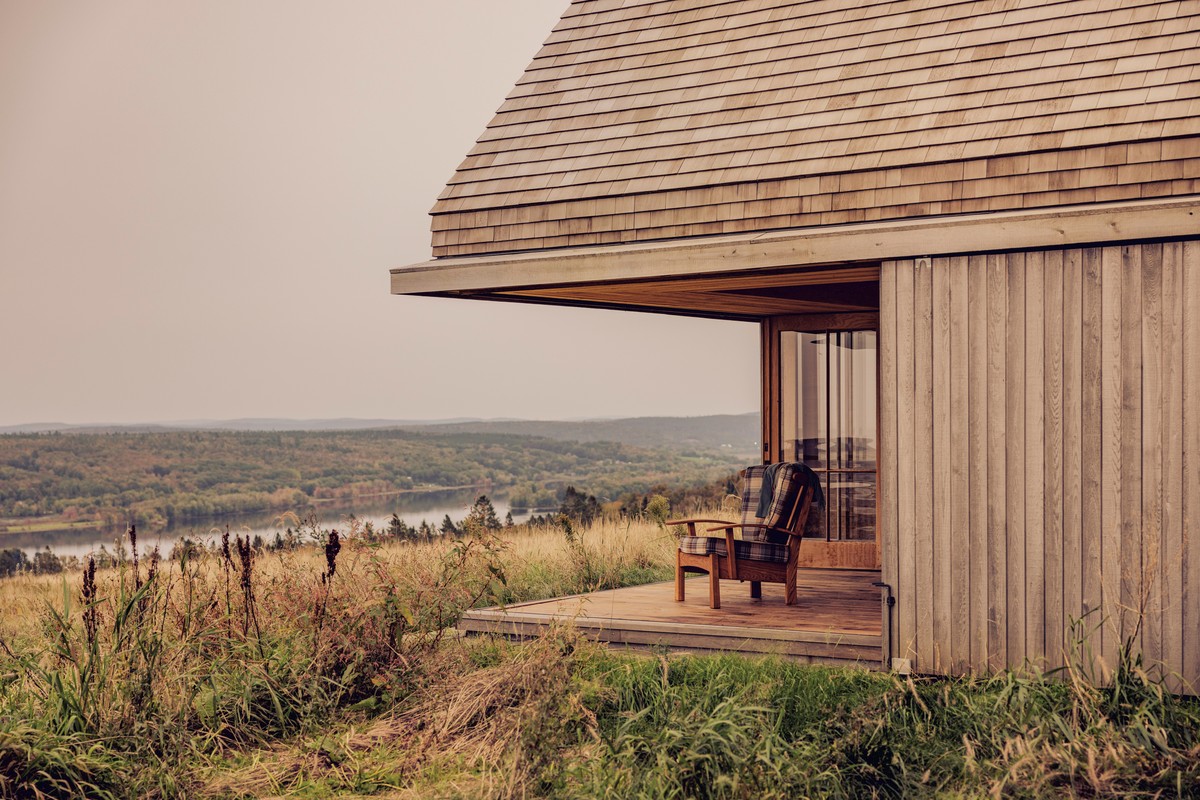
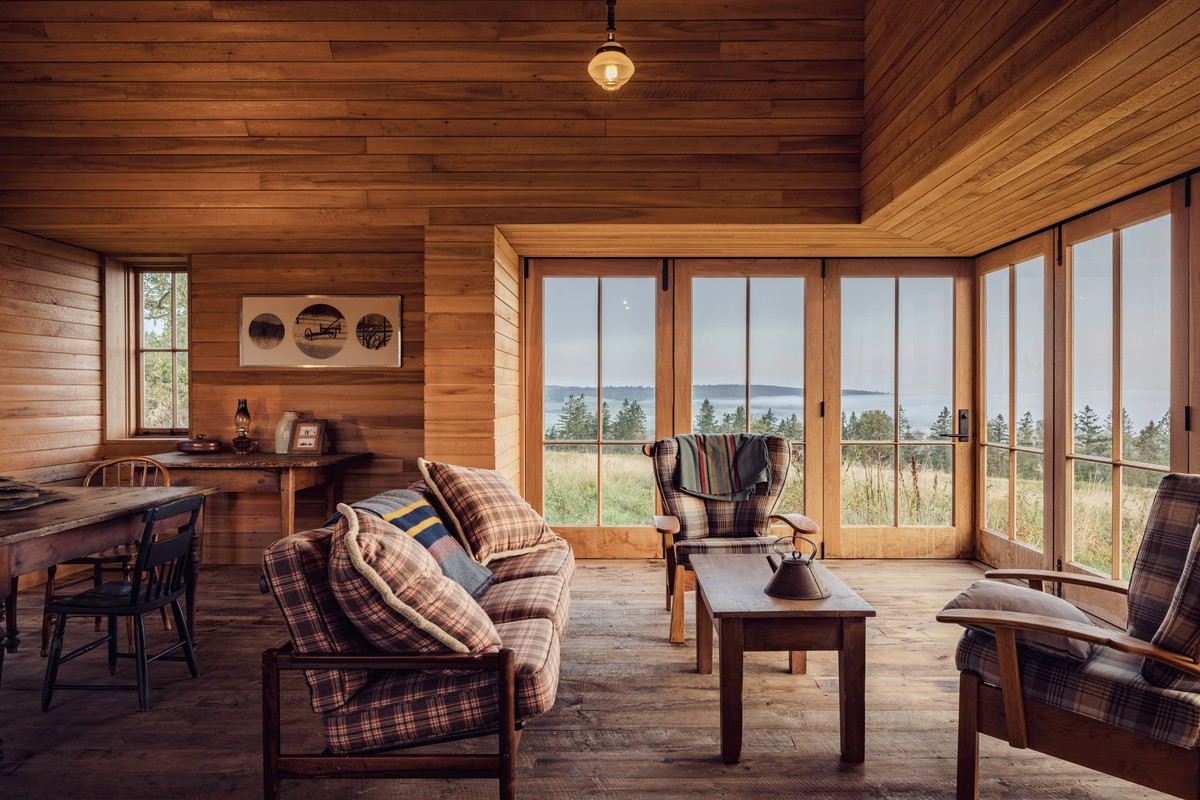
Daylight enters through the open and closed northeast corner (1 - 3). Photos © Matthew Mackay-Lyons, click to enlarge.
2
3
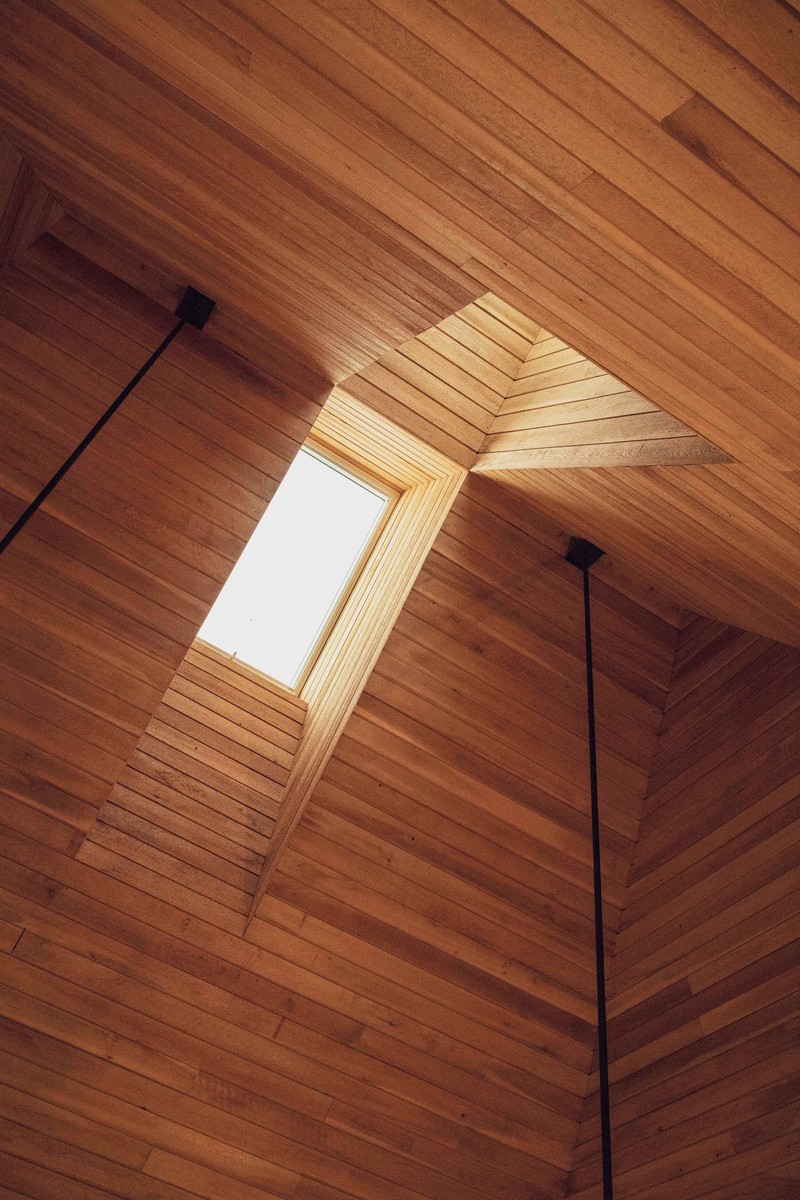
Two skylights are carved into cedar boards. Photo © Matthew Mackay-Lyons
As MLSA partner Brian MacKay-Lyons explains, the design’s inspiration came from two sources: one is the shieling, typically a stone-walled, hip-roofed rectangular hut found in rural areas of Scotland; the other one is the house that architect Charles Moore designed for himself in Orinda, California, in 1962. MacKay-Lyons, who worked for Moore in his Los Angeles office, had always admired the Orinda house’s roof, capped by a rectangular monitor that encloses two skylights. Accordingly, the architects inserted two intricately detailed skylights in the New Brunswick pavilion to illuminate its volumetric one-story interior. The walls and roof, tautly clad with eastern white cedar shingles, are combined with vertical cedar strips that form sliding barn-style doors. In addition, MLSA omitted the eaves, which the firm considers its most emblematic detail. It adds to house’s “monolithic monumentality,” says MacKay-Lyons.
Inside, 4-foot-thick pochéd walls enclose a hearth, storage, a kitchen, and a sleeping alcove. The 28-foot-square plan is open to the northeast corner, where oak and glass doors fold back under a deep overhang to allow its occupants to view the landscape “like a panopticon,” says principal Talbot Sweetapple. The roof’s wood trusses were fabricated off-site from local spruce and bolstered by a ring-beam system to keep all intact, so that no steel is needed for the corner cantilever. The interior’s shiplap walls and ceiling comprise 4-inch-wide eastern white cedar boards with ½-inch joints and, combined with floor planks made of reclaimed pine, attest to the modesty of the house’s materials.
As a serious gesture to sustainability, the house is off-the-grid. No bathroom—only an outhouse—no running water, no electricity. If the owners want to cook, they make use of a small propane stove, and, for illumination, they light propane lamps. The rusticity of the construction exudes a strong sense of intimacy and coziness, further emphasized by furnishings and upholstery, which appear as if they had always been there.
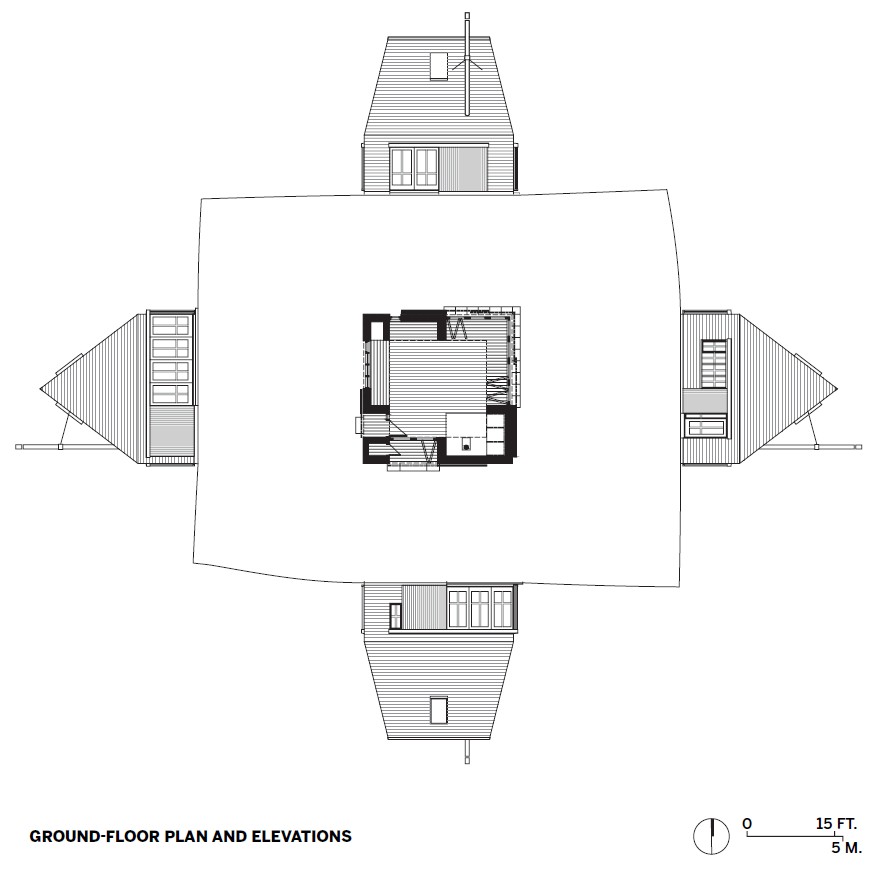
Image courtesy Matthew Mackay-Lyons, click to enlarge.
Read about other projects in our “Shingled Out: Contemporary Cottages” series from the September 2025 issue.
Looking for quick answers on architecture and design topics?
Try Ask RECORD, our new smart AI search tool.
Ask RECORD →
Looking for a reprint of this article?
From high-res PDFs to custom plaques, order your copy today!