Architect Louise Brodman Designs a Sustainable Compound on Maine’s Mount Desert Island
Architects & Firms
The now-retired and AIA emerita architect Louise Brodman has been coming to Maine with her husband since she was in her early thirties. She recalls the first visit: Arriving after Labor Day as the sun set and turned the blueberry fields orange. “I immediately fell in love,” she says.
After many years of renting a cottage on Mount Desert Island off the north-central coastline, Brodman had a dream of building her own sustainable home with net-positive energy goals. And after a five-year search for a property, she and her husband found an incredible one—a peninsula that juts north into the ocean as an extension of Acadia National Park.
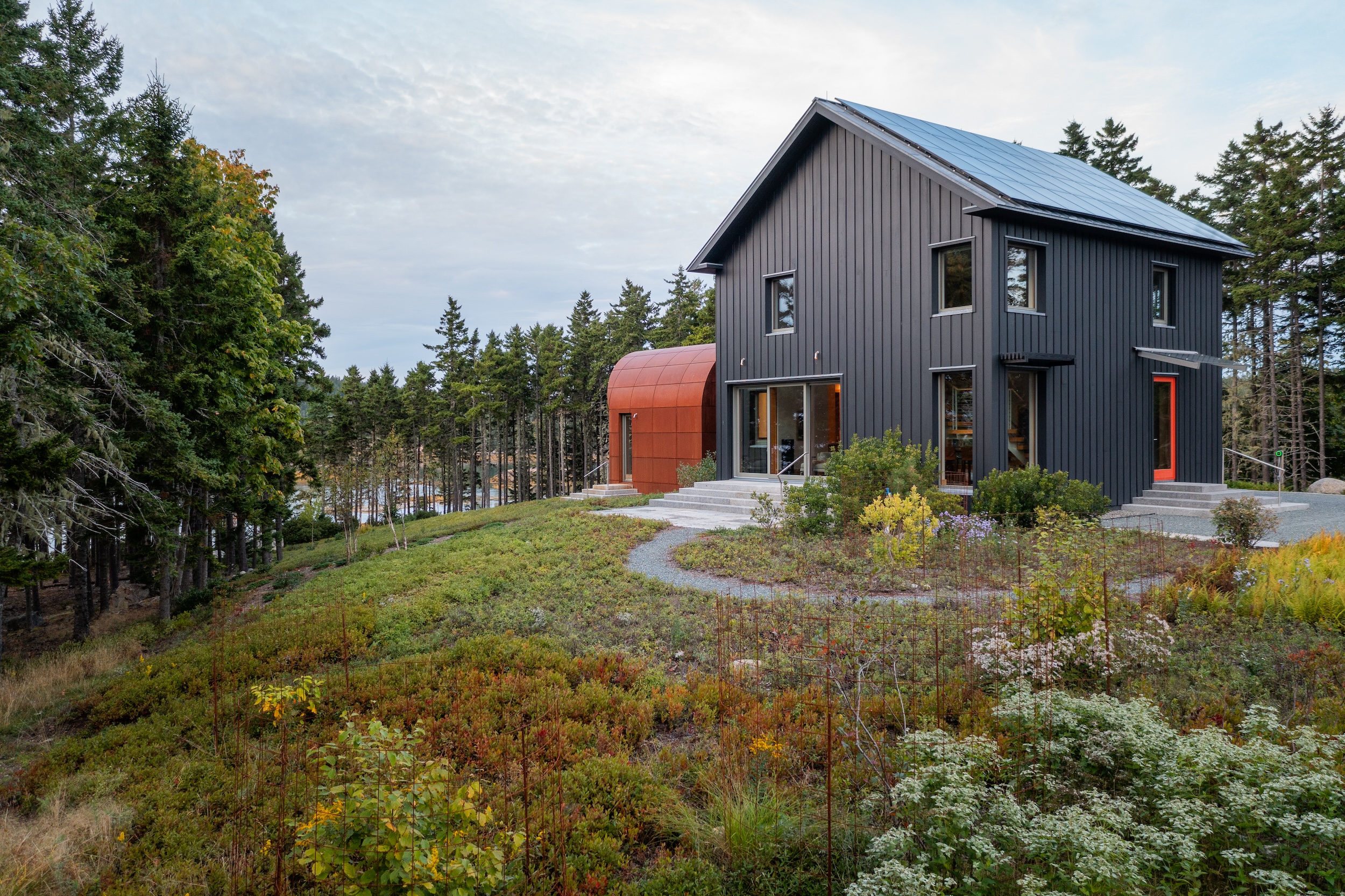
Photo © Tex Jernigan
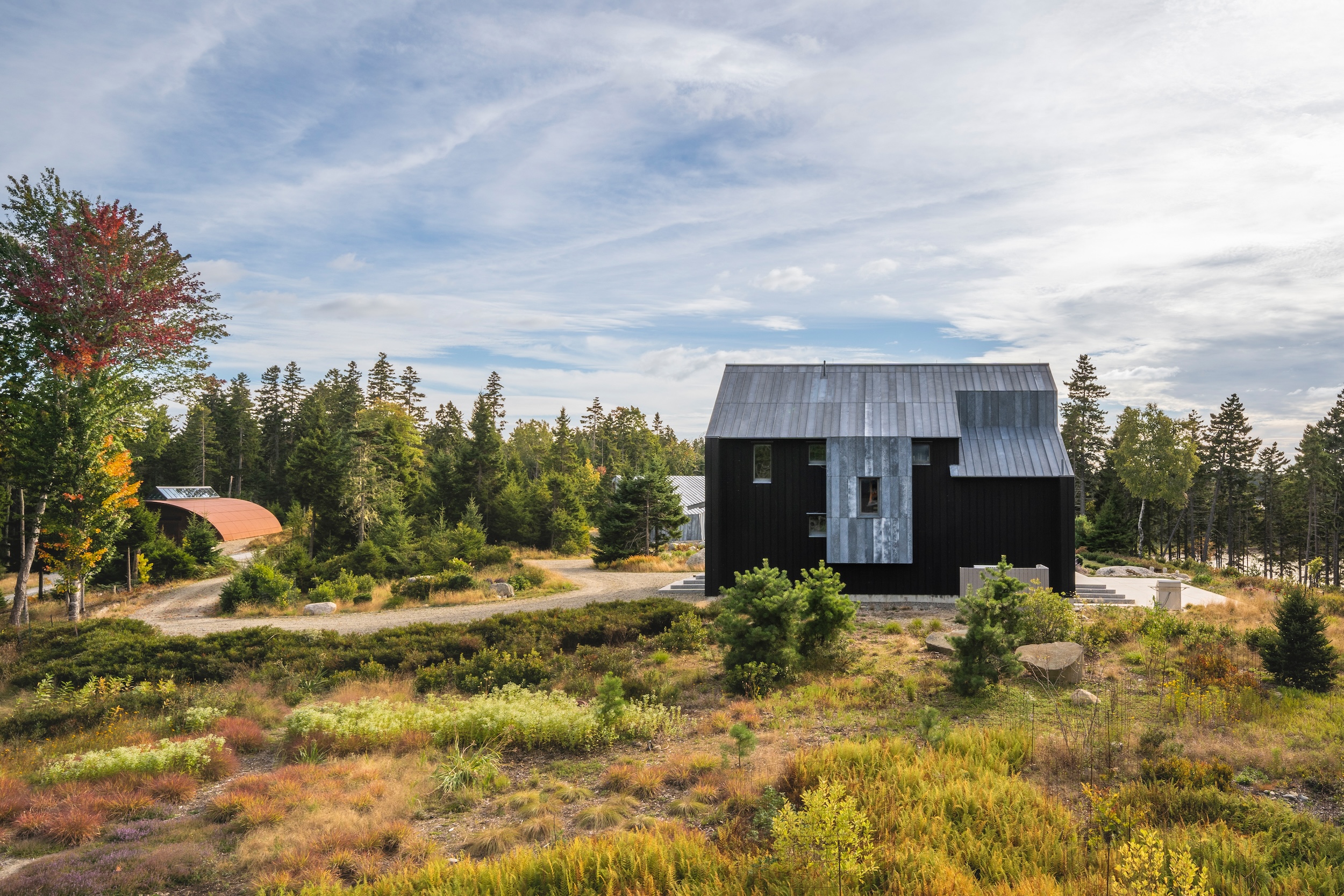
Photo © Tex Jernigan
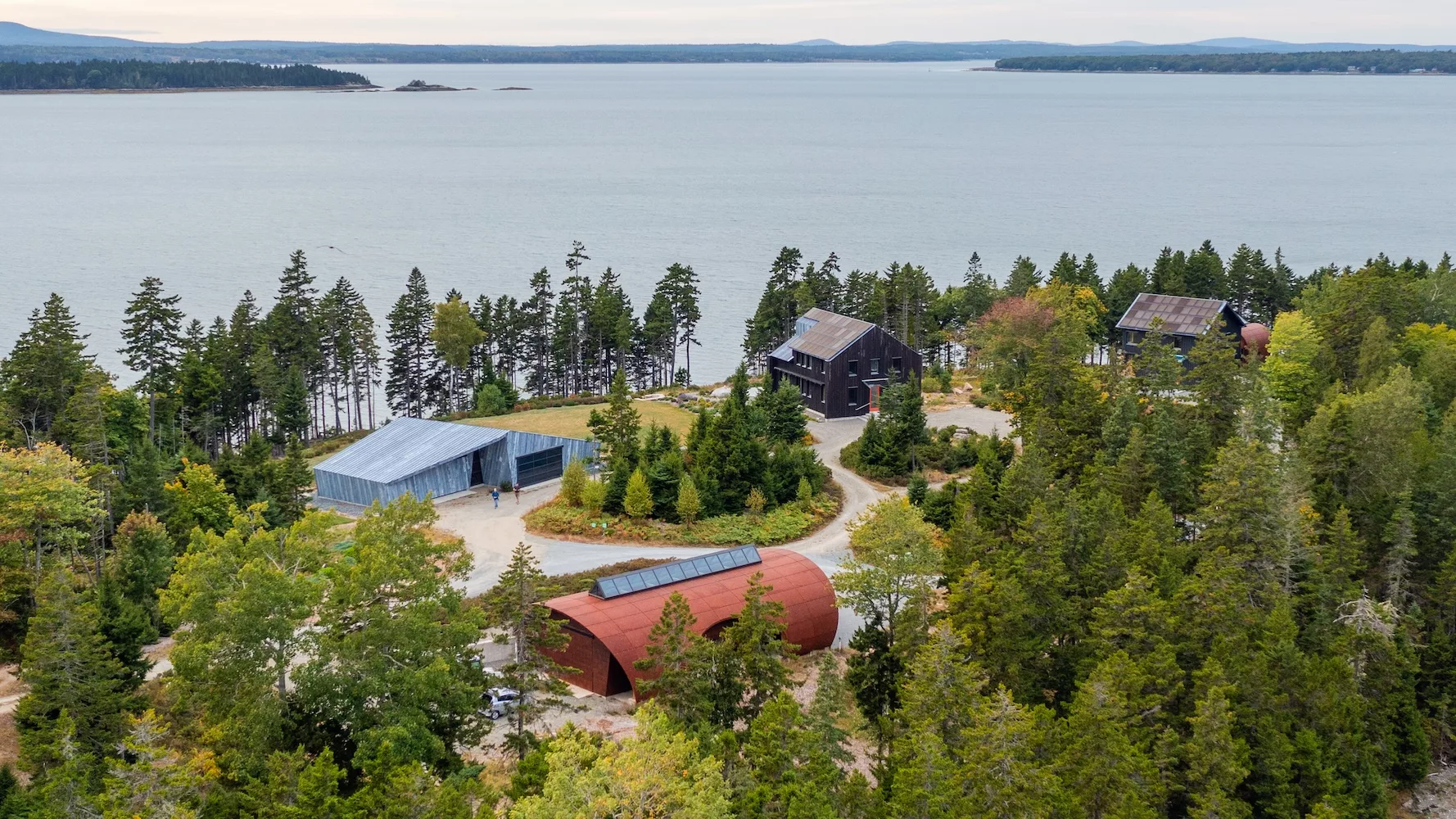
Initially intending to build an oceanfront barn—the phrase was her go-to password for many years (no longer)—Brodman ultimately decided on a collection of four small buildings, encompassing two cottages, a garage, and a boat shed, constructed between 2019 and 2023, that are assembled like natural outcroppings on the promontory.
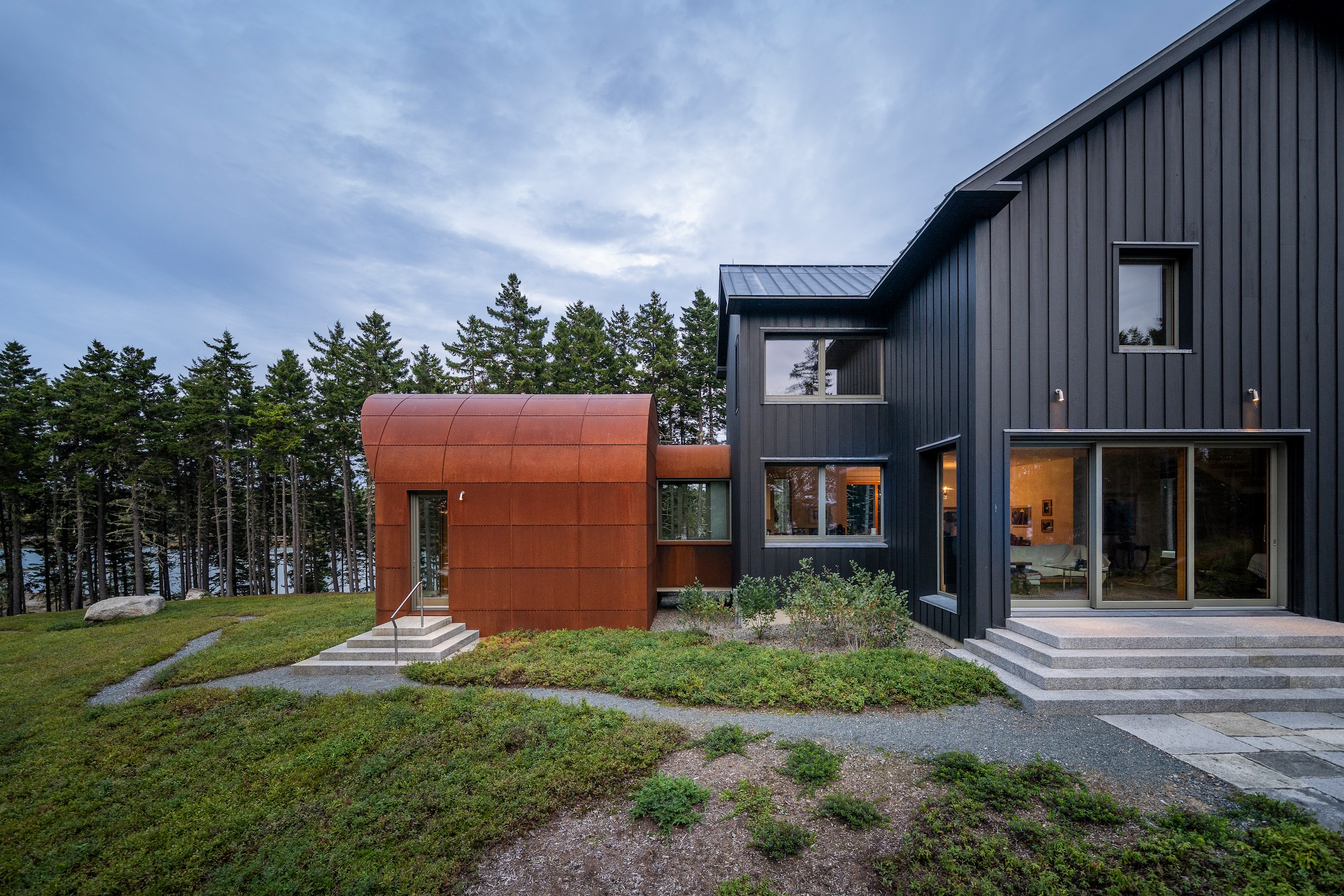
Photo © Tex Jernigan
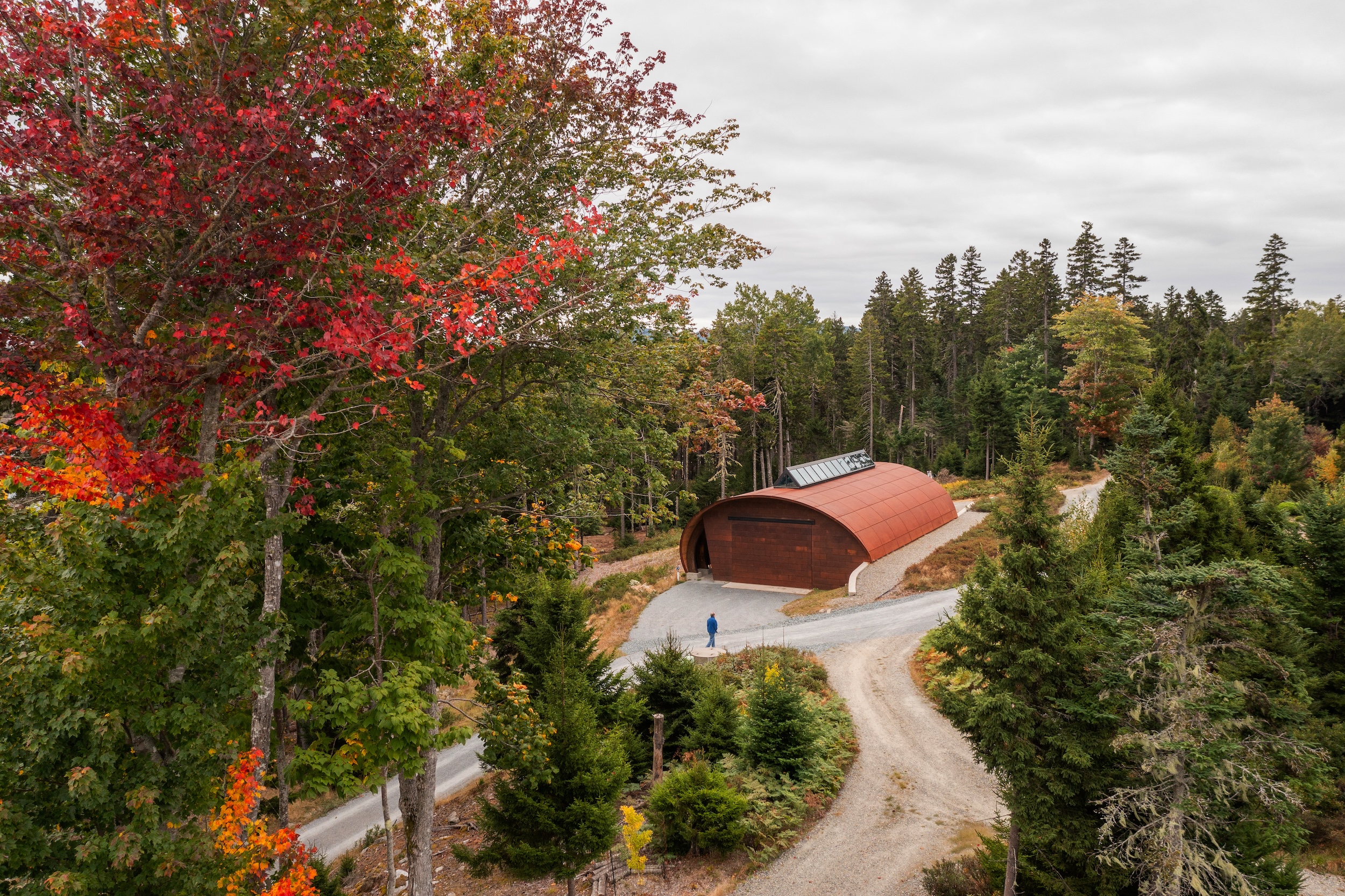
Photo © Tex Jernigan
The site is austere: rocky ledge, spruce and fir trees, and the long sweep of sea beyond. “We’re on the quiet side of the island,” says Brodman. “We don’t see another house. We hear the seals bickering with each other, birds, and the occasional kayaker. It's blissfully quiet.” The property came with a conservation easement requiring that any habitable structure be capped at 4,000 square feet with 3,500 square feet of coverage. Brodman decided to divide that between a “north” cottage, her primary, two-bedroom living space, and a “south” cottage, for guests, with four bedrooms.
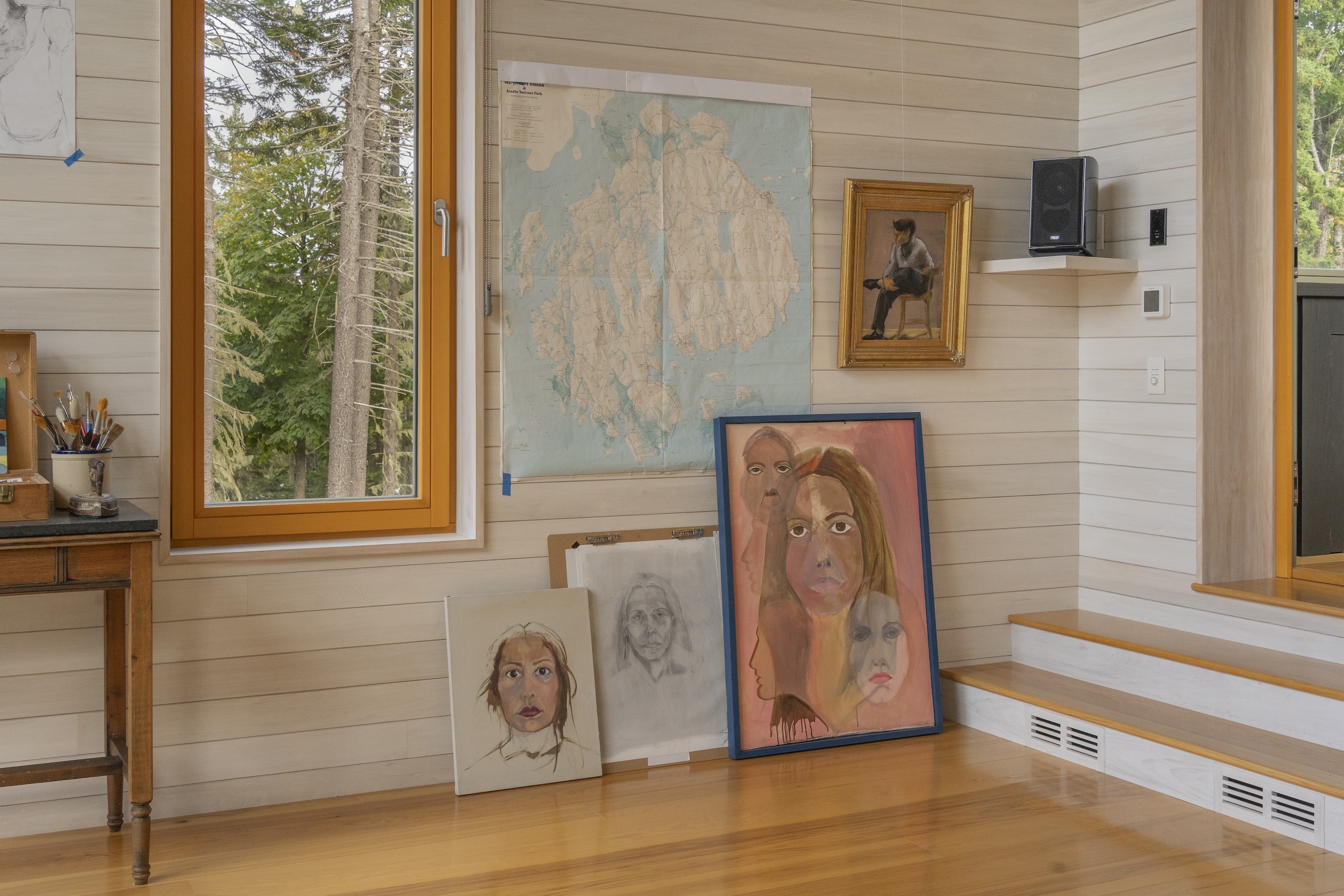
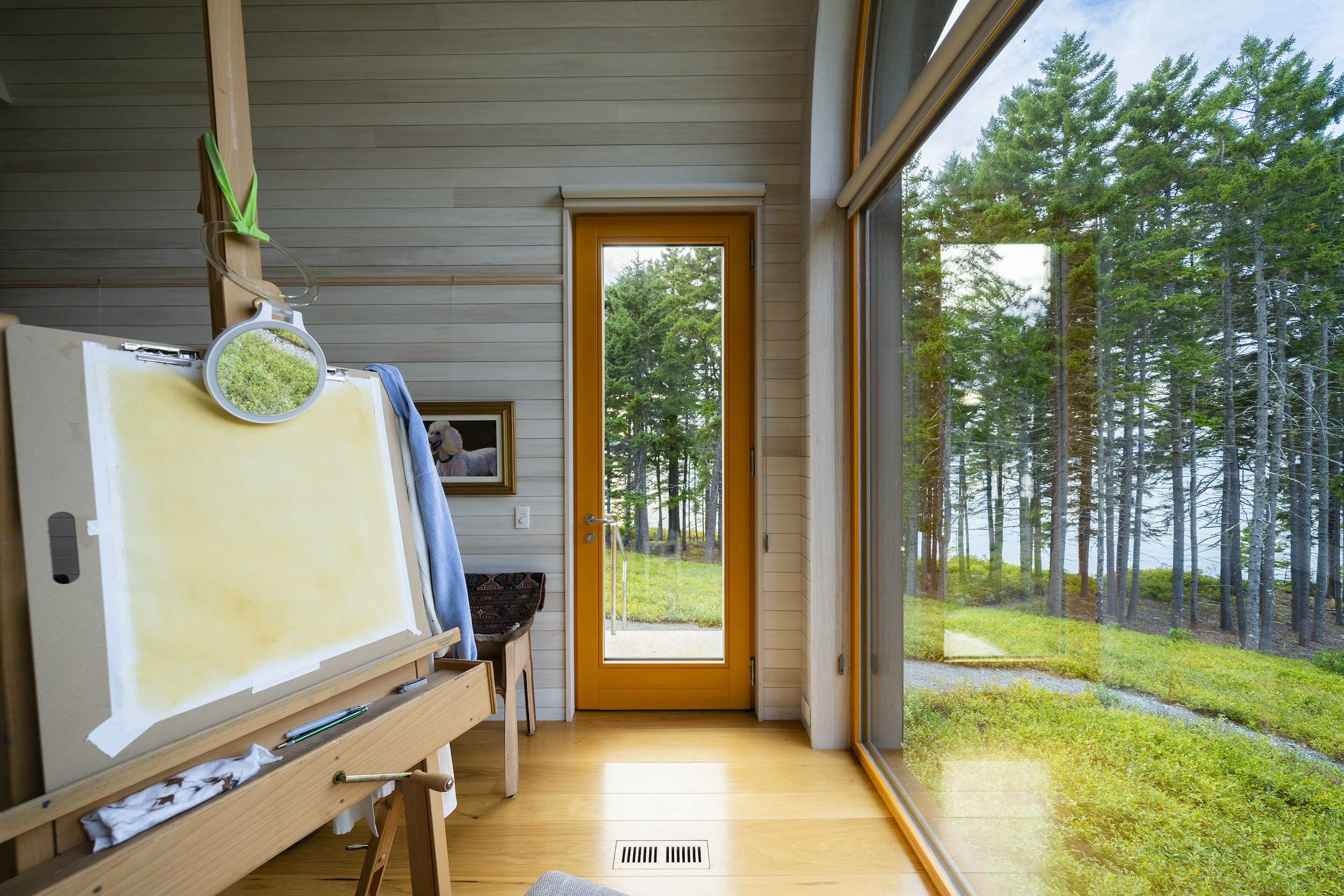

Photos © Tex Jernigan
The cottages are clad in shou sugi ban wood reverse board and batten, which Brodman chose to mimic the staggered verticality of the surrounding trees. Large windows with recessed screens give a porch-like feel to the interiors. The north cottage features a striking barrel-roofed addition that faces the sea. Clad in weathered steel shingles, it contains Brodman’s painting studio. Inside both cottages are hickory wood floors and American clay-finished walls, both chosen for their warmth and durability. Brodman praised her collaborators on the project, including New Hampshire-based builders, Bensonwood, and Dissimilar Metal Design (which Brodman discovered while reading an Architectural Record story about a Belzberg Architects project that featured weathering steel).
The timber-framed outbuildings had no square-footage restriction, but were limited to 17 feet in height, and Brodman wanted them to also blend into the environment. Inspired by English follies, she designed the boat shed as a curved, weathering steel-clad form. Dubbed “the Blowdown,” the modest structure resembles a decomposing cedar log settling back into the ground. The sedimentary-like garage—“the Rocky Coast”—has weathered zinc panels hung at 80-degree angles, mimicking the rocky ledge in form and the color of the lichen that fingers its way across the island. Both structures have hydraulic doors that open up and out in one elegant sweep.

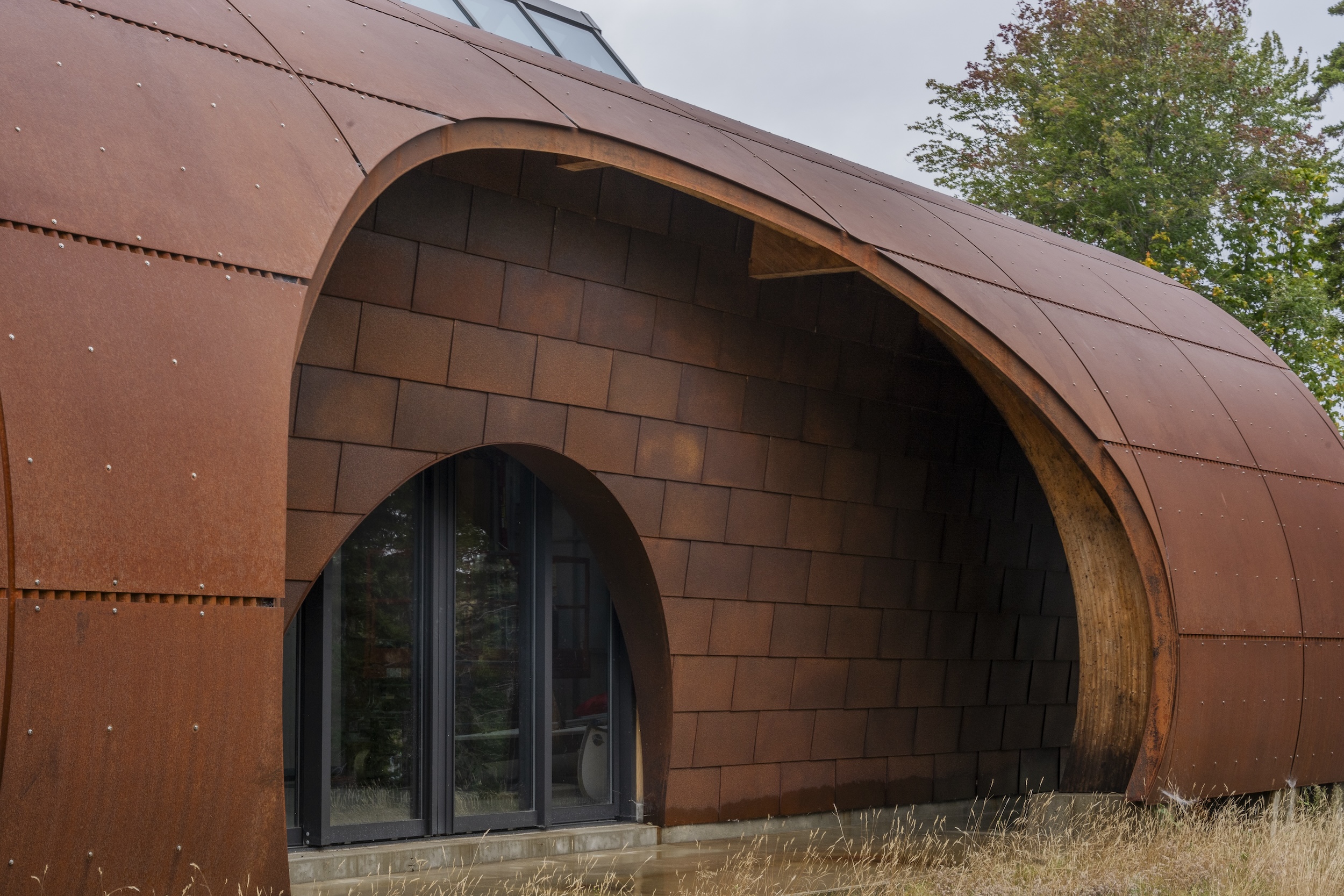
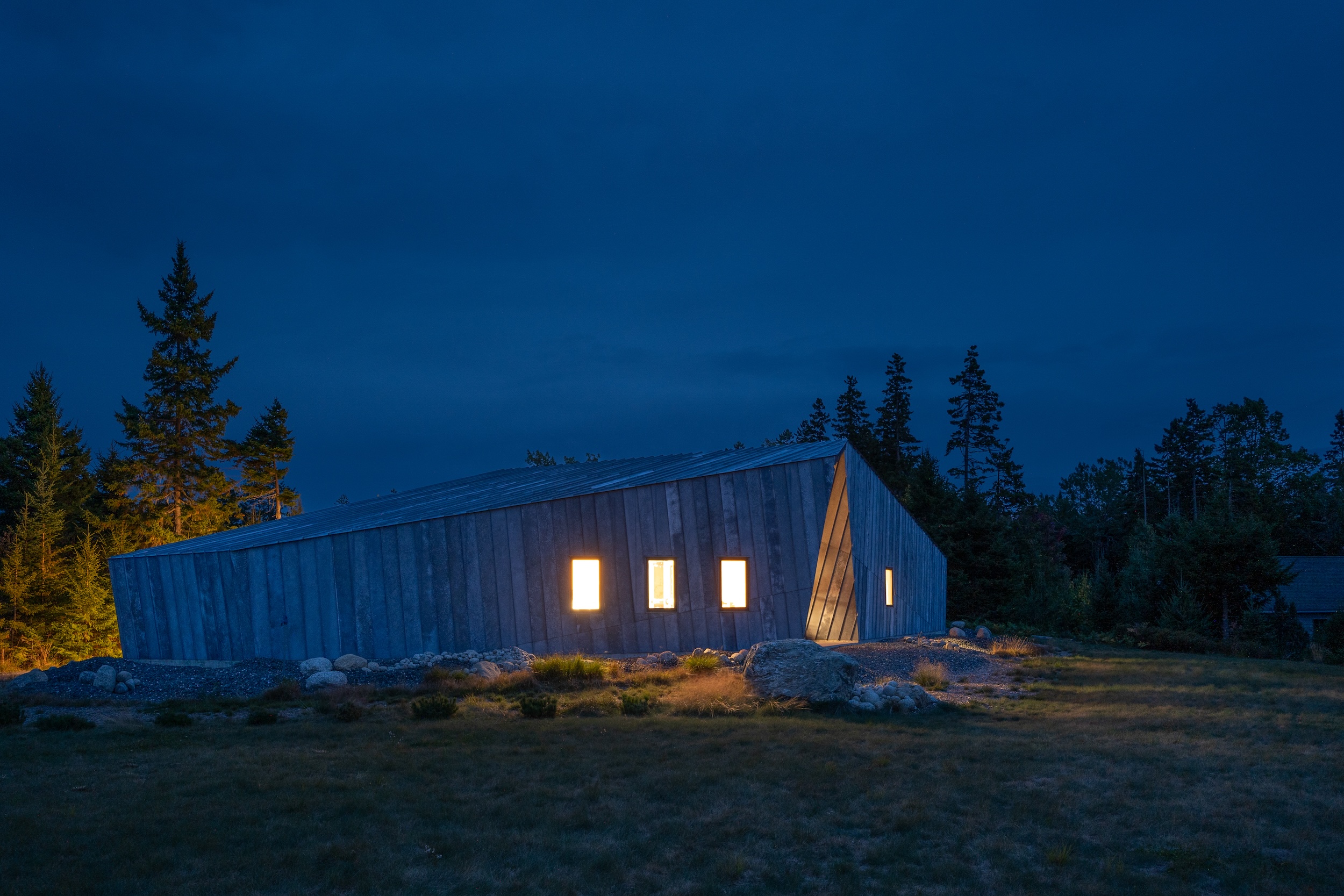
Photos © Tex Jernigan
Though Brodman didn’t pursue Passive House certification, those standards guided her material choices and construction process. Renewable energy is supplied by photovoltaic panels on both cottages, and the north cottage uses a closed-loop geothermal system. Walls and roofs are composed of an assembly that delivers optimal thermal insulation and air tightness.

Photo © Tex Jernigan
Brodman splits her time between and Old Greenwich, Connecticut, where her practice, Edgewater Architects, focused on residential work and affordable housing for Habitat for Humanity. Camp Boss, as she calls the Mount Desert Island property, is a nod to a beloved brother who died when Brodman was a young woman. She and her two brothers often called each other “boss” as a term of endearment. The project is a capstone to her long career, which, like the English folly and her Downeaster neighbors, reflects her ability to balance lyricism with the practicality, both.
Louise Brodman discusses the design of her “blissfully quiet” family compound and retreat on Maine’s Mount Desert Island, with a special guest appearance from the June 2015 issue of Architectural Record. Video © Tex Jernigan
Looking for quick answers on architecture and design topics?
Try Ask RECORD, our new smart AI search tool.
Ask RECORD →
Looking for a reprint of this article?
From high-res PDFs to custom plaques, order your copy today!