Liverpool’s New Soccer Ground Melds 21st-Century Stadium Design and Local Heritage with Varied Results
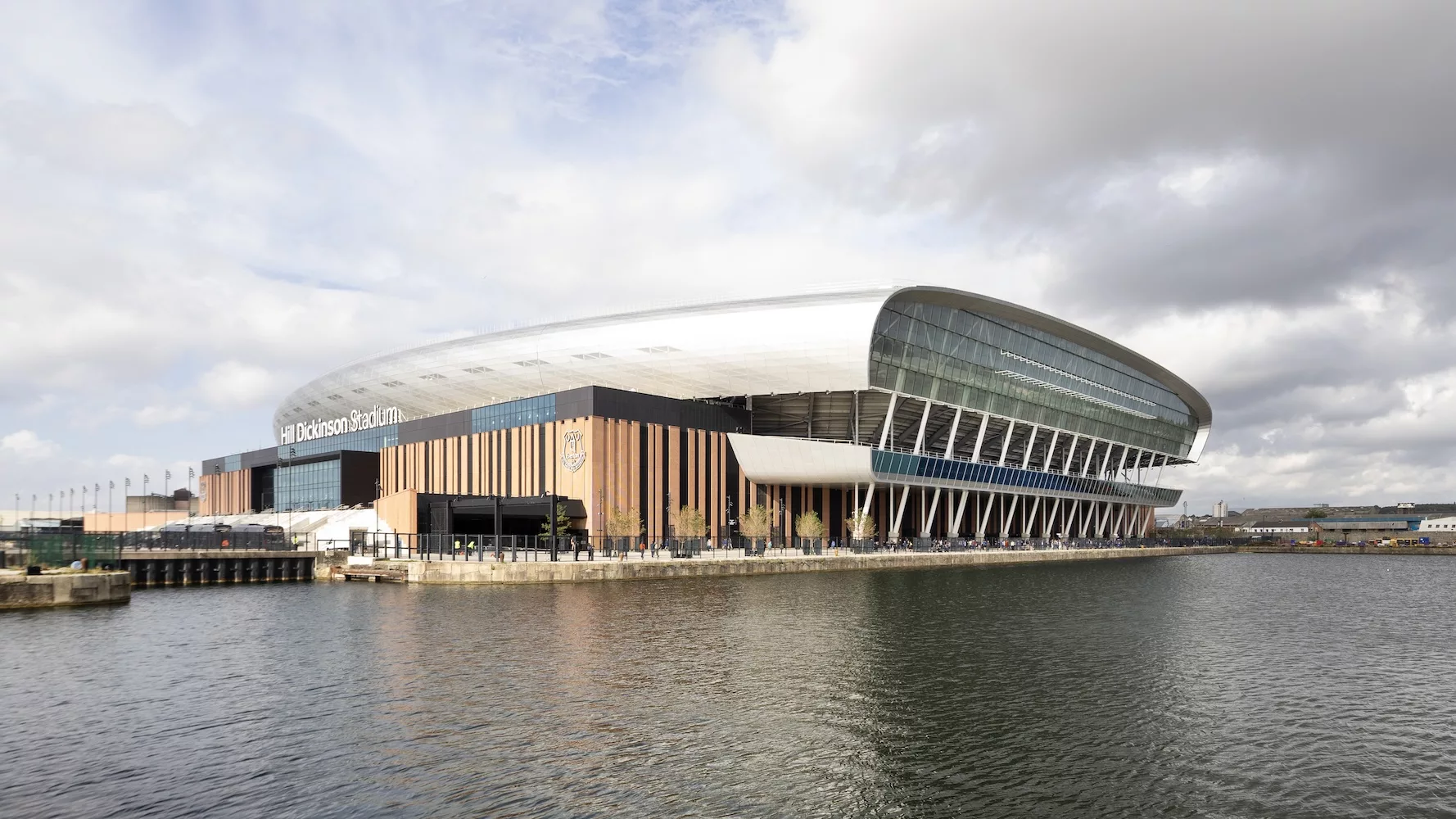
A new soccer stadium in Liverpool for English Premier League team Everton FC has now opened, offering 53,000 matchday fans a state-of-the-art experience. Designed by Los Angeles–based sports and entertainment firm MEIS and delivered by BDP Pattern, the sports division of BDP, the construction was an enormous undertaking. Estimated at costing just over $1 billion, the project required deep piling, employed 4D BIM technology, prefabricated large components offsite, utilized bespoke engineering solutions at the macro and micro levels, and poured 126 million gallons of sand into a historic dock to create the site.
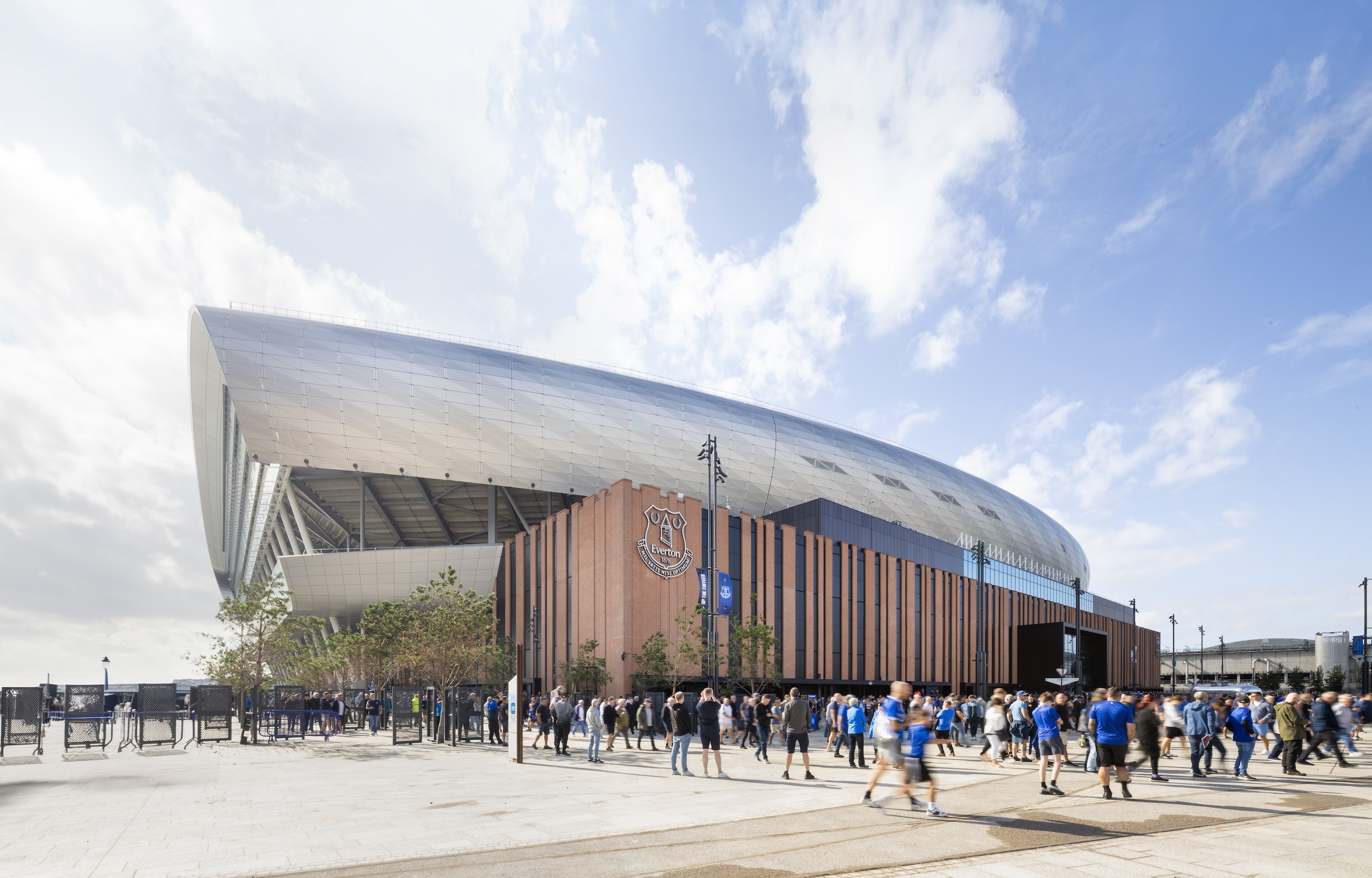
Photo © Nick Caville, BDP
The decision to infill Bramley-Moore dock, which opened in 1848 to welcome the largest steam ships of the day, was a contributing factor in UNESCO’s 2021 decision to withdraw World Heritage status from Liverpool’s waterfront. In its public statement, the heritage body stated that the Everton FC project, coupled with the long-term and huge dockside regeneration scheme Liverpool Waters, were “detrimental to the site’s authenticity and integrity.”
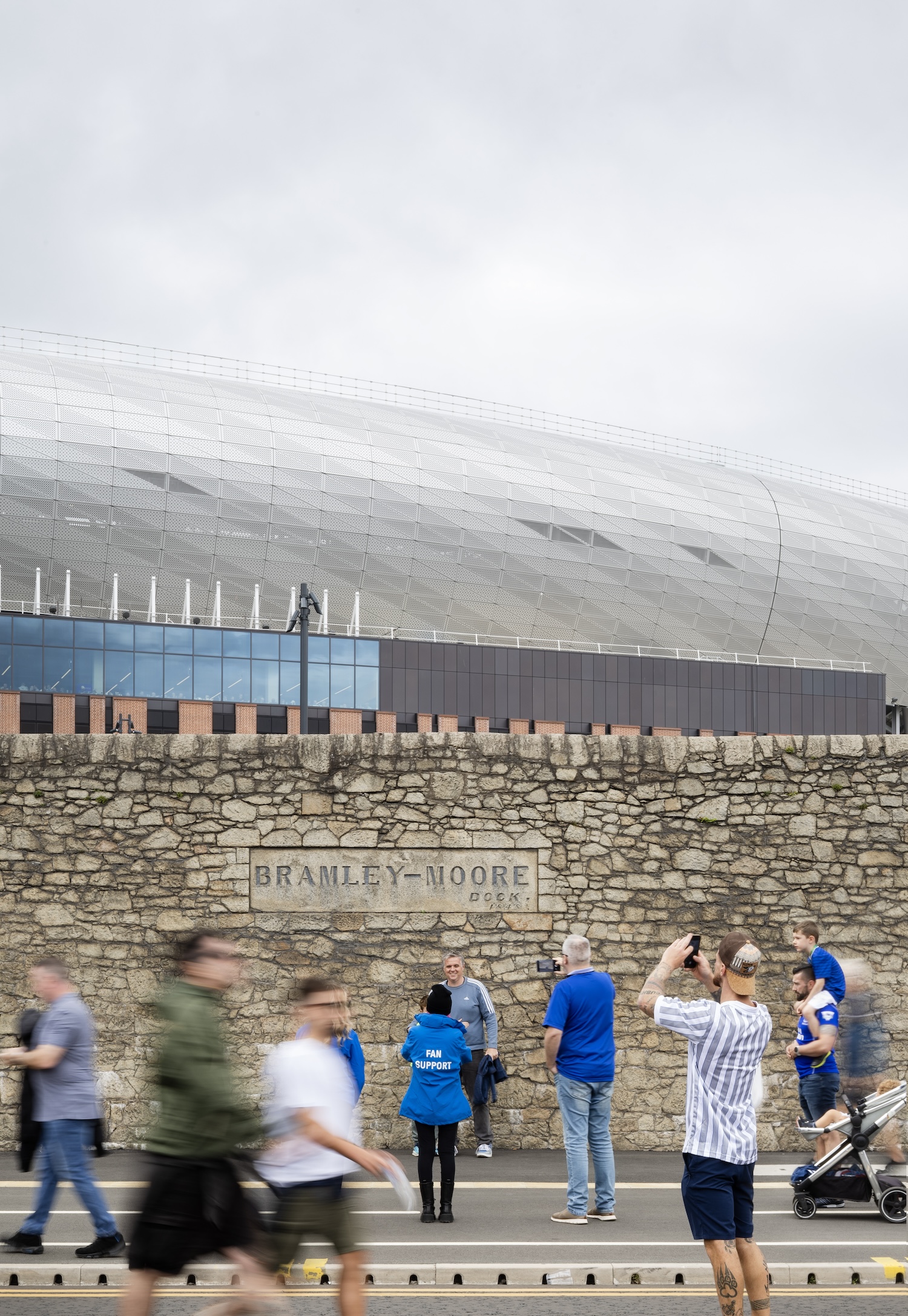
Photo © Nick Caville, BDP
Heritage is complicated. There is romantic glory with Liverpool’s impressive role in its connection to British maritime history and global commercial influence, and this remains present in much of the city’s architecture. However, the rise of the city was largely predicated on the early 1700s growth in shipping connected to the colonies, with slave ships mooring up alongside those carrying textiles, firearms, and iron. It is estimated that when the slave trade was legally abolished in 1807, Liverpool accounted for over 80 percent of all slave voyages from the UK.
Examining and exploring these histories is part cultural work. However, such deep thinking and conversations around how the city’s urban fabric and architecture might progress while also acknowledging its complex heritage seems underdeveloped compared to other cultural events such as the Liverpool Contemporary Art Biennial. The city is home to some remarkable urban set pieces: the majestic 1904-17 “Three Graces” trio of buildings are world-important, the suite of neoclassical civic buildings at the St. George’s Quarter are picturesque, and there are many modernist and Brutalist post-war moments of design that should be better respected. As a whole, however, the city is disjointed, broken by car-centric road networks and urban decline.
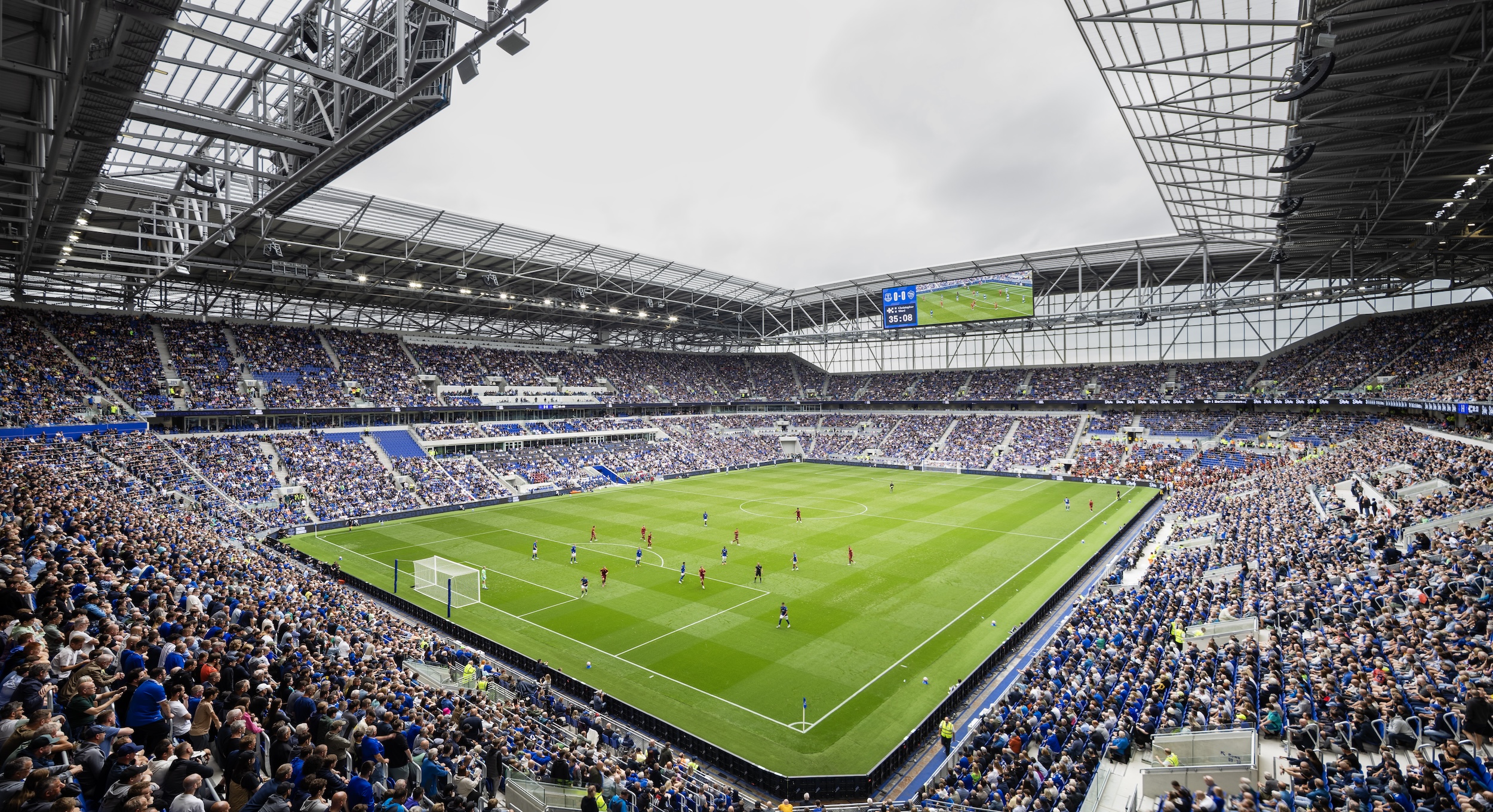
Photo © Nick Caville, BDP
It is into this that Everton FC, MEIS, and BDP Pattern set to build the new Everton FC soccer stadium, and with a design that gives a big—if not very subtle—nod to the heritage of the place. Formally, it is a large brick box—a reference to the many brick warehouses that stood along the docks site, including some impressive structures which remain to this day—with a futuristic parametric form seemingly dropped into it from above.
“Some people call it the spaceship,” Jon-Scott Kohli, director at BDP Pattern, says, “and I think it's a wonderful architectural metaphor about a scheme, a club, and a city that are respectful of heritage, but also looking forward to the future with a modern ambition.” What it isn’t is a particularly nuanced metaphor, and while it does seek to address the gap between Liverpool’s history and future, it comes through sharp juxtaposition rather than deftly weaved poetry.
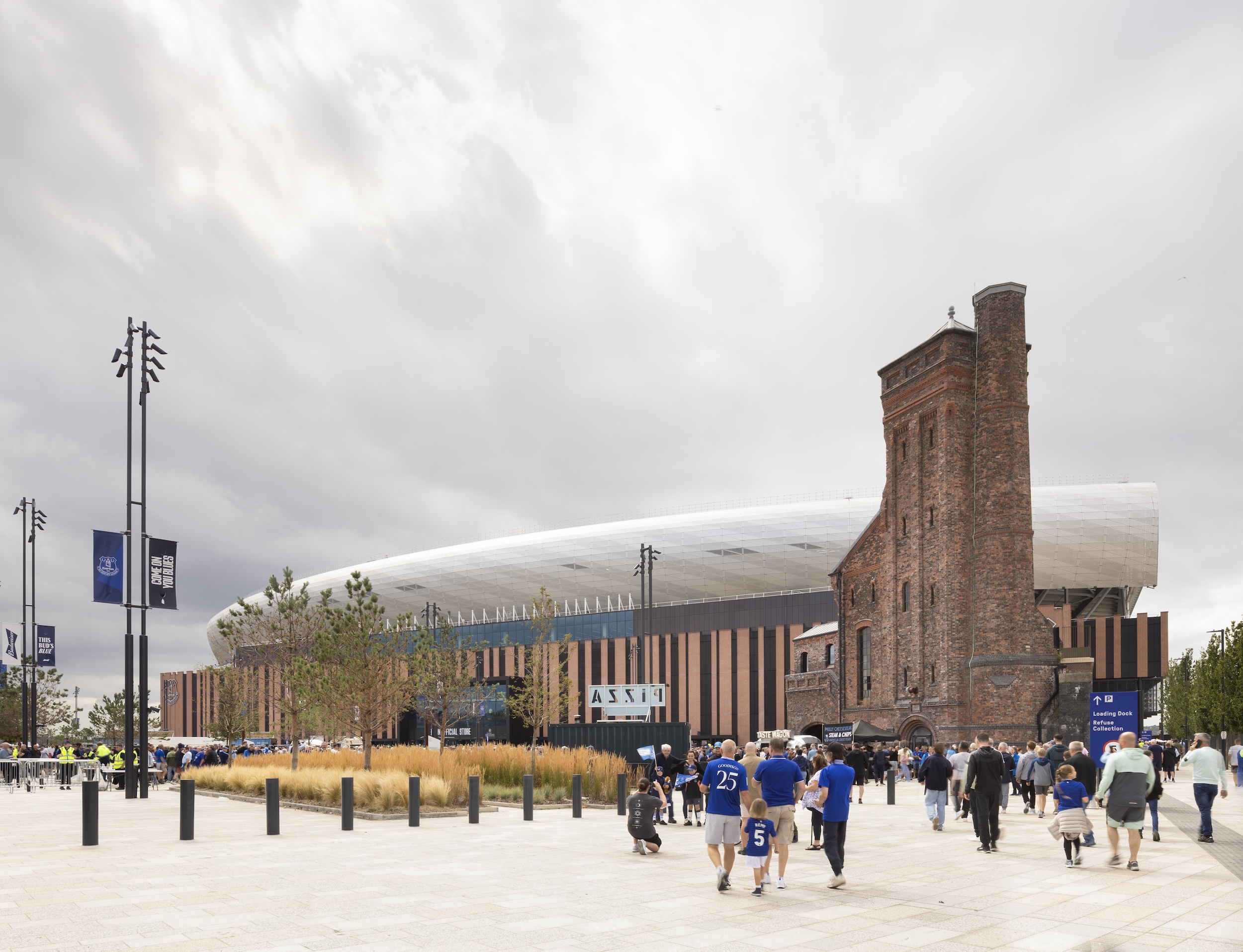
Photo © Nick Caville, BDP
Since 1892, Everton FC played at Goodison Park, much of which was designed by celebrated architect Archibald Leitch in the early 20th century. It is a romantic and traditional stadium which follows the soccer typology of square sides, seats tightly packed and close to the pitch, and positioned within the streets its blue-collar crowds come from—the largest of which was 78,000 in 1948, with capacity reduced to 39,000 by the time Everton played their final match there in May of this year. It was, however, also increasingly out of date with modern requirements and safety, and there was no easy quick fix to make it suitable for the 21st century.
Looking for quick answers on architecture and design topics?
Try Ask RECORD, our new smart AI search tool.
Ask RECORD →
.jpg "Hill Dickinson Stadium, Liverpool")
Photo © Nick Caville, BDP
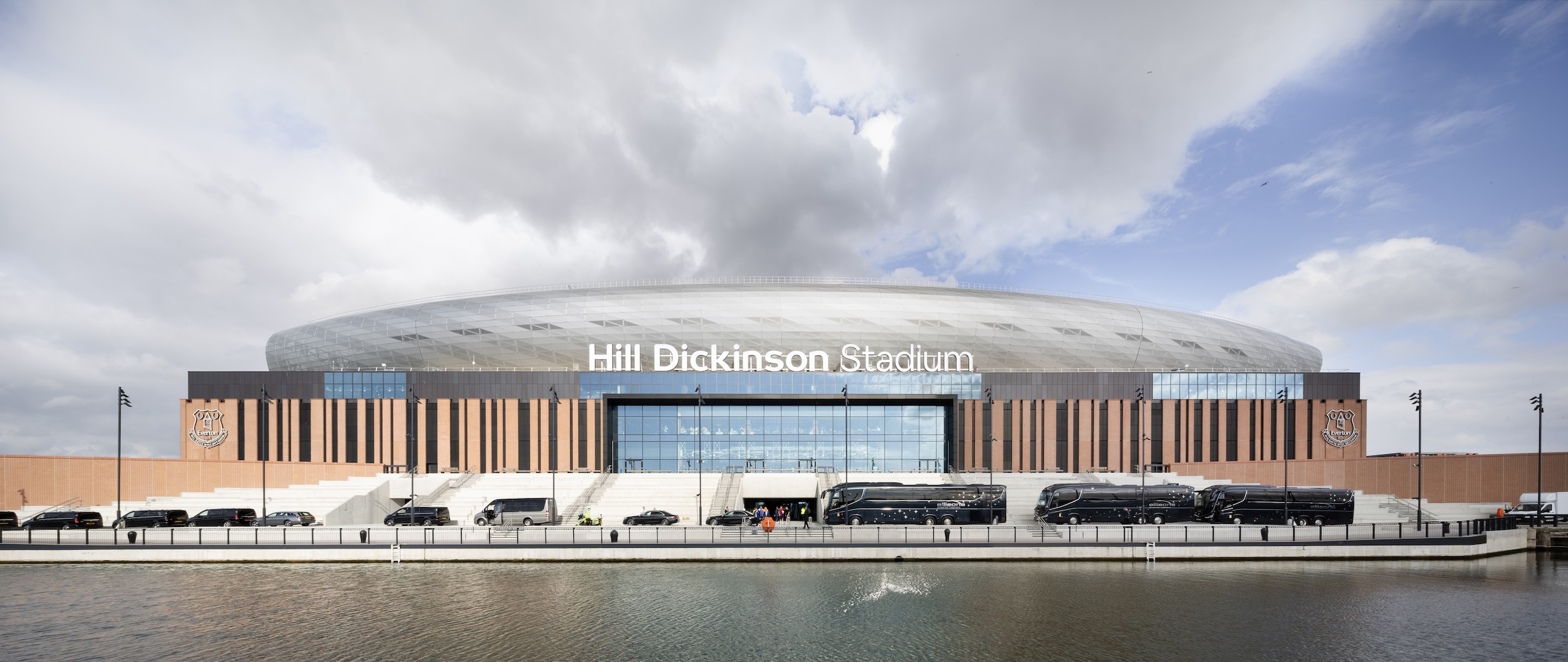
Photo © Nick Caville, BDP
The new stadium, now officially named the Hill Dickinson Stadium following corporate sponsorship, is a different beast. Every seat has an immaculate sightline, employing state-of-the-art technology to consider movements of fans during different moments of a game. They can celebrate (or commiserate) with vastly improved food and beverage options across internal concourses which wrap the entirety of the bowl. The new “home fans” end holds 14,000 spectators in a single tier as steep as regulations allow, designed to generate a wall of sound roaring the team to victory. A huge piazza wraps from the front to the River Mersey behind, intended to erupt in the team’s blue on matchday as it buzzes as a place of gathering and togetherness, while at the back the thoughtful addition by BDP is a stepped terrace creating a new civic space with river views.
There are some delicate moments of heritage consideration. Former dockside rail tracks have been incorporated into the public plaza, the Grade II-Listed Dock Wall has been retained, albeit with strategically cut entrance points, and a Hydraulic Tower and Engine House structure dating from 1883 have been restored, standing proud in front of the new spaceship. A small touch, but sure to help Evertonians warm to their new home, is the incorporation of a cross motif from Goodison Park, here repeated delicately within fences, seating, and brickwork.
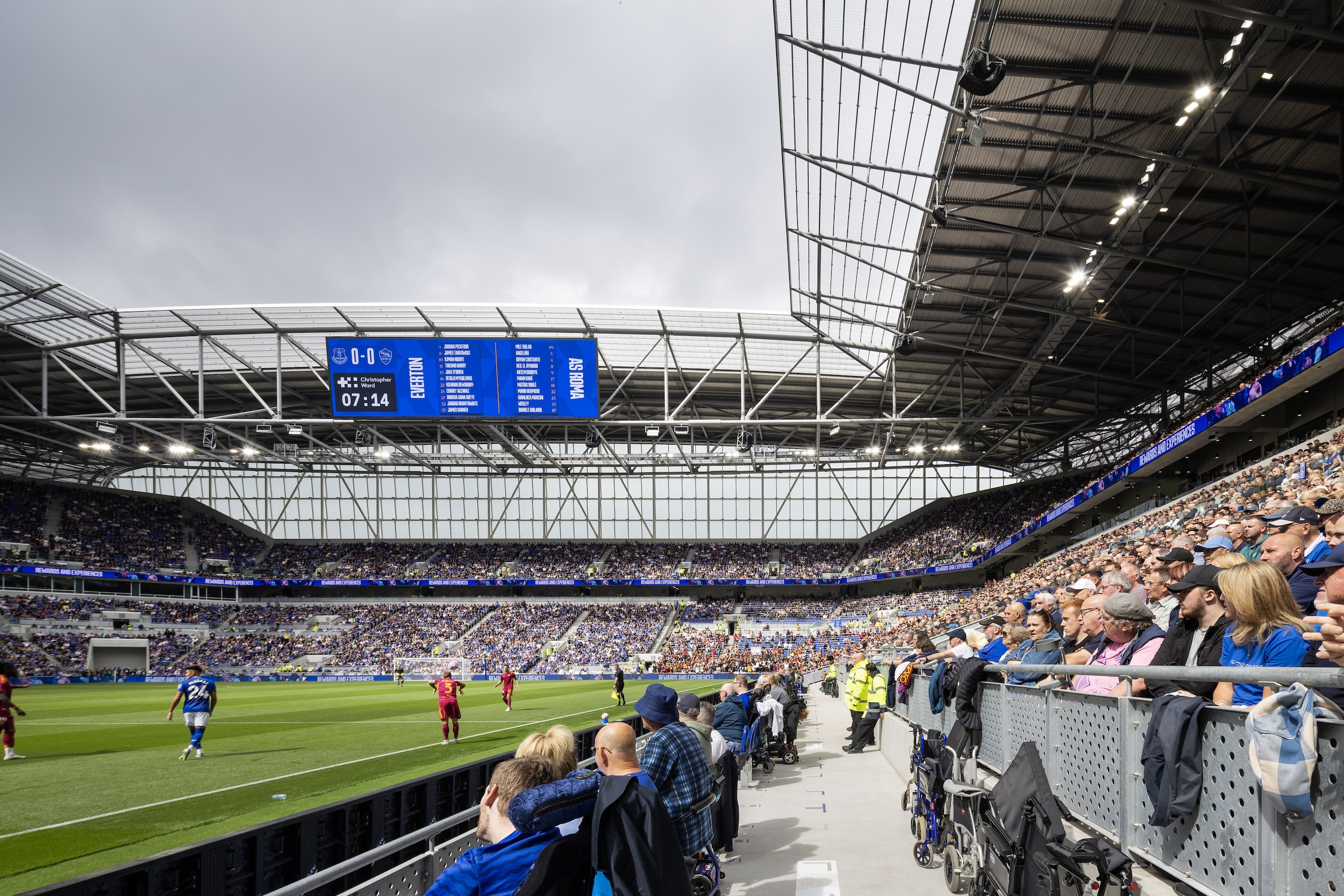
Photo © Nick Caville, BDP
Other nods to the past are somewhat clunkier. Dining options inside the stadium are themed around the club and city’s past, but in ways which seem more akin to a shopping mall. Generally, while superbly functional, safe, and generous, the internal concourse spaces carry something of a global airport aesthetic.
Such changes are not always all a bad thing. The technologies, aesthetics, and ideas of event architecture have progressed hugely. The new ground includes 279 wheelchair positions, sensory spaces, 58 accessible toilets, and more—all far greater than the typical stadium offers and all genuinely progressive decisions. But there is an awkwardness in the conjoining of the corporate-feeling approach to create a smooth events space, with the specificities of a soccer stadium, with all the rituals, histories, and aesthetics that the sport carries—perhaps unintentionally continuing the juxtaposed metaphor that the brick box and spaceship blob architecture has preconfigured.
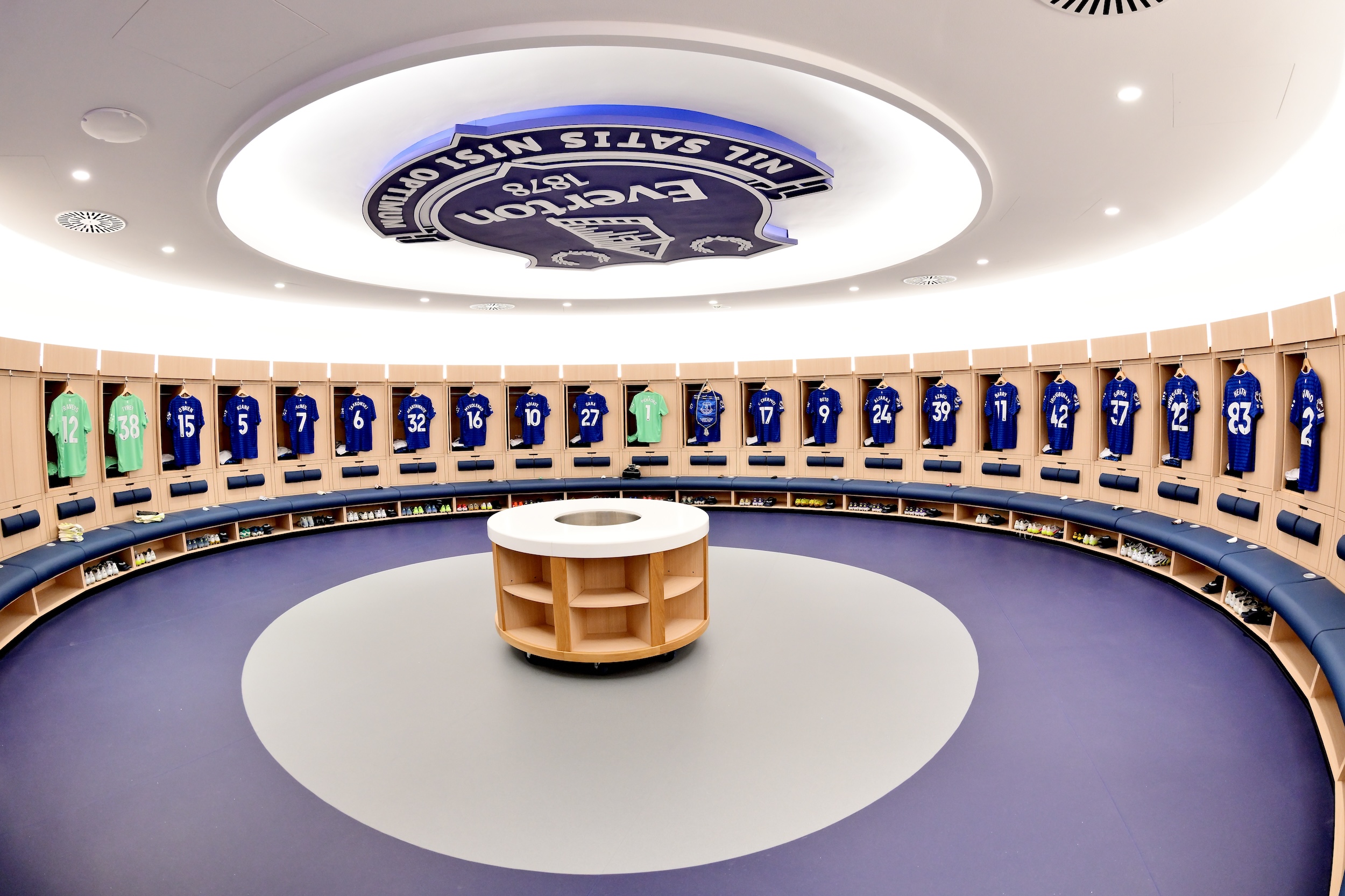
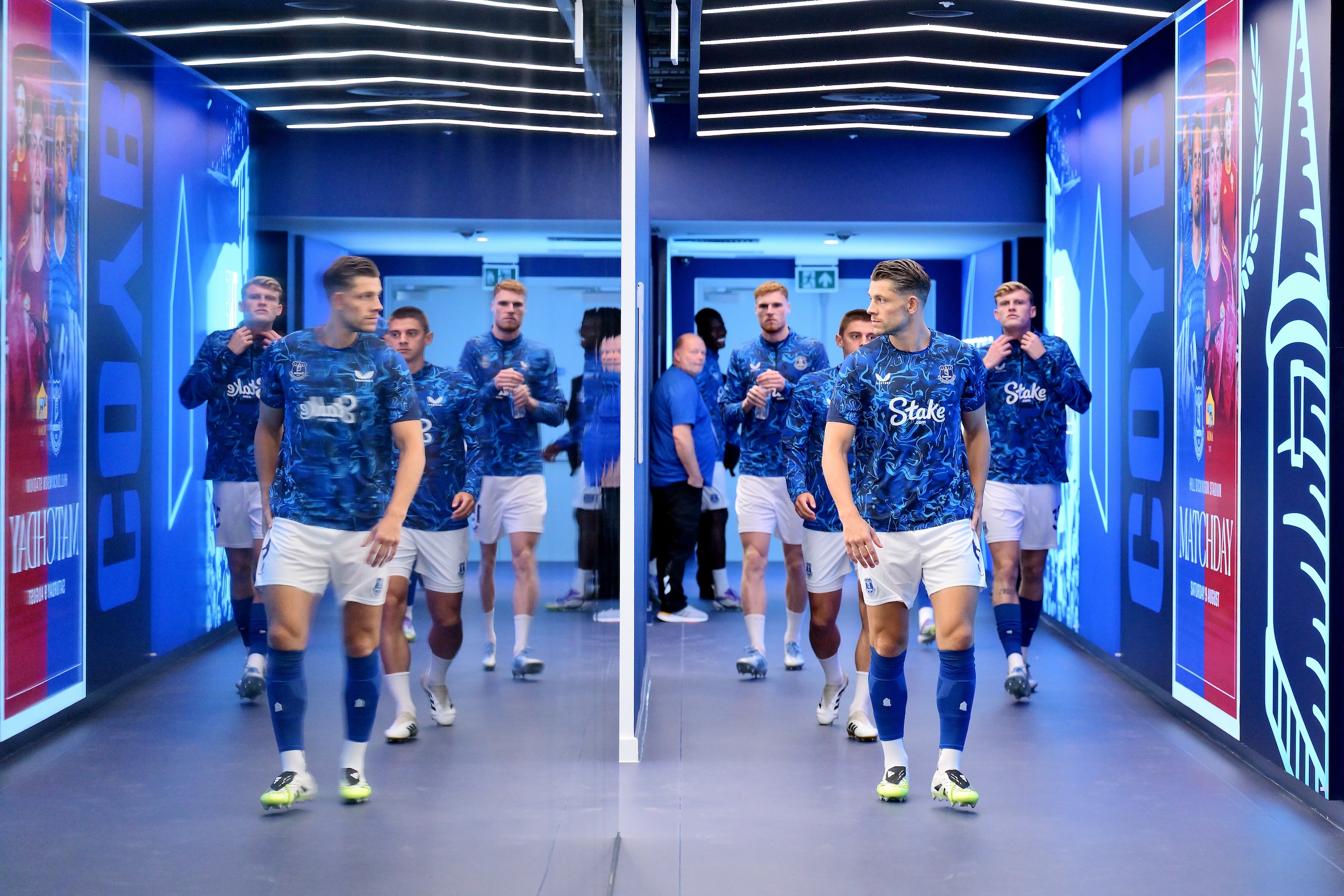
Photos © Nick Caville, BDP
The true test of the place will not be in this first season, but over decades to come—in its normal functioning, how fans take ownership of the place, and how it feeds into and integrates with the forthcoming Liverpool Waters development. Hill Dickinson Stadium will eventually become the northern bookend to Liverpool Waters, a three-decade, nearly $7 billion project for apartments, offices, and leisure, with a new riverside path connecting it to the city center. Some of the spaces between are already showing shoots of regrowth.
“It's amazing to already see it on a week-by-week basis,” Kohli says. “A new pub opens, then someone sets up a fan zone, and to watch urban regeneration happen in real time with these relatively small things, which will be followed by slightly bigger things, is exciting.” The big question now for Liverpool, is around the approach Liverpool Waters takes over the next 30 years. Hopefully, careful and considerate community planning will ensure that space is made to incorporate and build around both the historic businesses that have survived the area’s fallow years and these new harbingers of regeneration, though such large-scale British development does not always indicate this will be the strategy.
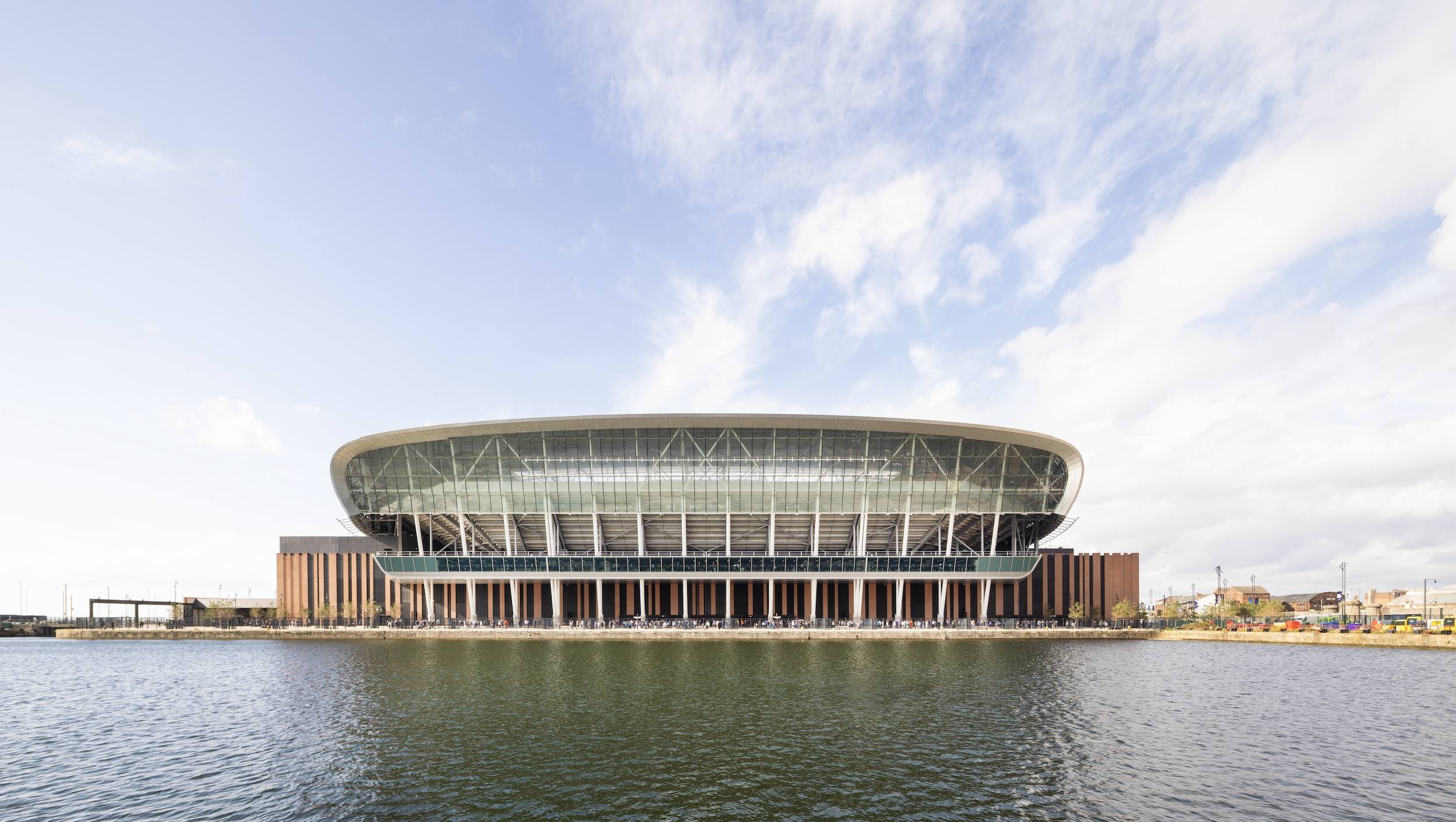
Photo © Nick Caville, BDP
Often, with such stadium moves, the original, historic ground speedily gets demolished and redeveloped with little evidence remaining, further adding to a community’s sense of physical and cultural loss for a place that had held social focus. Importantly, this will not be the case with Everton FC. Goodison Park will become the hub for the club’s community outreach operations and the new home ground for the women’s team, at a time the sport is rapidly growing in international popularity. The stadium’s architecture will be adapted to suit different crowd sizes, makeup, and behavior, but the use and presence of the place will remain in the neighborhood it has been for so long.
Looking for a reprint of this article?
From high-res PDFs to custom plaques, order your copy today!