Kadre Architects Transforms an L.A. Denny’s into a Resource for Families Transitioning Out of Homelessness
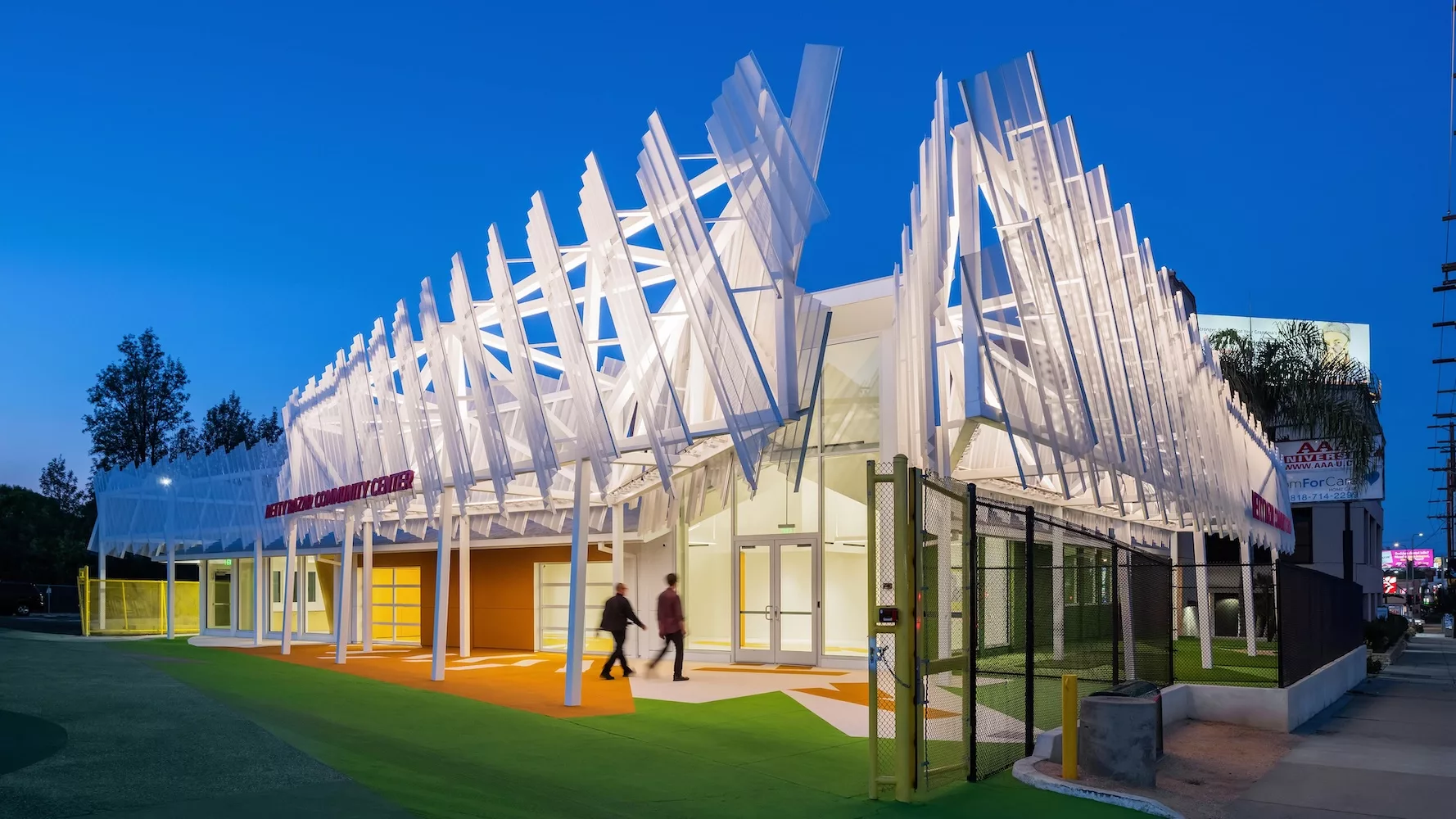
Betty Bazar Community Center and Preschool, Los Angeles, by Kadre Architects.
Arriving at the Betty Bazar Community Center in the Woodland Hills neighborhood of Los Angeles, the first thing that catches your eye is a white, perforated series of metal screen canopies that flicker with light as you drive past. It’s an intentional effect of the screens, which are installed around the southwest and southeast sides of the center to provide shading, but they also brightly announce the presence of this anchor building for the Woodlands, a 100-unit transitional housing project.
Both projects were designed by L.A.-based Kadre Architects, and both represent novel renovations of outdated commercial architecture—a motel and an adjacent Denny’s restaurant—as part of the city’s Project Homekey program to quickly convert buildings to residential use to address an immutable homelessness crisis. Betty Bazar Community Center opened at the beginning of 2025, after two years of design and construction, adding a multipurpose space and a licensed preschool that serves the families who call the Woodlands home.
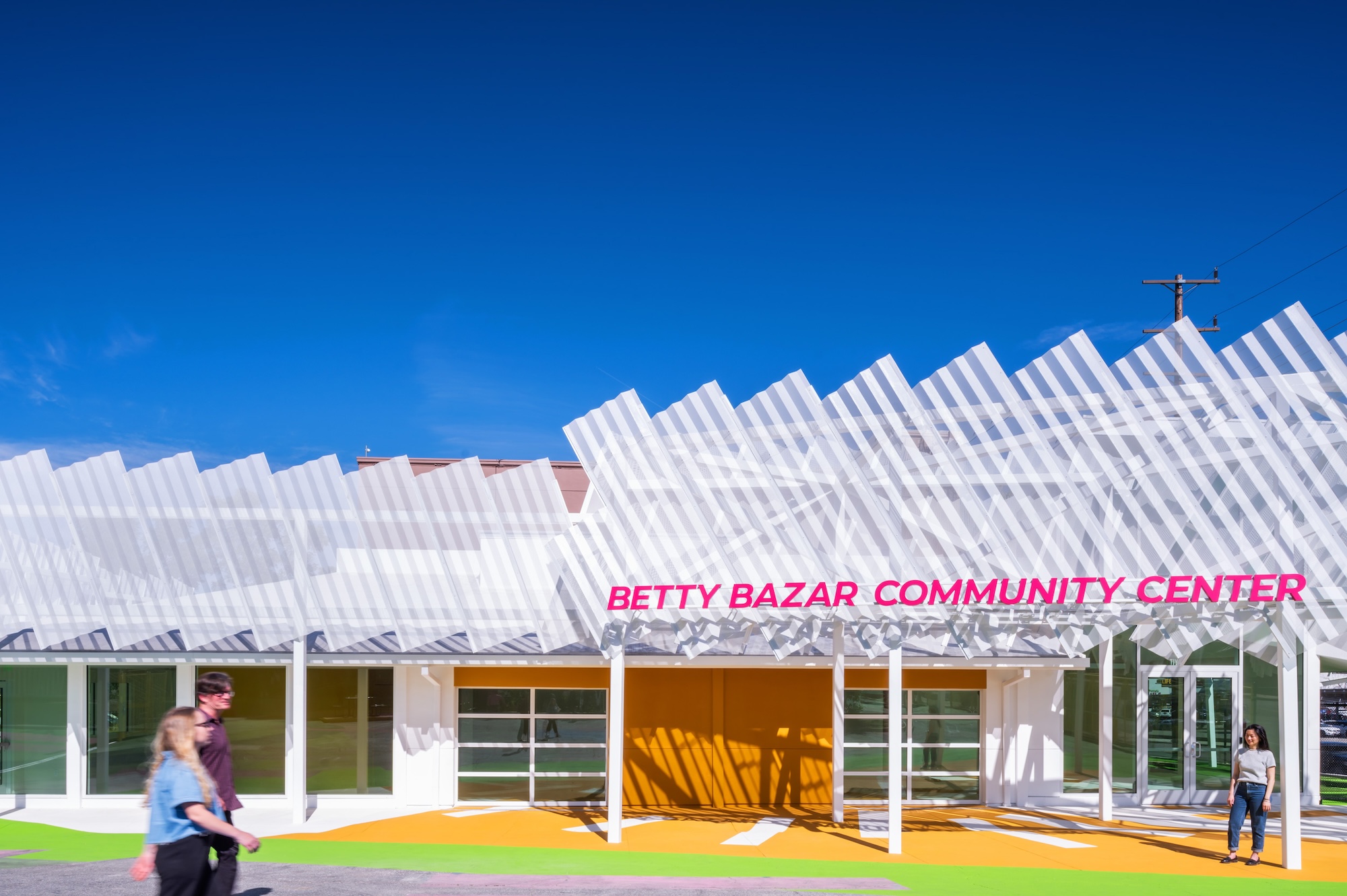
Photo © Paul Vu
Adaptive reuse of a chain restaurant is not a new thing in L.A., as even this Denny’s was renovated into a Starbucks prior to the community center development. The diner typology is right at home along Ventura Boulevard, which acts as the de facto main street for the San Fernando Valley—a classic, 16-mile strip through L.A. dotted with cheap, low-rise commercial construction and a language of signs, bright, colors, and garish lighting.
The community center’s white screens make sense in the urban cacophony of Ventura Boulevard, but more importantly, they are a way to give back to the neighborhood. And the project’s residents get a new building with some dramatic presence, Kadre’s Bosnian-born founder Nerin Kadribegovic says. A longtime L.A. architect with a focus on community projects, Kadribegovic is cognizant of the stigma that many other residents attach to transitional housing projects in their neighborhoods. “We did not want this building to just blend in,” he says.
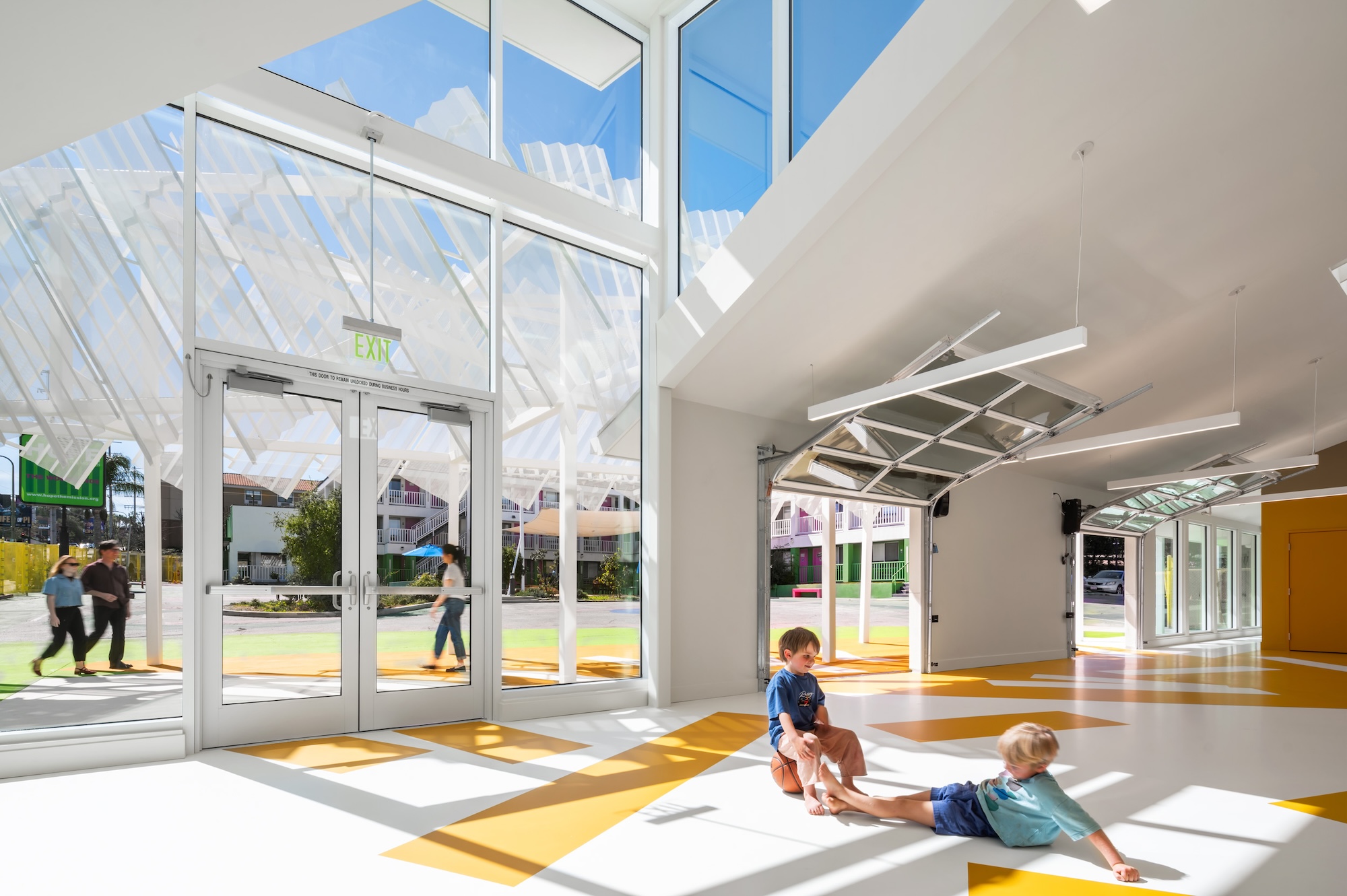
Photo © Paul Vu
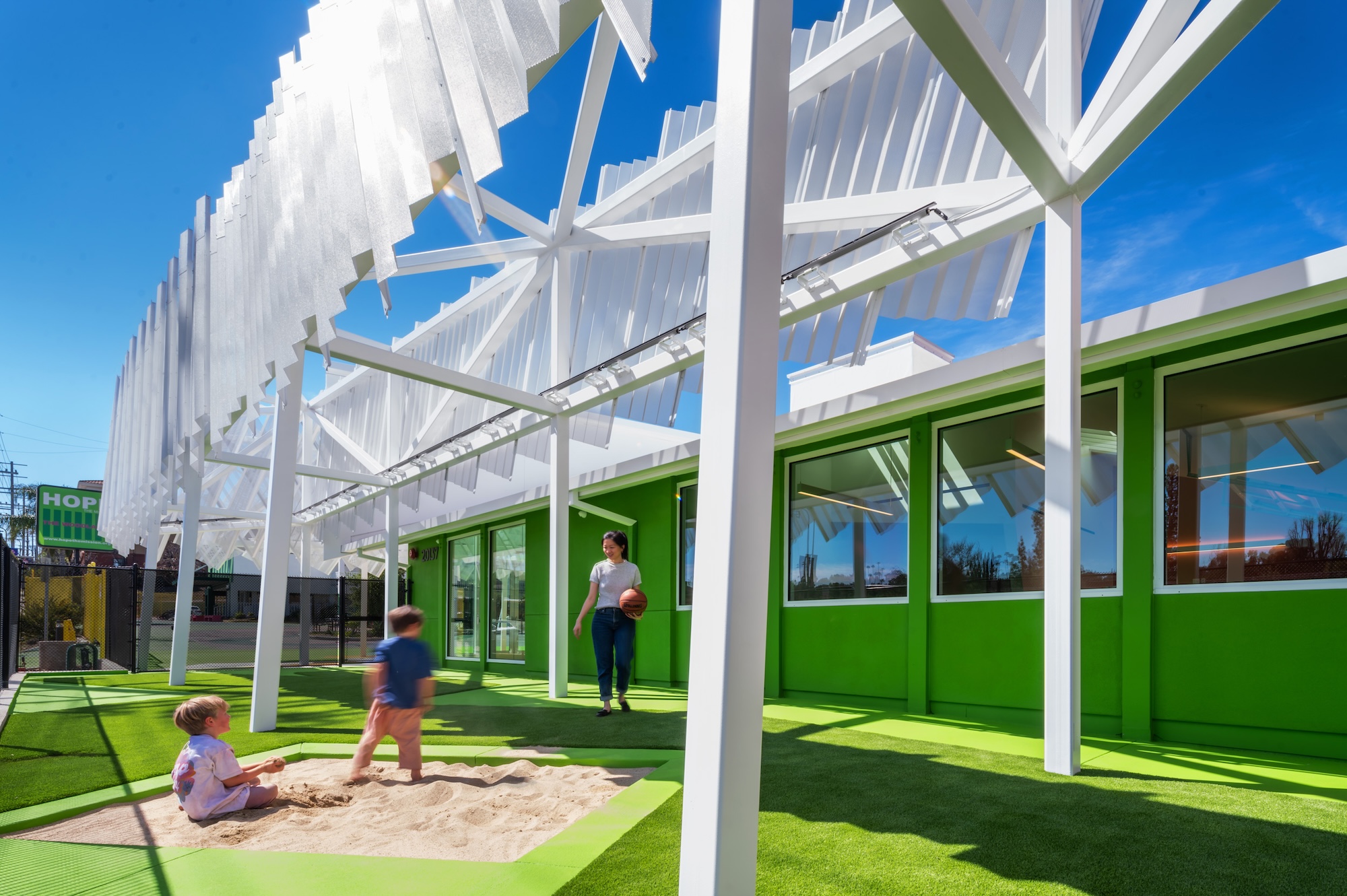
Photo © Paul Vu
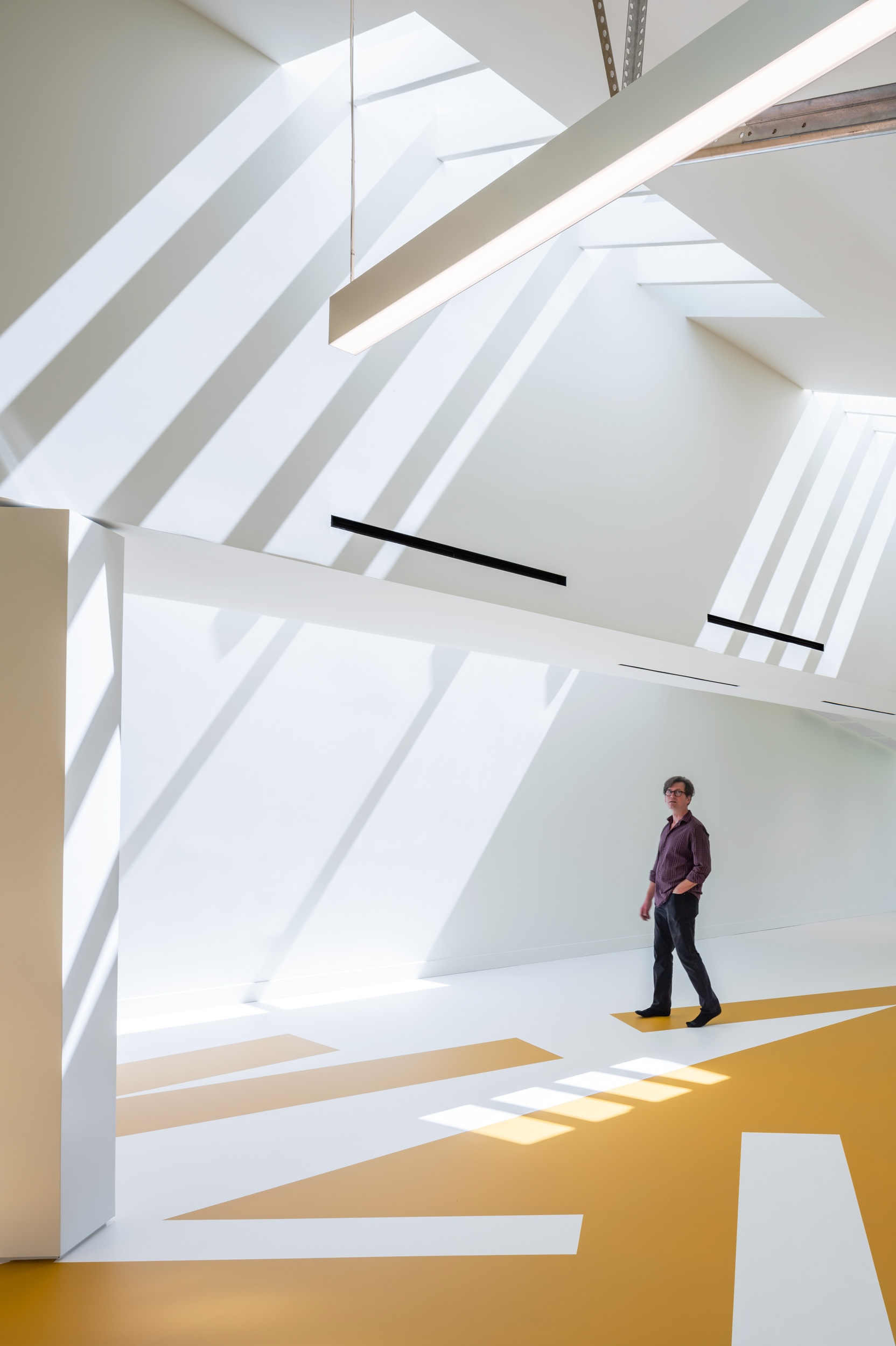
The original Denny’s structure was a simple ranch-style diner with a pitched roof and long eaves that concealed a rooftop equipment well in the center above the kitchen. This configuration allowed Kadre to divide the community center into its two parts with a wall that splits the building in half along the rooftop well, which was further transformed with skylights that brighten the interior core.
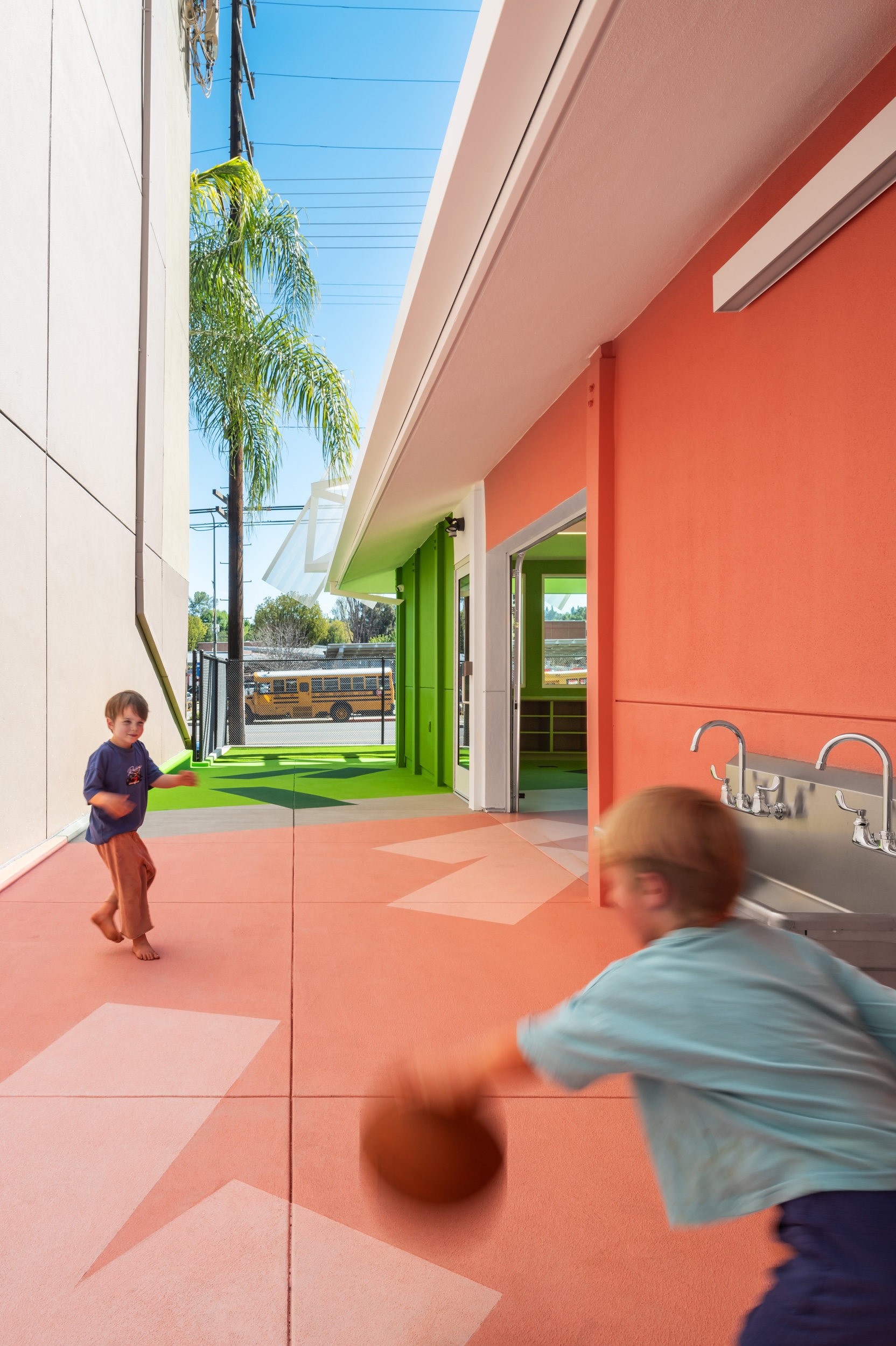
The multipurpose room on the west half, where tables and chairs support family activities and daily meal services, open to the site’s outdoor spaces and playground, whereas the two preschool classrooms on the east have controlled access entry points and a gated outdoor space that runs along the adjacent building. “We took what used to be a useless space and turned it into a play space for the preschool,” Kadribegovic says.
Photos © Paul Vu
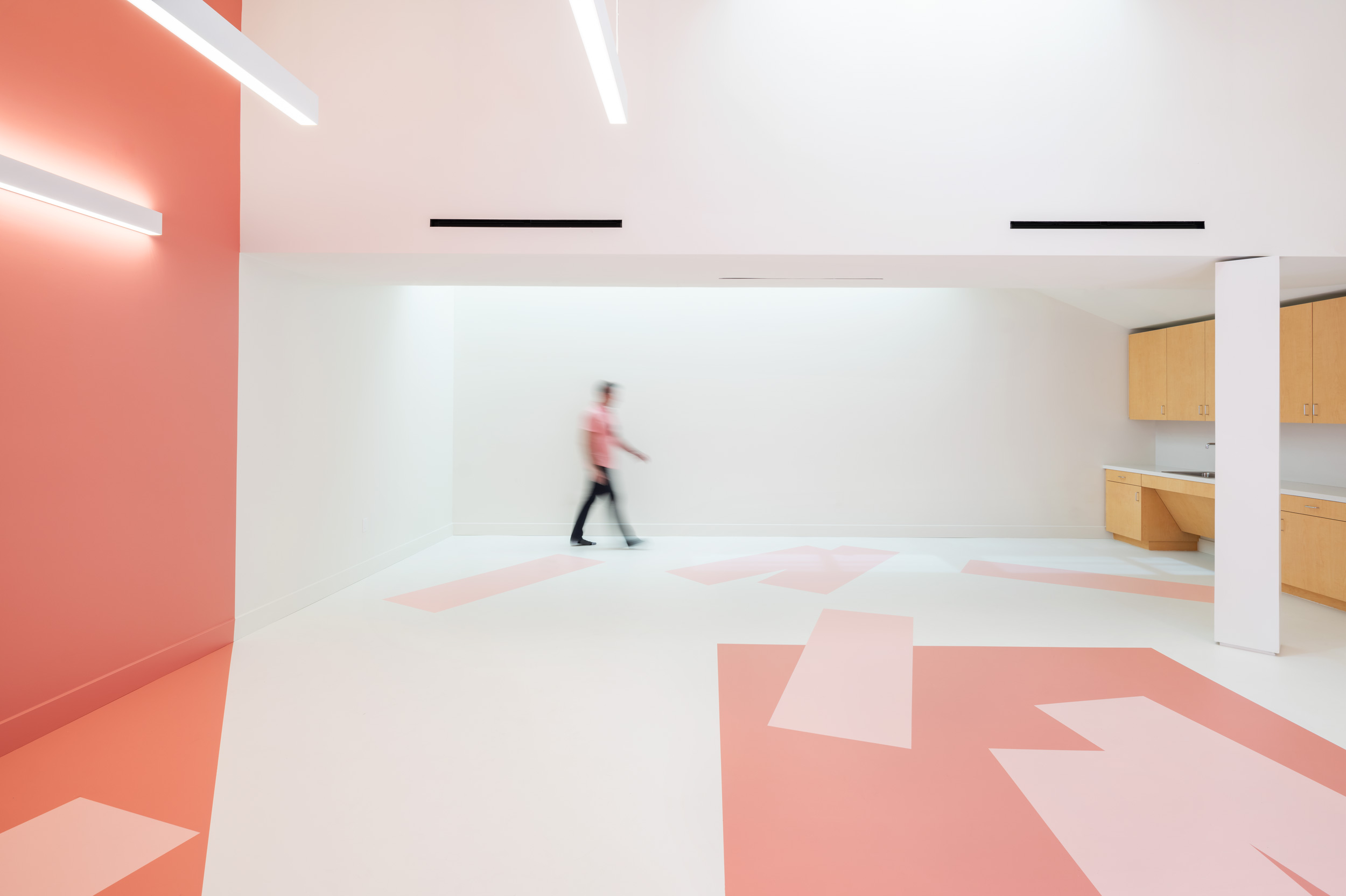
The overall color palette—a mix of orange, green, and pink—is bright and playful, with many whimsical details achieved by carrying geometric patterns directly from outside to inside. This color saturation bleeds into casework and structural elements, such as simple steel columns clad in plasterboard and twisted off axis to animate the interiors. It’s the opposite of the staid, generic appearance of the original Denny’s.
Looking for quick answers on architecture and design topics?
Try Ask RECORD, our new smart AI search tool.
Ask RECORD →
Starbucks vacated the property when the adjacent motel was converted to supportive housing. The shell of the former diner sat empty, with boarded-up windows, while thieves stripped it of copper wire and anything worth selling. When Kadre, who also acted as construction manager, began site investigation, the team had to scurry around in darkness with flashlights to document existing conditions so they could start thinking through the logic of a renovation.
.jpg)
Photos © Paul Vu
“Finding the idiosyncrasies of the building was really challenging because we couldn’t see anything,” Kadribegovic says. They solved this by dividing the project into two contracts, so Kadre’s team could first tear things apart to identify what could be preserved and what needed to be demolished, then that could be used to inform a second contract to design and build the center. Demolition took the building down to the structural shell, replacing all walls, windows, and even the concrete slab.
While the preschool had specific design requirements from the State of California, such as individual bathrooms for each classroom, Kadre has developed its own common-sense design criteria for its many mission-driven projects. Kadribegovic has pushed to remove fossil fuels from the firm’s work, including at the new community center, with heat pumps for hot water and heating, along with rooftop solar PV arrays that effectively let the building operate as net zero energy. This approach reduces annual costs significantly for Hope the Mission, the nonprofit that operates the Woodlands campus.
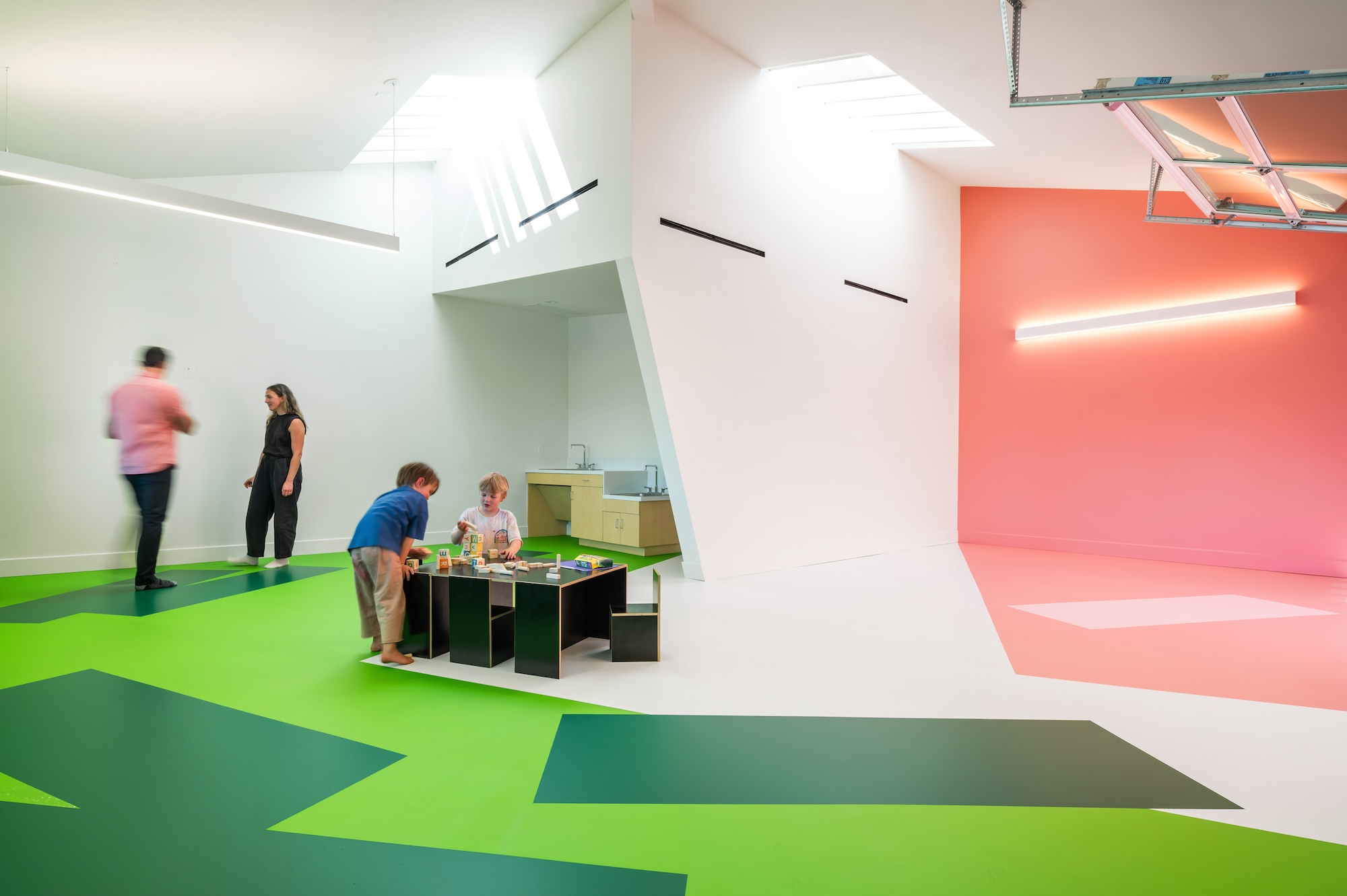
Photo © Paul Vu
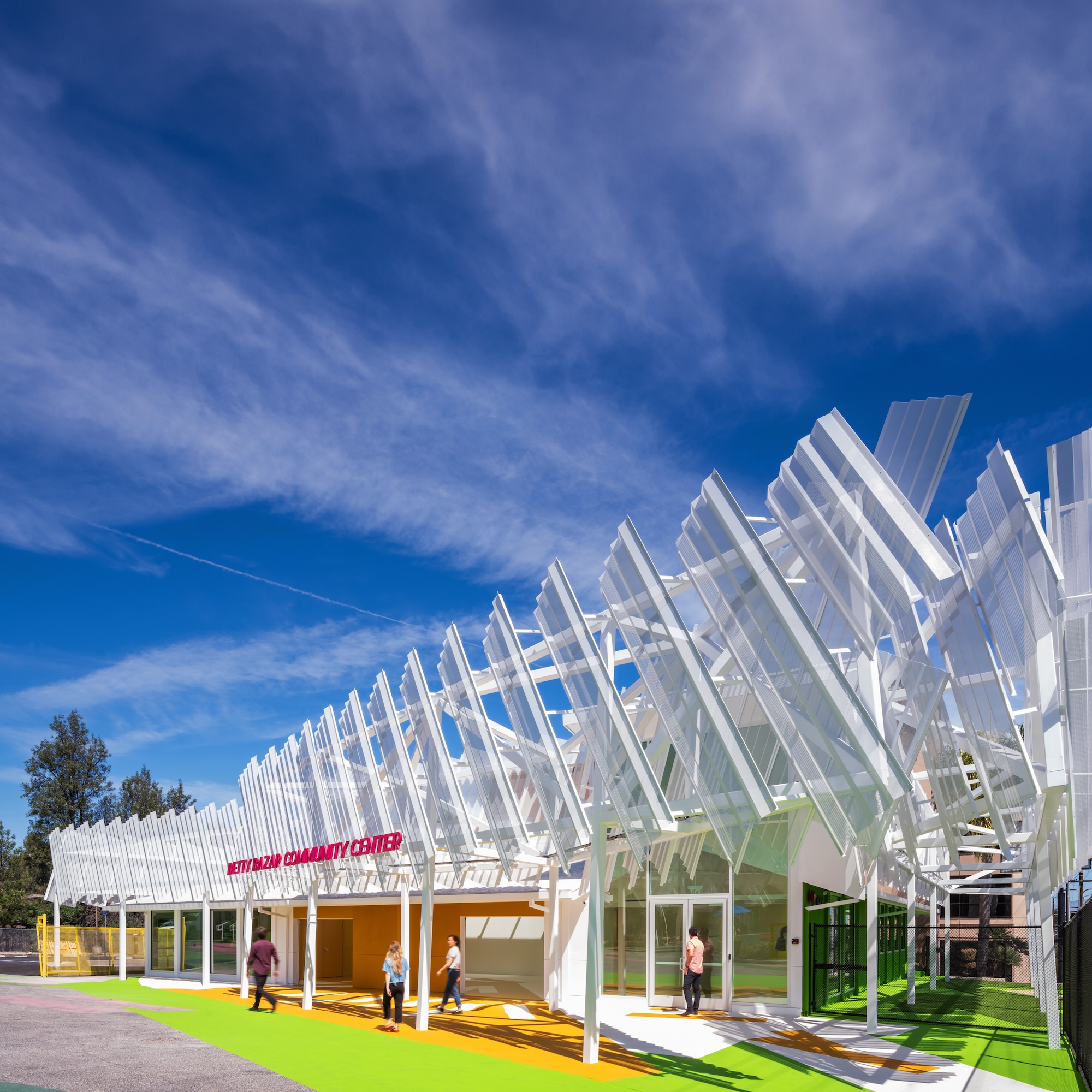
Photo © Paul Vu
The paint and patterning that Kadre uses as an organizational strategy for many of its projects is also another cost-saving approach to maximize impact. Using a water-based epoxy paint from Sika commonly employed with tough public projects like playgrounds, Kadre designed bright supergraphics across the parking lots to activate spaces and reduce urban heat island effects as part of the original site plan around the motel. That logic carries into the community center.
Kadribegovic says he would have liked to have converted the asphalt into landscape and planted more trees, but city regulations for low-impact development criteria around stormwater control would have added over six months to the permitting process, increasing project costs beyond the budget. The metal canopies, which stand separate from the building, more than make up for the lack of trees with a 50 percent opacity perforation and continuous coverage. Designed with L.A.-based structural engineering firm Nous, the two canopies meet at the southwest corner to frame a new entrance that bumps up the existing roofline with a large clerestory that floods the center with daylight. At night, they are lit up with LED strips.
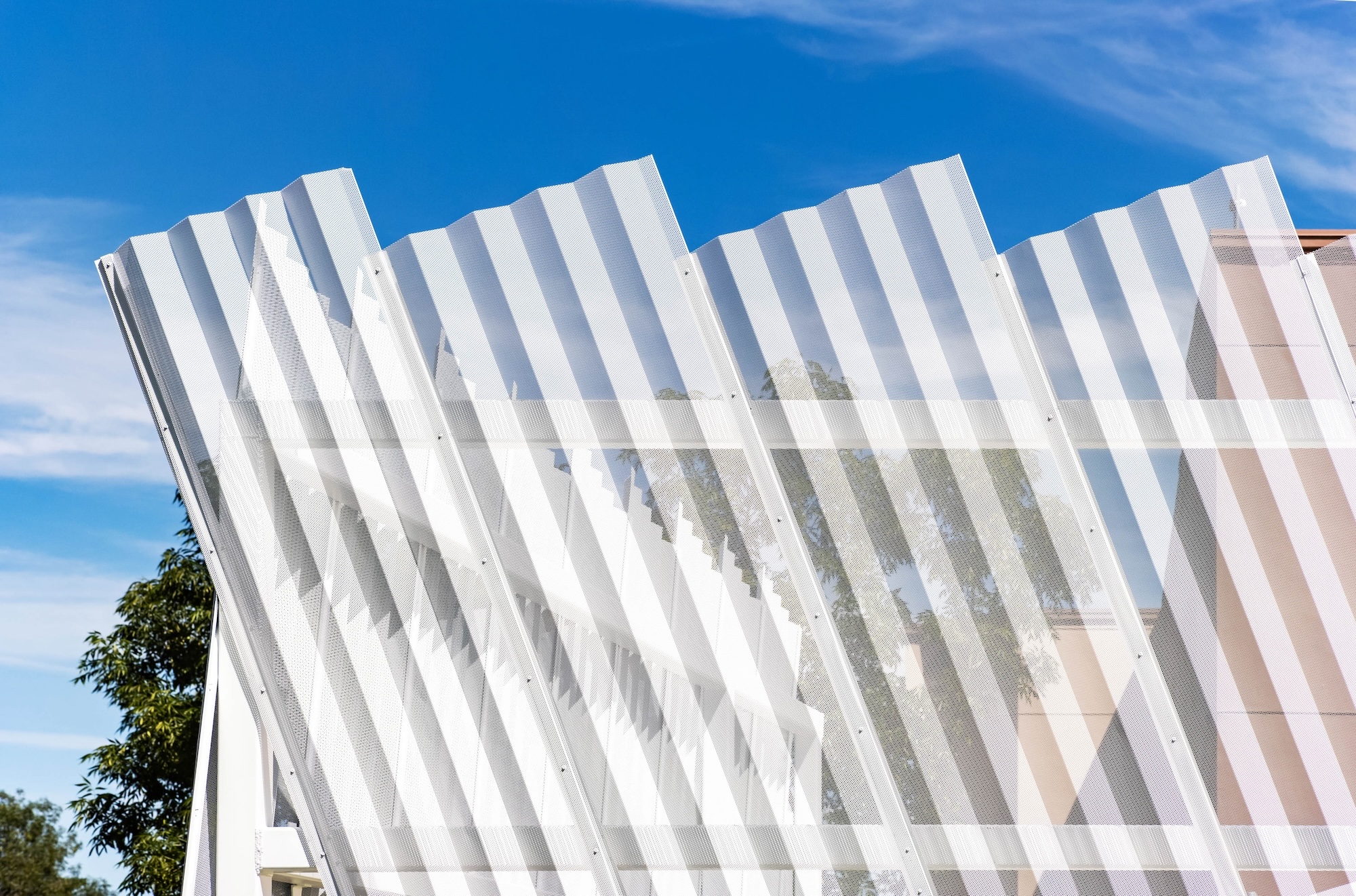
Photo © Paul Vu
The two canopies fan out on the southwest and southeast sides of the building like airplane wings, a subtle nod to the late Betty Bazar, a pilot and the CEO of a local aerospace components company, whose family financially supported the project in her memory. Bazar’s name, found prominently on the canopy along Ventura, ensures no one will mistake this building for a Denny’s again.
Looking for a reprint of this article?
From high-res PDFs to custom plaques, order your copy today!