VMDO Architects Completes the First Phase of a Freshmen Housing Complex in the Heart of the UMiami Campus

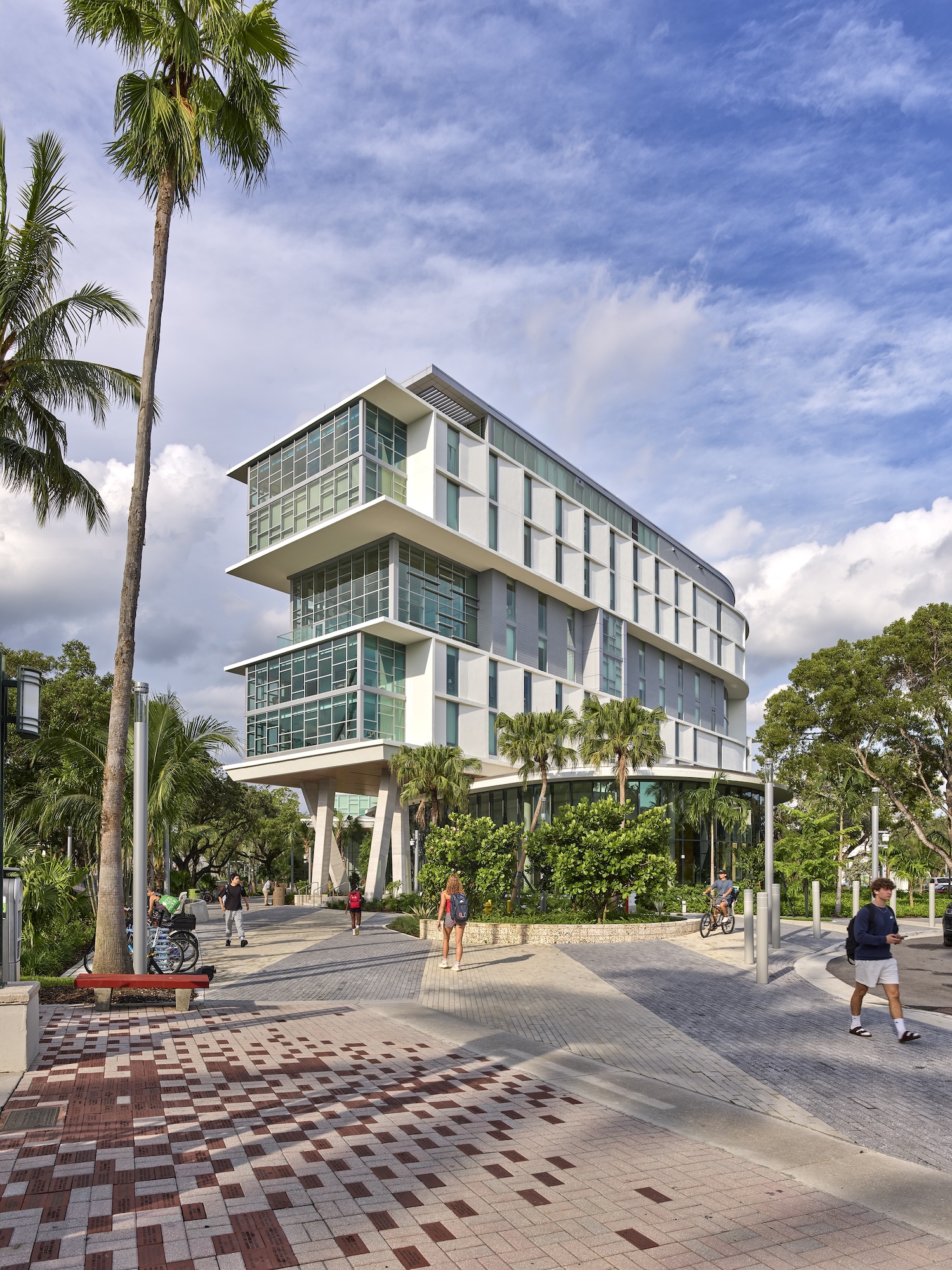
The first phase of Centennial Village at the University of Miami in Coral Gables, Florida, by VMDO Architects.
Architects & Firms
The commons, quad, lawn, or even arboretum—universities often have a central open green space that acts as a catalyst for campus life. Fittingly, and perhaps uniquely, the University of Miami in Coral Gables has Lake Osceola, a manmade inlet of Biscayne Bay, where the occasional crocodile gets adopted as the college’s unofficial temporary mascot. Around this lake are the student center, the music school, the school of architecture, and now, the new Centennial Village, named to mark the 100th anniversary of the university’s founding in 1925. Designed by Charlottesville, Virginia–based firm VMDO Architects, in partnership with local architects Zyscovich Studio (a Stratus company), the first of two phases of this five-building, 2,025-bed residential complex for freshmen opened for the 2024 fall semester. The second phase is expected to be completed in the summer of 2026.

Photo © Alan Karchmer
Like many large American universities, UMiami requires all nonlocal first-year undergraduates to live on campus, a policy that follows a growing body of research, since the 1990s, showing positive outcomes associated with this fostering of a robust on-campus community: for example, students are less likely to drop out; they’re more likely to join extracurricular organizations; and students of color report perceiving the campus to be a more welcoming environment. Beyond accommodating housing needs, Centennial Village was envisioned as a hub for student life. “It’s the keystone,” says VMDO principal Jim Richardson, “it’s probably the beating heart of campus.”
In each dormitory building, which are eight and 10 floors, the first two levels contain public amenities. These include common rooms, coworking areas, a teaching kitchen, and a dining hall that can accommodate up to 600 students. The two public floors are heavily glazed, blurring the line between interiors and the tropical plantings of the gardens and courtyard laced between the towers. The green spaces were designed by O’Shea Wilson Siteworks and include bioswales and on-site stormwater management.
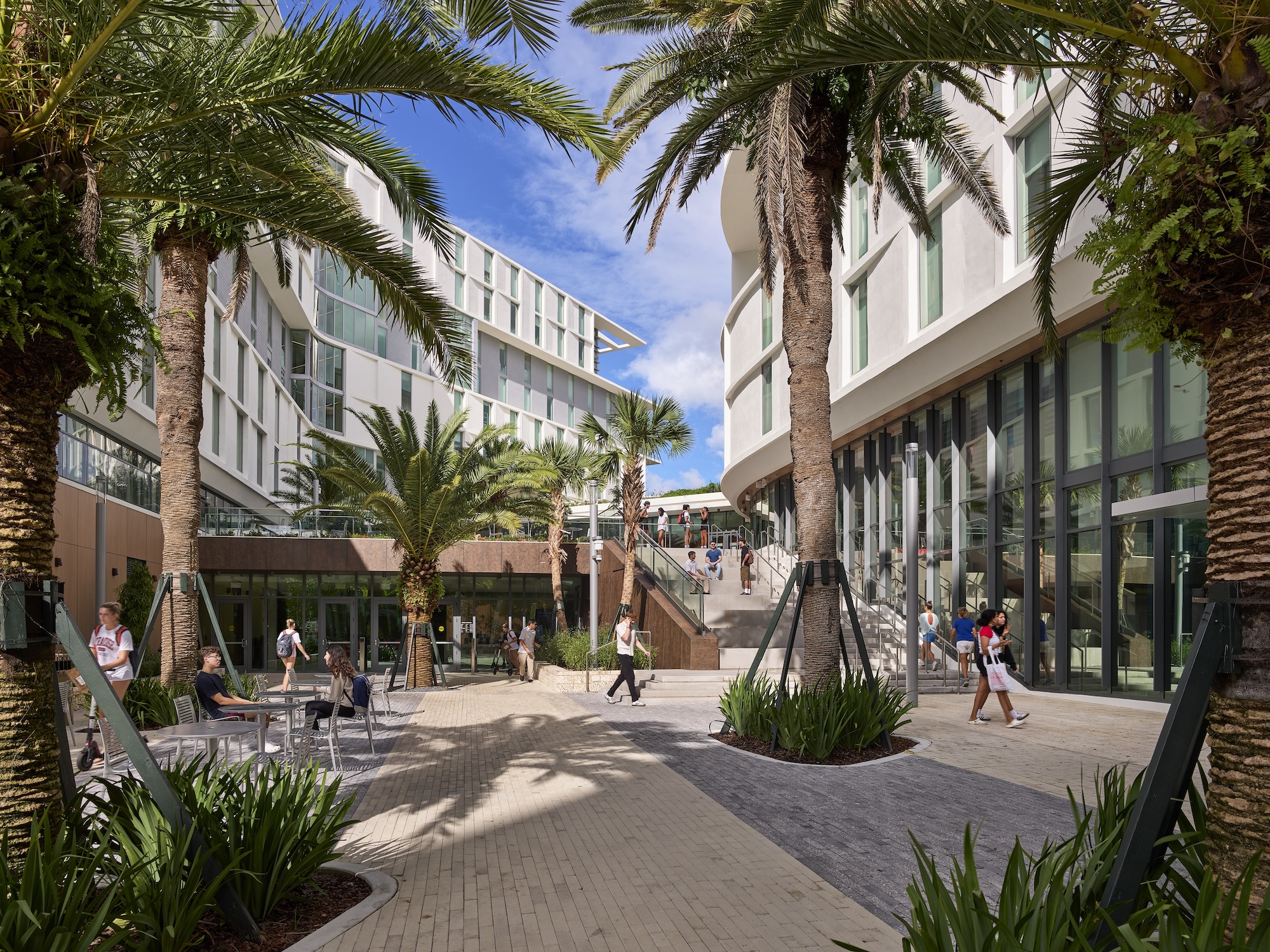
View of the Centennial Village’s outdoor event space. Photo © Alan Karchmer
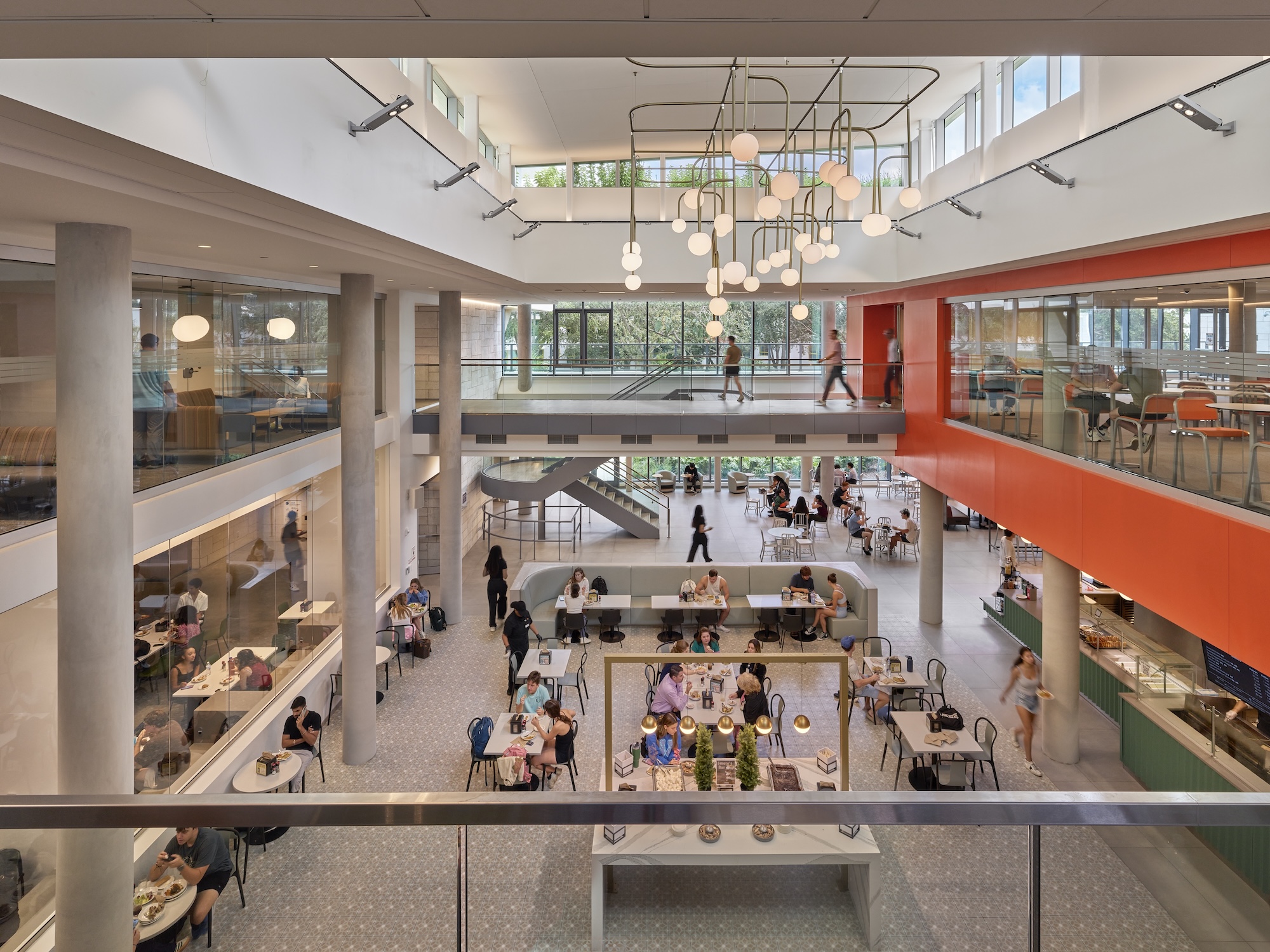
Second-floor view of the double-height dining hall. Photo © Alan Karchmer
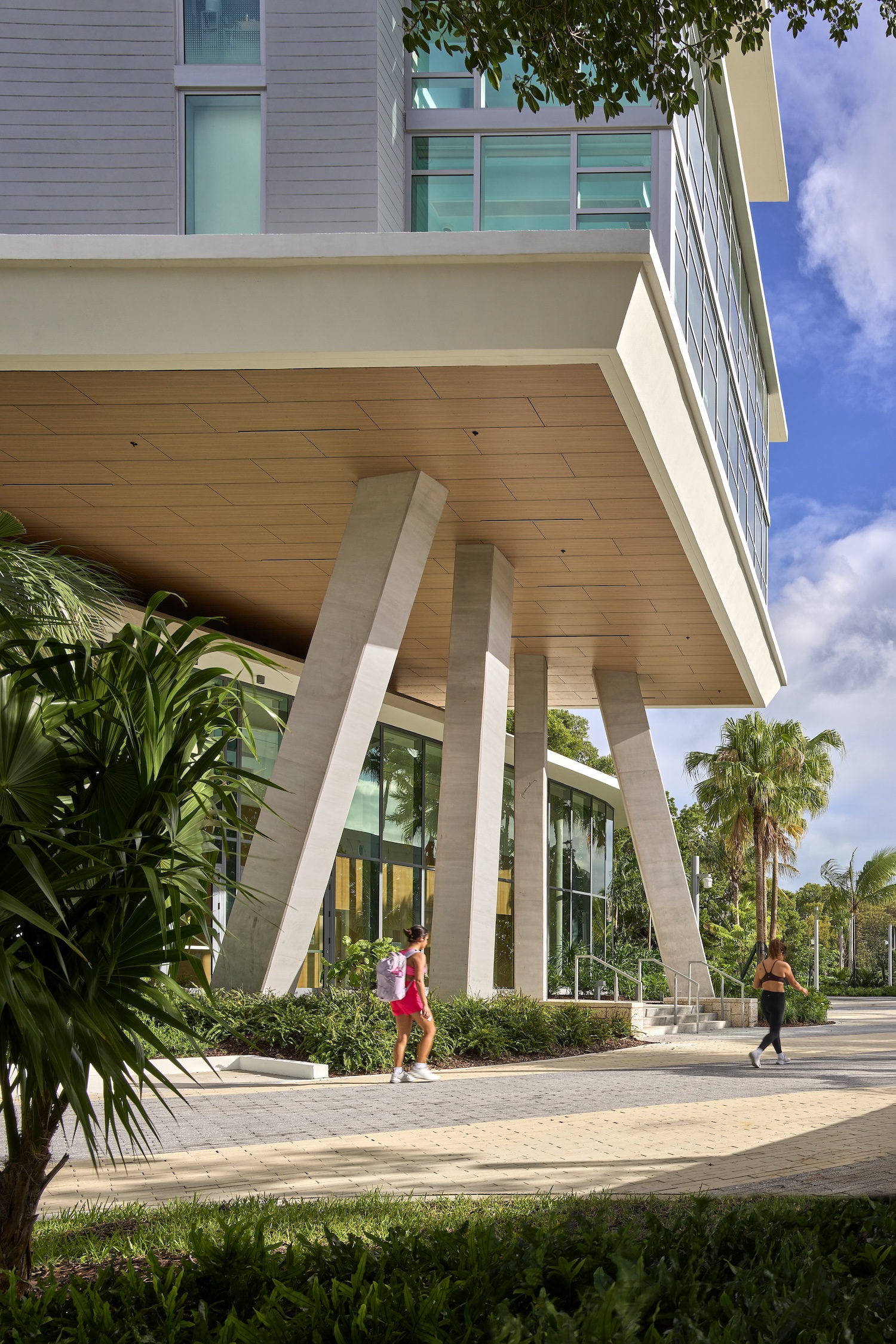
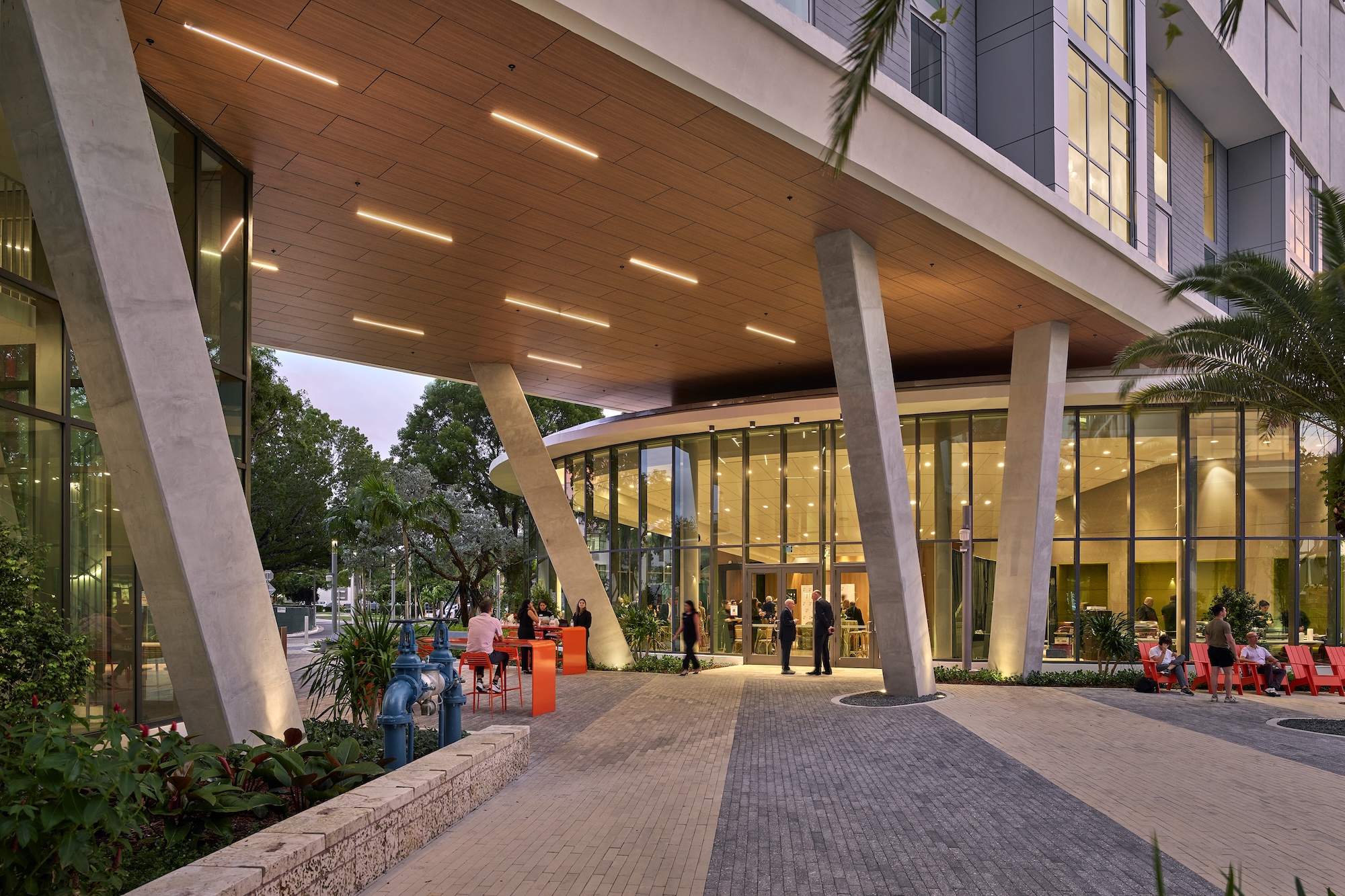
The residences are unconstrained by the footprint of these public facilities below, floating above this datum like the “hull of a ship,” says Richardson. The ends of the tower blocks cantilever past the lower floors, “adding to the drama and emphasizing the line between the public spaces and the student residences.” At these overhangs, and in a passageway cutting under the southernmost tower, exposed-concrete pillars lean and twist up to support the “hulls,” adding drama to otherwise ordinary pilotis.
1
2
The main lobby entrance (1) and a walking path (2). Photos © Alan Karchmer
In South Florida, mitigating heat and humidity is a top priority. The towers are designed to combine passive approaches with a central chilled-beam system running through the dorms’ double-loaded corridors. Each tower creases in plan to both self-shade and to capture the prevailing breezes, which allows for more fresh air than in typical dormitories. Every two floors shift laterally to further self-shade. The architects followed WELL Building Standard, and it would have been the first residence hall in the country to qualify, but the university chose not to pursue formal certification.
With Lake Osceola right outside students’ front doors, hurricanes are a major concern. Currently, the first floor is elevated nearly 12 feet above sea level. The second floors, which house some of the buildings’ mechanical systems, are held above the projected future maximum storm surge during high tide: a horrifying 25 feet above current sea level. Let’s hope these floating “ships’ hulls” remain metaphorical. But the architects have planned for the worst, ensuring that Centennial Village will be an essential part of UMiami students’ freshman experience for the next 100 years.
Dining courtyard view. Photo © Alan Karchmer
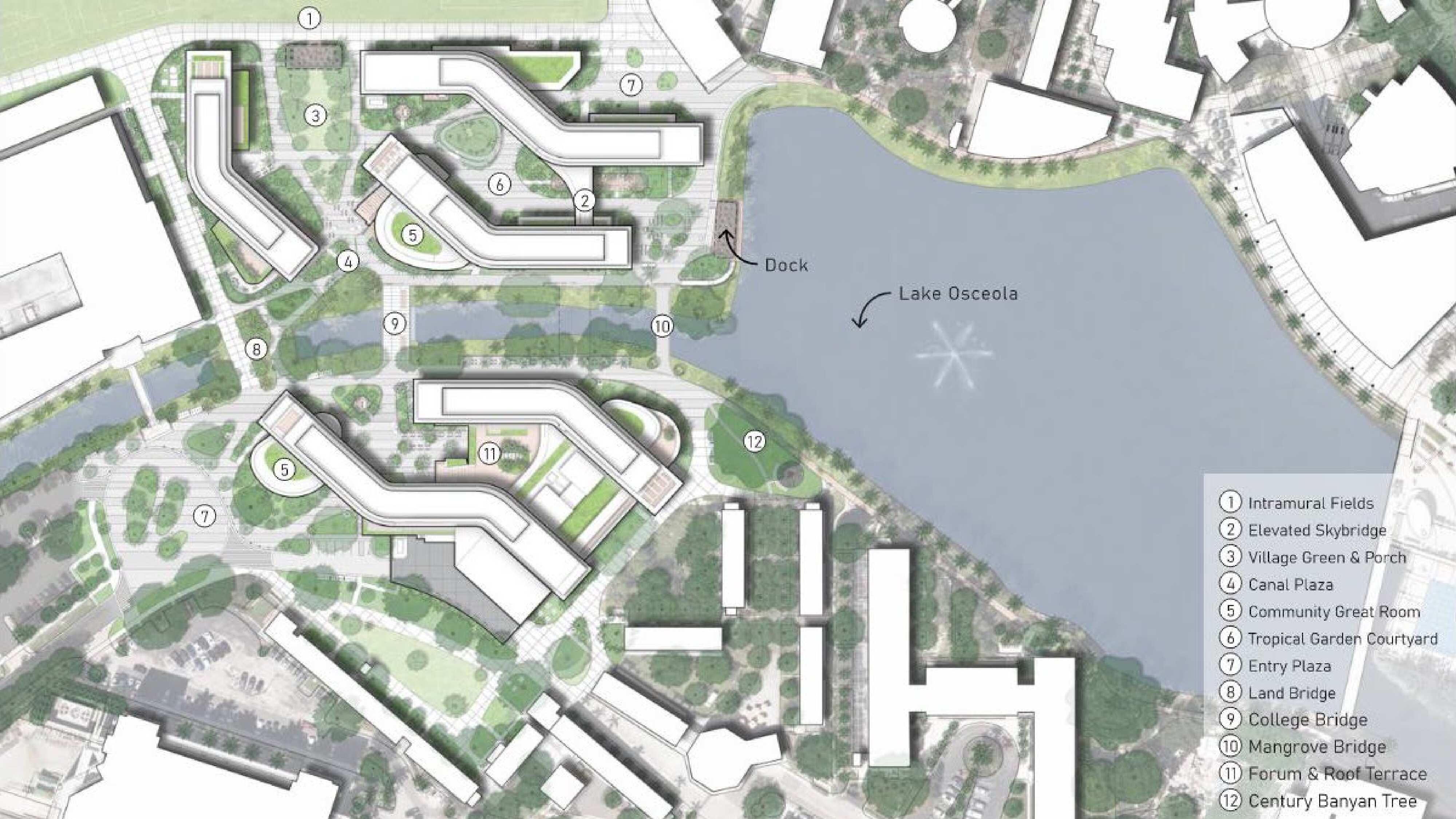
Image courtesy VMDO Architects, click to enlarge
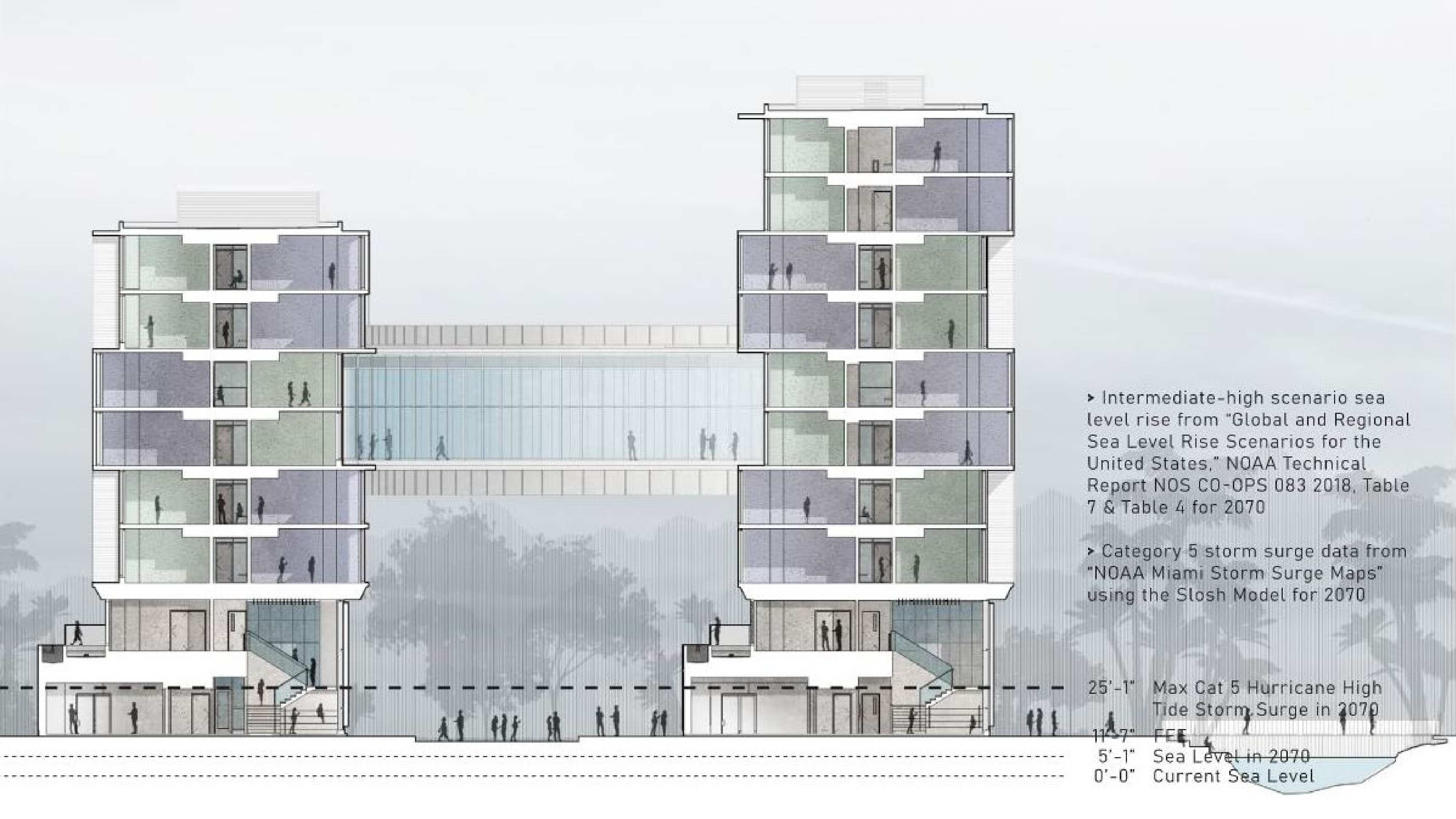
Image courtesy VMDO Architects
Looking for quick answers on architecture and design topics?
Try Ask RECORD, our new smart AI search tool.
Ask RECORD →
Looking for a reprint of this article?
From high-res PDFs to custom plaques, order your copy today!