A Public Research Institute at the University of Arkansas Continues the School’s Pioneering Embrace of Mass Timber

At the Institute for Integrative & Innovative Research at the University of Arkansas, by HGA and Hufft, a cross-laminated-timber roof seems to hover above enclosed collaboration areas.
Architects & Firms
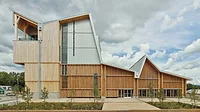
A steel-framed laboratory bar “hugged” by a mass-timber pavilion is the way Meredith Hayes Gordon, science + technology market sector leader at national architecture firm HGA, describes the parti for the Institute for Integrative & Innovative Research (I3R) at the University of Arkansas in Fayetteville. Opened early this year, the 144,000-square-foot, three-story I3R, designed by HGA with local studio Hufft as architect of record, combines the two structural systems, allowing for a daylight-filled timber entry atrium while creating a highly adaptable wing suitable for rapidly evolving cross-disciplinary research.
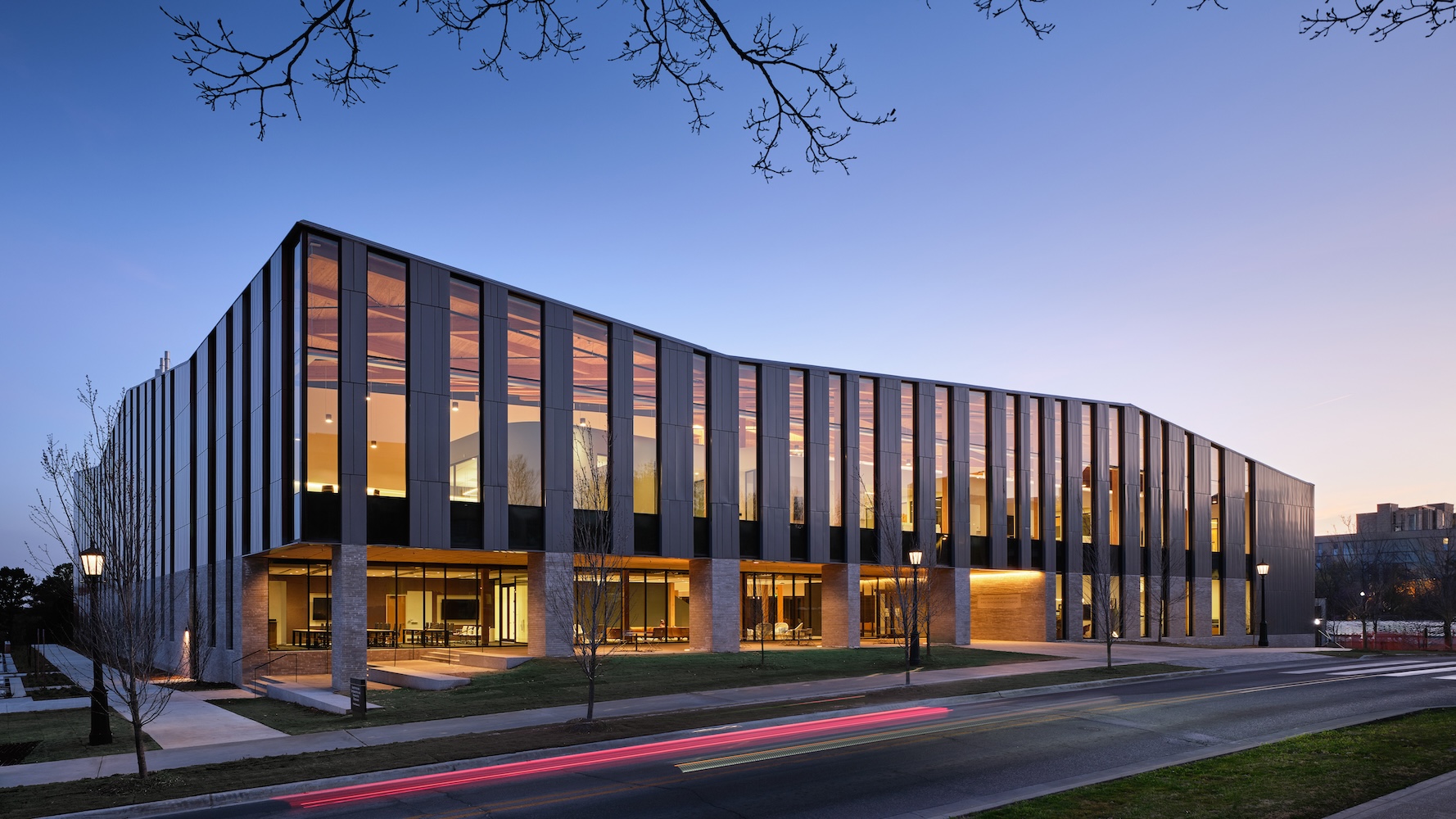
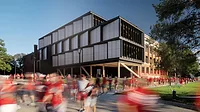
The brick- and metal panel-clad I3R sits on busy Dickinson Street. Photo © Michael Robinson
Just across from the manicured lawn of the university’s historic Old Main building, I3R sits on a steeply sloping site now partially planted, in a design by landscape architect Ground Control, with tall grasses to resemble an oak savanna. Clad in buff-colored brick and gray metal panels, I3R was conceived to advance scientific excellence and economic development in the Northwest Arkansas region and statewide. Made possible through a $194.7 million grant from the Walton Family Charitable Support Foundation, the building has been programmed around broad topic areas, including materials science, integrative systems neuroscience, bioengineering research in metabolism, and food technology. At I3R, researchers are creating devices that will better enable amputees to control their prosthetics, developing robotic-assisted surgical technologies, and studying vertical farming methods. The facility includes such equipment as a calorimeter, an MRI, a maker space, and a visualization lab intended to be shared by the university and industry partners.
.jpg)
1
.jpg)
2
Seemingly randomly placed skylights emulate the way sunlight shines through foliage (1); offices and group workspaces ring the 50-foot-tall atrium (2). Photos © Michael Robinson
Wood was part of the conversations about the project from the very beginning, according to the architects. The design team explored framing the entire building in mass timber, but soon discovered that the approach was impractical, in part due to the vibration-sensitive equipment the research wing would house. The required density of mass timber would have made the global warming potential of wood laboratories greater than that for steel, explains Hayes Gordon.
Timber is, however, on full display in the public-facing part of I3R: the double-story entry atrium, whose form was inspired by a forest. Its cross-laminated timber roof, supported on glue-laminated timber columns and beams (all of southern yellow pine from Alabama), appears to hover above the offices and collaboration rooms that ring the 50-foot-tall volume, much in the same way a tree canopy floats above the forest floor. Seemingly randomly placed skylights reinforce the metaphor, emulating the way sunlight shines through foliage.
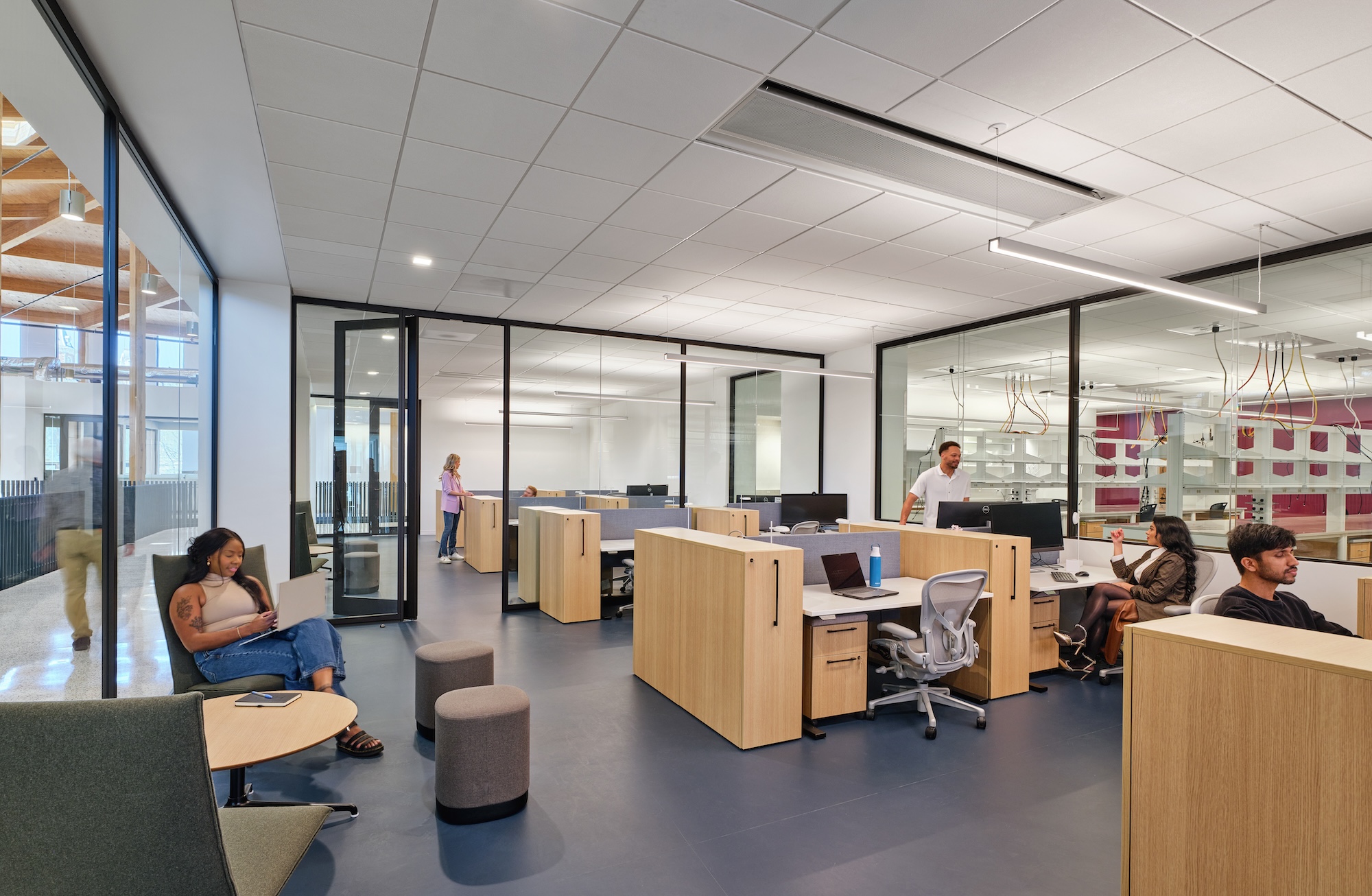
Photo © Michael Robinson
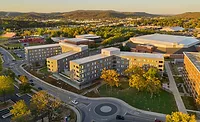
With the completion of I3R and the August opening of Grafton Architects’ Anthony Timberlands Center, the University of Arkansas now has a remarkable number of buildings entirely—or with significant portions—constructed of mass timber on its campus. I3R and the Timberlands project follow two other mass-timber structures: a library-storage annex and a 700-bed dormitory, completed in 2018 and 2019, respectively.
Looking for quick answers on architecture and design topics?
Try Ask RECORD, our new smart AI search tool.
Ask RECORD →
Looking for a reprint of this article?
From high-res PDFs to custom plaques, order your copy today!