Renovation, Restoration & Adaptive Reuse: 2026
WHY Converts a Bangkok Warehouse Into an Art Museum
February 2, 2026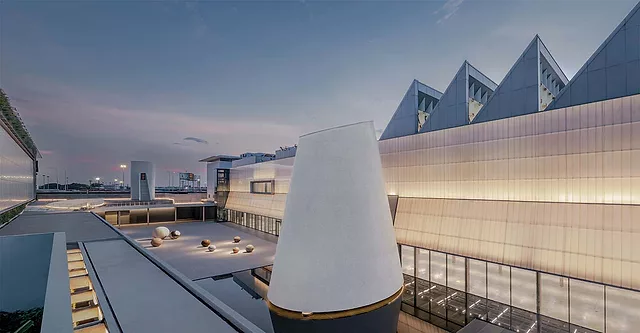
Renovation, Restoration & Adaptive Reuse: 2026
WHY Converts a Bangkok Warehouse Into an Art Museum
February 2, 2026Dib Bangkok.

“We inherited not just a collection but a dream,” declared director Purat Osathanugrah at the opening of Dib Bangkok, Thailand’s brand-new contemporary-art museum. Put together by his late father, the larger-than-life billionaire businessman and onetime pop singer Petch Osathanugrah, the world-class collection includes work by superstars such as Louise Bourgeois, Rebecca Horn, Anselm Kiefer, James Turrell, and Hiroshi Sugimoto, as well as impressive holdings by outstanding Thai artists like Somboon Hormtientong and Montien Boonma. As for the dream, it was to build a gallery worthy of these riches, a tortuous process that took almost 40 years.
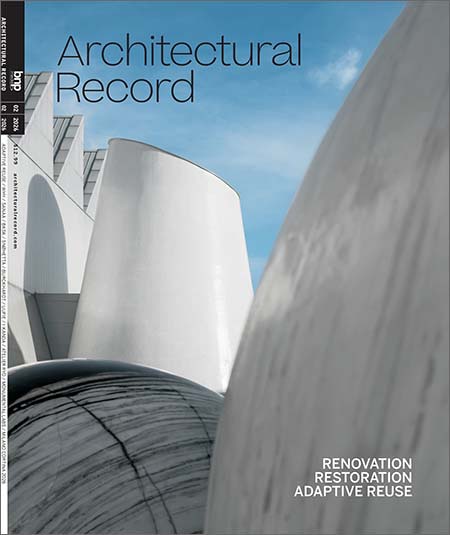
Image © Architectural Record
“I’d been hearing about this project since I was in college,” recalls 58-year-old Bangkok-born Kulapat Yantrasast, principal of U.S. office WHY Architecture. “There were rumors about Petch working with Rem Koolhaas and all sorts of other people.” Among those the collector approached were French architect François Roche, who produced two projects for different sites, and the Tokyo office SANAA, which spent two years developing a design for the Osathanugrah family compound. After dropping that scheme just as construction was due to begin, the mercurial billionaire reached out to WHY in 2019. Given the bumpy inception history, the collection’s importance in a country where contemporary art is still an emerging phenomenon, and the fact that this was his first big project in his hometown, Yantrasast was under enormous pressure to get it right.
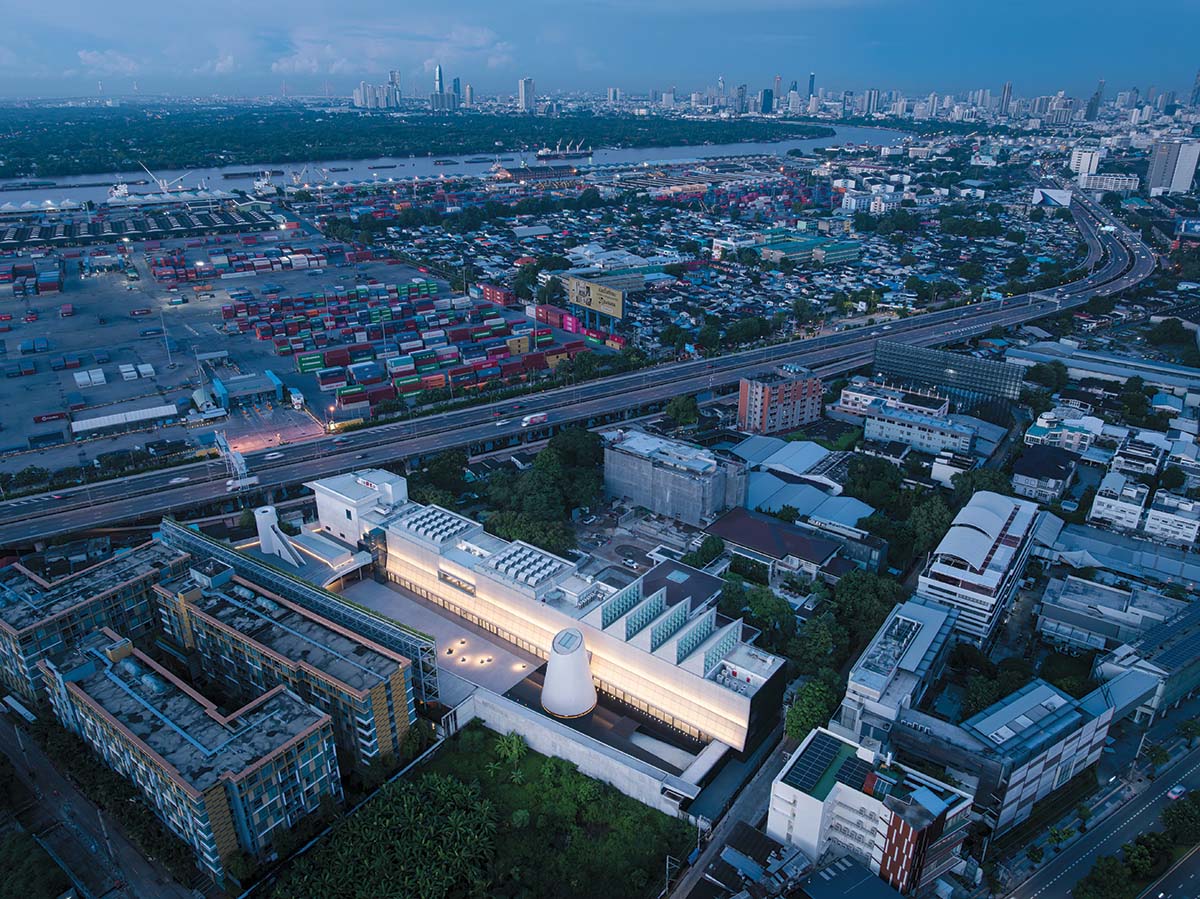
Located in an eastern, mainly residential neighborhood near the port, the site Osathanugrah eventually settled on is a short drive from the family compound, where Dib’s collection is stored, and within walking distance of the original location of Bangkok University, a private institution founded by Petch’s father, Surat, in 1962. Since most of the university has now moved out to a suburban campus, “there’s the possibility of redeveloping the old site as an arts hub and creating an ecosystem,” explains Yantrasast. With its narrow access streets and encroaching neighbors—an eight-story condominium to the east, and a six-lane elevated freeway to the south—the long rectangular plot might not seem the most auspicious place to locate a world-class museum. Moreover, WHY was tasked with repurposing the existing structure, a 1980s concrete warehouse running down the western side of the site, next to a parking lot. “There was nothing special about it,” says Yantrasast of the simple three-story structure, which WHY stripped down to its carcass for the transformation.
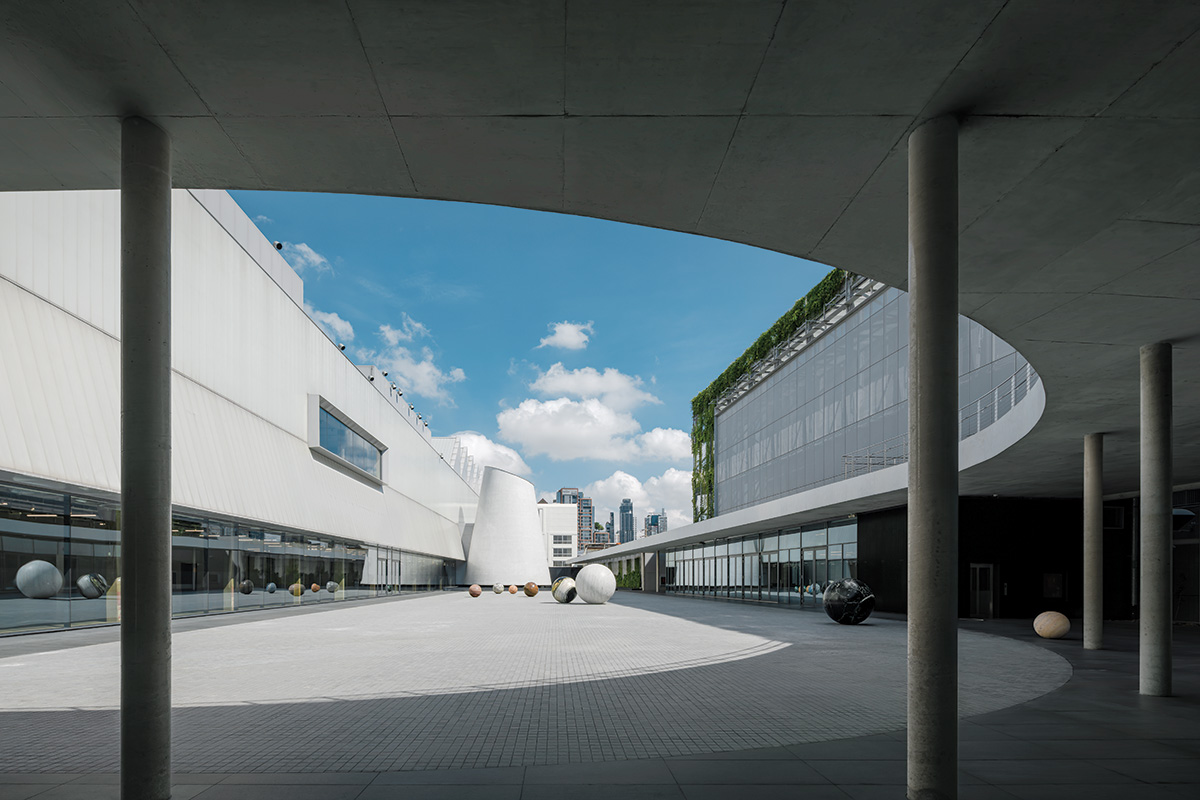
“I’m very focused on how museums survive,” Yantrasast continues. “It’s not just about looking passively at static art—it’s about music, performances, fashion. Events are where the money is, the museum as playground rather than temple.” With this in mind, and aided by Bangkok’s tropical climate, he created a giant events courtyard at the museum’s heart, where visitors arrive after negotiating the public entrance at the site’s northern end. As in a private compound, the street access comprises a barricade, of black metal, with a guardhouse at its center. Left open during events and museum hours, the automobile part of the entrance allows a glimpse of what’s to come: the giant truncated cone of the steel-framed “art chapel,” rising in front of the former warehouse, and a long reflecting pool, beneath which cars descend to the underground parking garage. Semi-air-conditioned, this cavernous 13-foot-high space hosts not only vehicles but also concerts, disco-style events, and other noisy affairs, in addition to acting as a reservoir in case of floods.
1
Museumgoers can escape Dib Bangkok’s frenetic surroundings, including a port (1), when they enter its art-filled courtyard (2). Photos © W Workspace, click to enlarge.
2
Once through the barricade’s pedestrian gate, visitors process alongside the soothing stillness of the pool, on a covered walkway that deposits them at Dib’s restaurant, halfway down the site’s eastern flank. Like the temporary-exhibition gallery at the rear, the restaurant is housed in a freestanding structure, a way of circumnavigating local construction code, which stipulates that publicly accessible buildings on this site cannot exceed 108,000 square feet (in total, Dib cumulates 131,785 square feet). Binding these two structures into the whole, a concrete roof terrace, engineered to carry heavy artworks, runs all the way around to the main building, and is accessed from the courtyard’s southeast corner via a monumental stairway, which also spirals down to the garage. Silhouetted against the horizon, James Turrell’s Straight Up occupies a prominent spot on the roof terrace; with its tower form and steep stairs, this sky observatory appears like a nod to the prangs of traditional Thai temples. Rising along the site’s eastern flank, and visible from the freeway, a giant steel palisade hides the condominium next door. Ten feet deep and filled with planters containing tropical vines, it is “engineered so you can hang a tank on it,” comments project architect Brian Butterfield. For the opening, in an ideal demonstration of its billboard capacities, it carried blowups of Japanese artist Sho Shibuya’s popular Sunrise from a Small Window series.
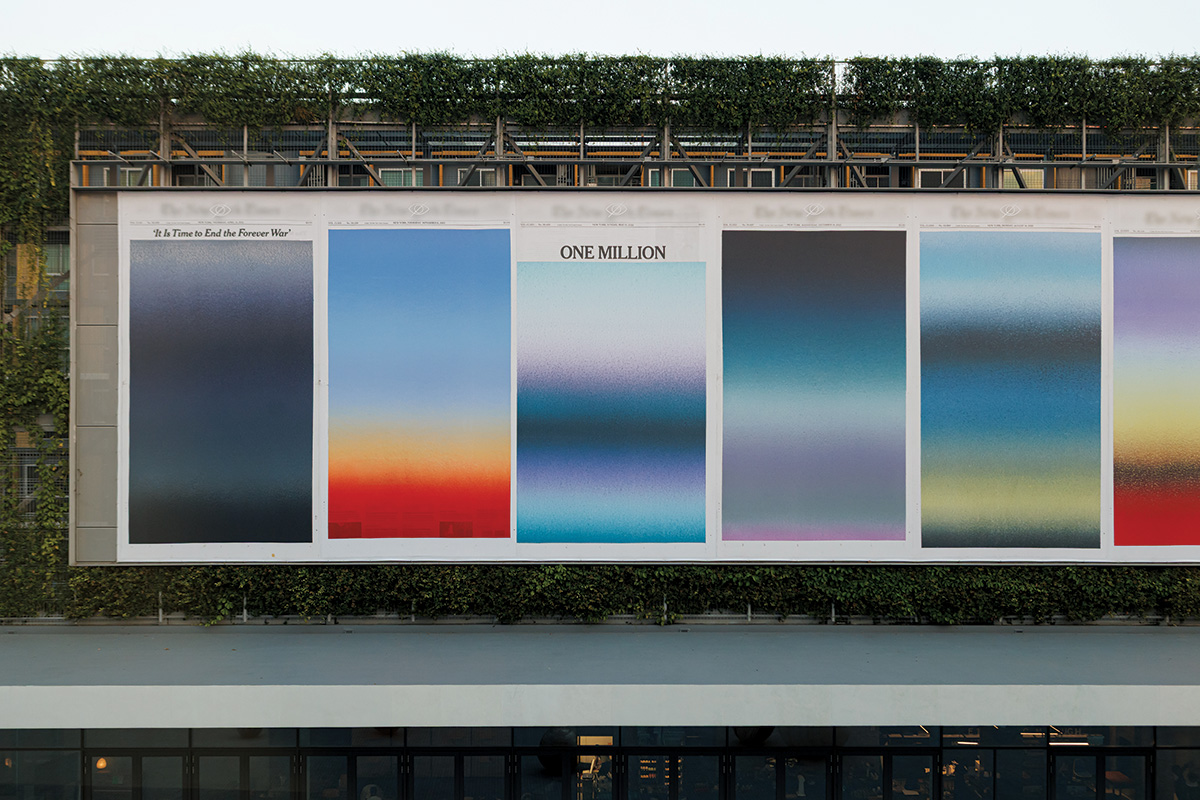
A scrim displays art like a billboard. Photo © Wikran Poungput
Located at the site’s southern end, the museum’s service entrance and back-of-house facilities include a new four-story raw-concrete block at the southwest corner; the director hopes to turn its upper level into a fine-dining venue. The block connects directly to the former warehouse, whose industrial past Yantrasast chose to acknowledge by cladding it in inexpensive polycarbonate, to “add a bit of edge,” he explains, “as well as some spectacle,” since the translucent panels light up from behind at night. Reflected in the quiet waters of the pool, the monumental, rather Platonic form of the art chapel—clad in ceramic tesserae that Petch suggested as a reference to the broken porcelain adorning religious sites like Wat Pho—serves to anchor the gaze in a space that, despite Yantrasast’s emphasis on fun, appears equal parts temple and playground. “Bangkok is such a harsh, dense, congested city. When people come to Dib, I want them to slow down and feel a sense of sanctuary,” he says of the giant outdoor room formed by the courtyard.
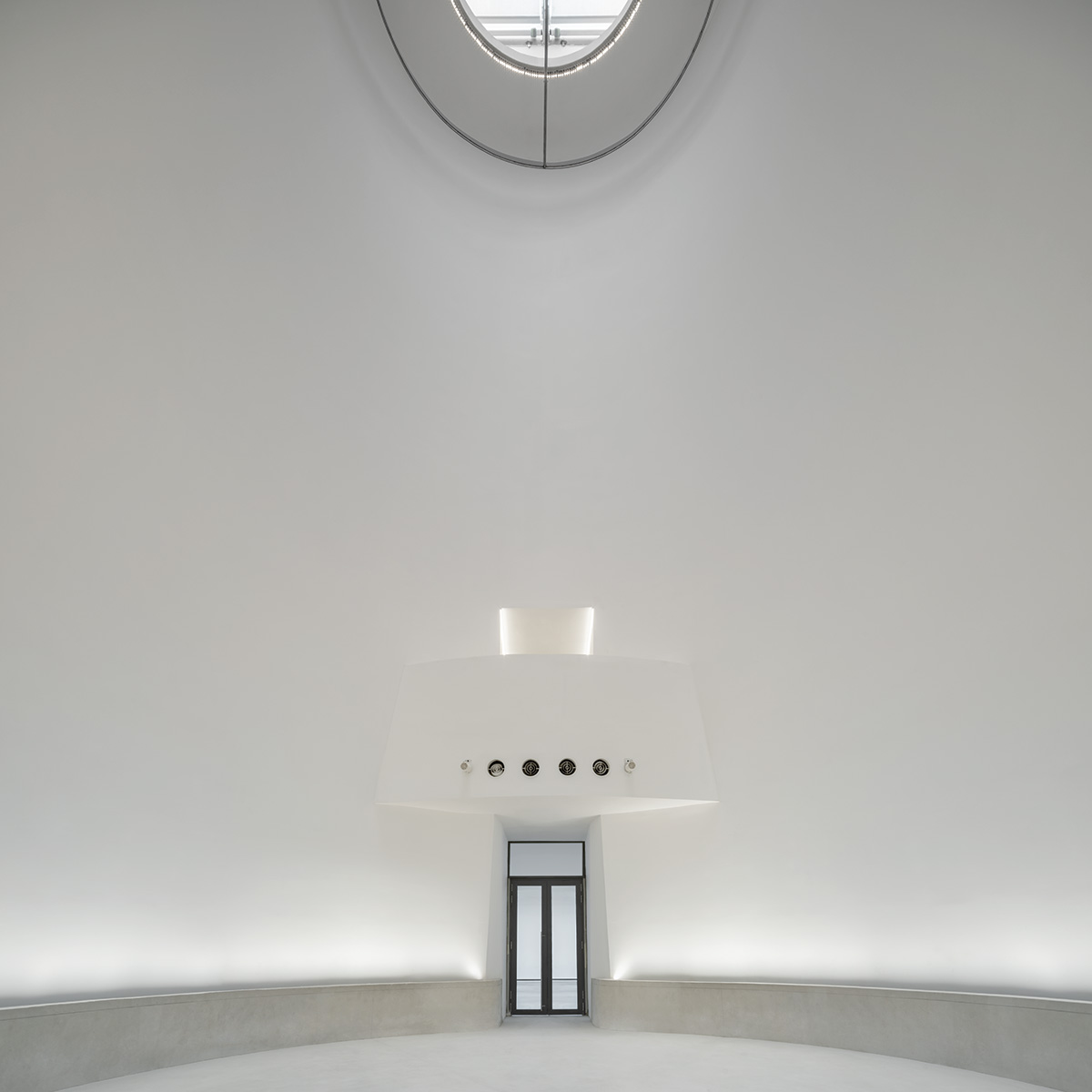
3
The chapel’s geometry (3) echoes that of the rooftop cylinder housing a Turrell (4). Photos © W Workspace
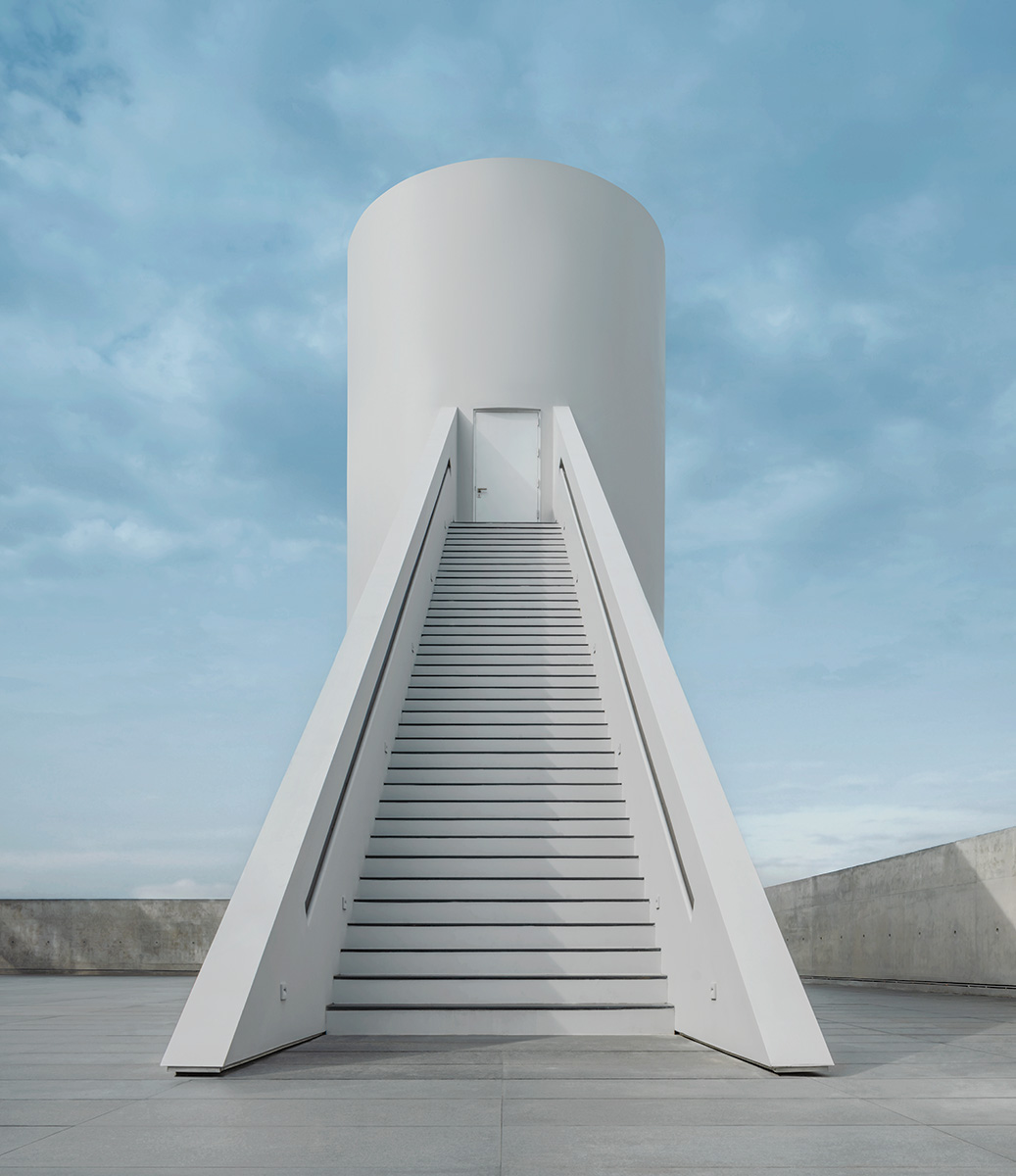
4
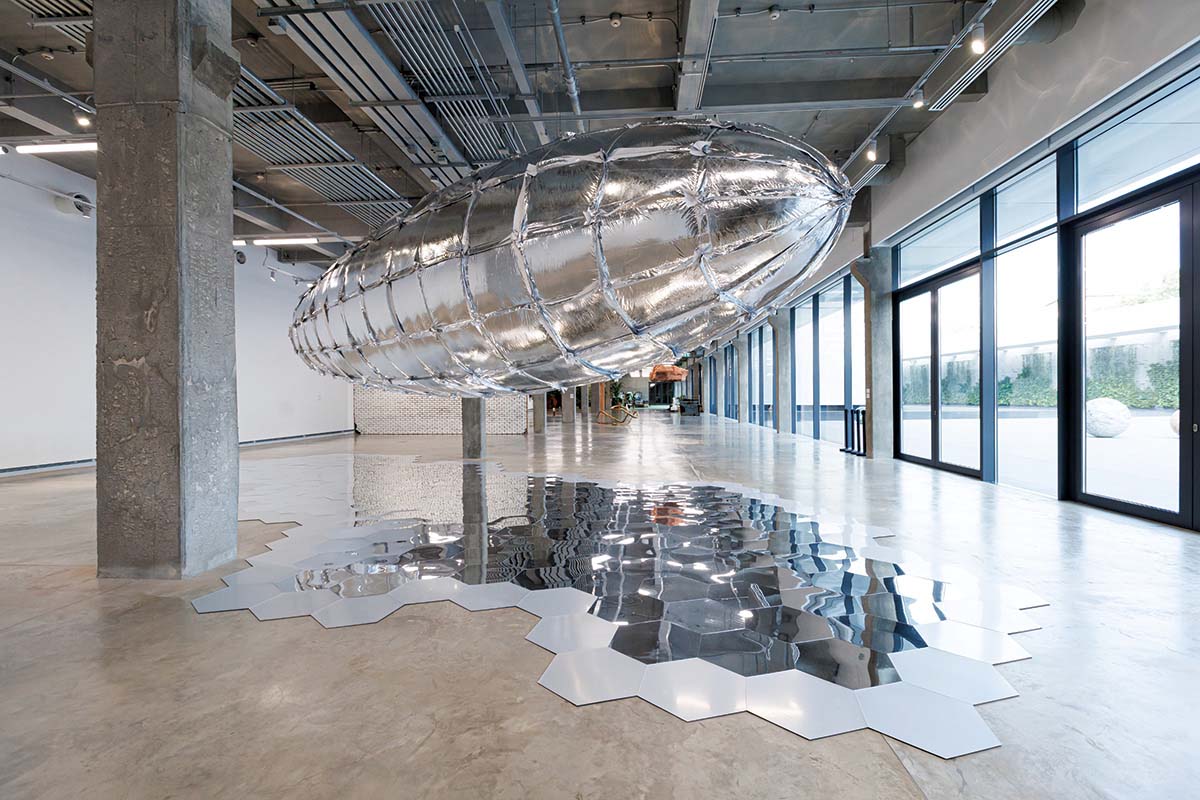
Inside the former warehouse, each floor offers a different type of museum experience. At ground level, a 262-foot-long glass-fronted gallery serves sculpture and installation art well; on the second floor, darker, more intimate rooms offer spaces for quiet contemplation, while on the final floor, thanks to WHY’s new roof, a series of soaring top-lit galleries allow for grand gestures, especially the northernmost, with its factorylike saw-tooth covering. Then there are the “events” that punctuate the visitor circuit: Turrell’s tower, the single-volume windowless box of the temporary-exhibition gallery, the immaculate whiteness of the art chapel, and a double-height clerestory-lit space carved out of levels two and three. A mix of the rough and the polished (dib is a Thai word that translates as “raw”), the finishes provide a semi-industrial backdrop that never distracts from the art.
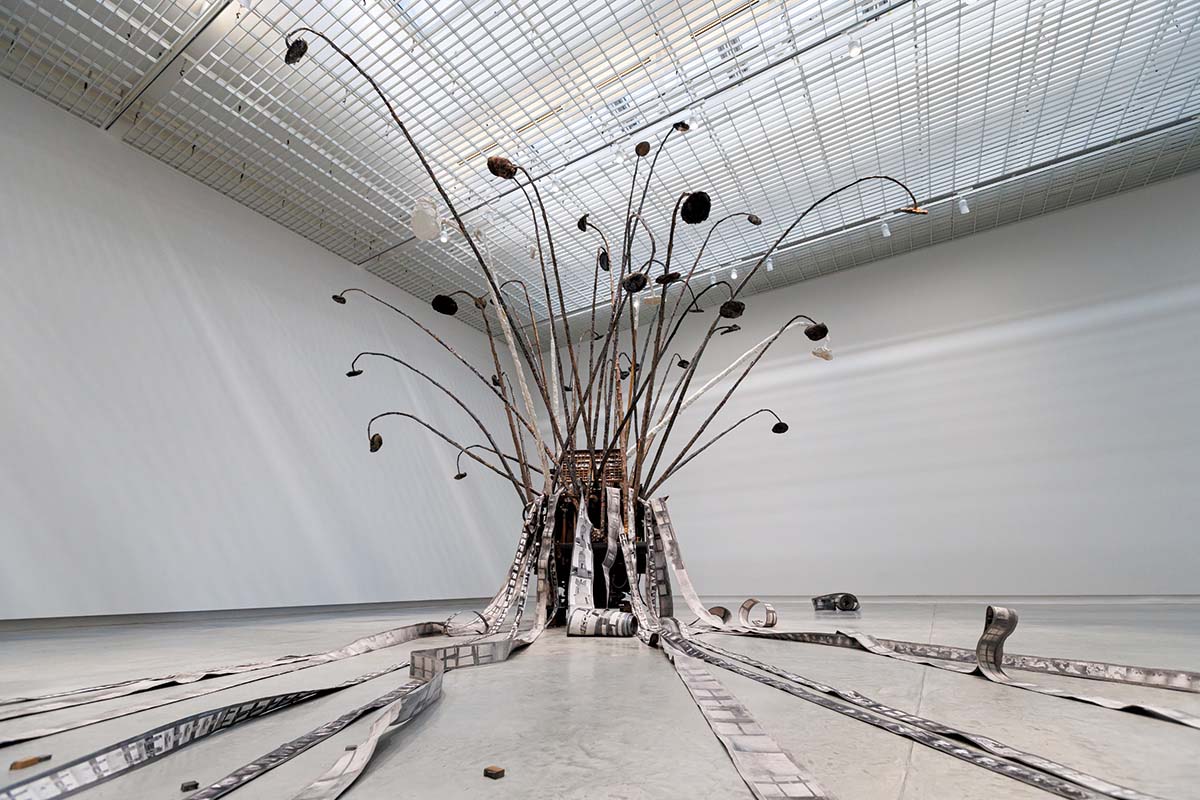
5
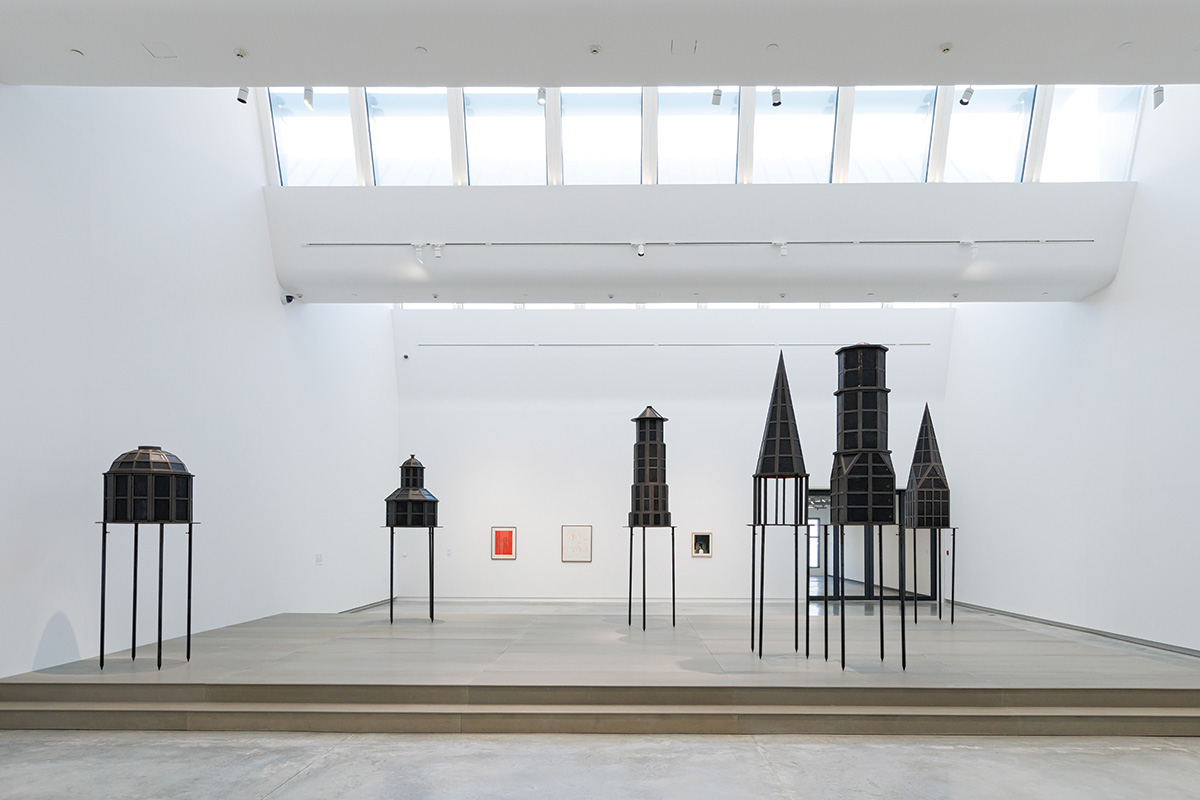
6
Daylight floods many of the galleries via skylights (5 & 6) or windows (7). Photos © Auntika Ounjittichai (5 & 7), Monruedee Jansuttipan (6)
7
Greeting visitors in the courtyard, a bench by artist Finnegan Shannon bears the words “IT WAS HARD TO GET HERE,” painted in white capital letters. Perhaps a nod to Bangkok’s traffic jams, this tongue-in-cheek installation might also reference Osathanugrah’s long quest to find his architect, or even the design process that produced the current building. Though Dib appears as the obvious answer to the problems posed, its simplicity is deceptive. It is the result of pruning all sorts of wild ideas on Petch’s part, from construction cranes carrying giant ficus trees to jungle-planted hills rolling over the restaurant and temporary-exhibition gallery. Restrained by economics and the realities of the Thai construction industry, the final iteration strikes just the right balance between the playful and the spiritual, the relaxed and the serious. Osathanugrah, who died unexpectedly in 2023, never got to see it, but, judging by the opening-night crowd, his legacy is poised to become a regional reference point, attracting visitors from India and Singapore to China and Japan.
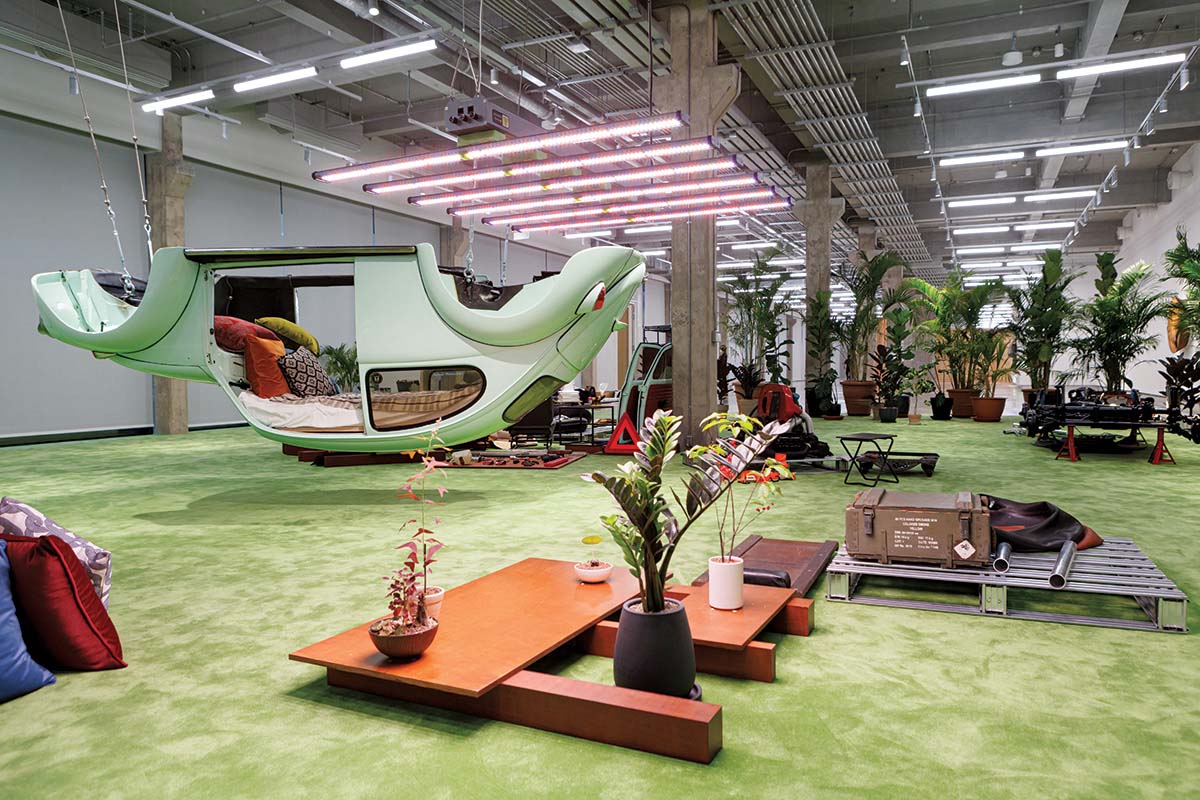
Artificial lighting exaggerates the spaces’ linearity. Photo © Watcharapong Sermwichitchai
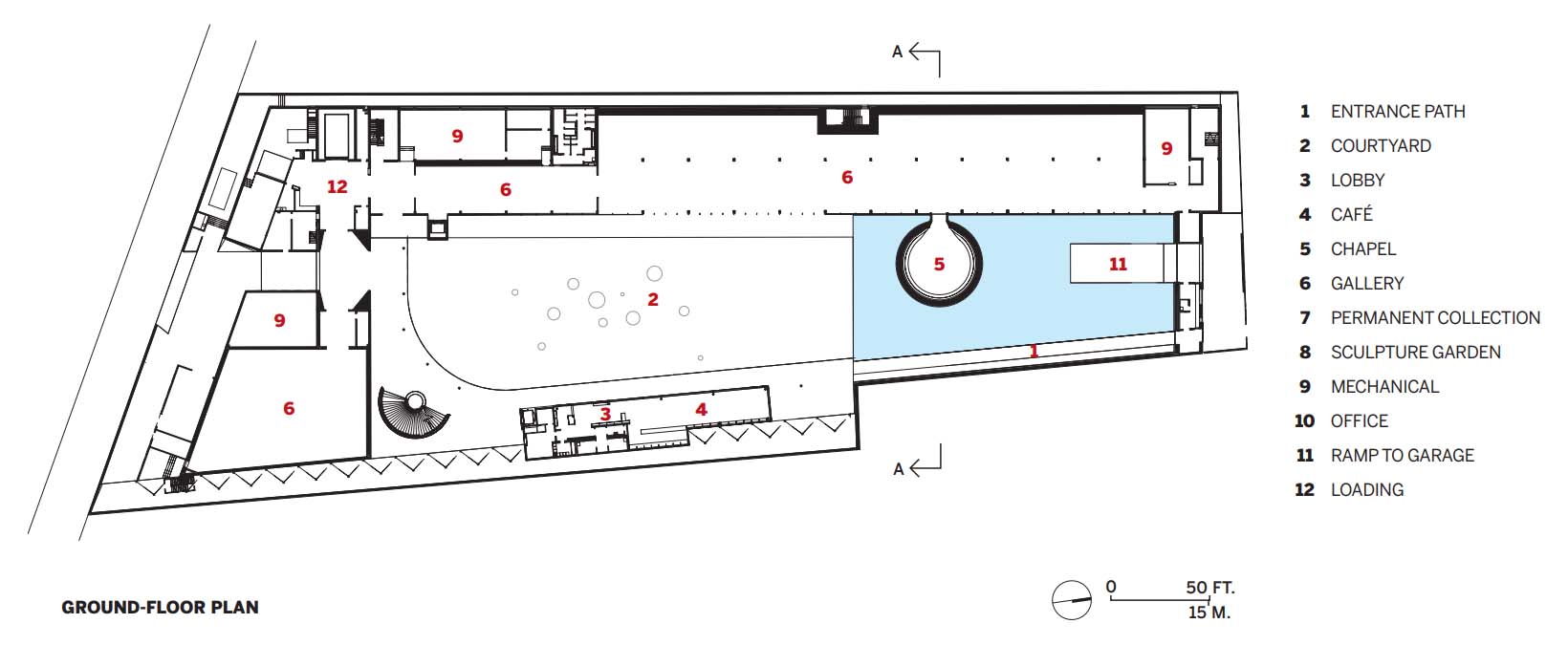
Image courtesy WHY Architecture
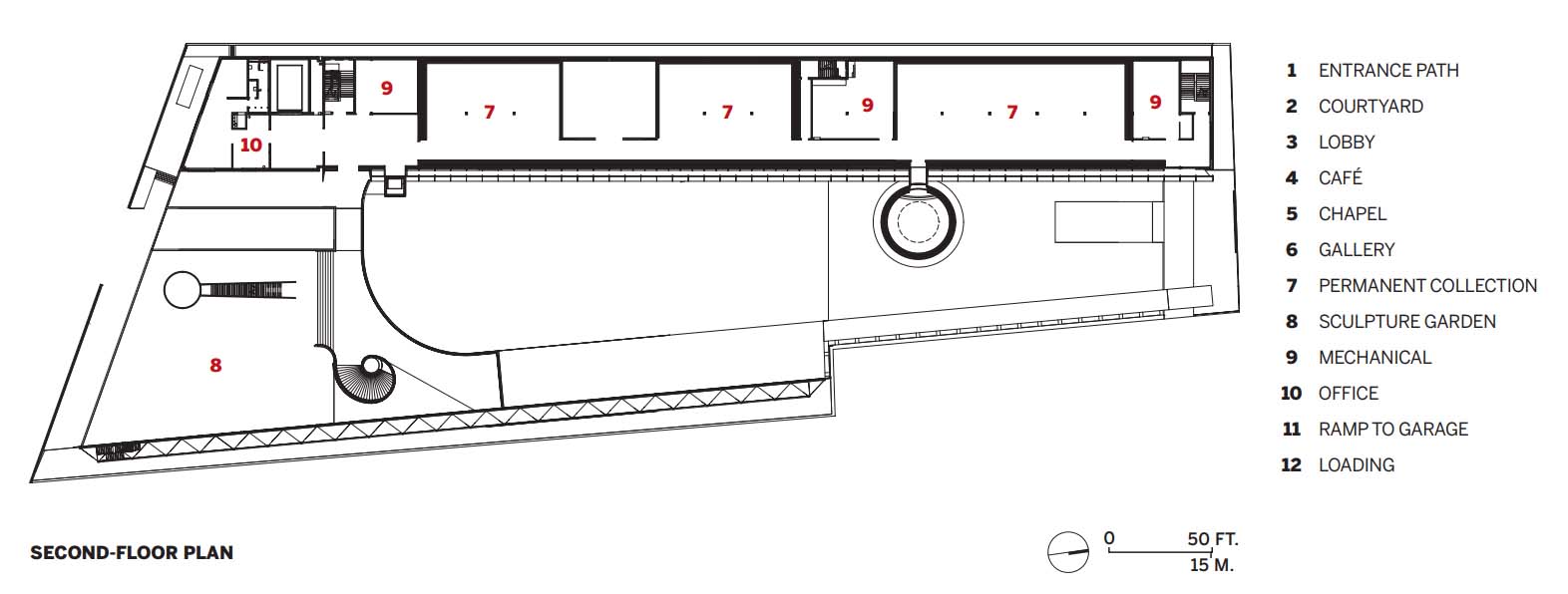
Image courtesy WHY Architecture
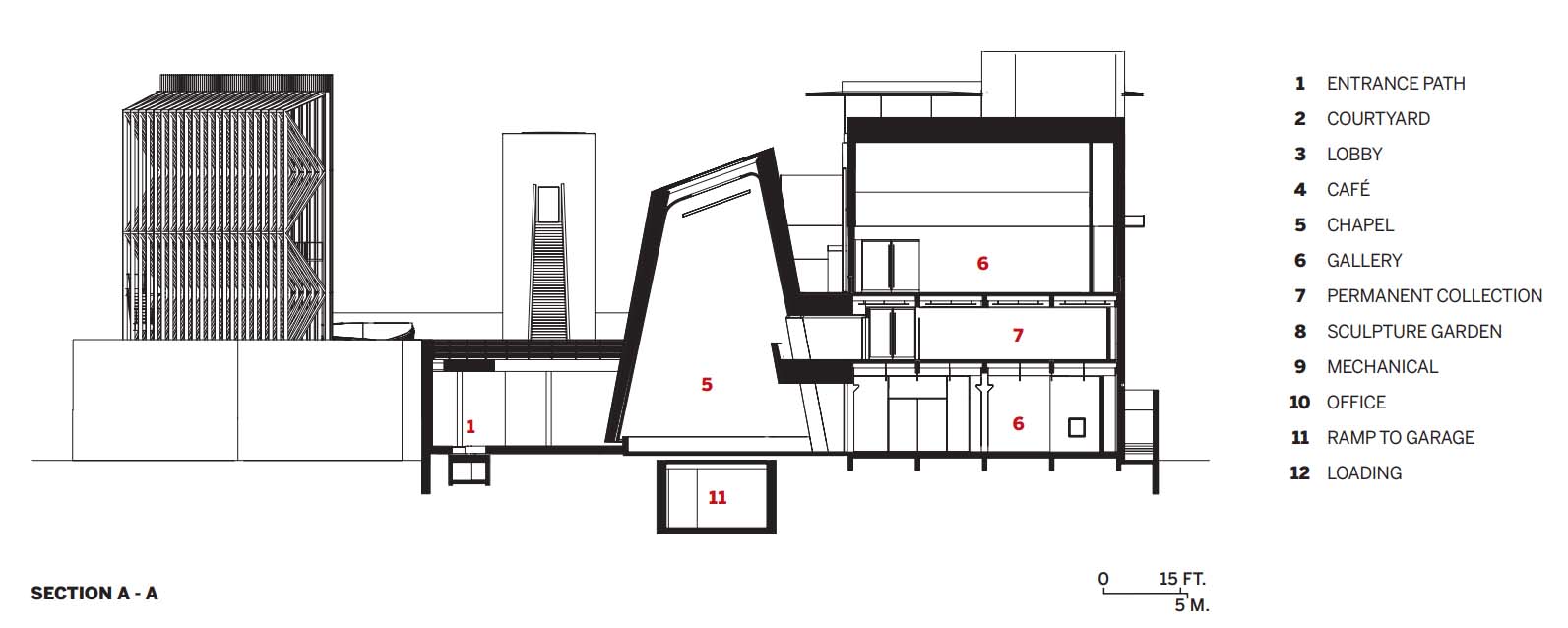
Image courtesy WHY Architecture
Credits
Architect:
WHY Architecture — Kulapat Yantrasast, Brian Butterfield, Mark Thomann
Architect of Record:
Architects 49
Engineers:
Arup, Ampersand Ace (MEP, structural)
Consultants:
Wilding X WHY, Chon Supawongse (landscape); Arup, APLD (lighting); CM49 (construction management)
General Contractor:
Powerline Engineering
Client:
Dib Bangkok
Size:
132,000 square feet (71,000 existing)
Cost:
Withheld
Completion:
December 2025
Looking for a reprint of this article?
From high-res PDFs to custom plaques, order your copy today!
Looking for quick answers on architecture and design topics?
Try Ask RECORD, our new smart AI search tool.
Ask RECORD →