A Former Big-Box Store in Colorado is Converted into a Pickleball Haven

Swan Dive Design Studio transformed a vacant Sam's Club in Louisville, Colorado, into a center for leisure.
Architects & Firms
There are two formidable trends shaping the nation: the decades-long decline of brick-and-mortar retail, and the meteoric rise of the leisure activity pickleball. Both phenomena converge at Relish Food Halls & Pickleball, a food court and sports facility in Louisville, Colorado, housed within a former Sam’s Club that closed its doors over a decade ago.
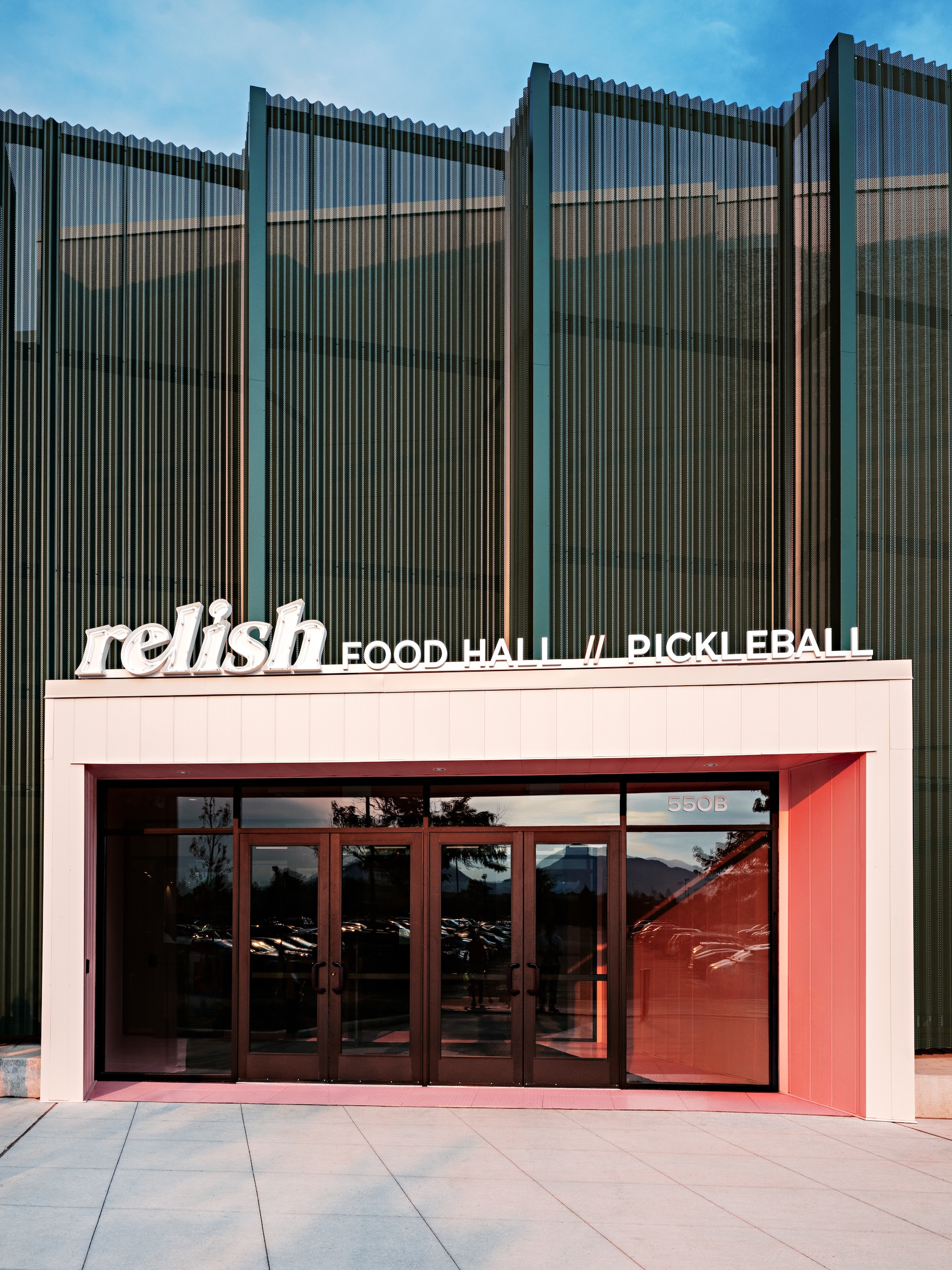
Relish's entrances are demarcated by perforated aluminum panels, arranged in a sawtooth pattern. Photo © Fernando Gomes
The 88,000-square-foot venue opened in June 2025, and its conversion was managed by an interdisciplinary design team led by Denver-based interior architecture firm, Swan Dive Design Studio, in collaboration with architecture studio Engine 8 and landscape architecture practice Dig Studio.
The client began to engage Swan Dive for the project in 2021, but, that same year, the catastrophic Marshall Fire tore through Louisville, and surrounding Boulder County. Destroying more than 1,000 structures, it remains the most destructive in Colorado history. During that time, the vacant wholesale club became a command center for fire response teams; it also acted as an informal community center for locals seeking information and camaraderie. According to Aleksandra Kaplan, co-founder of Swan Dive, it was important to the client for the space to continue to function as a community anchor, albeit with a revamped program.
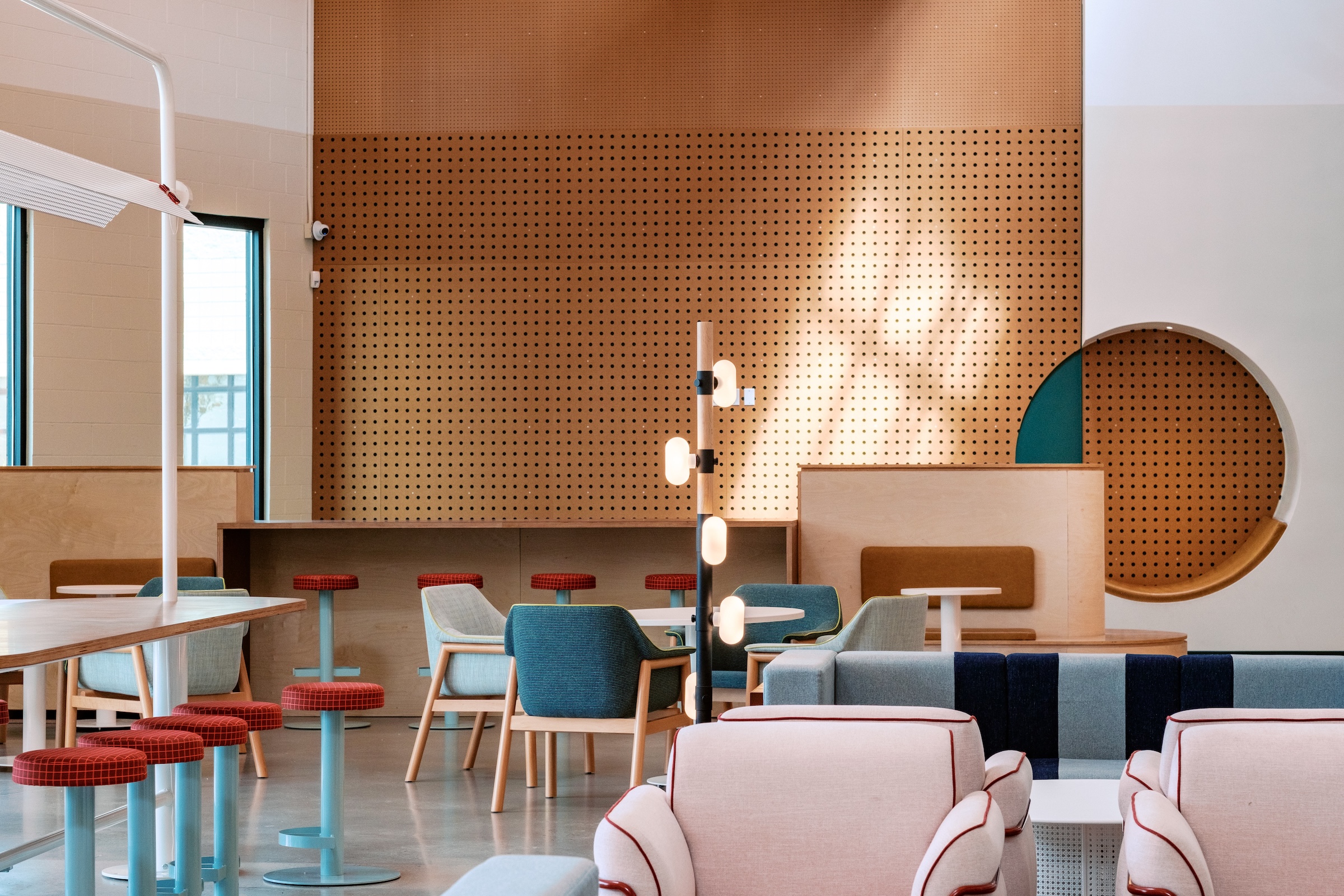
Swan Dive's choice of interior details and furnishings are colorful and playful. Photo © Fernando Gomes
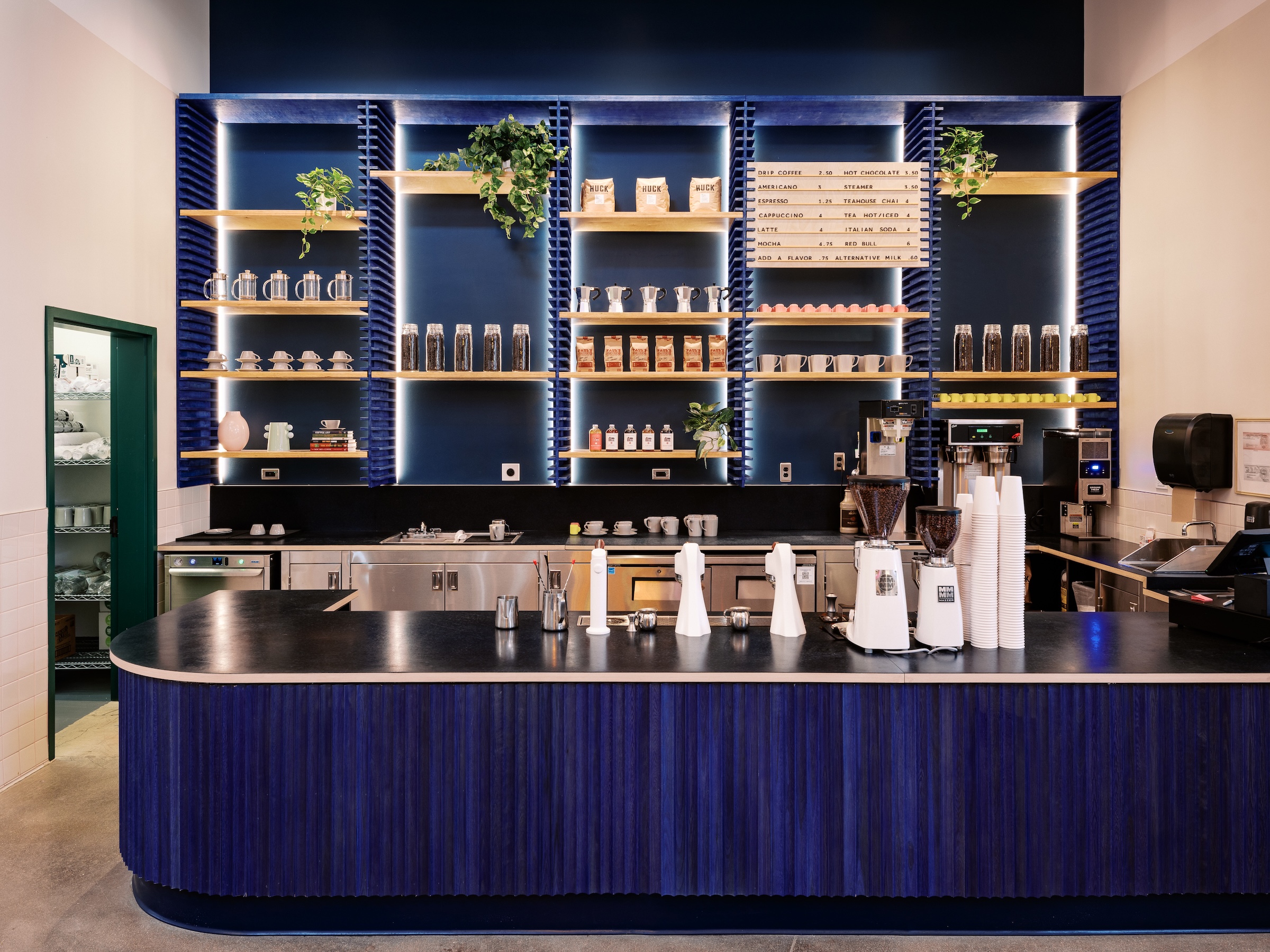
Relish is divided into two roughly equally sized zones: one contains the facility’s 19 indoor pickleball courts, and the other its food court. The latter comprises eight local vendors, a bar, and a coffee shop. Event and conference areas are placed in newly inserted stud-and-drywall structures. A church predating Relish’s tenancy occupies just under half of the sprawling former retail space; it joins a larger phenomenon of vacant strip malls and big-box stores being converted into houses of worship.
1
2
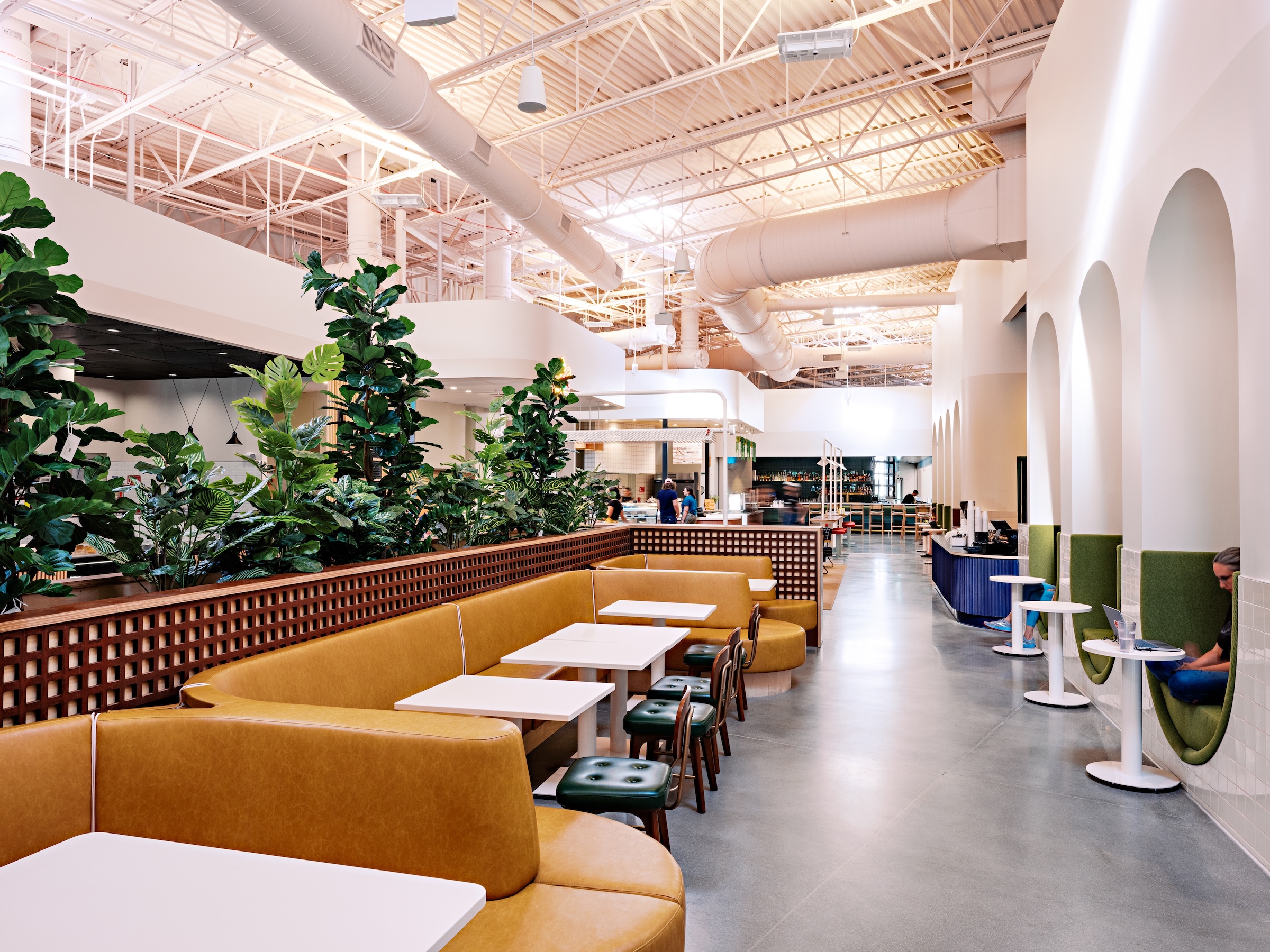
The food court includes banquettes, niches, and other spaces for lounging (1). Glazed ceramics front many of the vendor stalls (2). Photo © Fernando Gomes
Transforming a big-box store into nearly any other use is a challenge due to its lean structural system, which provides little wiggle room for the significant changes often required to adapt a hangar-like space into a center for leisure. Navigating that conundrum necessitated that the design team work closely with Fort Collins–based Larsen Structural Design, which, for instance, determined where new windows could be punched through the existing facade without installing structural goal posting.
Within the building, the team segmented the gargantuan space by orienting the courts, vendor booths, and event spaces, at a 45-degree angle to the existing structure. This spatial arrangement not only disrupts the store-length sightlines associated with warehouse retailers, but also makes room for meandering, intimate banquettes and other comfortable niches.
“We came up with this kind of sawtooth plan that divides the athletic and food hall spheres,” explains Swan Dive co-founder Amanda Arguello. “From there, we developed separate, smaller areas for additional program.”
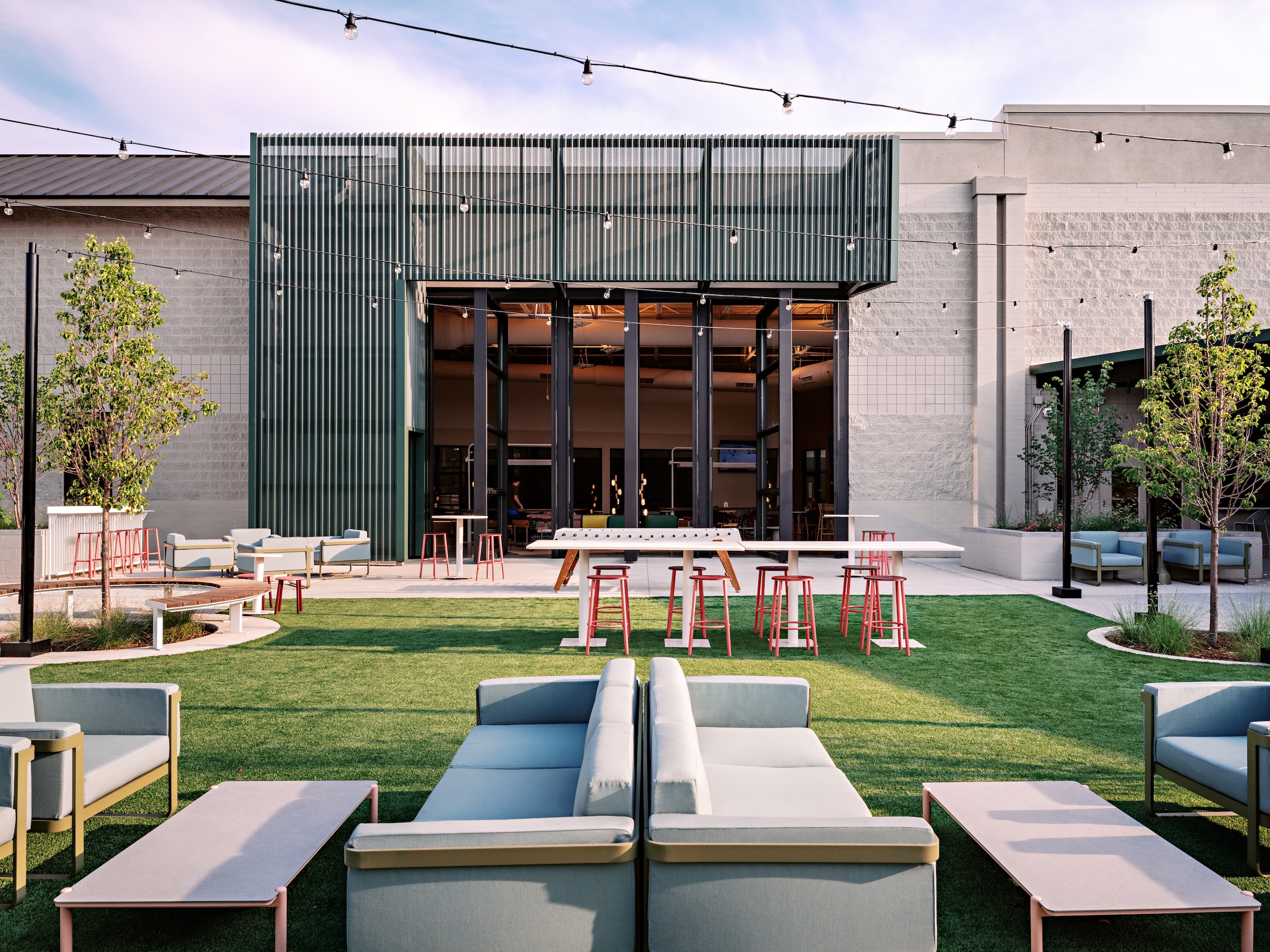
Relish includes furnished patios and several outdoor pickleball courts. Photo © Fernando Gomes
Swan Dive furthered their goal of creating a welcoming space through the installation of colorful—and sometimes whimsical—finishes and furniture. Ceramic tiles, of varied hues and glazes, add depth and character to interior walls, and curved and often plush seating invites lounging. In a tongue-in-cheek nod to the perforated plastic pickleball itself, the design team incorporated perforated MDF plywood as pegboard walls and court dividers. A similar motif is applied to the building exterior, where porous aluminum panels envelope portions of the facade.
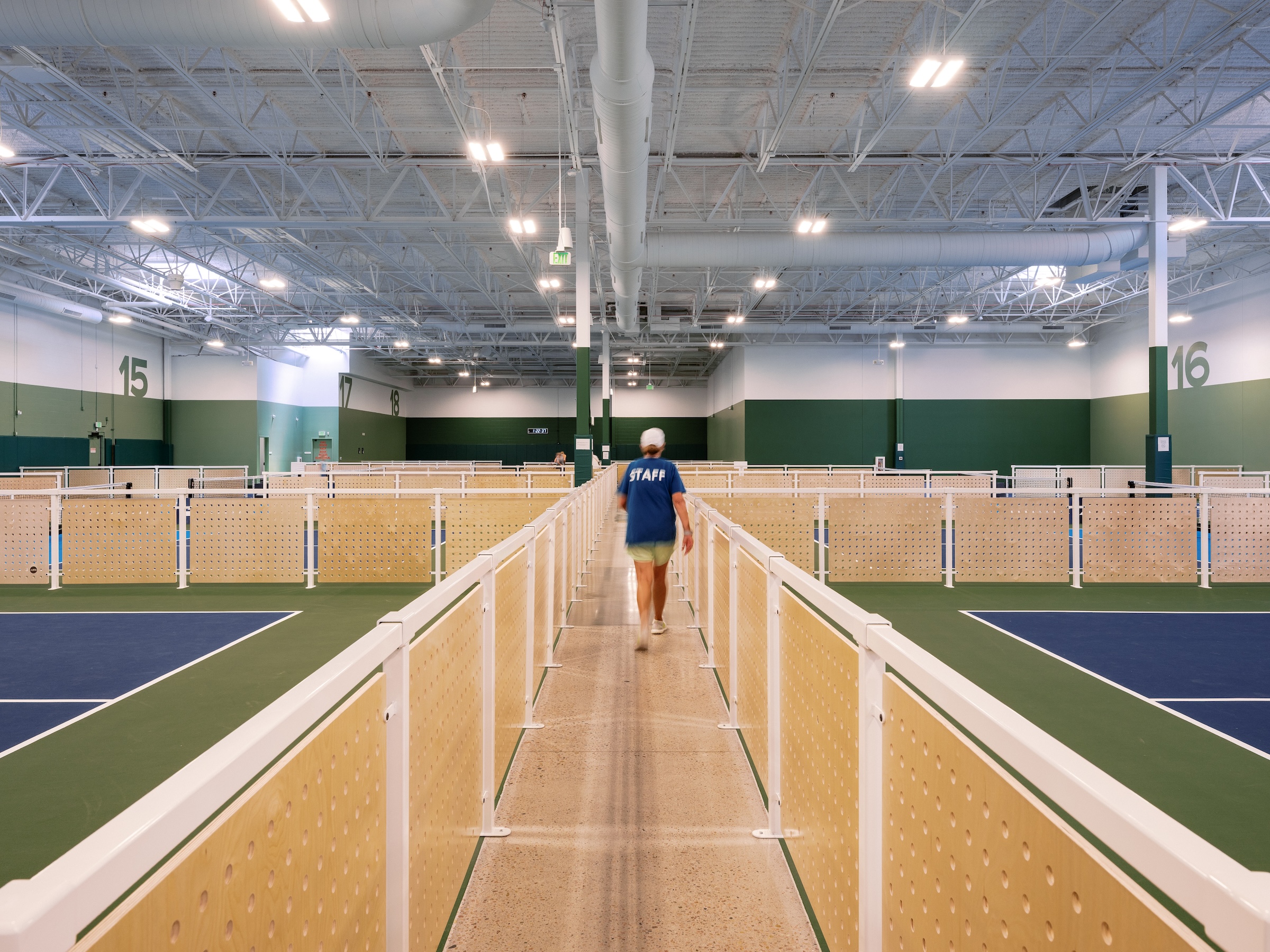
The indoor pickleball courts are seperated by perforated plywood boards. Photo © Fernando Gomes
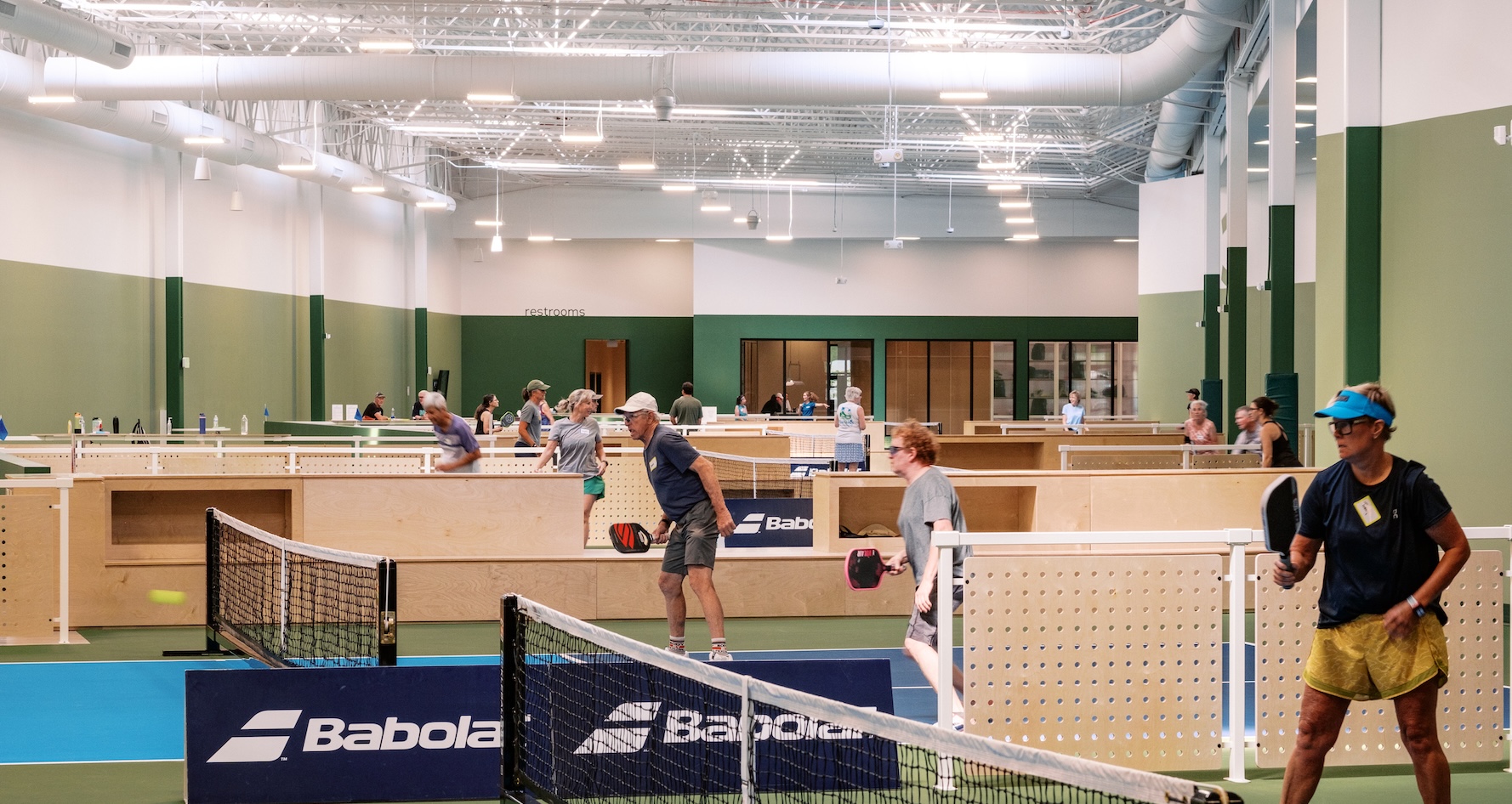
Photo © Fernando Gomes
Though the scope of the project’s landscape design was limited—Louisville is suburban and the facility required abundant parking—a generous belt of public space with plantings now wraps around the northern elevation. It includes furnished patios, one of which is accessed through a set of large-pivot doors that replaced the drive-in bays of the Sam’s Club tire center.
The decline of physical retail shows no signs of abating. Relish, with its charm and multiuse program, offers an inventive lessonon how the structures can be revamped for a second life.
Looking for quick answers on architecture and design topics?
Try Ask RECORD, our new smart AI search tool.
Ask RECORD →
Looking for a reprint of this article?
From high-res PDFs to custom plaques, order your copy today!