Civic Architecture 2026
A Community Center by Snow Kreilich Architects Offers Refuge in an Underserved Saint Paul Neighborhood
Saint Paul, Minnesota
Architects & Firms
During ordinary times, you might frequent a neighborhood community center for a pickup game, after-school programs, or canasta. During extraordinary times, such indispensable civic anchors offer the above—plus a needed sense of normalcy and communion. They provide protection in times of distress.
Minneapolis–Saint Paul is one place going through extraordinary times. A source of neighborhood pride since it opened last spring, the $30 million North End Community Center (NECC) in Saint Paul has kept its doors open to those seeking comfort in the familiar during a period of uncertainty and unease that has gripped the Twin Cities since late last year.
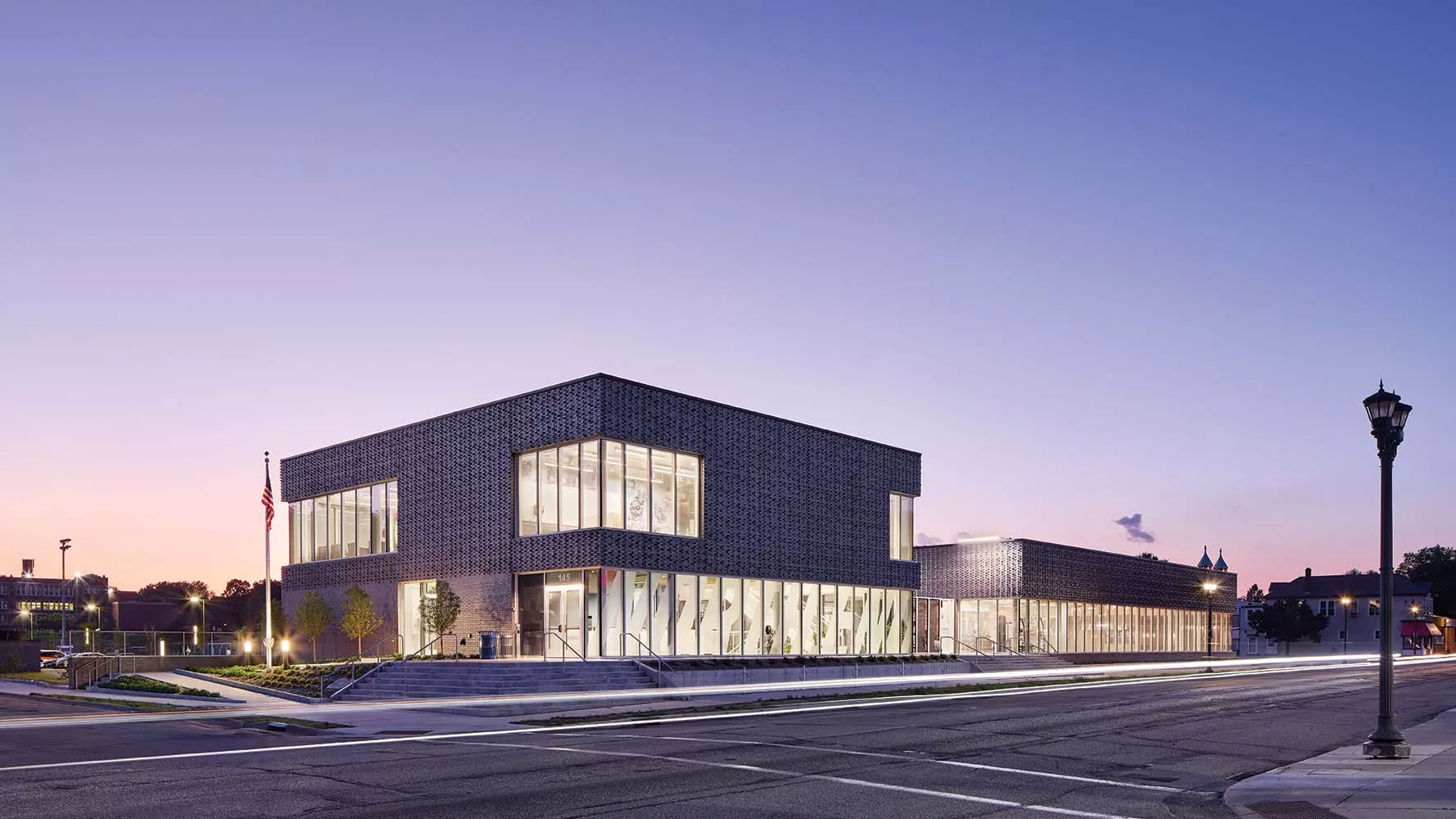
“It’s less a fortress, more a sanctuary,” says architect Julie Snow. Her Minneapolis firm, Snow Kreilich Architects, designed the 25,280-square-foot building fronting Rice Street, the main commercial corridor through one of the largest, poorest, and most diverse neighborhoods in Saint Paul. “With all the intensity going on, the center offers a calm and engaging presence,” adds Snow.
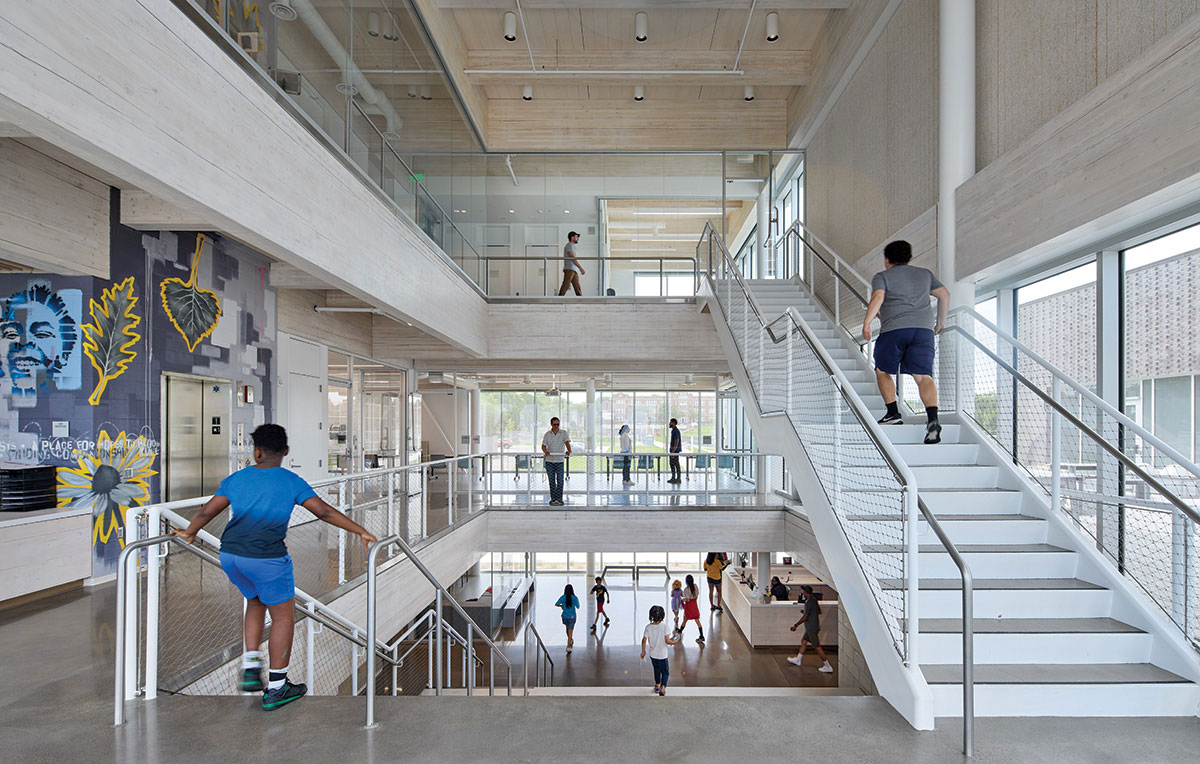
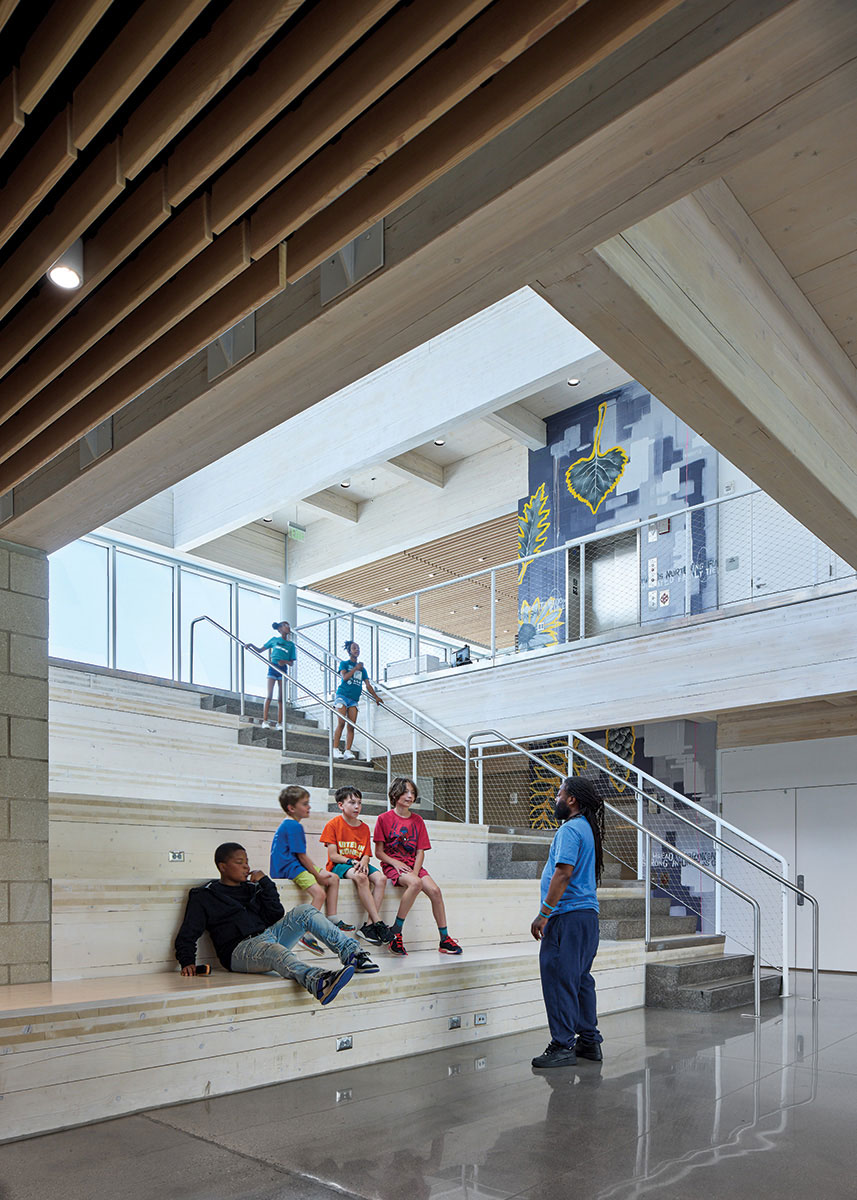
Community spaces are spread across three daylit levels with exposed timber. Photo © Corey Gaffer, click to enlarge.
The intensity Snow speaks of is the occupation of the Twin Cities by agents with United States Immigration and Customs Enforcement (ICE), whose stated purpose under the Department of Homeland Security is to detain and deport undocumented immigrants. This includes targeted groups such as Somali, Ecuadoran, Hmong (from Laos), and Karen (from Myanmar) refugees—all of whom have a concentrated presence in Saint Paul’s North End. Since ICE’s Operation Metro Surge commenced in late November (and sharply escalated early this year), an unknown number of U.S. citizens, legal residents, and lawful asylum seekers have been detained in and around the Twin Cities. Countless protesters, constitutional observers, and civilian bystanders have been arrested or brutalized. RECORD first discussed the North End Community Center with Snow, and project manager and architect James Howarth, between the fatal shootings of Minneapolis residents Renee Good and Alex Pretti on January 7 and January 24, respectively, by armed ICE agents. As of this writing, thousands of federal officers remain on the ground in the Twin Cities. Large-scale nationwide protests decrying the federal government’s actions in Minnesota and the killings of Good and Pretti continue.
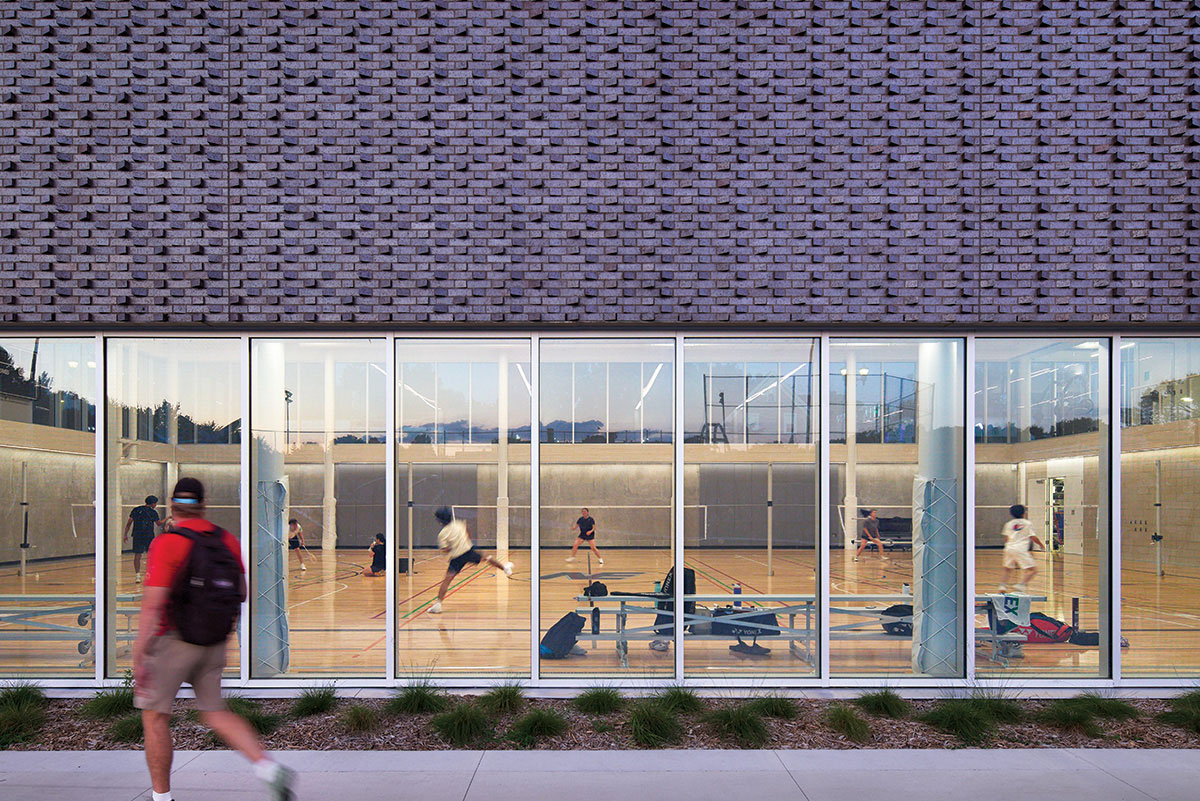
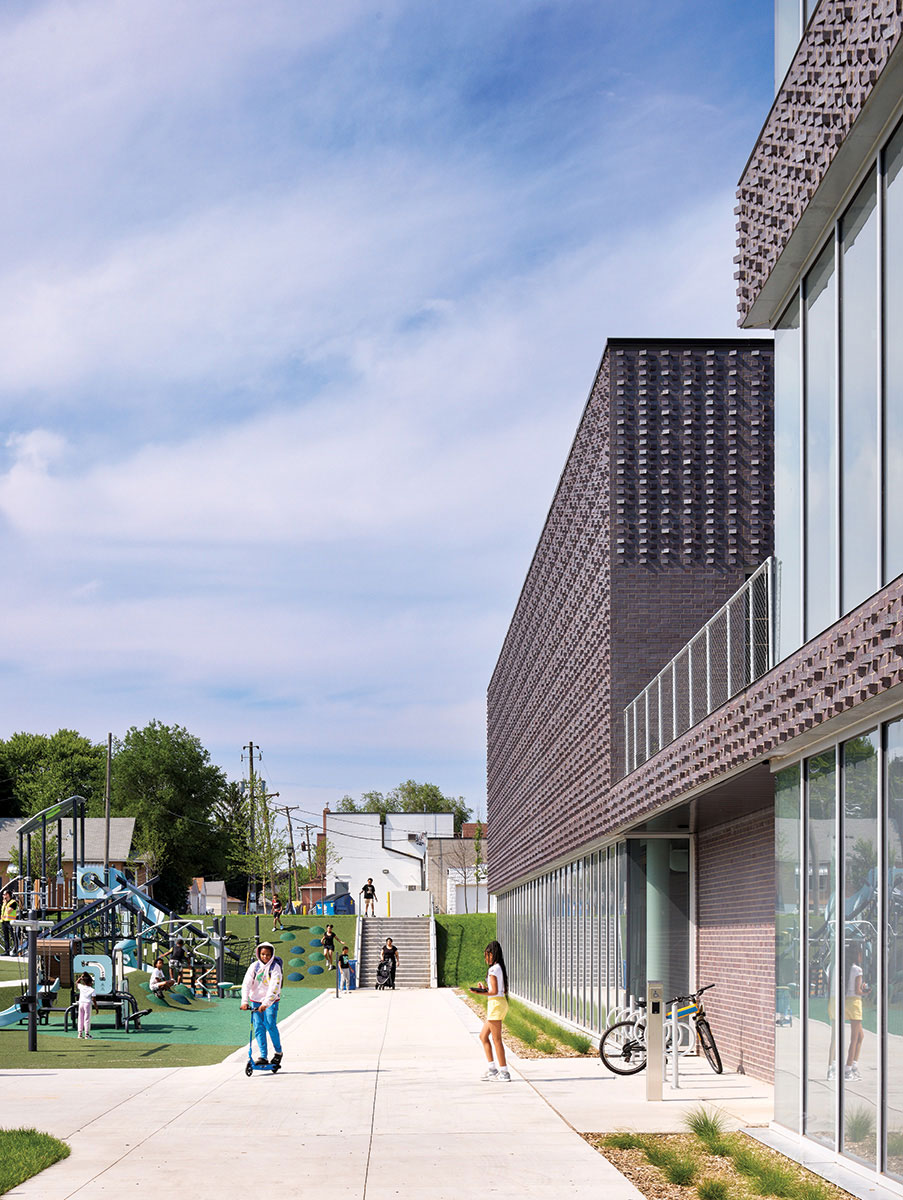
Passersby can watch gym activity from both the street and Fritz Klark Park. Photo © Corey Gaffer
Saint Paul Parks and Recreation, which owns and operates the NECC, relayed to RECORD a statement saying it has extended the facility’s hours to accommodate students and programs looking to utilize the space, which is located opposite a public library branch on Rice Street. There has also been an increase in permitted events at the center to help further bring locals together. “Recreation centers play a pivotal role in the mental and physical well-being of our residents, and NECC will always be an available asset to our community, especially in times of increased need,” said a department spokesperson.
Long before the immigration raids, there was pressing demand for a multitasking municipal hub that would offer a wide range of recreational amenities and community programs to this fast-growing and underserved pocket of Saint Paul. The NECC replaces the old Rice Recreation Center, located in a cramped and hidden-away space leased by the city’s school district. Because of that venue’s relative marginality, Howarth says “identity and the clarity of this being your space was important to the project.”
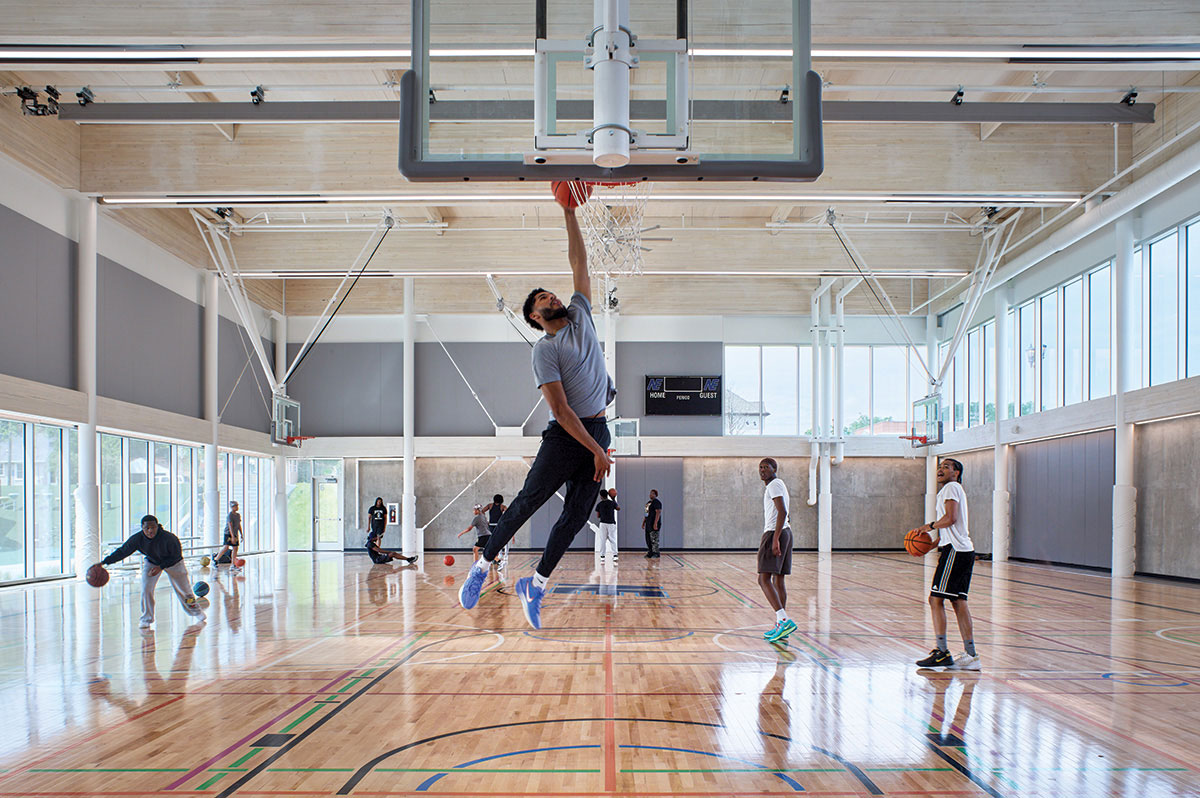
To that end, NECC offers much of what you would expect from a contemporary city-run community center: a large gymnasium, multipurpose rooms, a dance and yoga studio, dedicated teen space, and fitness and weight facilities. Flooded with daylight, these spaces are split between two distinct wings dedicated to community and recreational functions; an open-air central courtyard accessible from Rice Street divides the boxy, masonry-faced volumes. Reflective of the cultural diversity of the neighborhood, the NECC offers foot-washing stations for Muslim and other users, while a large teaching kitchen enables community members to engage with each other through the universal language of food. The neighboring 6-acre Fritz Klark Park, on whose southeast corner the center sits, recently emerged from a major renovation with new play equipment, an artificial-turf field, improved lighting and landscaping, and dedicated courts for sepak takraw, or kick-volleyball, a sport popular in Southeast Asia.
Looking for quick answers on architecture and design topics?
Try Ask RECORD, our new smart AI search tool.
Ask RECORD →
1
Facing Rice Street (top of page), the center contains a gym (1) and social spaces, like a triple-height “town hall” (2). Photos © Corey Gaffer
2
The North End’s “cultural mix was something that was really influential on our thinking about the project,” says Snow. “How do you create a framework for many cultures to come together and exchange?”
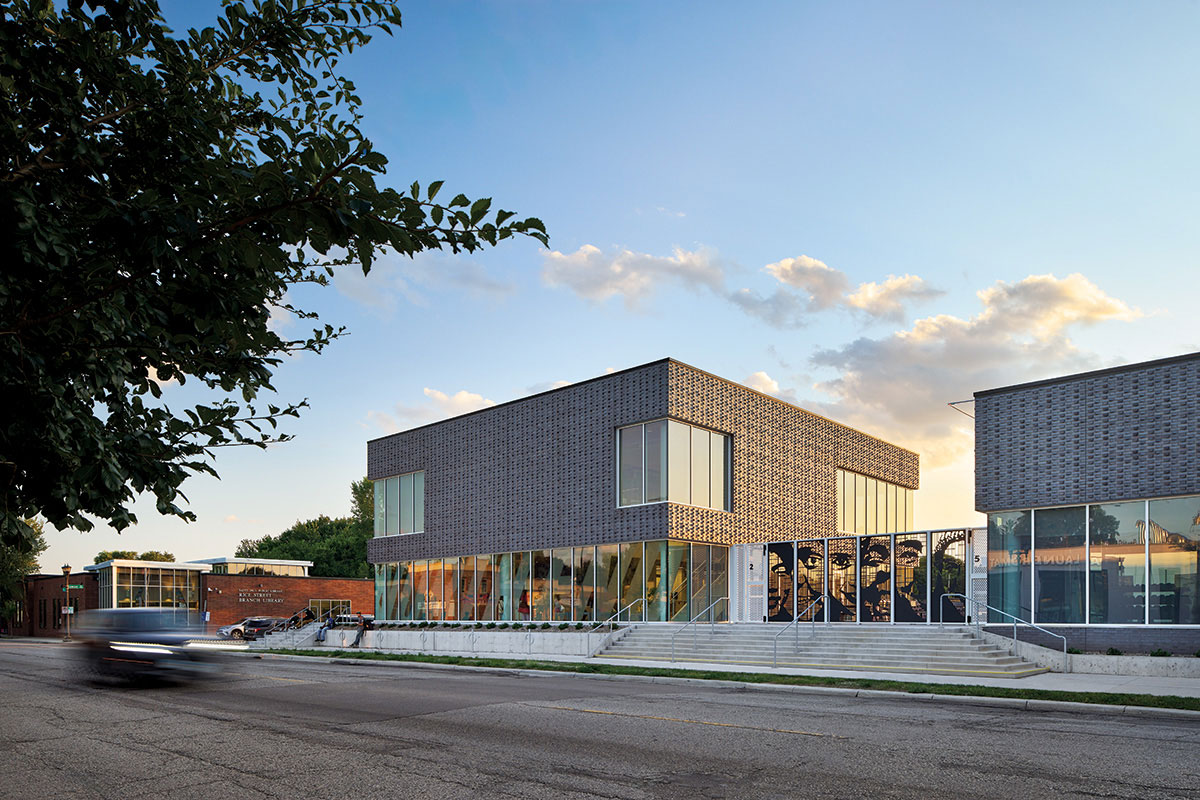
Also guiding the design were the low-slung brick-faced commercial storefronts of Rice Street. In deference to the scale of the historically working-class neighborhood, once white and now majority Black and Asian, the center rises a modest two stories at the street. It grows to three stories where the building, situated atop an embankment, meets the lower-level park at its rear elevation. In a move that promotes transparency and porosity, generous expanses of glazing connect pedestrians on Rice Street with the park through the building. Snow says that the intricate brickwork cladding the center’s upper levels acts as a foil to the “plain” brickwork of neighboring buildings. “There are so many different brick types along Rice Street—our approach reflects this but also gives a great deal of animation and warmth.”
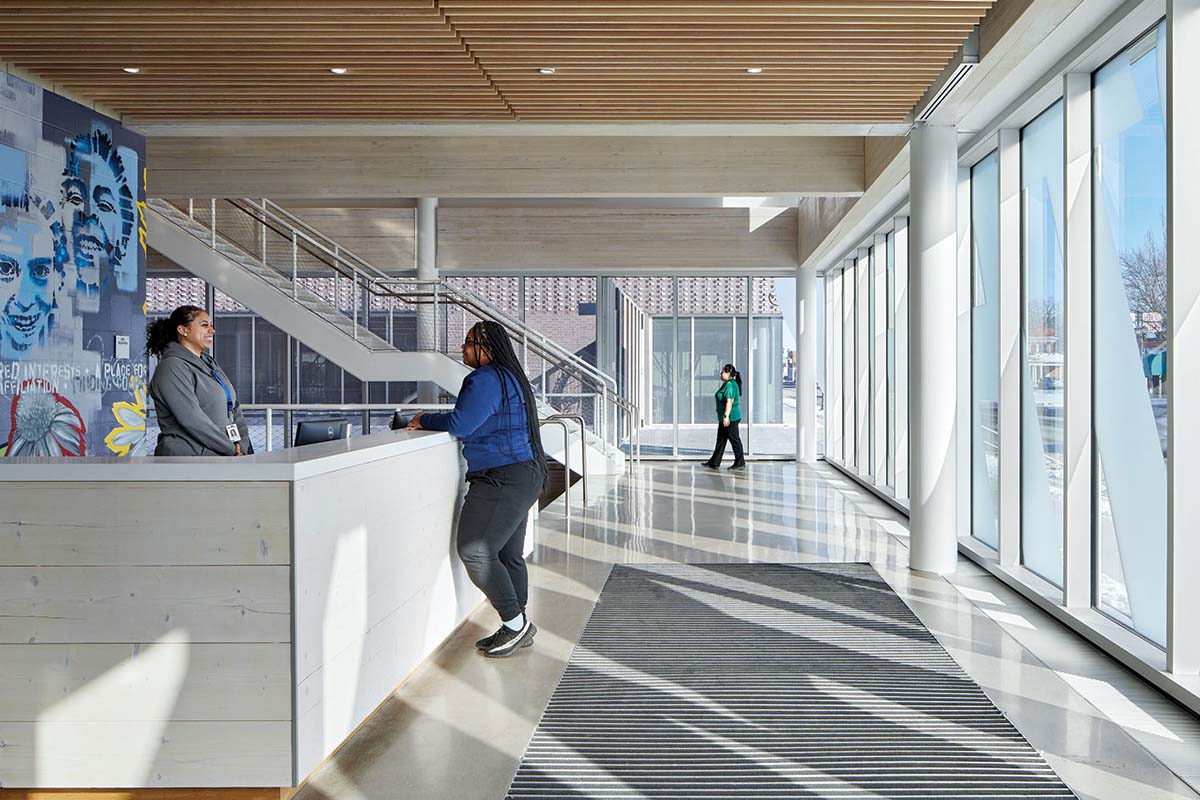
Individual community members themselves appear in the center’s decor, depicted in photo stencils that are realized as interior murals and an “art fence” between the center’s courtyard and Rice Street. The murals were created by Peyton Scott Russell, a Minneapolis artist best known for his Icon of a Revolution mural of George Floyd. “This representation of the community confers an automatic sense of ownership on the space,” says Snow of Russell’s murals.
3
4
Community members, whose faces are represented in murals both inside the center (3) and out (4), can access the lobby through the adjacent sunken park (5). Photos © Corey Gaffer
5
The NECC is billed by the city as its most sustainable community center to date. It is Saint Paul Parks and Recreation’s first mass-timber building, with glulam beams and cross-laminated timber (CLT) decking adding warmth to the interior with the benefit of reduced embodied carbon. These attributes resonated with the client, long accustomed to all-steel construction. The decision to proceed with a hybrid steel and mass-timber project, however, required some exploration—and convincing—at first, says Howarth. The project ultimately helped familiarize local suppliers and installers with the use of CLT, which is somewhat of a rarity in the region. Atop the gym’s roof is a 39-kilowatt direct-current solar array while, buried beneath Fritz Klark Park, is a 44-well geothermal field providing all the building’s heating and cooling energy. Also installed beneath the park during its renovation—carried out in tandem with the construction of the NECC—is a million-gallon stormwater-management system mighty enough to safeguard the North End from back-to-back 100-year storms. “They never asked us to reduce the quality of the building to achieve this high level of resilience,” says Snow.
Referring to the NECC as a “kid- and security-centered space,” Snow adds that Saint Paul Parks and Recreation approached the project from a sustainability standpoint as an investment in the future of its younger users.
The city could never have anticipated the turmoil of the present when the center broke ground in the spring of 2023. It is good fortune, however, that it was completed ahead of a time when community members of all ages and backgrounds, many scared and vulnerable, are most in need of a safe public place to coalesce, let off steam, or just greet a friendly face. The North End Community Center stands strong.
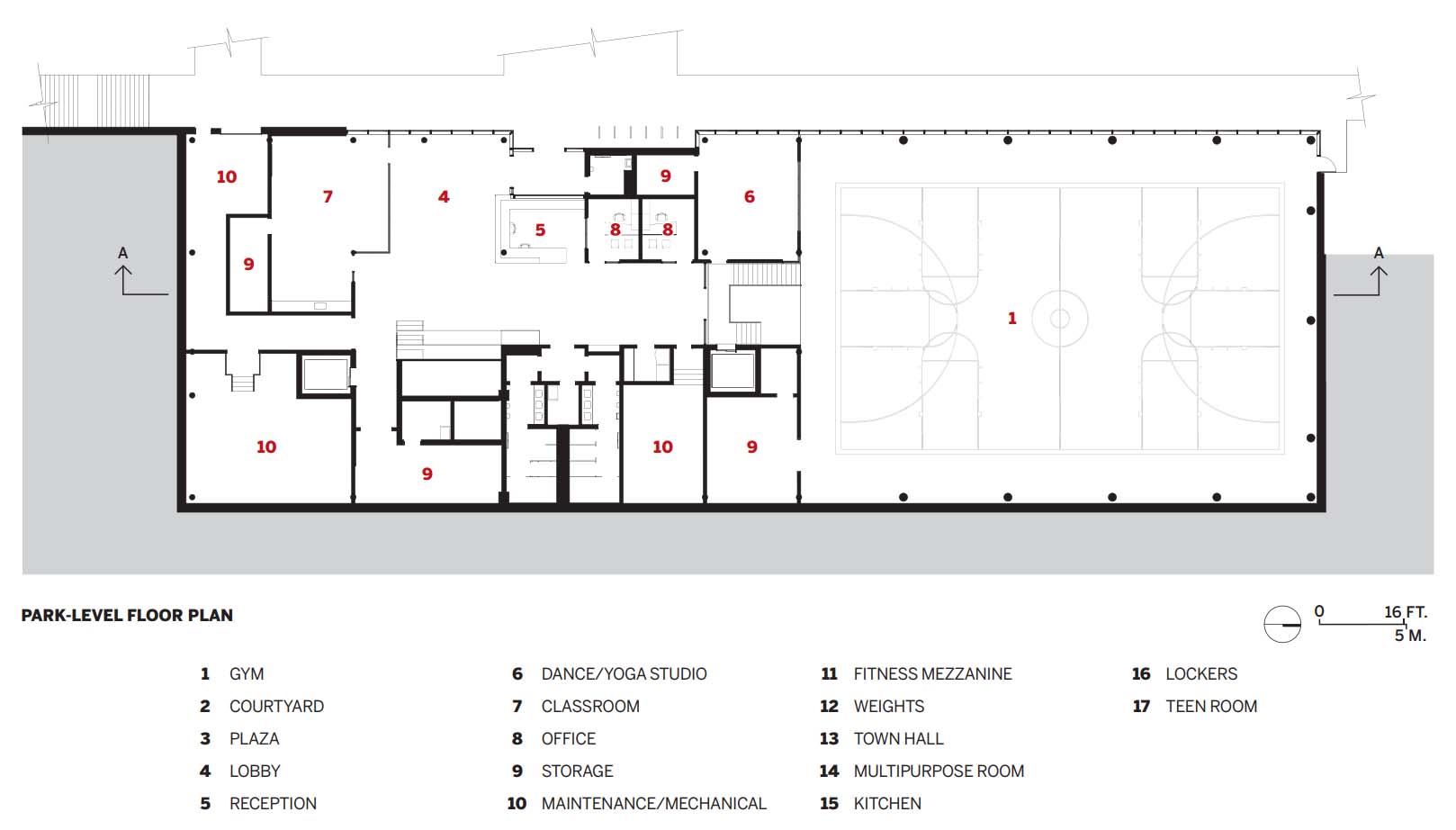
Image courtesy Snow Kreilich Architects
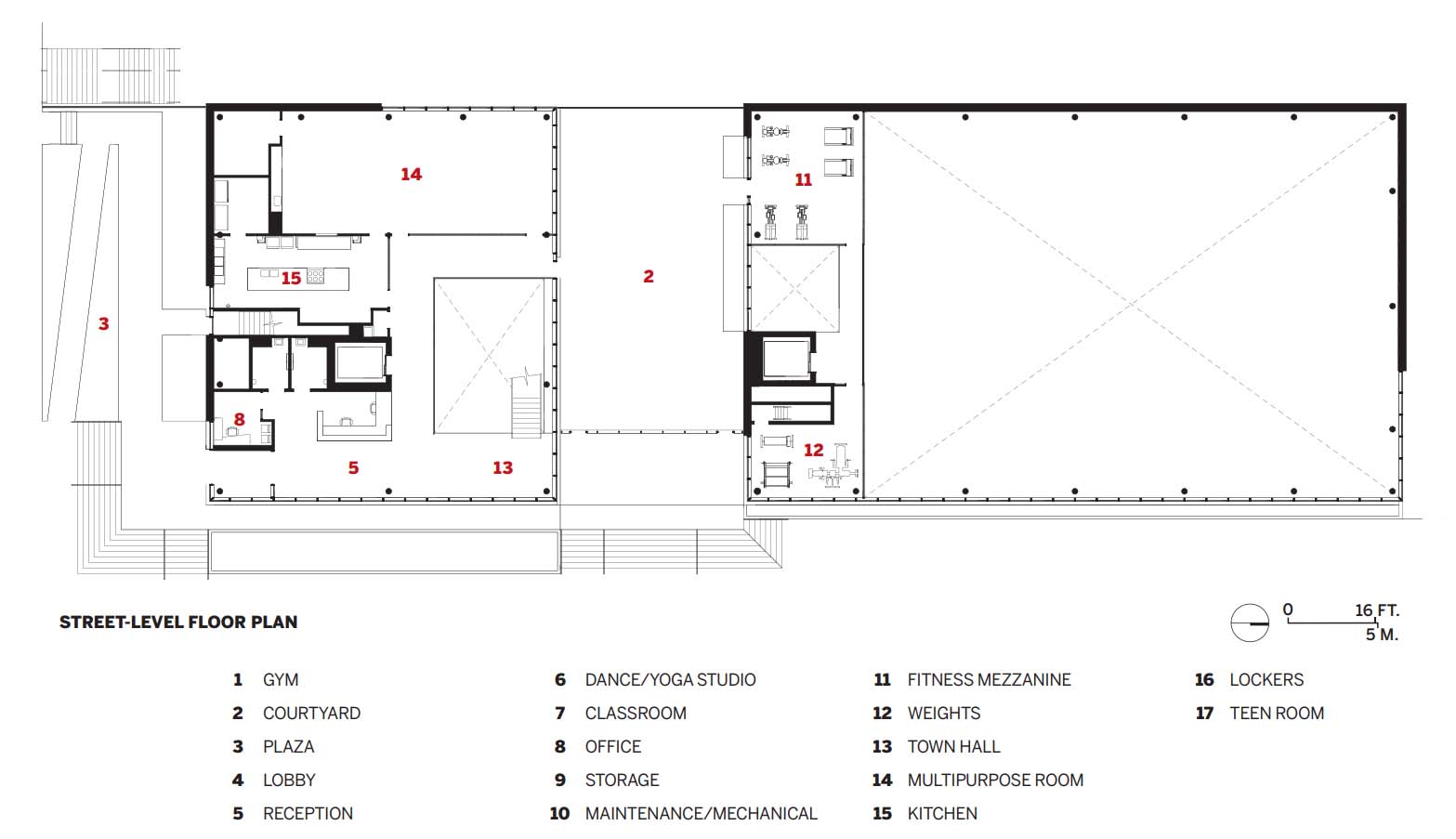
Image courtesy Snow Kreilich Architects
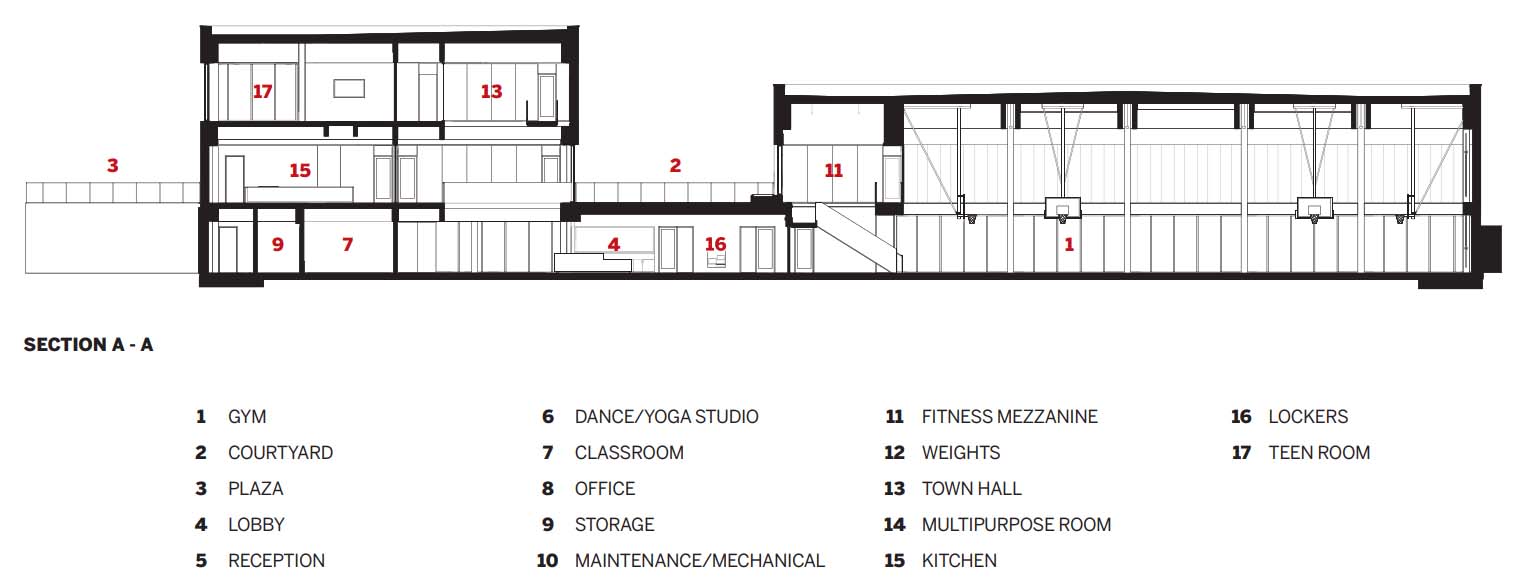
Image courtesy Snow Kreilich Architects
Credits
Architect:
Snow Kreilich Architects — Julie Snow, partner in charge; James Howarth, project manager and architect; Brett Gustafson, Nathan Van Wylen, Aarón Bretón, design team
Engineers:
Studio NYL (structural); Larson Engineering (civil); Salas O’Brien (MEP, lighting design)
Consultants:
Saint Paul Parks and Recreation (landscape architecture); SEH (stormwater lift pump station pump design); Sunde Land Surveying
General Contractor:
Donlar Construction
Client:
Saint Paul Parks and Recreation
Size:
25,280 square feet
Cost:
$30 million (total)
Completion:
May 2025
Sources
Exterior Cladding:
Endicott Clay Products (masonry); W.R. Meadows (moisture barrier); Nordstrom Architectural Sheet Metal, MG McGrath (metal panels); Kawneer (curtain wall)
Vegetated Roofing:
Columbia Green Technologies
Glazing:
Viracon (glass); Solatube International (skylights)
Gymnasium Flooring:
Action Floor Systems
Energy:
Johnson Controls (energy-management system); Renewable Energy Partners (photovoltaics); Waterfurnace Commercial Solutions (geothermal)
Stormwater Management:
Storm Trap Stormwater Solutions
Looking for a reprint of this article?
From high-res PDFs to custom plaques, order your copy today!