House of the Month
Near Seaside, Florida, Jennifer Bonner Designs a Rule-Bending House for Her Mother
Santa Rosa Beach, Florida
Architects & Firms
The cliché is that architects get their first commission from their parents. For Jennifer Bonner, it was her second.
Bonner founded MALL—which playfully stands for either Mass Architectural Loopty Loops or Maximum Arches with Limited Liability—in 2009. Since then, the Alabama native has established a career exhibiting work internationally, lecturing widely, and writing. She has taught at schools of architecture including the Georgia Institute of Technology, the Harvard Graduate School of Design, and, currently, Rice University. Following Haus Gables, completed in Atlanta in 2018, Kate’s House is only her firm’s second built project, but it exemplifies an ethos that has become associated with MALL’s practice.
Shortly after Haus Gables finished, Bonner’s mother and stepfather purchased a plot of land in Santa Rosa Beach, Florida, intending to have her design a house for their retirement. The small community on the Florida Panhandle is populated mostly by middle-class retirees, drawn to its weather, sugar-white sands, and favorable tax laws. Bonner recalls her mother’s saying, “It’s a homeowners association, Jennifer. It’s going to be hard for you to get your ideas through, but let’s try.”
Plans for the house and for retirement were thrown into uncertainty, however, when, in 2021, her stepfather unexpectedly died. His death left Bonner’s mother to manage their shared carpentry business. Ultimately, the family decided to proceed with construction, but its program changed so the house could flexibly serve as a vacation rental, family retreat, and eventually a retirement home with an attached, rentable accessory dwelling unit. Bonner designed the house, navigating (and bending) the strict homeowners association rules, while her brother worked as a contractor installing all the carpentry. Her sister now manages the rental listings.
In the early stages of design, the architect on the local review committee drew a sketch and handed it to Bonner. “This is the only facade that I’m going to accept,” she recounts his saying. It was two stories and symmetrical, with a gabled roof and a porch. Feeling boxed in, she looked to nearby precedents for ways to subvert the normative suburban house. “It’s just part of the MALL recipe to misbehave,” Bonner explains.
Santa Rosa Beach is less than 10 miles west of Seaside—the planned community, notorious as the setting of the Truman Show—where, in the 1980s, Andrés Duany and Elizabeth Plater-Zyberk put New Urbanism principles into practice. It is also an abecedarium of houses by famous designers, including Samuel “Sambo” Mockbee, the Southern architect who cofounded the Rural Studio at Auburn University, where Bonner studied.
The house Mockbee designed there includes all the standard elements and uses the typical materials—a gabled metal roof, wood siding, and window shutters—abiding by Seaside’s stringent building ordinances. But the forms are exaggerated, so much so that the house was dubbed “Birdie’s” because it looks more like a birdhouse than an ordinary bungalow. The June 2004 issue of RECORD, which was posthumously dedicated to his legacy, quoted Mockbee’s explanation of his design sensibility: “I’m drawn to anything that has quirkiness to it, a mystery to it.”
Looking for quick answers on architecture and design topics?
Try Ask RECORD, our new smart AI search tool.
Ask RECORD →
Original Samuel Mockbee drawings decorate the interiors. Photo © Timothy Hursley, click to enlarge.
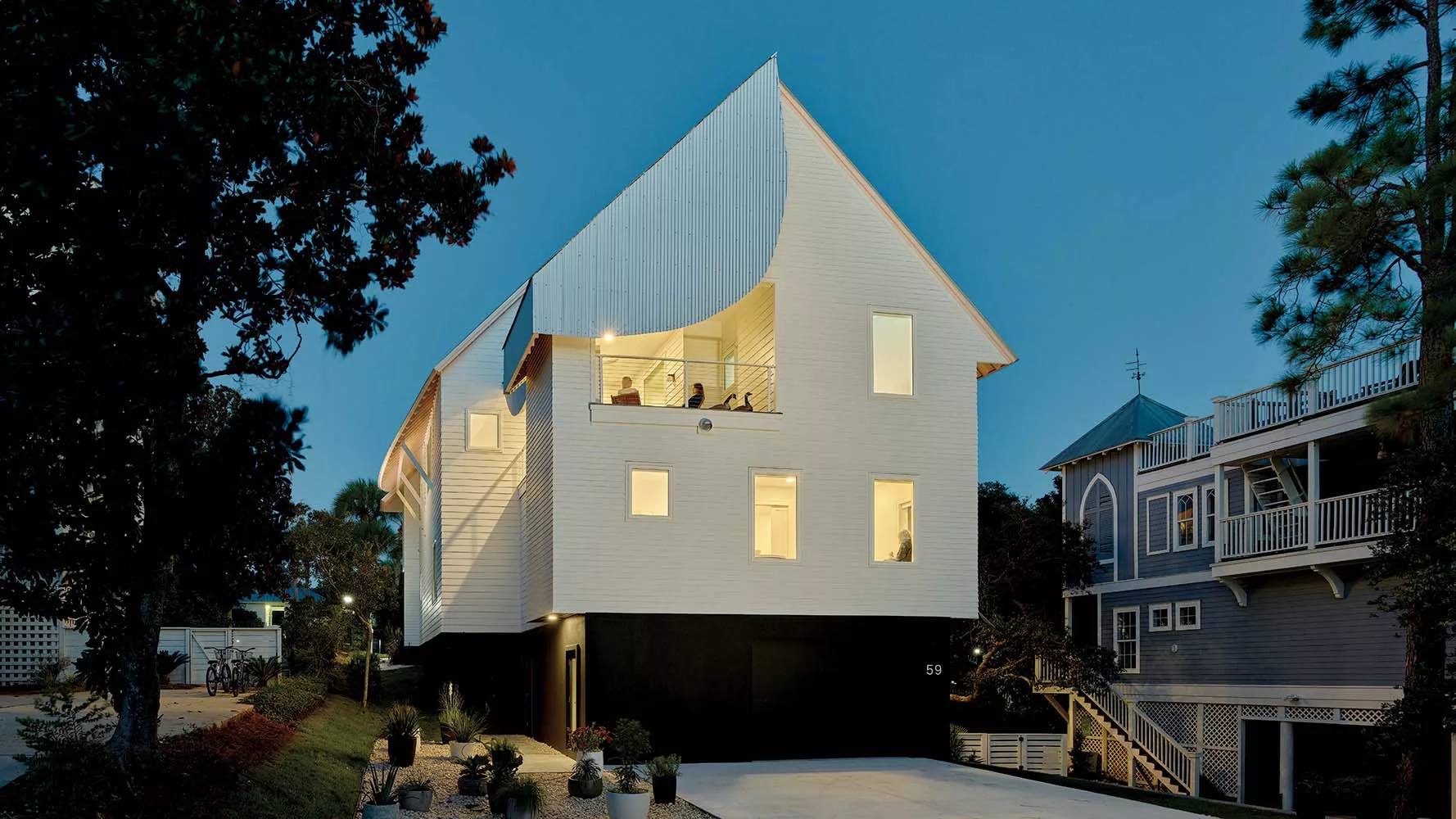
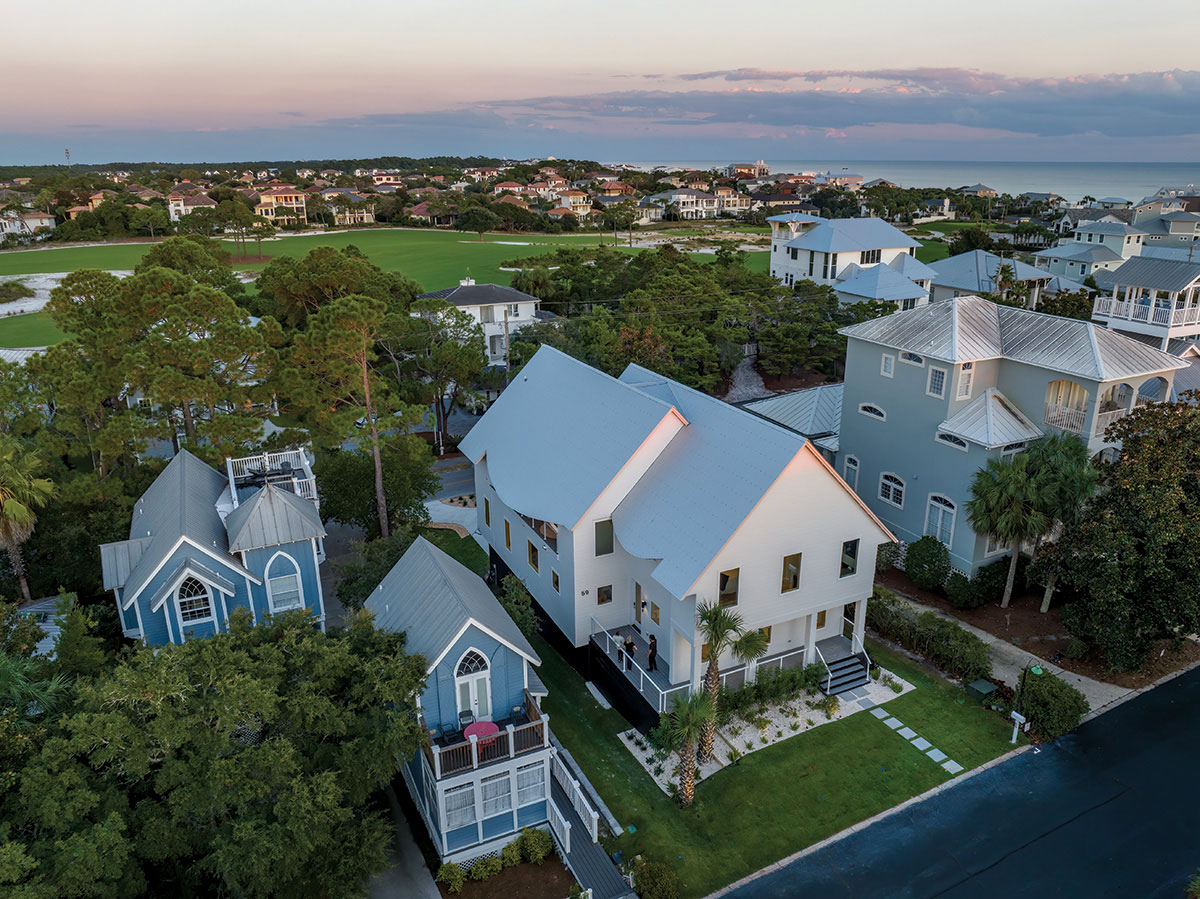
Bonner shares this fascination and aimed to achieve the same quirkiness and mystery with the beach house for her mother. The front facade is what it had to be—symmetrical and plain—leaving the sides and the back, where Bonner imagined the corrugated metal roof to be “bangs” that hang down as exaggerated eaves. The back, which Bonner considers the primary facade, is asymmetrical, with a peekaboo side swoop partially covering the second-story porch. It’s not the design the homeowners association approved, but Bonner took an “act first, ask for forgiveness later” approach that seems to have paid off.
1
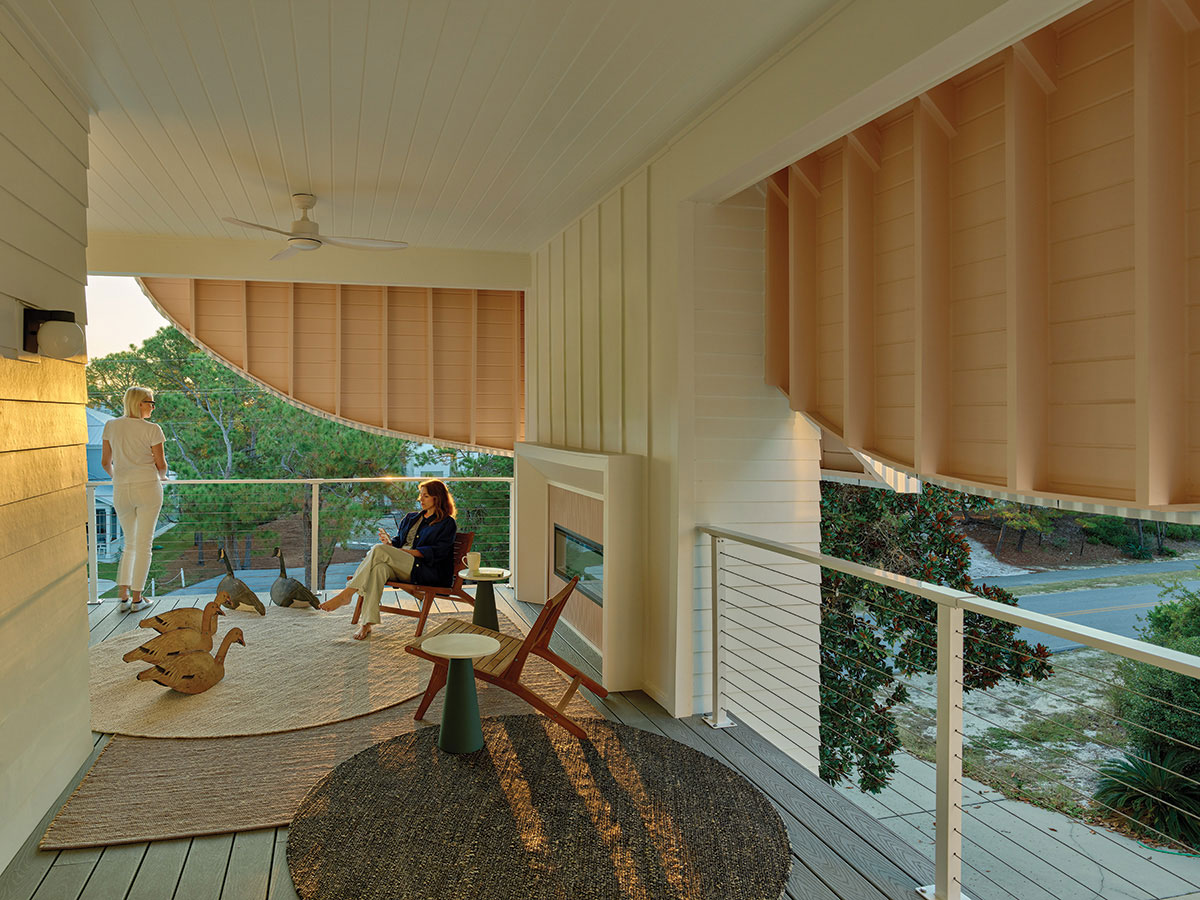
The eaves are reimagined as “bangs” (1 & 2). Photos © Timothy Hursley
2
This intimate upper-level porch is attached to the primary bedroom—her mother’s only programmatic request. The undersides of the bangs/eaves are painted a pinkish-orange hue named “blushing,” which reflects sunset tones into the interiors. Bonner’s subtle yet playful use of color here builds on her studies of art-photography gels and architectural models, which culminated in her 2016 exhibition Still Life at the Harvard Graduate School of Design.
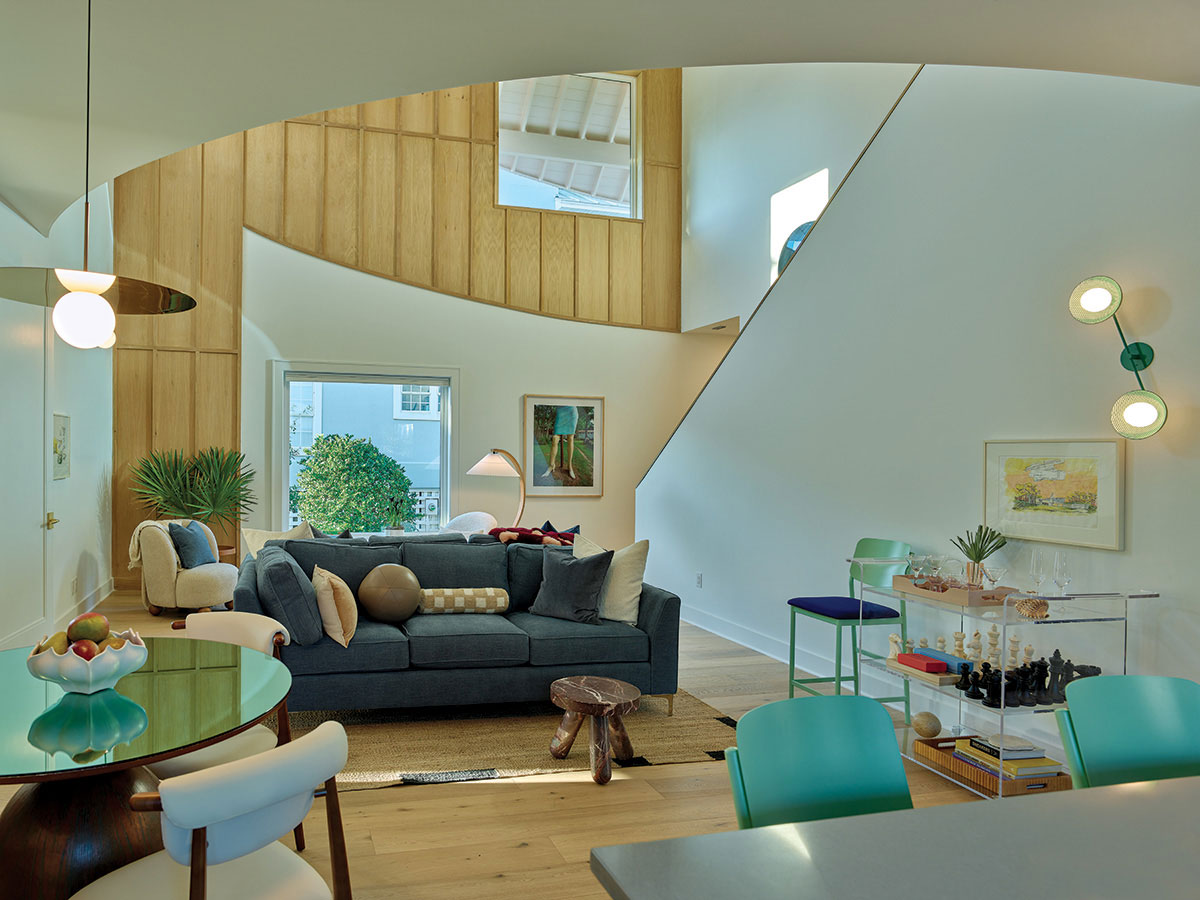
The spaces inside are densely packed, with the connected accessory dwelling unit occupying half the first floor. It is accessible and can be closed off, via the back entry stairs and hallway. In the main house, the three bedrooms are dispersed around the double-height living space on the first and second floors. The curved geometries of the eaves are echoed in the living space by rounded white oak paneling, which looks like exposed wood stud framing but is an appliqué.
Beyond drawing inspiration from Sambo’s architecture, Bonner has been close friends with his daughter, Carol Mockbee, since their college days. She invited her, an interior designer and principal of Mockbee Design Studio in Jackson, Mississippi, to work on the house. “I don’t have 15 projects,” says Bonner, “so when I have an opportunity to collaborate with people, I have to make it happen.”
3
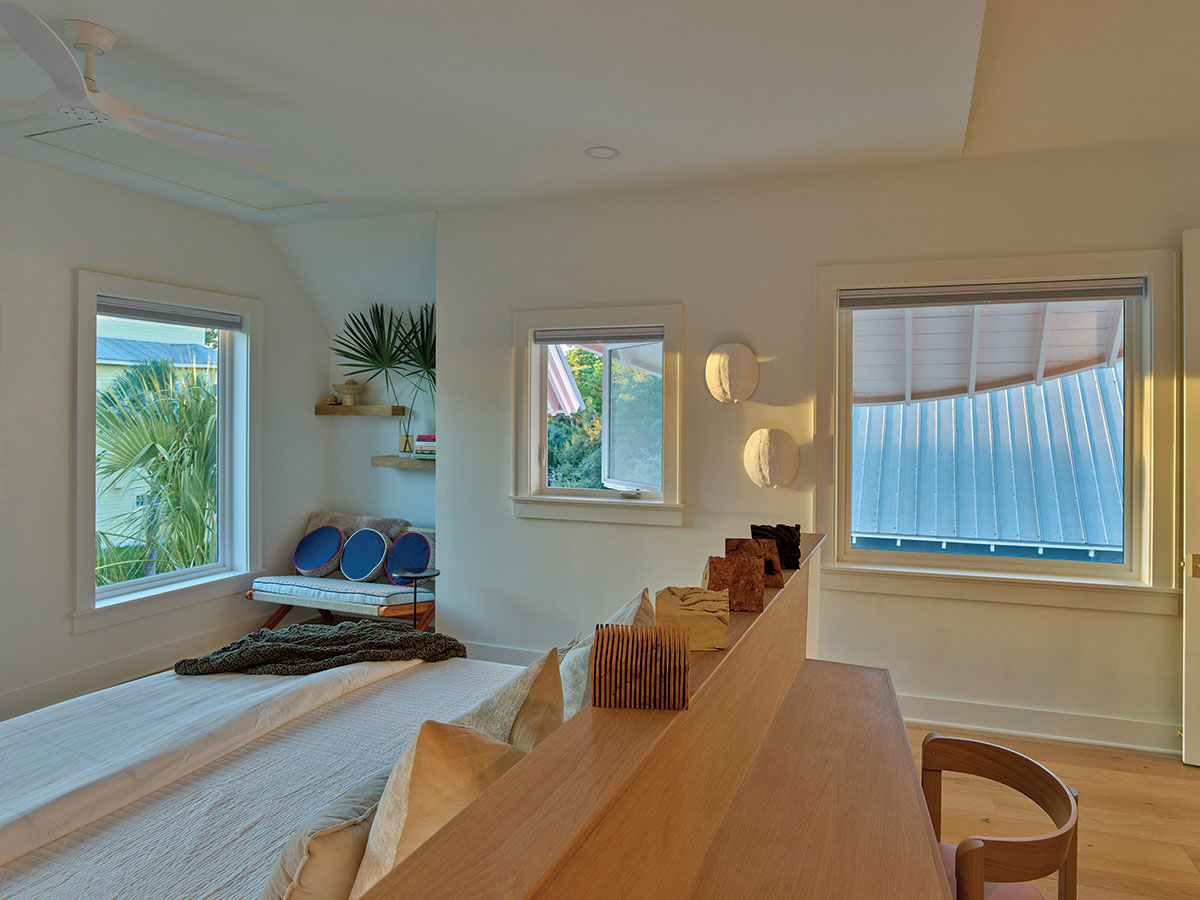
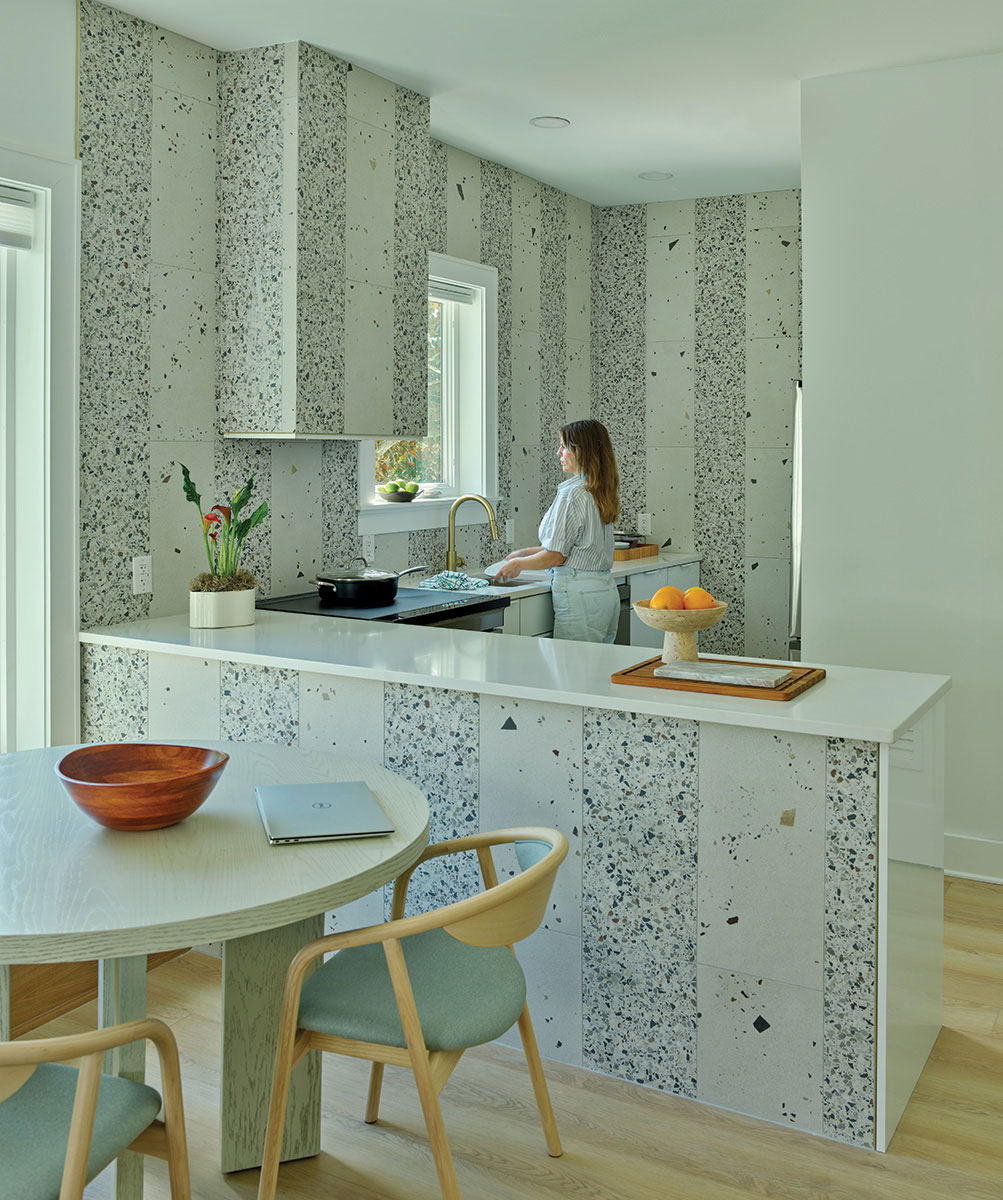
The decor combines everyday objects with artworks (3) or uses common materials, like oversize tiles, in uncommon ways (4). Photo © Timothy Hursley
4
For Carol, her father’s work was about “pushing the limits and then pulling back,” she says, which is a resonance she feels in MALL’s work. Carol’s approach to the decor was to juxtapose everyday materials and objects, like seashells gathered nearby or the denim of back-to-back sofas in the living room, with works of art, such as the vibrant color-block paintings by Patrick Puckett or one of the first photographs Timothy Hursley took upon arriving in the South.
“In the South, everything is either juxtaposition or contradiction,” says Bonner. In that sense, the house is both an intimate family undertaking and also one that has to serve as a business venture. Bonner’s design mostly plays by the rules, but she has found ways to maintain a defiant independence. While it might only be MALL’s second built work, it inherits from—and continues—a rich architectural legacy.
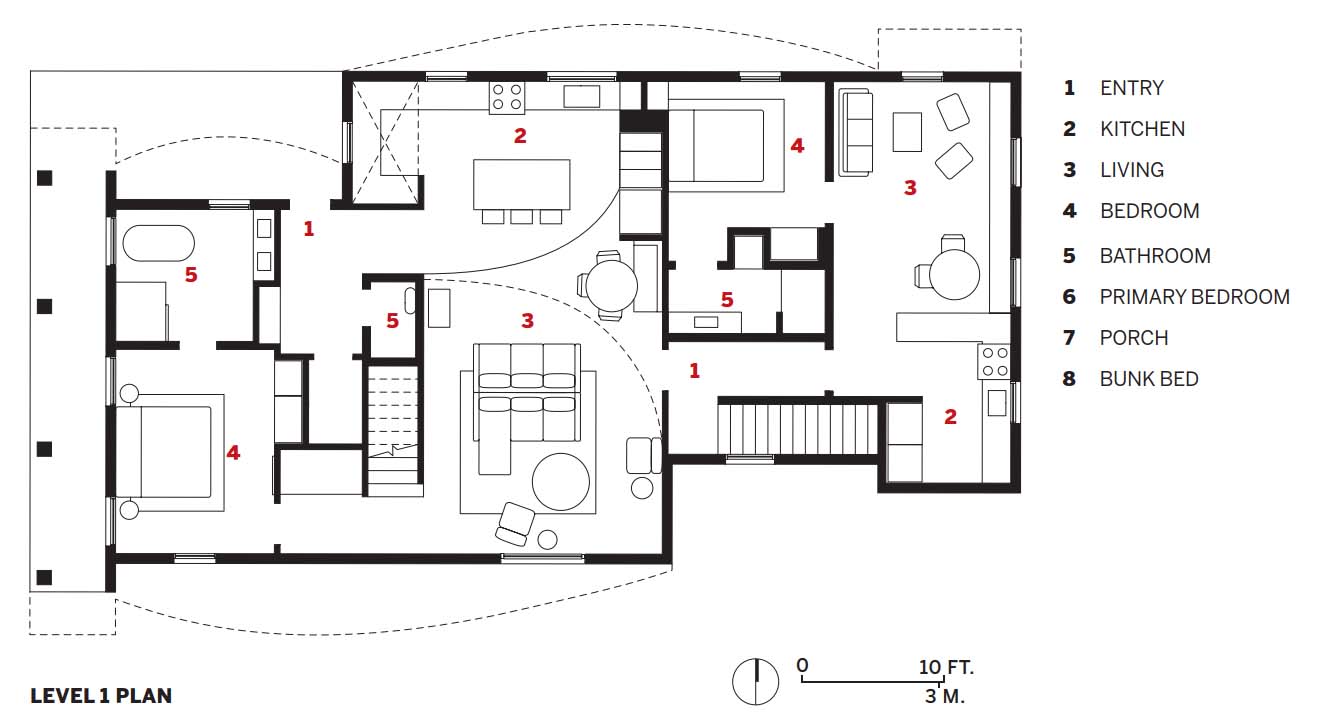
Image courtesy Jennifer Bonner / MALL
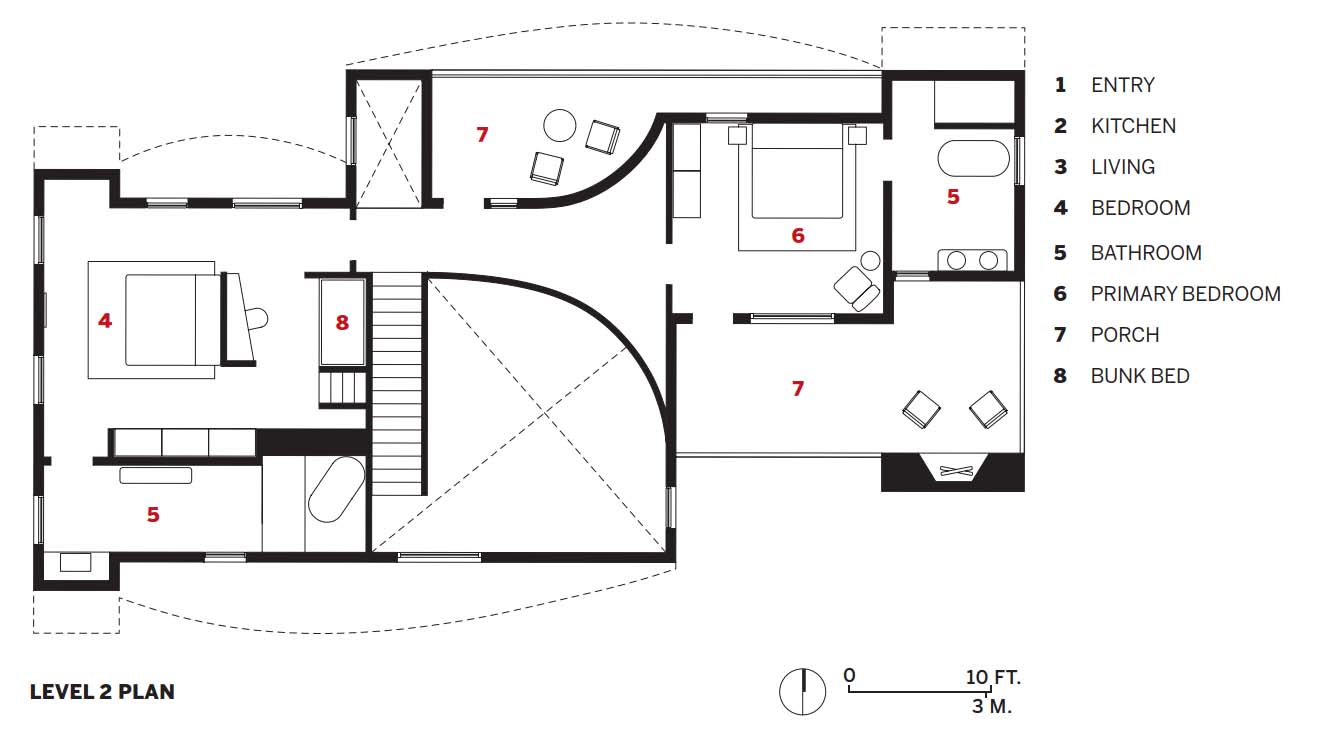
Image courtesy Jennifer Bonner / MALL
Credits
Architect:
Jennifer Bonner / MALL
Interior Designer:
Mockbee Design Studio
Engineers:
Bayside Engineering & Consulting (structural); Nautilus Civil Engineers (civil)
Consultant:
Trimco (carpentry)
General Contractor:
Withheld
Client:
Donna Kate Simpson
Size:
2,650 square feet
Cost:
$1.35 million (total)
Completion:
September 2025
Sources
Cladding:
Nichiha fiber cement
Doors:
Neuma Patio Impact Doors, Coastal Insulation (garage door)
Hardware:
Kwikset, Eufy Wifi Locks
Millwork:
RTA Wood Cabinets (kitchen), Ikea (closets), Trimco (custom carpentry)
Tile:
Tilebar, Kobe, Tile Club
Lighting:
Blueprint Lighting, Radilum, Design Within Reach, Residence Supply
Plumbing:
Rainlex, VIGO, Duravit, Concretti
Looking for a reprint of this article?
From high-res PDFs to custom plaques, order your copy today!

.webp?height=200&t=1761080995&width=200 "Sanatorium gallery, Galata, Istanbul")