Venice Biennale Unveils Newly Renovated Central Pavilion at the Giardini

La Biennale di Venezia has lifted the proverbial curtain on the Central Pavilion at the Giardini della Biennale following what it calls a “critical reinvention” of the “deeply stratified” 131-year-old building. The roughly $36 million renovation is the latest among numerous interventions and enhancements over the decades by Guido Cirilli, Galileo Chini, Duilio Torres, Gio Ponti, and, most significantly, Carlo Scarpa, among others. With the work now complete, installation will begin for the 61st Venice Art Biennale ahead of its public launch on May 9. Because construction began in December 2024, the Central Pavilion was closed during the run of the 19th Venice Architecture Biennale last summer and fall.
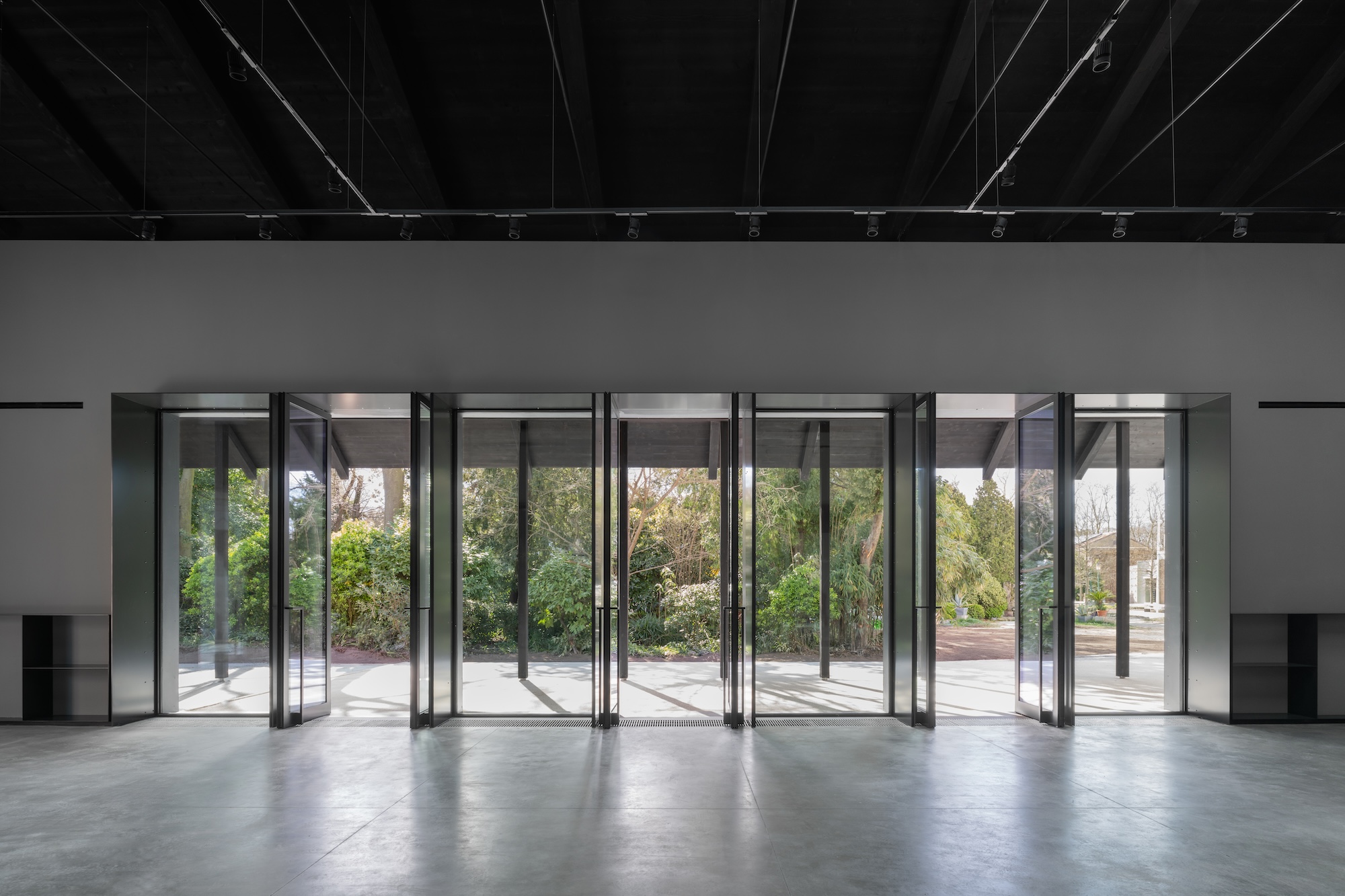
Garden view from the Central Pavilion. Photo © Marco Cappelletti / Marco Cappelletti Studio, courtesy La Biennale di Venezia
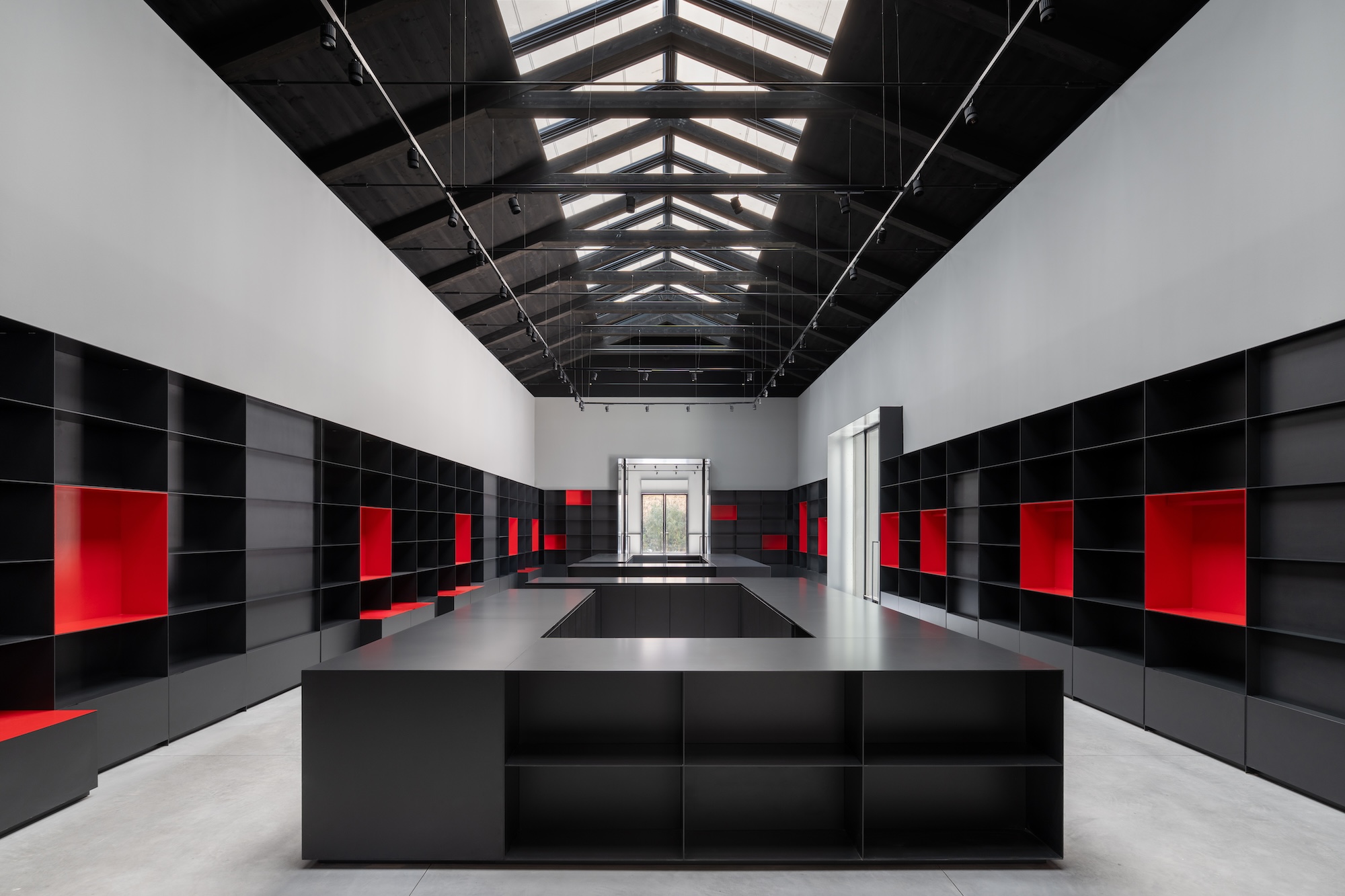
The Central Pavilion bookstore. Photo © Marco Cappelletti / Marco Cappelletti Studio, courtesy La Biennale di Venezia
Originally christened as the Palazzo Pro Arte, with a design conceived by municipal engineer Enrico Trevisanato and neoclassical facade by painter Marius De Maria, the pavilion first debuted in 1895 as the main venue for that year’s inaugural International Art Exhibition. Construction of the Giardini’s national pavilions kicked off several years later in 1906.
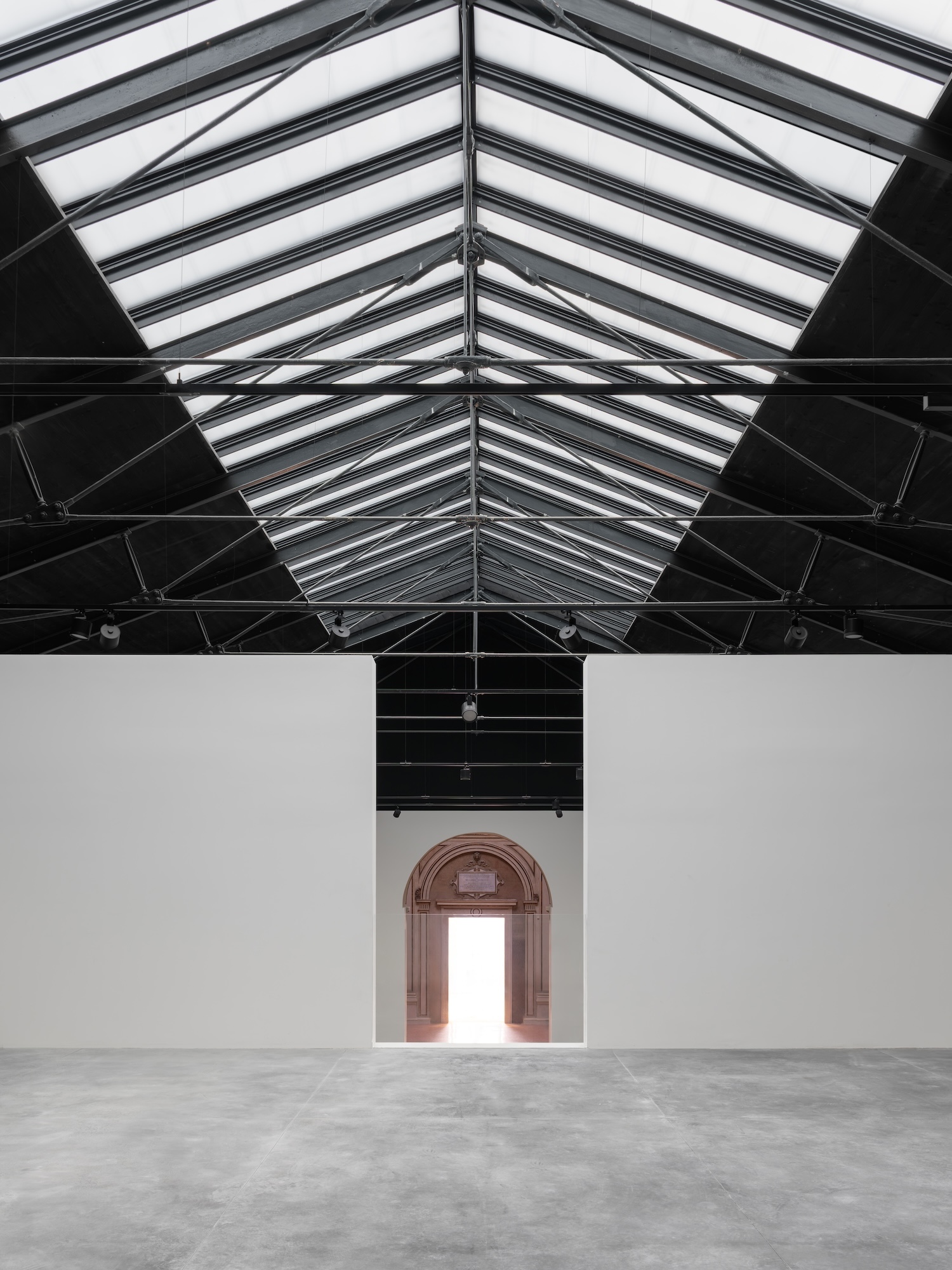
1
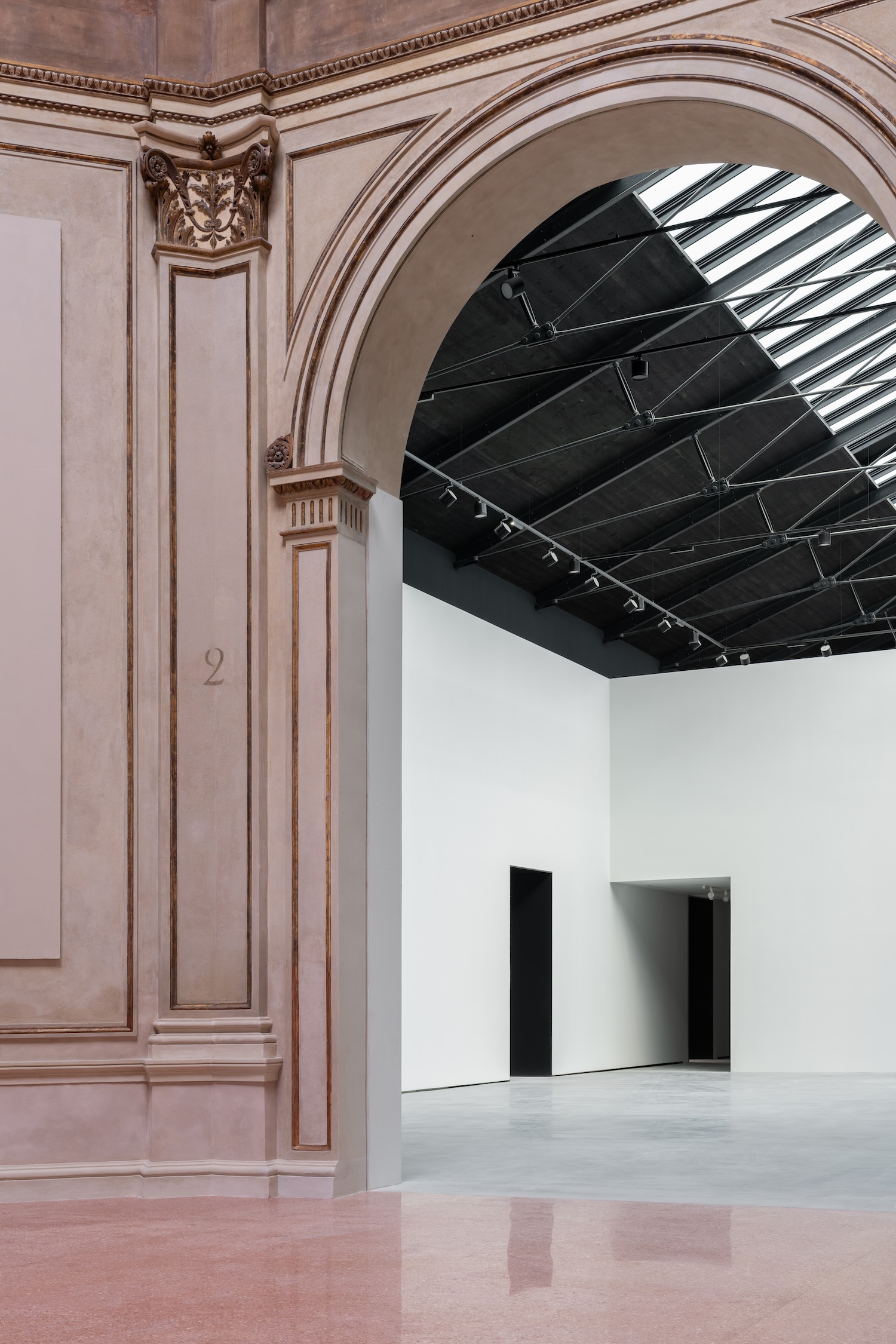
2
Central Pavilion mezzanine (1); Sala Chini (2). Photos © Marco Cappelletti / Marco Cappelletti Studio, courtesy La Biennale di Venezia
Noting that the Central Pavilion renovation goes beyond a straightforward “functional update,” the Biennale describes the project as “rewriting the entire architectural organism, redefining relationships, sequence, and connections” while “enhancing the essential nature of the architecture, preserving the memory of the different phases of construction, but stripping it of all accretions and incongruous elements.” To that end, the pavilion’s newly “neutral and flexible” white-box exhibition spaces, which encompass a total area of just under 33,400 square feet, have been wholly reorganized.
“The project demonstrates how reuse can be a creative act, not a nostalgic one: it selects, orders, and interprets the different phases in the history of the pavilion to build a new architectural unity that can fulfill the contemporary needs of La Biennale,” a press announcement explains.
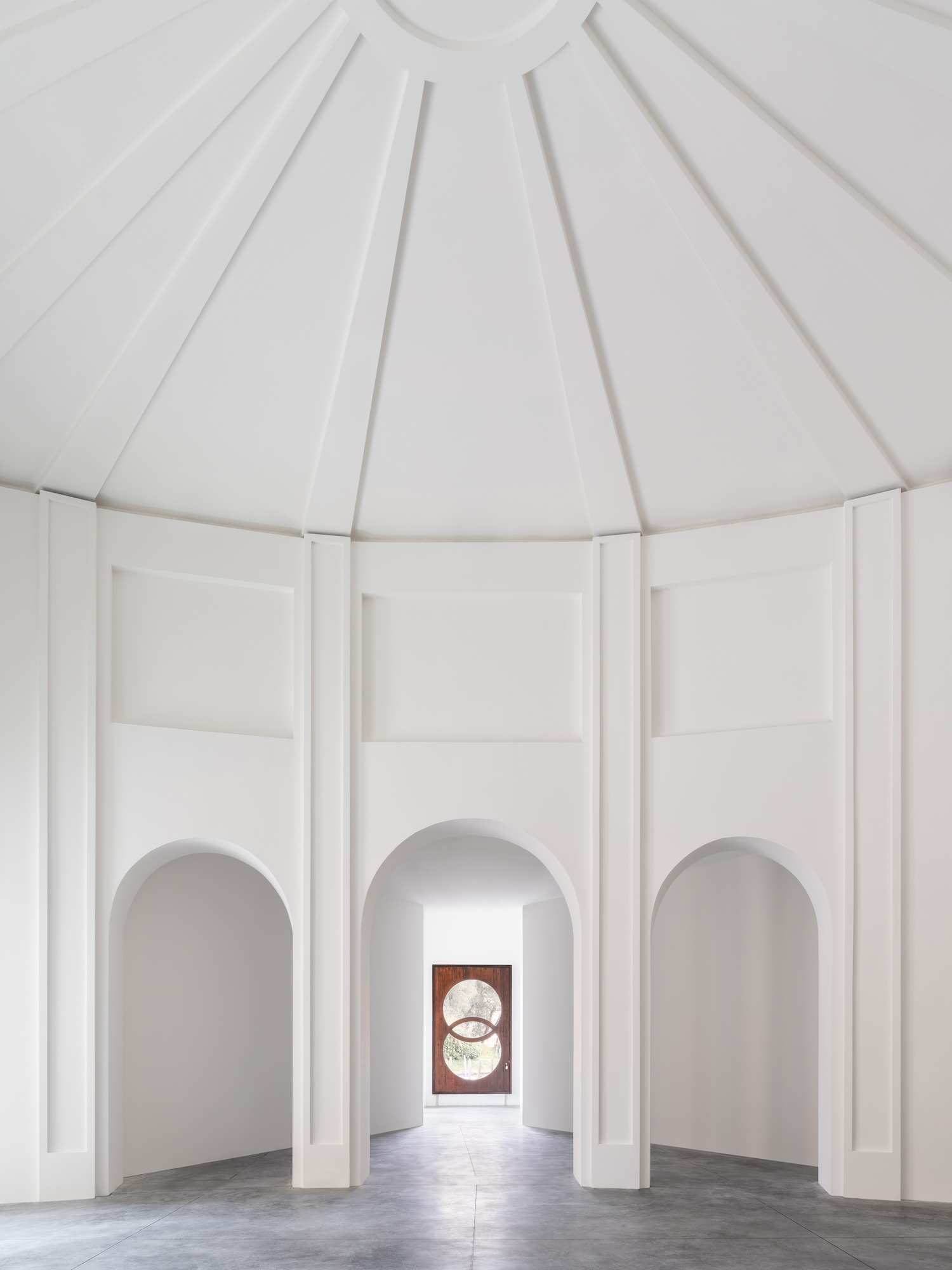
3
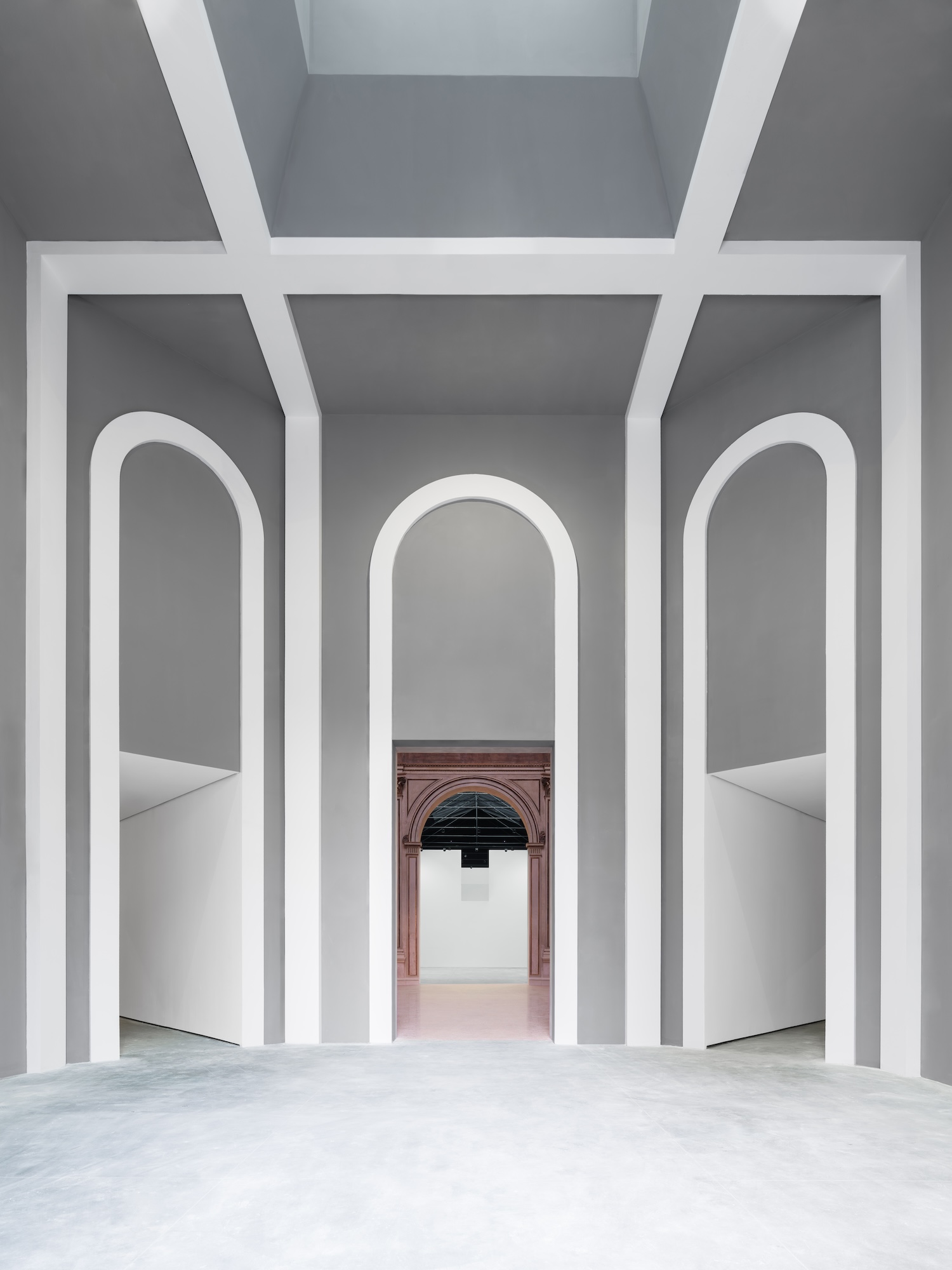
4
Sala Brenno (3), Sala di Ingresso (4). Photos © Marco Cappelletti / Marco Cappelletti Studio, courtesy La Biennale di Venezia
Labics, a Rome-based 2003 Design Vanguard, served as architectural design lead on the effort alongside Fabio Fumagalli. Additional collaborators included, among others, team leader BuroMilan, landscape designer Stefano Olivari, and MEP engineer ia2 Studio.
Historic elements that received special attention include the Scarpa-designed window fixtures, which have been restored and reinstalled. Major new interventions include the construction of two new outdoor structures, inspired by Venetian roof terraces—or altane—adjacent to the pavilion’s café and multipurpose space. “These slender structures introduce an element of openness that connect the pavilion to the landscape of the Giardini, without competing with the existing masonry mass,” the announcement details. “Built of charred laminated wood and X-LAM panels, the altane represent a conscious design gesture that sets up a dialogue with Venice and with Scarpa’s design sensibility.”
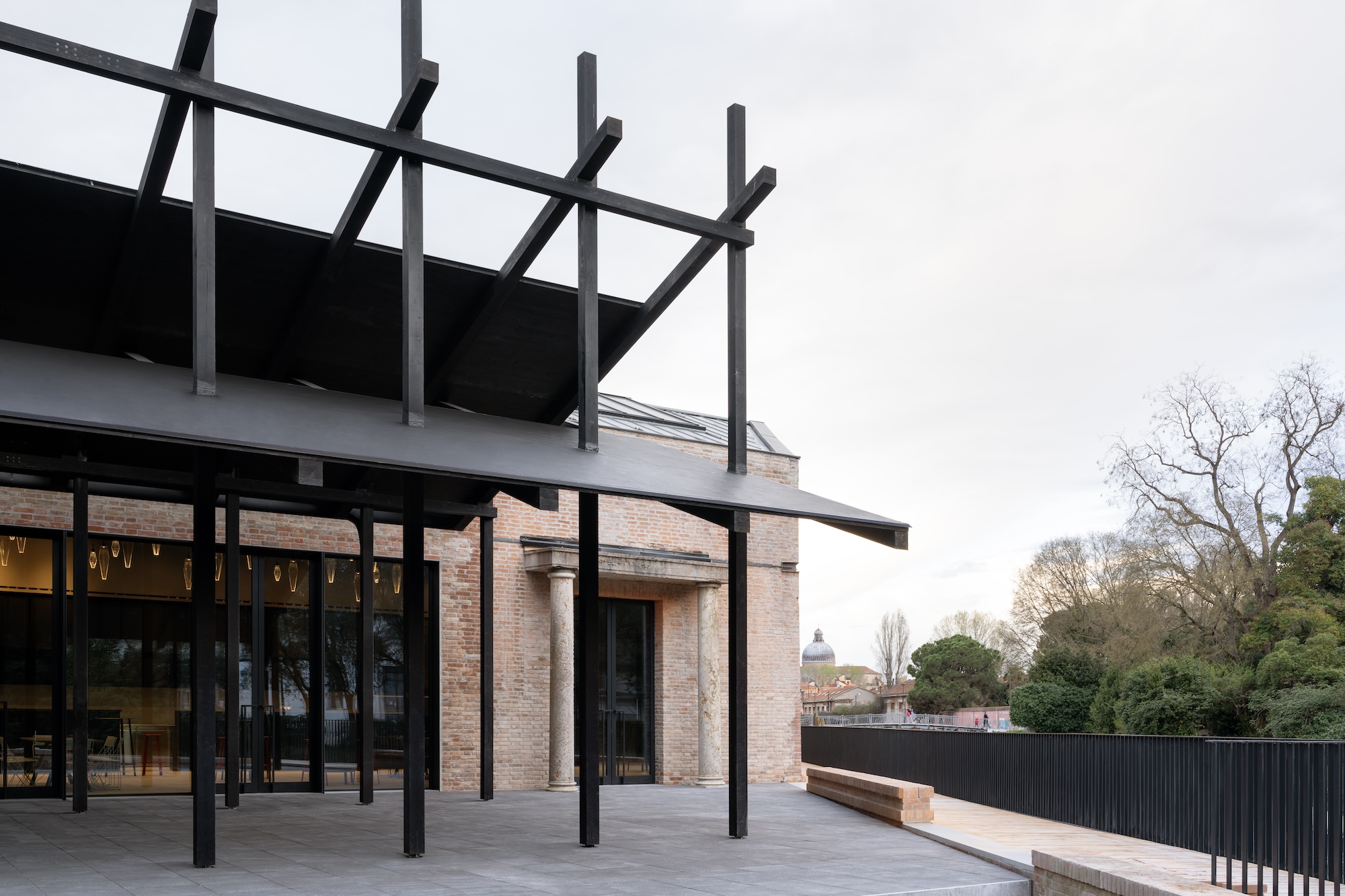
A new outdoor altane adjacent to the café. Photo © Marco Cappelletti / Marco Cappelletti Studio, courtesy La Biennale di Venezia
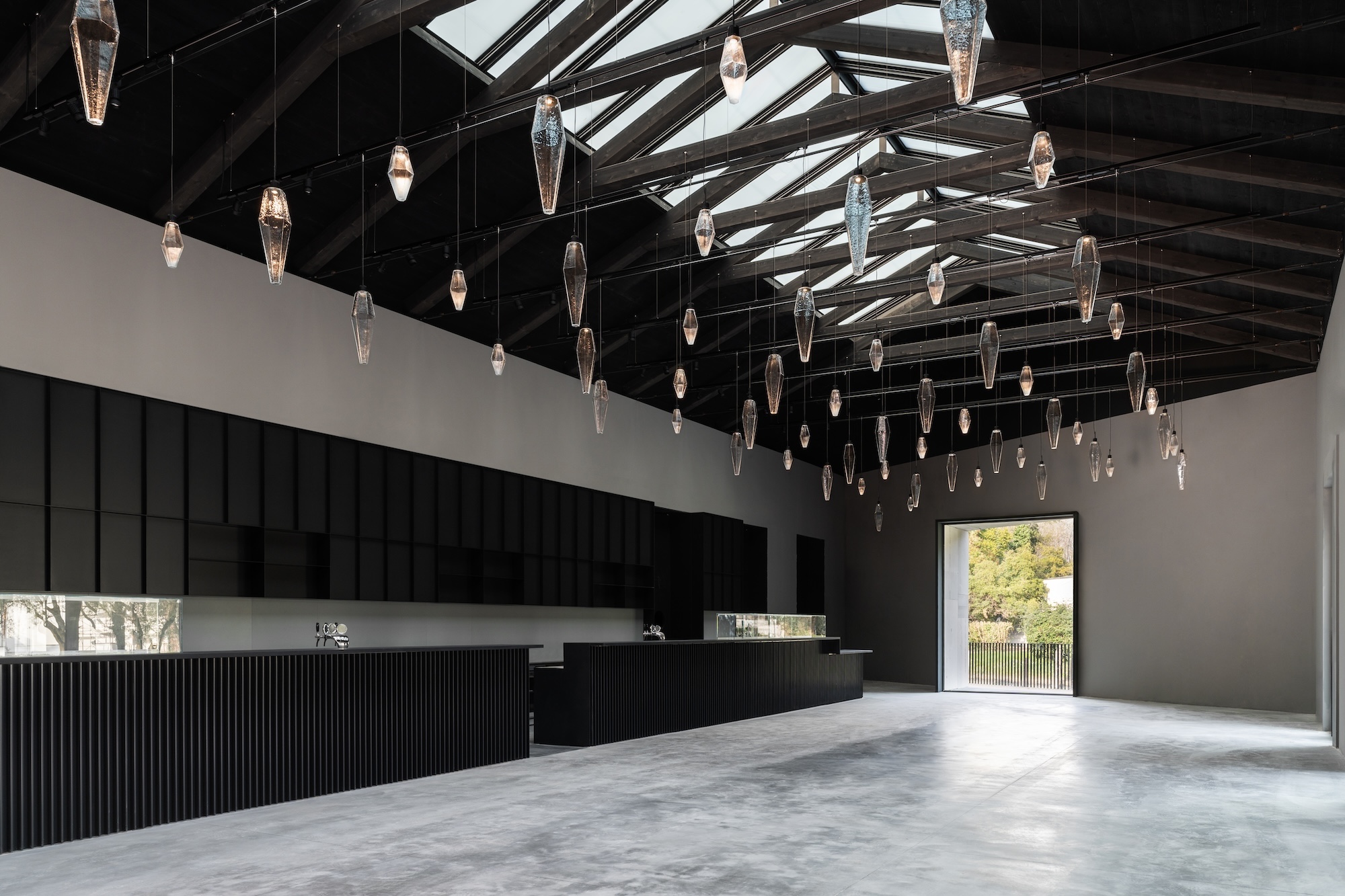
The Central Pavilion café. Photo © Marco Cappelletti / Marco Cappelletti Studio, courtesy La Biennale di Venezia
Notably, the renovation aims for LEED Gold certification. Incorporated are new skylights fitted with photovoltaic and light-diffusing glass, a natural ventilation system, and various energy- and water-reducing strategies. All the technical systems are integrated within the building envelope and concealed behind interior walls.
The government-backed renovation of the Central Pavilion was made possible by public funding allocated by Italy’s Ministry of Culture, as part of the National Plan for Complementary Investments (PNC) of the National Recovery and Resilience Plan (PNRR). It is one of the more complex elements comprising the Ministry’s Great Cultural Heritage Attractors program that forms part of a wider, 22-project initiative to “develop and enhance” the activities of La Biennale di Venezia.
Looking for quick answers on architecture and design topics?
Try Ask RECORD, our new smart AI search tool.
Ask RECORD →
Looking for a reprint of this article?
From high-res PDFs to custom plaques, order your copy today!