New York’s Skyscraper Museum Showcases the Evolution of Park Avenue in a New Exhibition

A new exhibition on view at the Skyscraper Museum chronicles the impact of Grand Central Terminal on Midtown Manhattan.
In February, New York City Mayor Zohran Mamdani pitched a seemingly fantastical proposal to President Donald Trump to place a structural deck and a 12,000-unit affordable housing complex atop the gargantuan Sunnyside rail yards in Queens. Various iterations of the scheme have been floated for decades: all have been characterized as too complicated or inordinately expensive, usually both, to achieve. But what if there is a precedent for such a Herculean feat just across the East River, in Manhattan, that could be emulated today? No, not Hudson Yards, with its gleaming stalagmite-like towers, but the blocks surrounding Grand Central Terminal, which, 120 years ago, began their metamorphosis from an open-pit train yard and industrial quarter into some of the world’s most coveted real estate. An exhibition now on display at Lower Manhattan’s Skyscraper Museum, The Invention of Park Avenue, documents that transformation.
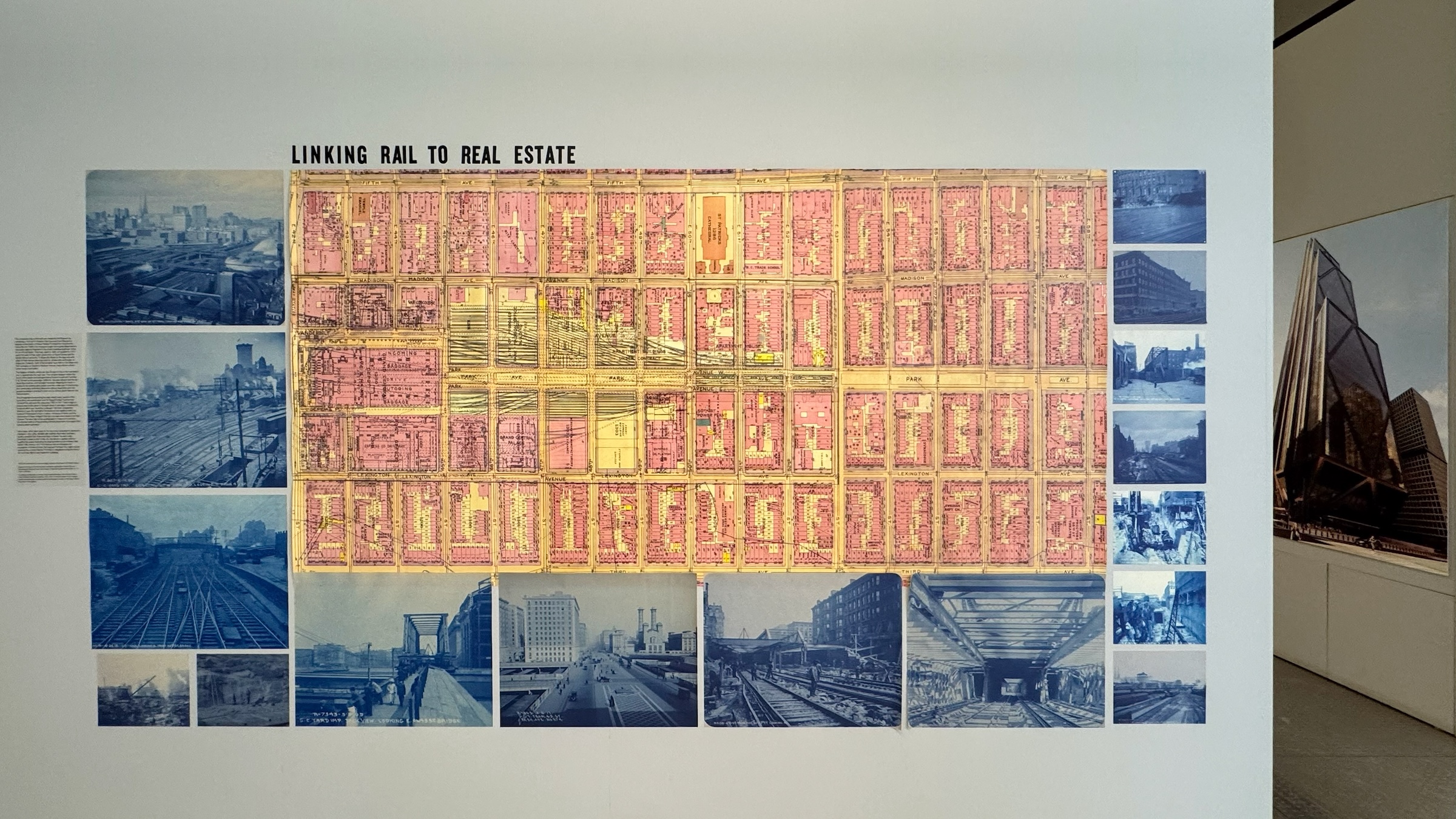
The exhibition makes use of maps and cyanotypes to establish Grand Central Terminal's historic context. Photo courtesy The Skyscraper Museum
For Carol Willis, the founder and director of the museum, the project is one that she has hoped to take on for years. “This exhibition highlights the dynamics behind Midtown’s mixed-use and high-density development and shows how it began with the construction of Grand Central Terminal,” she explains. “It is a story about linking rail to real estate.”
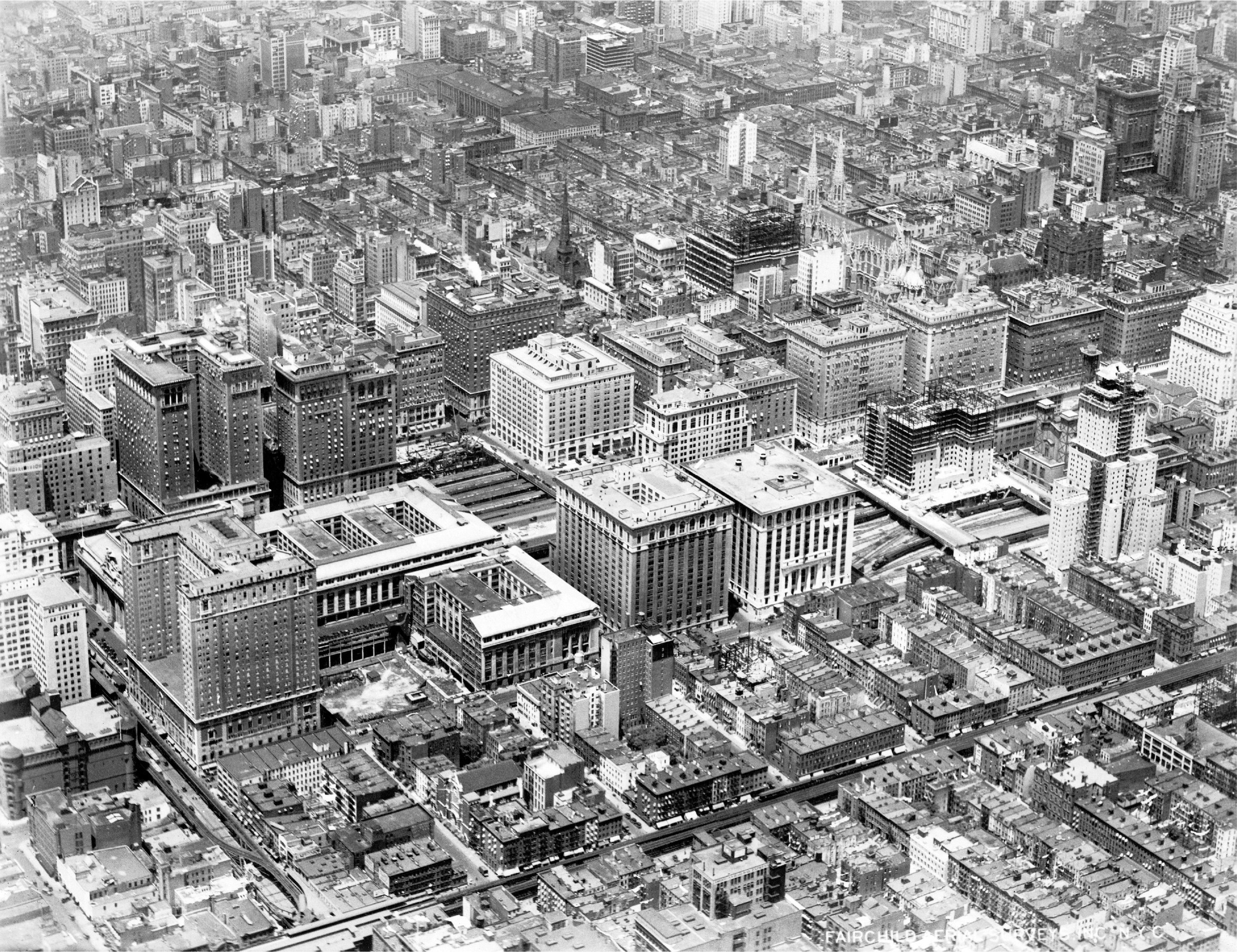
The exhibition focuses on the blocks extending from 42nd to 50th Streets and across Lexington to Madison Avenues, encompassing New York Central Railroad’s terminal, its rail yard, and the structures placed atop it. Curatorially, the show is divided into three eras: the construction of Grand Central Terminal (1903–1913), which, in a stroke of genius by civil engineer William J. Wilgus, saw the insertion of a double-decker rail yard, partially financed via land leases for development above; the midcentury office boom that recast the neighborhood as a commercial district; and today’s spate of feverish redevelopment, which includes Foster + Partners’ recently completed 270 Park Avenue.
1
2
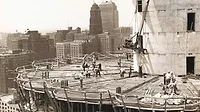
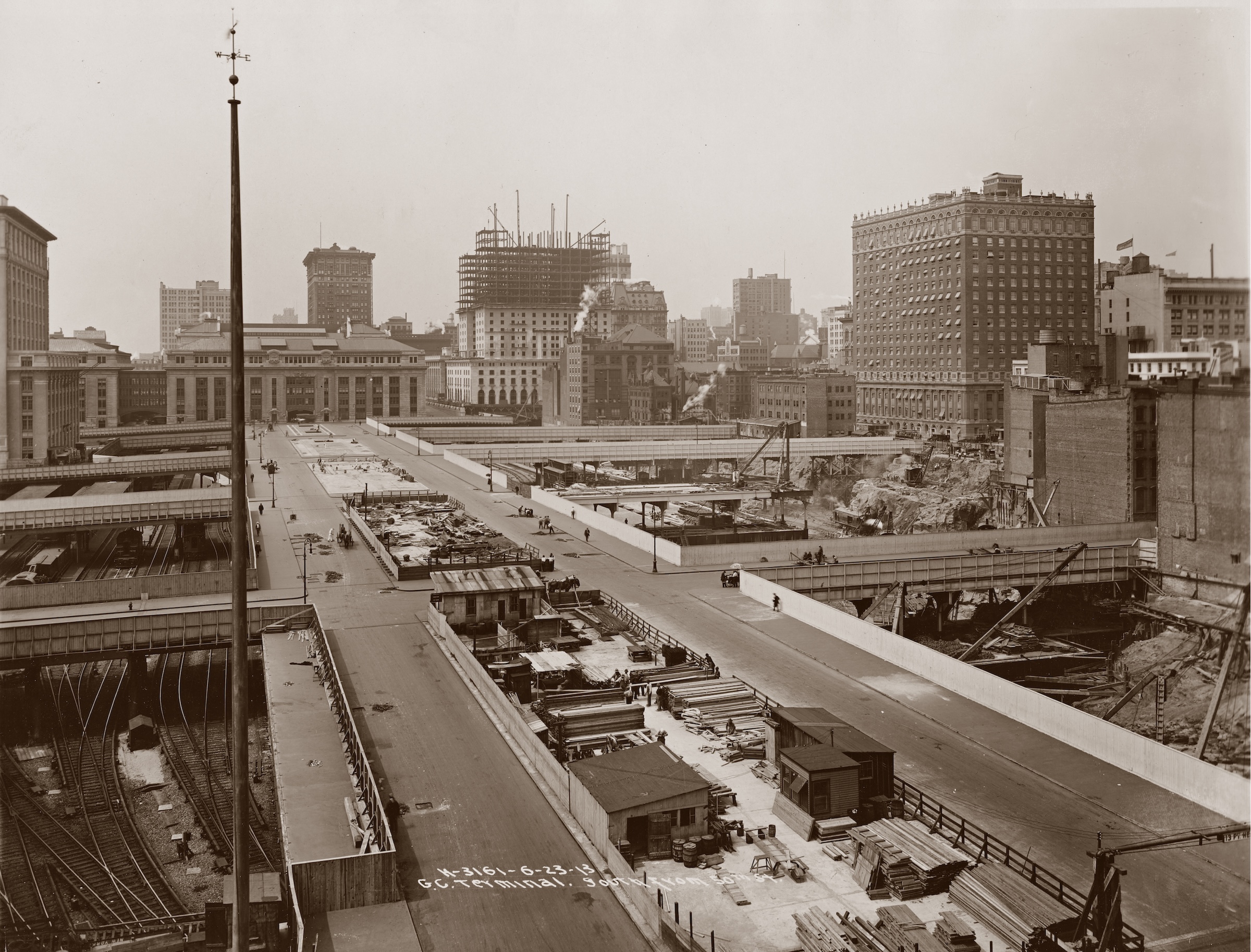
New York Central Railroad partially financed the terminal construction and railyard improvements through development. Images courtesy Avery Architectural Fine Arts Library, Columbia University (1); New York State Archives (2)
The genesis of the terminal in the early 20th century is brought to life through maps, cyanotypes, hand-drawn renderings, and photography. Together, the materials present a city growing fast around Grand Central Station (1900), the predecessor of the would-be terminal; and its environs, soot-blackened by coal-belching locomotives and industrial facilities. Willis’ curation effectively frames the forces that engendered the site’s transformation, namely the advent of electrification (the state government also banned steam locomotives in Manhattan with a deadline of 1908), which removed the need for open-cut track beds, and competition from Pennsylvania Railroad—across town, the McKim, Mead & White–designed terminus was beginning construction.
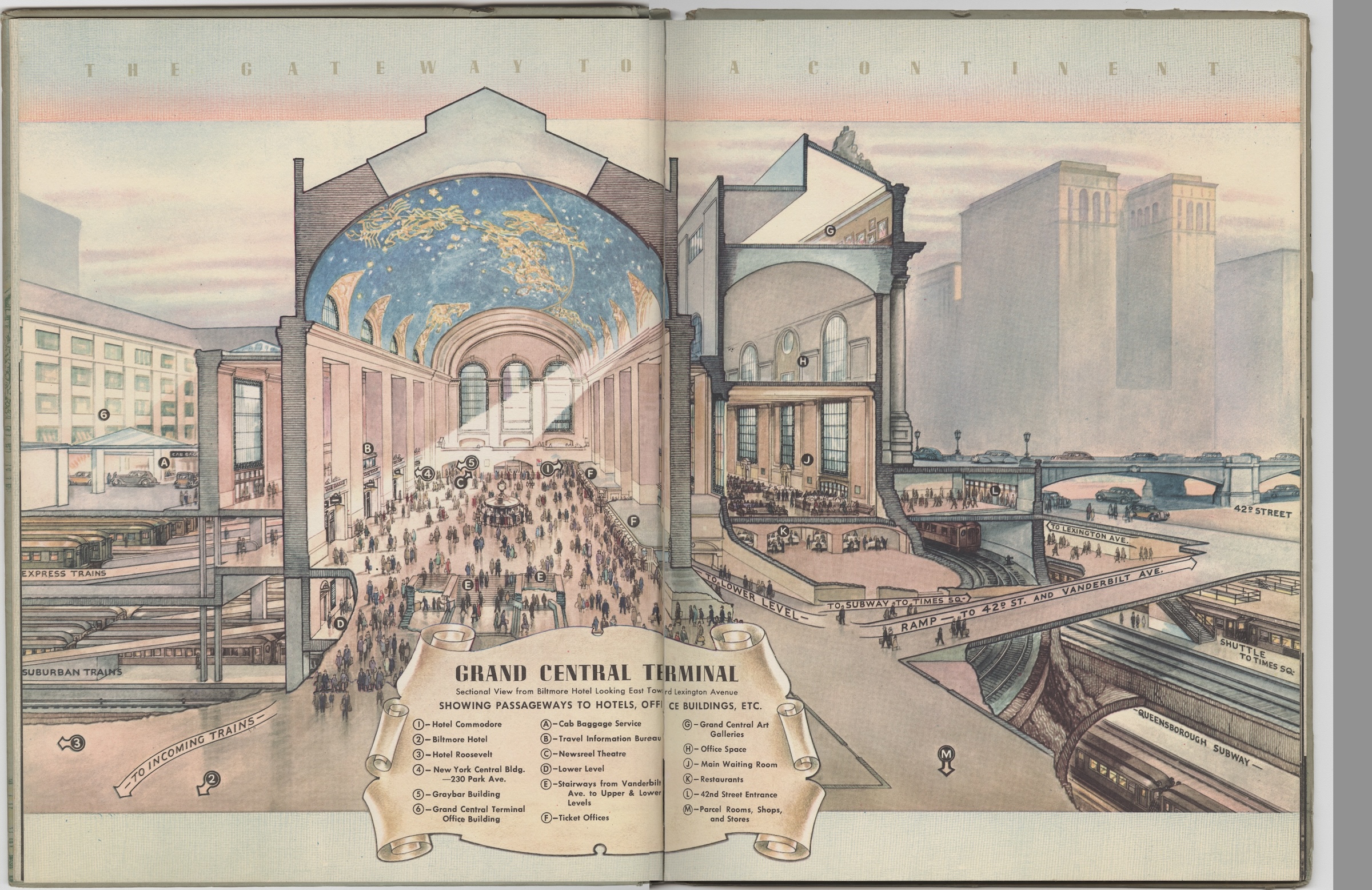
Grand Central Terminal sits atop a dense web of commuter and rapid transit infrastructure, rendered here in a promotional book. Image courtesy The Skyscraper Museum
Designed by Reed & Stem and Warren & Wetmore, Grand Central Terminal (1913) is, as Willis puts it, “the tip of the iceberg,” for the technically intensive solution developed by Wilgus below grade—the rail yard counts 67 tracks to Pennsylvania Station’s 21. That relationship between structure and substructure is translated to museumgoers through sections and other drawings of proposed and completed developments built shortly after the terminal’s completion.
The postwar and contemporary years are well-narrated—though not at the same level of historical detail—and clearly convey the cultural, economic, and political currents that reshaped this stretch of Park Avenue into speculative office towers and corporate headquarters. Namely, Willis notes that such developments, critical to the city’s status as a command center for global finance and media, required substantially larger floor plates. The buildings sought maximum rentable area within prescribed zoning limits, while staying proximal to an easily accessible transportation hub. A similar phenomenon is playing out today because of the 2017 East Midtown rezoning, which dramatically increased allowable floor-to-area ratios
3
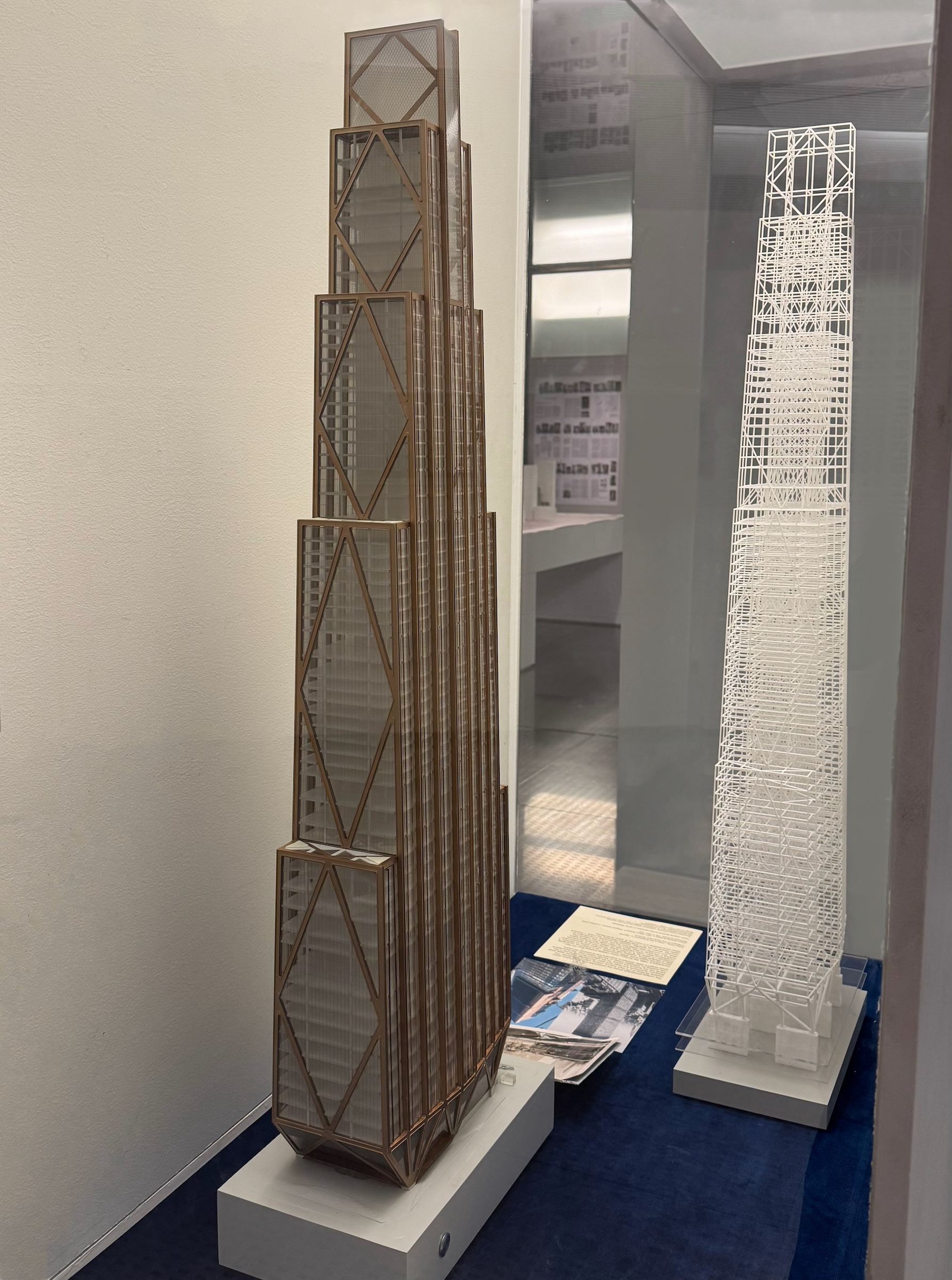
4
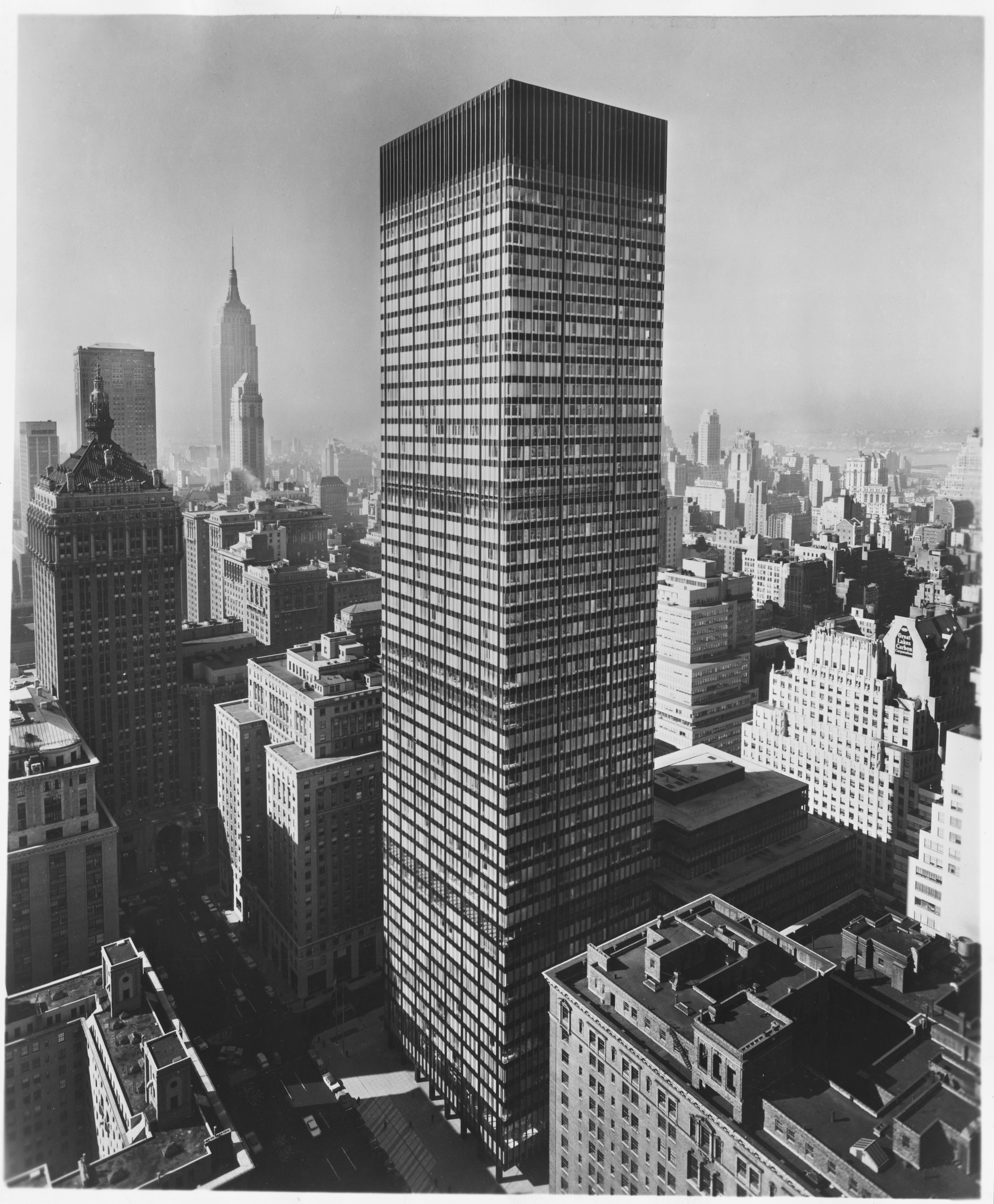
The Union Carbide Building, designed by Gordon Bunshaft and Natalie de Blois, was a significant midcentury addition to Park Avenue (3). It has been replaced by the Foster + Partner's designed 270 Park Avenue (4). Images courtesy Municipal Archives, City of New York (3); The Skyscraper Museum (4)
As would be expected of the Skyscraper Museum, the show highlights specific buildings in the study area with several physical models. Some were designed in-house while others like 425 Park Avenue (2022) were provided by participating architecture firms. Certain models, like that for the Pan Am Building (1963) and a diorama of Midtown Manhattan, were put together by hobbyists—one was hand-delivered by an enthusiast who drove from Arizona to New York City with his family.
Looking for quick answers on architecture and design topics?
Try Ask RECORD, our new smart AI search tool.
Ask RECORD →
Altogether, the exhibition is a well-rounded and accessible chronicle of Grand Central Terminal and its continued impact on Midtown Manhattan, and New York City at large.
The Invention of Park Avenue is on view through September 2026.
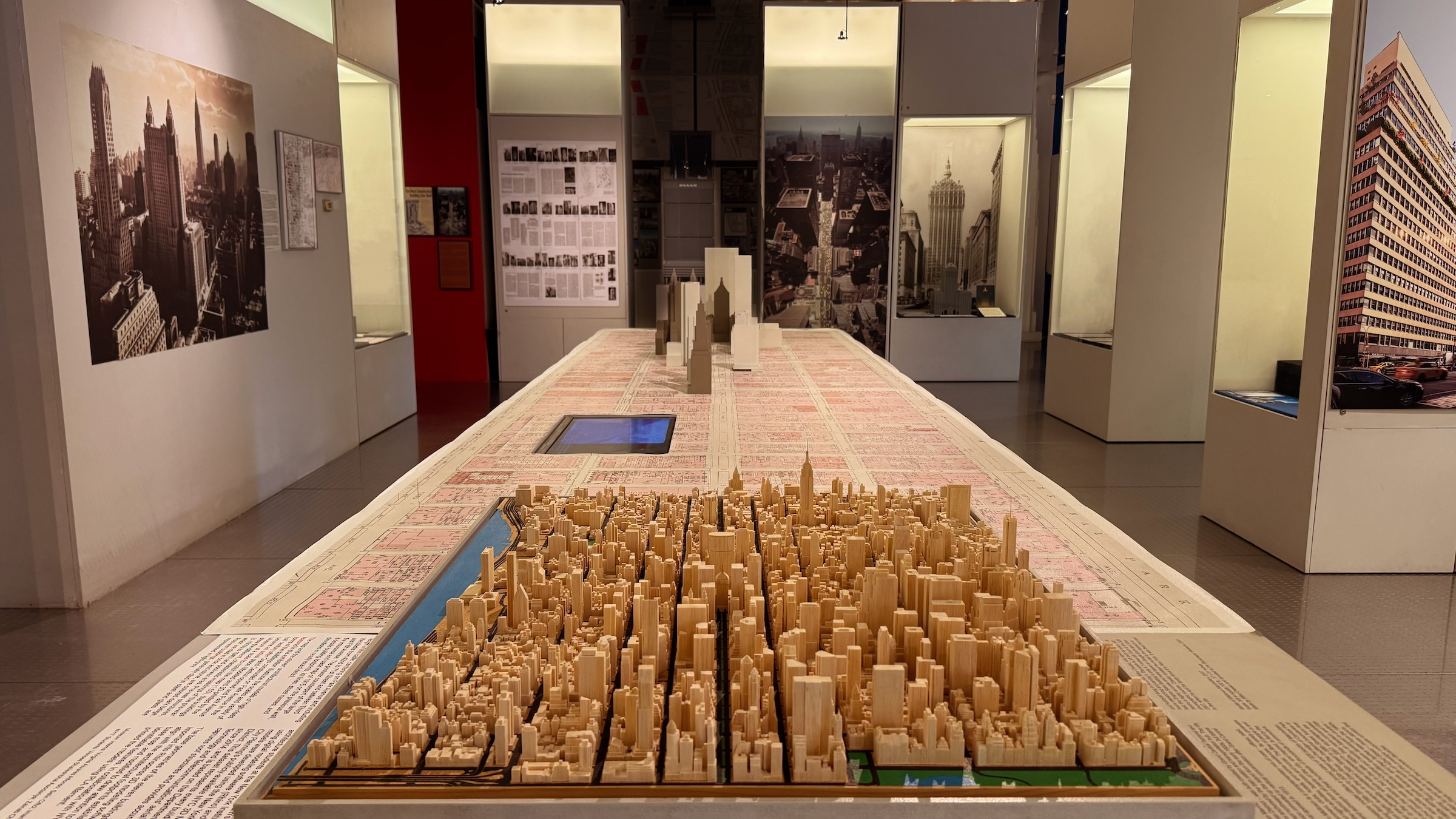
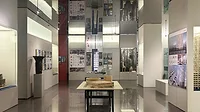
The exhibition includes a diorama of Midtown Manhattan, among other models. Photo courtesy The Skyscraper Museum
Looking for a reprint of this article?
From high-res PDFs to custom plaques, order your copy today!