Architectural Record
search
cart
facebook twitter linkedin youtube
  • Sign In
  • Subscribe
  • Sign Out
  • My Account
Architectural Record
  • NEWS
    • Latest News
    • Awards
    • Interviews
    • Obituaries
    • Podcasts
      • Design:Ed Podcast
      • Sponsored Podcasts
  • OPINION
    • Book Reviews / Excerpts
    • Exhibition Reviews
    • Forum
  • EXCLUSIVES
    • Videos
    • Design Vanguard
    • Top 300 Firms
    • Sponsored Content
    • Sponsored eBooks
    • From the Archives
  • CONTINUING ED
    • Editorial Continuing Ed
    • CE Center
    • CE Academies
  • PROJECTS
    • Buildings By Type
    • Reuse & Renovation
    • Museums & Arts Centers
    • Colleges & Universities
    • Multifamily Housing
    • Interiors
    • Lighting
    • Kitchen & Bath
  • HOUSES
    • Record Houses
    • House of the Month
    • Featured Houses
  • PRODUCTS
    • Products by Category
    • Record Products of the Year
    • Latest Products
  • EVENTS
    • Dates & Events
    • Record on the Road
    • Innovation Conference
    • Sustainability in Practice
    • Women In Architecture
    • Webinars
    • Ad Excellence Awards
    • Submit an Event
  • CONNECT
    • Ask RECORD AI
    • Newsletters
    • Contact
    • Advertise
    • Editorial Calendar
    • Store
    • Customer Service
  • SUBMIT
    • Submission Guidelines
    • RECORD Competitions
  • MAGAZINE
    • Subscribe
    • My Account
    • Digital Edition
    • Current Issue
    • Firm Pass
    • Historic Archive
Architecture NewsCommentary & CriticismOpinion

Books

‘Architecture and the Right to Heal’ Traces Displacement in the Wake of the Ottoman Empire

Review: ‘Architecture and the Right to Heal: Resettler Nationalism in the Aftermath of Conflict and Disaster’ by Esra Akcan

By Izzy Kornblatt
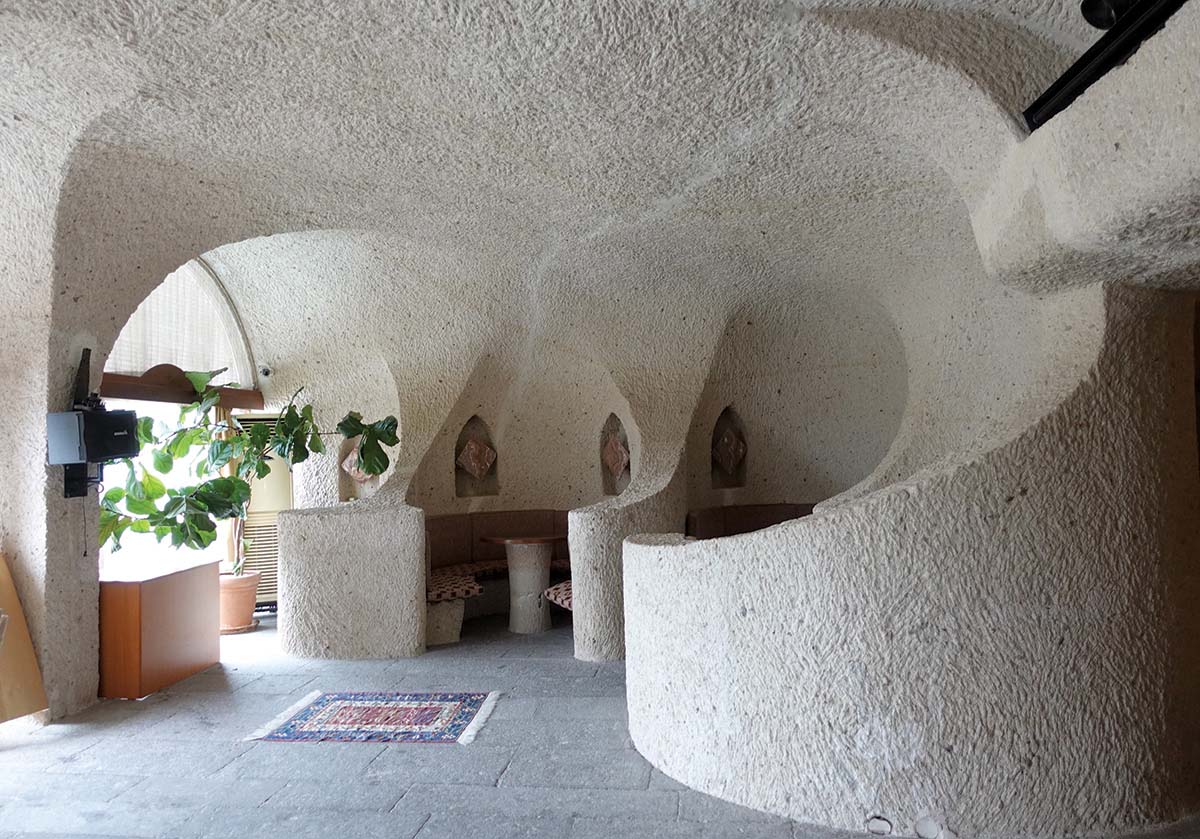
Argos Hotel
Photo © Esra Akcan, 2018. courtesy Duke University Press
The Argos Hotel in Uçhisar, Cappadocia, designed by Aslı Özbay, repurposes an ancient site in Turkey.
April 9, 2026
✕
Image in modal.

Early on in Architecture and the Right to Heal, Esra Akcan tells a curious anecdote: “Of all the migration stories that I heard in passing from my grandparents while growing up in Turkey, the most unbelievable was that of a grandaunt who had lived on a distant island on the Danube River, an island so small that it was forgotten in an international treaty and accidentally remained part of the Ottoman Empire until it submerged under the waters.” Having long assumed that the story was a fairy tale, Akcan only later learned that the island was real: Ada Kaleh, located between Serbia and Romania and overlooked in the 1878 Treaty of Berlin, remained under Ottoman control until 1922 and was inhabited by a largely Muslim community until it was submerged during the construction of a hydroelectric dam in the 1960s. Ultimately, much of its population resettled in Turkey.
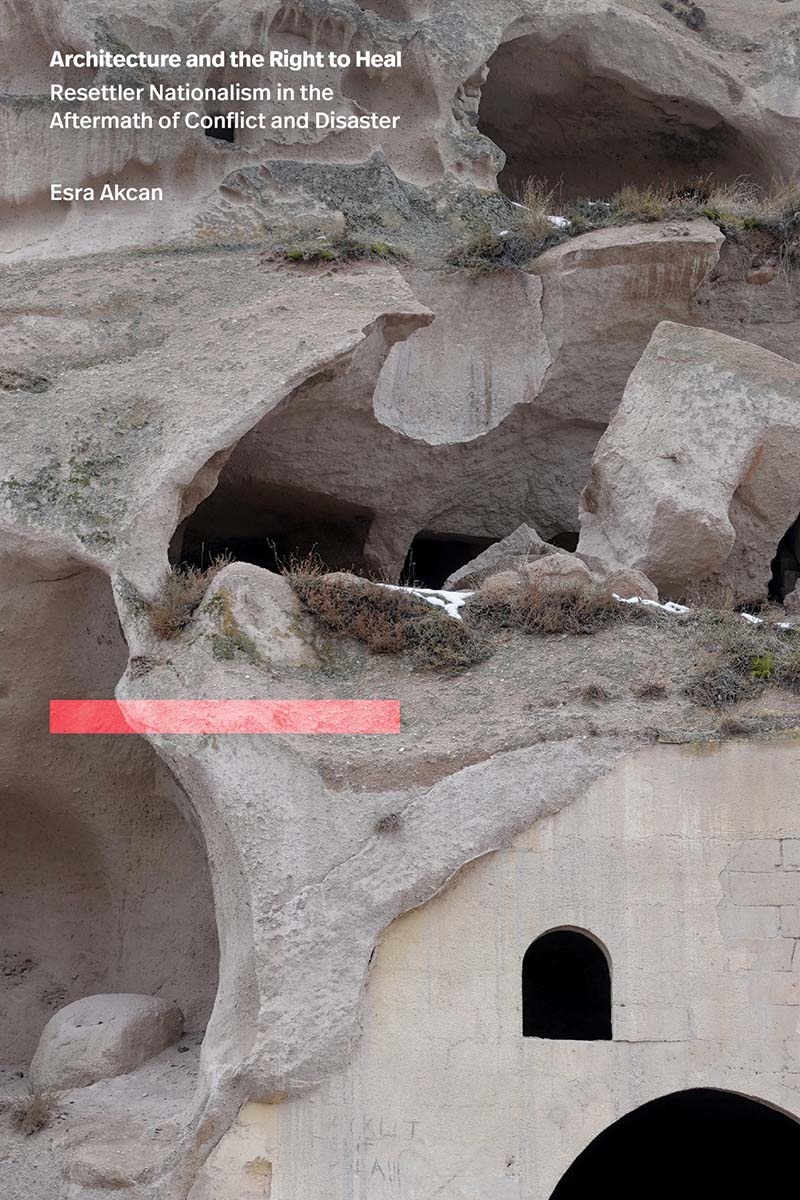
Architecture and the Right to Heal

Architecture and the Right to Heal: Resettler Nationalism in the Aftermath of Conflict and Disaster, by Esra Akcan. Duke University Press, 464 pages, $40. Image courtesy the publisher, click to enlarge.

Ada Kaleh does not end up figuring prominently in the book. Yet this strange, sad story serves to introduce several of Akcan’s themes: the forced dislocation of populations, the rise of ethnic and religious nationalisms, and the ecological devastation of 20th-century industrial development. Architecture and the Right to Heal offers a history of these forces across former reaches of the Ottoman Empire, centered on Anatolia, extending west to Greece and the Balkans, south into Sudan, and east toward Iran. Like many scholars of the region, Akcan questions the common notion of the “Middle East,” showing how both the conceptual categories and physical borders that divide Europe, Africa, and Asia were formed through the slow and violent process of the Ottoman Empire’s dissolution.

Akcan, an architect and professor at Cornell, studies this history through the design and occupation of built spaces. For example, Akcan delves into the career of 20th-century Sudanese architect Abdel Moneim Mustafa, who, she persuasively argues, questioned the idea of “tropical architecture” and pursued an alternative climatic modernism. Other figures in the book include those outside the profession who contended with transformations of the built world around them. The second chapter, “Partition,” recounts the story of the early 20th-century population exchanges between southeastern Europe and Anatolia that uprooted countless lives and forced ethnic categories on those whose complex backgrounds defied such division. Akcan follows a Turkish-speaking Christian from Cappadocia and a Muslim from a Macedonian village who were forced to relocate to Greece and Turkey, respectively. To tell this story, she relies on their written remembrances of buildings, landscapes, and relationships left behind, and of the placeless grids of low-quality housing where they were resettled.

Architecture emerges as both antagonist and protagonist. It can be a tool of ecological destruction and political domination, as in a series of extravagant cultural buildings in Istanbul’s Zeytinburnu district that erased the area’s multicultural history to advance nationalist narratives. But it can also be a medium for cultural connection, as in projects that begins to come into focus through Akcan’s case studies, among which are architectural projects by such architects as Aslı Özbay, who has in recent decades recovered and restored abandoned structures once occupied by Christians in Cappadocia.
Club Med hotel of Cappadocia

In 1964, cave dwellings in Turkey were turned into the luxury Club Med hotel of Cappadocia. Photo © Esra Akcan, 2018. courtesy Duke University Press

Throughout Architecture and the Right to Heal, the thing Akcan suggests we need to heal from most is what she calls “resettler nationalism,” which refers to the role of mass migration in the formation of religious and ethnic nationalism. In the post-Ottoman context, Akcan’s term proves useful in adding to the categories of colonized and colonizer, which don’t map neatly onto millions of resettled people. The term points to the arbitrariness of identities often presented as immutable and to the vengeance that nationalism can acquire in the hands of those whose lives are shattered in its name. One is reminded of Hannah Arendt’s observation that those deprived of the rights granted by nationality tend to cling “all the more desperately” to national identity.

Akcan shows that these population exchanges had world-altering reverberations, not only through the nation-states they shaped and the violence they precipitated but also because they became a model for subsequent partitioning—in, for example, British-ruled India and ex-Ottoman Palestine. Reading this book, one cannot help but think of how these dislocations continue to fuel devastating violence, not least in the Israel-Hamas war in Gaza.

What is perhaps most surprising about Architecture and the Right to Heal, given its grim subject, is that at its core it retains optimism. Akcan is steadfast in her belief in a future not defined by the division and destruction of this history but by interconnection. This is not an imminent future, but by describing the spaces and ways of occupying them that could enable its realization, she renders it a possible one. “A critical history of partition,” she writes, needs to “reclaim cosmopolitan ethics as a prerequisite for a new culture of welcoming and peace.”

Looking for quick answers on architecture and design topics?
Try Ask RECORD, our new smart AI search tool.
Ask RECORD →

KEYWORDS: Book Reviews / Excerpts

Share This Story

Looking for a reprint of this article?
From high-res PDFs to custom plaques, order your copy today!

Izzy kornblatt
RECORD contributing editor Izzy Kornblatt is a Ph.D. candidate at the Yale School of Architecture. He is the editor of Encounters: Denise Scott Brown Photographs (Lars Müller Publishers, 2025).

Post a comment to this article

Report Abusive Comment

Subscription Center
  • Create an Account
  • Start a Subscription
  • Manage My Account
  • Sign Up for Newsletters
  • Visit Customer Service
  • Update Preferences

More Videos

Sponsored Content

Sponsored Content is a special paid section where industry companies provide high quality, objective, non-commercial content around topics of interest to the Architectural Record audience. All Sponsored Content is supplied by the advertising company and any opinions expressed in this article are those of the author and not necessarily reflect the views of Architectural Record or its parent company, BNP Media. Interested in participating in our Sponsored Content section? Contact your local rep!

close
  • TAMLYN XtremeTrim Exterior Trim
    Sponsored byTamlyn

    Designing Cleaner Panel Facades: Why Exterior Trim Details Matter

  • Building with Vapor Barriers
    Sponsored byReef Industries, Inc.

    Vapor Barriers Help Control Moisture in Tighter Building Designs

  • Duct Interior with Prodeq System
    Sponsored byHenry, a Carlisle Company

    Designing Resilient Water Containment Systems

DESIGN:ED Podcast
Listen to Architectural Record’s DESIGN:ED Podcast

Events

June 10, 2026

Rethinking Stormwater – The Power of Porous Paving

Credits: 1 AIA LU/HSW; 1 AIBD P-CE; 0.1 ICC CEU

Learn how porous paving systems support stormwater management, reduce heat island effects, and enhance sustainable site design performance.

June 11, 2026

Very Early Warning Fire Detection for Mission-Critical Facilities

Credits: 1 AIA LU/HSW; 1 AIBD P-CE; 0.1 ICC CEU

Examine advanced fire detection strategies that support uptime and enhance safety in data centers and other mission-critical facilities.

View All Submit An Event

Products

2026 Architect's Square Foot Costbook

2026 Architect's Square Foot Costbook

See More Products

Popular Stories

Practice Matters illustration

What’s in a (Firm’s) Name? Thinking About Succession and Legacy

Practice Matters illustration

By the Numbers: Counting America's Architects

House on a Hill

Design Vanguard 2026: Forma

Crane Cove, ONO

Design Vanguard 2026 Winners

House A on a Hill

Design Vanguard 2026: Santiago Valdivieso

Broader Sustainability of CMU - Free Webinar - May 21, 2026

Related Articles

  • Big Building: Urbanization in the Wake of the Boom and Bust

    See More
  • In-the-Cause-of-Architecture-Frank-Lloyd-Wright-1928-01.jpg

    In the Cause of Architecture, I: The Logic of the Plan

    See More
  • Michael-Murphy-TED

    Architecture That’s Built to Heal: Michael Murphy’s TED Talk

    See More

Related Products

See More Products
  • GlobalData_logo_blue_header.png

    Construction in the US - Key Trends and Opportunities to 2023

See More Products

Events

View AllSubmit An Event
  • April 29, 2026

    Data Center Design: Specifying the Right Closure Products to Safeguard Critical Infrastructures

    NOW ON DEMANDCredits: 1 AIA LU/HSW; 1 AIBD P-CE; 0.1 ICC CEU; 0.1 IACET CEU This webinar explores different data center models and the ways that architects and designers can incorporate rolling and sectional closures into their designs to meet operational goals.
View AllSubmit An Event
×

The latest news and information

#1 Source for Architectural Design, News and Products

SUBSCRIBE
  • RESOURCES
    • Advertise
    • Contact Us
    • Submit
    • Store
  • ACCOUNT CENTER
    • Create an Account
    • Start a Subscription
    • Manage My Account
    • Sign Up for Newsletters
    • Visit Customer Service
    • Update Preferences
  • PRIVACY
    • PRIVACY POLICY
    • TERMS & CONDITIONS
    • DO NOT SELL MY PERSONAL INFORMATION
    • PRIVACY REQUEST
    • ACCESSIBILITY
  • SERVICES
    • Marketing Services
    • Reprints
    • Market Research
    • List Rental
    • Survey/Respondent Access
  • STAY CONNECTED
    • Linkedin
    • Facebook
    • Instagram
    • YouTube
    • X (Twitter)

Copyright ©2026. All Rights Reserved BNP Media, Inc. and BNP Media II, LLC.

Design, CMS, Hosting & Web Development :: ePublishing