Books
‘Out There’ Surveys 50 Architecture Practices Transforming Regional Cities and Small Towns
‘Out There: Architecture Across America’ by Robert Ivy, Cathleen McGuigan, and Peter MacKeith
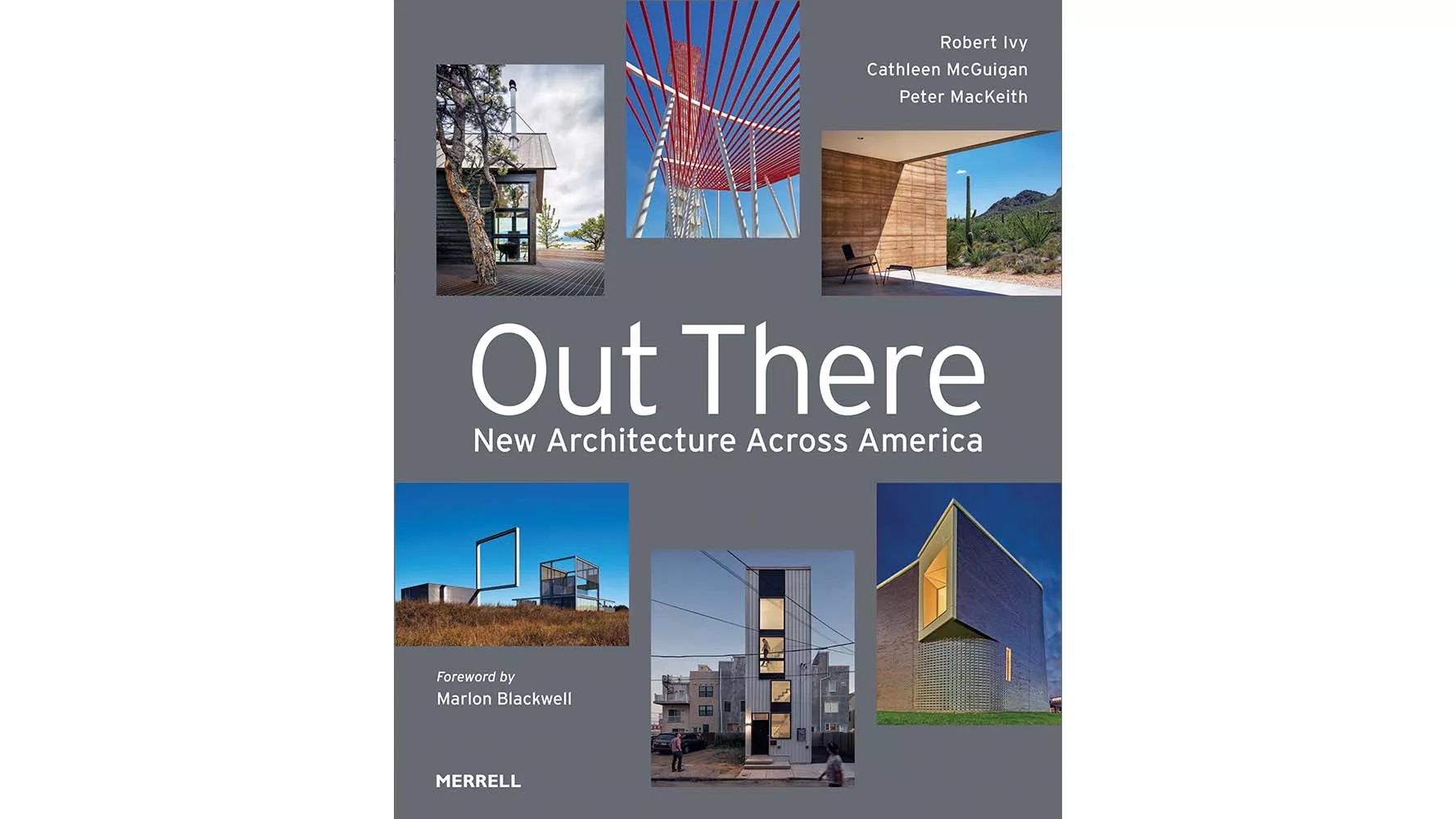
The idea for Out There, to be published in June, has been a decades-long pursuit for former RECORD editor in chief Robert Ivy. The February 2001 issue of the magazine, titled “Out There . . . Architecture Outside the Centers of Fashion,” presented, as Ivy wrote, “a geographically dispersed, selective sampling of projects and people along less traveled roads.” In this new tome, cowritten with fellow former RECORD editor in chief Cathleen McGuigan and educator Peter MacKeith, that initial sampling of six architects has grown to 50 architecture practices—some in places that are not so “out there,” including Boston, Brooklyn, and Los Angeles, as the original cohort. Many are Design Vanguards and firms that will be familiar to regular readers of RECORD. Following is an excerpt from Ivy’s introduction, “Reflections from the Heartland.”

There is power here. All architectural design ultimately includes form-making, and today’s architects in this country are producing their own kind of potent structures, even in projects as small as park pavilions or as large as schools. The humble public restrooms designed by GOA (formerly Gray Organschi) in the Bronx, New York, possess a quiet formal dignity and resolute power at a small scale in the urban fabric. The house Candid Rogers designed for himself in Marfa, Texas, though tiny, commands its surroundings like an inevitable lantern set in the flatlands. Brooklyn-based Worrell Yeung finds formal gravitas in the pared-down walls, cut openings, and pitched roofs of the agricultural Northeast. Avoiding formalism for its own sake, the projects that follow would not, could not, belong anywhere else; removed from their specific contexts, their potency would evaporate. That single word—belong—helps in describing the central motive of this moment, especially in contrast to today’s ubiquitous, placeless digital models.
A sense of disparity from inherited culture animated a previous generation. Confronted by the ubiquity of the International Style—which, in the postwar era, swept away accretions of historicist detail and reduced buildings to their structural bones and material essence—the idea of critical regionalism offered pause. By liberating architecture from the strictures of historicism, populism, and an overly simplified technocracy, scholars such as Kenneth Frampton, Alexander Tzonis, and Liane Lefaivre widened our appreciation of the built environment, reframing ideas that had long existed in the architectural ecosystem. Their focus ultimately lay in the potential of the tectonic—in the opportunities inherent in reality itself—rethinking, in contemporary terms, antecedent and existing forms and materials, as well as the particularities of topography, light, and context. While related to critical regionalism, the contemporary “out there” architects, in crafting their own architecture of honesty and belonging, defy easy categorization, even as the concept of “locus” both binds them and frees their individual expressions of place.
Strong ideas continue to buffet the architectural landscape. Over the last two decades, to attend a university lecture or to review architectural writing is to be met with messages laced with ever-insistent polemics. Forcefully presented by their proponents, these positions clamor for recognition—and, indeed, many deserve and receive it. Yet the dilemma for architects can loom large: how to satisfy a world overflowing with demands, in which each dominant idea in the architectural culture seems more critical than the last.
The values at the core of “out there” architects’ decision-making are what ground them. In conversation, they describe what animates their work—whether environmental concerns, community-based design, design-build practice, or social or artistic issues. Yet the ways in which they express these underlying, often abstract values vary widely from one person or firm to the next. The contemporary architects shown here have quietly accepted many of the exigencies of a demanding programmatic nexus and, without bravado, organized them into coherent form. Rather than producing buildings that trumpet their ideas overtly, they subtly incorporate a range of critical concepts within the fabric of the landscapes and structures they design. Their buildings assert without shouting.
Looking for quick answers on architecture and design topics?
Try Ask RECORD, our new smart AI search tool.
Ask RECORD →
Looking for a reprint of this article?
From high-res PDFs to custom plaques, order your copy today!