An Office Complex in Brazil Takes Advantage of its Tropical Setting with Sprawling Outdoor Space
São Paulo
Architects & Firms
From an airplane, descending toward Guarulhos Airport, the megalopolis of São Paulo emerges as an amorphous expanse of high-rise residential blocs, belts of highways, and knots of informal settlements, surrounded by an ocean of rainforest. It is a city that, despite a metropolitan population of over 20 million, struggles against being subsumed by wilderness. For São Paulo–based architect Gustavo Utrabo, this perennial conflict between man and nature is a missed opportunity to embrace the region’s tropical ecosystem and prepare for extreme weather events. In 2020, his firm, Estúdio Gustavo Utrabo, was awarded a commission by media conglomerate WPP and developer Brookfield to design a new corporate headquarters, called Arquipeo, that puts those ideas to the test.
“The competition brief asked for a Brazilian type of architecture, which led me to focus on how the structure could respond to the local climate,” says Utrabo. “Our design intertwines with nature while using pragmatic materials.”
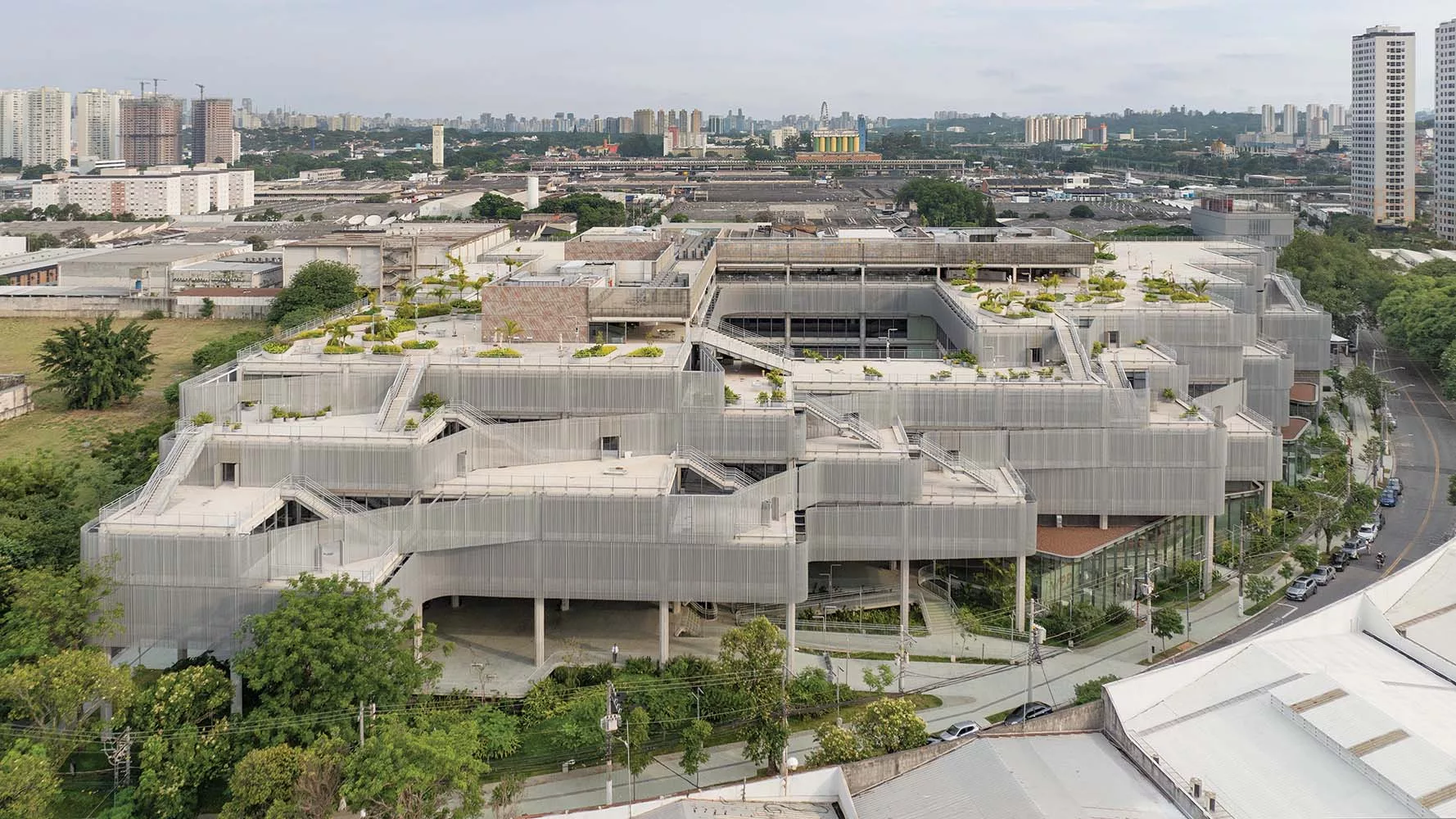
The 751,730-square-foot office complex recently opened and occupies a corner parcel in the fading, flood-prone industrial quarter of Vila Leopoldina, near the confluence of the Tietê and Pinheiros rivers. It is neighbored by warehouse structures; some still whir with the sounds of machinery and idling semitrucks, while others, signaling change, house trendy cafés and restaurants.
1
2
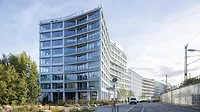
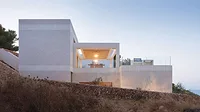
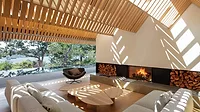
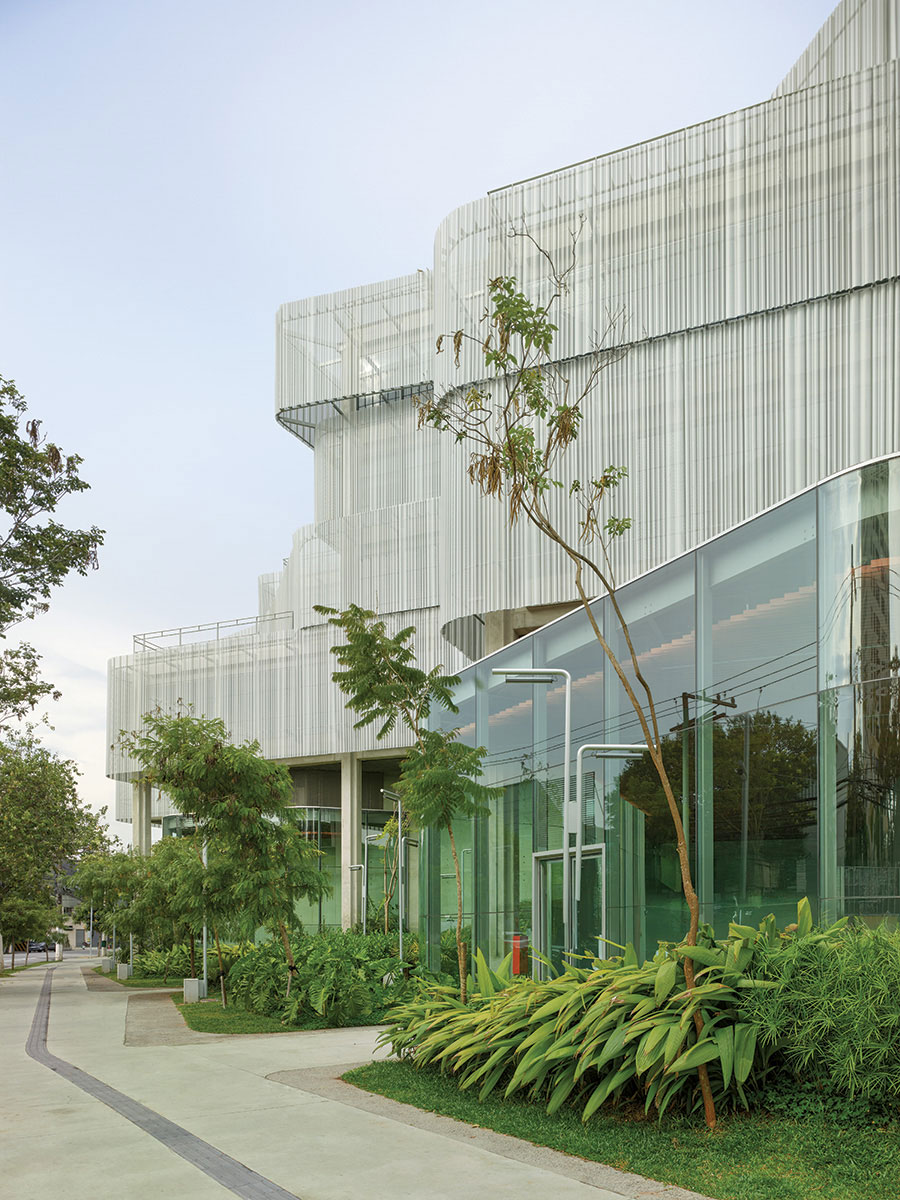
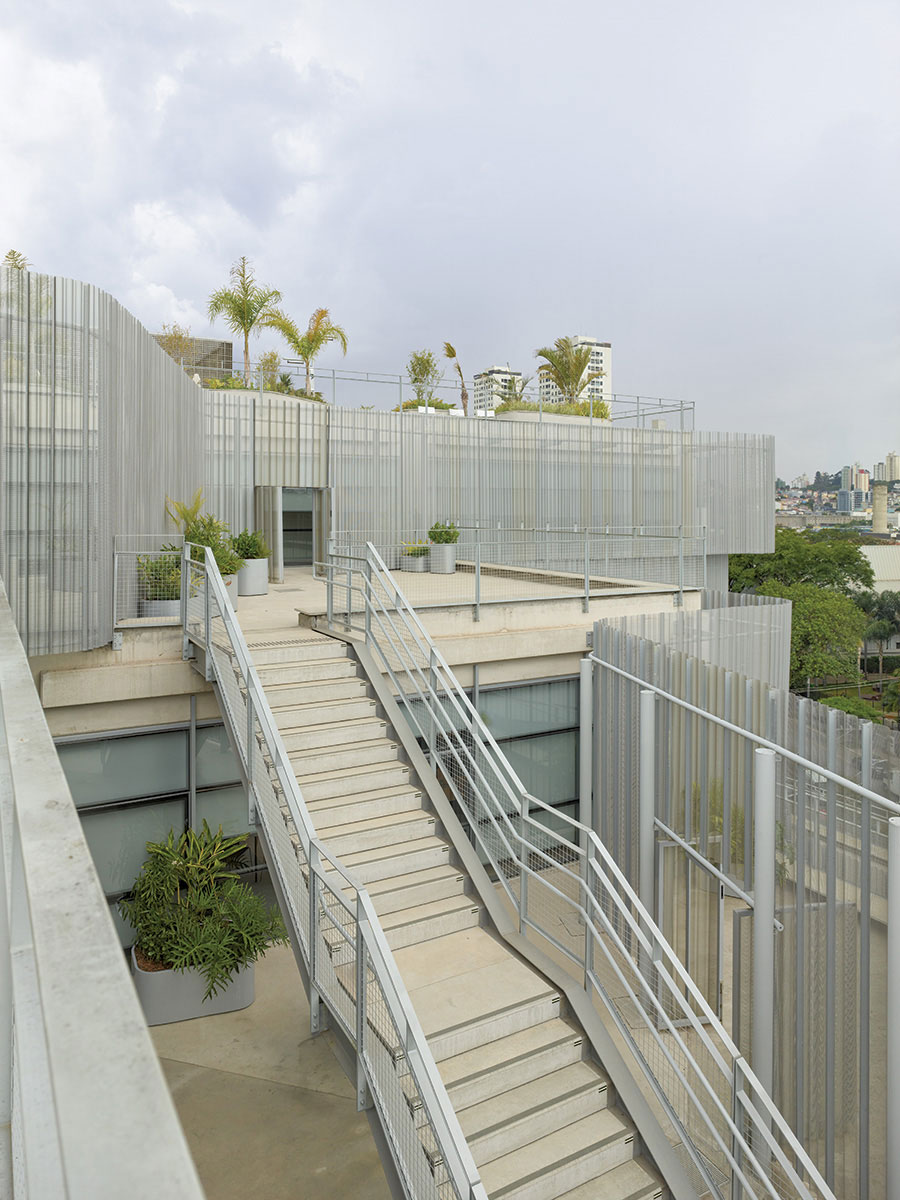
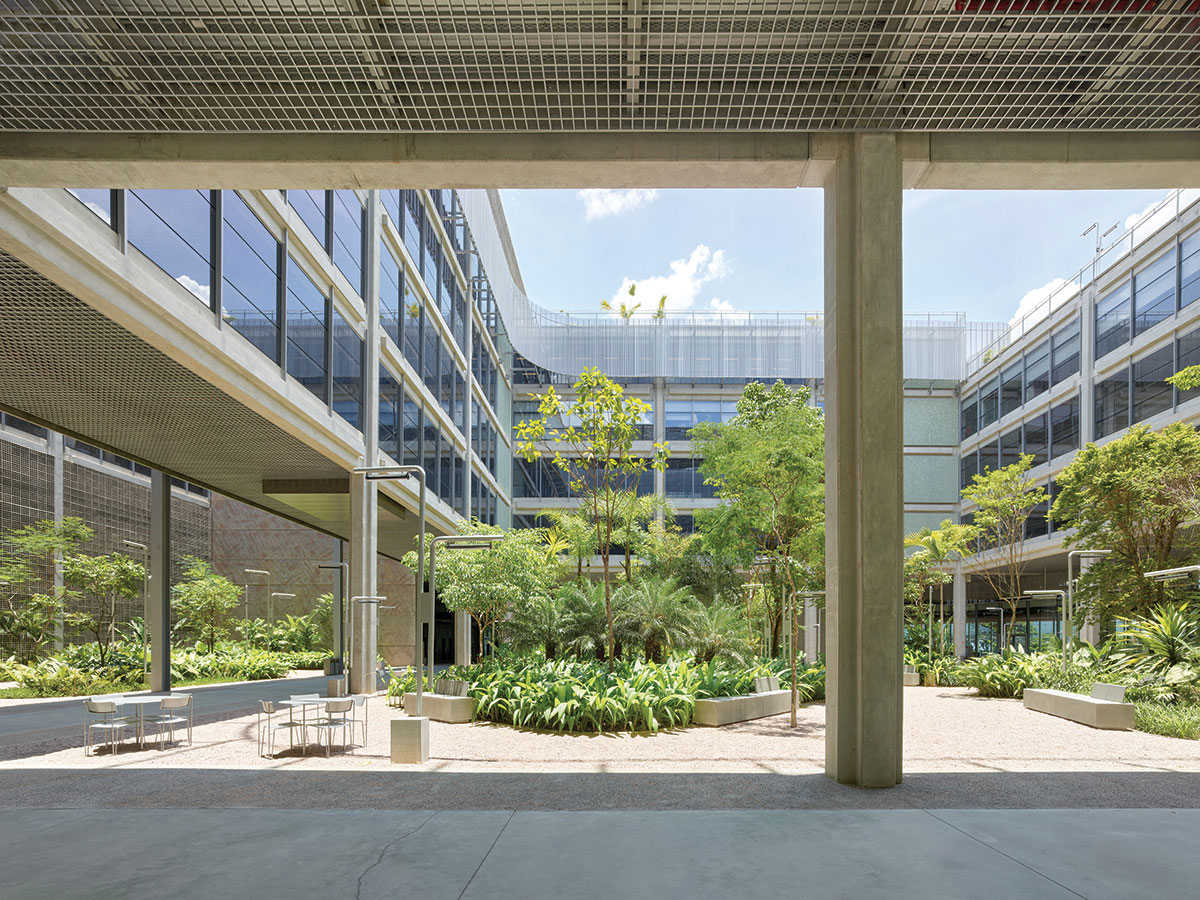
Commercial spaces and lobbies are housed in glass volumes (1). Terraces and courtyards offer abundant outdoor space (2 & 3). Photos © Roland Halbe, click to enlarge.
3
Arquipeo, just five floors tall but sprawling over a footprint of nearly 140,000 square feet, looms large within this low-slung context. The building is predominantly constructed of precast concrete elements that are arranged according to a 37-foot structural grid, with three courtyards placed near the center. Its otherwise formidable massing is broken up by a network of terraces interconnected by pathways that make up nearly 14 percent of the total floor area and are almost Piranesian in their complexity.
Their varied positions inform the placement of a diaphanous scrim of perforated steel that enshrouds street-facing elevations. A four-level parking garage screened by breeze blocks runs along the site’s south elevation.
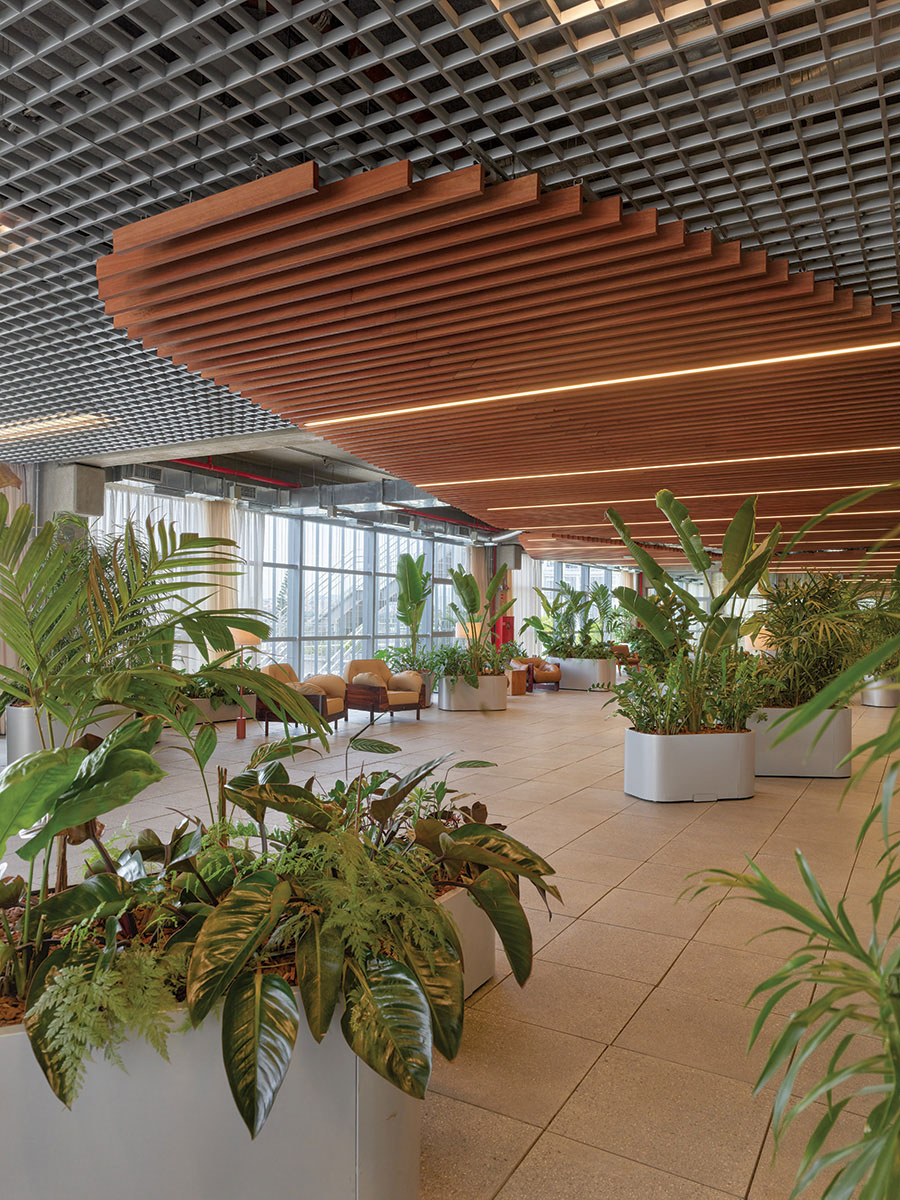
The building’s ground plane, raised several feet above street level to avoid flooding, is remarkably porous. In a move similar to Lina Bo Bardi’s Museu de Arte de São Paulo, some 7 miles away, the second level rests approximately 22 feet above the first to create a spacious public realm—a rarity for the city’s building stock, which, owing to security concerns, is often ringed by fencing. There, office workers and guests are enveloped by verdant landscaping of indigenous species planted amid reddish crushed granite gravel (a stormwater-retention system below can hold nearly 190,000 gallons, a portion of which is routed for graywater use). Green-tinted concrete pathways wind their way through this lush setting to numerous access points and commercial spaces, including a restaurant, housed in undulant glass pavilions, and an auditorium.
The vast structural composition is made possible through the insertion of three precast 111-foot-tall concrete cores that are visually introduced within the courtyards and extend above the roofline. Each is made up of prefabricated panels, nearly 22 inches thick, formed atop a bed of sand, with red gravel thrown in—the same used for the project’s landscaping. The resulting look is rippled and roughly surfaced, like a geological formation.
Looking for quick answers on architecture and design topics?
Try Ask RECORD, our new smart AI search tool.
Ask RECORD →
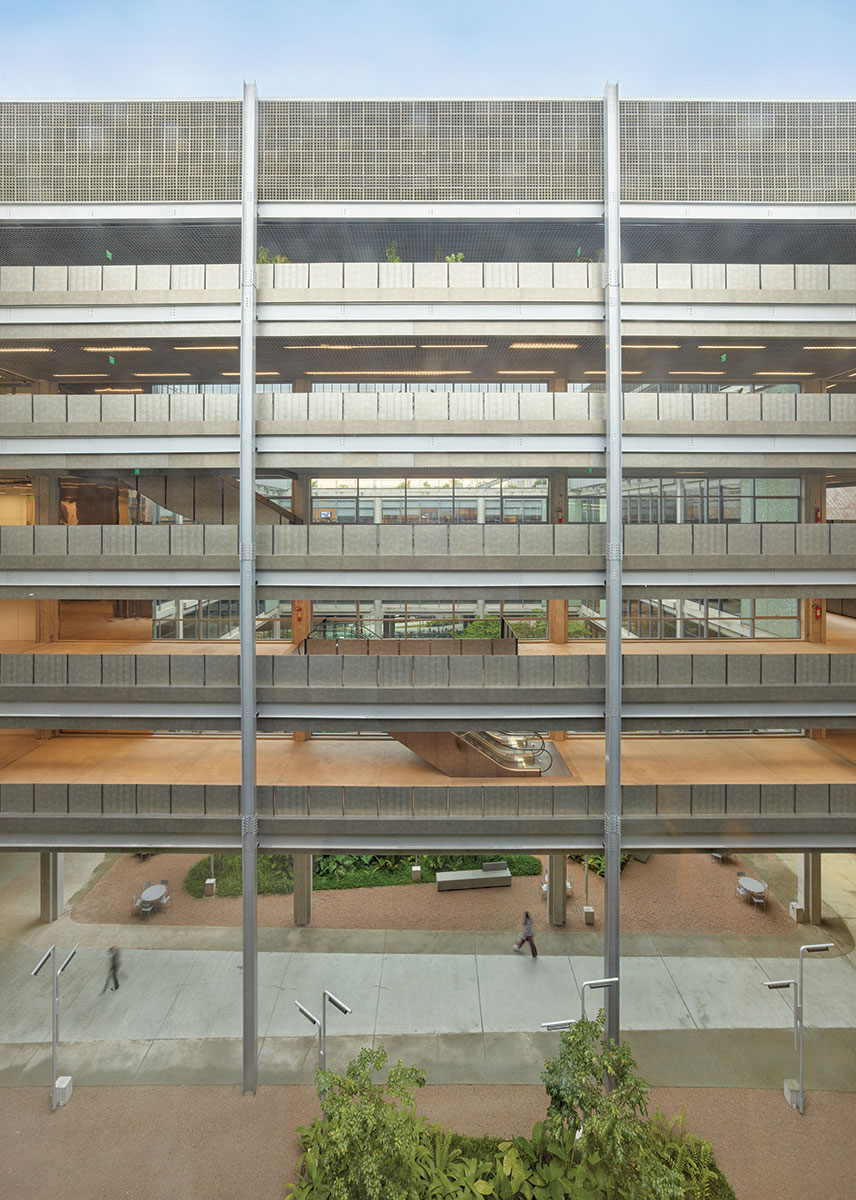
Breezeways thread the building cores. Photo © Roland Halbe
The primary access point is positioned at the north corner of the parcel, next to a vehicle drop-off area. A set of escalators, reached after several strides past the reception desk, whisks office workers up to the first level of a four-story-high breezeway that connects the building cores. (Elevator banks surfaced in acid-washed steel provide a more expeditious route to office spaces.) The elevations of the breezeways facing the smaller courtyards are open-air and utilize steel columns and beams, while those facing the main courtyard are fronted in glazing and intermittent firebreak panels; they are composed of green-tinted concrete incorporating salvaged glass from panes unintentionally broken on-site during construction.
4
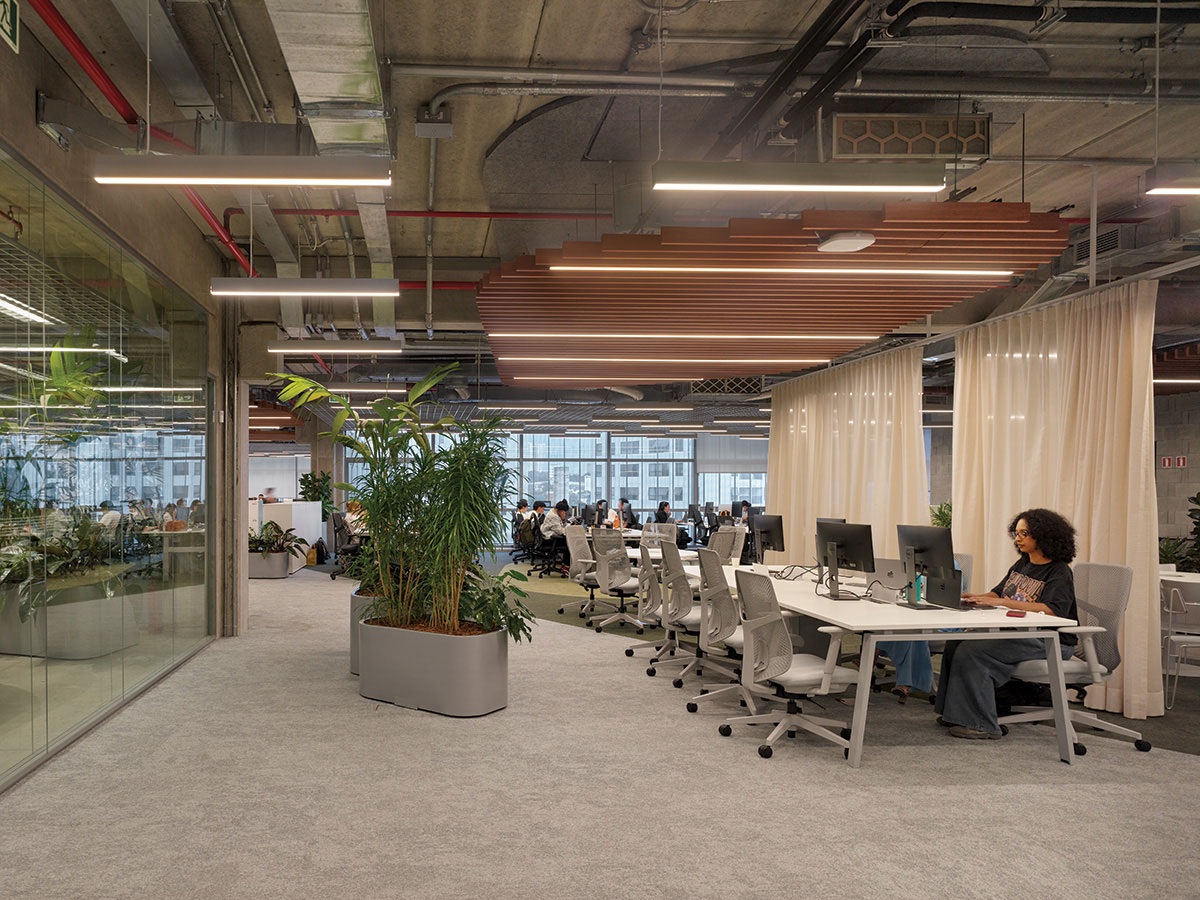
Office spaces are minimally furnished (4 & 5). Photo © Roland Halbe
WPP’s offices occupy the top two floors of the complex, while the bottom two were built on spec. The finishes within the client’s workplace are modest: flooring consists of concrete tiles and carpeting; plumbing, conduits, and ceiling slabs are left exposed; planters are interspersed throughout; and lightweight curtains are used as flexible partitions. The concrete cores remain visible, and their rough finish serves as a wall treatment here. But the primary elements, by virtue of the structure’s many terraces and courtyards, are abundant daylight, natural ventilation, and easy access to the outdoors.
“Sometimes you’re outside, sometimes you’re inside; you can walk the whole loop and reenter at different points,” notes Utrabo.
Should employees wish to stretch their legs further, they can ascend to the rooftop from either the terraces or breezeways. There the design team placed even more planters, an outdoor auditorium, and plein air pavilions that house a common kitchen and event spaces. The building’s mechanical systems are placed atop these amenities and obscured by breeze blocks.
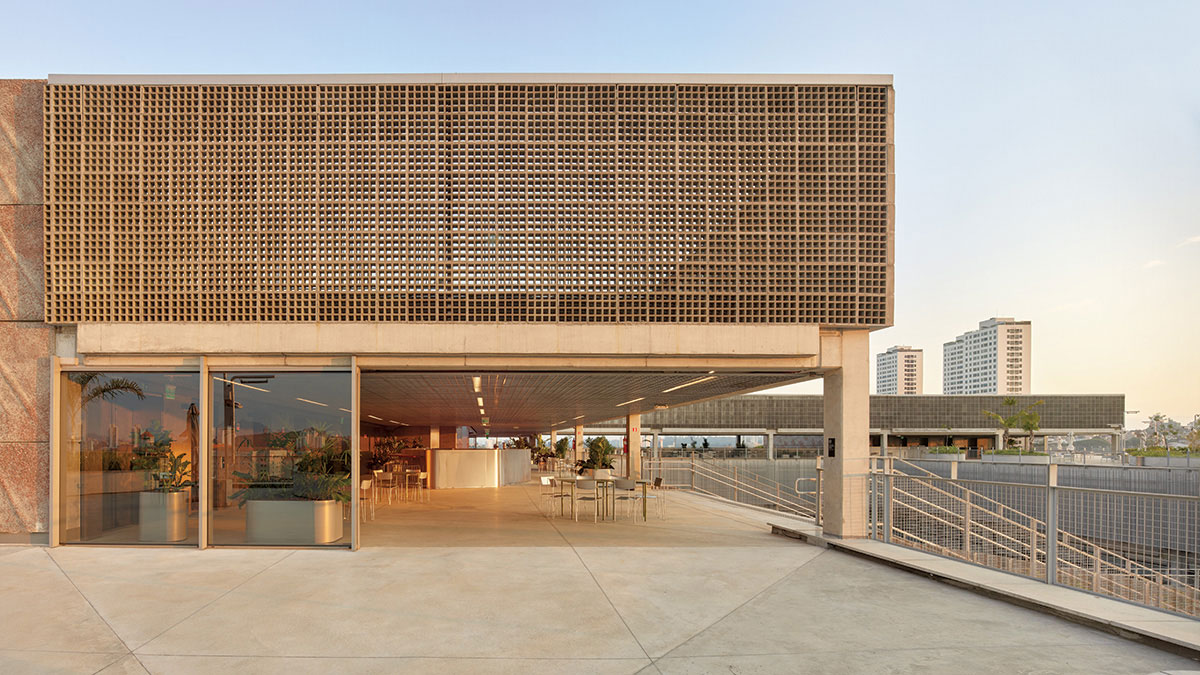
Common spaces are found at the roof level. Photo © Roland Halbe
If the success of a project is judged by the happiness of its occupants and its adherence to the budget, Arquipeo passes the test. Through the application of mass-produced materials and straightforward details, the design team managed to keep construction costs at just under $75 per square foot (a paltry sum for the city’s high-end office market). Walking through the complex with Utrabo in March, we were greeted by numerous employees who praised the design, mainly the ample open space, and expressed enthusiasm about commuting to the office daily. Standing on the rooftop, taking in São Paulo’s cityscape, I couldn’t help but wish to swap the stuffy Midtown Manhattan office spaces I’m accustomed to for a breeze-filled tropical workspace.
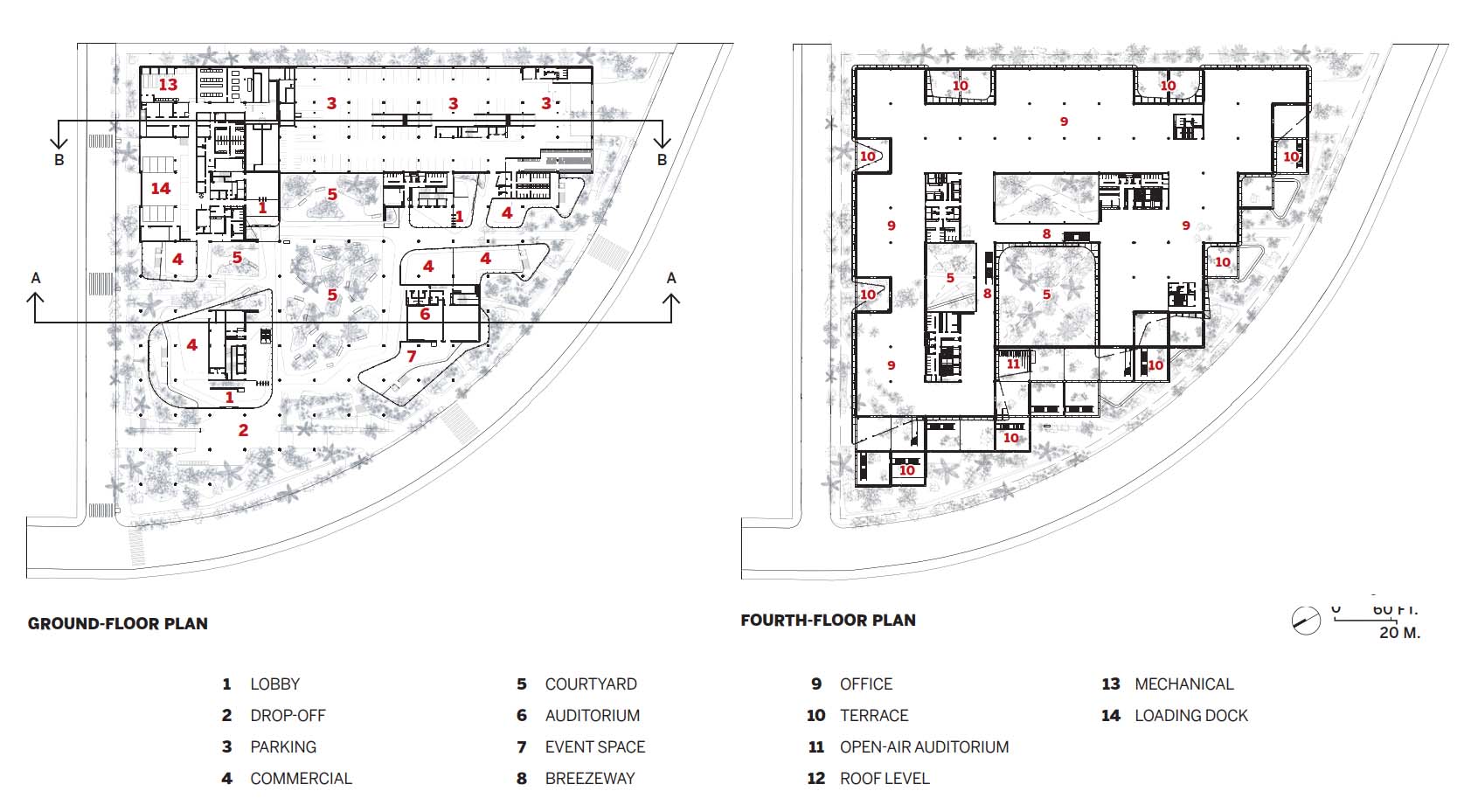
Image courtesy Estúdio Gustavo Utrabo
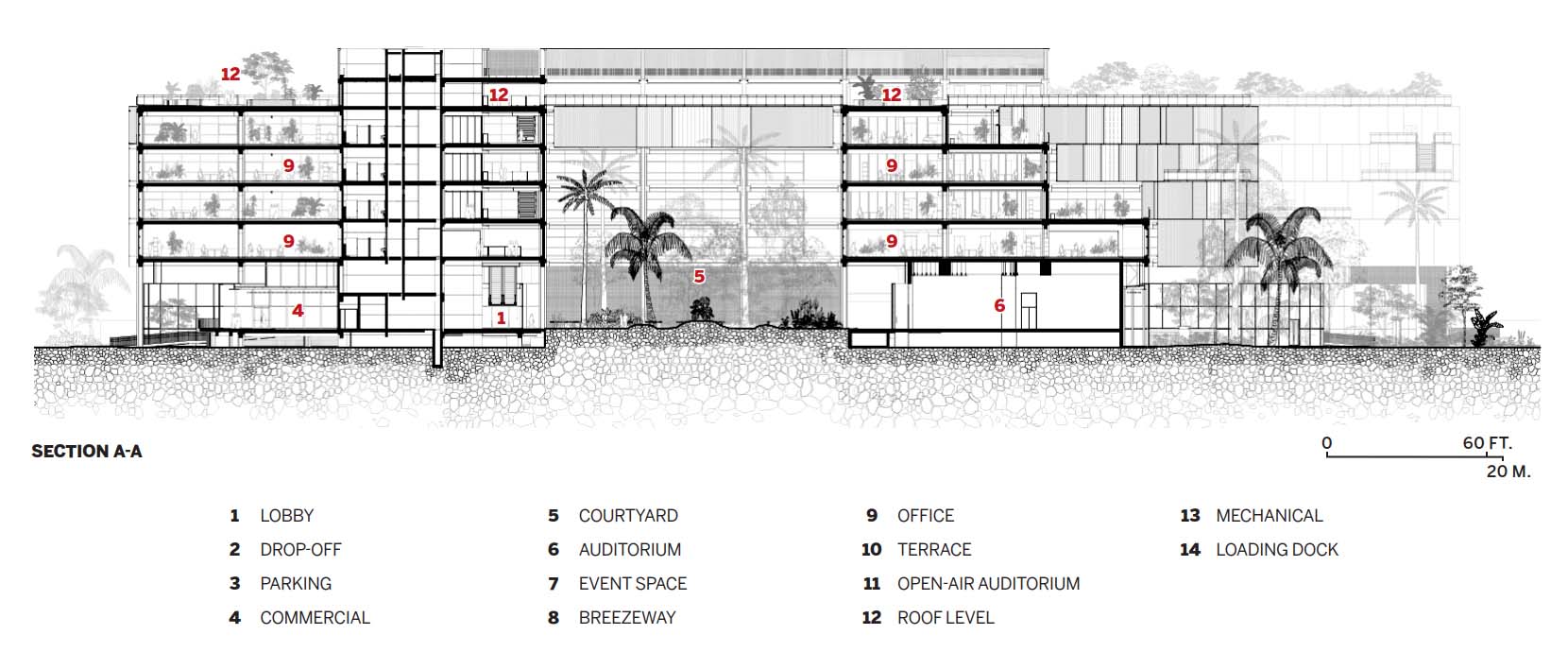
Image courtesy Estúdio Gustavo Utrabo
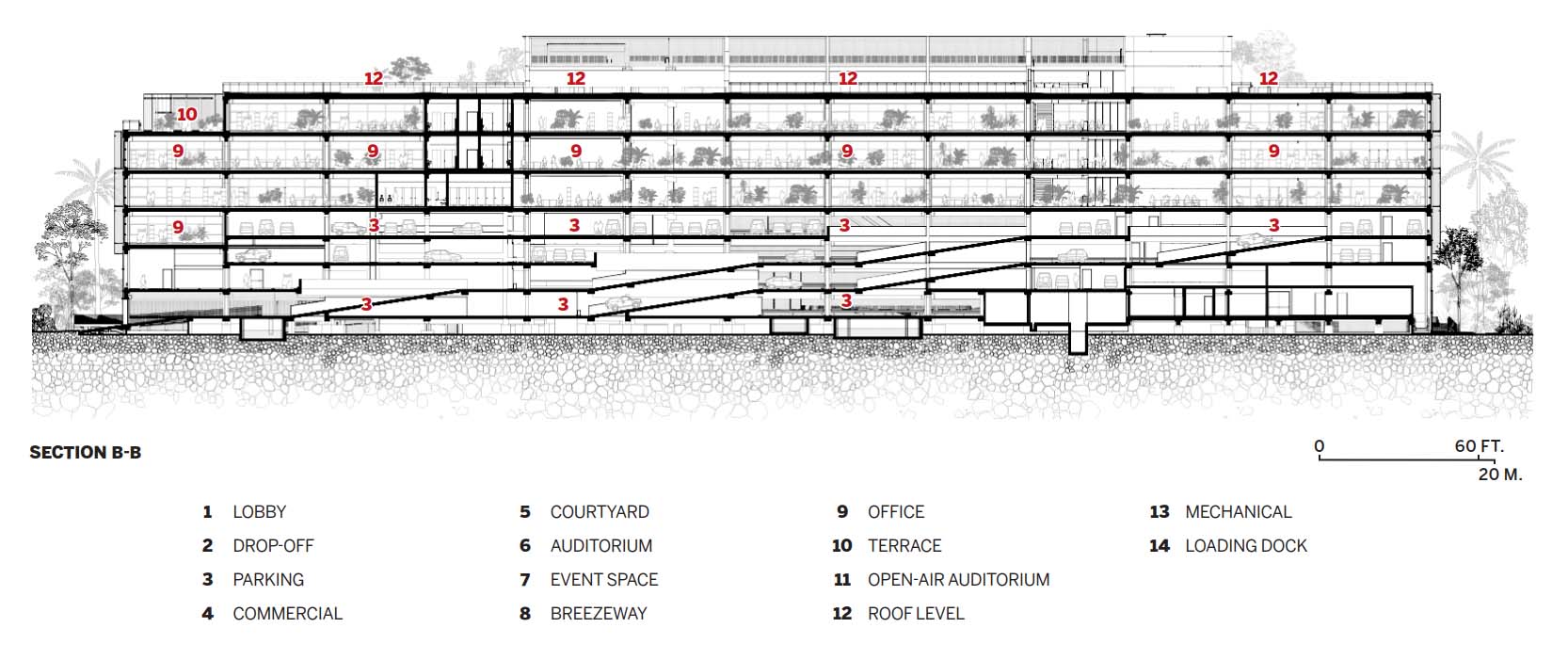
Image courtesy Estúdio Gustavo Utrabo
Credits
Architect:
Estúdio Gustavo Utrabo — Gustavo Utrabo, founder
Engineers:
CMA Engenharia, Consultrix Engenheiros (structural); Verticalli Engenharia, Teknika (MEP)
Consultants:
Raul Pereira Arquitetos Associados (landscape); Foco Luz e Desenho (lighting); CA2 (environmental); QMD Consultoria (facade)
General Contractor:
Rocontec
Client:
Brookfield, WPP
Size:
751,730 square feet
Cost:
Withheld
Completion:
November 2025
Sources
Steel Scrim:
Hunter Douglas
Steel Panels:
Sul Metais
Precast Concrete:
Cassol
Glazing:
Guardian
Looking for a reprint of this article?
From high-res PDFs to custom plaques, order your copy today!