RECORD Interviews
A Conversation with Smiljan Radić Clarke
Nader Tehrani: Good afternoon and congratulations on the Pritzker! Thank you for putting some time aside for this chat.
I am aware of your limited interaction with the academy, and after the announcement of the Prize, I read that you do not feel that your work should serve as a model for emulation—or as something exemplary for future architects. There is a sense of humility in this outlook, but given how the award also bestows a renewed level of attention, there is also an inevitable futility. For whatever it’s worth, now your work will be even more scrutinized, studied, analyzed, and critiqued…much as one does in a productive academic context.
There are many didactic qualities to be extracted from your work, but looking beyond that, it would seem that your foundation, the Fundación de Arquitectura Frágil, independent from your office, serves as an archive of architectural speculation, experimentation, and radical thought the post-war years. It appears to be something substantial—a pedagogical extension of your thinking. It can be construed as a didactic enterprise, even if not formally affiliated with an academic program.
Not unlike Tomás Saraceno, who had to leave architecture to enter architectural practice, mytheory is that you had to leave the academy in order to create a space for learning. I wonder if this rings true, or if you can comment on the tension between your work as a designer and your work as a thinker in broader terms? Accordingly, beyond your buildings, they create a discursive shadow, and I would like to know how you materialize that thinking.
Smiljan Radić Clarke: I don’t know whether this is entirely true or not, but I think it’s important to say it: I’ve always felt, especially at the beginning, that my work was not targeting an academic audience, nor to be done in academia per se. It wasn’t the type of work that fit certain molds “within the street,” or everyday practice, either. Every time I was invited to teach, the invitation came from a friend. Most recently, it was in collaboration with Christian Kerez at the ETH in Switzerland, but I was never personally invited by academia itself. That said, I have found it very enjoyable to teach classes alongside friends. It was, and remains so today, very fascinating, especially because as I moved away from that world, I recognize that there’s a certain language, certain protocols, and ways of teaching that I simply don’t have. So, I always feel, as is said in Chile, “like a strange bug,” like something unusual—in that environment. And, to tell the truth, I feel that I’m not a good teacher…I mean, in my way of seeing things. Maybe I feel that you don’t have to be a good teacher in order to practice it as such.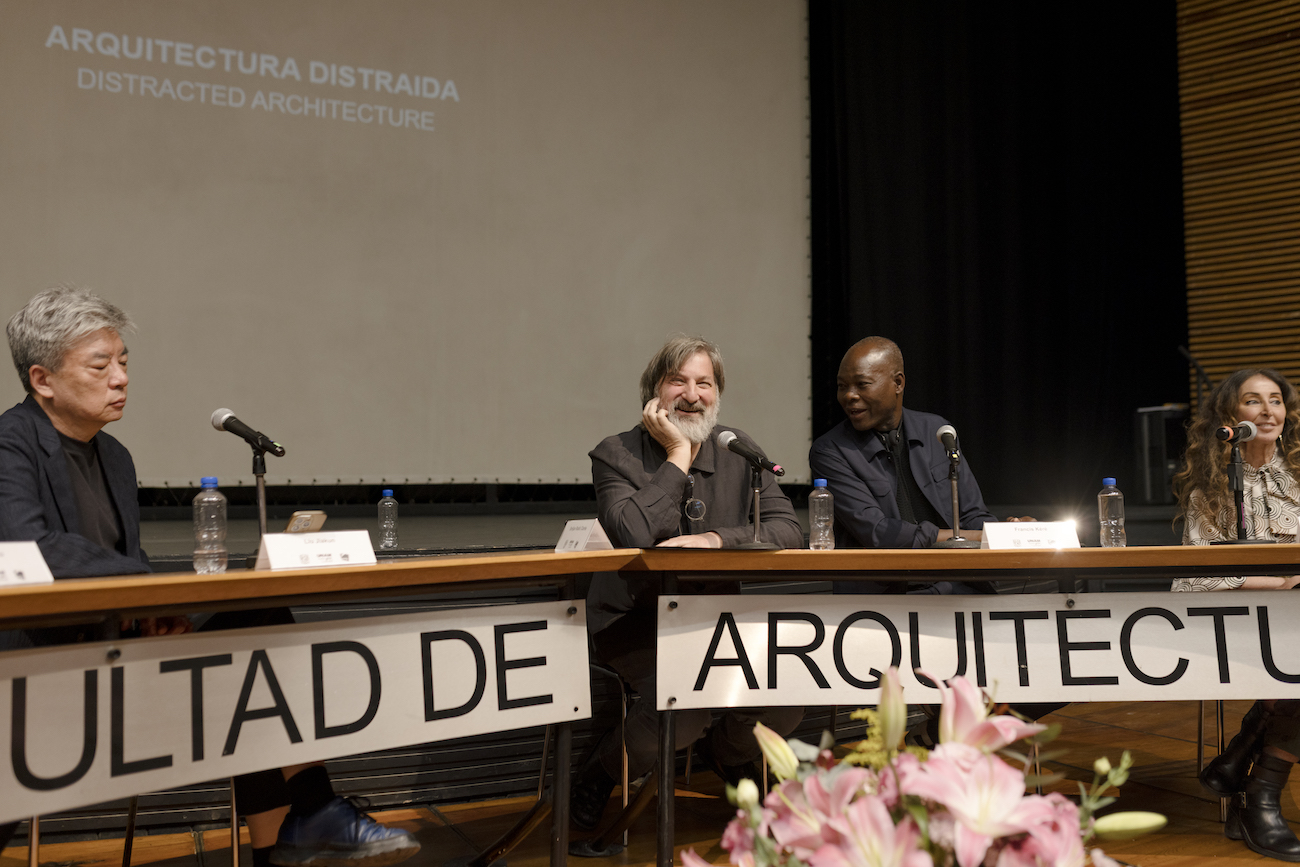
The day after the awards ceremony, Radić gave a talk at the National Autonomous University of Mexico (UNAM), and was joined by fellow laureates Liu Jiakun and Francis Kéré. Photo © Sofía Gonzalez Norieta for The Pritzker Architecture Prize
NT: I might disagree with you here, because my prompt to you emerged precisely because I sense that both in your words, and in your architecture, there is not only skill but also a self-consciousness, a deliberate intentionality.
In my years as a teacher, our faculties have grappled with what is commonly called foundational knowledge, those skill sets that are deemed as irreducible for the first steps of architectural engagement…whether the knowledge of geometry, spatial thinking, formal dexterity, the instrumentality of certain drawing types, or other such things. But, even under the best of circumstances, when students learn to excel at these so-called skills, we know that they most often do not suffice, if only because their critical thinking must act as a filter for the strategies they deploy and reject, at any given point…or even worse, when those skills become habits, techniques of virtuosity with little aim. Because of this, we often speak to the necessity of ‘unlearning,’ in effect, helping them to challenge their own areas of virtuosity—to rethink their process, as much as their objects. In this sense, beyond skills, there is also an intellectual project at stake, and often the process is at the core of enabling certain new intellectual arenas.
I see this in your work. You develop themes and artifacts in tandem, and eventually you see the need to move on, to challenge the premise, and to effectively reject the idea of the author’s signature.
Looking for quick answers on architecture and design topics?
Try Ask RECORD, our new smart AI search tool.
Ask RECORD →
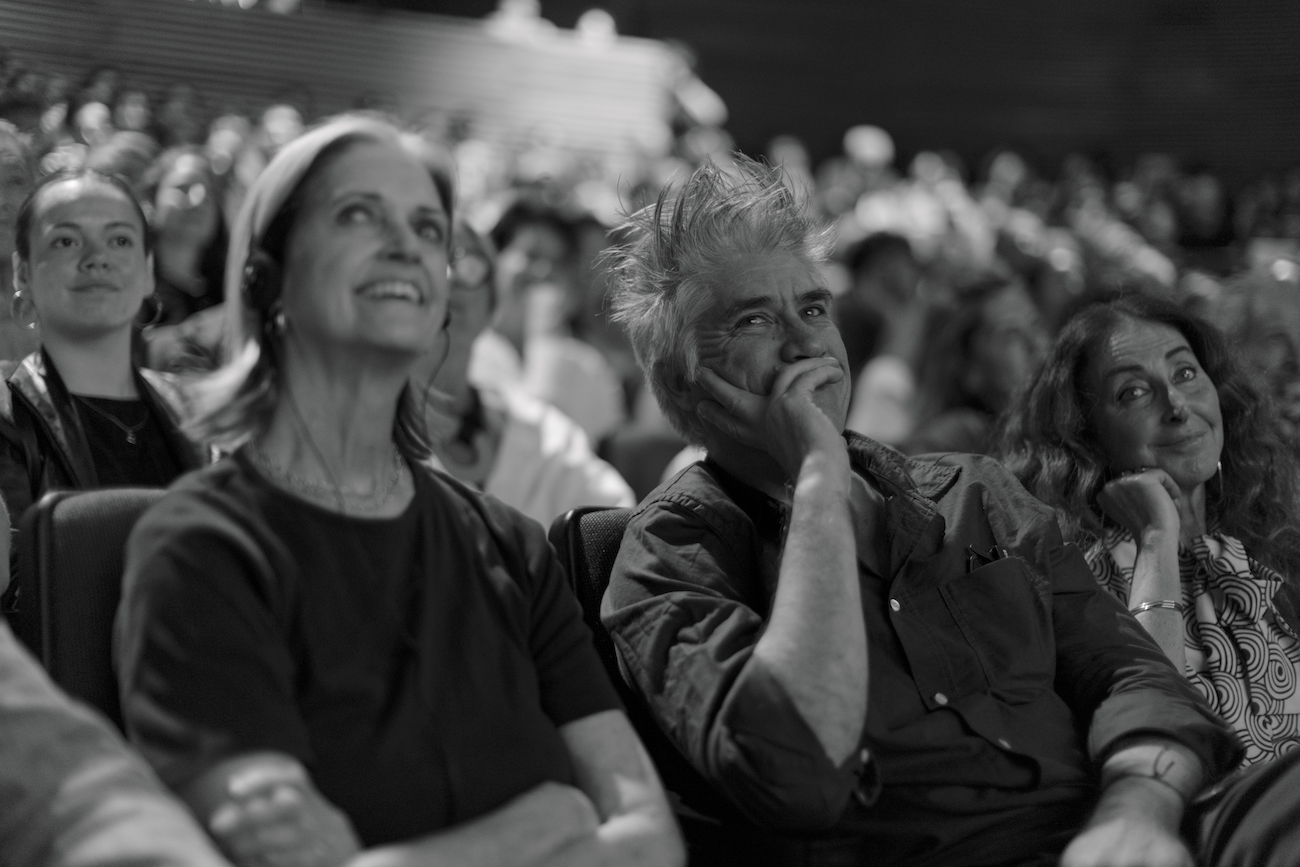
Pritzker jury members Deborah Burke and Alejandro Aravena in the audience at UNAM. Photo © Sofía Gonzalez Norieta for The Pritzker Architecture Prize
NT: So, the academy does, in fact, emerge as a great space of speculation, a place where you can discover without the weight of failure over your head.
SRC: And in my studio, I do more or less the same thing in the sense that though we do not necessarily launch a process with known forms, the process that we undertake allows us to mold forms in incremental and deliberate ways, modifying them as a central part of the process. But in the end, and importantly, the thinking we put into their construction completely transforms the initial point of reference.NT: Allow me to shift gears beyond the academic context. I want to discuss how you imagine your audiences.
I would think that your projects must emerge from similar constraints as any other, containing among other things, considerations of the site, budget, program, and cultural contingencies. But solving those challenges does not make “architecture” in itself. I continue to imagine that good design emerges out of a larger conversation, a discourse as it were, debates over epochs. By extension, I like to think that, as we draw, we are often in dialogue with architects of centuries long before us, and in turn, those who have yet to be born. This anachronism allows us not only to be timely, but to speak to a different scale of time beyond our own immediate relevance.
Can you speak to a specific protagonist, whether an architect, a building, or a detail with whom you have enjoyed this type of conversation.
SRC: Beyond specific individuals or projects, what I seek is a certain idea of freshness. In English, the word retains a precision and lightness that the Spanish frescura never fully captures. For me, this freshness appears in the work of Kiesler, Superstudio, Archigram, or Art Farm, and it largely constitutes the background of my current formation. It also emerges from the papers, images, and fragments I collect, which gradually configure a kind of intellectual landscape around me. As if, driven by constantly disparate circumstances, one were choosing a particular viewpoint within the immense panorama of events that make up the history of architecture. There exists a constellation of architects—particularly between the 1950s and the 1980s, up to the period of the Architectural Association under Alvin Boyarsky in London—who decisively contributed to expanding the limits of what we understood architecture to be. From an academic perspective—and perhaps there is some exaggeration in this—Boyarsky’s AA was one of the last schools to understand techniques of representation not merely as a means of communication, but as genuine instruments of disciplinary thought and discussion. As if architecture still possessed an interior of its own: open to the weather, traversed by external forces, yet still capable of preserving a certain critical autonomy. Needless to say, many of the forces currently shaping architectural discourse appear external to the discipline itself—collectivism and sustainability, for example—although they undoubtedly form an inevitable part of every architectural project. However, when those forces fail to transform architecture at its roots, when they merely attach themselves to its older frameworks, they risk becoming accessory elements: simple discursive appendices intended to address a contingent social moment, without producing any real impact on the discipline itself. For this reason, when one approaches certain references, it is not necessarily out of adherence to a particular formal language. What matters are the strategies: the specific ways in which certain problems were approached at particular historical moments. I always return to that question: how certain strategies were capable of triggering new forms, new sensibilities, or new ways of understanding architecture. Ultimately, new ways of displacing it.NT: I want to go back to your definition of ‘freshness,’ if only to better understand how you situate it in your strategies. I sense that your projects always draw from convention against which to position the strange, or unfamiliar.
Historically, ideas revolving around defamiliarization and estrangement are certainly a core part of avant garde, and this tendency seems to be central to your work…maybe as a way of expanding the limits of the discipline?
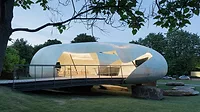
SRC: The word “strangeness” is deeply connected to the idea of freshness, in the sense that both suggest a different way of looking at reality. I believe architecture allows one to explore this condition without the need for grand events. In fact, it is often through smaller works or minor interventions that this sense of strangeness can be achieved most intensely, perhaps because those situations still allow for certain risks to be taken. Perhaps that was the most important realization for me in the Serpentine Pavilion: understanding that the idea of the folly, as it was historically employed in English gardens, could be extended—more or less—to architecture as a whole and to the multiple scales through which it operates. I am interested in thinking of architecture as a broad range of events moving across different historical moments, yet ;still remaining open to visitation; above all, I mean intellectual visitation.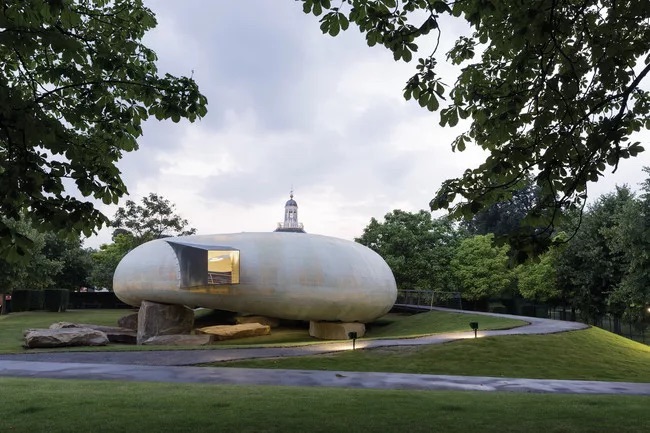
Serpentine Pavilion. Photo © Iwan Baan
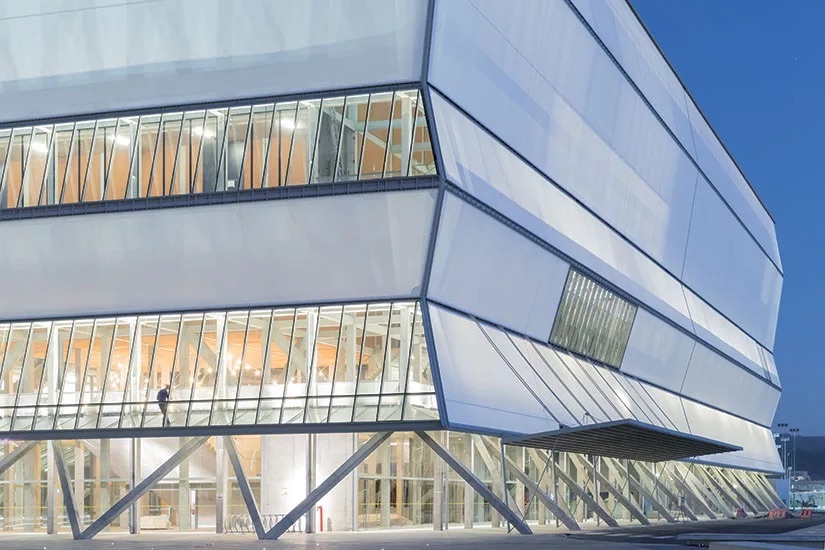
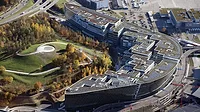
Regional Theater of Bío-Bío. Photo © Iwan Baan
NT: Recognizing that this discussion is mediated through words, I am reminded that architecture is somehow always riddled between words and images, maybe because the two mediums have their own means of communicating, their own instrumentality. And yet, we always rely on one to describe the other, even if imperfectly, in slight misalignments. Arguably, images, spaces, and forms already contain their own ideas independent of a language projected onto them.
Moneo writes about the “solitude of buildings,” when the structure is complete, when it is occupied by its many eventual visitors, and most importantly when the words of the architect recede entirely. It is a moment when the building needs to thrive on its own. Despite our disciplinary reliance on self-consciousness, intentionality, and maybe rationality, there is an element of lived experience, reception, of cognition that lives on independent of the author’s control. Your work seems to exploit this slippage between words and artifacts.
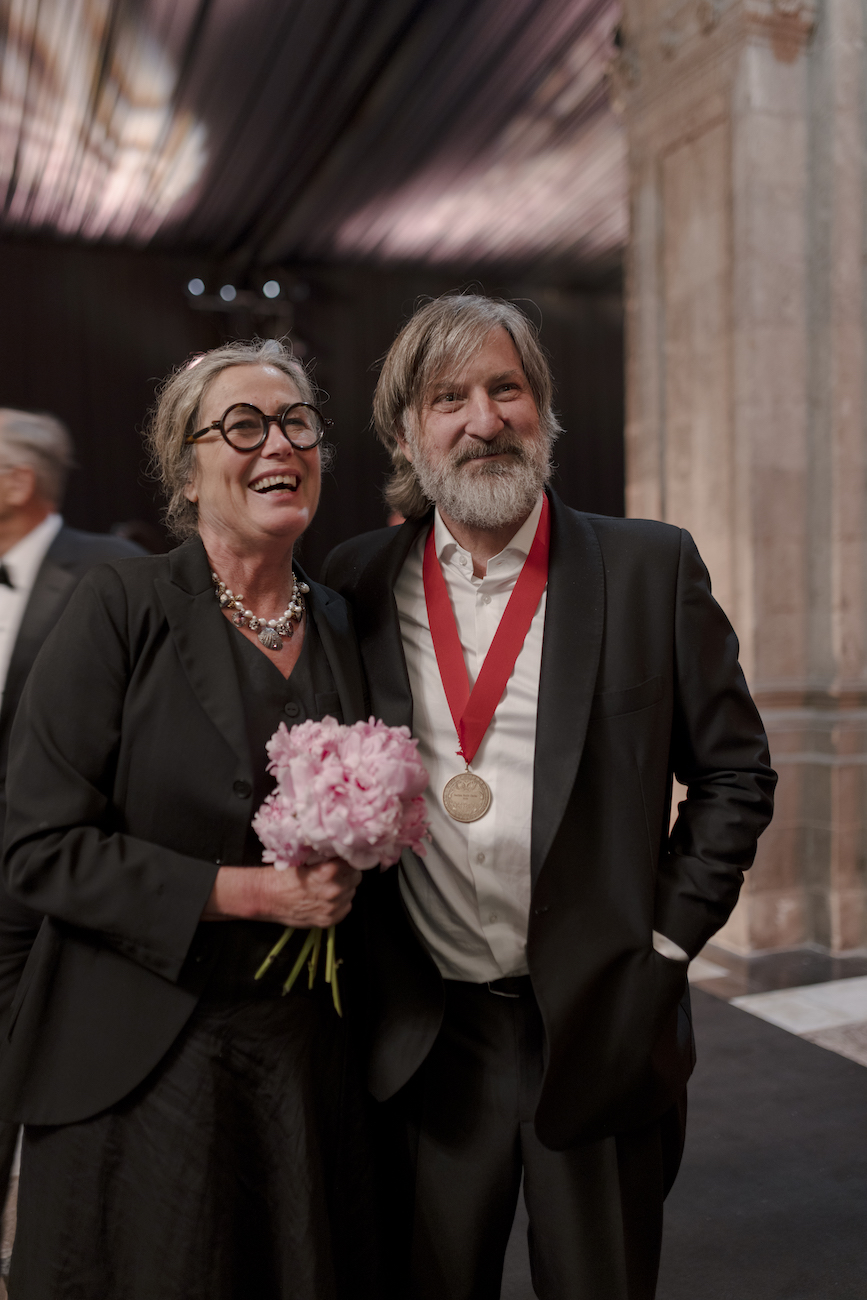
Radić with wife and frequent collaborator, sculptor Marcela Correa. Photo © Sofía Gonzalez Norieta for The Pritzker Architecture Prize
NT: I would like to pivot towards the question of construction: what may help distinguish between the systemic aspects of your design in contrast to the bespoke, the weird, or the unprecedented.
Knowing that the construction field and legal apparatus around the discipline of architecture in Chile may vary from North America, I would like you to comment on how you establish a parity between drawings and buildings. In the U.S., architects maintain a legal oversight over design intent—through drawings (and specifications), whereas the construction field dominates the “means and methods” of how things get built, sometimes overturning the more precise ‘constructive’ logics architects may wish to ensure. Knowing that drawings still matter to you, but also the visceral experience of an immersive environment, how do you negotiate that transition, from representation to actuality?
SRC: In the office, we try to ensure that the drawings are as comprehensive as possible—that is, as “global” as possible—so that one can truly have the capacity to represent the entire work within the drawing. However, within the act of drawing itself, there are many possibilities. And the way one selects a path—how you choose in order to draw it, represent it, and explain it—is how the construction is subsequently developed. At the same time, the construction process itself also offers many possibilities to either negate certain decisions or push the project toward other directions, often even toward a different dimension, sometimes through a radical change in detail. This attention to construction is extremely important to me; in a certain sense, it is non-negotiable. And when I realize that I will not be able to do that—that I will not be present during construction—I have to anticipate almost all the errors that may occur in execution. It is almost more about foreseeing mistakes than foreseeing successes. There is a kind of game, or wager, regarding what will happen in the future. And that wager sometimes succeeds and sometimes does not. It is complex—very complex. I believe it is always best to approach a project on a case-by-case scenario, without necessarily leaning on a single overarching principle. When you build in other countries, the process becomes more complex.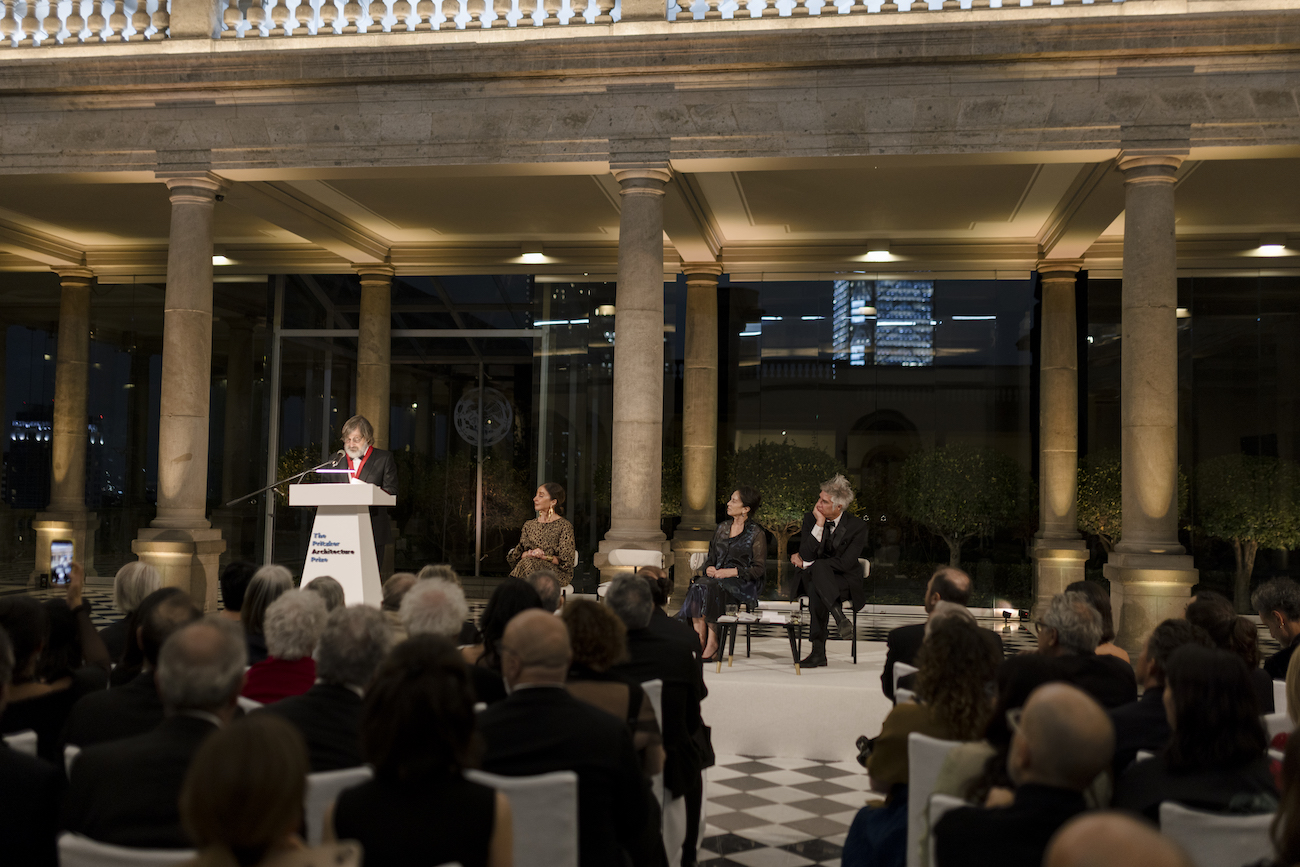
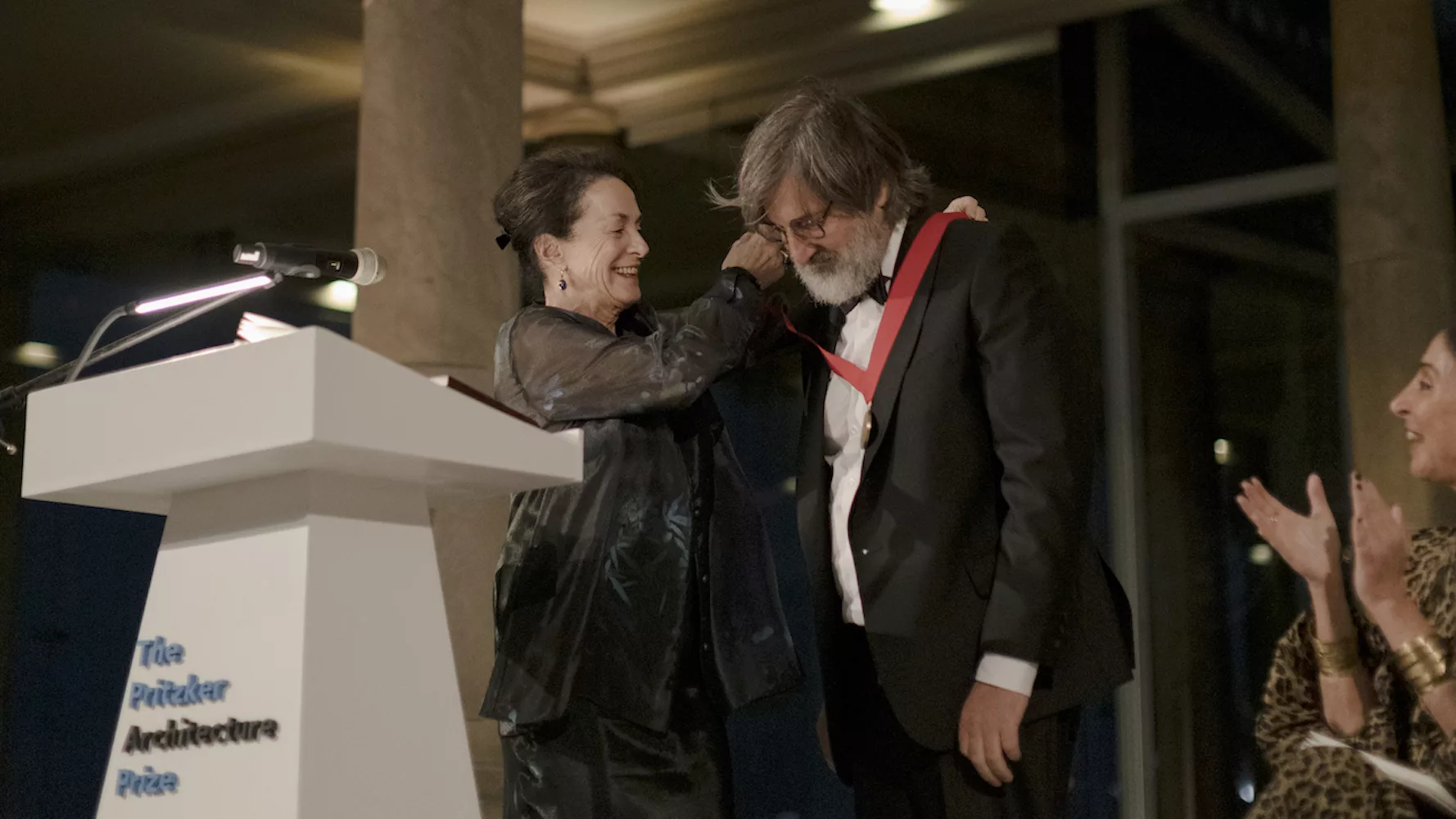
The ceremony was held at the historic Castillo de Chapultepec in Mexico City. Photo © Sofía Gonzalez Norieta for The Pritzker Architecture Prize
NT: I would like to end with a question about the Fira de Barcelona for which we both were shortlisted—and a tectonic condition I appreciate so much about your design for it…indeed, a detail worth losing to. Acknowledging the deft beauty of Mies Van der Rohe’s thin roof slab in the Barcelona Pavilion, I am reminded of the “invisible” up-turned beam, without which his sleight of hand would not be possible. In your proposal for the main conference space, you developed a structural system of leaning columns from which beams would be mysteriously suspended, inverting Mies’s proposition. While at two fundamentally different scales and completely different materialities, you managed to develop what I think as a critical dialogue between the two, even if invisible to the general public.
Can you identify another circumstance when the detail comes to challenge or motivate your assumptions of a design in transformative ways, a catalytic detail, as it were?
SRC: I often refer to a very important moment during the development of the Serpentine Pavilion, when we had the opportunity to work with a remarkable group of engineers. When one works with structural engineers in Europe—and usually with clients as well—the primary concern is often to preserve the form of the building in correspondence with the renderings or models that served as the basis for the approval and understanding of the proposal. In the case of our project, I wanted to maintain a fiberglass thickness of 10 millimeters in order to preserve the overall shape. However, as we began introducing openings into the toroidal figure, the structure started to deform, effectively compromising its performance as a shell structure. It became a very interesting moment because, as the structure began to fail, the engineer returned with a revised model. Instead of maintaining the original thickness, the shell was recalculated in a way that considerably increased its depth, effectively multiplying the required material by four. This made the project economically unfeasible and, moreover, had the consequence that natural light could no longer enter the space. So, at that moment, I asked for the structural model of the building, and we realized that it was failing at two specific points. And, as we say in Chile, when something fails, you simply add a couple of support sticks-columns and that’s it: the problem is solved. Two columns, and the form remains exactly the same. In fact, they introduced a certain ambiguity into the space, a kind of hybrid condition that interests me greatly; the space ceases to be pure, or rather acquires a hybrid condition as its solution, blending geometry with a sort of structural prosthesis—something richer than either of the two alone. That is why I often say that during the construction process one must remain extremely attentive to the design possibilities that emerge, to the challenges presented by the project, and to the ways in which that friction can be absorbed as a projective opportunity; that is, as a way of transforming one’s own thinking in relation to the artifact itself.Looking for a reprint of this article?
From high-res PDFs to custom plaques, order your copy today!