Architectural Record
search
cart
facebook twitter linkedin youtube
  • Sign In
  • Subscribe
  • Sign Out
  • My Account
Architectural Record
  • NEWS
    • Latest News
    • Awards
    • Interviews
    • Obituaries
    • Podcasts
      • Design:Ed Podcast
      • Sponsored Podcasts
  • OPINION
    • Book Reviews / Excerpts
    • Exhibition Reviews
    • Forum
  • EXCLUSIVES
    • Videos
    • Design Vanguard
    • Top 300 Firms
    • Sponsored Content
    • Sponsored eBooks
    • From the Archives
  • CONTINUING ED
    • Editorial Continuing Ed
    • CE Center
    • CE Academies
  • PROJECTS
    • Buildings By Type
    • Reuse & Renovation
    • Museums & Arts Centers
    • Colleges & Universities
    • Multifamily Housing
    • Interiors
    • Lighting
    • Kitchen & Bath
  • HOUSES
    • Record Houses
    • House of the Month
    • Featured Houses
  • PRODUCTS
    • Products by Category
    • Record Products of the Year
    • Latest Products
  • EVENTS
    • Dates & Events
    • Record on the Road
    • Innovation Conference
    • Sustainability in Practice
    • Women In Architecture
    • Webinars
    • Ad Excellence Awards
    • Submit an Event
  • CONNECT
    • Ask RECORD AI
    • Newsletters
    • Contact
    • Advertise
    • Editorial Calendar
    • Store
    • Customer Service
  • SUBMIT
    • Submission Guidelines
    • RECORD Competitions
  • MAGAZINE
    • Subscribe
    • My Account
    • Digital Edition
    • Current Issue
    • Firm Pass
    • Historic Archive
Architecture News

First Look: Piano's Addition to Boston's Gardner Museum Near Completion
By William Hanley
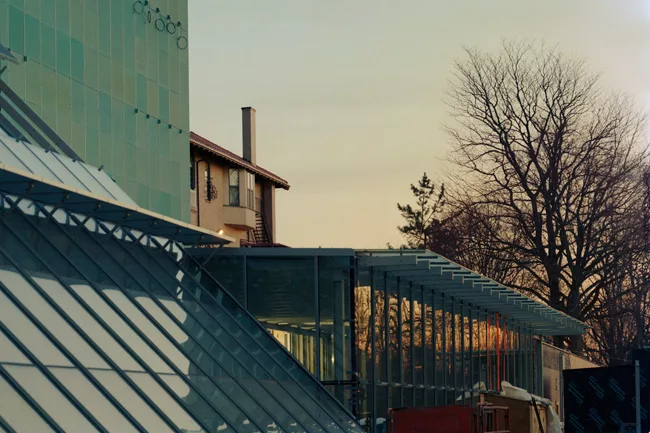
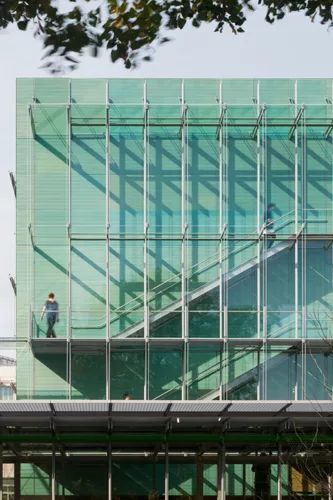
Pre-patinated copper cladding wraps much of the new building.
First Look: Piano’s Addition to Boston’s Gardner Museum Near Completion
Renzo Piano Building Workshop
Boston, Massachusetts
Pre-patinated copper cladding wraps much of the new building.
Image © Nic Lehoux
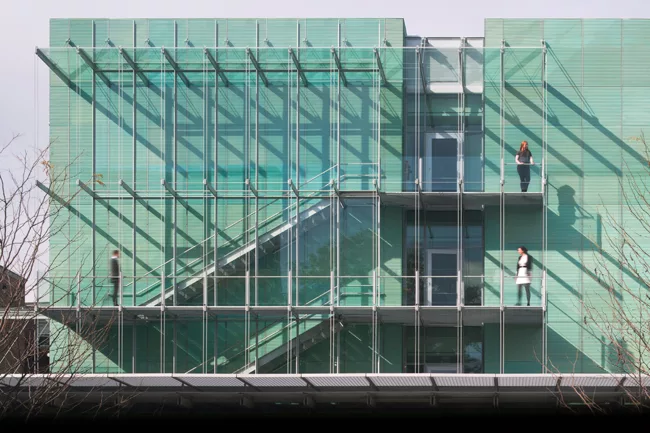
Fire stairs adorn the green facades.
First Look: Piano’s Addition to Boston’s Gardner Museum Near Completion
Renzo Piano Building Workshop
Boston, Massachusetts
Fire stairs adorn the green facades.
Image © Nic Lehoux
A new gallery space features a variable-height ceiling.
First Look: Piano’s Addition to Boston’s Gardner Museum Near Completion
Renzo Piano Building Workshop
Boston, Massachusetts
A new gallery space features a variable-height ceiling.
Image © Nic Lehoux
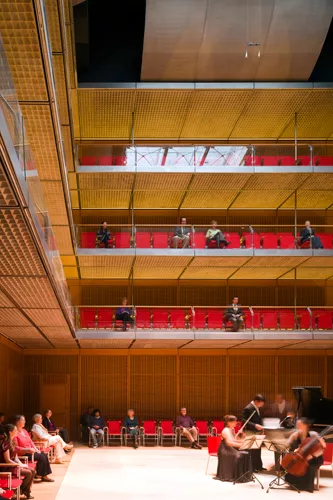
Musicians play on the floor of the box-like performance hall.
First Look: Piano’s Addition to Boston’s Gardner Museum Near Completion
Renzo Piano Building Workshop
Boston, Massachusetts
Musicians play on the floor of the box-like performance hall.
Image © Nic Lehoux
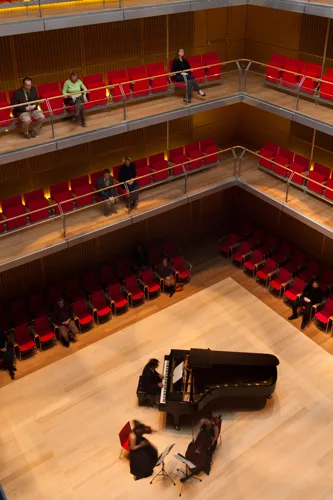
Narrow balconies wrapping the performance space afford views of musicians below as well as other concertgoers.
First Look: Piano’s Addition to Boston’s Gardner Museum Near Completion
Renzo Piano Building Workshop
Boston, Massachusetts
Narrow balconies wrapping the performance space afford views of musicians below as well as other concertgoers.
Image © Nic Lehoux
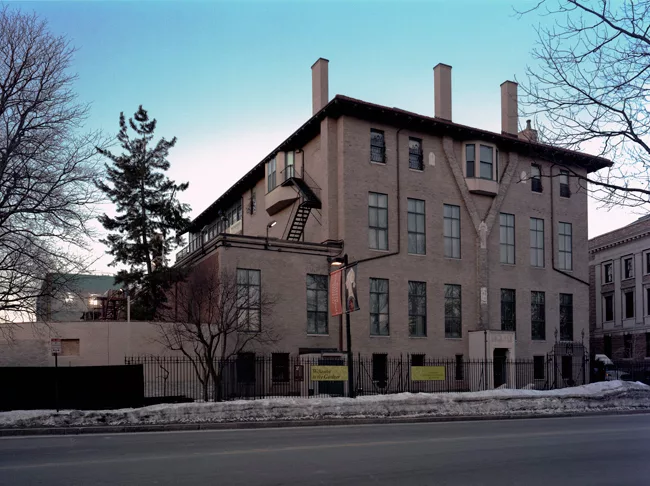
Shown under construction, Piano’s addition moves the museum’s main entrance to a side street.
First Look: Piano’s Addition to Boston’s Gardner Museum Near Completion
Renzo Piano Building Workshop
Boston, Massachusetts
Shown under construction, Piano’s addition moves the museum’s main entrance to a side street.
Image © George Bouret
The original 1903 building’s entrance faces the Fenway.
First Look: Piano’s Addition to Boston’s Gardner Museum Near Completion
Renzo Piano Building Workshop
Boston, Massachusetts
The original 1903 building’s entrance faces the Fenway.
Image © George Bouret
Pre-patinated copper cladding wraps much of the new building.
Fire stairs adorn the green facades.
A new gallery space features a variable-height ceiling.
Musicians play on the floor of the box-like performance hall.
Narrow balconies wrapping the performance space afford views of musicians below as well as other concertgoers.
Shown under construction, Piano’s addition moves the museum’s main entrance to a side street.
The original 1903 building’s entrance faces the Fenway.
December 9, 2011
Boston, Massachusetts

The architect’s turquoise copper complement to the revered institution is set to open next month.

Pre-patinated copper cladding wraps much of the new building.

Narrow balconies wrapping the performance space afford views of musicians below as well as other concertgoers.

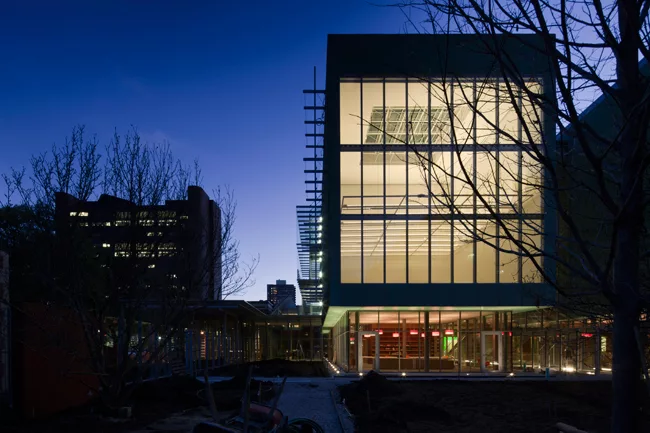
Six weeks before its scheduled opening, Renzo Piano’s addition to the Isabella Stewart Gardner Museum has entered the final stages of construction, and on a recent visit it bustled with workers applying finishes in advance of the January 19th debut. Connected to the back of the museum’s original building by a 50-foot glass walkway, the addition only slightly alters the revered Boston institution—a faux-palazzo built in 1903 as a house for the society luminary Isabella Stewart Gardner and her vast and eclectic art collection. But the new structure relieves the original building of ancillary spaces that had been squeezed into it over 70 years as a public museum.

Piano’s 70,000-square-foot addition includes a performing arts space and a gallery, as well as a new entrance, a restaurant, administrative offices, education spaces, conservation labs, a greenhouse, and apartments for the museum’s artist in residence program. The older structure will be primarily devoted to displaying the collection, which includes important work by Rembrandt, Titian, and a who’s who of old masters through Impressionism.

The addition took two years to complete and was result of a $180 million capital campaign that allocated $114 million to construction costs and $46 million for operating costs and the museum’s endowment. Annual attendance is expected to increase by 15 percent to 230,000 visitors.

When it decided to go forward with the project in 2004, the Gardner’s board formed a selection committee, but Piano initially declined to enter the running. “Of everyone we asked, only Rafael Moneo and Piano said no,” says the museum’s director Anne Hawley. The group had compiled a shortlist of prospective designers—including Tokyo-based SANAA, Phoenix’s Will Bruder, and Boston’s own William Rawn—when Piano changed his mind. (According to Hawley, he was persuaded by Raymond Nasher whose eponymous Dallas sculpture center Piano designed.) After a trip to Texas to see the Nasher and the Menil Collection, the committee threw out its list and settled on the Italian architect.

Divided into four primary volumes stitched together by a stair, Piano’s new building reorients the main entrance from the Fenway to Evans Way to the east. It is clad in glass and ridged plates of pre-patinated copper. The turquoise finish, mottled in places with greens and yellows, was intended to echo the copper details found on bay windows throughout Boston’s historic neighborhoods. Piano placed the fire stairs on the building’s exterior. Attached by a suspended rod system, the catwalks create a pattern of silver ribbons across the greenish background.

One glazed section of the facade encloses a new 1,500-square-foot gallery. The white box rises a dramatic 36 feet and, in a reference to the courtyard in the original building, is covered by Piano’s signature top lighting. A scrim stretches across an armature that can be raised and lowered by a mechanical system, allowing the ceiling height to be adjusted from the full 36 feet down to 24 or 12 feet depending on curatorial needs. “It has the flexibility to go from a wide-open, slightly outrageous contemporary space to an intimate gallery,” says director of operations Jim Labeck.

The largest of the four new volumes is a concrete cube housing the performing arts space. A skylight, 42 feet overhead, allows scrim-filtered daylight into the room. Piano paneled the hall in perforated white oak, and has hung curtains between the wood and concrete to allow the acoustics of the space to be adjusted for different performances. Acoustician Yasuhisa Toyota, who worked with Frank Gehry on the Walt Disney Concert Hall in Los Angeles and the New World Symphony in Miami, consulted on the scheme.

There is no stage in the hall, which seats 296. Instead, performers play in the center of the cube’s floor with rows of seating surrounding them. Three levels of galleries above contain one row of seating each. Beveled glass balustrades with wooden railings, allow unusual sight lines from the upper levels down to the musicians below—and voyeuristic glances at fellow concert-goers straight across the balcony.

The Gardner’s tapestry room, which for decades had hosted concerts and other events, has been restored with furnishings organized according to archival photos. Layers of grime have been cleaned from the tiled floor. Other galleries in the original building still show some deterioration from years of public use. A jewel box of art and architectural elements from Europe and Asia, all installed to specifications set out in Gardner’s will, the museum is also a major cultural touchstone for the city. The theft of 13 works in 1990 was regarded as a public tragedy, and the museum met resistance from some community groups over the expansion.

The Gardener tore down a 1908 carriage house and a greenhouse added later to make room for the Piano wing, in addition to moving a sarcophagus from its original location, a process that required approval from the Massachusetts State Supreme Court. “As a matter of Gardner’s will, we had to go to court,” says Hawley. “But a small community group without an immediate connection to the museum also took us on.” The museum persevered, and at the end of the day, Hawley feels the addition crucially eases the strain on the revered palazzo. “It was impossible to deal with the wear and tear—now we can really preserve the original building.”

Share This Story

Looking for a reprint of this article?
From high-res PDFs to custom plaques, order your copy today!

Post a comment to this article

Report Abusive Comment

Subscription Center
  • Create an Account
  • Start a Subscription
  • Manage My Account
  • Sign Up for Newsletters
  • Visit Customer Service
  • Update Preferences

More Videos

Sponsored Content

Sponsored Content is a special paid section where industry companies provide high quality, objective, non-commercial content around topics of interest to the Architectural Record audience. All Sponsored Content is supplied by the advertising company and any opinions expressed in this article are those of the author and not necessarily reflect the views of Architectural Record or its parent company, BNP Media. Interested in participating in our Sponsored Content section? Contact your local rep!

close
  • TAMLYN XtremeTrim Exterior Trim
    Sponsored byTamlyn

    Designing Cleaner Panel Facades: Why Exterior Trim Details Matter

  • Building with Vapor Barriers
    Sponsored byReef Industries, Inc.

    Vapor Barriers Help Control Moisture in Tighter Building Designs

  • Duct Interior with Prodeq System
    Sponsored byHenry, a Carlisle Company

    Designing Resilient Water Containment Systems

DESIGN:ED Podcast
Listen to Architectural Record’s DESIGN:ED Podcast

Events

June 10, 2026

Rethinking Stormwater – The Power of Porous Paving

Credits: 1 AIA LU/HSW; 1 AIBD P-CE; 0.1 ICC CEU

Learn how porous paving systems support stormwater management, reduce heat island effects, and enhance sustainable site design performance.

June 11, 2026

Very Early Warning Fire Detection for Mission-Critical Facilities

Credits: 1 AIA LU/HSW; 1 AIBD P-CE; 0.1 ICC CEU

Examine advanced fire detection strategies that support uptime and enhance safety in data centers and other mission-critical facilities.

View All Submit An Event

Products

2026 Architect's Square Foot Costbook

2026 Architect's Square Foot Costbook

See More Products

Popular Stories

Practice Matters illustration

What’s in a (Firm’s) Name? Thinking About Succession and Legacy

Practice Matters illustration

By the Numbers: Counting America's Architects

House on a Hill

Design Vanguard 2026: Forma

Crane Cove, ONO

Design Vanguard 2026 Winners

House A on a Hill

Design Vanguard 2026: Santiago Valdivieso

Broader Sustainability of CMU - Free Webinar - May 21, 2026

Related Articles

  • Isabella Stewart Gardner Museum Extension

    See More
  • First Look: Chrysler Museum of Art Renovation and Expansion

    See More
  • Piano Conceives a Respectful Addition to Kahn's Kimbell Masterpiece

    See More
×

The latest news and information

#1 Source for Architectural Design, News and Products

SUBSCRIBE
  • RESOURCES
    • Advertise
    • Contact Us
    • Submit
    • Store
  • ACCOUNT CENTER
    • Create an Account
    • Start a Subscription
    • Manage My Account
    • Sign Up for Newsletters
    • Visit Customer Service
    • Update Preferences
  • PRIVACY
    • PRIVACY POLICY
    • TERMS & CONDITIONS
    • DO NOT SELL MY PERSONAL INFORMATION
    • PRIVACY REQUEST
    • ACCESSIBILITY
  • SERVICES
    • Marketing Services
    • Reprints
    • Market Research
    • List Rental
    • Survey/Respondent Access
  • STAY CONNECTED
    • Linkedin
    • Facebook
    • Instagram
    • YouTube
    • X (Twitter)

Copyright ©2026. All Rights Reserved BNP Media, Inc. and BNP Media II, LLC.

Design, CMS, Hosting & Web Development :: ePublishing