Architectural Record
search
cart
facebook twitter linkedin youtube
  • Sign In
  • Subscribe
  • Sign Out
  • My Account
Architectural Record
  • NEWS
    • Latest News
    • Awards
    • Interviews
    • Obituaries
    • Podcasts
      • Design:Ed Podcast
      • Sponsored Podcasts
  • OPINION
    • Book Reviews / Excerpts
    • Exhibition Reviews
    • Forum
  • EXCLUSIVES
    • Videos
    • Design Vanguard
    • Top 300 Firms
    • Sponsored Content
    • Sponsored eBooks
    • From the Archives
  • CONTINUING ED
    • Editorial Continuing Ed
    • CE Center
    • CE Academies
  • PROJECTS
    • Buildings By Type
    • Reuse & Renovation
    • Museums & Arts Centers
    • Colleges & Universities
    • Multifamily Housing
    • Interiors
    • Lighting
    • Kitchen & Bath
  • HOUSES
    • Record Houses
    • House of the Month
    • Featured Houses
  • PRODUCTS
    • Products by Category
    • Record Products of the Year
    • Latest Products
  • EVENTS
    • Dates & Events
    • Record on the Road
    • Innovation Conference
    • Sustainability in Practice
    • Women In Architecture
    • Webinars
    • Ad Excellence Awards
    • Submit an Event
  • CONNECT
    • Ask RECORD AI
    • Newsletters
    • Contact
    • Advertise
    • Editorial Calendar
    • Store
    • Customer Service
  • SUBMIT
    • Submission Guidelines
    • RECORD Competitions
  • MAGAZINE
    • Subscribe
    • My Account
    • Digital Edition
    • Current Issue
    • Firm Pass
    • Historic Archive
Architecture News

Ban's Cardboard Cathedral Rises in Christchurch
By Cathleen McGuigan
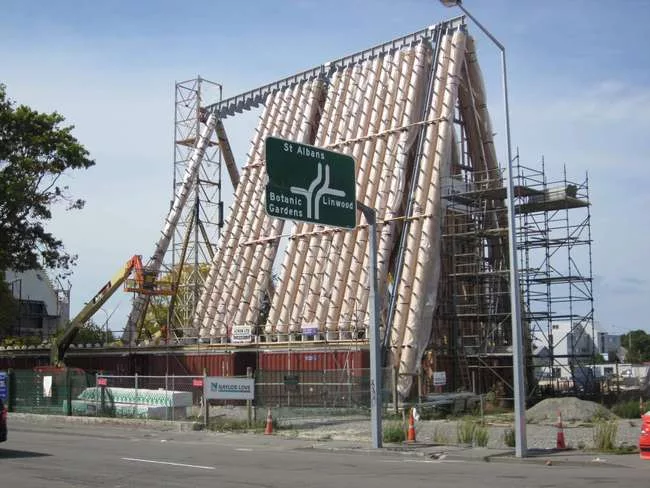
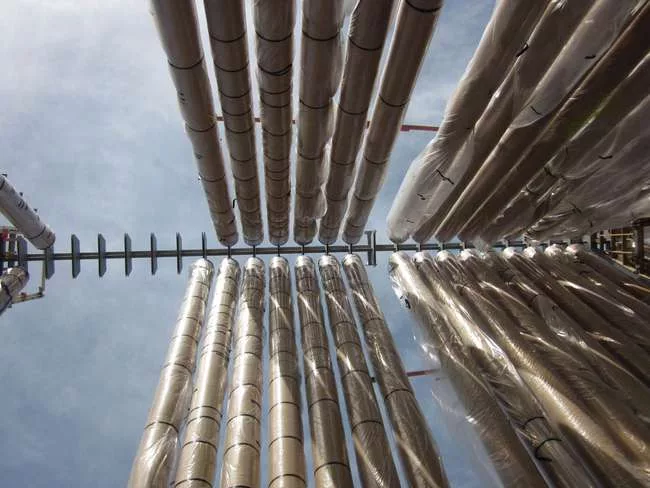
The roof of the cathedral will be comprised of 96 cardboard tubes when the building is completed in May.
Ban's Cardboard Cathedral Rises in Christchurch
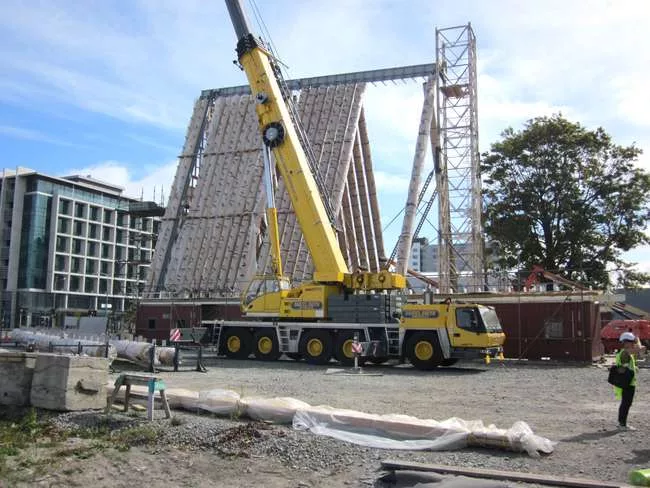
The roof of the cathedral will be comprised of 96 cardboard tubes when the building is completed in May.
Photo © David Berridge
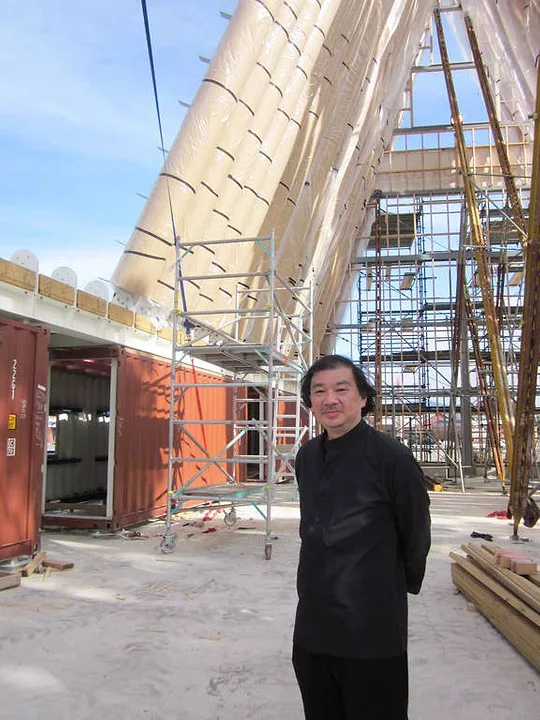
Architect Shigeru Ban in front of his 'cardboard cathedral' in Christchurch, New Zealand.
Ban's Cardboard Cathedral Rises in Christchurch
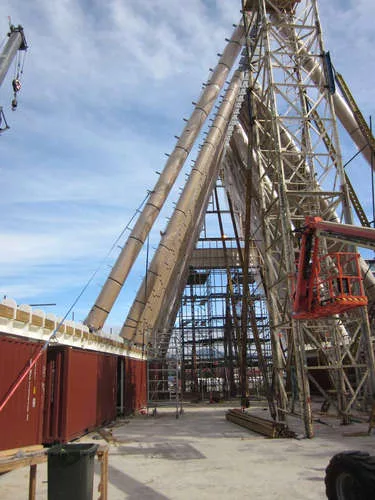
Architect Shigeru Ban in front of his 'cardboard cathedral' in Christchurch, New Zealand.
Photo © David Berridge
The original 19th century Christchurch Cathedral was damaged in an earthquake in September 2010, and subsequently suffered a major collapse in the February 2011 quake.
Ban's Cardboard Cathedral Rises in Christchurch
The original 19th century Christchurch Cathedral was damaged in an earthquake in September 2010, and subsequently suffered a major collapse in the February 2011 quake.
Photo © David Berridge
The original 19th century Christchurch Cathedral was damaged in an earthquake in September 2010, and subsequently suffered a major collapse in the February 2011 quake.
Ban's Cardboard Cathedral Rises in Christchurch
The original 19th century Christchurch Cathedral was damaged in an earthquake in September 2010, and subsequently suffered a major collapse in the February 2011 quake.
Photo © David Berridge
The original 19th century Christchurch Cathedral was damaged in an earthquake in September 2010, and subsequently suffered a major collapse in the February 2011 quake.
Ban's Cardboard Cathedral Rises in Christchurch
The original 19th century Christchurch Cathedral was damaged in an earthquake in September 2010, and subsequently suffered a major collapse in the February 2011 quake.
Photo © David Berridge
The original 19th century Christchurch Cathedral was damaged in an earthquake in September 2010, and subsequently suffered a major collapse in the February 2011 quake.
Ban's Cardboard Cathedral Rises in Christchurch
The original 19th century Christchurch Cathedral was damaged in an earthquake in September 2010, and subsequently suffered a major collapse in the February 2011 quake.
Photo © David Berridge
The original 19th century Christchurch Cathedral was damaged in an earthquake in September 2010, and subsequently suffered a major collapse in the February 2011 quake.
Ban's Cardboard Cathedral Rises in Christchurch
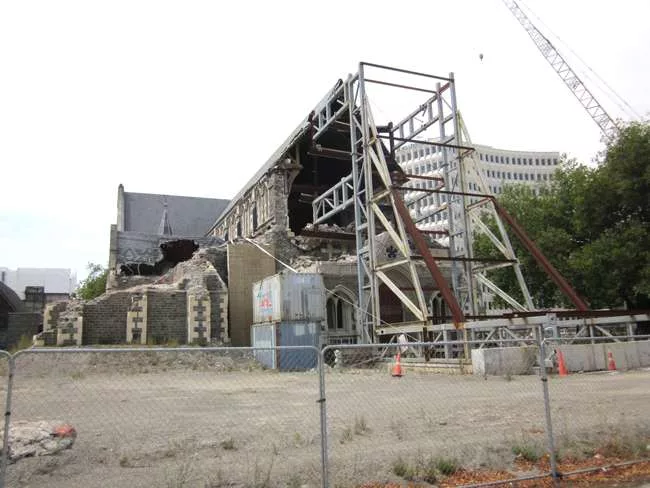
The original 19th century Christchurch Cathedral was damaged in an earthquake in September 2010, and subsequently suffered a major collapse in the February 2011 quake.
Photo © David Berridge
The original 19th century Christchurch Cathedral was damaged in an earthquake in September 2010, and subsequently suffered a major collapse in the February 2011 quake.
Ban's Cardboard Cathedral Rises in Christchurch
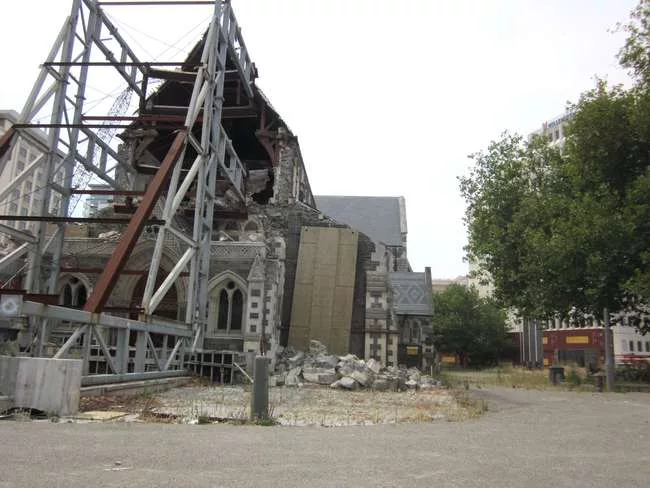
The original 19th century Christchurch Cathedral was damaged in an earthquake in September 2010, and subsequently suffered a major collapse in the February 2011 quake.
Photo © David Berridge
The original 19th century Christchurch Cathedral was damaged in an earthquake in September 2010, and subsequently suffered a major collapse in the February 2011 quake.
Ban's Cardboard Cathedral Rises in Christchurch
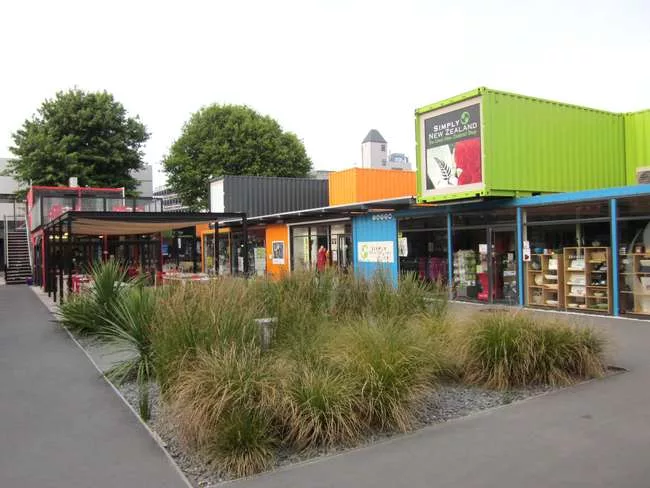
The original 19th century Christchurch Cathedral was damaged in an earthquake in September 2010, and subsequently suffered a major collapse in the February 2011 quake.
Photo © David Berridge
The original 19th century Christchurch Cathedral was damaged in an  earthquake in September 2010, and subsequently suffered a major collapse  in the February 2011 quake.
Ban's Cardboard Cathedral Rises in Christchurch
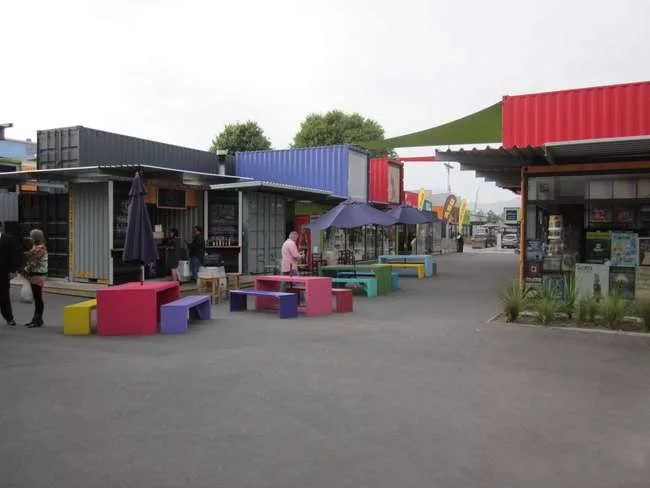
The original 19th century Christchurch Cathedral was damaged in an earthquake in September 2010, and subsequently suffered a major collapse in the February 2011 quake.
Photo © David Berridge
Re:START is a temporary shopping center and public space in  Christchurch, built of brightly colored, artfully arrayed shipping  containers.
Ban's Cardboard Cathedral Rises in Christchurch
Re:START is a temporary shopping center and public space in Christchurch, built of brightly colored, artfully arrayed shipping containers.
Photo © David Berridge
Re:START is a temporary shopping center and public space in  Christchurch, built of brightly colored, artfully arrayed shipping  containers.
Ban's Cardboard Cathedral Rises in Christchurch
Re:START is a temporary shopping center and public space in Christchurch, built of brightly colored, artfully arrayed shipping containers.
Photo © David Berridge
The roof of the cathedral will be comprised of 96 cardboard tubes when the building is completed in May.
Architect Shigeru Ban in front of his 'cardboard cathedral' in Christchurch, New Zealand.
The original 19th century Christchurch Cathedral was damaged in an earthquake in September 2010, and subsequently suffered a major collapse in the February 2011 quake.
The original 19th century Christchurch Cathedral was damaged in an  earthquake in September 2010, and subsequently suffered a major collapse  in the February 2011 quake.
Re:START is a temporary shopping center and public space in  Christchurch, built of brightly colored, artfully arrayed shipping  containers.
February 25, 2013

The roof of the cathedral will be comprised of 96 cardboard tubes when the building is completed in May.

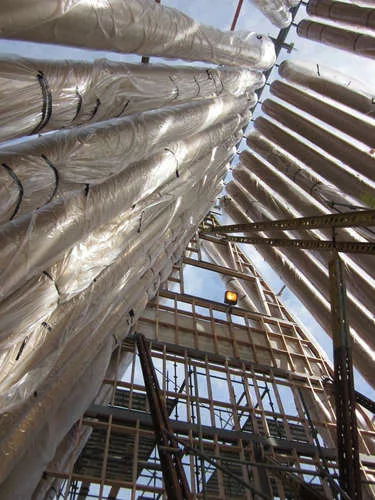
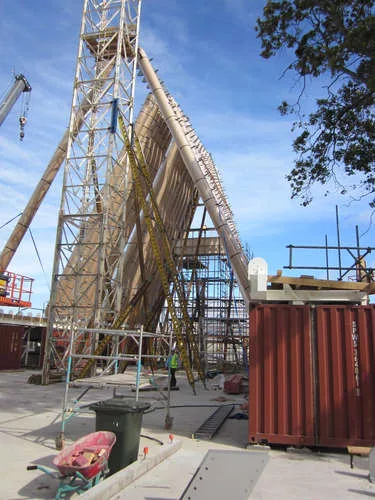
The day before the second anniversary of the cataclysmic and fatal earthquake in Christchurch, New Zealand, architect Shigeru Ban stood in the half-finished nave of the “cardboard cathedral” he designed for the devastated city, his largest temporary structure yet. Thirty-seven of the cardboard tubes that form the soaring A-shaped church roof were already installed, and will be covered in translucent corrugated polycarbonate panels. The project is meant to evoke the feeling of being in the 19th century Christchurch Cathedral, which toppled in the quake on February 22, 2011.

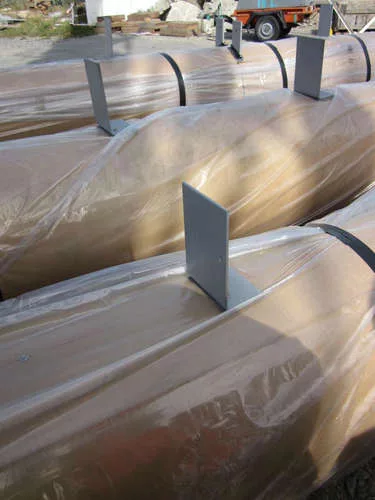
The architect had just come from meeting with a group of Japanese parents in town for the anniversary memorial: their children, who’d been in Christchurch studying English, were among the 185 people who died in the quake. As the architect talked about his design for the cathedral, a bitter southwest wind made an unholy racket, whipping up the plastic sheeting that was protecting the cardboard tubes. When complete, the roof will rise up to 70 feet above the altar. The structure is quite simple. The foundation is a deep concrete slab, onto which eight shipping containers sit, four to a side, form the walls. The containers anchor the roof, which will be comprised of 96 cardboard tubes when the building is completed in May. Two-inch gaps between each tube will allow shafts of light to filter into the sanctuary, which will seat 700 people.

“I was very busy in Tokyo after the earthquake,” recalled Ban of the day in March 2011, shortly after the disastrous earthquake and tsunami hit Japan, when he got an email from the Reverend Craig Dixon of Christchurch Cathedral. The cathedral had been damaged first in an earthquake in September 2010, and subsequently suffered a major collapse in the February 2011 quake. Christchurch, the largest city on the south island of New Zealand, was also the country’s most English. Its early British settlers built a number of Gothic Revival stone churches, planted rose gardens, and named the meandering local river the Avon. Christchurch Cathedral was a copy of one in Oxford, England, and was one of the most famous landmarks in the city of 400,000, pictured on postcards and souvenir tea towels.

Reverend Dixon had reached out to Ban after seeing photographs of the architect’s cardboard-tube chapel in Japan, built after the 1995 Kobe earthquake and later disassembled and moved to Taiwan. The first day he visited Christchurch, he made a sketch, based on an analysis of the proportions of the original cathedral. “It is totally different,” said Ban, who waived his design fee for the project because it will serve as a community space and house of worship, “but I wanted people to feel familiar in the space.” The entrance will feature triangular panes of stained glass that echo the old cathedral’s Rose Window.

Ban’s original sketch is still the basis of the design, but there have been challenges along the way. Church officials wanted Ban’s signature cardboard tubes, but those manufactured in New Zealand were smaller than required to support the structure. Ban decided it was more important to use local materials than to import larger cardboard tubes from Australia, so the tubes are reinforced internally by locally sourced, laminated wood beams.

The $4.2 million “temporary” church is likely to stand for decades. It sits not on the site of the original cathedral but a few blocks away, where another Anglican church once stood before it too was destroyed in the earthquake. Ban’s church will also serve that parish. “Even a building made of cardboard can be permanent if people love it,” said Ban.

Meanwhile, officials of the Anglican diocese grapple with the immense problems of how to rebuild the cathedral, whose ruined walls dominate the heart of Christchurch today. It is a project likely to take more than a decade and cost tens of millions of dollars. Much of the city still looks like a post-war zone, with cranes continuing to topple unstable buildings, and rubble scattered inside a fenced “red zone.” But despite the vast devastation, local architects acknowledge a huge opportunity to create a new, more urbane city. A controversial plan has already been unveiled to wrap open space and parkland around the city center to encourage density—though unfortunately, it doesn’t allow for much residential space, let alone mixed income development. 

Yet pockets of hope and determination are already blossoming. Sam Crofskey, an entrepreneurial young restaurateur re-opened his popular C-One café—completely destroyed in the earthquake—in a former 1930s post-office. A movie theater is next door, and an art gallery has set up shop in a floor above him. On the roof, Crofskey has installed solar panels for the restaurant’s hot water, a beehive for honey, and a tiny vineyard, which will produce 55 bottles of boutique pinot noir. “We’re trying to show that you can go in now and do something,” he said. “Don’t wait. I want to inspire people.” Others have been similarly inspired. Re:START is a cool temporary shopping center and public space built of brightly colored, artfully arrayed shipping containers. Other architects and designers have created clever interventions, dubbed Gap Fillers, such as an outdoor performing venue shaped by stacked-up, blue-painted freight pallets. In Christchurch, imagination is fueling the potential for a lively urban future—with Ban’s cathedral an emblem of the possibilities.

Share This Story

Looking for a reprint of this article?
From high-res PDFs to custom plaques, order your copy today!

Mcguigan

Cathleen McGuigan served as editor in chief of Architectural Record from 2011 to 2022.

Post a comment to this article

Report Abusive Comment

Subscription Center
  • Create an Account
  • Start a Subscription
  • Manage My Account
  • Sign Up for Newsletters
  • Visit Customer Service
  • Update Preferences

More Videos

Sponsored Content

Sponsored Content is a special paid section where industry companies provide high quality, objective, non-commercial content around topics of interest to the Architectural Record audience. All Sponsored Content is supplied by the advertising company and any opinions expressed in this article are those of the author and not necessarily reflect the views of Architectural Record or its parent company, BNP Media. Interested in participating in our Sponsored Content section? Contact your local rep!

close
  • cold storage facility
    Sponsored byCarlisle SynTec Systems

    How Architects Can Design More Continuous Cold Storage Envelopes

  • TAMLYN XtremeTrim Exterior Trim
    Sponsored byTamlyn

    Designing Cleaner Panel Facades: Why Exterior Trim Details Matter

  • Building with Vapor Barriers
    Sponsored byReef Industries, Inc.

    Vapor Barriers Help Control Moisture in Tighter Building Designs

DESIGN:ED Podcast
Listen to Architectural Record’s DESIGN:ED Podcast

Events

June 23, 2026

Enhancing Fire Resistance with Advanced PVC Solutions

Credits: 1 AIA LU/HSW; 1 AIBD P-CE; 0.1 ICC CEU; 1 IIBEC CEH

Evaluate advanced PVC solutions that improve fire resistance, support WUI compliance, and enhance resilience in residential and commercial building design.

June 25, 2026

Designing Glass Railing Systems that Enhance Aesthetics and Meet Code

Credits: 1 AIA LU/HSW; 1 AIBD P-CE; 0.1 ICC CEU

Upon course completion, participants will possess a deeper understanding of glass railings to help ensure that safety, aesthetic, and performance objectives are achieved.

View All Submit An Event

Products

2026 Architect's Square Foot Costbook

2026 Architect's Square Foot Costbook

See More Products

Popular Stories

Lorcan O' Herilhy

California Architect Lorcan O’Herlihy Has Died, Age 66

Obama Presidential Center, Chicago

The Obama Presidential Center Opens on Chicago’s South Side

Spoonbill Ranch

Johnsen Schmaling Architects Integrates Spoonbill Ranch into a Pristine Landscape

Image of Bruce Springsteen Center for American Music

The CookFox-designed Bruce Springsteen Center for American Music Opens in New Jersey

Three Courtyards House

Design Vanguard 2026: Balsa Crosetto Piazzi

Enhancing Fire Resistance with Advanced PVC Solutions - Free Webinar - June 23, 2026

Related Articles

  • In Quake-Ravaged Christchurch, Ban’s Cardboard Cathedral Ready for Groundbreaking

    See More
  • Quick Take: Shigeru Ban's Cardboard Cathedral

    See More
  • New Auction House by Ole Scheeren Rises in Beijing

    See More

Related Products

See More Products
  • book3.jpg

    If Architecture is a Language, Then a Building is a Story

See More Products
×

The latest news and information

#1 Source for Architectural Design, News and Products

SUBSCRIBE
  • RESOURCES
    • Advertise
    • Contact Us
    • Submit
    • Store
  • ACCOUNT CENTER
    • Create an Account
    • Start a Subscription
    • Manage My Account
    • Sign Up for Newsletters
    • Visit Customer Service
    • Update Preferences
  • PRIVACY
    • PRIVACY POLICY
    • TERMS & CONDITIONS
    • DO NOT SELL MY PERSONAL INFORMATION
    • PRIVACY REQUEST
    • ACCESSIBILITY
  • SERVICES
    • Marketing Services
    • Reprints
    • Market Research
    • List Rental
    • Survey/Respondent Access
  • STAY CONNECTED
    • Linkedin
    • Facebook
    • Instagram
    • YouTube
    • X (Twitter)

Copyright ©2026. All Rights Reserved BNP Media, Inc. and BNP Media II, LLC.

Design, CMS, Hosting & Web Development :: ePublishing