Architectural Record
search
cart
facebook twitter linkedin youtube
  • Sign In
  • Subscribe
  • Sign Out
  • My Account
Architectural Record
  • NEWS
    • Latest News
    • Awards
    • Interviews
    • Obituaries
    • Podcasts
      • Design:Ed Podcast
      • Sponsored Podcasts
  • OPINION
    • Book Reviews / Excerpts
    • Exhibition Reviews
    • Forum
  • EXCLUSIVES
    • Videos
    • Design Vanguard
    • Top 300 Firms
    • Sponsored Content
    • Sponsored eBooks
    • From the Archives
  • CONTINUING ED
    • Editorial Continuing Ed
    • CE Center
    • CE Academies
  • PROJECTS
    • Buildings By Type
    • Reuse & Renovation
    • Museums & Arts Centers
    • Colleges & Universities
    • Multifamily Housing
    • Interiors
    • Lighting
    • Kitchen & Bath
  • HOUSES
    • Record Houses
    • House of the Month
    • Featured Houses
  • PRODUCTS
    • Products by Category
    • Record Products of the Year
    • Latest Products
  • EVENTS
    • Dates & Events
    • Record on the Road
    • Innovation Conference
    • Sustainability in Practice
    • Women In Architecture
    • Webinars
    • Ad Excellence Awards
    • Submit an Event
  • CONNECT
    • Ask RECORD AI
    • Newsletters
    • Contact
    • Advertise
    • Editorial Calendar
    • Store
    • Customer Service
  • SUBMIT
    • Submission Guidelines
    • RECORD Competitions
  • MAGAZINE
    • Subscribe
    • My Account
    • Digital Edition
    • Current Issue
    • Firm Pass
    • Historic Archive
Architecture NewsInterviews

Newsmaker: Barry Bergdoll
By Suzanne Stephens
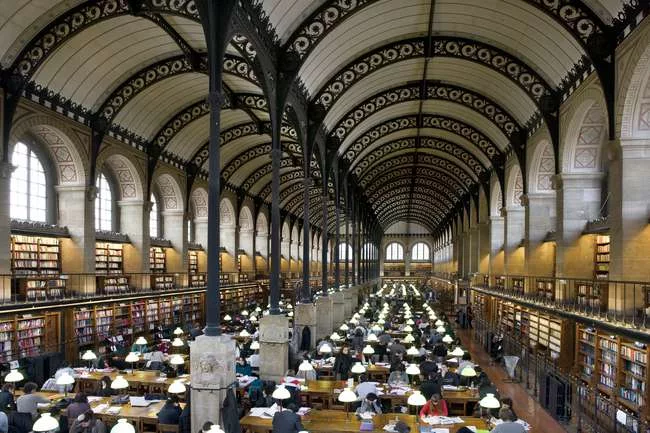
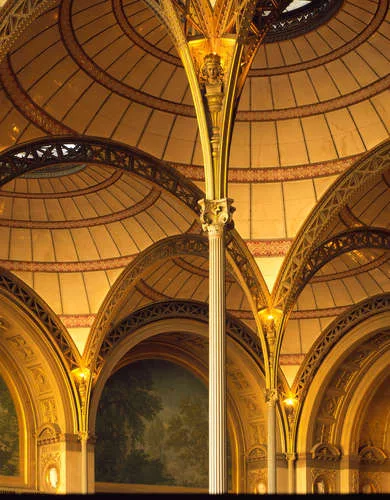
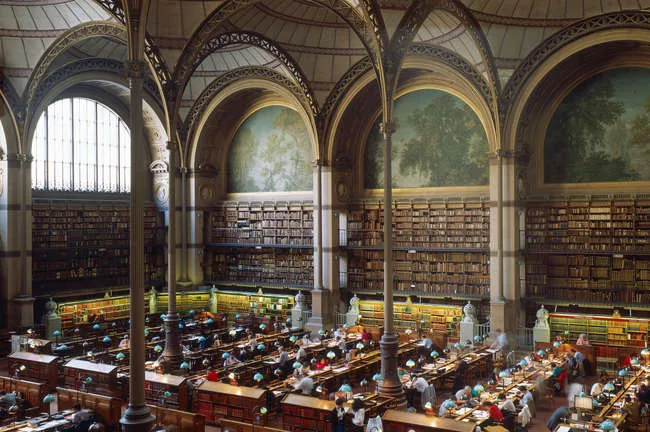
Bibliothèque Sainte‐Geneviève, Paris, 1838‐1850. View of the reading room.
Newsmaker: Barry Bergdoll
Bibliothèque Sainte‐Geneviève, Paris, 1838‐1850. View of the reading room.
Photo by Michel Nguyen © Bibliothèque Sainte‐Geneviève/Michel Nguyen
Biblioth&#232;que nationale, reading room.<br />
Newsmaker: Barry Bergdoll
Bibliothèque nationale, reading room.
Photo © Georges Fessy
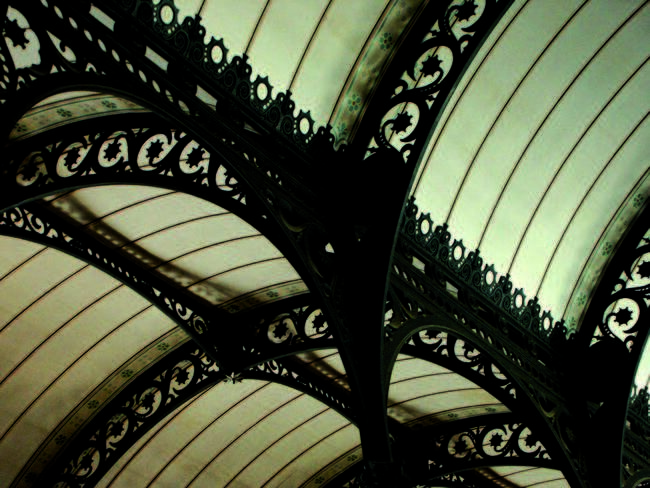
Biblioth&#232;que Sainte&#8208;Genevi&#232;ve, Paris, 1838&#8208;1850. Steel trusses of the reading room. <span style='color: #242424; font-family: 'Helvetica Neue',Helvetica,Verdana,Arial,sans-serif;
Newsmaker: Barry Bergdoll
Bibliothèque Sainte‐Geneviève, Paris, 1838‐1850. Steel trusses of the reading room.
Photo © Priscille Leroy
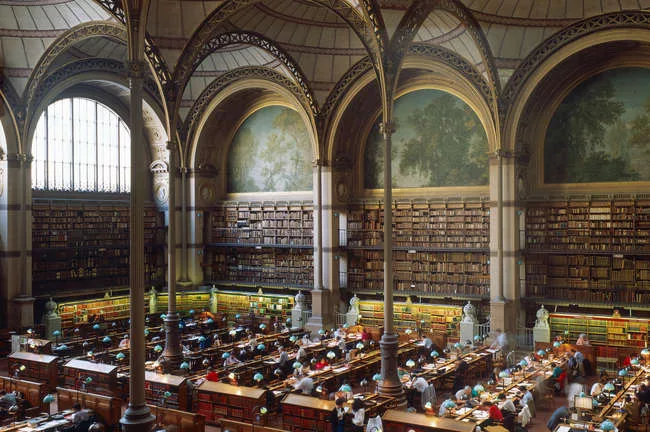
Biblioth&#232;que nationale, Paris, 1854-1875. View of the reading room. <span style='color: #242424; font-family: 'Helvetica Neue',Helvetica,Verdana,Arial,sans-serif; font-size: 11px; font-style: nor
Newsmaker: Barry Bergdoll
Bibliothèque nationale, Paris, 1854-1875. View of the reading room.
Photo © Georges Fessy
Biblioth&#232;que nationale Paris, 1854-1875.<br />
Newsmaker: Barry Bergdoll
Bibliothèque nationale Paris, 1854-1875.
Photo © Georges Fessy
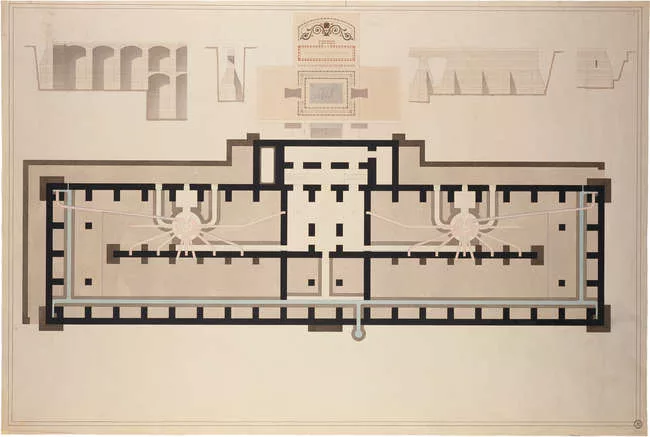
Henri Labrouste, Biblioth&#232;que Sainte-Genevi&#232;ve, plan du sous-sol, avec coupes, et d&#233;tail de la premi&#232;re pierre, fin 1850, 65,7 x 97,5 cm, Paris, BSG, Ms. 4273 (6)<br />
Newsmaker: Barry Bergdoll
Henri Labrouste, Bibliothèque Sainte-Geneviève, plan du sous-sol, avec coupes, et détail de la première pierre, fin 1850, 65,7 x 97,5 cm, Paris, BSG, Ms. 4273 (6)
Image © Bibliothèque Sainte-Geneviève, Paris
Henri Labrouste, Biblioth&#232;que Sainte-Genevi&#232;ve, &#233;tude pour les fermes en fonte du premier &#233;tage et le comble en fer, vers novembre 1846, 66,5 x 102,3 cm, Paris, BSG, Ms.4273 (24<sp
Newsmaker: Barry Bergdoll
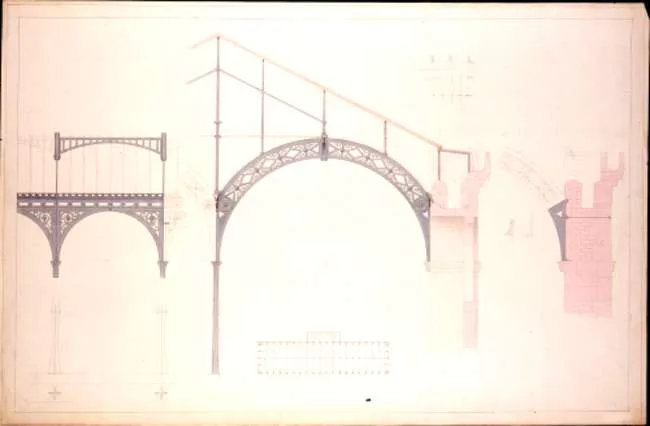
Henri Labrouste, Bibliothèque Sainte-Geneviève, étude pour les fermes en fonte du premier étage et le comble en fer, vers novembre 1846, 66,5 x 102,3 cm, Paris, BSG, Ms.4273 (24
Image © Bibliothèque Sainte-Geneviève, Paris
<span style='color: #242424; font-family: 'Helvetica Neue',Helvetica,Verdana,Arial,sans-serif; font-size: 11px; font-style: normal; font-variant: normal; font-weight: normal; letter-spacing: normal; l
Newsmaker: Barry Bergdoll
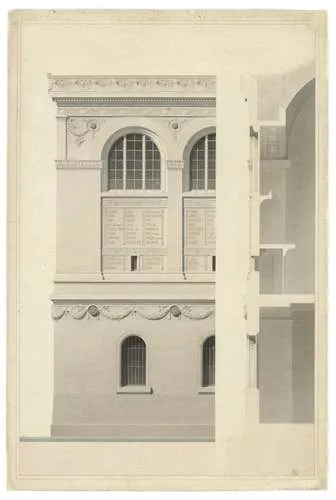
Henri Labrouste (1801-1875). Bibliothèque Sainte-Geneviève, Paris, 1838-1850. Southwest corner: elevation and section. Late 1850. Pen, ink, graphite, wash and watercolor on paper.
Image © Bibliothèque Sainte-Geneviève, Paris
Henri Labrouste, Biblioth&#232;que Sainte-Genevi&#232;ve, coupe transversale sur la salle de lecture, fin 1850, 66 x 99 cm Paris, BSG, Ms. 4273 (41) <span style='font-style: normal; font-variant: norm
Newsmaker: Barry Bergdoll
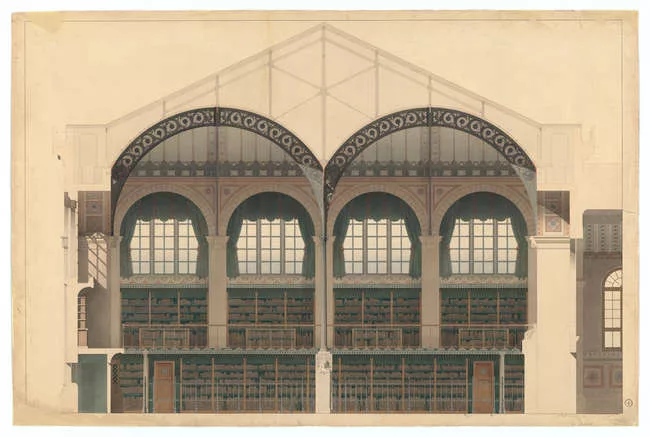
Henri Labrouste, Bibliothèque Sainte-Geneviève, coupe transversale sur la salle de lecture, fin 1850, 66 x 99 cm Paris, BSG, Ms. 4273 (41)
Image © Académie d’Architecture, Paris
Henri Labrouste, Projet de concours pour la construction d&#8217;une prison centrale &#224; Alessandria (Pi&#233;mont), coupe perspective, 1839, 35,7 x 68,1 cm, Paris, AA, 285.2<span style='font-style
Newsmaker: Barry Bergdoll
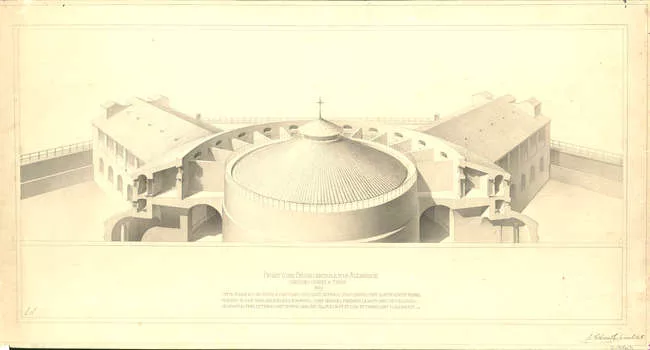
Henri Labrouste, Projet de concours pour la construction d’une prison centrale à Alessandria (Piémont), coupe perspective, 1839, 35,7 x 68,1 cm, Paris, AA, 285.2
Image © Académie d’Architecture, Paris
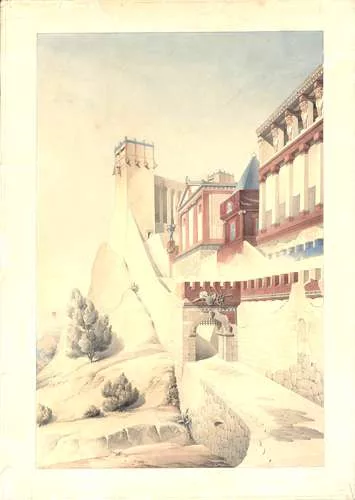
Henri Labrouste (French, 1801-1875). Imaginary reconstruction of an ancient city. Perspective view. Date unknown. Graphite, pen, ink and watercolor on paper.<br />
Newsmaker: Barry Bergdoll
Henri Labrouste (French, 1801-1875). Imaginary reconstruction of an ancient city. Perspective view. Date unknown. Graphite, pen, ink and watercolor on paper.
Image © Académie d’Architecture, Paris
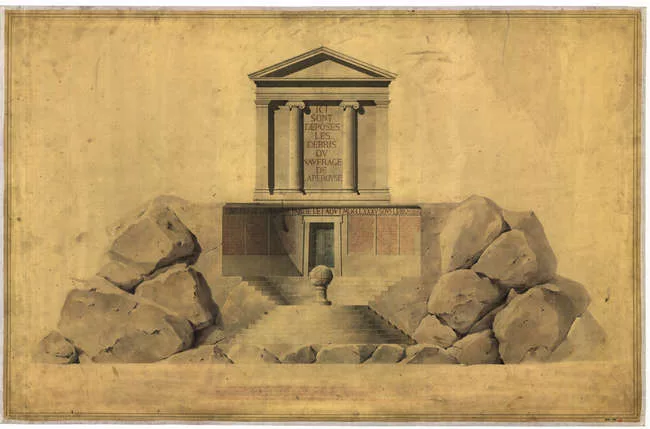
Henri Labrouste (French, 1801-1875). Project for a cenotaph in memory of La P&#233;rouse. Main elevation. 1829. Pen, ink and wash on paper mounted on canvas. <span style='color: #242424; font-family:
Newsmaker: Barry Bergdoll
Henri Labrouste (French, 1801-1875). Project for a cenotaph in memory of La Pérouse. Main elevation. 1829. Pen, ink and wash on paper mounted on canvas.
Image © Académie d’Architecture, Paris
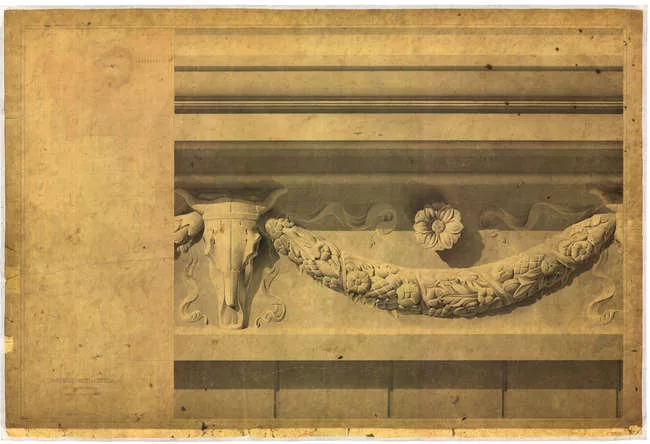
Henri Labrouste (French, 1801-1875). Tomb of Caecilia Metella on the Appian Way, Rome. Details of the frieze and profile of the entablature. 1825-1830. Pen, ink, wash and watercolor highlights on pape
Newsmaker: Barry Bergdoll
Henri Labrouste (French, 1801-1875). Tomb of Caecilia Metella on the Appian Way, Rome. Details of the frieze and profile of the entablature. 1825-1830. Pen, ink, wash and watercolor highlights on paper. Académie d’Architecture, Paris
Image © Académie d’Architecture, Paris
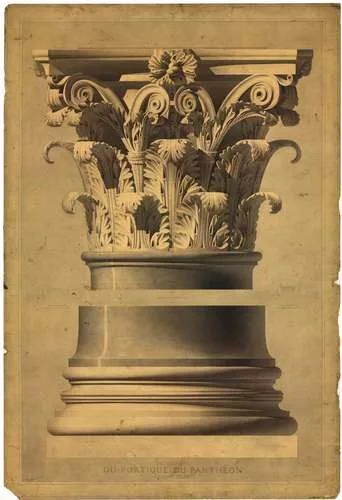
Henri Labrouste (French, 1801-1875). The Pantheon, Rome. Capital and base of a column of the portico. 1825-1830. Pen, ink, graphite and watercolor on paper. <span style='color: #000000; font-family: V
Newsmaker: Barry Bergdoll
Henri Labrouste (French, 1801-1875). The Pantheon, Rome. Capital and base of a column of the portico. 1825-1830. Pen, ink, graphite and watercolor on paper.
Image © Académie d’Architecture, Paris
Henri Labrouste, Le Panth&#233;on &#224; Rome, &#233;l&#233;vation lat&#233;rale du portique et profil d&#8217;un pilastre, [1825-1830], 41,1 x 46,9 cm, Paris, AA, 268.7 <span style='font-style: norma
Newsmaker: Barry Bergdoll
Henri Labrouste, Le Panthéon à Rome, élévation latérale du portique et profil d’un pilastre, [1825-1830], 41,1 x 46,9 cm, Paris, AA, 268.7
Image © Académie d’Architecture, Paris
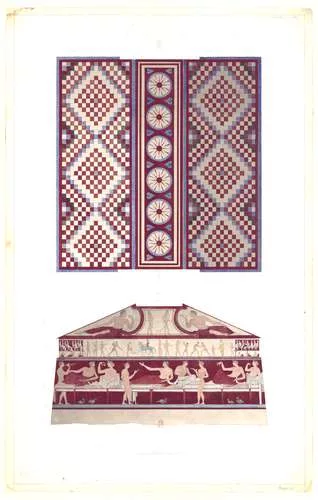
Henri Labrouste (1801-1875). Etruscan tomb, known as delle Bighe, Corneto (nowadays Tarquinia). Plan of the ceiling and elevation of the back wall. 1829. Pen, ink and watercolor on paper. <span style=
Newsmaker: Barry Bergdoll
Henri Labrouste (1801-1875). Etruscan tomb, known as delle Bighe, Corneto (nowadays Tarquinia). Plan of the ceiling and elevation of the back wall. 1829. Pen, ink and watercolor on paper.
Image © Cliché Bibliothèque nationale de France
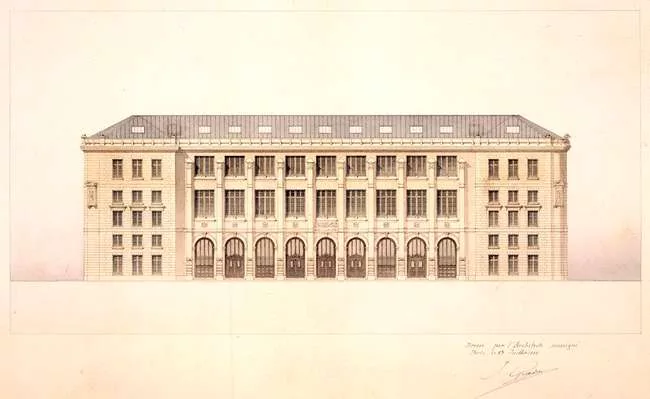
Julien Guadet (1834-1908). New Central Post Office (today Central Post Office) of the rue du Louvre, Paris, 1880-1886. Elevation of the main fa&#231;ade, July 13th 1880. Pen, ink and watercolor on pap
Newsmaker: Barry Bergdoll
Julien Guadet (1834-1908). New Central Post Office (today Central Post Office) of the rue du Louvre, Paris, 1880-1886. Elevation of the main façade, July 13th 1880. Pen, ink and watercolor on paper. Paris, Cité de l’architecture et du patrimoine Centre d’archives d’architecture du XXe siècle.
Image © CNAM/SIAF/CAPA/ Archives du XXe siècle
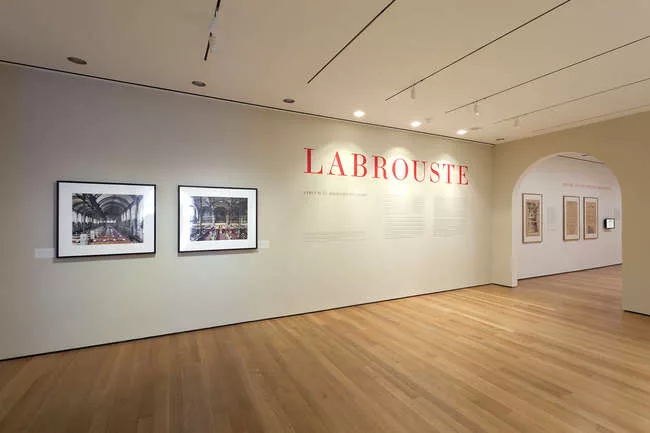
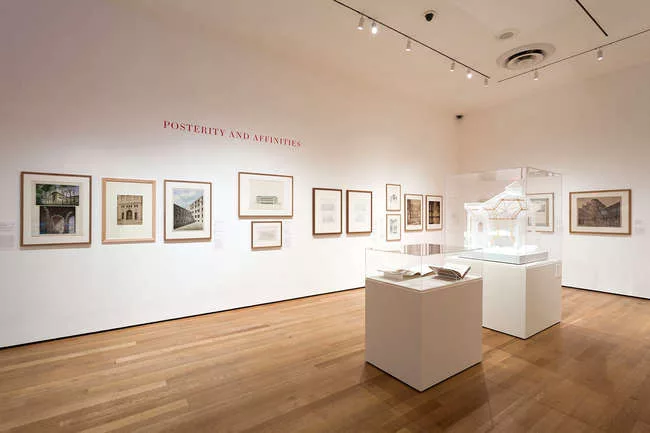
Installation view of exhibition 'Henri Labrouste: Structure Brought To Light.' March 10&#8211;June 24, 2013. <br />
Newsmaker: Barry Bergdoll
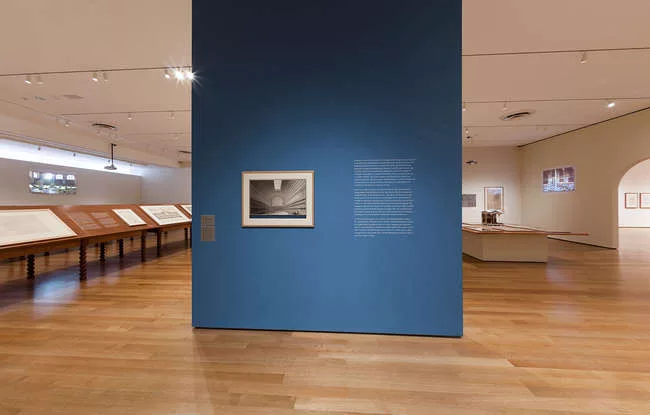
Installation view of exhibition 'Henri Labrouste: Structure Brought To Light.' March 10–June 24, 2013.
Photo © Jonathan Muzikar/MoMA
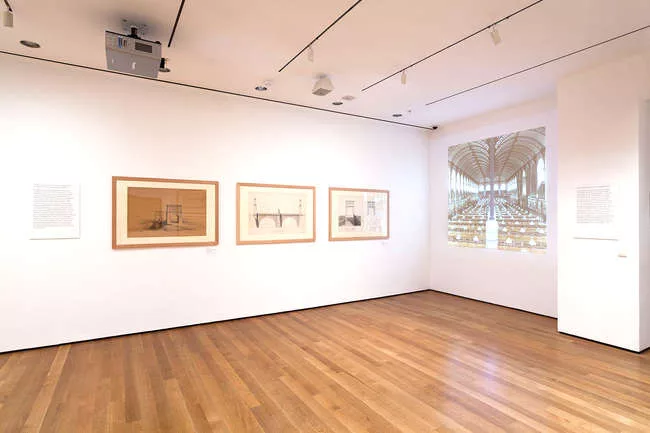
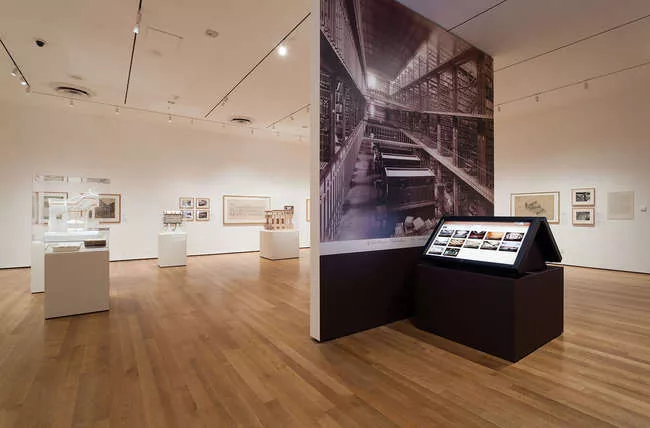
Installation view of exhibition 'Henri Labrouste: Structure Brought To Light.' March 10&#8211;June 24, 2013.
Newsmaker: Barry Bergdoll
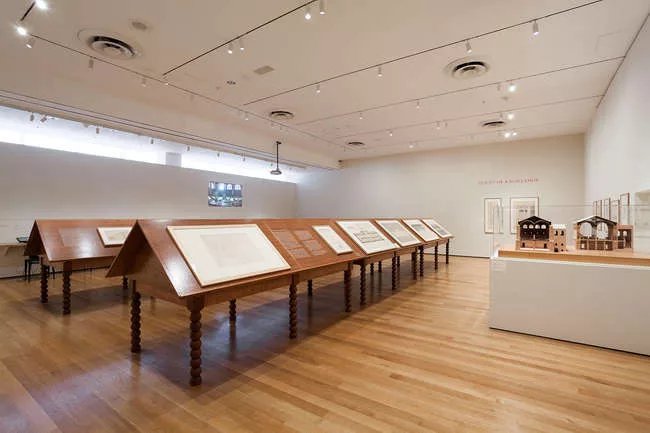
Installation view of exhibition 'Henri Labrouste: Structure Brought To Light.' March 10–June 24, 2013.
Photo © Jonathan Muzikar/MoMA
Installation view of exhibition 'Henri Labrouste: Structure Brought To Light.' March 10&#8211;June 24, 2013.
Newsmaker: Barry Bergdoll
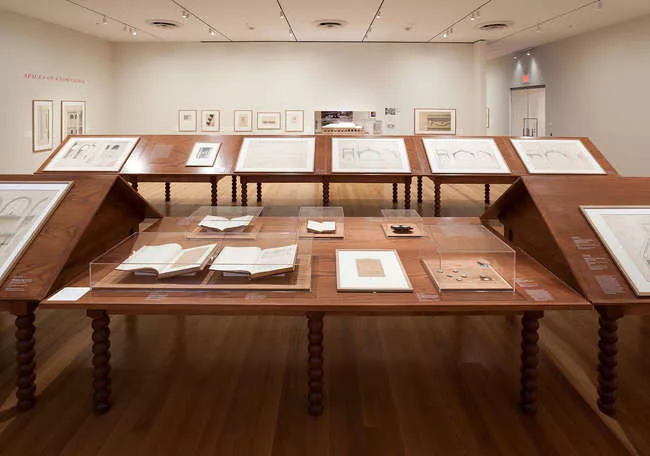
Installation view of exhibition 'Henri Labrouste: Structure Brought To Light.' March 10–June 24, 2013.
Photo © Jonathan Muzikar/MoMA
Installation view of exhibition 'Henri Labrouste: Structure Brought To Light.' March 10&#8211;June 24, 2013.
Newsmaker: Barry Bergdoll
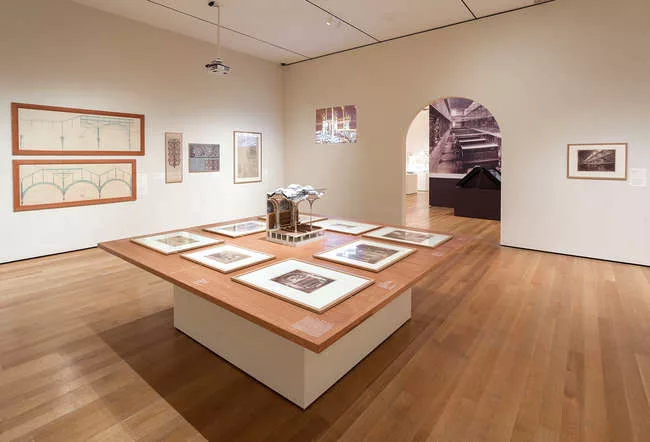
Installation view of exhibition 'Henri Labrouste: Structure Brought To Light.' March 10–June 24, 2013.
Photo © Jonathan Muzikar/MoMA
Installation view of exhibition 'Henri Labrouste: Structure Brought To Light.' March 10&#8211;June 24, 2013.
Newsmaker: Barry Bergdoll
Installation view of exhibition 'Henri Labrouste: Structure Brought To Light.' March 10–June 24, 2013.
Photo © Jonathan Muzikar/MoMA
Installation view of exhibition 'Henri Labrouste: Structure Brought To Light.' March 10&#8211;June 24, 2013.
Newsmaker: Barry Bergdoll
Installation view of exhibition 'Henri Labrouste: Structure Brought To Light.' March 10–June 24, 2013.
Photo © Jonathan Muzikar/MoMA
Installation view of exhibition 'Henri Labrouste: Structure Brought To Light.' March 10&#8211;June 24, 2013.
Newsmaker: Barry Bergdoll
Installation view of exhibition 'Henri Labrouste: Structure Brought To Light.' March 10–June 24, 2013.
Photo © Jonathan Muzikar/MoMA
Installation view of exhibition 'Henri Labrouste: Structure Brought To Light.' March 10&#8211;June 24, 2013.
Newsmaker: Barry Bergdoll
Installation view of exhibition 'Henri Labrouste: Structure Brought To Light.' March 10–June 24, 2013.
Photo © Jonathan Muzikar/MoMA
Biblioth&#232;que Sainte&#8208;Genevi&#232;ve, Paris, 1838&#8208;1850. View of the reading room.
Biblioth&#232;que nationale, reading room.<br />
Biblioth&#232;que Sainte&#8208;Genevi&#232;ve, Paris, 1838&#8208;1850. Steel trusses of the reading room. <span style='color: #242424; font-family: 'Helvetica Neue',Helvetica,Verdana,Arial,sans-serif;
Biblioth&#232;que nationale, Paris, 1854-1875. View of the reading room. <span style='color: #242424; font-family: 'Helvetica Neue',Helvetica,Verdana,Arial,sans-serif; font-size: 11px; font-style: nor
Biblioth&#232;que nationale Paris, 1854-1875.<br />
Henri Labrouste, Biblioth&#232;que Sainte-Genevi&#232;ve, plan du sous-sol, avec coupes, et d&#233;tail de la premi&#232;re pierre, fin 1850, 65,7 x 97,5 cm, Paris, BSG, Ms. 4273 (6)<br />
Henri Labrouste, Biblioth&#232;que Sainte-Genevi&#232;ve, &#233;tude pour les fermes en fonte du premier &#233;tage et le comble en fer, vers novembre 1846, 66,5 x 102,3 cm, Paris, BSG, Ms.4273 (24<sp
<span style='color: #242424; font-family: 'Helvetica Neue',Helvetica,Verdana,Arial,sans-serif; font-size: 11px; font-style: normal; font-variant: normal; font-weight: normal; letter-spacing: normal; l
Henri Labrouste, Biblioth&#232;que Sainte-Genevi&#232;ve, coupe transversale sur la salle de lecture, fin 1850, 66 x 99 cm Paris, BSG, Ms. 4273 (41) <span style='font-style: normal; font-variant: norm
Henri Labrouste, Projet de concours pour la construction d&#8217;une prison centrale &#224; Alessandria (Pi&#233;mont), coupe perspective, 1839, 35,7 x 68,1 cm, Paris, AA, 285.2<span style='font-style
Henri Labrouste (French, 1801-1875). Imaginary reconstruction of an ancient city. Perspective view. Date unknown. Graphite, pen, ink and watercolor on paper.<br />
Henri Labrouste (French, 1801-1875). Project for a cenotaph in memory of La P&#233;rouse. Main elevation. 1829. Pen, ink and wash on paper mounted on canvas. <span style='color: #242424; font-family:
Henri Labrouste (French, 1801-1875). Tomb of Caecilia Metella on the Appian Way, Rome. Details of the frieze and profile of the entablature. 1825-1830. Pen, ink, wash and watercolor highlights on pape
Henri Labrouste (French, 1801-1875). The Pantheon, Rome. Capital and base of a column of the portico. 1825-1830. Pen, ink, graphite and watercolor on paper. <span style='color: #000000; font-family: V
Henri Labrouste, Le Panth&#233;on &#224; Rome, &#233;l&#233;vation lat&#233;rale du portique et profil d&#8217;un pilastre, [1825-1830], 41,1 x 46,9 cm, Paris, AA, 268.7 <span style='font-style: norma
Henri Labrouste (1801-1875). Etruscan tomb, known as delle Bighe, Corneto (nowadays Tarquinia). Plan of the ceiling and elevation of the back wall. 1829. Pen, ink and watercolor on paper. <span style=
Julien Guadet (1834-1908). New Central Post Office (today Central Post Office) of the rue du Louvre, Paris, 1880-1886. Elevation of the main fa&#231;ade, July 13th 1880. Pen, ink and watercolor on pap
Installation view of exhibition 'Henri Labrouste: Structure Brought To Light.' March 10&#8211;June 24, 2013. <br />
Installation view of exhibition 'Henri Labrouste: Structure Brought To Light.' March 10&#8211;June 24, 2013.
March 6, 2013

Bibliothèque Sainte‐Geneviève, Paris, 1838‐1850. View of the reading room.

Barry Bergdoll, the Philip Johnson Chief Curator of Architecture and Design at New York’s Museum of Modern Art (MoMA), opens a major exhibition devoted to the 19th-century French architect Henri Labrouste (1801-1875) on March 10. The show, Henri Labrouste: Structure Brought to Light, on view until June 24, 2013, looks at the major accomplishments of this progenitor of modern architecture, particularly his two significant works, the Bibliothèque Sainte-Geneviève (1838 to 1850) and the Bibliothèque nationale de France (1859 to 1875) in a display of over 200 works, including drawings, watercolors, architectural models, vintage and modern photographs. Bergdoll organized the show, which represents the first solo exhibition of Labrouste’s work in the U.S., with Corinne Bélier, chief curator of the Cité de l’architecture & du patrimoine in Paris, and Marc Le Coeur, art historian at the Bibliothèque nationale de France, département des Estampes and de la photographie. The exhibition initially opened at the Cité de l’Architecture (October 11, 2012 to January 7, 2013) and is presented by MoMA, the Cité de l’Architecture, and the Bibliothèque nationale, with the participation of the Académie d’architecture and the Bibliothèque Sainte-Geneviève. A 235-page catalogue of the same name includes essays by Neil Levine, David van Zanten, and Martin Bressani.

Since his arrival at MoMA in January 2007, Bergdoll, a professor of architectural history in the department of art history and archeology at Columbia University, has organized exhibitions of varied topical and historical interest, ranging from Bauhaus 1919-1933: Workshops for Modernity in 2009, to Foreclosed: Rehousing the American Dream with Reinhold Martin, in 2012. Bergdoll’s interest in 19th century French architecture was early manifested in his Ph.D. dissertation at Columbia on Léon Vaudoyer, which became the book “Léon Vaudoyer: Historicism in the Age of Industry” (1994), and his exhibitions, Les Vaudoyer: Une Dynastie d’Architectes at the Musée d’Orsay, Paris (1991) and Ste. Geneviève/Panthéon: Symbol of Revolutions at the Canadian Centre for Architecture, Montreal (1989). On a recent day, RECORD discussed the show’s timing with Bergdoll.

Why is the Museum of Modern Art interested in an architectural exhibition devoted to Henri Labrouste now? Is it due in part to the reduced attention given by the media and museums to architectural history since the heyday of Postmodernism in the 1980s?

While not every look at history needs to be justified by an argument related to the present, it’s an interesting moment to reflect on Labrouste. He’s an Architect’s Architect. Early modern theorists such as Sigfried Giedion were interested in his rational use of iron structures; Postmodernist architects were drawn to his stone inscriptions and symbolic iconography. Now we see him as the forefather of assembling a building from discrete interlocking systems, as shown by the construction drawings in the exhibition. Any number of issues are activated by rethinking Labrouste.

The Museum of Modern Art created a stir when Arthur Drexler mounted The Architecture of the École des Beaux Arts exhibition in 1975. Do you expect the same effect?

At the time Arthur was fighting a modernist orthodoxy, well seen in its reliance on chipboard models. When he began to do research at the École des Beaux Arts in Paris, he was stunned by the drawings—as representations of architecture, they were more palpable than chipboard models. While the show was Arthur’s critique of modernism, he probably didn’t mean it to be interpreted by the new generation of classicists as a validation of its own efforts.

Now there is no orthodoxy to oppose or applaud. Today you cannot pull off this succès de scandale. And if it seems as if we’re not actively studying history, it is because it has been absorbed into the culture of architecture—you have Peter Eisenman teaching Palladio and Serlio at Yale. Bringing history to the Museum of Modern Art is not shocking. It is relevant. So why not Henri Labrouste? As his first solo exhibition in the U.S., it is valuable to see how an architect pushes experimentation but keeps control over it. Self-criticism is a crucial part of Labrouste’s work.

Labrouste’ most famous buildings were two libraries—a seemingly outdated building type in the age of digital information. What should we value now in his design for these buildings?

The Bibliothèque Sainte-Geneviève and the Bibliothèque nationale de France represent two library buildings concerned both about the public environment and the storing of information: they were designed at a seminal moment. Now we are confronting a tectonic shift in how knowledge is stored. Surprisingly, the emptying of libraries because of the digital revolution hasn’t taken place. Even though a new Bibliothèque nationale opened in 1996 in eastern Paris designed by Dominique Perrault, Labrouste’s original library is under restoration and is scheduled to open in 2015 as the national art history library.

What about his use of ornament? Does that have relevance today?

In the last ten years we have seen a fascination with the production of ornament and pattern coming out of the digital parametric movement and algorithmic automatism. But all too often this research takes on a life of its own, divorced from architecture. There is only so much the computer—and algorithms—can do. Labrouste’s use of technology and ornament was essential to the structural integrity of his buildings. Look at the way the ornamental iron work of the Bibliothèque Sainte-Geneviève is based on natural form, and the way he tests and hones a meaningful relationship between new technologies and his larger architectural project. Because the building uses cast iron, the lace-like truss is doing work without looking heavy. In his architecture, Labrouste achieved a real integration of program, means, structure, and space.

Drawing was important in the 19th century—as you vividly demonstrate by installing the stunning drawings Labrouste executed as a Prix de Rome winner at the French Academy in Rome (1825-1830) at the entrance hall to in the exhibition. Does drawing have any significance at this moment?

We are not saying architects should draw again. It’s just that the computer takes away the slow eye-to-hand struggle. Without rejecting digital tools, it would be good to recapture the analytic rigor of drawing. The computer erodes individuality in research.

How did the Labrouste show come about? It opened at the Cité de l’architecture & du patrimoine in Paris last fall.

Initially we had planned a Labrouste show at the Musée d’Orsay, but the Musée decided against it. So MoMA joined up with the Cité as a partner on a tighter, more focused exhibition. I worked with Cité’s Corinne Bélier, chief curator at the Paris museum, and with Marc Le Coeur, art historian at the Bibliothèque nationale. The three of us conceived the exhibition as a co-production.

The Paris and New York exhibitions share the same content but different installations, correct?

The Cité, which has no in-house exhibition department, wanted it to be installed by an architect, Manuelle Gautrand. The Paris show had its own zooty beauty. MoMA felt that since Labrouste is master of space, whose buildings are simultaneously diagrammatic in plan but experientially rich, we had to convey that. In the area devoted to the Bibliothèque Sainte-Geneviève we try to combine the intimacy of reading alone at a table within an overall space of the architecture by emulating Labrouste’s reading tables, and placed most of the material on table. We also tried to recapture Labrouste’s layering of space by carving out openings in partitions so you can see from one area to another.

Share This Story

Looking for a reprint of this article?
From high-res PDFs to custom plaques, order your copy today!

Stephens

Suzanne Stephens, a former deputy editor of Architectural Record, has been a writer, editor, and critic in the field of architecture for several decades. She has a Ph.D. in architectural history from Cornell University, and teaches a seminar in the history of architectural criticism in the architecture program of Barnard and Columbia colleges.

Post a comment to this article

Report Abusive Comment

Subscription Center
  • Create an Account
  • Start a Subscription
  • Manage My Account
  • Sign Up for Newsletters
  • Visit Customer Service
  • Update Preferences

More Videos

Sponsored Content

Sponsored Content is a special paid section where industry companies provide high quality, objective, non-commercial content around topics of interest to the Architectural Record audience. All Sponsored Content is supplied by the advertising company and any opinions expressed in this article are those of the author and not necessarily reflect the views of Architectural Record or its parent company, BNP Media. Interested in participating in our Sponsored Content section? Contact your local rep!

close
  • TAMLYN XtremeTrim Exterior Trim
    Sponsored byTamlyn

    Designing Cleaner Panel Facades: Why Exterior Trim Details Matter

  • Building with Vapor Barriers
    Sponsored byReef Industries, Inc.

    Vapor Barriers Help Control Moisture in Tighter Building Designs

  • Duct Interior with Prodeq System
    Sponsored byHenry, a Carlisle Company

    Designing Resilient Water Containment Systems

DESIGN:ED Podcast
Listen to Architectural Record’s DESIGN:ED Podcast

Events

June 10, 2026

Rethinking Stormwater – The Power of Porous Paving

Credits: 1 AIA LU/HSW; 1 AIBD P-CE; 0.1 ICC CEU

Learn how porous paving systems support stormwater management, reduce heat island effects, and enhance sustainable site design performance.

June 11, 2026

Very Early Warning Fire Detection for Mission-Critical Facilities

Credits: 1 AIA LU/HSW; 1 AIBD P-CE; 0.1 ICC CEU

Examine advanced fire detection strategies that support uptime and enhance safety in data centers and other mission-critical facilities.

View All Submit An Event

Products

2026 Architect's Square Foot Costbook

2026 Architect's Square Foot Costbook

See More Products

Popular Stories

Coronado Bridge

The Architect’s Guide to San Diego

Practice Matters illustration

What’s in a (Firm’s) Name? Thinking About Succession and Legacy

Practice Matters illustration

By the Numbers: Counting America's Architects

Inward House

Inward House by VeeV Design Studio

Riverdale House by Studio Lau

Riverdale House by Studio Lau

Broader Sustainability of CMU - Free Webinar - May 21, 2026

Related Articles

  • Barry Bergdoll

    Newsmaker: Barry Bergdoll Awarded the 2025 Vincent Scully Prize

    See More
  • Newsmaker: Barry Bergdoll

    See More
  • Barry Bergdoll Steps Down from Chief Design Curator Post at MoMA

    See More

Events

View AllSubmit An Event
  • April 20, 2016

    Creative Collaborations: Designing Signature Product Lines

    More and more established interior designers are embarking on creating their own product lines—furniture, rugs, lighting, and accessories. Interior designers Alexa Hampton and Laura Kirar, licensing agent Kate Verner, and designer Barry Goralnick will discuss the ins and outs and pros and cons of developing signature product lines.
View AllSubmit An Event
×

The latest news and information

#1 Source for Architectural Design, News and Products

SUBSCRIBE
  • RESOURCES
    • Advertise
    • Contact Us
    • Submit
    • Store
  • ACCOUNT CENTER
    • Create an Account
    • Start a Subscription
    • Manage My Account
    • Sign Up for Newsletters
    • Visit Customer Service
    • Update Preferences
  • PRIVACY
    • PRIVACY POLICY
    • TERMS & CONDITIONS
    • DO NOT SELL MY PERSONAL INFORMATION
    • PRIVACY REQUEST
    • ACCESSIBILITY
  • SERVICES
    • Marketing Services
    • Reprints
    • Market Research
    • List Rental
    • Survey/Respondent Access
  • STAY CONNECTED
    • Linkedin
    • Facebook
    • Instagram
    • YouTube
    • X (Twitter)

Copyright ©2026. All Rights Reserved BNP Media, Inc. and BNP Media II, LLC.

Design, CMS, Hosting & Web Development :: ePublishing