Architectural Record
search
cart
facebook twitter linkedin youtube
  • Sign In
  • Subscribe
  • Sign Out
  • My Account
Architectural Record
  • NEWS
    • Latest News
    • Awards
    • Interviews
    • Obituaries
    • Podcasts
      • Design:Ed Podcast
      • Sponsored Podcasts
  • OPINION
    • Book Reviews / Excerpts
    • Exhibition Reviews
    • Forum
  • EXCLUSIVES
    • Videos
    • Design Vanguard
    • Top 300 Firms
    • Sponsored Content
    • Sponsored eBooks
    • From the Archives
  • CONTINUING ED
    • Editorial Continuing Ed
    • CE Center
    • CE Academies
  • PROJECTS
    • Buildings By Type
    • Reuse & Renovation
    • Museums & Arts Centers
    • Colleges & Universities
    • Multifamily Housing
    • Interiors
    • Lighting
    • Kitchen & Bath
  • HOUSES
    • Record Houses
    • House of the Month
    • Featured Houses
  • PRODUCTS
    • Products by Category
    • Record Products of the Year
    • Latest Products
  • EVENTS
    • Dates & Events
    • Record on the Road
    • Innovation Conference
    • Sustainability in Practice
    • Women In Architecture
    • Webinars
    • Ad Excellence Awards
    • Submit an Event
  • CONNECT
    • Ask RECORD AI
    • Newsletters
    • Contact
    • Advertise
    • Editorial Calendar
    • Store
    • Customer Service
  • SUBMIT
    • Submission Guidelines
    • RECORD Competitions
  • MAGAZINE
    • Subscribe
    • My Account
    • Digital Edition
    • Current Issue
    • Firm Pass
    • Historic Archive
Architecture News

Eero Saarinen's Bell Labs, Reimagined
By Ronda Kaysen
October 17, 2013

Photo courtesy Wikipedia Creative Commons
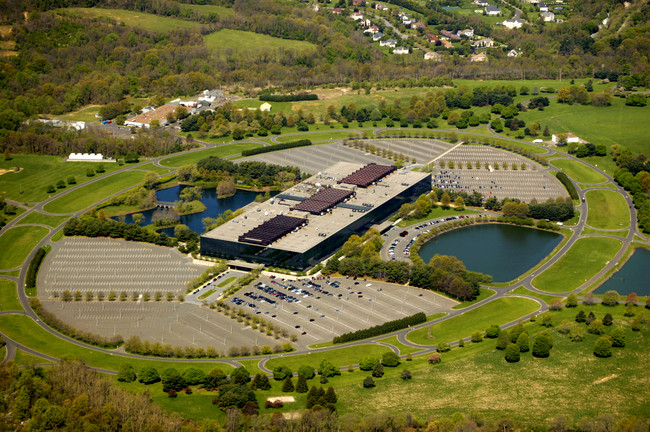
An aerial view of Bell Labs in Holmdel, New Jersey, shows its context within an oval campus, surrounded by seas of parking lots.

Ever since the Eero Saarinen–designed Bell Labs building in central New Jersey closed six years ago, its fate has hung in the balance. Now the iconic edifice that was once the site of enormous technological innovation will re-emerge as a civic center for the surrounding town of Holmdel.
bell labs
Photo © Ezra Stoller/Esto
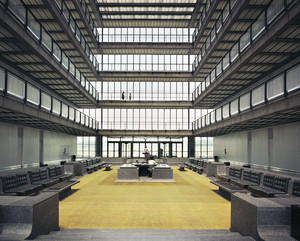
The atrium of the building, as it looked when it was completed.

Somerset Development purchased the 1.9-million-square-foot building and the surrounding pastoral grounds from Alcatel-Lucent this summer, securing the future for the vacant structure, which closed in 2007 when the French telecommunications company consolidated its research facilities. At one point, another developer suggested razing the structure, an option that was scrapped after scientists and architects from around the world blasted the idea. And in August, the township of Holmdel approved a redevelopment plan for the site, ensuring the structure’s survival. With its future now settled, architects must decide how to transform the vaunted building into a viable mixed-use complex with a health center, hotel, offices, retail, and a library.

The mirrored-glass structure opened in 1962 as a place to foster scientific innovation among AT&T employees at a time when the company had a monopolistic hold on the telecommunications industry. Alcatel-Lucent eventually acquired the property from AT&T. The expansive hallways of the six-story building were designed so scientists might accidentally encounter one another and perhaps stop for a cigarette near one of the built-in ashtrays on the balcony ledges. The design served its purpose: Bell Labs employees contributed to the inventions of touch-tone dialing, lasers, the microwave, and the cell phone. But reimagining this historic structure for a new era is not a simple task. “You have to think out of the box, and this is a glass box, literally,” says Alexander Gorlin, the architect tapped to lead the redesign effort. NK Architects and Joshua Zinder Architecture + Design, both based in New Jersey, will design interior tenant spaces.

As Somerset begins the task of luring tenants, Gorlin and his team will bring the common spaces back to life. The entryway will be restored, and a heavy awning added later will be removed. Already, Somerset has begun restoring the Sasaki, Walker & Associates-designed landscape to its original glory. The 470-acre grounds include lakes, wetlands, and fields. Although Somerset plans to sell 237 acres to the national homebuilder Toll Brothers, the remaining land will eventually include bike paths, pedestrian walkways, and an outdoor sports center. 

But in order for the ambitious $100 million redevelopment to succeed, Somerset must draw tenants to a property set on a quiet road in a wealthy rural community. Although Bell Labs is close to the Garden State Parkway, most of the town’s retail is a 10-minute drive away. Somerset envisions a new center for Holmdel, punctuated by 225 new houses that will rise on the outer edge of the original property.

A health-care developer intends to create a 400,000-square-foot health and wellness center in the building, and the town will move its library there. But so far no other tenants have committed to the project, which will include 50,000 square feet of retail. “We are in a classic chicken-and-egg situation,” says Ralph Zucker, president of Somerset. “People want to be there because of the restaurants, and the restaurants want to be there because of the offices. So what comes first?”

Meanwhile, Gorlin will set to work restoring the quarter-mile-long atrium that runs the length of the building and acts as an avenue. Daylight pours in through the glass ceiling. Zucker hopes to improve the lighting and acoustics so it can be used for a marketplace and events. “When Alex walks around the building, you can almost see him relating to every nut and bolt. It really speaks to him, and it’s important to us that we have an architect who is not looking to put his imprint on the building but rather to help us complement what is already there,” says Zucker. “He really gets it. He is somebody who understands Midcentury Modern architecture, understands Saarinen, understands the building.” Another immediate challenge: clad in single-pane glass with inoperable windows, it was designed at a time when energy was cheap. The mechanical equipment is aging. Zucker is considering installing a co-generation plant for cooling and heating. The interior, however, was created as four separate buildings contained within a glass curtain wall. So those offices are surprisingly well-insulated. “The single biggest challenge is the role of the skin of the building,” says Michael Calafati, an architect and chairman of the American Institute of Architects’ New Jersey Historic Resources Committee. “It’s a colossal building without one operable window.”

Recently, Gorlin began sifting through Saarinen’s original Mylar and pencil drawings. Although they connect him to the man who designed the Gateway Arch in St. Louis and Lincoln Center’s Vivian Beaumont Theater, Gorlin says he is not intimidated by the challenge. In the next two months, he will release renderings of a master plan so that even as pieces of the building are parceled off—like the hotel—the final result will have a single vision. “There won’t be a hodgepodge of signage or facades,” says Gorlin. “We’re providing a framework for all future development to fit within the box.”

Share This Story

Looking for a reprint of this article?
From high-res PDFs to custom plaques, order your copy today!

Ronda Kaysen, a columnist for The New York Times, writes about housing and real estate.

Post a comment to this article

Report Abusive Comment

Subscription Center
  • Create an Account
  • Start a Subscription
  • Manage My Account
  • Sign Up for Newsletters
  • Visit Customer Service
  • Update Preferences

More Videos

Sponsored Content

Sponsored Content is a special paid section where industry companies provide high quality, objective, non-commercial content around topics of interest to the Architectural Record audience. All Sponsored Content is supplied by the advertising company and any opinions expressed in this article are those of the author and not necessarily reflect the views of Architectural Record or its parent company, BNP Media. Interested in participating in our Sponsored Content section? Contact your local rep!

close
  • cold storage facility
    Sponsored byCarlisle SynTec Systems

    How Architects Can Design More Continuous Cold Storage Envelopes

  • TAMLYN XtremeTrim Exterior Trim
    Sponsored byTamlyn

    Designing Cleaner Panel Facades: Why Exterior Trim Details Matter

  • Building with Vapor Barriers
    Sponsored byReef Industries, Inc.

    Vapor Barriers Help Control Moisture in Tighter Building Designs

DESIGN:ED Podcast
Listen to Architectural Record’s DESIGN:ED Podcast

Events

June 18, 2026

Rebooting the Aging Office Building

Credits: 1 AIA LU/HSW; 1 AIBD P-CE; 0.1 ICC CEU; 1 PDH

Explore façade retrofit strategies and award-winning design concepts that can transform aging office buildings into healthier, higher-performing workplaces for today’s hybrid workforce.

June 23, 2026

Enhancing Fire Resistance with Advanced PVC Solutions

Credits: 1 AIA LU/HSW; 1 AIBD P-CE; 0.1 ICC CEU; 1 IIBEC CEH

Evaluate advanced PVC solutions that improve fire resistance, support WUI compliance, and enhance resilience in residential and commercial building design.

View All Submit An Event

Products

2026 Architect's Square Foot Costbook

2026 Architect's Square Foot Costbook

See More Products

Popular Stories

SanDiegoAirport

Top 300 Architecture Firms of 2026

Coronado Bridge

The Architect’s Guide to San Diego

Lorcan O' Herilhy

California Architect Lorcan O’Herlihy Has Died, Age 66

CCA, Studio Gang

The Winners of the AIA’s 2026 Architecture Award Range from Collegiate Rowing Hubs to Housing for the Homeless

Dusk House

Design Vanguard 2026: ONO

Rebooting the Aging Office Building - Free Webinar - June 18, 2026

Related Articles

  • Bell Labs, Architectural Record, 1962

    From the RECORD Archives: ‘Bell Labs’ Mirrored Superblock’

    See More
  • The Saarinens

    New PBS Documentary Explores the Life and Work of Eero Saarinen

    See More
  • Miller House and Garden by Eero Saarinen

    See More

Events

View AllSubmit An Event
  • July 29, 2026

    Adaptive Reuse Reimagined: Designing Multifamily Housing from Existing Buildings

    Credits: 1 AIA LU/HSW; 1 AIBD P-CE; 0.1 ICC CEU; 1 IIBEC CEHExamine adaptive reuse envelope strategies that improve energy performance, preserve architectural character, and transform existing buildings into high-performing multifamily housing.
View AllSubmit An Event
×

The latest news and information

#1 Source for Architectural Design, News and Products

SUBSCRIBE
  • RESOURCES
    • Advertise
    • Contact Us
    • Submit
    • Store
  • ACCOUNT CENTER
    • Create an Account
    • Start a Subscription
    • Manage My Account
    • Sign Up for Newsletters
    • Visit Customer Service
    • Update Preferences
  • PRIVACY
    • PRIVACY POLICY
    • TERMS & CONDITIONS
    • DO NOT SELL MY PERSONAL INFORMATION
    • PRIVACY REQUEST
    • ACCESSIBILITY
  • SERVICES
    • Marketing Services
    • Reprints
    • Market Research
    • List Rental
    • Survey/Respondent Access
  • STAY CONNECTED
    • Linkedin
    • Facebook
    • Instagram
    • YouTube
    • X (Twitter)

Copyright ©2026. All Rights Reserved BNP Media, Inc. and BNP Media II, LLC.

Design, CMS, Hosting & Web Development :: ePublishing