Architectural Record
search
cart
facebook twitter linkedin youtube
  • Sign In
  • Subscribe
  • Sign Out
  • My Account
Architectural Record
  • NEWS
    • Latest News
    • Awards
    • Interviews
    • Obituaries
    • Podcasts
      • Design:Ed Podcast
      • Sponsored Podcasts
  • OPINION
    • Book Reviews / Excerpts
    • Exhibition Reviews
    • Forum
  • EXCLUSIVES
    • Videos
    • Design Vanguard
    • Top 300 Firms
    • Sponsored Content
    • Sponsored eBooks
    • From the Archives
  • CONTINUING ED
    • Editorial Continuing Ed
    • CE Center
    • CE Academies
  • PROJECTS
    • Buildings By Type
    • Reuse & Renovation
    • Museums & Arts Centers
    • Colleges & Universities
    • Multifamily Housing
    • Interiors
    • Lighting
    • Kitchen & Bath
  • HOUSES
    • Record Houses
    • House of the Month
    • Featured Houses
  • PRODUCTS
    • Products by Category
    • Record Products of the Year
    • Latest Products
  • EVENTS
    • Dates & Events
    • Record on the Road
    • Innovation Conference
    • Sustainability in Practice
    • Women In Architecture
    • Webinars
    • Ad Excellence Awards
    • Submit an Event
  • CONNECT
    • Ask RECORD AI
    • Newsletters
    • Contact
    • Advertise
    • Editorial Calendar
    • Store
    • Customer Service
  • SUBMIT
    • Submission Guidelines
    • RECORD Competitions
  • MAGAZINE
    • Subscribe
    • My Account
    • Digital Edition
    • Current Issue
    • Firm Pass
    • Historic Archive
Architecture News

Will Tokyo's Second Olympics Leave a Design Legacy?
By Naomi Pollock, FAIA
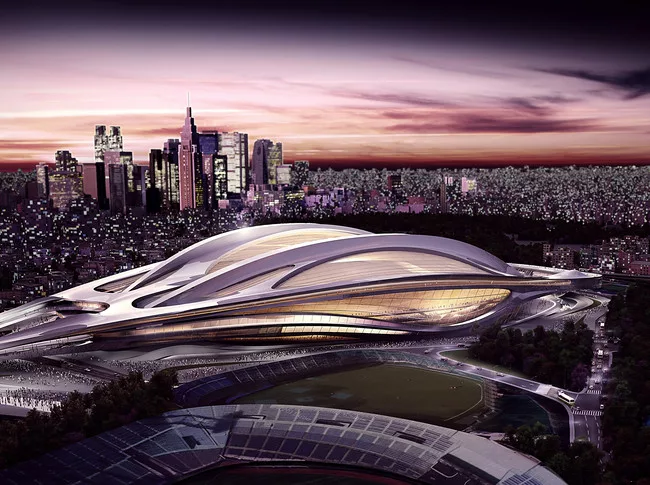
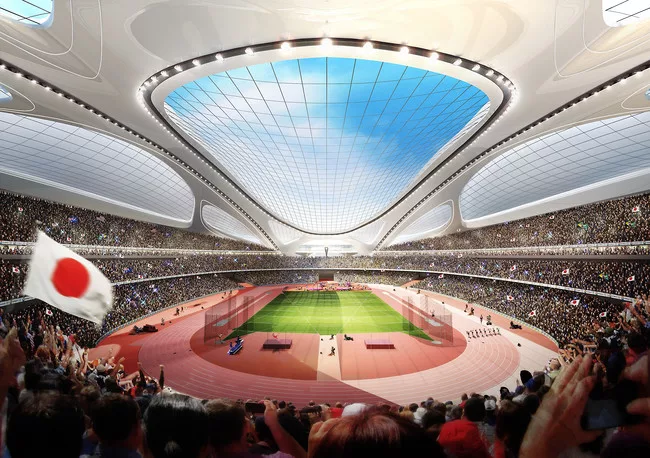
The new national stadium of Japan, by Zaha Hadid Architects, will be built for the 2020 summer Olympics in Tokyo.
Will Tokyo's Second Olympics Leave a Design Legacy?
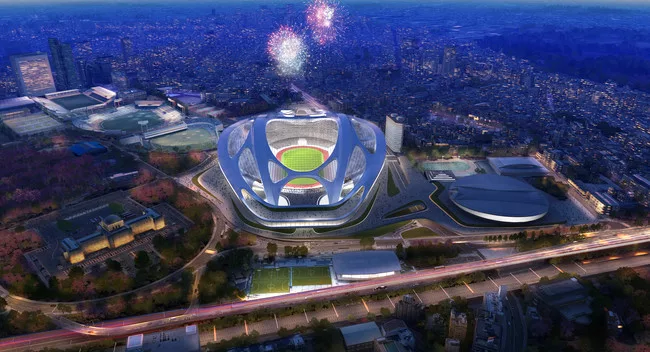
The new national stadium of Japan, by Zaha Hadid Architects, will be built for the 2020 summer Olympics in Tokyo.
Image © Zaha Hadid Architects
The new national stadium of Japan, by Zaha Hadid Architects, will be built for the 2020 summer Olympics in Tokyo.
Will Tokyo's Second Olympics Leave a Design Legacy?
The new national stadium of Japan, by Zaha Hadid Architects, will be built for the 2020 summer Olympics in Tokyo.
Image © Zaha Hadid Architects
The new national stadium of Japan, by Zaha Hadid Architects, will be built for the 2020 summer Olympics in Tokyo.
Will Tokyo's Second Olympics Leave a Design Legacy?
The new national stadium of Japan, by Zaha Hadid Architects, will be built for the 2020 summer Olympics in Tokyo.
Image © Zaha Hadid Architects
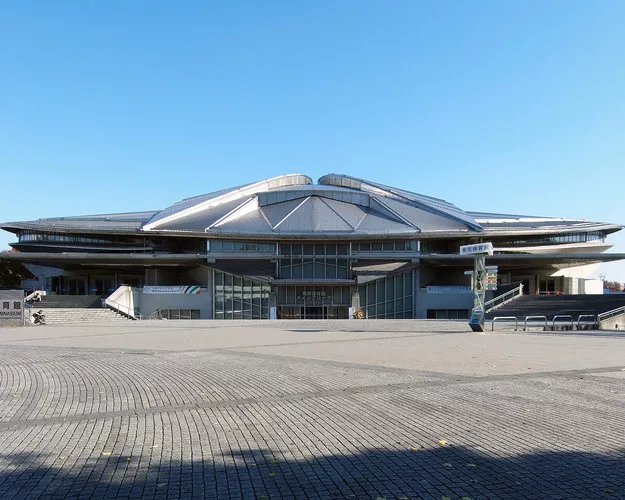
A range of existing facilities will be used for the 2020 Summer Olympic and Paralympic games, including Fumihiko Maki’s Tokyo Metropolitan Gymnasium (1990).
Will Tokyo's Second Olympics Leave a Design Legacy?
A range of existing facilities will be used for the 2020 Summer Olympic and Paralympic games, including Fumihiko Maki’s Tokyo Metropolitan Gymnasium (1990).
Image courtesy Wikimedia Commons
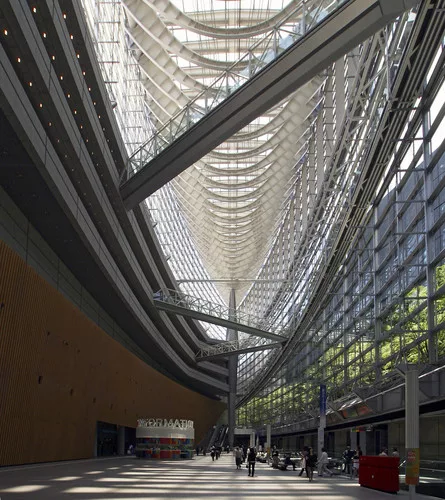
A range of existing facilities will be used for the 2020 Summer Olympic and Paralympic games, including Rafael Viñoly’s Tokyo International Forum, a civic complex completed in 1996.
Will Tokyo's Second Olympics Leave a Design Legacy?
A range of existing facilities will be used for the 2020 Summer Olympic and Paralympic games, including Rafael Viñoly’s Tokyo International Forum, a civic complex completed in 1996.
Photo courtesy Wikimedia Commons
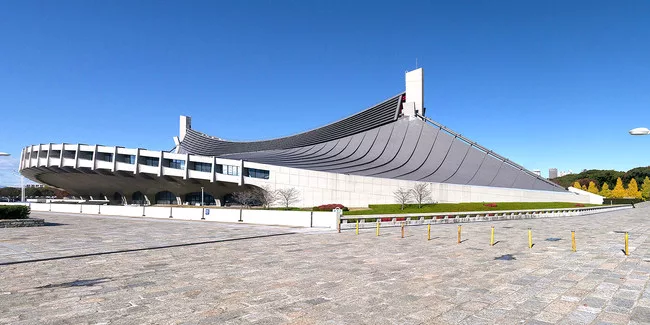
A range of existing facilities will be used for the 2020 Summer Olympic  and Paralympic games, including Kenzo Tange’s Yoyogi National Gymnasium, completed in 1964 and built to house that year&#
Will Tokyo's Second Olympics Leave a Design Legacy?
A range of existing facilities will be used for the 2020 Summer Olympic and Paralympic games, including Kenzo Tange’s Yoyogi National Gymnasium, completed in 1964 and built to house that year’s swimming and diving summer Olympic events.
Photo courtesy Wikipedia Creative Commons
The new national stadium of Japan, by Zaha Hadid Architects, will be built for the 2020 summer Olympics in Tokyo.
A range of existing facilities will be used for the 2020 Summer Olympic and Paralympic games, including Fumihiko Maki’s Tokyo Metropolitan Gymnasium (1990).
A range of existing facilities will be used for the 2020 Summer Olympic and Paralympic games, including Rafael Viñoly’s Tokyo International Forum, a civic complex completed in 1996.
A range of existing facilities will be used for the 2020 Summer Olympic  and Paralympic games, including Kenzo Tange’s Yoyogi National Gymnasium, completed in 1964 and built to house that year&#
November 14, 2013

Architects & Firms

Zaha Hadid Architects

The new national stadium of Japan, by Zaha Hadid Architects, will be built for the 2020 summer Olympics in Tokyo.

In September, the International Olympic Committee (IOC) announced the host city for the Games of the XXXII Olympiad in 2020. A town with a good track record, Tokyo beat out Istanbul and Madrid and took the prize for the third time.

The city was first selected for the 1940 summer games, which were canceled due to World War II. Tokyo’s second win was for the 1964 summer Olympics. Symbolizing the end of Japan’s post–World War II reconstruction, new athletic facilities were built and infrastructure was upgraded, changing the Japanese lifestyle for good. Now many are wondering what kind of legacy the 2020 Olympics will leave.

In preparation for the 1964 Olympics, Tokyo underwent several major changes including the construction of an overhead highway system, the extension of subway lines, the widening of streets, and, just days after the opening of the games, the launch of the Shinkansen bullet train connecting Tokyo and Osaka. “Our urban life, based on a network of underground trains, was a gift of the 1964 Olympics,” says Professor Hiroyuki Suzuki of Aoyama Gakuin University. Most of the new athletic facilities were concentrated within central Tokyo. While a number of the original structures remain in use, Kenzo Tange’s Yoyogi National Gymnasium stands out as the event’s iconic building. Flexing the country’s technological muscles, the building is topped by a spectacular swooping roof and, fittingly, was erected on the site of a former U.S. military base. It showed the world the power of Japan’s contemporary architecture culture, which has continued into the present.

This time, the main Olympic venues will be divided between two areas reasonably near the Olympic Village, in the middle of the city. To improve Tokyo’s already efficient public transportation network, there is talk of adding new subway lines that would facilitate movement to the city’s two airports as well as to one of the venue areas, the Tokyo Bay Zone. Largely built on landfill, this area is a relatively recent addition to the city and is still considered a little out of reach. More commercial amenities catering to the 17,000 athletes who will call the Village home are also anticipated. These will make the neighborhood more enticing after the Olympics, when temporary accommodations are converted into permanent residences.

But recasting the Village isn’t the only adaptive reuse planned. A whole range of existing facilities will host the new competitions. While the Tange gym will hold handball tournaments, Fumihiko Maki’s Tokyo Metropolitan Gymnasium will host table tennis. Other buildings, such as Rafael Viñoly’s Tokyo Forum and various stadiums as far afield as Sapporo and Sendai, built for the 2002 FIFA World Cup, will be venues for weightlifting and soccer respectively.

One building not slated for reuse is the 1964 Olympics’ main stadium. In preparation for the possibility of winning the bid, the Japan Sports Council held the International Concept Design Competition for a new arena in compliance with the IOC’s current requirements. In November 2012, they awarded the commission to London-based Zaha Hadid Architects, which will serve as the project’s design consultant in collaboration with a team of Japanese firms captained by Nihon Sekkei, Nikken Sekkei, and Ove Arup Japan.

“We need a simple, clear image for the main stadium,” explains Suzuki, a competition juror. Incorporating the site of the previous stadium (which will be torn down) plus adjacent property, the futuristic scheme has a distinctive, dynamic, helmet-like form, capped by a retractable roof. Since the Olympics will take place in August, when Tokyo’s heat and humidity are at their worst, this feature
will enable air-conditioning—and, when the Games are all over, provide soundproofing for possible future events, like concerts.

Yet local architects are not uniformly rejoicing about the new building. While they do not oppose the selected scheme or its architectural expression, a number have questioned its size and location. Several times bigger than the previous stadium and situated in a fairly developed precinct with historic significance, the 80,000-seat structure looms large. Determined to call attention to these and other issues, a symposium was held on October 11. Though placing the massive building in the less-developed area near Tokyo Bay might have been more logical, that site was deemed too remote when the city bid for the 2016 Olympics. There is also concern that the
stadium runs the risk of obsolescence after the Olympic festivities are over and the arena proves just too big for projected uses.

Hopefully, the main stadium in its realized form will become a monument that architects in Japan can rally around. Though the process for deciding who will design the other new buildings for the 2020 games has yet to be announced, it will certainly differ from 1964, when two Tokyo University professors essentially assigned projects to architects. While the changes to the Tokyo landscape and lifestyle are likely to have a less dramatic impact than last time, the 2020 Olympics could become another chance to showcase Japanese architectural talent.

KEYWORDS: Olympics

Share This Story

Looking for a reprint of this article?
From high-res PDFs to custom plaques, order your copy today!

Contributing Editor Naomi Pollock, FAIA, is the author of Japanese Design Since 1945: A Complete Sourcebook and the forthcoming Vanishing Japan: Modern Architecture Gone But Not Forgotten,

Post a comment to this article

Report Abusive Comment

Subscription Center
  • Create an Account
  • Start a Subscription
  • Manage My Account
  • Sign Up for Newsletters
  • Visit Customer Service
  • Update Preferences

More Videos

Sponsored Content

Sponsored Content is a special paid section where industry companies provide high quality, objective, non-commercial content around topics of interest to the Architectural Record audience. All Sponsored Content is supplied by the advertising company and any opinions expressed in this article are those of the author and not necessarily reflect the views of Architectural Record or its parent company, BNP Media. Interested in participating in our Sponsored Content section? Contact your local rep!

close
  • TAMLYN XtremeTrim Exterior Trim
    Sponsored byTamlyn

    Designing Cleaner Panel Facades: Why Exterior Trim Details Matter

  • Building with Vapor Barriers
    Sponsored byReef Industries, Inc.

    Vapor Barriers Help Control Moisture in Tighter Building Designs

  • Duct Interior with Prodeq System
    Sponsored byHenry, a Carlisle Company

    Designing Resilient Water Containment Systems

DESIGN:ED Podcast
Listen to Architectural Record’s DESIGN:ED Podcast

Events

June 10, 2026

Rethinking Stormwater – The Power of Porous Paving

Credits: 1 AIA LU/HSW; 1 AIBD P-CE; 0.1 ICC CEU

Learn how porous paving systems support stormwater management, reduce heat island effects, and enhance sustainable site design performance.

June 11, 2026

Very Early Warning Fire Detection for Mission-Critical Facilities

Credits: 1 AIA LU/HSW; 1 AIBD P-CE; 0.1 ICC CEU

Examine advanced fire detection strategies that support uptime and enhance safety in data centers and other mission-critical facilities.

View All Submit An Event

Products

2026 Architect's Square Foot Costbook

2026 Architect's Square Foot Costbook

See More Products

Popular Stories

Practice Matters illustration

What’s in a (Firm’s) Name? Thinking About Succession and Legacy

Practice Matters illustration

By the Numbers: Counting America's Architects

Riverdale House by Studio Lau

Riverdale House by Studio Lau

House on a Hill

Design Vanguard 2026: Forma

Crane Cove, ONO

Design Vanguard 2026 Winners

Broader Sustainability of CMU - Free Webinar - May 21, 2026

Related Articles

  • Brandywine Museum of Art new building rendering

    Kengo Kuma Will Design a New Gallery Building at Pennsylvania’s Brandywine Museum of Art

    See More
  • The Van Alen Institute and Architectural Record Launch a Design Competition Survey

    See More

Related Products

See More Products
  • movable arch.jpg

    Movable Architecture: A Design Guide to Container Reuse

  • 0470126736.gif

    Modern Sustainable Residential Design: A Guide for Design Professionals

  • Web-Legacy16-1920x1125.jpg

    Legacy

See More Products
×

The latest news and information

#1 Source for Architectural Design, News and Products

SUBSCRIBE
  • RESOURCES
    • Advertise
    • Contact Us
    • Submit
    • Store
  • ACCOUNT CENTER
    • Create an Account
    • Start a Subscription
    • Manage My Account
    • Sign Up for Newsletters
    • Visit Customer Service
    • Update Preferences
  • PRIVACY
    • PRIVACY POLICY
    • TERMS & CONDITIONS
    • DO NOT SELL MY PERSONAL INFORMATION
    • PRIVACY REQUEST
    • ACCESSIBILITY
  • SERVICES
    • Marketing Services
    • Reprints
    • Market Research
    • List Rental
    • Survey/Respondent Access
  • STAY CONNECTED
    • Linkedin
    • Facebook
    • Instagram
    • YouTube
    • X (Twitter)

Copyright ©2026. All Rights Reserved BNP Media, Inc. and BNP Media II, LLC.

Design, CMS, Hosting & Web Development :: ePublishing