Architectural Record
search
cart
facebook twitter linkedin youtube
  • Sign In
  • Subscribe
  • Sign Out
  • My Account
Architectural Record
  • NEWS
    • Latest News
    • Awards
    • Interviews
    • Obituaries
    • Podcasts
      • Design:Ed Podcast
      • Sponsored Podcasts
  • OPINION
    • Book Reviews / Excerpts
    • Exhibition Reviews
    • Forum
  • EXCLUSIVES
    • Videos
    • Design Vanguard
    • Top 300 Firms
    • Sponsored Content
    • Sponsored eBooks
    • From the Archives
  • CONTINUING ED
    • Editorial Continuing Ed
    • CE Center
    • CE Academies
  • PROJECTS
    • Buildings By Type
    • Reuse & Renovation
    • Museums & Arts Centers
    • Colleges & Universities
    • Multifamily Housing
    • Interiors
    • Lighting
    • Kitchen & Bath
  • HOUSES
    • Record Houses
    • House of the Month
    • Featured Houses
  • PRODUCTS
    • Products by Category
    • Record Products of the Year
    • Latest Products
  • EVENTS
    • Dates & Events
    • Record on the Road
    • Innovation Conference
    • Sustainability in Practice
    • Women In Architecture
    • Webinars
    • Ad Excellence Awards
    • Submit an Event
  • CONNECT
    • Ask RECORD AI
    • Newsletters
    • Contact
    • Advertise
    • Editorial Calendar
    • Store
    • Customer Service
  • SUBMIT
    • Submission Guidelines
    • RECORD Competitions
  • MAGAZINE
    • Subscribe
    • My Account
    • Digital Edition
    • Current Issue
    • Firm Pass
    • Historic Archive
Architecture News

Old Hotel in Jerusalem Gets New Life
By Esther Hecht
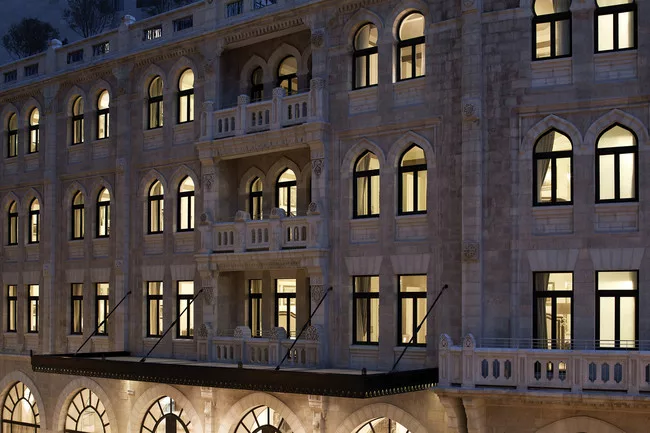
The original hotel was completed in 1929. Jerusalem has strict standards for preservation of historic sites, and the Palace Hotel façade has been meticulously restored.
Old Hotel in Jerusalem Gets New Life
The original hotel was completed in 1929. Jerusalem has strict standards for preservation of historic sites, and the Palace Hotel façade has been meticulously restored.
Photo courtesy Waldorf Astoria Jerusalem
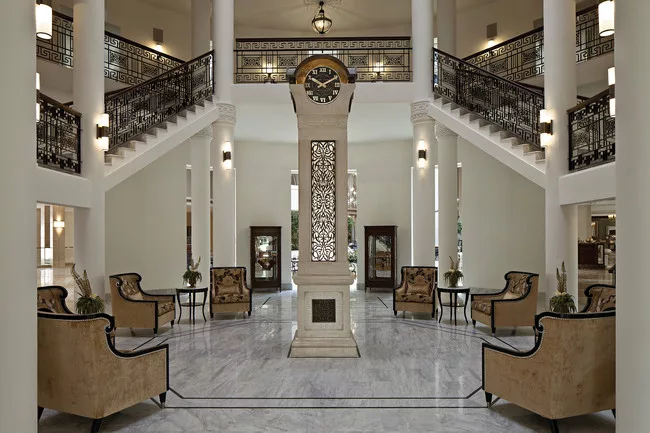
The Palace Hotel's trademark staircase was reconstructed in the hotel's rotunda.
Old Hotel in Jerusalem Gets New Life
The Palace Hotel's trademark staircase was reconstructed in the hotel's rotunda.
Photo courtesy Waldorf Astoria Jerusalem
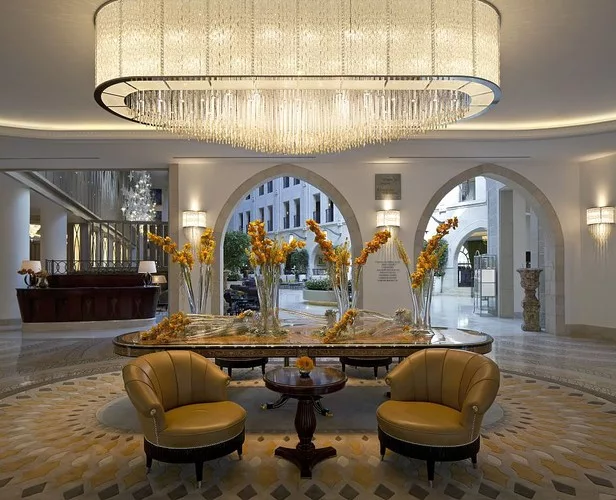
Hotel lobby
Old Hotel in Jerusalem Gets New Life
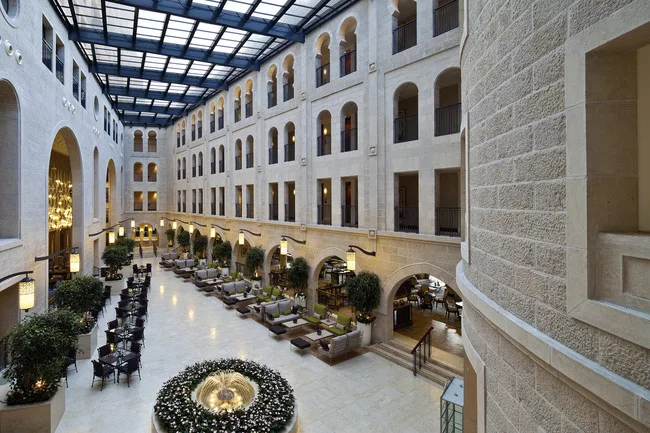
Hotel lobby
Photo courtesy Waldorf Astoria Jerusalem
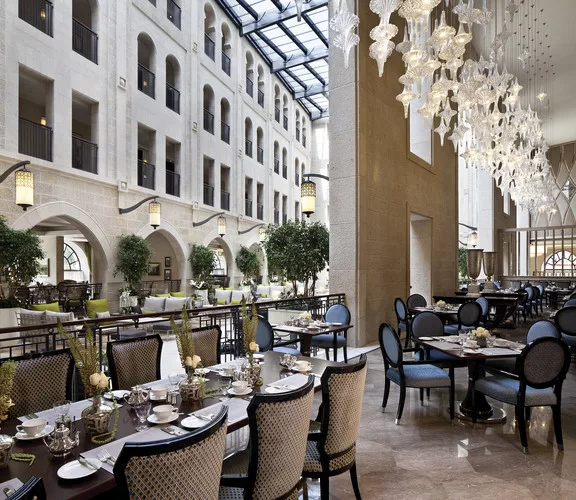
The atrium promenade features a retractable glass ceiling that floods the hotel with natural light.
Old Hotel in Jerusalem Gets New Life
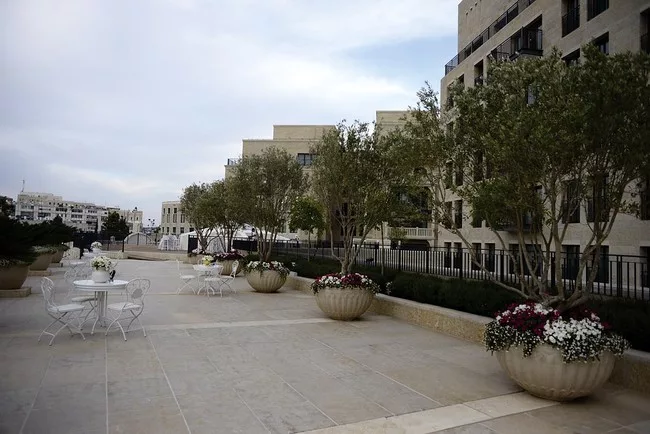
The atrium promenade features a retractable glass ceiling that floods the hotel with natural light.
Photo courtesy Waldorf Astoria Jerusalem
The atrium promenade features a retractable glass ceiling that floods the hotel with natural light.
Old Hotel in Jerusalem Gets New Life
The atrium promenade features a retractable glass ceiling that floods the hotel with natural light.
Photo courtesy Waldorf Astoria Jerusalem
Old Hotel in Jerusalem Gets New Life
Photo courtesy Waldorf Astoria Jerusalem
The original hotel was completed in 1929. Jerusalem has strict standards for preservation of historic sites, and the Palace Hotel façade has been meticulously restored.
The Palace Hotel's trademark staircase was reconstructed in the hotel's rotunda.
Hotel lobby
The atrium promenade features a retractable glass ceiling that floods the hotel with natural light.
Old Hotel in Jerusalem Gets New Life
August 27, 2014

The original hotel was completed in 1929. Jerusalem has strict standards for preservation of historic sites, and the Palace Hotel façade has been meticulously restored.

The Waldorf Astoria Jerusalem is a study in contrasts. It is both the oldest and the newest luxury hotel in the city. It has a traditional Islamic façade, yet the most modern and green amenities and infrastructure.

Situated in the heart of Jerusalem, the hotel is a five-minute walk from the historic Old City walls. Built as the Palace Hotel in 1929 by the Supreme Muslim Council headed by the Grand Mufti Haj Amin al-Husseini, a supporter of Adolf Hitler and a Nazi collaborator during World War II, it is now owned by the Canadian-Jewish Reichmann family and is managed by the Hilton chain.

Today’s hotel, renovated and designed by the Israeli firm Feigin Architects and opened in April 2014, preserves the ornate limestone facade, with its rows of arched windows and floral and geometric carvings. Although the entrance of the formerly L-shaped building has been moved from the apex of the right angle to the building’s eastern side, the original, dramatic Art Deco entrance rotunda has been faithfully reconstructed. An octagonal skylight bathes the rotunda in daylight and a sweeping double staircase has intricately patterned iron balustrades.

The new hotel, reported to have cost $200 million, is one of the most challenging conservation projects ever undertaken in Israel, according to architect Yoel Feigin. “Never before has a complex and stylized stone façade been conserved, and a basement constructed under it,” he said in an e-mail interview.

The new elements are as dramatic as the reconstructed ones. A four-story atrium lobby runs the length of the structure, connecting the original building and a new, set-back, eight-story wing that increases the number of rooms from 100 to 226. The atrium has a retractable glass ceiling and beige limestone walls; with arches framing the entrances to the rooms and iron-filigree lamps reminiscent of old street lamps, it is reminiscent of an outdoor café in an old Jerusalem neighborhood. And indeed, guests can order coffee or dine in the lobby.

The hotel’s interior design, by Turkish architect Sinan Kafadar, has a Levantine opulence, with lavish rugs and ceilings with hand-painted geometric designs. An adjacent building, Jerusalem’s old Customs House, which was not slated for preservation, was demolished to create a wing of luxury condos whose owners receive services from the hotel.

The original, four-story Palace Hotel was designed by the Turkish architects Ahmet Kemaleddin and Mehmed Nihad and Jerusalem architect Rushdi Husseini, a relative of the mufti (the contractors oddly included two Jews and an Arab). At the time, it was the city’s only hotel to have central heating, elevators, and private bathrooms (in 45 of its rooms). According to architect David Kroyanker, an expert on Jerusalem’s architectural history, it was one of the grandest buildings erected in the city during the period of the British Mandate (1922-1948). 

Above the original entrance is a large stone tablet inscribed with the Arabic words: “We are building as our fathers built and act as they act.” This quotation, Kroyanker said in a telephone interview, shows that al-Husseini and the Supreme Muslim Council wanted to prove that “they could build something that was no less splendid and impressive than what their forefathers—the Mameluks—had built.”

And they were able to complete the construction in just 11 months, with the help of skilled stonemasons from Egypt. On the basis of old photographs, however, Kroyanker said the project apparently ran out of funds: The interior had nowhere near the opulence of the façade. And in 1931, when a new luxury hotel, the King David, opened just two blocks away, the Palace Hotel could not compete, Kroyanker said. Although the mufti envisioned a role for the hotel in connection with an Islamic university that was to have been built across the street (on an ancient Muslim cemetery), the Palace Hotel closed its doors in 1935 and then housed offices, a radio station, and a small hospital. In its last incarnation, it was home to Israel’s Industry, Trade, and Labor Ministry.

Kroyanker takes credit for the idea of restoring the building to its original function and glory. In 1980 he created the first plan, and in 1995 he revised it to include the luxury condos, which, he said, made the “fantastically expensive” project financially viable. This plan was the basis for the current design.

Share This Story

Looking for a reprint of this article?
From high-res PDFs to custom plaques, order your copy today!

Post a comment to this article

Report Abusive Comment

Subscription Center
  • Create an Account
  • Start a Subscription
  • Manage My Account
  • Sign Up for Newsletters
  • Visit Customer Service
  • Update Preferences

More Videos

Sponsored Content

Sponsored Content is a special paid section where industry companies provide high quality, objective, non-commercial content around topics of interest to the Architectural Record audience. All Sponsored Content is supplied by the advertising company and any opinions expressed in this article are those of the author and not necessarily reflect the views of Architectural Record or its parent company, BNP Media. Interested in participating in our Sponsored Content section? Contact your local rep!

close
  • cold storage facility
    Sponsored byCarlisle SynTec Systems

    How Architects Can Design More Continuous Cold Storage Envelopes

  • TAMLYN XtremeTrim Exterior Trim
    Sponsored byTamlyn

    Designing Cleaner Panel Facades: Why Exterior Trim Details Matter

  • Building with Vapor Barriers
    Sponsored byReef Industries, Inc.

    Vapor Barriers Help Control Moisture in Tighter Building Designs

DESIGN:ED Podcast
Listen to Architectural Record’s DESIGN:ED Podcast

Events

June 18, 2026

Rebooting the Aging Office Building

Credits: 1 AIA LU/HSW; 1 AIBD P-CE; 0.1 ICC CEU; 1 PDH

Explore façade retrofit strategies and award-winning design concepts that can transform aging office buildings into healthier, higher-performing workplaces for today’s hybrid workforce.

June 23, 2026

Enhancing Fire Resistance with Advanced PVC Solutions

Credits: 1 AIA LU/HSW; 1 AIBD P-CE; 0.1 ICC CEU; 1 IIBEC CEH

Evaluate advanced PVC solutions that improve fire resistance, support WUI compliance, and enhance resilience in residential and commercial building design.

View All Submit An Event

Products

2026 Architect's Square Foot Costbook

2026 Architect's Square Foot Costbook

See More Products

Popular Stories

SanDiegoAirport

Top 300 Architecture Firms of 2026

Lorcan O' Herilhy

California Architect Lorcan O’Herlihy Has Died, Age 66

Coronado Bridge

The Architect’s Guide to San Diego

CCA, Studio Gang

The Winners of the AIA’s 2026 Architecture Award Range from Collegiate Rowing Hubs to Housing for the Homeless

Dusk House

Design Vanguard 2026: ONO

Rebooting the Aging Office Building - Free Webinar - June 18, 2026

Related Articles

  • Brant Foundation

    Renovated Industrial Building Gets New Life as Brant Foundation Art Study Center

    See More
  • Triboro Hospital

    A Tuberculosis Hospital Gets a New Lease on Life as Affordable and Supportive Housing

    See More
  • TWA

    TWA Hotel at JFK Gives New Life to Saarinen’s Flight Center

    See More
×

The latest news and information

#1 Source for Architectural Design, News and Products

SUBSCRIBE
  • RESOURCES
    • Advertise
    • Contact Us
    • Submit
    • Store
  • ACCOUNT CENTER
    • Create an Account
    • Start a Subscription
    • Manage My Account
    • Sign Up for Newsletters
    • Visit Customer Service
    • Update Preferences
  • PRIVACY
    • PRIVACY POLICY
    • TERMS & CONDITIONS
    • DO NOT SELL MY PERSONAL INFORMATION
    • PRIVACY REQUEST
    • ACCESSIBILITY
  • SERVICES
    • Marketing Services
    • Reprints
    • Market Research
    • List Rental
    • Survey/Respondent Access
  • STAY CONNECTED
    • Linkedin
    • Facebook
    • Instagram
    • YouTube
    • X (Twitter)

Copyright ©2026. All Rights Reserved BNP Media, Inc. and BNP Media II, LLC.

Design, CMS, Hosting & Web Development :: ePublishing