Architectural Record
search
cart
facebook twitter linkedin youtube
  • Sign In
  • Subscribe
  • Sign Out
  • My Account
Architectural Record
  • NEWS
    • Latest News
    • Awards
    • Interviews
    • Obituaries
    • Podcasts
      • Design:Ed Podcast
      • Sponsored Podcasts
  • OPINION
    • Book Reviews / Excerpts
    • Exhibition Reviews
    • Forum
  • EXCLUSIVES
    • Videos
    • Design Vanguard
    • Top 300 Firms
    • Sponsored Content
    • Sponsored eBooks
    • From the Archives
  • CONTINUING ED
    • Editorial Continuing Ed
    • CE Center
    • CE Academies
  • PROJECTS
    • Buildings By Type
    • Reuse & Renovation
    • Museums & Arts Centers
    • Colleges & Universities
    • Multifamily Housing
    • Interiors
    • Lighting
    • Kitchen & Bath
  • HOUSES
    • Record Houses
    • House of the Month
    • Featured Houses
  • PRODUCTS
    • Products by Category
    • Record Products of the Year
    • Latest Products
  • EVENTS
    • Dates & Events
    • Record on the Road
    • Innovation Conference
    • Sustainability in Practice
    • Women In Architecture
    • Webinars
    • Ad Excellence Awards
    • Submit an Event
  • CONNECT
    • Ask RECORD AI
    • Newsletters
    • Contact
    • Advertise
    • Editorial Calendar
    • Store
    • Customer Service
  • SUBMIT
    • Submission Guidelines
    • RECORD Competitions
  • MAGAZINE
    • Subscribe
    • My Account
    • Digital Edition
    • Current Issue
    • Firm Pass
    • Historic Archive
Architecture News

Smithsonian Unveils BIG's Master Plan

By Fred A. Bernstein
Smithsonian Unveils BIG's Master Plan
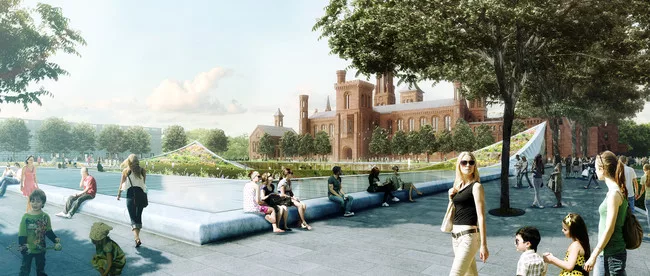
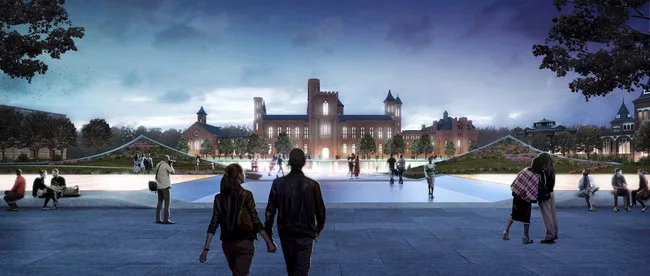
BIG's concept includes a lawn between the Smithsonian’s historic Castle and Independence Avenue that curls upward at its corners.
 
Image courtesy Smithsonian Institution
Smithsonian Unveils BIG's Master Plan
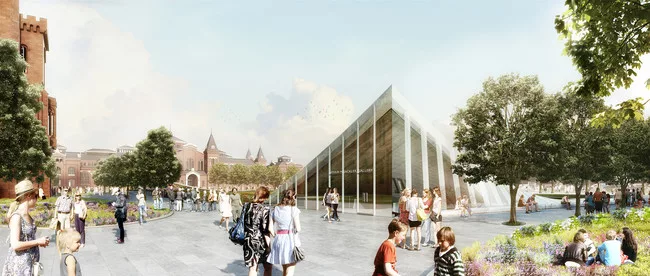
The Sackler Pavilion
 
Image courtesy Smithsonian Institution
Smithsonian Unveils BIG's Master Plan
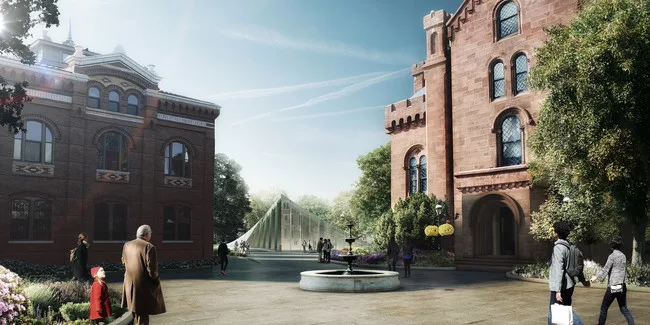
The Sackler Pavilion
 
Image courtesy Smithsonian Institution
Smithsonian Unveils BIG's Master Plan
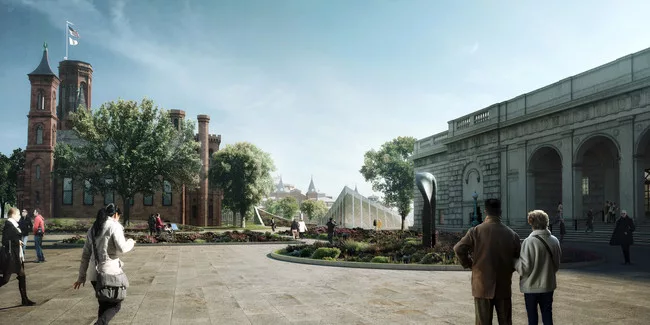
African Art Museum pavilion from the National Mall.
 
Image courtesy Smithsonian Institution
Smithsonian Unveils BIG's Master Plan
Sackler Pavilion from the Mall.
 
Image courtesy Smithsonian Institution
Smithsonian Unveils BIG's Master Plan
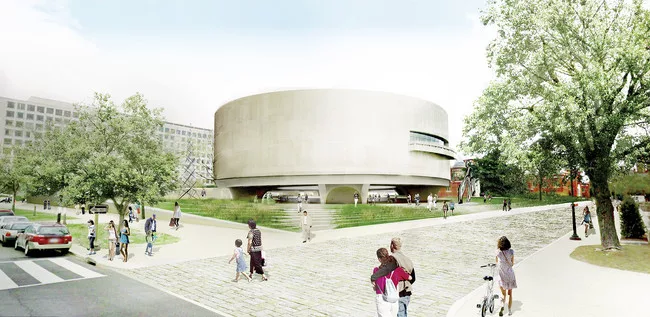
BIG's plan for the Hirshhorn Museum calls for taking down the wall that separates the building from the Mall, and tweaking the courtyard with a new fountain and ramp.
 
Image courtesy Smithsonian Institution
Smithsonian Unveils BIG's Master Plan

BIG's plan for the Hirshhorn Museum calls for taking down the wall that separates the building from the Mall, and tweaking the courtyard with a new fountain and ramp.
 
Image courtesy Smithsonian Institution
Smithsonian Unveils BIG's Master Plan
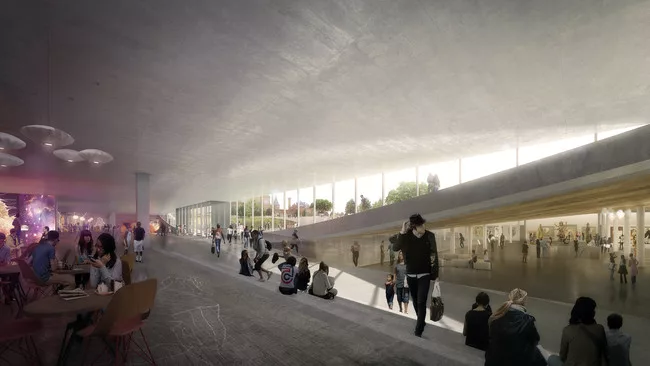
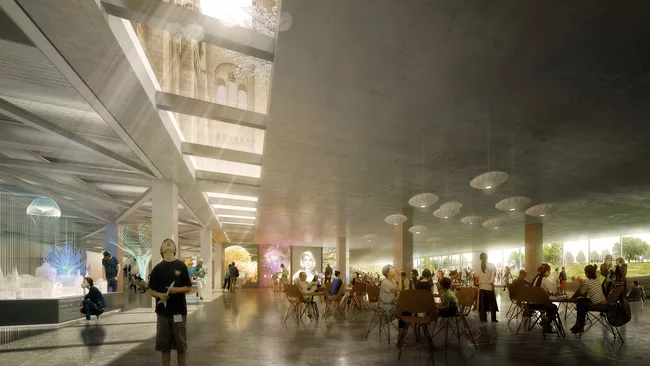
Visitor Center
 
Image courtesy Smithsonian Institution
Smithsonian Unveils BIG's Master Plan
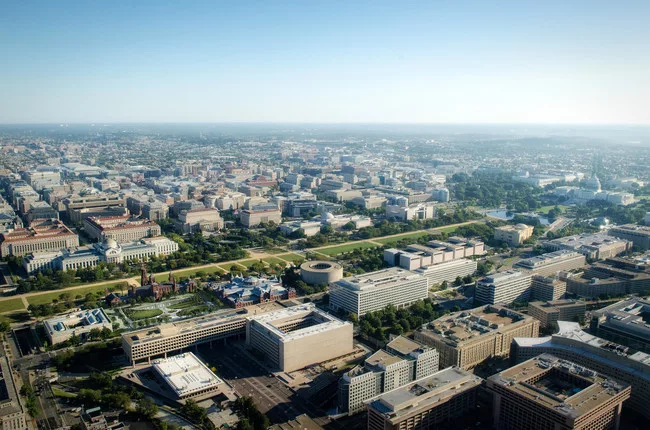
Visitor Center
 
Image courtesy Smithsonian Institution
Smithsonian Unveils BIG's Master Plan
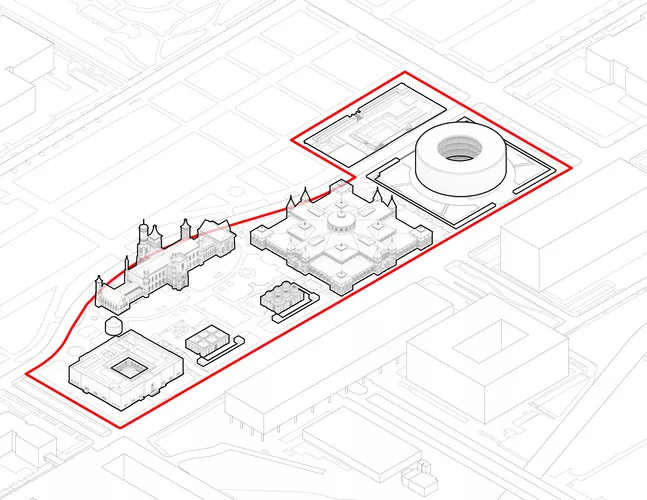
Visitor Center
 
Image courtesy Smithsonian Institution
Smithsonian Unveils BIG's Master Plan
Image courtesy Smithsonian Institution
Smithsonian Unveils BIG's Master Plan
Image courtesy Smithsonian Institution
Smithsonian Unveils BIG's Master Plan
November 13, 2014

Architects & Firms

Bjarke Ingels Group
BIG's concept includes a lawn between the Smithsonian’s historic Castle and Independence Avenue that curls upward at its corners.

To interest donors in a plan that includes HVAC upgrades and the repositioning of loading docks, it helps to throw in a few dramatic flourishes. That’s the lesson of the Smithsonian Institution’s new master plan, made public today in Washington, D.C., by the Institution’s secretary, Wayne Clough, and his architect of choice, Bjarke Ingels, of the Copenhagen- and New York-based Bjarke Ingels Group.

Much of the plan, which will take decades and at least $2 billion to implement (and is dependent on a mix of public and private funds), involves invisible infrastructure improvements, which, Clough said, are “hard to get people to write checks for. You have to show them the big concept.” That big, or BIG, concept includes a lawn between the Smithsonian’s historic Castle and Independence Avenue that curls upward at its corners.

The canted lawn is certainly photogenic—it resembles a lawn proposed by Ingels for Brooklyn Bridge Park, as well as the lawn at Lincoln Center created by Diller Scofidio + Renfro as part of a $1 billion renovation of that complex (a close analogue to the Smithsonian project, involving improvement to the “visitor experience” and replacement of aging mechanicals).

Luckily, the peeled-up lawn is more than a gimmick. Two of the Smithsonian’s units—the Arthur M. Sackler Gallery (devoted to Asian Art) and the National Museum of African Art—are nearly invisible, parts of a vast subterranean complex that are now entered through what appear to be gazebos. The new lawn, with its corner entry pavilions and strip of windows linking them, will make the two museums easier to see and enter.

The Smithsonian already has an overall master plan, but it believed its South Mall campus, along Independence Ave. SW, from 7th to 12th Street—that is, from the Freer Gallery of Art to the Hirshhorn Museum—needed special attention. In 2013 it announced it had settled on BIG, which is working with the San Francisco-based landscape architecture firm Surfacedesign Inc. The process, guided by Clough, took on new urgency in 2011, when an earthquake rocked Washington. Clough, a civil engineer, was in his office in the Castle at the time. As seismic forces ground up century-old mortar, his office, he remembers, filled with dust. One expensive component of the master plan is a seismic upgrade, which will consist of “base isolation”—essentially putting the Castle on a tray, so if another earthquake hits, “the building won’t even know it’s happening,” Clough said. Digging for the tray will permit the creation of new underground facilities, including an auditorium, education spaces, and cafeteria. Above ground, flanking the canted lawn, Ingels promised both “restoration of the romantic, meandering paths” and more intuitive links between the buildings.

At the Hirshhorn, a plan by Diller Scofidio + Renfro for a balloon-like conference space inside the donut was shelved last year, and Ingels’ proposal for that building, designed by Gordon Bunshaft, is modest: It calls for taking down the wall that separates the building from the Mall, and tweaking the courtyard with a new fountain and ramp. It also calls for the creation of underground spaces for contemporary sculptures too big for the existing galleries. But, oddly, the plan largely sidesteps the Smithsonian’s Arts and Industries building, a handsome masonry structure adjacent to the Castle. That building was recently renovated, but is unoccupied; Clough said Congress will have to decide what to do with it. But critics of government waste are likely to wonder: why build new facilities when a prominent building sits empty?

Share This Story

Looking for a reprint of this article?
From high-res PDFs to custom plaques, order your copy today!

Fred Bernstein studied architecture at Princeton and law at NYU and writes about both subjects.

Post a comment to this article

Report Abusive Comment

Subscription Center
  • Create an Account
  • Start a Subscription
  • Manage My Account
  • Sign Up for Newsletters
  • Visit Customer Service
  • Update Preferences

More Videos

Sponsored Content

Sponsored Content is a special paid section where industry companies provide high quality, objective, non-commercial content around topics of interest to the Architectural Record audience. All Sponsored Content is supplied by the advertising company and any opinions expressed in this article are those of the author and not necessarily reflect the views of Architectural Record or its parent company, BNP Media. Interested in participating in our Sponsored Content section? Contact your local rep!

close
  • cold storage facility
    Sponsored byCarlisle SynTec Systems

    How Architects Can Design More Continuous Cold Storage Envelopes

  • TAMLYN XtremeTrim Exterior Trim
    Sponsored byTamlyn

    Designing Cleaner Panel Facades: Why Exterior Trim Details Matter

  • Building with Vapor Barriers
    Sponsored byReef Industries, Inc.

    Vapor Barriers Help Control Moisture in Tighter Building Designs

DESIGN:ED Podcast
Listen to Architectural Record’s DESIGN:ED Podcast

Events

June 30, 2026

Generator Selection and Sizing for Outage-Ready Homes

Credits: 1 AIA LU/HSW; 1 AIBD P-CE; 0.1 ICC CEU

Explore how propane-powered systems and whole-home generators can improve energy resilience, reduce electrical loads, and lower long-term residential costs.

July 1, 2026

Hospitality in Higher Education

Credits: 1 AIA LU/HSW; 1 AIBD P-CE; 0.1 ICC CEU

Explore how hospitality-driven campus design can strengthen belonging, wellbeing, and community connection in higher education environments.

View All Submit An Event

Products

2026 Architect's Square Foot Costbook

2026 Architect's Square Foot Costbook

See More Products

Popular Stories

Obama Presidential Center, Chicago

The Obama Presidential Center Opens on Chicago’s South Side

Spoonbill Ranch

Johnsen Schmaling Architects Integrates Spoonbill Ranch into a Pristine Landscape

Kìwekì Point, Ottawa, Canada

Perched High Above the Ottawa River, Kìwekì Point Showcases Sweeping Views of the Canadian Capital Region

Baileywick Park

An Elegant Pavilion by In Situ Studio Adds Sheltered Courts and a Gateway to a Public Park in Raleigh

Ayn Rand Center rendering

John Ronan Architects Designs Cultural and Education Hub for the Ayn Rand Institute in Austin

Generator Selection and Sizing for Outage-Ready Homes - Free Webinar - June 30, 2026

Related Articles

  • Google Unveils Master Plan for Silicon Valley HQ

    See More
  • Chongqi Channel Environmental Landscape Plan and Chongming North Lake District Master Plan

    See More
  • SWA Group Scores Gold with Asian Games' Master Plan

    See More
×

The latest news and information

#1 Source for Architectural Design, News and Products

SUBSCRIBE
  • RESOURCES
    • Advertise
    • Contact Us
    • Submit
    • Store
  • ACCOUNT CENTER
    • Create an Account
    • Start a Subscription
    • Manage My Account
    • Sign Up for Newsletters
    • Visit Customer Service
    • Update Preferences
  • PRIVACY
    • PRIVACY POLICY
    • TERMS & CONDITIONS
    • DO NOT SELL MY PERSONAL INFORMATION
    • PRIVACY REQUEST
    • ACCESSIBILITY
  • SERVICES
    • Marketing Services
    • Reprints
    • Market Research
    • List Rental
    • Survey/Respondent Access
  • STAY CONNECTED
    • Linkedin
    • Facebook
    • Instagram
    • YouTube
    • X (Twitter)

Copyright ©2026. All Rights Reserved BNP Media, Inc. and BNP Media II, LLC.

Design, CMS, Hosting & Web Development :: ePublishing