Architectural Record
search
cart
facebook twitter linkedin youtube
  • Sign In
  • Subscribe
  • Sign Out
  • My Account
Architectural Record
  • NEWS
    • Latest News
    • Awards
    • Interviews
    • Obituaries
    • Podcasts
      • Design:Ed Podcast
      • Sponsored Podcasts
  • OPINION
    • Book Reviews / Excerpts
    • Exhibition Reviews
    • Forum
  • EXCLUSIVES
    • Videos
    • Design Vanguard
    • Top 300 Firms
    • Sponsored Content
    • Sponsored eBooks
    • From the Archives
  • CONTINUING ED
    • Editorial Continuing Ed
    • CE Center
    • CE Academies
  • PROJECTS
    • Buildings By Type
    • Reuse & Renovation
    • Museums & Arts Centers
    • Colleges & Universities
    • Multifamily Housing
    • Interiors
    • Lighting
    • Kitchen & Bath
  • HOUSES
    • Record Houses
    • House of the Month
    • Featured Houses
  • PRODUCTS
    • Products by Category
    • Record Products of the Year
    • Latest Products
  • EVENTS
    • Dates & Events
    • Record on the Road
    • Innovation Conference
    • Sustainability in Practice
    • Women In Architecture
    • Webinars
    • Ad Excellence Awards
    • Submit an Event
  • CONNECT
    • Ask RECORD AI
    • Newsletters
    • Contact
    • Advertise
    • Editorial Calendar
    • Store
    • Customer Service
  • SUBMIT
    • Submission Guidelines
    • RECORD Competitions
  • MAGAZINE
    • Subscribe
    • My Account
    • Digital Edition
    • Current Issue
    • Firm Pass
    • Historic Archive
Architecture News

Sleuthing Forgotten Works of Architecture

By Henry Ng
October 31, 2007

  Gwendolyn Wright
Gwendolyn Wright
  Photo: © Amy Etra / PBS

Correction appended November 2, 2007

If you didn’t know better, you might think that the history of women practicing architecture and design began with women’s lib during the 1960s. Earlier figures including Lilly Reich or Catherine Bauer are virtually unknown despite their central role in high-profile projects: Reich co-designed the famous Barcelona chair, usually attributed solely to Mies van der Rohe, and Bauer was as an early hero of social housing who co-authored the Housing Act of 1937, establishing public housing in the U.S.

Who better to help uncover these forgotten stories than Gwendolyn Wright, a host on the popular PBS series History Detectives and professor of architecture at Columbia University’s Graduate School of Architecture, Planning, and Preservation. She was the keynote speaker last Thursday at a conference titled Women in Modernism: Making Places in Architecture. The event was sponsored by the Museum of Modern Art (MoMA) in Manhattan and the Beverly Willis Architecture Foundation with the goal of re-contextualizing the role that women played in Modernism.

Wright outlined certain myths that have perpetuated incomplete versions of history, offering as an example the idea that many 20th century arbiters overvalued an ideal type of architect who was hyper-rational, uncompromisingly idealistic, and invariably male. As a result, important figures falling outside that standard were either unnoticed or, if they did achieve recognition, soon forgotten. For example, even with today’s booming interest in sustainability it’s a rather obscure fact that architect Eleanor Raymond, who worked in Boston for more than 50 years, and chemist Dr. Maria Telkes, from M.I.T., built what was arguably the first solar-powered house, the Dover Sun House, in 1948. Wright challenged the audience to resist “myths that are clearer and more convenient than real history.”

The most telling example Wright sleuthed out was Katherine Mock, head of MoMA’s Department of Architecture from 1942 to 1946. Mock organized an exhibit in 1944 entitled Built in USA: 1932-1944 that expanded on Philip Johnson’s already canonical 1932 exhibit, Modern Architecture: International Exhibit. She presented an alternate history of architecture that affirmed a diverse and regional Modern style. Philip Johnson later fired Mock and then borrowed her title for the now-better-known 1952 show Built in America: Post-War Architecture—and, as Wright contends, thereby erased history.

Related Links:
The ArchRecord Interview: Beverly Willis, FAIA

In a panel discussion after Wright’s talk, moderated by MoMA’s current chief architecture curator Barry Bergdoll, guest speakers shared similar examples of neglected contributions made by women in architecture. Sarah Herda, executive director of the Graham Foundation for Advanced Studies in the Fine Arts in Chicago, explained that her colleagues relentlessly insisted that her appointment as the foundation’s first female director was revolutionary. But after digging through the Graham archives, she discovered that women had been operating at the institution’s highest levels since its founding in 1956. Catherine Bauer, for instance, was one female consultant among others who urged the establishment of a foundation upon Ernst Graham’s bequest—but that knowledge, until Herda’s recently initiated archive project, was buried within its vaults.

While panelists offered plenty of examples showing how women’s contributions to history are deliberately or unwittingly forgotten, they were short on explanations about why this happens. Karen Stein, the former editorial director of Phaidon Press and a former senior editor of RECORD, evoked chaos theory’s famous question—does the flap of a butterfly’s wings in Brazil set off a tornado in Texas?—to explain how internal and enigmatic mechanisms of power in any field can magnify small, unintentional acts into widespread problems. But she also said that this butterfly effect provides a reason to look forward with optimism, because “any statement made tonight has the potential to change the course of architectural history.”

Toshiko Mori, FAIA, who chairs the Department of Architecture at the Harvard University Graduate School of Design, shared a desire to think optimistically about the future. Proclaiming herself a woman of action, she said, “The time is for us to make the history. We can’t stay where we are. We can’t keep looking back.”

Correction: This story misidentified Elizabeth Mock as Katherine Mock; she was an architecture curator at the Museum of Modern Art during the 1940s, not the head of the department as incorrectly stated during the colloquium on October 25.

Share This Story

Looking for a reprint of this article?
From high-res PDFs to custom plaques, order your copy today!
Post a comment to this article

Report Abusive Comment

Subscription Center
  • Create an Account
  • Start a Subscription
  • Manage My Account
  • Sign Up for Newsletters
  • Visit Customer Service
  • Update Preferences

More Videos

Sponsored Content

Sponsored Content is a special paid section where industry companies provide high quality, objective, non-commercial content around topics of interest to the Architectural Record audience. All Sponsored Content is supplied by the advertising company and any opinions expressed in this article are those of the author and not necessarily reflect the views of Architectural Record or its parent company, BNP Media. Interested in participating in our Sponsored Content section? Contact your local rep!

close
  • cold storage facility
    Sponsored byCarlisle SynTec Systems

    How Architects Can Design More Continuous Cold Storage Envelopes

  • TAMLYN XtremeTrim Exterior Trim
    Sponsored byTamlyn

    Designing Cleaner Panel Facades: Why Exterior Trim Details Matter

  • Building with Vapor Barriers
    Sponsored byReef Industries, Inc.

    Vapor Barriers Help Control Moisture in Tighter Building Designs

DESIGN:ED Podcast
Listen to Architectural Record’s DESIGN:ED Podcast

Events

June 18, 2026

Rebooting the Aging Office Building

Credits: 1 AIA LU/HSW; 1 AIBD P-CE; 0.1 ICC CEU; 1 PDH

Explore façade retrofit strategies and award-winning design concepts that can transform aging office buildings into healthier, higher-performing workplaces for today’s hybrid workforce.

June 23, 2026

Enhancing Fire Resistance with Advanced PVC Solutions

Credits: 1 AIA LU/HSW; 1 AIBD P-CE; 0.1 ICC CEU; 1 IIBEC CEH

Evaluate advanced PVC solutions that improve fire resistance, support WUI compliance, and enhance resilience in residential and commercial building design.

View All Submit An Event

Products

2026 Architect's Square Foot Costbook

2026 Architect's Square Foot Costbook

See More Products

Popular Stories

SanDiegoAirport

Top 300 Architecture Firms of 2026

Lorcan O' Herilhy

California Architect Lorcan O’Herlihy Has Died, Age 66

Coronado Bridge

The Architect’s Guide to San Diego

CCA, Studio Gang

The Winners of the AIA’s 2026 Architecture Award Range from Collegiate Rowing Hubs to Housing for the Homeless

Dusk House

Design Vanguard 2026: ONO

Rebooting the Aging Office Building - Free Webinar - June 18, 2026

Related Articles

  • Architecture of Nature/Nature of Architecture

    Review of 'Architecture of Nature/Nature of Architecture'

    See More
  • A New Work of Architecture for Denver's Golden Triangle

    See More
  • 500 Days (of Architecture)

    See More

Related Products

See More Products
  • 1118522532.gif

    Future Details of Architecture

  • experience of arc.jpg

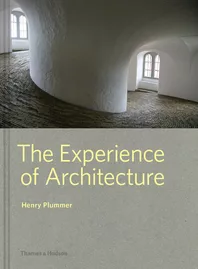
    The Experience of Architecture

See More Products
×

The latest news and information

#1 Source for Architectural Design, News and Products

SUBSCRIBE
  • RESOURCES
    • Advertise
    • Contact Us
    • Submit
    • Store
  • ACCOUNT CENTER
    • Create an Account
    • Start a Subscription
    • Manage My Account
    • Sign Up for Newsletters
    • Visit Customer Service
    • Update Preferences
  • PRIVACY
    • PRIVACY POLICY
    • TERMS & CONDITIONS
    • DO NOT SELL MY PERSONAL INFORMATION
    • PRIVACY REQUEST
    • ACCESSIBILITY
  • SERVICES
    • Marketing Services
    • Reprints
    • Market Research
    • List Rental
    • Survey/Respondent Access
  • STAY CONNECTED
    • Linkedin
    • Facebook
    • Instagram
    • YouTube
    • X (Twitter)

Copyright ©2026. All Rights Reserved BNP Media, Inc. and BNP Media II, LLC.

Design, CMS, Hosting & Web Development :: ePublishing