Architectural Record
search
cart
facebook twitter linkedin youtube
  • Sign In
  • Subscribe
  • Sign Out
  • My Account
Architectural Record
  • NEWS
    • Latest News
    • Awards
    • Interviews
    • Obituaries
    • Podcasts
      • Design:Ed Podcast
      • Sponsored Podcasts
  • OPINION
    • Book Reviews / Excerpts
    • Exhibition Reviews
    • Forum
  • EXCLUSIVES
    • Videos
    • Design Vanguard
    • Top 300 Firms
    • Sponsored Content
    • Sponsored eBooks
    • From the Archives
  • CONTINUING ED
    • Editorial Continuing Ed
    • CE Center
    • CE Academies
  • PROJECTS
    • Buildings By Type
    • Reuse & Renovation
    • Museums & Arts Centers
    • Colleges & Universities
    • Multifamily Housing
    • Interiors
    • Lighting
    • Kitchen & Bath
  • HOUSES
    • Record Houses
    • House of the Month
    • Featured Houses
  • PRODUCTS
    • Products by Category
    • Record Products of the Year
    • Latest Products
  • EVENTS
    • Dates & Events
    • Record on the Road
    • Innovation Conference
    • Sustainability in Practice
    • Women In Architecture
    • Webinars
    • Ad Excellence Awards
    • Submit an Event
  • CONNECT
    • Ask RECORD AI
    • Newsletters
    • Contact
    • Advertise
    • Editorial Calendar
    • Store
    • Customer Service
  • SUBMIT
    • Submission Guidelines
    • RECORD Competitions
  • MAGAZINE
    • Subscribe
    • My Account
    • Digital Edition
    • Current Issue
    • Firm Pass
    • Historic Archive
Architecture News

Paleontology Meets Architecture in Project by Cotera+Reed

By Charlotte Huff
May 20, 2009

Correction appended May 27, 2009

To preserve the prehistoric bones at Waco Mammoth Site, Cotera+Reed Architects has strived to intertwine the firm’s creative vision with the immutable realities of sunlight, Central Texas heat, and the rigors of scientific preservation.

The Austin-based firm has designed an 8,400-square-foot shelter for the dig site that will be open to the public. It will be one of fewer than a dozen buildings in the United States that enclose prehistoric remains in situ—that is, located where they were first discovered. Portions of at least 25 Columbian mammoth skeletons, dating back some 68,000 years, have been identified at the Waco site since the first mammoth bone was spotted there in 1978 protruding from a creek bed.
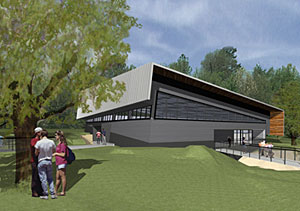
Cotera+Reed was tapped to design a shelter for mammoth fossils in Waco, Texas.
Image courtesy Cotera+Reed
Cotera+Reed was tapped to design a shelter for mammoth fossils in Waco, Texas.
Related Links:
Leeser Wins Mammoth Museum Competition Fort Worth Museum of Science and History Museum of the Earth

The site’s development has been a cooperative effort involving Baylor University and the City of Waco. Their initial concept was to build a pole barn to replace the circus-style tent that has covered the skeletons for more than two decades, according to Phillip Reed, AIA, principal at Cotera+Reed. But the architects and the client quickly recognized that a more climate-moderated building would be required: The dramatic swings in Texas temperature, along with humidity levels that can fluctuate 40 percentin a single day, can be damaging to the porous bones over time. “They can cause cracking and flaking both of the fossil material and the soil around it,” explains Anita Benedict, collections manager for Baylor University’s Mayborn Museum Complex.

Instead of a pole barn, the firm got approval to build a metal-clad, one-story building to permanently house and protect the skeletons, along with any additional fossils that may be unearthed in the years ahead. To accommodate visitors, the design includes a suspended catwalk that curves through the shelter, exiting out a side wall.  

The shelter incorporates several measures to guard against the elements. For instance, it contains a highly waterproofed, 8-foot-tall attic that sits on the shelter like a lid on a shoebox, extending beyond the building’s walls to provide protective shade. The shelter also is positionedto capture the Texas winds and to use them—along with the help of perforated metal panels—to ventilate the attic, moderating the temperature within.

To protect the bones, no direct sunlight can reach the dirt floor. At the same time, Reed didn’t want visitors to feel like they were walking into a vault. “We tried to humanize what would otherwise be a pretty scientifically derived building,” he says. So he’s provided natural lighting by running clerestory windows along all four walls, which filter out all but 4 percent of ultraviolet light.

Since construction began last fall, protecting the bones has been an overriding priority. Four large wooden boxes were constructed around them, so they couldn’t be harmed by even a falling tool, Reed says. The catwalk will be particularly tricky to construct, as it will be installed piece by piece, ideally while keeping the workers off the floor. The contractor for the project is Waco-based Mazanec Construction.

The dig shelter, which is slated to open this fall, is part of a $3.2-million first phase of the Waco Mammoth Site project. A 1,400-square-foot visitor’s center—also designed by Cotera+Reed— is being constructed abouta quarter of a mile away. A short bridge will lead to the dig shelter, marking the creek where the first mammoth bones were discovered. Reed pictures school-aged children and other young visitors pausing there for a moment, before skipping into the ancient world of mammoths.

Correction: Due to an editor's error, the original headline on this story included the word "Archaeology" rather than "Paleontology." Archaeology is the study of ancient human cultures, not bones.

Share This Story

Looking for a reprint of this article?
From high-res PDFs to custom plaques, order your copy today!

Post a comment to this article

Report Abusive Comment

Subscription Center
  • Create an Account
  • Start a Subscription
  • Manage My Account
  • Sign Up for Newsletters
  • Visit Customer Service
  • Update Preferences

More Videos

Sponsored Content

Sponsored Content is a special paid section where industry companies provide high quality, objective, non-commercial content around topics of interest to the Architectural Record audience. All Sponsored Content is supplied by the advertising company and any opinions expressed in this article are those of the author and not necessarily reflect the views of Architectural Record or its parent company, BNP Media. Interested in participating in our Sponsored Content section? Contact your local rep!

close
  • TAMLYN XtremeTrim Exterior Trim
    Sponsored byTamlyn

    Designing Cleaner Panel Facades: Why Exterior Trim Details Matter

  • Building with Vapor Barriers
    Sponsored byReef Industries, Inc.

    Vapor Barriers Help Control Moisture in Tighter Building Designs

  • Duct Interior with Prodeq System
    Sponsored byHenry, a Carlisle Company

    Designing Resilient Water Containment Systems

DESIGN:ED Podcast
Listen to Architectural Record’s DESIGN:ED Podcast

Events

June 10, 2026

Rethinking Stormwater – The Power of Porous Paving

Credits: 1 AIA LU/HSW; 1 AIBD P-CE; 0.1 ICC CEU

Learn how porous paving systems support stormwater management, reduce heat island effects, and enhance sustainable site design performance.

June 11, 2026

Very Early Warning Fire Detection for Mission-Critical Facilities

Credits: 1 AIA LU/HSW; 1 AIBD P-CE; 0.1 ICC CEU

Examine advanced fire detection strategies that support uptime and enhance safety in data centers and other mission-critical facilities.

View All Submit An Event

Products

2026 Architect's Square Foot Costbook

2026 Architect's Square Foot Costbook

See More Products

Popular Stories

Practice Matters illustration

What’s in a (Firm’s) Name? Thinking About Succession and Legacy

Practice Matters illustration

By the Numbers: Counting America's Architects

House on a Hill

Design Vanguard 2026: Forma

Crane Cove, ONO

Design Vanguard 2026 Winners

KRESA by DLR

In Kalamazoo, DLR Group Completes a Mass-Timber Hub for Career and Technical Education Programs

Broader Sustainability of CMU - Free Webinar - May 21, 2026

Related Articles

  • Design Miami Dispatch

    Design Miami 2017: Art Meets Architecture at the Jade Signature, the Bass Museum, and ‘Form and Space’

    See More
  • Seamus Heaney Meets Architecture

    Seamus Heaney Meets Architecture

    See More
  • Highland Hall

    An Adaptive Reuse Project by Lever Architecture Makes the Grade at the University of Oregon’s New Portland Campus

    See More

Related Products

See More Products
  • image7.jpg

    Contemporary Architecture in China Towards A Critical Pragmatism

See More Products
×

The latest news and information

#1 Source for Architectural Design, News and Products

SUBSCRIBE
  • RESOURCES
    • Advertise
    • Contact Us
    • Submit
    • Store
  • ACCOUNT CENTER
    • Create an Account
    • Start a Subscription
    • Manage My Account
    • Sign Up for Newsletters
    • Visit Customer Service
    • Update Preferences
  • PRIVACY
    • PRIVACY POLICY
    • TERMS & CONDITIONS
    • DO NOT SELL MY PERSONAL INFORMATION
    • PRIVACY REQUEST
    • ACCESSIBILITY
  • SERVICES
    • Marketing Services
    • Reprints
    • Market Research
    • List Rental
    • Survey/Respondent Access
  • STAY CONNECTED
    • Linkedin
    • Facebook
    • Instagram
    • YouTube
    • X (Twitter)

Copyright ©2026. All Rights Reserved BNP Media, Inc. and BNP Media II, LLC.

Design, CMS, Hosting & Web Development :: ePublishing