Newsmaker: Cameron Sinclair
Image courtesy Architecture for Humanity
Image courtesy Architecture for Humanity
Image courtesy Architecture for Humanity
Photo © Tracy Nelson / Architecture for Humanity
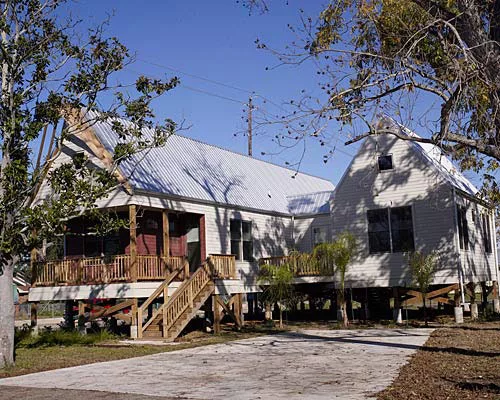
Photo © David Purdy / Architecture for Humanity
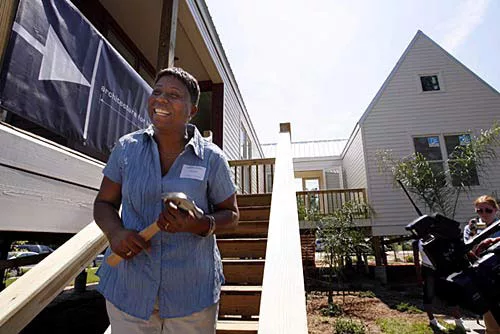
Photo © David Purdy / Architecture for Humanity
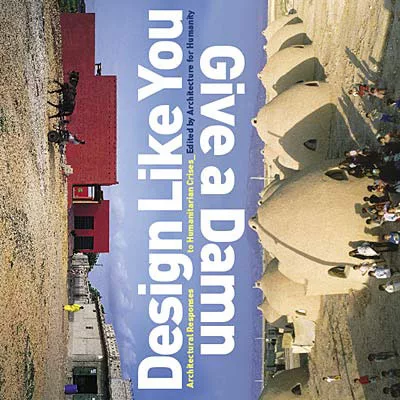
This 2006 look at humanitarian design was edited by Architecture for Humanity.
Image courtesy Architecture for Humanity
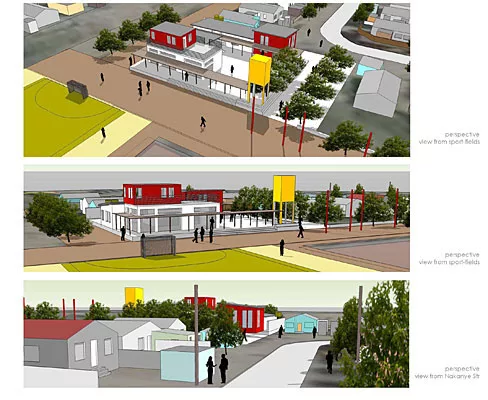
Perspective Views of arG-designed, FIFA-sponsored.
Photo © ARG / Architecture for Humanity
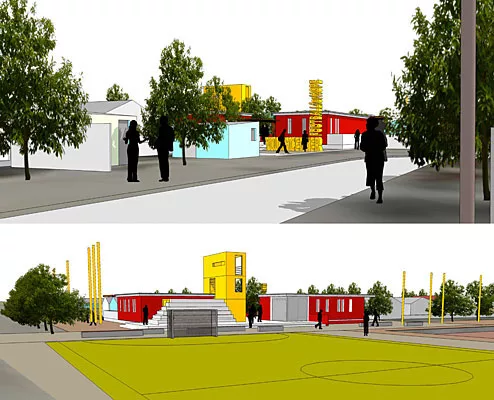
arG-designed, FIFA-sponsored .
Photo © ARG / Architecture for Humanity
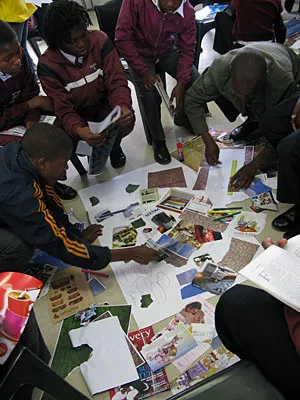
Photo © ARG / Architecture for Humanity
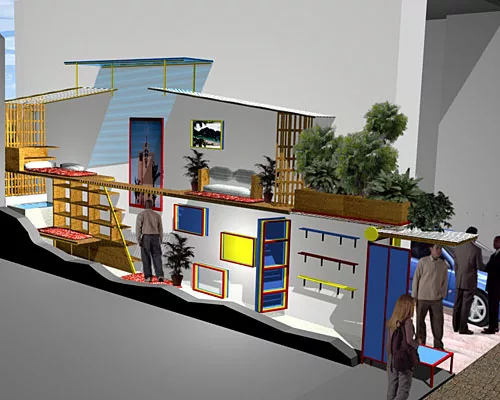
Urban planning projects utilizing unplanned.
Image courtesy Architecture for Humanity
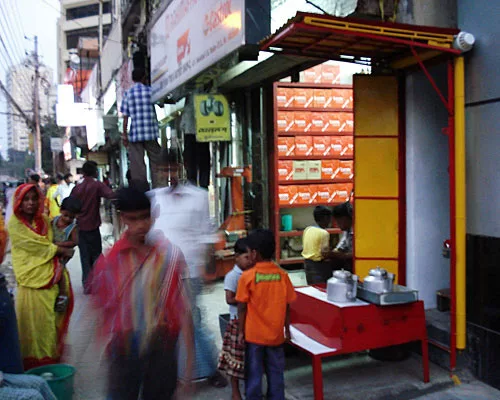
Urban planning projects utilizing unplanned.
Image courtesy Architecture for Humanity
Image courtesy Architecture for Humanity
Image courtesy Architecture for Humanity
Image courtesy Architecture for Humanity

Image courtesy Architecture for Humanity
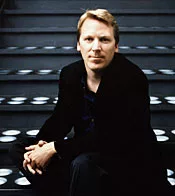
Cameron Sinclair.
Architects & Firms
Architectural Record: Congratulations on 10 years.
Cameron Sinclair: Thank you. I think running an architectural non-profit is a bit like dog years. I know it’s 10, but it feels like 70 sometimes.
Have you found that any of the organization’s initial ideals or missions have had to change as the size has increased?
I think we originally started off with the idea of doing a few small projects, assuming that a small sustainable project could be a catalyst for a much greater change. As we grew, we realized that we weren’t a design non-profit, we were sort of a developer non-profit. We went from working on one project a year to working in multiple countries on multiple project-types simultaneously.
And what does a client look for when they contact you?
Well, it’s usually a very nervous moment in their lives because they realize that they’ve outgrown whatever space they’re in right now. But doing a building is actually extremely distracting for a charitable organization or a social entrepreneur who has very little time or risk to spend on it. Our role is to fill that void, to help at that moment when they’re moving to the next level.
Are you generally working with designers from outside the area or local designers?
Both. For us, the best scenario is when we marry an international designer who has the drive and passion to for a project with a local architect who has the skill set and license—we make sure that every project we build has a licensed architect on it.
Can you give an example of someone from the outside coming in and developing something that local people maybe hadn’t considered?
Absolutely. Susie Platt is an architect who’s now working with Richard Rogers. She was working in Sri Lanka with the United Nations Habitat and local federations to build a community center. While the building was traditional in its physical architecture, it integrated rainwater catchment systems to make sure that the water table wasn’t disturbed with an increase in population after the tsunami.
The siting of the building, natural ventilation, and rainwater systems were married with local materials, and it allowed the international architect a moment to play. Susie did an homage to Geoffrey Bawa’s idea of allowing landscape to enter a building, so there was this respectful marriage between Sri Lankan architecture and a low-tech, sustainable response from the newer western tradition.
You indicated that the international architect comes in and has more power than he or she might have, normally. How do your projects respond to that stigma of a paternalistic approach?
Well, we don’t airdrop people in. Susie, for instance, lived almost two years in Sri Lanka. It’s about listening and learning and understanding. When you have a community that’s an equal partner in the design process, and they have an equal say in how the thing gets designed, you’re not one person designing for 1,000; it’s 1,001 people designing. The architect’s voice is important, and it does guide the process, but it doesn’t dictate it.
A lot of your projects seem to be at an intersection of design or architecture and public policy. Do you find yourself struggling with that?
I think we use architectural solutions to challenge policy. I think of AFH as a tugboat and a lot of these large NGOs and large policy-making organizations as giant oil tankers. We’re not going to turn them around overnight. We’re not going to steer a government policy into being 100 percent sustainable, off the grid, immediately. What we can do is to nudge it in the right direction with proven solutions.
There seems to be a tension between “proven solutions” and the self-conception of the architect as an “inventor.”
Well, I believe in doing new ideas. But by proven ideas, I just mean built work. If we do everything as just unbuilt schematics, then it’s really hard for someone whose job it is to release a million or ten million or a hundred million dollars into the system to be influenced by a jpeg. The whole idea about open-sourcing and using creative commons means that instead of creating the eight homes for low-income families that will change the world, you can create 800,000.
Do you see this leading to a development of a new building code?
I think there need to be basic standards of construction, and I mean that in a holistic way. We need some basic structural and design elements that are shared globally. At the same time we need to have fairer labor practices in the construction industry. If you had fair and equal labor laws then you would give incentive to making sure that the buildings were built correctly.
A good example is in Pakistan, the architects and the engineers had worked for decades to design earthquake-resistant schools, but there was a disconnect between architecture and construction. The schools were built, but incorrectly. So when the Kashmir earthquake happened, thousands of students died. Now you have to ask, “was it the architecture or was it the implementation of the architecture?” AFH ends up being the research and development for this kind of socially focused work. It’s very challenging in certain areas where we’re trying to formalize in an informal environment.
Before we were really just funding the design, we were giving grants and travel stipends to architects and designers to work on these projects. What we have moved into in the last few years is actually handling the construction financing, which means we have a say in the quality of the construction.
Building on that, in the profession, as it exists in the developed world, how do you see architects becoming more socially responsible or ethical in practice?
I think architects are already there. We know that almost every architect wants to do that kind of work. When you talk to a student and ask them why are you an architect? It’s usually for three reasons: one, to create great buildings; two, to improve the community; and three, to leave a legacy behind that’s going to influence people.
Looking for a reprint of this article?
From high-res PDFs to custom plaques, order your copy today!