Technology and the City: Austin
With a new generation of tech entrepreneurs setting up shop, a steadily ballooning population, and Google Fiber on the way, a rapidly changing city tries not to lose its cool.
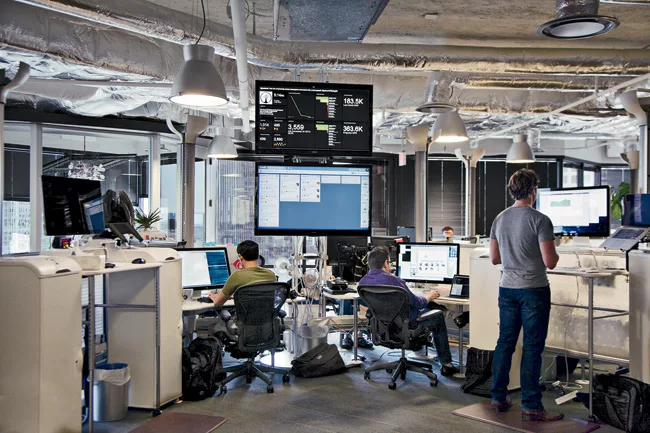
On the top floor of a bland high-rise in downtown Austin, the city's future is being written—or, more accurately, coded. In the gutted shell of a once-staid office, now colonized by giant beanbags and quirky light fixtures, entrepreneurs in T-shirts hack away in podlike clusters of workstations, striving to develop the next big mobile app, cloud data service, e-commerce platform, or other piece of hit software.
The 150 or so companies that rent space here at Capital Factory, one of Austin's many startup incubators, have reason to be hopeful. The recent IPOs of some of their local peers, including Bazaarvoice and HomeAway, have raised hundreds of millions of dollars. In the process, they have also netted the kind of attention typically reserved for a breakout performance at the annual South by Southwest music showcase. In a town synonymous with bands, the tech nerds are making noise.
At the same time that Austin's identity is broadening from music scene to startup hotbed, more and more people are moving here—120 every day on average—and the city now faces the challenge of how to grow while retaining the character that makes it such an appealing place to live.
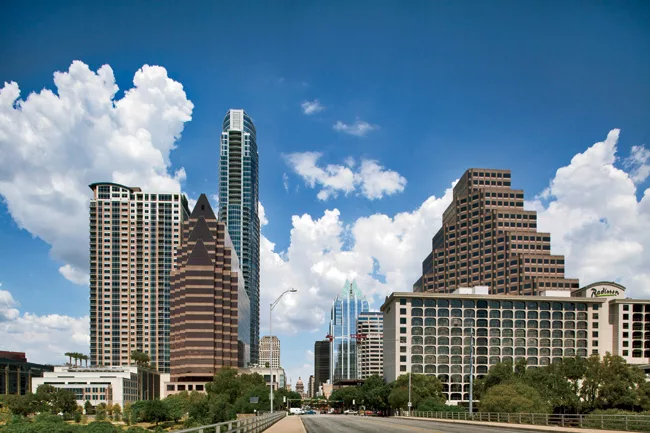
Looking through Capital Factory's glass walls at a skyline ornamented with gleaming new apartment towers, it's clear that Austin is changing, but, still, the numbers are striking. The city's population of 850,000 has grown by close to 40 percent in 10 years and is expected to nearly double by 2039. Meanwhile, companies in greater Austin added some 120,000 new jobs between 2005 and 2012, with roughly 12,000 of them coming from the tech industry. “When there is an influx of people, it creates new opportunities,” says Joshua Baer, a seasoned entrepreneur and managing director of Capital Factory. “It's a rising-tides phenomenon.”
Austin's magnetism lies in its contradictions: a progressive enclave in the middle of Texas, a college town and a seat of government, a big-city cultural scene with a relatively low cost of living, and a home to both well-designed Thai restaurants and barbecue joints in dusty parking lots. “Keep Austin weird”—once a rallying cry to defend small businesses from invasive chains—has become a brand.
Entrepreneurs find economic charms here as well. “From a tax perspective, a hiring perspective, and a real estate perspective, the business climate was much more favorable than anywhere else we were looking,” says Capital Factory member Kenny Gorman, who moved from Silicon Valley to Austin when his database service, Object-Rocket, was acquired by a Texas company. The cost of living is a bargain compared to the Bay Area, and Texas famously—if controversially—offers incentives to out-of-state businesses looking to relocate (Apple recently received a $21 million tax break to open a large Austin campus). The University of Texas feeds the talent pool with every graduating class, and the city also has a growing investment community. A recent Atlantic Cities list placed Austin in the top ten most active regions in the U.S. for venture capital, and it also has one of the most active angel investor networks in the country.
“In the self-proclaimed live music capital of the world, people joke that everyone in Austin is in a band,” says Shawn O'Keefe, director of South by Southwest Interactive, a digital media-focused sister of the massive music event. “But now you can't throw a rock without hitting someone working in emerging technologies.”
Google found the climate so appealing that it made Austin a pilot city for its Google Fiber initiative. Currently slated to arrive next year, the new fiber-optic infrastructure will deliver astoundingly fast Internet service—up to 1 gigabit-per-second—which is 100 times faster than standard broadband, a stat that makes web developers salivate and traditional phone and cable companies nervous. “The tech economy in Austin, with its strong startup and entrepreneurial culture, was critical to our decision,” says Jenna Wandres, a spokesperson for Google Fiber. “It's hard to imagine what a generation of gigabit apps could be, and you need people who can develop them.”
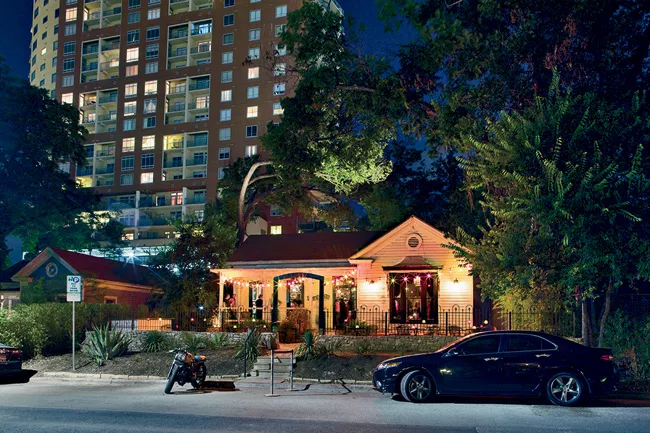
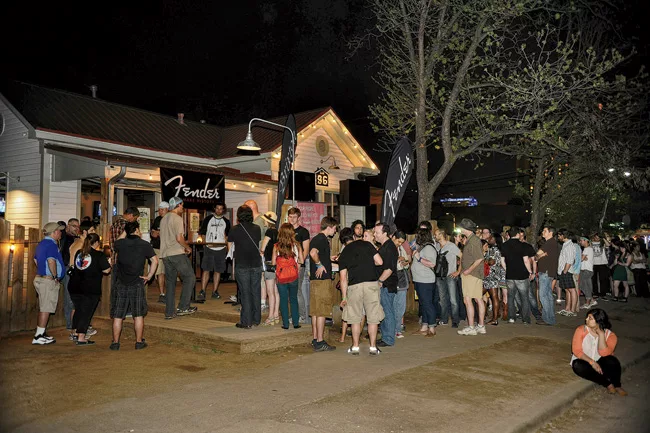
Austin's big tech companies—including mammoth elder statesman Dell—are for the most part based in suburban office parks. But many young entrepreneurs want to be downtown. There, they can sip coffee at Juan Pelota Caf', which shares space with a bike shop, buy groceries at an 80,000-square-foot, see-and-be-seen Whole Foods flagship (not far from the location of the organic empire's original store), or drink a beer and see a band on Rainey Street—a cluster of historic wood-frame houses recently converted, seemingly overnight, into a strip of teeming bars and restaurants.
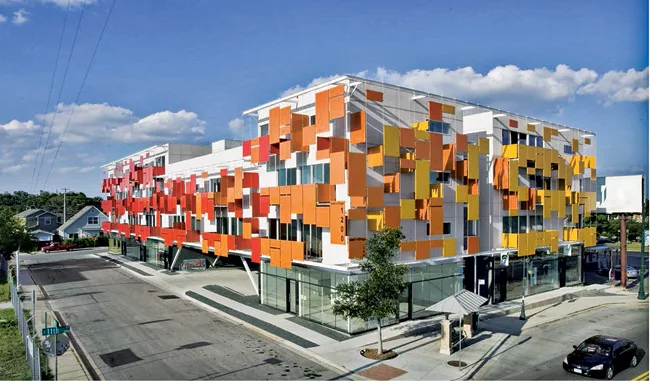
The demand for housing in the center of Austin, rekindled after a recession lull, has led to new multifamily residential work for architects, but it has also sparked a looming affordability crisis, which could threaten the cultural life that has made the city famous. “If you have a tech job, you can easily afford to live close to downtown, but if you're a musician or someone who works at a hotel, you can't anymore,” says Jim Robertson, an architect and the manager of the city planning department's Urban Design Division. “At what point have you killed the goose that laid the golden egg?”
Nowhere is the rising cost of Austin more apparent than the East Side of the city. Historically a cluster of working- and middle-class neighborhoods with predominantly African-American and Latino residents, East Austin has gentrified in waves of musicians, students, and now young professionals. “A lot of the diversity is leaving the city,” says Barbara Brown Wilson, director of the Center for Sustainable Development at the University of Texas. “People who have been living here for generations and who made the city what is are moving farther out. Now we're sprawling, with a high level of suburban poverty.”
Countering the pressure of an overheating housing market is one goal of Imagine Austin, a comprehensive plan for the city released last year. It calls for building up outdated or underused commercial sites along arterial roads close to downtown Austin—in contrast to low-density sprawl around the city's perimeter—and turning them into mixed-use nodes connected by a transportation network. “We have aging commercial streets, aging strip centers, aging malls,” says Robertson. “The grayfield opportunities to accommodate the coming influx of population are out there.”
Bringing higher-density housing into central Austin on a large scale will require modifying zoning laws. But in a town of cottages, midcentury ranch houses, and renovated Airstream trailers, many community groups see taller buildings as a threat to Austin's character. Last month, the city held the first public-input sessions as it embarks on a process to overhaul the code by 2015.
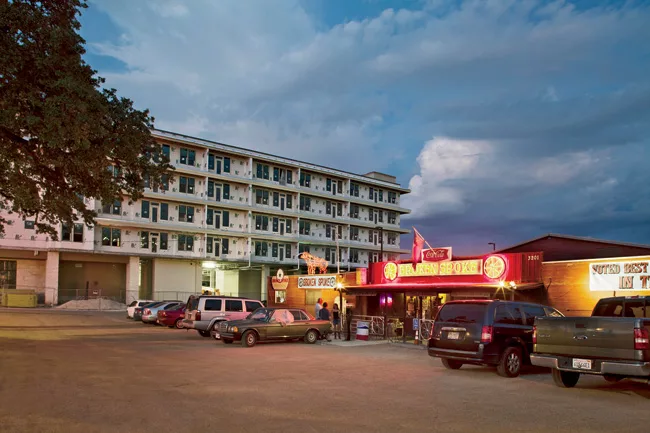
In the meantime, some higher-density projects have already popped up in traditionally low-density parts of the city. Most notably, the decommissioned Mueller Municipal Airport site has brought a large mixed-use development to the East Side of Austin, and on South Lamar Boulevard, a developer spared the Broken Spoke, a nearly 50-year-old honky-tonk and civic icon, but surrounded it with five-story apartment buildings. Residents are scheduled to move in this month.
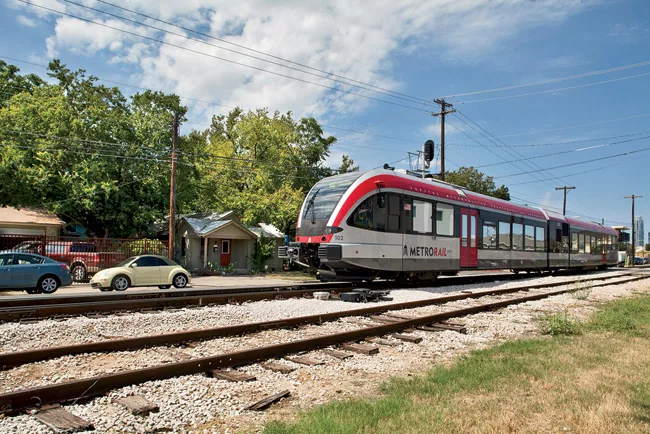
The Broken Spoke is a four-mile drive from downtown Austin, and the development around it underscores a key ingredient missing from the transit-oriented plan: better public transit. Three years ago, Austin completed a single commuter rail line, but it otherwise relies on a disjointed bus system. Traffic is a common annoyance. But improving transit is a tough sell in Texas car country. “We're still grappling with what kind of transportation would have the most traction,” says Robertson. “We don't have a clear, funded future plan yet.”
The plan might not come soon enough. When Google began rolling out Fiber in Kansas City this year, it divided the city into districts that it calls “Fiberhoods” and allowed residents to sign up for the service. The neighborhoods with the highest number of preregistered customers got Fiber first. Google plans to use a similar process in Austin, and some community groups have already begun collecting signatures from willing residents, even though, as of September, Google still had not announced a process for introducing the service here. But if demand for housing in central Austin is already heating up, when a neighborhood evolves into a Fiberhood, it will pour gasoline on the fire.
Looking out the Capital Factory windows at patches of construction below a skyline punctuated by cranes, Baer contemplated a changing city. “We can't just keep Austin exactly as it was,” he says. “But we need to focus on keeping the best things about Austin as we grow. How do we keep our spirit while we cultivate our entrepreneurial attitude?”
People | Products |
Looking for a reprint of this article?
From high-res PDFs to custom plaques, order your copy today!