Technology and the City: Chattanooga
Investments in street-level urbanism and digital infrastructure are helping to turn a once-blighted industrial town into “Gig City,” a haven for businesses and a magnet for young professionals.
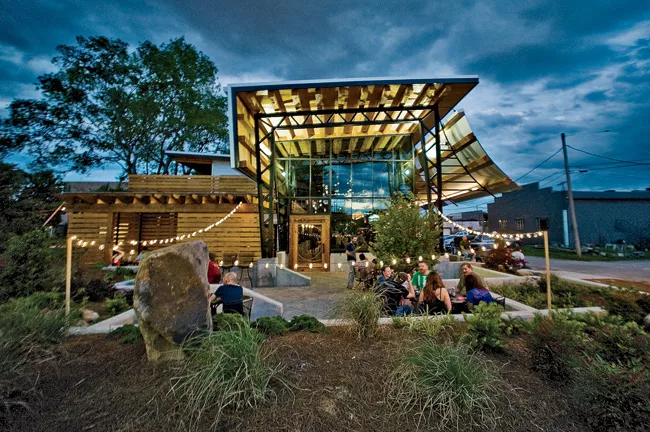
On a recent evening, Dan Rose, the 32-year-old co-owner of the newly opened Flying Squirrel restaurant in Chattanooga, Tennessee, sat at the packed bar, sketching ideas for his next project, with architect Thomas Palmer, a graduate of Auburn University and its Rural Studio program. Rose is quintessential new-Chattanooga, a walking symbol of what the city aspires to be: after graduating from Skidmore College in upstate New York, he came south to wait tables and climb some of the best vertical rock faces in the country, many within biking distance of downtown. Eight years later, he's still here, caught in the city's rising entrepreneurial tide.
Among once-struggling rust-belt cities now on the upswing, Chattanooga is breaking away from the pack. Increasingly identified with places that combine high-tech and big nature to attract people and jobs—such as Austin, Texas; Boulder, Colorado; and Portland, Oregon—it also flaunts the singularly alluring feather in its cap: some of the fastest Internet speeds in the western hemisphere. In 2010, the city-owned power utility, EPB, completed a fiber-optic network that allows it to offer up to 1 gigabit-per-second bandwidth to every home and business in the city. Chattanooga became “Gig City” and launched recruitment programs to lure businesses, from startups to multinationals. The network is emblematic of the city's many efforts to transform itself from having an all-but-deserted core to becoming an amenity-rich magnet for a young, enterprising population.
Chattanooga's rebirth is one of the more improbable stories of American urbanism. The city's nadir is easy to pinpoint: the October evening in 1969 when Walter Cronkite reported on CBS News that Chattanooga had been named the “dirtiest city in America.” It was a sad decline from its postwar peak as one of America's leading industrial centers, when the cheap Tennessee Valley Authority electric power made it the machine shop of the South—and the surrounding hills trapped the resulting polluted air.
Today, most of the city's new buildings wear LEED plaques. Metropolitan Chattanooga added more new jobs in the 12-month period ending October 2012 than the rest of Tennessee combined. Its success was enough to attract President Obama to town in July to talk about “that first and most important cornerstone of a middle-class life: a good job in a durable, growing industry.” The president spoke against the backdrop of online retailer Amazon's new 1 million-square-foot Chattanooga distribution center, one of the most prominent success stories to come out of the city's effort to lure large businesses. That facility opened on the heels of a billion-dollar Volkswagen factory, which began production in 2011, and a growing constellation of suppliers has since surrounded it. (Both Volkswagen and Amazon received millions of dollars in state and city tax incentives to move to Chattanooga.) As it continues to attract new companies, the city has cultivated its young and progressive, high-tech and pro-business image. In April, it inaugurated a new mayor, native Chattanoogan Andy Berke. At age 45, the Stanford graduate embodies the city's newfound reputation.
If an urban center can be said to pivot, Chattanooga has done so in less than a generation. In 1997, then-mayor Jon Kinsey called Harold DePriest, CEO of EPB, into his office to ask what the city-owned utility was doing to benefit the community. DePriest took the question seriously and recognized—years ahead of his colleagues—that high-speed Internet access would be to the 21st century what electric power was to the 20th. “The whole idea of bringing electricity to the Tennessee Valley in the 1930s was to improve the quality of life,” says David Wade, the current COO at EPB. “So it [the fiber-optic network] is in line with what the company was created to do.” It helped that the city's railroad roots—you've heard of that song “Chattanooga Choo Choo”—put it alongside the path of the major transcontinental fiber-optic backbones (which often follow the tracks), giving it robust access to the rest of the Internet. When the $390 million project came online, it gave Chattanooga a rare amenity among American cities and a leg up on attracting businesses.
The utility's ability to execute construction of the fiber network is an example of Chattanooga's adroit combination of competent institutions and civic spirit. As Christopher Mitchell of the Institute for Local Self-Reliance, a major supporter of municipal broadband networks, emphasizes, “It's not only that fiber attracts jobs, it's that well-governed areas build fiber networks.”
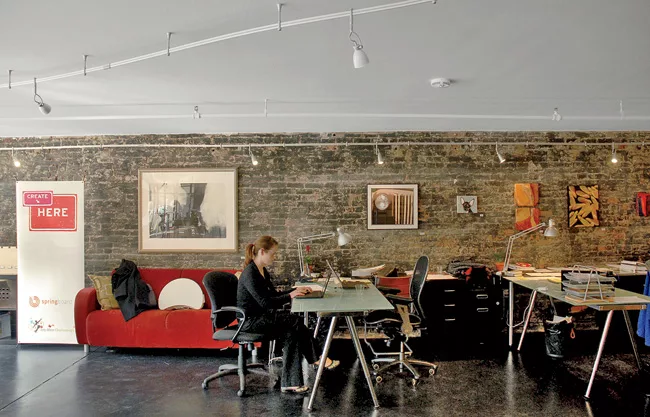
What is surprising about Chattanooga is how broad-based its orchestrated renaissance appears to be. Among entrepreneurs, city officials, and community leaders, there is a clear recognition of the link between economic development and quality of life—particularly those elements of it that appeal to young professionals. The city's wealthy foundations have catalyzed the impulse, funding design competitions, public artworks, and cultural events. Rather than trying to get on the map using the “Bilbao effect,” their focus has been on smaller-scale urban changes. “While other cities were building ballfields and big entertainment kind of things, we decided to build Chattanooga for all of us who are going to live here,” says Sarah Morgan, president of the Benwood Foundation. On the Southside, the Lyndhurst Foundation financed sidewalk improvements along Main Street, design guidelines for the residential neighborhood, and CreateHere, a nonprofit that encourages local cultural development, with incubator space and a business planning course (Rose and his partner, Max Poppel, are graduates).
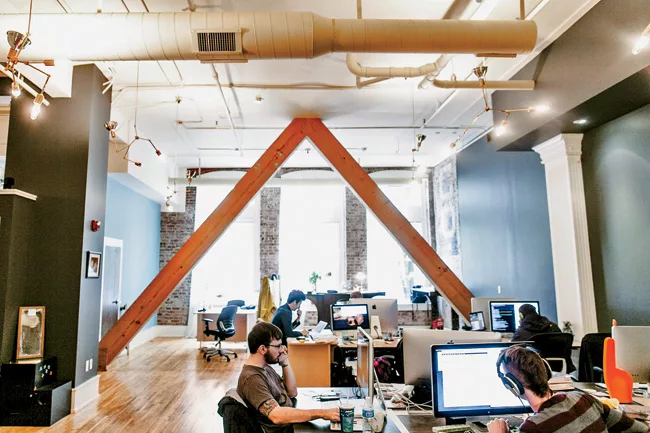
Recently, the CreateHere space has been reborn as “Co.Lab,” an incubator for tech startups. Sheldon Grizzle, the Florida native who cofounded the space, is a prime example of the city's ambition. “If I didn't feel like there was opportunity here, I wouldn't be here,” says the entrepreneur. “But I think people who are attracted to Chattanooga are going to make the choice because of the lifestyle—not purely because it's the best place to start a business.”
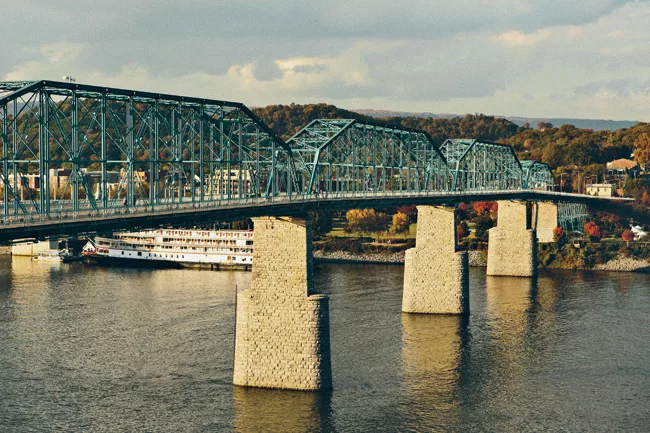
A focus on design has long played a part in making downtown Chattanooga a desirable place to live. The biggest moves—including the construction of a major plaza and the reclamation of the industrial waterfront—were guided by Stroud Watson, an architect and professor who from 1981 to 2004 ran an unusual entity called the Urban Design Studio. Founded at the University of Tennessee School of Architecture, it migrated inside city government, becoming an in-house urban design consultant to a succession of Chattanooga mayors. Watson believed in “the city-as-living room,” as he called it, with an unusually humanistic and fine-grained emphasis on the city's in-between spaces. In a debate over the entrance plaza of the Tennessee Aquarium—Chattanooga's leading tourist attraction—Watson notably insisted, “We're not building a front yard for the aquarium; we're building a front porch for the city.”
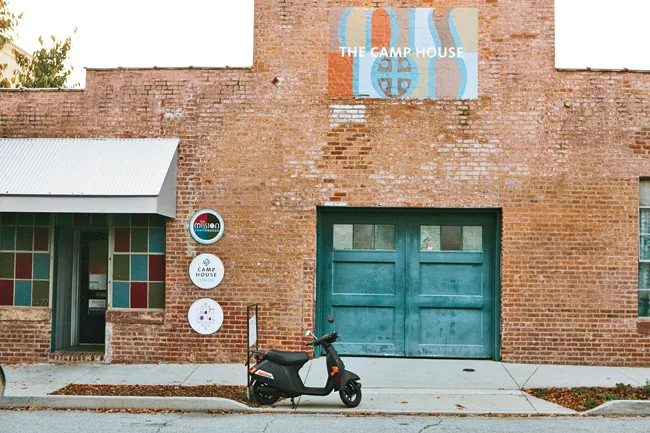
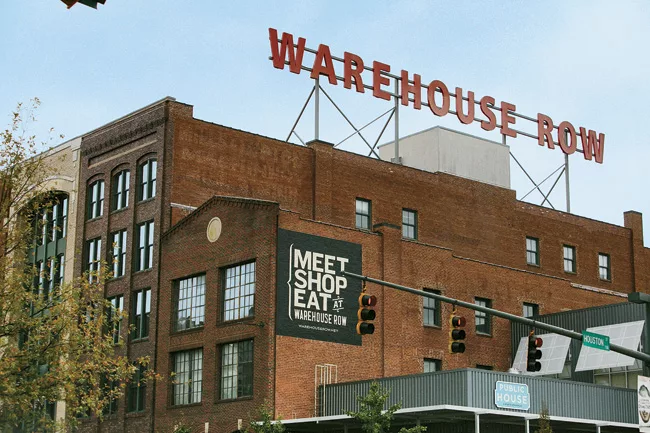
Now Chattanooga's downtown is in a moment of transition. There is still a 15 percent office vacancy rate, but some parts of the city feel like a hipster theme park. There is a new bike-share program, and an electric shuttle that runs in a loop across downtown. Coffee shops serving carefully prepared pour-over cups (like The Camp House) are filled with 20-somethings working on MacBooks beneath filament bulbs. Farm-to-table restaurants occupy reused brick buildings, and impeccably renovated Victorian houses sport Neutra numbers. Last year, a pair of local designers used Kickstarter to crowdfund the creation of Chatype, a “city-wide typeface.” There is a weekly food truck rally on an empty lot downtown, a PechaKucha night, and an artisanal sausage-maker in a Southside storefront designed by Palmer.
It all adds up to a city on the brink, if not quite there yet: after 5 p.m. on a weekday evening, a location scout for a zombie film wouldn't have to worry about clearing the streets downtown. But there is plenty to admire: the “front porch” plaza in front of the Aquarium; festive bus shelters with circus lights (and every lightbulb in working order); luxury condos along the riverfront; even a remarkable new downtown climbing gym, built in and on a disused movie theater, with a roughly four-story synthetic rock wall facing the street. The technological promise of gigabit-speed Internet is that it collapses time and space, allowing businesses to be anywhere. And with all of its non-virtual amenities, Chattanooga's betting on being a nice place to be.
Andrew Blum is a New York'based journalist and the author of Tubes: A Journey to the Center of the Internet.
People | Products |
Looking for a reprint of this article?
From high-res PDFs to custom plaques, order your copy today!